Pizza, place, and local character

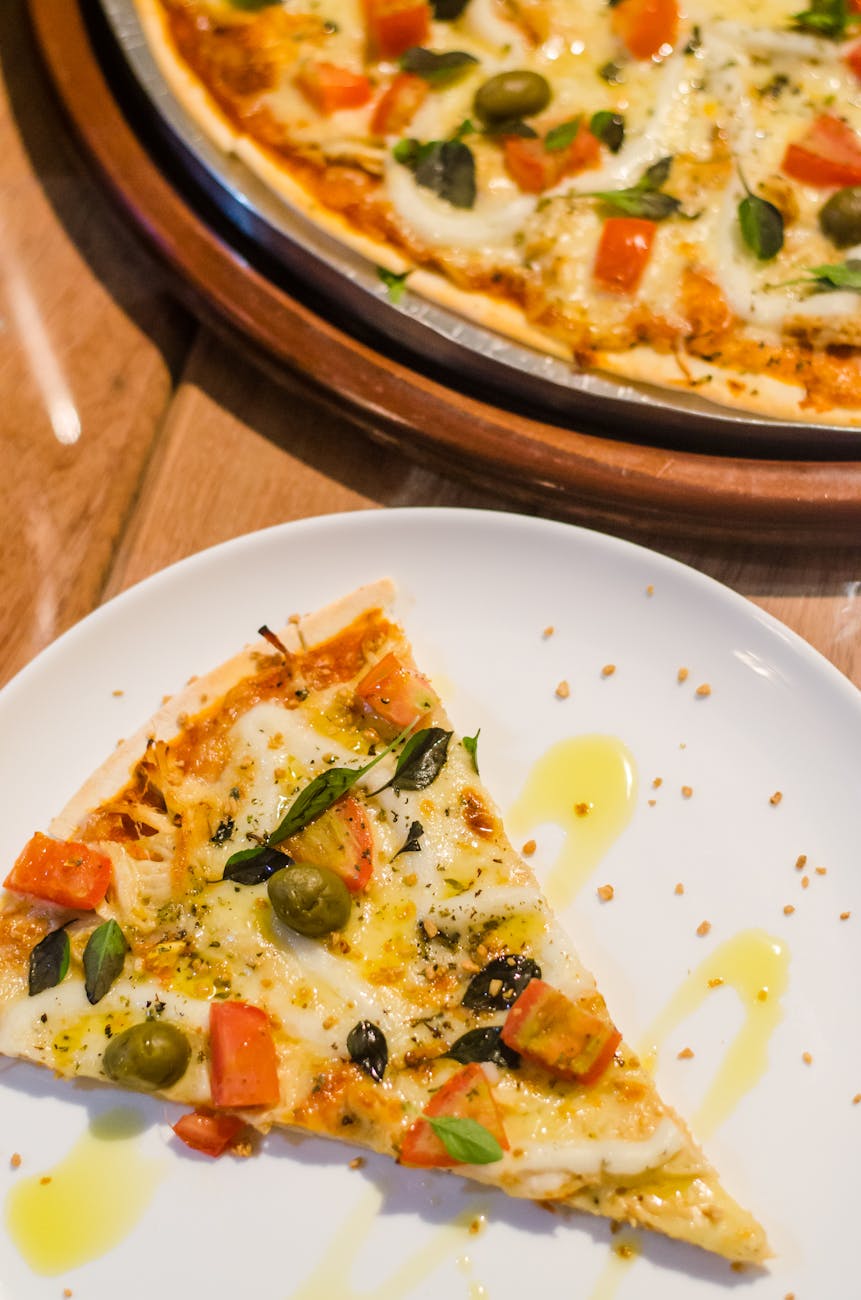
A recent study looked at what helped some local pizza places thrive:

Photo by Pablo Macedo on Pexels.com

I think another hugely important part about pizzerias is the atmosphere they offer. There’s a sentence you wrote in the article: “Rather than focusing only on speed or price, they compete by offering character, inventive toppings, personal service and a sense of place that chains just can’t replicate.” What does that sense of place feel like to you when you enter these pizzerias?

De la Cruz-Fernández: That’s an important sentence and a good question, because I would go a little beyond pizzerias to say that businesses themselves, exploring the idea of a business becoming part of our life, is one of the goals of this project. Usually, when you think about culture, you think about people reading books or people watching TV. And in this case, it’s how the businesses that you patronize every day are also part of your own growth. But everything goes back to that organization, that business that someone has managed and allowed to become your space. So someone has put labor, has put thinking, has put finances into it. And that makes business part of the history of humanity, to put it too broadly, maybe. But for business historians, that is how we think; what we want is to understand that business also is part of social life and culture.

We recently gathered with family at such a place. It had been there for decades. Through different features inside, it showed that it was part of the community. On this weekend night, the tables were full of families and larger groups gathering for pizza and conversation.

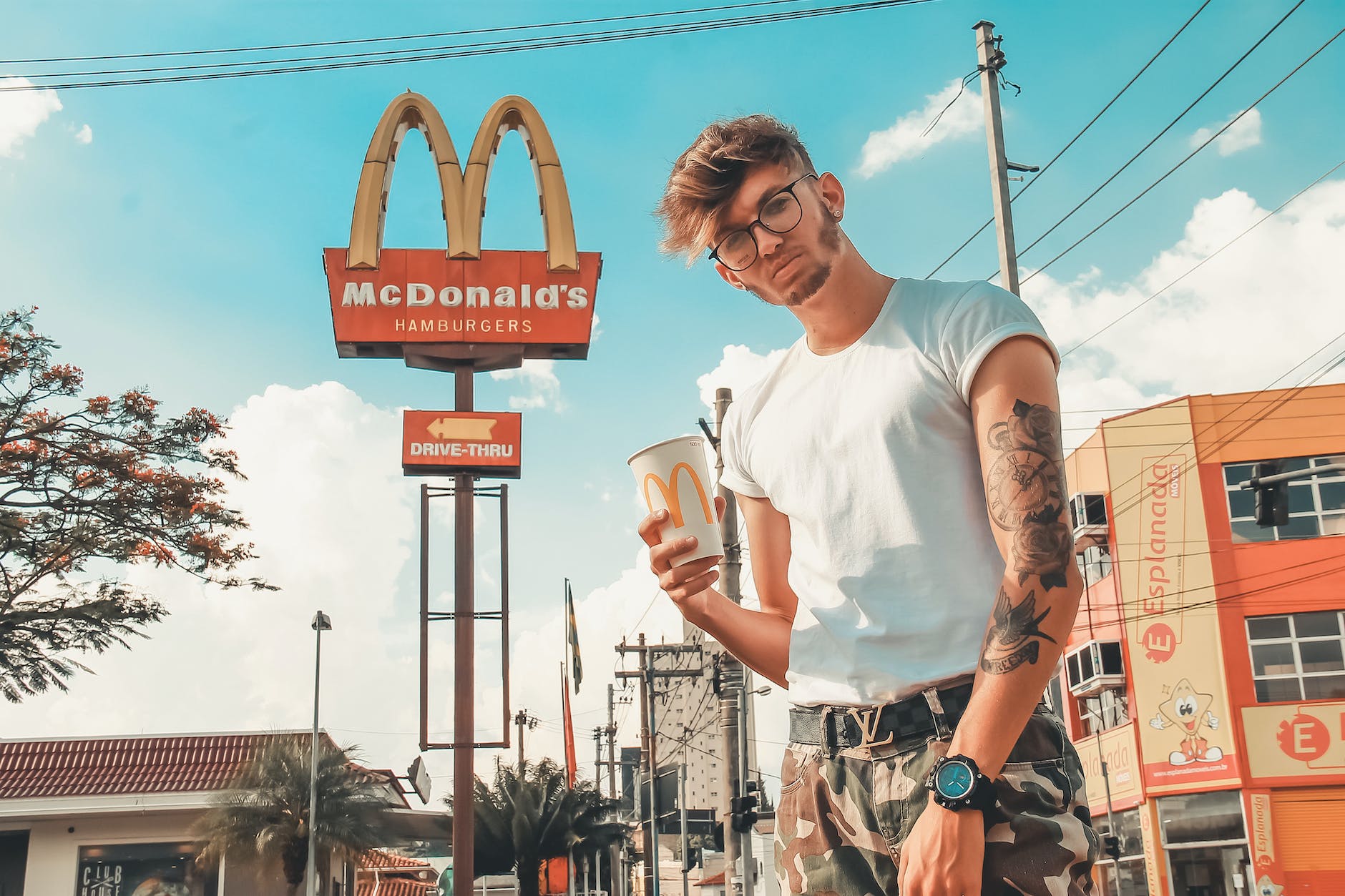
People like to gather around food. A McDonald’s or a Starbucks can act like a third place in certain situations. But these are chains that promise more predictability than they do local character. Local restaurants have an opportunity to do something different; it can be both a distinctive compared to the national chains and it can be part of the business model to be a place for the local community.

On the community side, how many American communities have a restaurant like this? How many or what percentage of residents have to visit regularly to make it a community place? A restaurant could claim this status for themselves. Or a small group of residents might have a place in mind.

It would also be interesting to know how many pizza places make it over the years compared to those who do not. Is that local character there from the beginning – and this is what helps them get through the start or difficult years? – or does it develop over time as the business and the community interact?

The prime suburban real estate available when restaurants close

Want a prime location in the suburbs? Red Lobster and TGI Fridays might have an answer:

Photo by Armando Oliveira on Pexels.com

Vacant restaurant chains are creating prime real estate for a wide range of companies looking for spots to grow, especially fast-food chains that want to install drive-thru lanes on spots where diners once sat down for dinner.

Chains like Red Lobster and TGI Fridays filed for bankruptcy this year and closed more than 175 restaurants combined. Red Lobster was driven into bankruptcy by mismanagement under a previous owner, global shrimp supplier Thai Union, while TGI Fridays fell under private equity owner TriArtisan Capital Advisors. Denny’s is also closing 150 restaurants…

In the past, these restaurants would often be replaced by a different restaurant chain, with tables to sit at and servers to bring out the food. But now, fast-food and fast-casual chains are taking these spaces and building more drive-thru lanes. Chipotle is building 4,000 new locations, the majority with drive-thru lanes, while Chick-fil-A is building new spots with four-lane drive thrus…

Many of these restaurant locations are also attractive to prospective tenants, as they are freestanding buildings, not located in the back of decaying indoor malls. Indoor malls have struggled in recent years, and mall vacancies reached 6.5% last quarter, according to CBRE. Macy’s, JCPenney, Nordstrom and others have closed hundreds of their stores in malls as online shopping has grown to around 16% of retail sales. Real estate research firm Green Street estimates about 150 enclosed malls have closed since 2008, leaving about 900 today.

Most of the closed restaurants are also located on high-traffic streets with large parking lots or adjacent to a shopping center, making them attractive sites.

I have heard before that certain restaurants and retailers are less into the business of selling things and more into the business of real estate. Think just of the largest fast food chains in the world: how many prime locations do they occupy? If all that land went up for sale at once, how many other businesses would be interested in jumping in?

I have been thinking about locations like these in terms of religious congregations recently. They often occupy important locations within communities, sometimes at busy intersections or in important historic locations. If that location is no longer occupied by a congregation and/or a religious building, it could be a loss in the community (and a possibility for something else).

In the case of these restaurants, it appears there is plenty of demand for the land and plenty of interested parties want to make more money with these properties. Additionally, I would guess most municipalities love that another restaurant will take over. Those new restaurants and businesses can generate even more revenue. The worst possible outcome is that the land remains vacant with limited demand and the property becomes an empty eyesore.

How long before these new restaurants that take over are selling off their own properties? Ten years? Twenty years? At least in this moment, new restaurants want to snatch up these properties but that might not always be the case.

How much easier is it to build a new Chipotle than repurpose a vacant storefront nearby?

Near our suburban house is a shopping center consisting largely of strip malls and several anchor grocery stores. This development constructed in the late 1980s has fallen had hard times in recent years with numerous vacant storefronts.

Thus, it was surprising to see the construction that started last year at the site of a former national chain restaurant in this shopping center. This spot had been vacant for several years. The building came down and a new strip mall is going up. The new commercial space has an easy turn-in off a busy arterial road.

I have heard that it is easier to build a new big box store than to repurpose an old one. For example, numerous grocery stores in the Chicago region sat empty for years. Some big box businesses have moved out of older buildings and reopened in new structures not that far away.

The new Chipotle building will certainly be geared toward exactly what this business needs. Additionally, there will be at least one new storefront next to the restaurant. The old building had a different layout inside, one more fitting for a sit-down restaurant, and with on additional commercial space.

At the same time, how many strip malls, shopping malls, big box stores, and restaurants are torn down each year because the space they have is not exactly what a different business wants? What happens to all of these materials? How much time goes into tearing down? How substantially are these shopping areas changed by adding a few new buildings here and there? This Chipotle could have moved into a vacant property within the shopping center.

I could imagine more modular structures or incentives for reusing buildings or asking businesses to adapt to existing spaces. But, if it is cheaper or more efficient to tear down one building and redevelop another, then that is what businesses will do.

Emphasize the drive-thru and delivery, ditch the indoor dining

More fast food, coffee, and fast causal restaurants are moving toward no indoor dining space:

Photo by Alexandro David on Pexels.com

Last August, Dunkin’ opened its first “digital” location on Beacon Street in Boston. There are no cashiers, replaced by touchscreens and mobile ordering, and no seats or tables.

Dunkin’ is far from alone. Name a fast-food restaurant and the odds are the company has recently developed a branch without any restaurant at all. Chipotle’s first “Digital Kitchen,” which opened in upstate New York in 2020, has no dining room. A branch that opened last year in the Cleveland suburbs doesn’t even let customers inside the store. This summer, Taco Bell opened something it calls Taco Bell Defy, which is not a restaurant at all but a purple taco tollbooth powered by QR code readers and dumbwaiters that bring the food down from a second-story kitchen. The operation is, by most accounts, astoundingly efficient. Wingstop’s “restaurant of the future” doesn’t have seats or take cash.

What’s driving this trend? Partly savings on real estate and labor. But mostly it’s a response to consumer preference. Pushed by pandemic restrictions and pulled by the increasing ease of mobile transactions, customers have rushed into drive-thrus, delivery, and mobile ordering. Even with coronavirus fears in most Americans’ rear-view mirror, Chipotle’s in-restaurant sales now account for just a third of its business. At Panera, which opened its first to-go-only locations this summer, that figure is under 20 percent…

Like the parallel remote-work phenomenon, the rise of what McDonald’s calls the Three D’s—digital, drive-thru, and delivery—may reflect an ongoing social atomization as the shared spaces that emptied out during the pandemic are slow to fill back up, to the point that walk-up, dine-in customers like me are no longer the focus, and might even be a nuisance. Often lauded as a vital “third space” for seniors, teenagers, and families in communities that lack friendly public spaces, McDonald’s unveiled a concept store in 2020 that has no seating at all.

This kind of eating works in the United States largely because of the amount of driving Americans do. In commuting and other trips from place to place that are required for daily life, they want access to food on the go. The option of indoor dining might be nice for some – see the idea of third spaces above and the ways this can enhance public life – but much business via people who never leave their car.

If those who used to eat inside these restaurants cannot do this, where will they go instead? This could lead to an uptick in eating restaurant food at home. This is a different kind of experience, more private with the diner have much more control over lighting, screens, sound, and more. It is much harder to fix wrong orders or to get more food. The restaurant experience might be limited to only larger outlays of money and specific foods in particular locations.

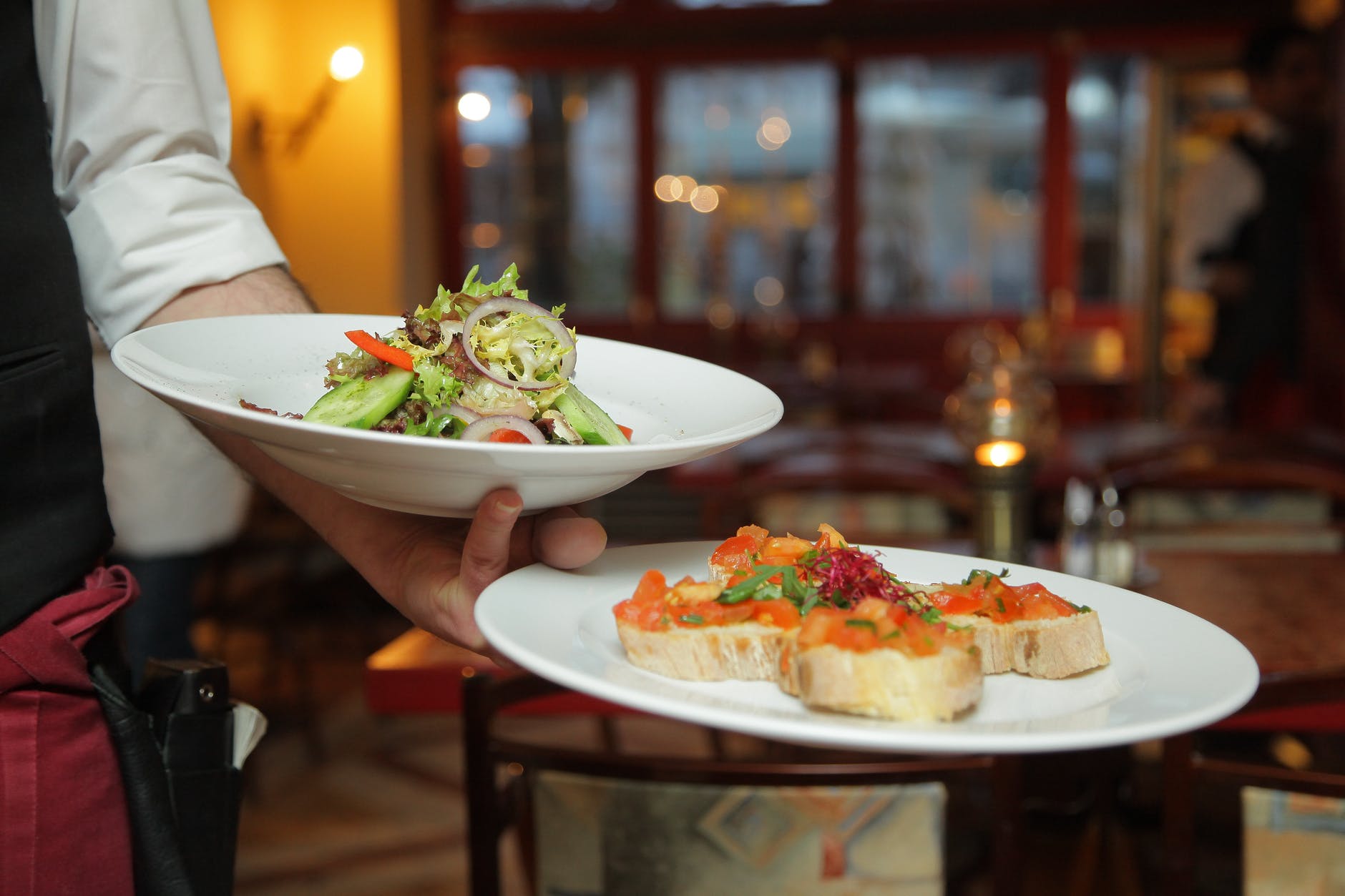
You can find great restaurants in the suburbs?!?

The New York Times reports on good restaurants in unexpected locations:

Photo by Pixabay on Pexels.com

Jalea’s owners, the siblings Mimi and Andrew Cisneros, recognized the risk in choosing this quaint street over a city known for its vibrant restaurant scene. But they saw opportunities in the suburbs that they wouldn’t find in St. Louis. Yes, the rent was lower. And St. Charles, where the Cisneroses spent their teenage years, is also one of the fastest-growing counties in Missouri…

There is also less competition than in the city, they said. Because St. Charles is a small community, the two believe they can make a bigger impact here. With the lower overhead costs, Mr. Cisneros, 29, said he felt much freer to experiment with flavors. (He runs the kitchen, and Ms. Cisneros, 30, oversees operations.) Since the restaurant opened in December, they have been encouraged to see that locals are eager to try Peruvian food.

Media coverage of restaurants in the United States has long centered on cities, while suburbs are most often associated with restaurant chains. But Jalea is one of many independent restaurants — including Roots Southern Table in Farmers Branch, Texas; Travail Kitchen and Amusements in Robbinsdale, Minn.; and Noto in St. Peters, Mo. — that are raising the collective aspirations of the local culinary culture and turning suburbs into dining destinations…

While not all suburbs are alike, in general, suburban planners are not well versed in how best to support independent restaurants, said Dr. Samina Raja, a professor of urban planning at the University at Buffalo.Because they don’t understand that these businesses often have a shorter financial runway than large restaurant groups or chains, the planners are less likely to provide economic development grants or loosen zoning restrictions.

So suburban eating is not all Olive Garden and Chik-Fil-A and whatever other chain restaurant, fast causal, or fast food place is on the nearest main road?

This article attributes much of the change to what the suburbs have become in recent decades: complex suburbia with more diversity, more cultural and entertainment options, and growing populations. And there are concerns about whether suburbs are well-suited for fine dining in terms of regulations and

My biggest question upon reading this story is how long it might take to develop new narratives about where great restaurants are located. If there are indeed fine dining establishments in suburbs across the United States, does this become recognized or are city restaurants still drawing the bulk of attention? This could depend on a lot of factors – where are restaurant critics based, stereotypes about cities and suburbs, the number of independent restaurants per capita in different locations, etc. – but I imagine it would take some time to shift. Even as the article recognizes significant shifts in suburbs that mean they are no longer just retreats of white and wealthy people, is this widely known and told?

Fitting COVID-19 into the cycles of American cities

Derek Thompson writes about how COVID-19’s effect on retail and restaurants will affect American cities:

The song of American urbanization plays on an accordion. Americans compressed themselves into urban areas in the early 20th century. By mid-century, many white families were fanning out into the suburbs. Then, in the early 21st century, young people rushed back into downtown areas. But in the past few years, American cities have begun to exhale many residents, who have moved to smaller metros and southern suburbs. As with so many other trends, the pandemic will accelerate that exodus. Empty storefronts will beget empty apartments on the floors above them.

The American cities waiting on the other side of this crisis will not be the same. They will be “safer” in almost every respect—healthier, blander, and more boring, with fewer tourists, less exciting food, and a desiccated nightlife. The urban obsession with well-being will extend from cycling and salads to mask design and social distancing. Many thousands of young people who might have giddily flocked to the most expensive downtown areas may assess the collapse in living standards and amenities and decide it’s not worth it. Census figures will show that the urban exodus went into hyperdrive in the COVID years. There will be headlines exclaiming the decline of the American city or, more punchy, “Americans to New York: ‘Drop Dead.’”

Then something interesting will happen. The accordion will constrict again and American cities will have a renaissance of affordability…

But the near death of the American city will also be its rebirth. When rents fall, mom-and-pop stores will rise again—America will need them. Immigrants will return in full force when a sensible administration recognizes that America needs them, too. Cheaper empty spaces will be incubators for stores that serve up ancient pleasures, like coffee and books, and novel combinations of health tech, fitness, and apparel. Eccentric chefs will return, and Americans will remember, if they ever forgot, the sacred joys of a private plate in a place that buzzes with strangers. From the ashes, something new will grow, and something better, too, if we build it right.

Several thoughts in response:

1. Thompson hints at one of the vital pieces that makes cities work: the density of people and activity. Restaurants and retailers are not just functional entities that provide jobs and revenue; they bring in extra people who want to visit, eat, browse, be around other people who are doing similar things. The kinds of everyday activity that make urban neighborhoods unique and attractive are difficult to maintain during COVID-19 when restrictions limit contact and social interaction.

2. After just reading The Death and Life of Great American Cities with one of my classes, I wonder: what would Jane Jacobs do in times of global pandemics?

3. Thompson describes populations moving in and out of American cities as conditions change. From a broader perspective, I am not sure I would agree with the accordion example: the longer-term trend in the United States since the early 1900s has been toward suburban growth and development. The percent of Americans living in cities has stayed relatively stable since the beginning of the postwar era while government policy, cultural ideology, and population shifts have swelled suburban populations. If American cities can gain and lose residents, it is a relatively small accordion compared to the tremendous suburban growth over the last century.

4. A problem with predicting future urban trends is that the patterns of the past may not happen again in the future. COVID-19 is the sort of event that is difficult to know the effects of, particularly years down the road. Will life return to normal or will the effects of a significant economic shutdown and shelter-in-place for many people change future behaviors? We do not know. At the same time, I do not think Thompson’s predictions are unreasonable. How exactly the affordability of land plays out could be an arduous process; land that was relatively overvalued before COVID-19 may not quickly become affordable and it may take time to clear significant debts or mortgages for numerous urban properties.

Less restaurant and retail business, lower local sales tax revenue

The ongoing effects of COVID-19 on business activity, particularly restaurants, will impact communities:

Restaurant dining room closures resulting from the coronavirus pandemic are wreaking havoc on the industry’s bottom line and upending the lives of many working in the service industry. Those losses also will be felt by communities that rely on restaurant sales taxes and special food and beverage taxes to help fund municipal services. Some suburbs will feel the effects much more than others because of how heavily they rely on such taxes.

Sales taxes at restaurants and bars contributed more than $2 million a week to 83 suburbs, a Daily Herald analysis of 2019 tax records on the Illinois Department of Revenue’s website shows.

In a dozen suburbs, sales taxes from restaurants and bars represented more than 20% of all their sales tax revenue last year…

“It’s not just restaurants and bars, though,” said Rob Karr, president and CEO of the Illinois Retail Merchants Association, pointing out many sources of sales tax have had sharp drops. “Everybody in the retail sector has been negatively impacted, aside from groceries.”

With more Americans eating out in general, the ability of restaurants to draw visitors from other communities, and connections between eating and other recreational and cultural activities, eateries can be important sources of revenue.

Communities can aspire to have a diverse tax base where they draw tax revenues from a variety of sources, including sales taxes and property taxes. At the same time, some communities develop niches where they focus on one business sector or they have a historic strength. Diversification may be difficult to achieve and depend on a variety of forces including actions by local officials and leaders, the demographics of the community, historic patterns, and actions by business owners and larger economic forces. In other words, the character of a community’s tax base develops over time, can change, and at least in part depends on outside actions and forces beyond a community’s control.

It will also be interesting to see where the budget issues that municipalities face fall among the other economic concerns. Sales tax revenues are part of the picture but so might be property values if businesses need to close and there are not other businesses to take their place. If the federal government and states are also facing big hits to revenue, what might happen to municipal budgets?

Starbucks as a symbol of wealth in a community

Starbucks is planning more stores in less wealthy neighborhoods:

Starbucks plans to open or remodel 85 stores by 2025 in rural and urban communities across the U.S. Each store will hire local staff, including construction crews and artists, and will have community event spaces. The company will also work with local United Way chapters to develop programs at each shop, such as youth job training classes and mentoring…

Starbucks opened its first community store in Ferguson, Missouri, in 2016, two years after the riots that broke out over the shooting of an unarmed black 18-year-old by a white police officer. It has added 13 more locations since then, including stores in Baltimore, Chicago, Dallas, New Orleans and Jonesboro, Georgia. Another one will open this spring in Prince George’s County, Maryland. Starbucks estimates the shops have created more than 300 jobs…

Kelly said the stores reflect Starbucks’ core belief in responsible capitalism. The coffee shops are profitable, he said, and have the same menu as regular Starbucks stores…

“I can’t think either of a retailer, especially one that has more of a discretionary, higher-end purchase, being willing to push into neighborhoods and markets that have less purchasing power,” Theodos said. “Starbucks usually appears when a neighborhood has the purchasing power to support it.”

For years, Starbucks has been a brand and presence that signals a wealthier location. With their prices, products, and aesthetics, communities had to have a certain level of resources for Starbucks to locate there. Once the money was there, Starbucks might arrive in droves. (I’m thinking of the number of Starbucks on Michigan Avenue in Chicago.) If payday loan stores and dollar stores help identify poorer locations, Starbucks may be the most common restaurant that signals the opposite.

I am curious about one item of information from the article. The Starbucks executive quoted in the story says the locations are profitable. Does this mean Starbucks avoided these locations for so long even though they could have made money or did something change in the cost equation over time? Some firms would want to expand everywhere to bring in money though others might want to protect their status.

A restaurant smaller than a McMansion dining room

McMansions are known for having a lot of space; certain restaurants try to keep the dining room very small. Thus, the comparison between an Omaha cafe and a McMansion dining room might not seem out of place:

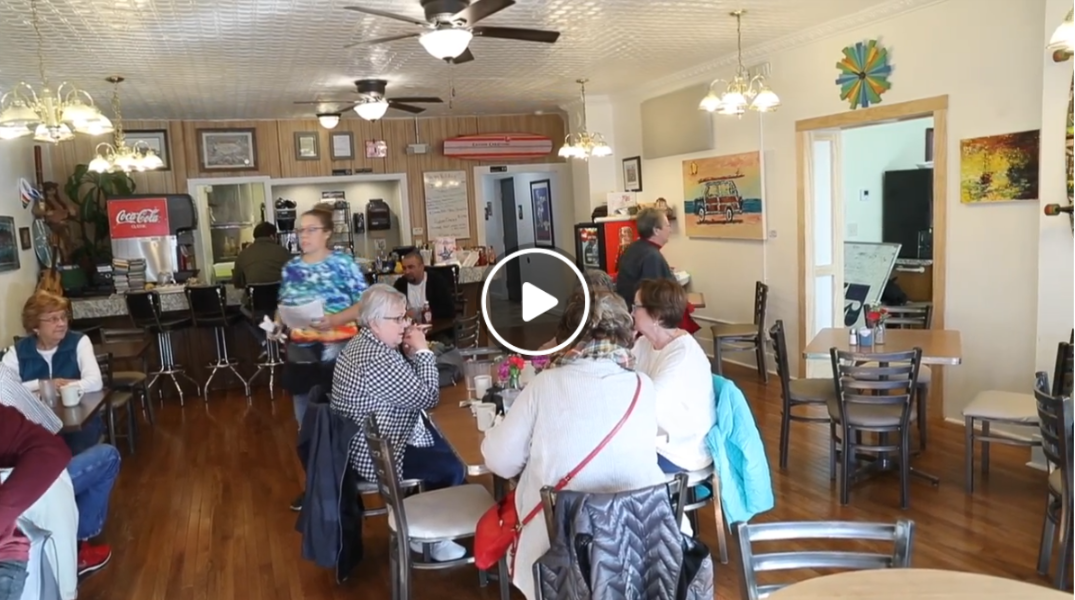
You feel at home in Sojourn the minute you walk in the door and down a hall that’s separated from the eating area. When you reach the cafe, it’s much like you’re entering your own dining room. The serving area, with 12 tables for four, is smaller than some dining rooms in suburban McMansions.

OmahaRestaurantDiningRoom

However, this appears to be a decent-sized space with room for twelve tables, 48 customers (plus the small countertop in the back), and still some room for people to get by. And if this estimate of 12 square feet per diner is anywhere close, this space has roughly 570 square feet.

This would make for a very large McMansion dining room. Even with the interest Americans might have in always having some extra space, how many times does a McMansion owner need to seat 48 people? A 20 foot by 20 foot square McMansion dining room comprising of 400 square feet would be smaller than this space. A 40 foot by 15 foot rectangular dining room would be slightly larger than this. The size of this cafe is probably more akin to a great room or family room in a McMansion rather than a dining room.

So why the comparison here to a McMansion? Two guesses. First, the emphasis is on the relatively small space of the cafe. While the video does not suggest the space is too tight, the dining room would certainly be lively with a half full or more dining room. This is not a suburban chain restaurant with tables upon tables; this is a limited space. Second, the description attempts to highlight the coziness and warmth of the space. McMansions have plenty of space as well as limited charm due to their cookie-cutter nature and cavernous rooms.