Safety and other amenities in a narrative of why families choose to move to specific suburbs

When there are scores or hundreds of suburbs in large metropolitan regions, how do people select which suburb to move to? I recently read one common narrative based around a top safety ranking for one Chicago suburb:

Photo by Vlad Vasnetsov on Pexels.com

It’s a small village, just over an hour from the heart of Chicago by car, but it has consistently reported some of the lowest crime rates in the region, with a violent crime rating of zero. This small-town security is one of the driving forces behind Campton Hills’ rising popularity with families in recent years. People moving out of Chicago or nearby suburbs are looking for peace of mind in their neighborhood, and this village delivers exactly that…

A place with such a high safety ranking is the perfect spot for families to put down roots. In this regard, Campton Hills is truly designed for families to thrive. Schools in the area have earned a strong reputation for academic achievement, supportive teachers, and a wide range of extracurricular opportunities. The village is also home to some of the highest-rated public schools in the state.

In the village, there is an impressive range of amenities to keep families busy. Community parks provide space for picnics, soccer games, and weekend strolls, while nearby forest preserves give children the chance to explore nature close to home. (Nature lovers should visit this peaceful suburb near Chicago next.) Access to healthcare and family-oriented services is reliable, with clinics and hospitals within easy driving distance. Campton Hills also hosts seasonal events that bring neighbors together, including the Boo After Dark Halloween event.

It always feels like a win when you find somewhere close to the city that still feels like it’s tucked away in the middle of nowhere. And Campton Hills’ rural character is something that truly makes it stand out. Unlike some suburbs that feel like extensions of the city, this village keeps the perfect balance of open countryside and convenient access to Chicago.

The story starts with safety. People are looking for a safe place with little to no crime. Their kids will be safe. It is away from the city and others places with crime.

But then the story goes on to include other factors that attract families to this specific suburb. The schools have a good reputation. There are parks and forest preserves. Medical care is nearby. The community comes together for events. It is close to Chicago but feels rural.

Is this how people chose a community to live in? Do they prioritize safety and then if other things look good, they go with that? Do they research all the statistics about various communities, look at rankings provided by numerous sources, and develop their own composite score of which community comes out on top?

I am reminded of research from sociologists Annette Lareau and Elliot Weininger where they find networks, affected by social class and race, mattered for how people chose communities. What networks lead to Campton Hills and other suburbs like it? How do relationships and social ties provide people with information about communities? Do articles like these make their way through some networks?

(Interestingly, Campton Hills is a new suburb: it was incorporated in 2007. And it is relatively small: just over 10,000 residents in the 2020 Census.)


Society enables people through social networks, part three

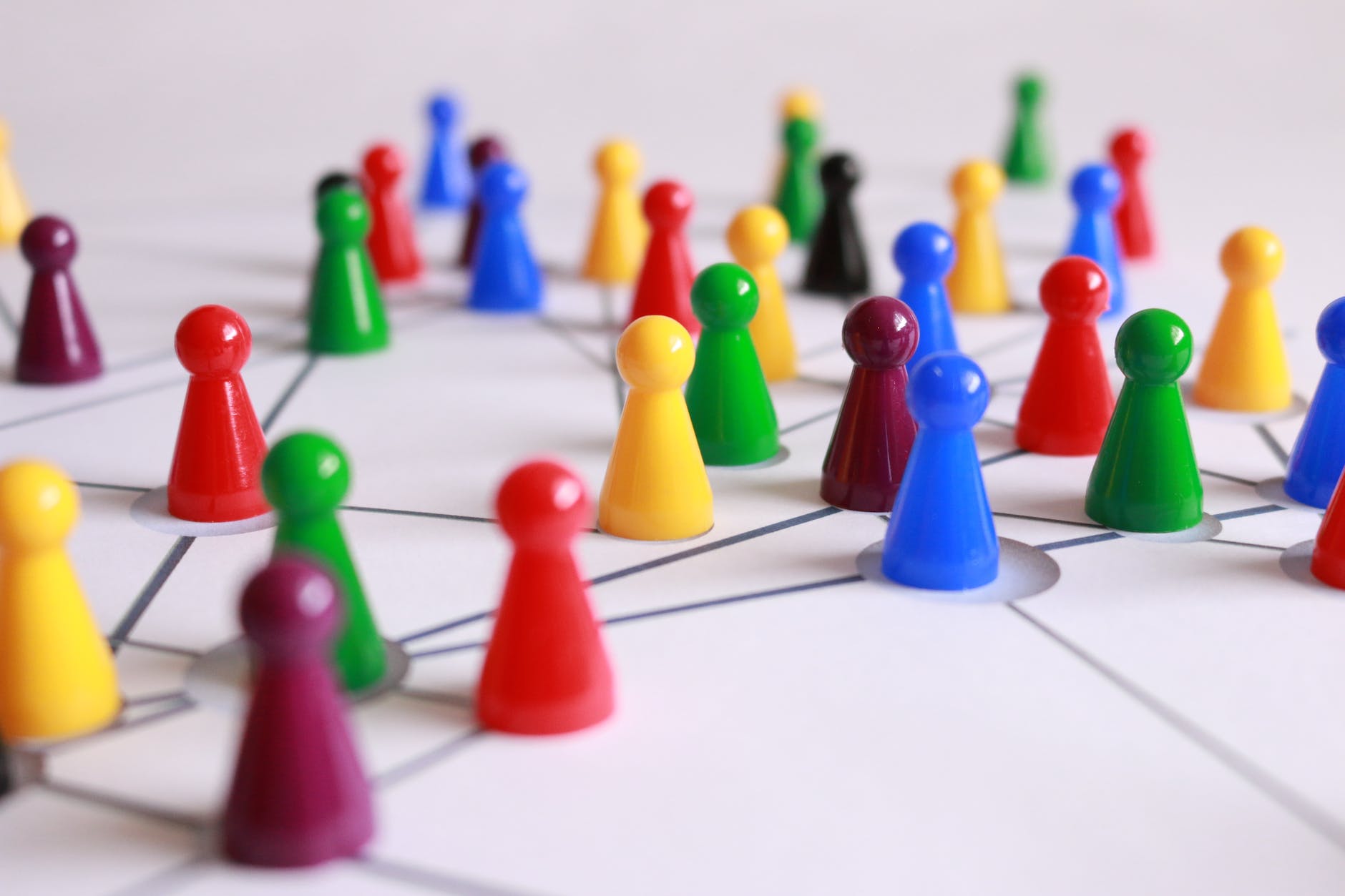
Humans contribute to and benefit from being part of social networks. Social networks are made up of the relationships between people. These relationships can range from weak to strong, can be based on all kinds of social ties, and can connect large numbers of people (think playing “six degrees of Kevin Bacon”).

Photo by Pixabay on Pexels.com

The 2009 book Connected by James Christakis and Nicholas Fowler details features of social networks. They pass information. They connect people. They can heal themselves.

And they are superorganisms, enabling humans to do things in networks that individuals alone cannot. Yes, social networks can lead to negative outcomes such as passing diseases along. This is how epidemics happen. But networks give people access to information, to relationships, to resources. In one famous study, the friends of friends – “weak ties” – provide more access to jobs. A community can do things through its social networks that an individual or a small group would not be able to.

Take any group of which you are a participant. The social network approach examines not the group or institution as an actor but the sets of relationships between people. In a family, there are different kinds of ties and different kinds of resources passed through the network. A network diagram of a workplace would look different, dependent on the size of the network, the density of the relationships, and the shape of those connections. A national society might be much too big to map out but the ways that people are connected can be surprisingly small if we consider nodes and bridging ties.

People and actors can have both bonding and bridging ties. Bonding ties are ones that tend to be close relationships that bring individuals together. Imagine close friends. All enduring groups need some level of this. Think of a religious congregations. There are often close connections at the center of this group that help anchor the organization. Religious congregations also have the capacity to create bridging ties. They can reach out in their communities, working neighbors or other congregations or other organizations. These ties can link together groups that might not otherwise interact. Some congregations might be really good at one of these two kinds of relationships: forming tight bonds that endure or linking together parts of society that can benefit from collaboration. Social networks overall give humans opportunities to thrive. It is in the building and maintaining of relationships that individuals can access what they need and larger groups can operate. To be human is to be part of networks that can empower people.

A 7-11 as a gathering place in a small town

In American communities today, what businesses offer spaces for people to shop and interact with other people 24 hours a day? A profile of a 7-11 in Lewiston, Maine amid a shooting in the community offers one such example:

Photo by Jack Sparrow on Pexels.com

The night of the shooting, Dalia Karim locked the doors of her family’s 7-Eleven for the first time in 17 years. “We never close,” she told me. As owners of one of the few businesses in Lewiston, Maine, that remains open 24 hours a day, seven days a week, the Karims built a livelihood and a reputation by serving customers from all walks of life at all hours. Since 2007, save for a brief afternoon to complete floor repairs, Karim’s store has provided what she calls the “everyday purchases” of life: milk, cereal, soda, donuts, cigarettes, chips, beer. Nearly half of the purchases at her registers are made by EBT cards, she said, and many of her patrons lack the resources to drive to or shop at conventional grocery stores and arrive on foot. To them, the Karims’ 7-Eleven is often a singular source of sustenance…

It was the quietest Friday night Buck and April had ever worked. “The place was like a ghost town,” April said. Though the shooter still hadn’t been found, they both figured that by then, he’d either fled town or taken his own life. At one point, Buck saw police officers tackle a man on a motorcycle driving down Main Street—but it was the wrong guy…

Instead, her mourning took place behind the counter. One night, a woman came in and showed Dalia her wedding ring. “My fiancé is dead,” she said. Karim left the register to give her a hug. Another night, a man came into the store in search of a print copy of that day’s Lewiston Sun Journal. He wanted the paper to memorialize the loss of his brother. As he left, the back of his sweatshirt offered his brother’s name and the dates of his birth and recent death…

When the lunch rush came, Dalia attended to the register. The typical chitchat—about the Celtics, about the weather—came and went. Several customers wore blue Lewiston Strong T-shirts, but no one said anything in particular about the anniversary itself. Then a woman bought a copy of Uncle Henry’s sell-and-swap magazine. Beneath the magazine stood a small stack of print copies of that day’s Lewiston Sun Journal, devoted to stories about the anniversary of the shooting. One story was about a group of cornhole players who’d once played at Schemengees but had since found a new place to gather. Another story was about the resilient children who, despite the memory of the shooting, continued to bowl at Just-in-Time Recreation Center. A final story detailed the efforts of several organizations to come up with a design for a public memorial. When the lunch rush was over, Dalia took a moment to scan the front page of the paper. “I keep thinking: Maybe he will come back?” she said, straightening the papers. “But then I tell myself: It’s OK. It’s OK. He’s gone now.” She looked across the aisles. Soon, night would fall, and the crowds would arrive for the busiest night of the week. But for now, in the convenience store that had given her family a life in this city, and a future in this country, Dalia Karim had a few quiet hours to herself.

I assume there are sociological studies of such spaces. I would be interested to know:

  1. How do the stories, meanings, and relationships generated at 7-11 compare to the same generated in more “official” locations like City Hall or schools? Or to other social spaces/businesses in Lewiston?
  2. How does the 7-11 factor in the social networks of the community? Do people see it as a node important to them or not? Who in the town wouldn’t go to the 7-11?
  3. If the 7-11 were to disappear for some reason, what could take its place (if anything)?
  4. After COVID-19, how many 24 hour a day places are no longer and what does this mean for communities and people within them?

In a society where life seems polarized and atomized, could certain businesses offer room for relationships to form and people to get what they need when they want it? 7-11 and similar stores can offer particular goods for people at all hours and can provide opportunities to share small conversations and information about the town.

The math behind six degrees of separation

A recent study looks at why human relationships are marked by six degrees of separation:

Photo by Pixabay on Pexels.com

That’s why a group of researchers from Chile, Italy, Israel, Russia, Slovenia, and Spain recently collaborated to understand the mathematics behind “six degrees of separation.” They discovered that a natural human social challenge– weighing the costs versus benefits of social ties– may point toward the root of “the magic number six.”

Take a moment to think about why social networking is so coveted– in both work and recreation. Oftentimes, individuals hope to gain something, whether that be status or prominence, by identifying strategic social connections.

In these cases, people aren’t just hoping to accumulate a massive number of connections. Instead, they’re looking to find more meaningful “right” connections– which will essentially place them in a middle-network position and allow them to funnel more information flowing through their network…

At the heart of this game is the goal of social centrality, and once this battle reaches a sort-of equilibrium, all people involved have secured a position in the network that balances their drive for status against their budget for friendships.

“When we did the math, we discovered an amazing result: this process always ends with social paths centered around the number six. This is quite surprising,” explained Professor Baruch Barzel, one of the study’s lead authors.

I wonder what people might think if they saw this explanation of social relationships: it is a tradeoff between a central position in a network and how much they can spend on relationships. In some ways, we hear this in discussions of social networking where the goal is to create a lot of connections and a good flow of information and resources to you. On the other hand, viewing relationships as commodities or as transactional seems disrespectful and cruel.

Do we know that number six has always been the value or has this changed over time given social changes, settlement patterns, and other factors that differentiate life in different periods and contexts?

“The strength of weak ties” applies to LinkedIn

A recent study suggests that weak ties on Linkedin are better in helping people find jobs:

Photo by Pixabay on Pexels.com

If you have a LinkedIn account, your connections probably consist of a core group of people you know well, and a larger set of people you know less well. The latter are what experts call “weak ties.” Now a unique, large-scale experiment co-directed by an MIT scholar shows that on LinkedIn, those weak ties are more likely to land you new employment, compared to your ties with people you know better…

The notion that there is something especially useful about the more tenuous connections in your social network dates to a highly influential 1973 paper by Stanford sociologist Mark Granovetter, “The Strength of Weak Ties,” from The American Journal of Sociology. In it, Granovetter identified weak ties as a key source of “diffusion of influence and information, mobility opportunity, and community organization.”…

All told, the experiment involved around 20 million LinkedIn users, who over the five years ended up creating about 2 billion new connections on the site, recorded over 70 million job applications, and wound up accepting 600,000 new jobs identified through the site…

“Moderately weak ties are the best,” Aral says. “Not the weakest, but slightly stronger than the weakest.” The inflection point is around 10 mutual connections between people; if you share more than that with someone on LinkedIn, the usefulness of your connection to the other person, in job-hunting terms, diminishes.

The general idea is the people more removed to you but still in your network can access opportunities that close connections do not have access to. Reach out to the edges of your network and there are more options.

Now it would be interesting to see how LinkedIn and other similar platforms take advantage of this knowledge. Many social media platforms want to connect people. But, what if having more ties and increased interaction with other users is actually a negative feature for jobs?

Or, I imagine there are strategies for social media users to create an excellent set of weak ties rather than connect with people they know better. Why connect with people close to you when you could amass weak ties that could come through big later?

Is Visa a network more than a credit card?

Visa has a new campaign where they say they are a network. Here is what it looks like on their front page yesterday:

What is a social network? Here is how one sociology source talks about social network analysis:

Social network analysis is a way of conceptualizing, describing, and modeling society as sets of people or groups linked to one another by specific relationships, whether these relationships are as tangible as exchange networks or as intangible as perceptions of each other.

Visa argues that they connect people. Because people can use Visa at a wide range of stores, restaurants, and other settings, this brings people together. Imagine all of these organizations as different nodes in a network and Visa provides the connecting link. Without Visa, they would not connect.

Yet, is the social network sustained by Visa or used by Visa? Now that the network exists, Visa claims they are the network but similar things could be said for Mastercard or paper money. Without Visa, would many of these actors still connect, perhaps through other economic means?

It would be interesting to know whether and/or this economic network facilitates other kinds of network interactions. Does Visa use lead to new social networks? Is this not just about economic exchange but also exchange of information, experiences, and culture? This gets at larger processes, like globalization, that depend on familiar economic means across places.

Three Soc 101 concepts illustrated on Big Brother

Many television shows could (and have) been mined for sociological content. Big Brother is no different. Here are three concepts:

https://www.cbs.com/shows/big_brother/
  1. Houseguests talk about having “a social game.” This roughly means having good interactions with everyone. A more sociological term for this might be looking to accrue social capital. With so many players at the beginning, this might be hard: simply making connections, talking to a variety of people, discussing strategy, contribute positively to house life. But, this social capital can pay off as the numbers dwindle, people show their different capabilities, and the competition heats up. It could also be described as the ability to manipulate or coerce people without others hating you, particularly when it comes down to the jury selecting the winner among the final two.
  2. Connected to the importance of social capital are the numerous social networks that develop quickly and can carry players to the end. The social networks can be larger or smaller (ranging from two people up to 6 or more), some people are in multiple networks (more central) while others may be in just one or none (less central), and the ties within networks can be very strong or relatively weak. At some point in a season, the overlapping or competing networks come into conflict and houseguests have to make decisions about which network commitments to honor – or reject.
  3. There are plenty of instances where race, class, and gender and other social markers matter. A typical season has a mix of people. Relationships and alliances/networks can be built along certain lines. Competitions can highlight differences between people. The everyday interactions – or lack of interaction between certain people – can lead to harmony or tension. Some people may be more open about their backgrounds outside the house, others are quieter. With viewers selecting America’s Favorite Houseguest, there is also an opportunity to appeal to the public.

There is more that could be said here and in more depth. Indeed, a quick search of Google Scholar suggests a number of academics have studied the show. Yet, television shows are accessible to many and applying sociological concepts can be a good exercise for building up a sociological perspective. Even if the world does not operate like “Big Brother,” this does not mean that aspects of the show do not mirror social realities.

Social science tips for “how to make friends in a new city”

An advice piece in Harvard Business Review about making friends in an unfamiliar place includes several connections to social science research:

Rediscover weak or dormant ties. As we go through life, relationships fade in and out of view. You may have stayed in the same city up until now, but your friends and  former colleagues may have not. As you look toward your new destination, consider the weak ties (acquaintances) and the dormant ties (old friends or colleagues) in your existing social circle. Check your social media channels and alumni databases from school or past employers. You may find that you already know someone who lives in your new city. With this knowledge, you’ll have the opportunity to reach out to them before you move, and set a date to reconnect once you arrive.

Ask existing friends and colleagues for help. This one may sound obvious, but many of us only reach out to our closest friends when we need help making new connections. To get the most out of your current network, make sure you cast a wide net. One of the most powerful questions you can ask is, “Who do you know in ______?” In this case, the blank space is your new city, but it can also be an industry, a company, or anything you’re looking to explore. Before you move, take the time to ask many friends and colleagues if they know anyone worth meeting in your new city. Most people will be able to think of a few names. Even if each person can only think of one, you’ll still walk away with a good list of potential contacts.

Seek out shared activities. Once you land in your new city, it may be tempting to seek out meetups, networking events, and the like. But research shows that events structured around meeting new people often fail. Attendees generally spend time conversing with people they already know, or with people who are similar to themselves. A better option is to participate in a “shared activity,” an event where there is a bigger objective at hand and achieving that objective requires interdependence. You’re much more likely to make new and diverse connections at events that give you a reason to get to know the person next to you. So, how do you find a shared event? They come in all shapes and sizes, from community service to classes to amateur sports leagues. Choose what you’re most comfortable with.

The key emphasis in the advice above is to activate old networks and work your way into new ones. Making use of weak ties, people you may know from the past or acquaintances or friends of friends, could help ease your way into new social circles. It may not necessary be easy to reach out to those weak ties, particularly the extent of a connection was a social media friendship or following, but this would still probably be preferable to cold calling people. To start participating in a new network, the advice suggests finding an activity which allows people to organize themselves by interest. This draws on the homophily often present in social networks: people tend to congregate with people like them. This particular advice about common interests is likely even more true today than in the past; rather than joining civic organizations or relationships based on geography and proximity, people today tend to sort by interests.

Even with these tips, it is likely a disorienting experience for many when they move to a new community. Americans are fairly mobile people and I wonder if the American tendencies toward extroversion and public friendliness are intended to help make these social transitions easier.

Solving traffic problems by developing resilient roads

A new study suggests cities and regions should think about their whole network of roads as resilient rather than focusing on main arteries:

In a paper published Wednesday in the journal Science Advances, Maksim Kitsak, associate research scientist in the Department of Physics and Northeastern’s Network Science Institute, and his colleagues examine the resilience and efficiency in city transportation systems. Efficiency refers to the average time delay a commuter would face annually due to traffic. Resilience is the ability of road networks to absorb adverse events that fall outside normal daily traffic patterns…

“What we show is actually these two measures are not really correlated with each other,” Kitsak said. “One would think that if the city is bad for traffic under normal conditions, it would be equally bad or worse for traffic under additional stress events, like severe weather. But we show that is not quite the case.”

For example, the study found that the Los Angeles transportation network—while inefficient on a daily basis—doesn’t suffer much from adverse events. The road systems are resilient. They function more or less the same regardless of unforeseen incidents…

Why is the City of Angels more resilient than the City by the Bay? Kitsak said there are many factors that influence transportation resiliency, but one of the most important ones is the availability of backup roads. Los Angeles has many, while San Francisco does not. San Francisco also relies heavily on bridges, which separate the city from other parts of the Bay Area where many commuters live.

This is more evidence that simply adding lanes to major highways or even constructing more major roads is not necessarily the way to go to solve traffic and congestion issues. All the roads (plus other transportation options) work together in a system or network.

Speaking of Los Angeles, this reminds me that the region can illustrate both the good and bad of having a more resilient road network. On the good side, concern about potential Carmageddon and Carmageddon 2 were overblown as the closing of a major highway for repairs was not as disruptive as some thought. On the flip side, a few years ago some Los Angeles residents complained about Waze rerouting cars through their quiet neighborhood to avoid backups on the main roads.

Finally, this study could also be related to claims by New Urbanists that the best option for laying out roads and space is on a grid system. Grids allow drivers and other easy ways to get around problem spots. In contrast, subdivisions (common in suburban areas) that include quiet and occasionally winding residential roads that dump onto clogged main arteries do not contain many alternatives should something go wrong on the main roads.

So is the trick in the long run to create a resilient road network within a region that is not totally dependent on cars? Los Angeles might come up looking good in this study but not everyone would agree that sprawl and lots and driving is desirable.

Social networks of corporate elites have become less dense

Two researchers suggest that the board members of major American corporations are now less connected to each other:

The dense web of connections allowed the inner circle to police the corporate ranks and present a unified, middle-of-the-road message to policymakers. Our own research, forthcoming in the American Journal of Sociology, finds that board ties are now too sparse to provide a means for business executives to forge common ground.

CEOs today rarely serve on two or more boards, and, as a result, they no longer have monthly opportunities to hear what peers who support another point of view might think. Those board connections turned out to be a force for political moderation, and annual gatherings in Davos are not enough to replace them.

These researchers argue this weaker network is not necessarily good:

When a single network connected corporate America, executives were forced to listen to opinions from a range of peers. And although the group skewed Republican on average, individual directors held a range of political opinions.

The most well-connected leaders converged on a preference for more moderate candidates and policies and often ended up donating to both parties’ candidates, not just one. The support of this group was useful, if not absolutely essential, for potential presidential candidates, and it is hard to imagine that a putative anti-establishment candidate like Trump would have passed muster.

This seems like a counterintuitive finding: even as academics like C. Wright Mills worried about the power elite, breaking up these networks can also have negative consequences. Many may not like the image of a good old boys network but that group could get things done. This reminds me of some of the research on term limits: many might want more turnover in political offices in order to limit corruption but such efforts can also limit effectiveness of politicians who no longer have the deep knowledge or connections built up over years. What if it turns out that neither outcome – dense corporate board networks or weaker networks – is particularly good? It is probably going too far to suggest that corporate boards should go all together…