What if a significant portion of residents and leaders want to provide lots of public money for stadiums?

Plenty of professional sports teams owners have been in the news recently asking for public money to fund sports stadiums. I am against such funding (see examples here and here) as the benefits tend to primarily go to the owners.

Photo by Robert Hernandez Villalta on Pexels.com

But, what if plenty of people want to give this money to teams for stadiums? What if they value sports? What if they see this as a good use of public resources?

Those who argue against stadiums may pitch it another way. Here is an example looking at the recent request by the Kansas City Chiefs for public money. How is the Chiefs’ owner thinking about the fans?

The Chiefs are hoping, it seems, that voters are either very dumb or very scared.

This is an easy story to go with: the wealthy team owner is threatening the people. Out of fear or not knowing the full situation (the team has limited options, the money tends to enrich owners, etc.), residents and leaders will go along with it. If fear can be reduced or ignorance limited, people would oppose these proposals.

Is there another possibility? Some people like the Chiefs, think they are good for the community, and want to give them public money. They hear the opposing point of view and disagree with it. They would rather spend public money this way. Americans tend to like sports and spectacles.

In many ways, this is not just about sports and wealthy owners. These are civic questions about the public good, how money should be spent, and how we collectively make these decisions. People with all sorts of perspectives will try to persuade each other. And the fate of future sports stadiums and communities depends on these processes.

Trying to diversify a city economy through sports

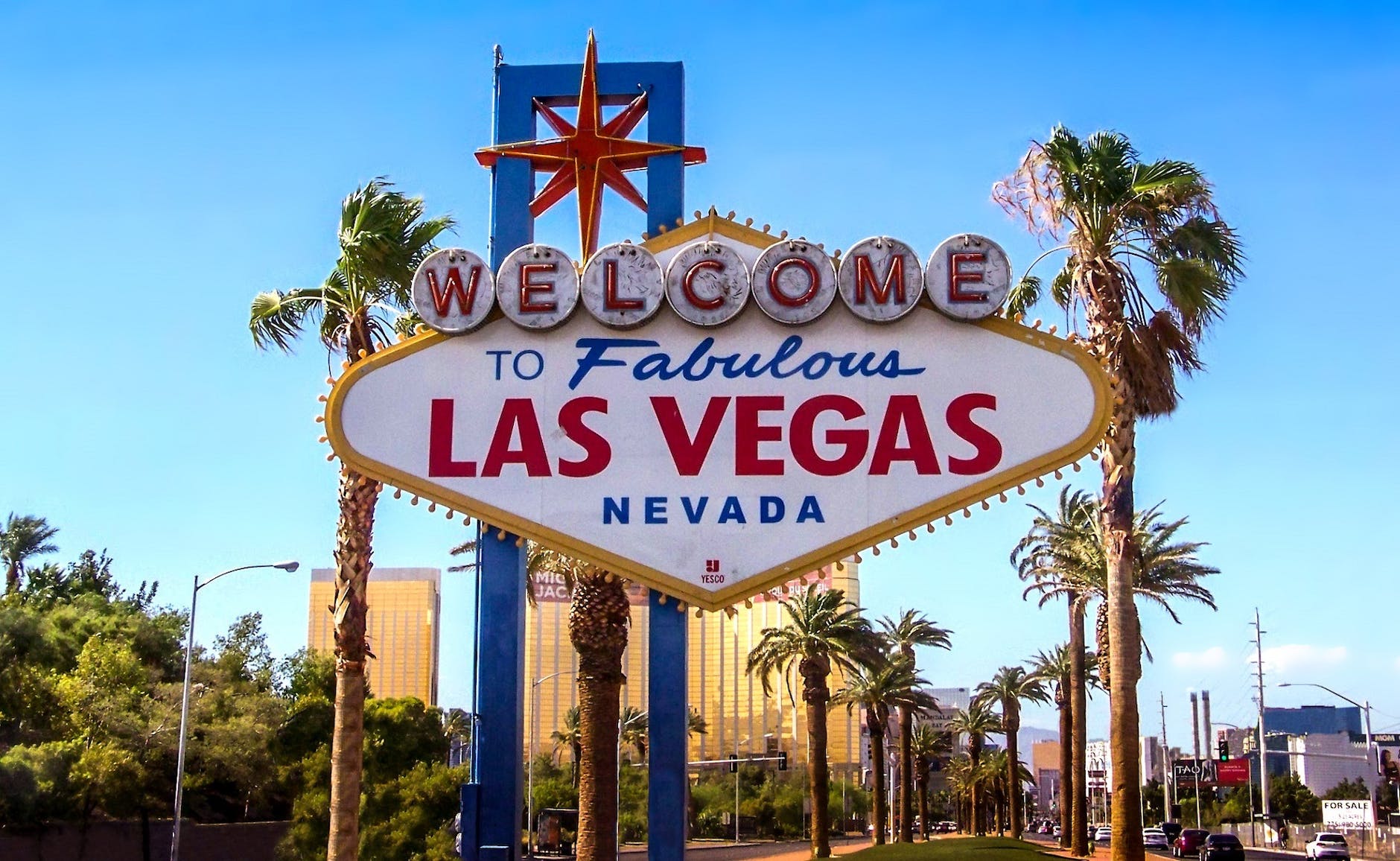
Las Vegas has gambling and all that goes with it, including significant recent investments in sports:

Photo by Pixabay on Pexels.com

In under a decade’s time, the desert city long known for its casinos, food and live entertainment has become the home to four major league sports teams (the latest being MLB’s Athletics), six minor league teams, a major sports organization in the Ultimate Fighting Champion, and four large sports venues playing host to events such as NCAA tournament games, NFL Pro Bowls, and, coming this February, Super Bowl LVIII.

At least a half-dozen more venues are in the planning stages, and the city appears poised to be one of the top picks for an NBA expansion team and an MLS team, as well…

The initial economic impact estimates for Sunday’s Formula 1 Las Vegas Grand Prix and the February 2024 Super Bowl were $1.3 billion, and $500 million, respectively. (But this was before ticket prices slid for F1 when the championship was won earlier in the season).

That total would match the estimated $1.8 billion contributed to the metro area by all sporting events from July 2021 to June 2022, according to an economic impact study released this summer by the Center for Business and Economic Research at UNLV’s Lee Business School.

Earlier research on public money used for new stadiums suggested teams benefit the most from that spending. Will the money spent here on facilities increase the size of the economy, generate additional new jobs, and other benefits or does it simply shift money around? Will residents and businesses move to Las Vegas just because of sports?

Perhaps the pitch with Las Vegas is that it has the added bonus of lots of tourists. If some of them can be enticed to sporting events and other local attractions, this is extra money. This might work for major events, but I would guess it is harder for a regular season MLB game.

Here is just one guess of how this all might look in 10-15 years: local officials will say that sports helped enhance the city’s status, the team owners will be happy with their facilities and revenues, and the local economy will not be enhanced much just because of sports (when accounting for the debt and costs associated with sports).

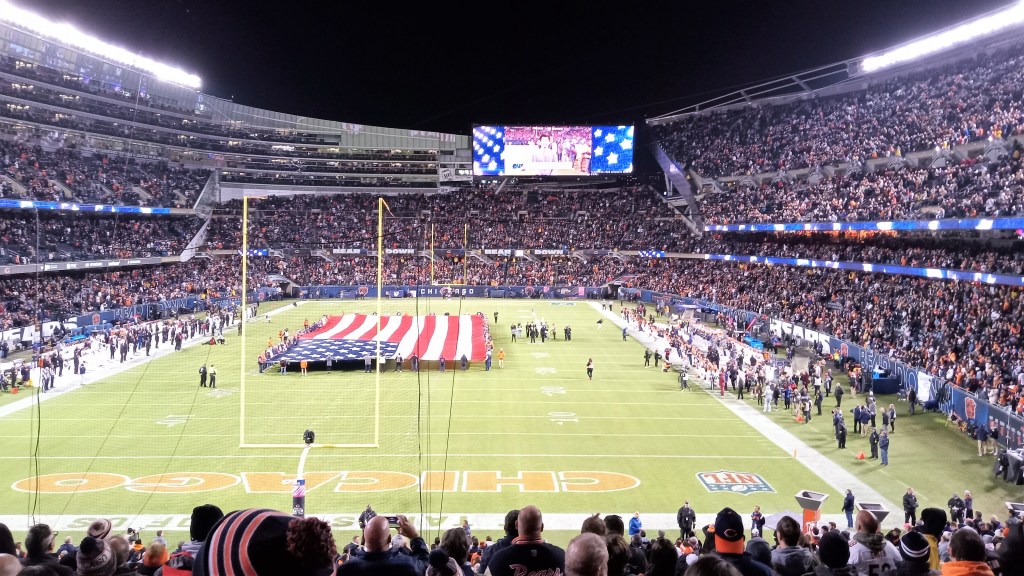
Why not let every Chicago suburb pitch the Chicago Bears on a stadium deal?

The Chicago area has several hundred suburbs. Why not have dozens of them submit proposals to the Chicago Bears for a stadium and surrounding development? If the goal is to get the most tax breaks and make the most money, this is how Amazon and other large firms operate.

Here is one satirical look at some options:

Winnetka

Cheap Uber rides to the stadium for the McCaskeys from their North Shore abodes. Every dollar saved counts…

Blue Island

A local referendum changing the town’s name to “Black and Blue Island” could seal the deal. Fans would travel from remote parking lots to the stadium via a scenic barge ride on the Little Calumet River…

Batavia

In conjunction with nearby Fermilab, America’s particle physics and accelerator laboratory, the Bears could find the answers to two of life’s eternal questions: How did the universe begin? and Why can’t the Bears win another Super Bowl?…

Downers Grove

The Bears already have been a downer for many years. Just make it official by building a retractable DownersDome.

The Chicago area is large and there are plenty of possible sites for a stadium. And for most fans, the view of the game on TV will look the same regardless of where the stadium is located.

Playing Chicago suburbs off each other to get the best deal for the owners of the Bears

Which Chicago suburb might give the Bears the best option to make money off a new stadium and development around it? Enter Naperville, the largest suburb in the region:

Photo by Pixabay on Pexels.com

“We will continue the ongoing demolition activity and work toward a path forward in Arlington Heights, but it is no longer our singular focus,” Scott Hagel, the Bears senior vice president of marketing and communications said in a statement. “It is our responsibility to listen to other municipalities in Chicagoland about potential locations that can deliver on this transformational opportunity for our fans, our club and the state of Illinois.”…

This isn’t the first time there’s been hopes of a Bears move to the suburbs. Through the years, the Bears have considered sites in Hanover Park, Hoffman Estates, Aurora, Elk Grove Village and Waukegan. And once before in Arlington Heights.

Wehrli’s letter touts Naperville as accessible through major highways, such as the east-west Interstate 88 and the north-south Interstate 355, as well the city’s downtown Metra train station. There are also Metra stops in nearby Lisle and on Route 59 in Aurora.

The meeting is a major splash for Wehrli, who was elected in April and has been mayor for only a month. A lifelong Naperville resident with family roots in the community dating back to the 1840s, his letter to Warren stresses the impact an NFL stadium would have on the city.

This strategy works for the Bears because they can seek out a community that will give them a good deal on land, permits, taxes, and more. Their goal is to make money off the stadium and nearby development.

This strategy might work for individual suburbs beyond Arlington Heights. If the Bears do not come to Naperville, does the new mayor lose anything by reaching out? Even a short conversation keeps his community in the news. If the Bears come, it could be touted as a big deal. (On the other hand, just as some residents and taxing bodies in and near Arlington Heights are not thrilled about the Bears locating there, I imagine there would be some resistance in Naperville.)

Ultimately, providing public money for stadiums tends to benefit the team owners the most. Someone will host the Bears in the future but the team will end up as the biggest winner.

Nashville, you do not have to commit $1.2 billion in public financing for a new Titans stadium

Leaders in Nashville approved a lot of public financing for a new dome for the Titans and other uses:

Photo by Pixabay on Pexels.com

The Metro Nashville City Council approved by a 26-12 vote early Wednesday morning on the final reading to allow its sports authority to issue $760 million in bonds. That combines with $500 million in state bonds for more than $1.2 billion in public financing committed to the Titans’ enclosed stadium…

The stadium’s total cost is estimated at $2.1 billion. The Titans, with help from the NFL and personal seat licenses, will provide the remaining $840 million. The new stadium will feature a translucent roof with a capacity of approximately 60,000.

This stadium will allow Nashville and the Titans to bid for a Super Bowl, Final Fours, College Football Playoff games and more. Burke Nihill, the Titans’ president and CEO, said they are excited at the chance to host some of the world’s best events…

A new 1% hotel/motel tax, all of in-stadium sales tax and 50% of sales taxes from 130 acres around the stadium will pay off the bonds. The Titans and city officials announced an agreement in December that includes a new 30-year lease. The team agreed not to leave Nashville during that lease.

If I am reading this correctly:

  1. More than half of the costs of the stadium are coming through public financing.
  2. A number of new revenue sources – hotel tax, sales taxes from the stadium and the surrounding property – will pay off the bonds.
  3. The city thinks this deal will be good because it keeps the team and allows for additional events in Nashville.

My question: who benefits the most from this arrangement? The Titans and their owners. One source has them valued at $3.5 billion August 2022. This puts them toward the bottom of the NFL rankings. A new stadium boosts their value.

Research shows that while political and business leaders tout the advantages of new stadiums (jobs, status, energy, events, tourists, etc.), the money spent at the stadium would be spent elsewhere in Nashville. The city already has a lot going for it. The Titans and the stadium are part of the scene but they are relatively new in the city and there are plenty of other entertainment and tourist options for residents and visitors. Were the Titans really going to leave? (Of course, this is a team that left their previous city…)

But, the NFL generally gets what it wants for its owners. Nashville will try to sell this as a win for the city and region but the ultimate winners are the team owners.

Build it – the residential and commercial development around a suburban football stadium – and they will profit?

What if the new football stadium is less of a draw in the long run than the development right around the stadium? Here is one report about what has changed in Glendale, Arizona, home to today’s Super Bowl, where the stadium opened in 2006:

Photo by Pixabay on Pexels.com

Far out? The site of Sunday’s Super Bowl is about 13 miles northwest of downtown Phoenix. Arlington Heights is about 30 miles northwest of downtown Chicago.

The distance is less of an issue than it was when State Farm Stadium was built, said Kevin Phelps, Glendale’s city manager. Some projections show that two out of three newcomers to the Phoenix area will live in the West Valley…

The last time Glendale hosted a Super Bowl, it had about 800 hotel rooms near the stadium. By next year, that number will be 3,000. The city has found that most people spend money on dinner and shopping within two miles of their hotel. But a new development has to deliver.

“You have to have a ‘there’ there,” Phelps said. “I don’t care how good your advertising is. If we told everyone to come to Glendale and they got here and there was an ice cream shop and a Denny’s and that’s all there is, you’d never get them back again.”

Just having a superb stadium experience is not enough. The stadium can anchor a larger entertainment district where people come for a variety of events, enjoy food and other experiences, and are willing to spend a few nights or a long day. The real activity and money is in the year-round potential of the property that at the center has a recognizable stadium but also has enough to attract people when there is not a big game.

Still, the more important question is this: who benefits from the new development? Does the suburb of Glendale? Do its residents? Or, does this primarily enrich the team owners who see the value of their franchise increase?

Can a successful suburb have a thriving downtown and a stadium-driven mixed-use district?

With the Chicago Bears considering building in Arlington Heights, one village trustee expressed concerns that a sizable project would compete with the suburb’s successful downtown:

Photo by Philipp Silbernagl on Pexels.com

But, he said, “I’m going to tell you right now I’m not a fan of the site plan. And I hope this doesn’t blow up and ruin things for you in any way because I’m just one person sitting up here. But I have to be true to myself and true to my thoughts.”

Tinaglia, who founded his Tinaglia Architects firm in Arlington Heights in 1991, blasted the mixed-use transit-oriented development aspect of the Bears’ proposal, arguing the plans for restaurants, stores, offices, hotels, homes and more on 206 acres of the 326-acre property would detract from what is in downtown Arlington Heights.

“For a community that doesn’t have a downtown — that doesn’t have what Arlington Heights already has — that community would die to have this,” Tinaglia said. But he said he didn’t believe Arlington Heights’ current business owners could survive the competition from the kind of development being proposed.

Just how many entertainment centers can exist in the suburbs, let alone in one community?

Many suburbs would like to have a thriving downtown. Arlington Heights has one. It boosts the status of the community with its older buildings, current businesses bringing in residents and visitors, and possibly residents living downtown and also visiting local businesses and restaurants. Not all suburbs have downtowns; some never had them due to consisting of multiple suburban subdivisions joined together while others may have had a downtown that is now struggling or non-existent. The suburban downtown has had numerous challenges over the years – strip malls, shopping malls, driving and parking, big box stores, and more – so having a successful one is not something a suburb would lightly give up.

On the other hand, not every suburb has an opportunity to be home to a major sports stadium and all of the development around it. This is a new opportunity that could be worth a lot in terms of business activity and tax revenue, population growth, and status tied to being the home of an important football franchise.

It will be interesting to see if there is a compromise to be had here where both a downtown and a new mixed-use development coexist. Do they have to be in competition or can they serve different audiences?

Sports teams want the state-of-the-art stadium – and all of the nearby mixed-use development – to profit

The conceptual plans released earlier this week from the Chicago Bears about what they might construct in Arlington Heights follows a recent trend: sports teams are interested in stadiums and all the other development around those facilities.

Photo by Mikael Blomkvist on Pexels.com

The plans revealed Tuesday by the Bears call for a multipurpose entertainment district anchored by a stadium that could host the Super Bowl, college football playoffs and college basketball Final Four, with an adjoining commercial/retail and housing district. While cautioning that the long-term vision for the entire property is a work in progress, the team said the site could include restaurants, offices, a hotel, fitness center, parks and open spaces.

The team’s open letter provided a series of economic projections, saying the large-scale redevelopment would provide “considerable” economic benefits to Cook County, the region and state.

For instance, construction would create more than 48,000 jobs, result in $9.4 billion in economic impact in the region, and provide $3.9 billion in labor income to workers, the team said.

The development would generate $16 million in annual tax revenue for the village, $9.8 million for the county and $51.3 million for the state, according to the Bears.

Yes, a stadium is necessary for football but teams now want to develop more land and generate additional revenues adjacent to the sports playing surface. If they help generate such development and/or retain an ownership stake in the surrounding development, this can both bring in significant annual revenue and further boost the value of their franchise.

This also follows on-trend development ideas where a mixed-use property helps ensure a regular flow of activity. Instead of separating land uses in different places, putting them all together can create synergy and additional revenues.

Another way to think about it is that a lot of sports teams are in the land development business. How exactly this fits with a goal of fielding a winning team might get complicated.

10 of 32 NFL teams play in the suburbs of the city whose name they hold

Ten NFL teams have a big city in their name but play in the stadiums located in the suburbs of that big city. Here are the 10 (sourced from here and here):

Photo by Robert Hernandez Villalta on Pexels.com

-Buffalo Bills play in Orchard Park

-Dallas Cowboys play in Arlington

-Los Angeles Chargers play in Inglewood

-Los Angeles Rams play in Inglewood

-Miami Dolphins play in Miami Gardens

-New York Giants play in East Rutherford (New Jersey)

-New York Jets play in East Rutherford (New Jersey)

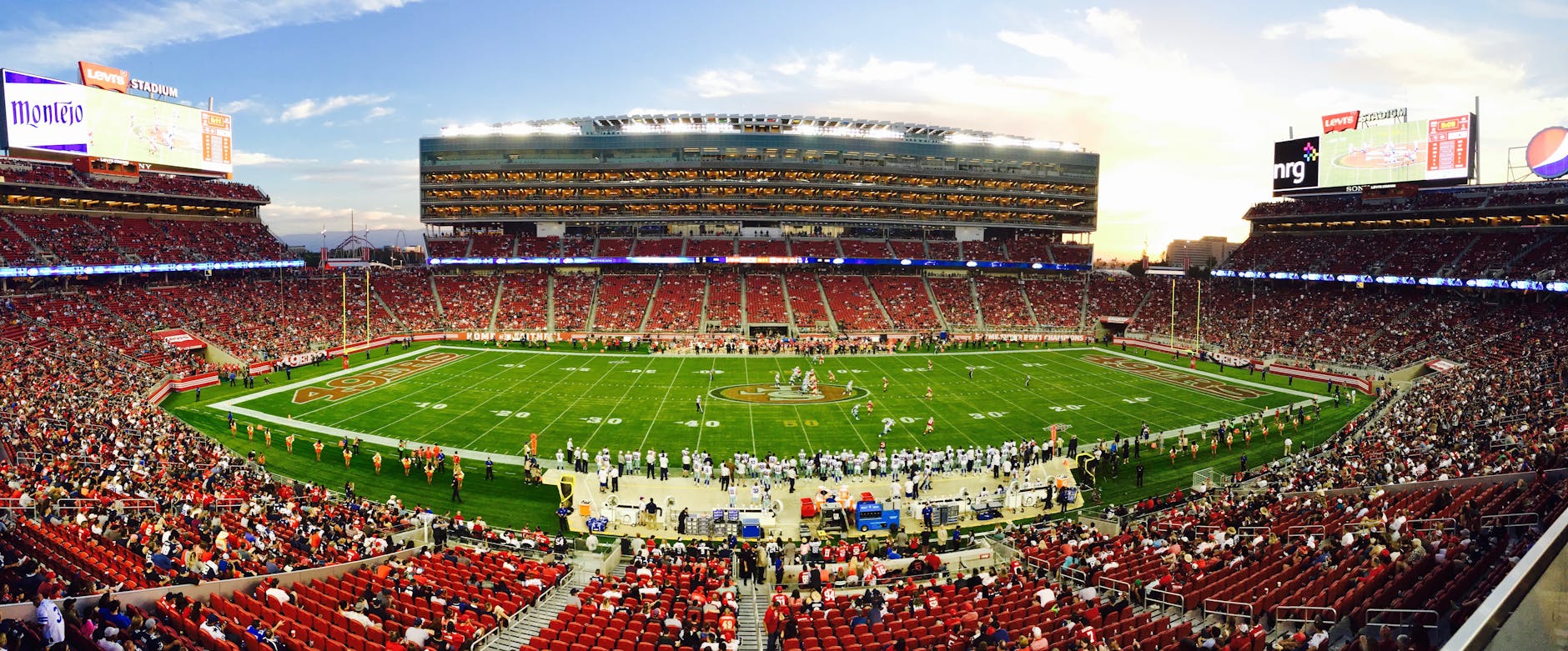
-San Francisco 49ers play in Santa Clara

-Washington Commanders play in Landover (Maryland)

Two bonus suburban teams: the Arizona Cardinals, not named after a city but a state, play in suburban Glendale and the New England Patriots, named after a region and not a city, play in suburban Foxborough.

If the Bears end up in Arlington Heights, that would push the number of suburban NFL teams up to 13 total.

“The stadium is the spiritual home”

With the opening of a new stadium for Nashville SC, the team’s CEO described its importance:

Photo by Tuur Tisseghem on Pexels.com

“For any team, whether it’s in soccer or other sport, the stadium is the spiritual home,” Nashville SC chief executive officer Ian Ayre said. “If you’re renting, it’s not the same as owning, right? Of all the infrastructure and the parts we build, it’s the most important.”

The team’s coach added:

Nashville SC coach Gary Smith called the crowd “magnificent,” adding that the players felt the energy from the moment they walked onto the field for warm-ups. “The expectation and excitement that surrounded this opening game was huge,” he said after the match. “To think that the players didn’t feel that would be inhuman. The atmosphere was terrific.”…

“To have our own home is vitally important,” Smith said. “This venue now will be the place over the coming years and decades that fathers and sons will come to and look back on and say, ‘Do you remember?'”

As a sports fan, I understand this sentiment. Going to the physical home of your favorite team or to an interesting stadium or a stadium where there is clearly fan interest is exciting. It is not just watching teams play in a physical setting; there is a collective effervescence that can arise to the level similar to how people describe spiritual experiences.

On the other hand, the team benefits from this spiritual home in the terms of dollars and cents. The stadium and all it entail makes money. It is an improved property. And increasingly so these days, owners and teams develop the land around the stadium in ways to further enhance revenue. This is not a sacred place maintained for the well-being of people who visit; it is for a business.

This mixing of business and spirituality is not uncommon in the United States or elsewhere in the world. Is the spiritual homeness of the sporting event ruined because money is being made? Perhaps not for most of the fans who are there for what the trivial can produce. For some of those fans, the sports stadium is more sacred than a religious building or congregation. At the same time, a new stadium and sports in general are big business where producing spiritual homes and transcendent experiences keeps consumers coming back for more and cities eager to keep teams or introduce new teams to the local economy.