At first glance, you may think that Oak Park is nothing more than an affluent suburb of Chicago. But it’s so much more.
Stunningly beautiful, Oak Park is the birthplace of American author Ernest Hemingway. Meanwhile, prominent architect Frank Lloyd Wright lived and worked here. A casual stroll around the suburb will take you past numerous examples of his work.
Come in the fall to watch or run in the Frank Lloyd Wright races. These 5K, 10K, and youth mile races weave through some of the suburb’s most notable architecture.
Even among this global range of destinations – cities, natural spots, beaches, mountains, etc. – this one suburb stands out. It may be the only suburb on the list. Oak Park is unique in several ways. As noted above, it does have some unique architecture and the ability to learn more about Frank Lloyd Wright. Hemingway was born there. It is also a suburb that has pursued racial and ethnic diversity for decades.
At the same time, is one reason an American suburb could make such a list is that visitors get to experience a suburban lifestyle? If they went to Oak Park, beyond some of the unique features discussed above, would they have a sense of what American suburban communities are like?
What other American suburbs might make a global list of top travel destinations?
The suburbs have become increasingly diverse and populous. More than half of voters in 2024 were in suburban areas, according to exit polls. They have become swing areas, home to some of the most closely targeted House seats, and a good barometer of who will win the presidential election.
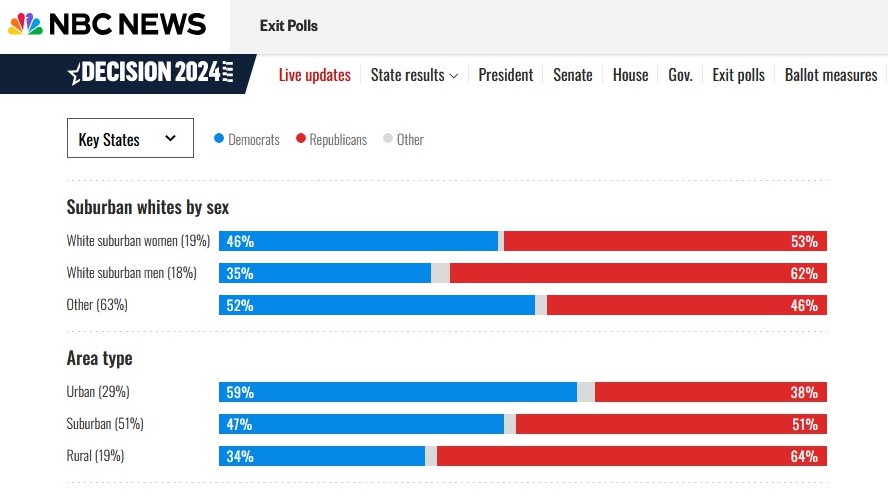
The winner in the suburbs has won 11 of the last 12 presidential elections, dating back to 1980. And this year that was Trump, 51%-47%, according to exit polls.
Vice President Harris was hoping she could turn out women in the suburbs in key swing states to get her across the finish line. But that didn’t happen. Trump, for example, won white suburban women by 7 points, as well as white suburban men — by 27. So there were some split kitchen tables, but not enough to help Harris win.
In multiple swing states, there were significant shifts in Trump’s direction in the suburbs, based on nearly final vote totals. That includes a net swing of almost 60,000 votes in the four counties that make up the Philadelphia suburbs and the two major ones north of Detroit, more than 10,000 in the “WOW” counties around Milwaukee (Waukesha, Ozaukee and Washington) and in the counties touching Fulton County, Ga., where Atlanta is.
This is the strongest declaration I have seen thus far about suburban voters in the 2024 election.
Two graphics in the story add to the text above:
A national map of counties shows many suburban counties shifted toward more raw votes for Trump between 2020 and 2024. Relatively few suburban counties shifted toward Harris.
There is an interactive graphic that shows shifts in suburban counties from 2016 to 2020 to 2024 and some suburban counties did move toward Harris in that span. This graphic shows there is significant variation in voting patterns across suburban counties.
On the whole, one candidate garnered more votes from the suburbs. Did that determine the election? This analysis does not say; it suggests suburban voters contributed to the outcome.
A 2021 Northwest Municipal Conference survey of its members identified 14 suburbs permitting group homes for particular populations, largely those with disabilities.
However, the conversion of homes into assisted living centers for seniors is becoming increasingly prevalent. Schaumburg has seen two proposals in the past year alone. There are also online seminars offered to entrepreneurs looking to flip homes and turn them into assisted living centers, aimed at the nation’s aging population.
Regulations vary in towns that allow such conversions. Some require approval from a village board or city council, while other towns don’t require such approval because these uses are already allowed in its residential code. But all enforce rules against external changes to the houses that would identify them as group homes…
“You’ll be driving down a neighborhood and never know we’re there apart from a van picking people up or dropping them off,” said Little City Foundation CEO Rich Bobby…
While the intention of the homes is to blend in, a degree of engagement with neighbors is sought in advance to paint an accurate picture of those who are going to live there.
A common suburban story regarding proposed changes to houses might go like this: neighbors get wind of a possible change in a subdivision or residential area. They express concerns about such changes altering the character of the community. Perhaps there might be increased traffic, noise, and lights? They share that they moved into this location because it was a quiet, residential space. Changes to that format threaten their day-to-day experiences and their property values.
But what if the changes to that house or residence were minimal in nature? Or, as the regulations above suggest, the exterior of the home does not look any different and there is not a noticeable change in day-to-day life around the home? Would this allay all the concerns?
From this article, it sounds like concerns have been at a minimum thus far. The number of conversions is small. Perhaps there is a tipping point where multiple proposals in the same neighborhood or on the same straight might draw more attention. But if neighbors do not see significant changes on the outside, they might not have many issues.
Given the needs of the suburban population, I suspect more suburbs will face this particular issue in the coming years. Building large facilities can be difficult and costly. If converting homes to group homes can help serve residents and neighbors are okay with it, perhaps this will happen in a lot of places.
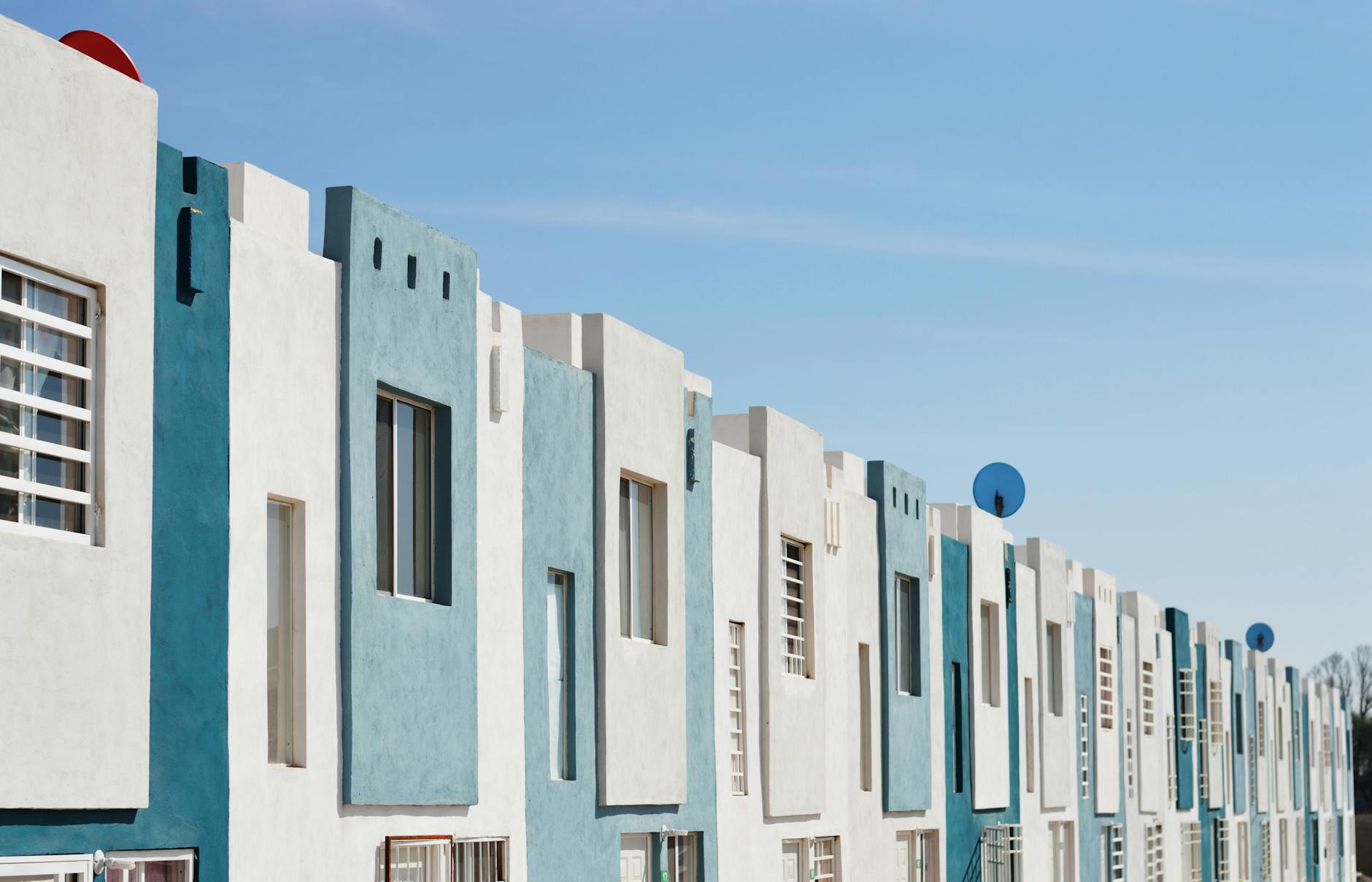
(This reminds of a 2013 book looking at affordable housing built in New Jersey where one of the goals was to design the multi-family housing units in a way that people passing by would not identify them as affordable housing. With some design work, this was largely accomplished and relatively few neighbors opposed the project.)
In consecutive years, developers brought two different proposals for redeveloping an almost empty set of suburban office buildings into apartments. The first was turned down, the second was accepted. One factor was the size of the proposed apartments. From the first proposal:
Photo by Miguel u00c1. Padriu00f1u00e1n on Pexels.com
At an initial public hearing in August, the developer indicated he would target grad students with young families. According to the original plan, each apartment would have four bedrooms.
“If the target market demographics is going to be students, that’s more like a dormitory, not a residence. It’s a residential hall, but it’s not what we would envision in a neighborhood such as ours,” nearby resident Roberta Stewart told the zoning board.
The developer modified the proposal after the zoning board expressed concerns over a lack of details and too much parking. The property now has 80 parking spaces, most of which fall within a flood plain.
The revised plan shows three-bedroom units with offices in both buildings. There’s an “unmet need” for that size apartment in the area, Che said last month.
The previous zoning request was ultimately denied by the council last November in part due to the use of nontraditional floor plans — originally calling for four-bedroom units — and a surplus of on-site parking spaces, according to city documents.
Under the current plan, the buildings would contain a dozen one-bedroom units and 10 two-bedroom apartments, totaling 22 units. The proposed rents are approximately $1,674 a month for a one-bedroom unit and approximately $2,000 for a two-bedroom, said Mike Mallon, founder of Mallon and Associates, who represents the developer.
“We believe that our proposed plan will meet the residential demand in the market,” Mallon told city council members earlier this month.
It does not sound like the idea of apartments is the problem. The suburb was working with a plan that “recommends low-density multifamily residential development and repurposing existing structures.” The issue was the size of the apartments or the kinds of residents. If this was student housing – pitched by the developer as “grad students with young families” – then neighbors expressed concerned about dorms. Big apartments will lead to too many people near single-family homes.
Where are suburban residents to find larger apartments? Which suburban communities are approving construction of apartments with more bedrooms? Are the only concerns about students? Both developers said there is a market for their units but I would guess relatively few suburban apartments under construction have four bedrooms.
Let’s start with geography. Urban counties showed a bigger swing toward Trump than suburban and exurban counties, smaller metros, and rural areas. Of course, Harris did best — as did Biden four years earlier — in urban counties, but the 10-point swing toward Trump in urban counties was larger than swings in other places.
A more refined county classification from the American Communities Project, which groups counties based on their demographic, economic, and other factors, confirmed that Trump did better in 2024 than in 2020 in all types of communities, with larger swings in some places than others. Big cities, Hispanic centers, and Native American lands swung most toward Trump in 2024. The reddest communities — aging farmlands, evangelical hubs, and working class country — swung less, as did still-blue college towns and LDS (i.e. Mormon) enclaves, where Trump has repeatedly gotten smaller margins than previous Republican presidential candidates.
Going one step more granular to individual metros, many swung more than 10 points toward Trump in 2024 versus 2020, including New York, Los Angeles, Chicago, San Francisco, and Miami, as well as heavily Hispanic/Latino metros in Texas, California, and the Southwest. Just a handful of metros swung a bit bluer in 2024, mostly in the Mountain West and Pacific Northwest, including Salt Lake City, Tucson, and Colorado Springs.
Looking across all counties that have reported election data, the geographic pattern of the 2024 vote was less polarized than in 2020 in some ways. Most notably, counties with a higher share of Hispanic residents were more likely to vote for Harris than for Trump, but by smaller margins than for Biden in 2020. Same with higher density counties: there was a very strong correlation between county density and Harris vote share, though not as strong as in 2020. In contrast, the correlation between county education level and Harris vote share strengthened further in 2024. Density and education are themselves highly correlated, with residents of more urban counties more likely to have a college degree than those of more rural counties, but higher-density counties swung toward Trump, while highly educated counties did not.
One question about this is whether the electoral college outcomes changed if one candidate picked up more votes in cities. If the election came down to key states, were these swings in urban areas enough to win the state? Or maybe they did prove consequential in purple states. Looking at these swings in particular places could help address this. In Pennsylvania, did changes in metropolitan Philadelphia and Pittsburgh decide this or in Wisconsin, changes in metropolitan Milwaukee and Madison?
Additionally, it is less clear what this all means for considering suburban voters. The American Communities Project typology includes multiple suburban settings, Urban Burbs, Middle Suburbs, and Exurbs, in addition to suburban areas that might fit into other categories because of unique traits (such as a college town in a suburban county). Just looking at the three with suburbs in their title in one form or another, the 2020 patterns held: exurbs leaned Republican, suburbs near cities leaned Democratic, and middle suburbs leaned Republican. But voters in each three categories moved toward Trump. Was this shift substantive? Did suburban voters decide the 2024 election?
I am sure there is more analysis to come on this subject and I will keep looking for it.
Based on these results, it looks like the Democratic candidate won large percentages in urban areas, the Republican candidate won a majority in rural areas, and suburban voters went slightly for the winning candidate.
If this pattern roughly held across the United States, it would be similar to patterns from previous presidential election cycles. If a candidate wants to win, they need to appeal to enough suburban voters.
What appealed to suburbanites specifically in 2024? If economic conditions was a top concern of voters, is this what drove suburban voters? The top table above suggests white suburbanites in these 10 states voted for the winning candidate. Were they driven by economic concerns or other issues?
And as attention turns to the next election cycle, how will parties and candidates seek to appeal to suburbanites? In addition to those thinking of presidential office, how will House districts involving suburbs speak to suburban residents?
Over the past decade and a half, however, the dynamic has dramatically shifted. In 2008, the top fifth of earners favored Democrats by just a few percentage points; by 2020, they were the group most likely to vote for Democrats and did so by a nearly 15-point margin. (Democrats won the poorest fifth of voters by a similarly large margin.) Democrats now represent 24 of the 25 highest-income congressional districts and 43 of the top 50 counties by economic output. A similarly stark shift has occurred if you look at college education rather than income. Perhaps most dramatic of all has been the change among wealthy white people. Among white voters, in every presidential election from 1948 until 2012, the richest 5 percent were the group most likely to vote Republican, according to analysis by the political scientist Thomas Wood. In 2016 and 2020, this dynamic reversed itself: The top 5 percent became the group most likely to vote Democratic…
That realignment leaves both parties in a strange place heading into November. Voters consistently say that the economy is the most important issue of the 2024 election. And yet the affluent overwhelmingly support Kamala Harris, whose administration favored bold redistribution and big government spending, while a critical mass of working-class voters favor Donald Trump, whose economic agenda consisted largely of cutting taxes for the rich and trying to kill the Affordable Care Act.
This is not the only political shift in recent years but an interesting one nonetheless. Are these political shifts enduring? Such a shift disrupts short-term activity but there could also be long-term consequences. With the resources and connections elites have, does a shift like this lead to other consequential changes?
While the article focuses on whether these voters are voting in their material best interests, another part is intriguing: how then does this fit with the American obsession on the middle-class and the political rhetoric and activity that goes along with this? Does the composition of who comprises the electorate for a political party than affect how much the party talks about the middle-class or pursues policy aimed to help that group?
And since I think about the suburbs a lot, how does this affect how the two parties view suburbs in the United States? Traditionally viewed as middle-class places with powerful local control, does this shift with new political bases at play?
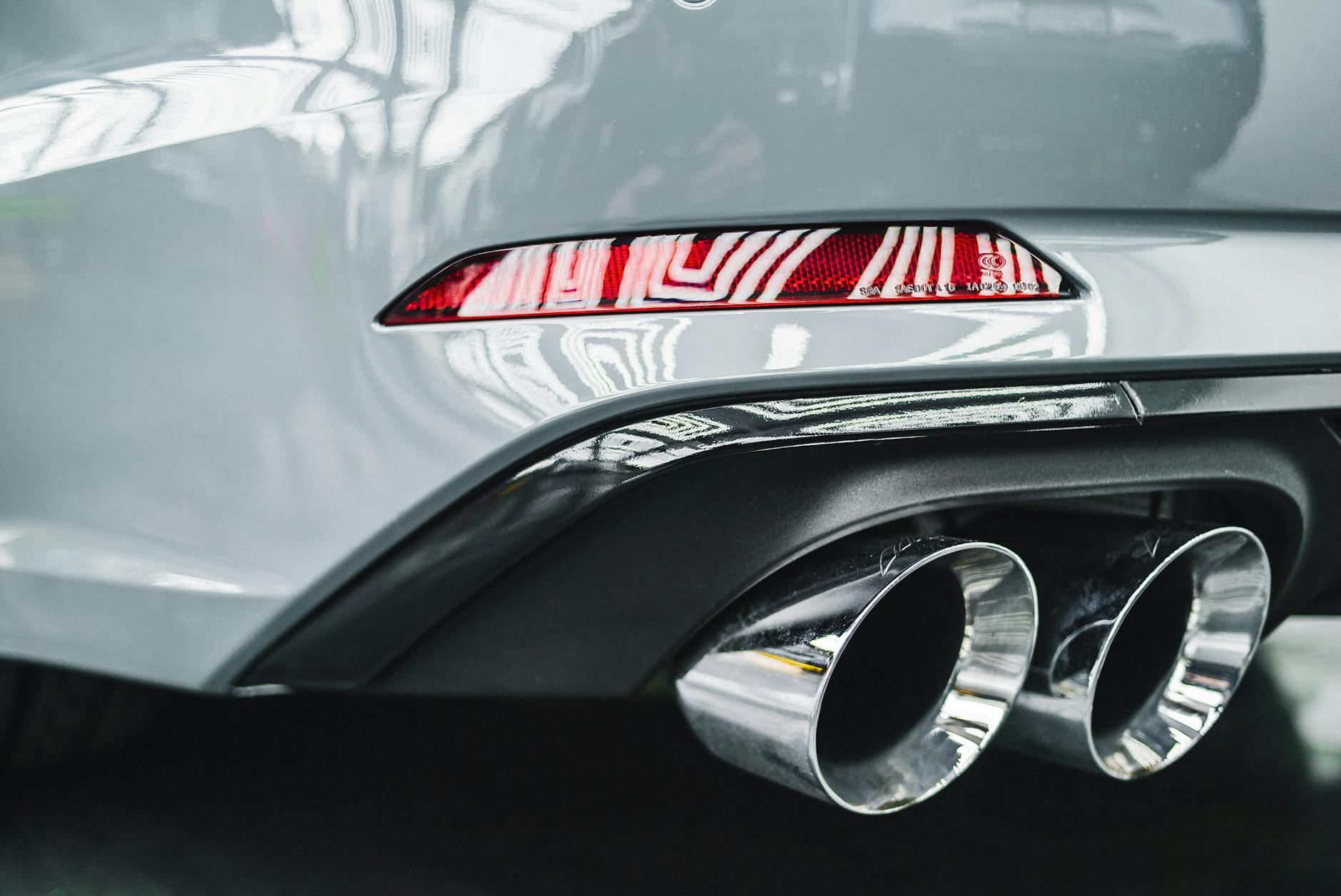
Noisy mufflers were among the top complaints at a recent “chat with the chief,” and city council members also have fielded complaints coming from the downtown district and the south end of Naperville near 95th Street.
The noise from engines revving and modified mufflers can get loud enough to be heard blocks away, said Mayor Scott Wehrli, who lives near the city’s downtown district. This summer, for example, motorcycles revving their engines through one of the parking decks created enough noise to disrupt an outdoor summer band concert, he added…
Under state law, it is illegal to have a modified muffler on a vehicle, Naperville Police Chief Jason Arres said. Naperville police have been issuing citations based on that law.
Between Sept. 1 and Oct. 8, police issued 26 citations. Two of them resulted in guilty pleas on Wednesday and about $300 in fines for each citation, officials said…
Arres, who noted complaints about noisy cars is not unique to Naperville, is hopeful word will travel fast that loud cars aren’t welcome in town.
Two questions quickly came to mind when I read this:
Will loud cars and vehicles now avoid Naperville? It is a big community with lots of locations for locals and visitors to travel to.
What if nearby suburbs do not enforce this state law? Say Naperville continues to enforce this law and issue citations and some of the drivers do indeed stay away; will these drivers simply visit nearby suburbs? Will they get their vehicles fixed or modified? While Naperville is indeed big, nearby suburbs could many of the same kinds of places to drive to.
This is not just limited to loud cars; what about enforcing having proper license plates or tinted windows that are too dark or other vehicle issues that are not moving violations? If a number of communities do not enforce this, will it make that much of a difference?
It will take some time to see if the issue is addressed to the satisfaction of Naperville leaders and residents. And will the problem shift to neighboring suburbs?
Suburbanites, who make up about half of the U.S. electorate and are as racially diverse as the nation at large, are a key prize. Biden beat Trump in suburban counties by about six percentage points in the 2020 presidential election.
Before Biden dropped out, Trump was leading him 43% to 40% among suburbanites in Reuters/Ipsos polls conducted in June and July, reflecting the Democrat’s struggle to energize supporters.
Harris began closing the gap when she launched her campaign in July and led Trump 47% to 41% among suburban voters in polling across September and October. That represents a nine-point swing in the Democrat’s favor, according to the analysis of six Reuters/Ipsos polls that included responses from over 6,000 registered voters…
Winning the middle – whether nationally or in the election’s key states – won’t necessarily crown the victor. Democrat Hillary Clinton, who got nearly 3 million votes more than Trump nationwide in the 2016 election and beat him in suburban counties by about 1 percentage point, still lost the election when Trump flipped six states that had voted Democratic in 2012.
Suburban voters are a sizable block of voters as this is where a majority of Americans live. Do all suburbanites vote the same? No, suburbia is increasingly complex with people in suburbia have different experiences and backgrounds.
Related to the previous point, do suburbanites see themselves as a voting bloc? If I were to take the Chicago metropolitan area as an example, voters across the region might not see themselves as similar to others in the region’s suburbs.
Will the presidential candidates appeal more directly to suburban life in the last few months? If the economy is the biggest issue for voters (as the article suggests), is talking about the middle-class direct enough? Trump in 2020 spoke directly about suburbs; will both candidates do this in 2024?
Illinois Department of Transportation leaders unveiled a new diverging diamond design they predict will expedite travel for drivers on the interstate and local roads…
“The modern design is a proven solution to improve safety and traffic flow in a busy area like where we are today,” IDOT Secretary Omer Osman said…
The interchange dovetails with Rock Run Collection, a major Will County development that will include housing, retail, restaurants, offices, and the relocated Hollywood Casino Joliet…
A diverging diamond has a smaller footprint than conventional cloverleafs and is cheaper to build.
Innovation to keep all the vehicles moving smoothly between interstate and a local major road.
What other major roadway changes could help speed up traffic and increase safety? Adding lanes does not necessarily speed up traffic. The Chicago region has plenty of left-turn on green signal only lanes that help reduce certain crashes. Protected bike lanes are only found in a few denser places.
Is the answer in better vehicle technology? Vehicles that talk to each other and/or driverless cars? Smaller or lighter vehicles?
Another possible solution is to reduce the amount of driving. This could be hard in sprawling suburban areas, like where these diamond interchanges are located. Introducing more mass transit options in the region is possible but it is costly, is harder to implement in the suburbs, and it might not find favor among residents.
The drivers at this busy interchange may come to appreciate their new diamond among the asphalt. Others may want to wait for more innovation that improves travel through suburbia.





 Legally Sociable