“DuPage County is becoming remarkably cool” is an outcome of complex suburbia

The Editorial Board of the Chicago Tribune recently noted the opportunities available in DuPage County, Illinois:

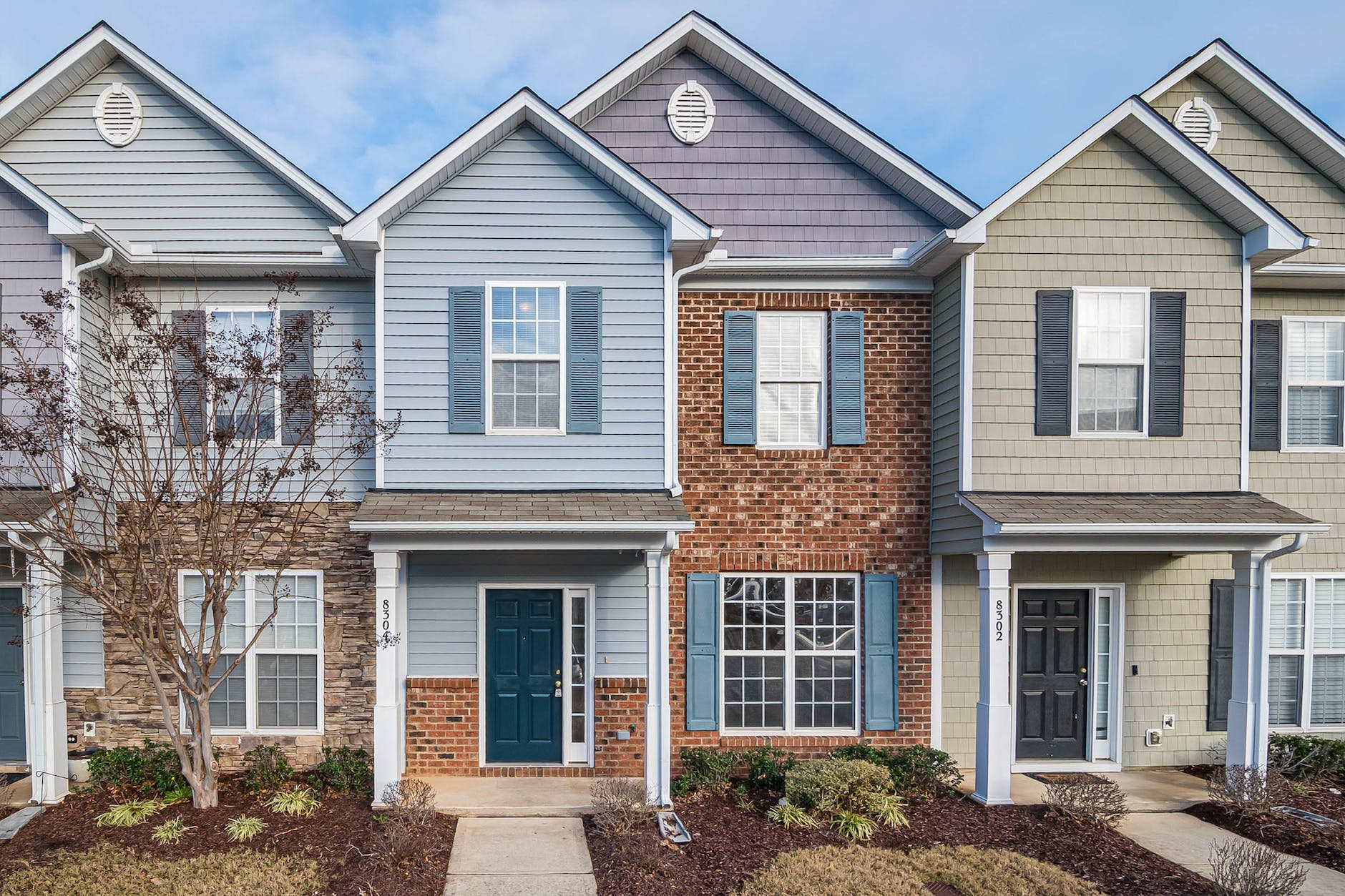
Photo by Brett Sayles on Pexels.com

If you’re not doing anything Thursday evening, swing by the park for a bit of Shakespeare, a signature cocktail and an interesting bite or two from a selection of food trucks. What park? Why, Cantigny Park, in DuPage County, of course. Where else would anyone go for a hip summer evening out in the Chicago area?

Long overshadowed by Cook County when it comes to cool stuff to see and do, DuPage County is starting to change its image as a boring suburban haven for people intimidated by life in the big city.

The editorial also notes the “good government” and diversity of the county:

The occasional scandal aside, we think of DuPage as being a haven for good government compared with the rest of the state, owing in no small part to the 12-year tenure of Dan Cronin as chair of the DuPage County Board. Cronin, a native of Elmhurst, set a singular example for reducing the size and cost of county government and we were sorry to see him step down.

Democrats have turned the tables in this longtime GOP bastion, holding a majority on the board for the first time in decades. In November, voters elected the county’s first woman as board chair to replace Cronin. After her election, longtime Illinois state Rep. Deb Conroy noted that her predecessors on the board had been white men. “And today that is not the face of DuPage County,” she said. “DuPage County today is richly diverse.”

As chair, Conroy should aim to extend Cronin’s proud legacy of efficient government, while ensuring this important part of the state is inclusive and equitable.

The contrast in this editorial is the city of Chicago and Cook County. The city is supposed to be the place of cool scenes, art exhibits, and exciting entertainment options. These are now available in the suburbs?!

I would put this recognition as part of a longer process of suburban development. At this point, DuPage County has had over seven decades of suburban postwar growth. It is a wealthy suburban county with plenty of jobs and economic opportunities. Before the postwar era, the county had roughly one hundred years of history involving the arrival of white settlers and the removal of Native residents, the coming of the railroad that connected the county to Chicago and other parts of the Midwest, the founding of small towns throughout the county, and the start of suburbanization on the eastern edges of the county.

This means the county has had plenty of time to mature and develop. Suburban greenfield growth is pretty much done and the population has grown less than 2% each decade since 2000. More communities have focused on infill development, redevelopment, and enhancing their downtowns (or trying to create community nodes if they did not have a downtown). There are plenty of institutional and community resources to draw on and wealthier residents to spend money. The demographics and social priorities of county have changed.

Additionally, people can live, work, go to school, find interesting restaurants and shopping spots, and more all within the suburbs. Chicago does offer unique opportunities and places but many suburbanites spend a majority of their time closer to home.

Is DuPage County cool? Or, are the suburbs more complex than an image of quiet and staid communities that provide bedrooms for urban jobs and exciting city opportunities?

(One note: the coolness the Editorial Board cites does not likely extend to all suburbs. The piece notes particular communities and opportunities. How many entertainment centers can the suburbs have? Suburbia is full of uneven development and inequalities.)

When living in a suburbia of McMansions is good and when it is not

Here are two different stories involving living among McMansions. Let’s start with a positive take on McMansions from someone who moved from New Zealand to Australia:

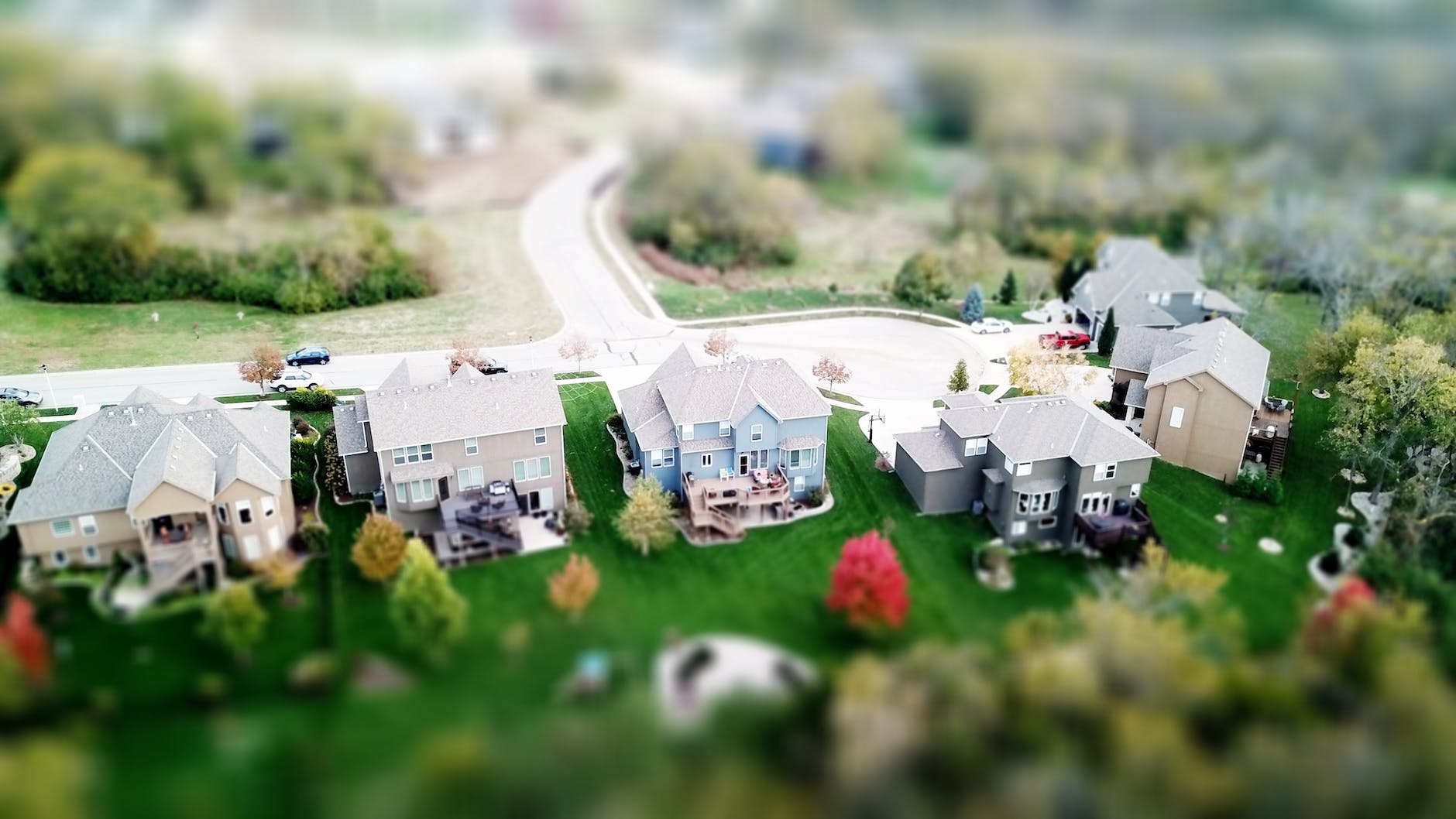
Photo by David McBee on Pexels.com

Money and a chance to do something new was my draw to Australia. I picked up a $140,000 IT role in central Melbourne, which was a 40% increase over my New Zealand salary. Pretty much everything here was cheaper at the time, with the comparison of renting out my three bedroom Johnsonville house in New Zealand for slightly less than I rented a five bedroom McMansion in western Melbourne…

In terms of housing we sold our small Johnsonville house in 2021 for $1.3 million, and bought a significantly bigger property with a pool here about 15km from the CBD for $975,000. The value for money was a no-brainer.

The takeaway here is that the McMansion in Australia is larger and cheaper than housing in New Zealand.

Here is a different perspective on McMansions from someone living further out in the suburbs of Texas:

We’re deep in a Texas suburb less than a minute from a major highway. As a semi-city-adapted human, it’s a culture shock. I’m not used to jumping on the freeway for a quick grocery run. Or driving 30 minutes to get a decent breakfast sandwich. On top of that, I’m a black woman with facial piercings and a bunch of tattoos surrounded by white Republicans.

It’s… an adjustment.

I can’t walk anywhere, the traffic sucks, and the lack of small businesses and diversity around here is eerily dystopian. It feels like the walls of Starbucks, Orange Theory, and Olive Garden are closing in on me. The only close-by establishments are big-box stores, chain restaurants, and mega-churches. It’s gentrified in the worst possible way…

I understand the appeal of wide open fields and expansive landscapes, but most people don’t live there. Most people live in towns with overlapping, 5-lane highways and poorly constructed McMansions. They live in towns surrounded by giant HEBs.

In the sprawling American suburbs, McMansions are part of a landscape with limited community, walkability, and local character.

These two experiences highlight two perspectives on McMansions: are they a good deal offering residents the best bang for their buck or are they part of a soulless suburbia dependent on cars and chain establishments? Plenty of Americans align with one side or the other.

New York Times finds more suburbanites complaining about pickleball noise

Pickleball produces noise and some suburbanites across the country are not happy about it:

Photo by Mason Tuttle on Pexels.com

Sports can produce all kinds of unpleasant noises: referees’ whistles, rancorous boos, vuvuzelas. But the most grating and disruptive sound in the entire athletic ecosystem right now may be the staccato pop-pop-pop emanating from America’s rapidly multiplying pickleball courts.

The sound has brought on a nationwide scourge of frayed nerves and unneighborly clashes — and those, in turn, have elicited petitions and calls to the police and last-ditch lawsuits aimed at the local parks, private clubs and homeowners associations that rushed to open courts during the sport’s recent boom.

The hubbub has given new meaning to the phrase racket sport, testing the sanity of anyone within earshot of a game.

People from a number of communities are interviewed about the noise. The suburbs figure prominently in this list of the communities cited:

-Arlington, VA: suburb of Washington, D.C.

-Wellesley, MA: suburb of Boston

-York, ME: suburb of Portland

-Scottsdale, AZ: suburb of Phoenix

-Longboat Key, FL: suburb of Sarasota

-West Linn, OR: suburb of Portland

-Falmouth, MA: in the Barnstable Town MSA

Is this a primarily suburban problem? It may not be exclusive to suburbs – see this earlier post about noise complaints in Chicago – but pickleball is growing in popularity among suburbanites and suburbs have a lot of single-family homes whose owners do not appreciate noises or other threats to their private lives.

Will this continue to be a suburb-by-suburb problem, is there a solution that can be effective across suburbs, and/or will this problem spread to kinds of American communities?

Hoping to revive shopping malls with pickleball

Could indoor pickleball courts save a depressed shopping mall near you?

Photo by Mason Tuttle on Pexels.com

The game, a mixture of tennis, badminton and pingpong, is the fastest-growing sport in America, but it requires a large court and finding space to play has become a problem.

Enter Pickleball America, which is building an 80,000-square-foot pickleball court in what used to be a two-story Saks OFF 5th at the Stamford Town Center in Connecticut.

The group is also looking at transforming other retail spaces in New Hampshire and New Jersey.

The idea seems a perfect marriage for a sport that needs massive spaces and a dying form of retail business replaced by online shopping...

“The mall just needed little bit of a boost, so with the idea of the space, it was a perfect fit,” said Pickleball America co-owner Jay Waldner of the 28-court Stamford facility. Waldner also said pickleball at the mall could annually attract 500,000 players, who could also shop during their visits.

Come play a game of pickleball and then stick around the mall for a bite, entertainment, and then a return to a nearby residence. Shopping may or may not be part of a regular trip.

I assume this new pickleball space is a for-profit enterprise. Do Americans want to pay to play pickleball or would they prefer local park districts pick up the bill for these courts? Is the indoor court enough to entice people to play? Residents may prefer that pickleball noise is contained to an indoor space at a shopping mall.

Which shopping malls could support a large pickleball facility? It is not a surprise to see this attempted in wealthier suburban communities.

Responding to the affordability of suburbs outside America’s most expensive cities

A recent analysis looked at how affordable suburban residences were compared to prices in the most expensive cities in the U.S.:

Photo by Curtis Adams on Pexels.com

Buying a house in the suburbs isn’t just a little easier on the wallet for city dwellers. In some parts of the country, bedroom communities offer an entirely different real estate market. Over 600 of the 777 suburbs within 30 miles of the country’s 20 most expensive cities are more affordable in terms of price per square foot — up to 65% cheaper in some places.

The East Coast offers the most suburban alternatives to main cities: 95 of the top 100 suburbs with the biggest price differences are near New York, Washington D.C., Boston, and Miami…

These are the top 10 cities with the most relatively affordable suburbs for home buyers, ranked by the percentage of suburbs with a lower cost per square foot compared to the main city.

  1. Salt Lake City, Utah (100%)
  2. New York, New York (98%)
  3. Washington, D.C. (97%)
  4. Boston, Massachusetts (93%)
  5. Honolulu, Hawaii (90%)
  6. Austin, Texas (89%)
  7. Seattle, Washington (83%)
  8. Boise, Idaho (80%)
  9. Denver, Colorado (80%)
  10. Riverside, California (79%)

A few thoughts in response:

  1. Do people always seek out the cheapest housing and move to the suburbs? Some will move to the suburbs because of lower price points. Others might stay in the city or go to the suburbs for other reasons.
  2. Is 30 miles out from an expensive city a large enough radius? It might be for some of these cities and not for others. Additionally, many commutes are suburb to suburb to being 40 miles out and commuting to a suburb 25 miles from the city is a different comparison than city versus suburban settings.
  3. One reason the expensive cities are so pricey is that they are desirable. If more people move to a region, does this then decrease the affordability of suburbs as well?
  4. Is it safe to assume then that there are metro areas where city and suburb prices do not have much difference?

Will a new Bewitched TV show be set in a similar looking suburbia?

A new Bewitched show is in the works:

Photo by Burak The Weekender on Pexels.com

The Bewitched update would focus on Tabitha Stevens, the 13-year-old daughter of witch Samantha and human Darrin. She juggles two lives attending middle school while also being secretly enrolled in a magical academy run by her grandmother, Endora — D’Ambrosia describes the premise as “Hannah Montana meets Harry Potter.”

The only mention of the setting of the show involves school settings: a middle school and a magical academy. The original Bewitched, a very popular show in the 1960s, was set in the suburbs of New York City. Samantha stayed at home while Darrin worked in the city. They live in a single-family home. They had a nosy neighbor. They have children.

Will the new Bewitched also include any of suburbia or will it primarily focus on schools? Interestingly, the two comparison TV shows mentioned above also include suburban settings. Hannah Montana was primarily set in Malibu, California while Harry Potter included scenes in and around the Dursley’s house on Privet Drive.

If the new version does include the suburbs, there is an opportunity for the suburbia depicted to look quite different than that of the 1960s. The suburbia often depicted on television then often portrayed nuclear family life in single-family homes on quiet streets. The suburbs today are more complex, diverse, and varied. There is an opportunity here to depict not only updated characters and storylines but also settings.

A common suburban sentiment about land uses: “But I don’t want to live anywhere near it”

An Arlington Heights resident describes the reasons he does not want a Chicago Bears stadium near where he lives:

Photo by SHVETS production on Pexels.com

The McCaskey family is in love with Arlington Heights? Well, me, too. I pay every nickel in property taxes I owe and am quite happy with the services I receive in return. I suggest Da Bears be required to do the same. In addition, they can build the infrastructure required at their own expense. With the full oversight and approval of the village of Arlington Heights, of course. If this is unacceptable, then please, by all means, head to Naperville. Best of luck to all…

The McCaskey family will plop a 70,000-seat domed stadium, plus sportsbook (that’s a casino, folks) on a portion of the property and sell off pieces to the highest bidders who will quickly turn the place into a national party destination. And it won’t just be eight Sundays a year. I’m quite certain they envision March Madness, Super Bowls and Taylor Swift concerts. Trains will back up through downtown; Euclid Avenue, Wilke Road and Northwest Highway will be jammed; and our perfect little town will be overrun.

“Don’t be ridiculous,” I can hear them say. “All stadium traffic will be routed to the expressways.” Uh-huh. Ever been to Wrigley Field? I have. What a cool place. What a legendary sports destination. But I don’t want to live anywhere near it. Nor do I want to live next door to the Airbnb rental on the weekend the Packers are in town.

What if the Bears back out? What will we do with a 326-acre lot? Here are some ideas: walking, running and biking paths. Lakes and paddleboats. Horseback riding would be a nice touch. Skate parks for the skateboarders in the summer, a wandering ice-skating path in the winter with a warming house. A nine-hole golf course — walking only, kids-only.

I’m sure the numbers are daunting, but why not be creative? Not every use of land has to be about growth, development and profitability. We are rushing into the arms of the first suitor that has presented us with a ring. I suggest we get it appraised. It feels like cubic zirconium to me.

On one hand, this is a specific response to a particular proposed land use. A major stadium plus surrounding development is a big deal. In mature suburbs where big pieces of land become available only rarely, decisions about this land can be very consequential. Additionally, residents of suburbs often feel they should have a say in how land in their community is used. This is one of the reasons they like living in suburbs: they are closer to local government officials and processes. After all, they pay taxes, they live in the community, and they will be affected by the new development.

On the other hand, the sentiment of “not wanting to live anywhere near it” is a common one across suburbs. This could refer to affordable housing or waste transfer stations or drug treatment facilities or religious buildings or other uses suburbanites feel will threaten their way of life. Residents may not like the idea that growth is good yet this part of the appeal of many suburbs where growth signals continued residential and business demand.

The Chicago Bears will end up somewhere and there will likely be some residents who do not like the decision to have a stadium near them. Given the billions of dollars and status at stake here, they might not be able to do much about it.

Is there a great novel of the Chicago suburbs?

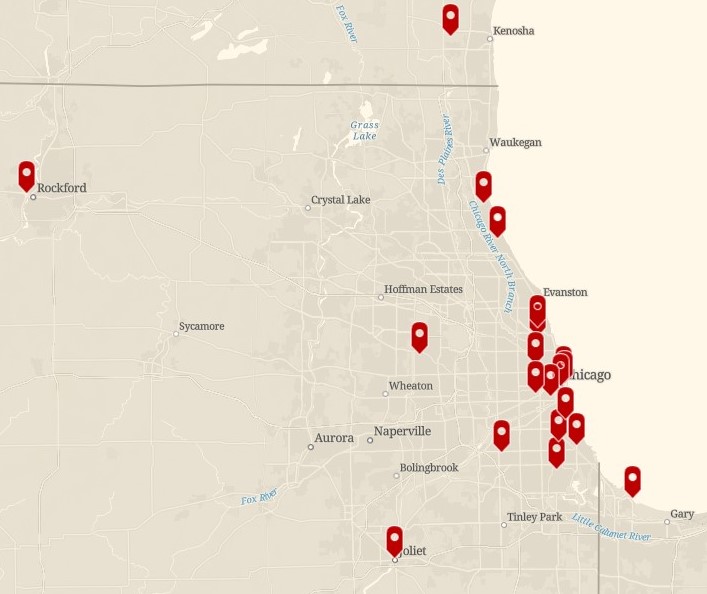
A professor of creative writing set out to map 1,001 novels set in the United States. In her project, here is what the Chicago region looks like:

I do not know enough literature to know how well this map might reflect the totality of fiction written about and/or set in Chicago. However, the map above has relatively little from the suburbs. Here are the suburban works listed (a few others have markers in the suburbs but the descriptions say they are set in Chicago):

-Joliet – A Martyr for Suzy Kosasovich (2008)

-Salt County, Illinois – Water Marked (2000) [this is the one with a marker in northeast DuPage County on the map above]

-Prairie Park, Illinois – Neon Green (2016) [this is the one with a marker in northwest Indiana]

-Lake Forest – Ordinary People (1976)

No interest in the latest from Jonathan Franzen?

More broadly, is there any consensus on the best suburban novel of the last few decades? Academic treatments of the literature set in suburbs often cite novels like The Crack in the Picture Window or Revolutionary Road from the early years of postwar suburbia.

Regulation coming for renting out suburban backyard swimming pools?

Suburbanites are renting out their pools through an app and their neighbors are not happy:

Photo by Pixabay on Pexels.com

The sounds of summer fun ripple up from ads for Swimply, an app that allows homeowners to rent out private pools to strangers looking to enjoy cool water under the hot sun. But that seasonal chorus has sharply divided suburban residents of Montgomery County as the local government considers formally regulating the short-term amenity rentals — potentially becoming the first in the nation to do so…

It is only mid-spring, but already dozens of pools in and around Maryland’s most populous county have been listed for rent on Swimply, which launched in 2020 as people sought alternatives to public pools that shut down because of the pandemic on the heels of the wild success of apps like Airbnb and Uber. Hosts set hourly rates anywhere between $25 to $100 an hour to access private backyard pools that bypass lines and crowds.

Unlike long-established home rental and ride sharing apps, newer apps that let people rent out their pools, home gyms and backyards have largely been unregulated across the United States so far. In fact, several jurisdictions, from the city of San Jose to towns across New Jersey to the state of Wisconsin, have tried over the past three years to ban the rentals or set up strict rules that require private pools to meet the same standards as a public pool…

A like-minded group of 36 county residents from Chevy Chase, Rockville, Montgomery Village, Kensington and Rosemary Hills, wrote a letter opposing the bill and asking the county instead to outlaw the amenity rentals altogether. The group argued that the rentals turn quiet residential neighborhoods into bustling business districts, without the infrastructure to support commercial activity. They raised dozens of concerns, largely over the added nuisance of strangers pouring into their neighborhoods because of the apps, congested roads, scarce parking, and noise and safety.

Should the property rights of homeowners reign supreme – they can do what they want with their property – or is this too much activity within residential neighborhoods where people expect quiet and do not want neighboring activities that they perceive will affect their property values?

If Montgomery County does not regulate this, someone will. I can imagine an alternative line of reasoning from a suburban government: this is a possible revenue stream.

Evangelicals and when the “postmodern” and “urban” came to the American suburbs

A reflection on pastor and author Tim Keller’s life includes this line involving distinctions between American places:

Photo by Zekai Zhu on Pexels.com

His insights hit a nerve at a time when evangelicals were realizing that “postmodern” and “urban” challenges—religious diversity, isolation, transience—were becoming common in rural and suburban contexts as well.

In the American context, suburbs often served as a refuge from perceived problems of the city. Religious diversity in cities involved all sorts of religious traditions as people flocked to cities in the late 1800s and early 1900s. Even with the number of people in cities, Americans often celebrated an ideal of families living in suburban single-family homes rather than feeling atomized in large cities. Whereas people moved in and out of cities and urban neighborhoods, Americans often perceived suburbs as built around family and children, neighbors, and community groups.

How might we evaluate these features separating places? It is hard to discuss religious diversity without addressing race and ethnicity. As suburbs often excluded people who were not white, religious diversity was limited. Suburbs are increasingly diverse in terms of race and ethnicity and social class. Regarding isolation, plenty of narratives have been shared and told where individuals found the suburbs to be isolating. Compared to suburbs, cities offer opportunities for exploration and finding a place among other similar people. The suburbs may have celebrated certain social relationships but they were also quite transient for decades in the postwar era as people took advantage of opportunities.

If the lines between cities, suburbs, and rural areas are now more blurred, are evangelicals better equipped to address a changing world? How might they address complex suburbia?