What could go wrong if a suburb buys up a vacant shopping mall to redevelop it?

The suburb of Bloomingdale, Illinois got fed up with the lack of redevelopment a formerly thriving shopping mall so they are buying up the property:

Photo by Aldiyar Seitkassymov on Pexels.com

Frustrated by years of inaction by the owners of Stratford Square Mall, Bloomingdale has spent more than $5.6 million to buy former department store buildings and open space near the mostly deserted shopping center.

Now the village is trying to use its powers of eminent domain to take over the core of the mall itself. Bloomingdale has filed a condemnation lawsuit aimed at acquiring the property. Village President Franco Coladipietro called it an “act of last resort.”…

Bloomingdale has been buying mall real estate to facilitate a full-scale redevelopment of Stratford Square. The village paid $2.4 million for the vacant Carson’s department store, $2.15 million for the former Burlington building and $1.1 million for a vacant parcel east of the mall, between townhouses to the north and medical offices to the south…

“You have the potential of a brighter future. I understand that there’s risk. We look at it as a calculated risk,” he said. “And we’ve done the due diligence prior to engaging in the purchase of the properties.”…

To that end, the village opened a line of credit, or short-term loan, to pay for the purchase of the Carson’s, Burlington and undeveloped properties. The village also filed condemnation lawsuits targeting Kohl’s and the vacant Sears store to “keep everything on the same track,” Coladipietro said.

If all turns out well, the suburb will be able to say in ten or twenty years that the former shopping mall property is an asset for the community with new, vibrant uses.

But, this could also turn out poorly. The suburb has borrowed money to buy property. They are in court. The developer has not successfully pursued redevelopment; will the village be able to do better? What happens when the bills come due and/or the community cannot agree about what the mall property should become and/or potential developers are still not interested in the property?

The Village President says this is a “calculated risk.” Indeed. Suburbs do not like dealing with significant vacant retail space and this mall is not the only one in the area facing these issues. I hope they have a manageable floor for the mall property if all does not go as planned.
The suburbs are not having a “surprise revival” as they never went away

A summary of several recent patterns involving the American suburbs starts with this:

Photo by Geometric Photography on Pexels.com

American suburbia— once marked by dying malls and empty office parks — is thriving.

But, given the already-existing love in the United States for the suburbs, are the suburbs back?

Take one of the pieces of evidence cited. A recent survey suggests a good portion of millennials want to settle in the suburbs:

For eight years now, as millennials have entered their thirties and forties, also known as “homebuying age,” Bank of America has surveyed over 1,000 members of the generation once a year for its Home Work series. And for 2023’s edition, it finds a “suburban nation” alive and well. Older millennials (age 31–41) are almost three times as likely to move into a house than an apartment, the survey found, and they’ve got a hunger for the Costco dog, so to speak. 

Migration patterns during the pandemic have clearly established that most homebuyers have wanted to flee big cities, with some “zoomtowns” such as Boise benefiting in particular. But the survey reveals something even more drastic. In a section called “suburban nation,” BofA reveals that 43% to 45% of millennials—of every age—expect to buy a house in the suburbs…

The interest is pervasive across the generation, and maybe means that the suburb is in for a new and better revival. And a 2021 study from Pew Research Center found that one in five adults preferred city life, compared to one quarter of adults in 2018, those who favored the suburbs increased post COVID-19 as well. One of suburbia’s worst qualities or stereotypes was its pervasive whiteness, now with the surge in interest the suburbs are starting to grow to reflect the diversity of the country at large. Big suburbs are actually now more racially diverse than the nation, according to a Brookings analysis

I take this less of millennials now really want to go to the suburbs and more of millennials are following the patterns of previous generations of Americans. What exactly the suburbs are today is different – they are more complex – but they are still structured around single-family homes, family life, and attaining the American Dream.

All places go through some fluctuations in conditions and appeal. It will take longer than just a few years to doom the suburbs as Americans have now devoted decades to celebrating and pursuing them.

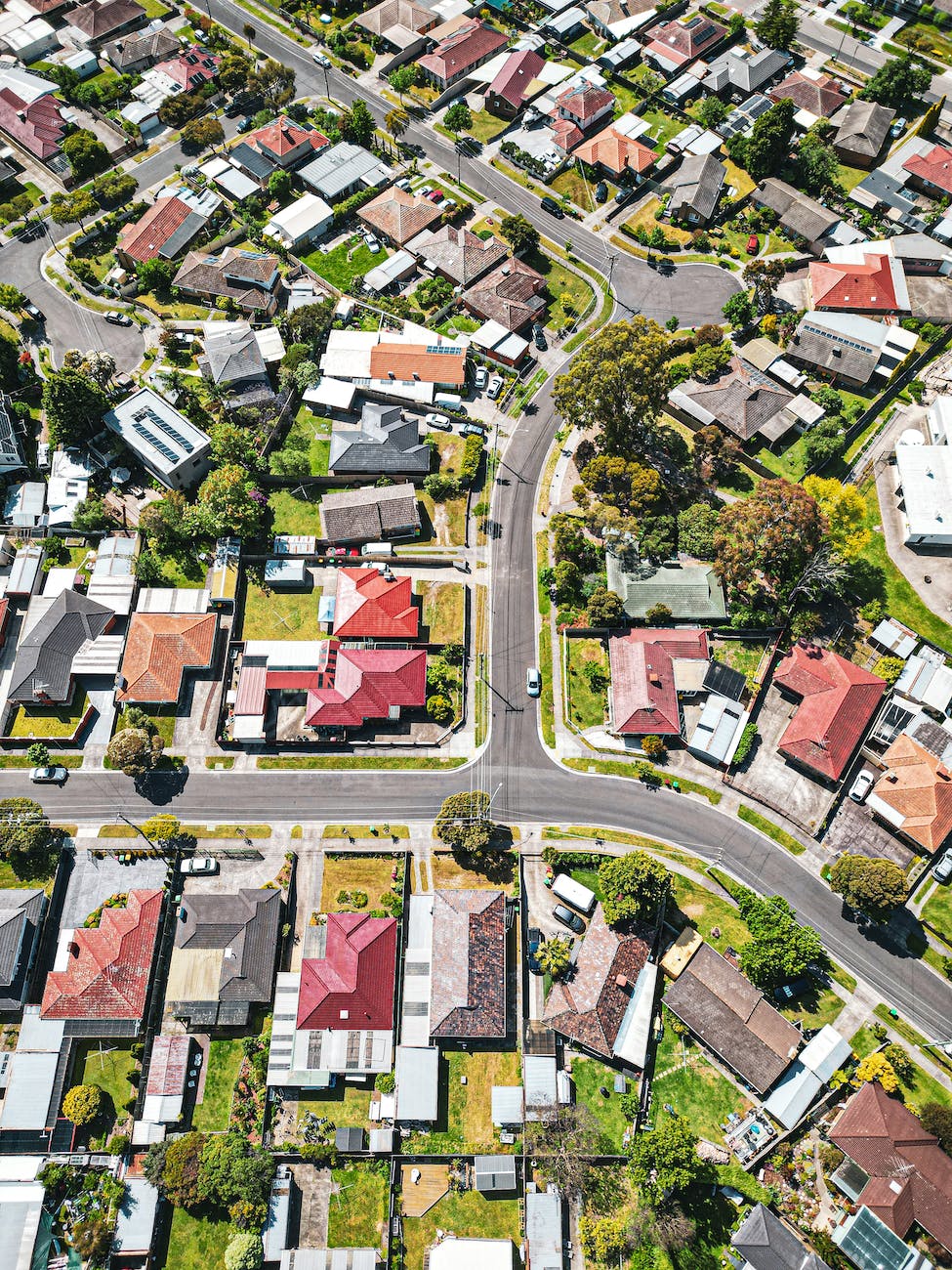
American sprawl consequential because of its scale

An environmental activist in New Jersey describes suburban sprawl in his state in ways that hint at its vast scale:

Photo by Seva Kruhlov on Pexels.com

The origins of this devil-may-care approach to development stretches back decades. “One of the things we’re going to look at is all that development in the 60s, 70s, and 80s, where we just sprawled out along the highways, built office complexes in the middle of nowhere, and built these five acre McMansions on farm fields. With all those policies, we’re going to have to reverse them at some point where we need to develop in a smarter, better way: places that are more walkable, fewer cars, more green space, less pavement. It’s not going to be easy because we, in some ways, have to fix the mistakes of the past, like on stormwater, where so many of our cities and towns are already paved, how do you go back and retrofit them? How do you break up these heat island effects in places like North Jersey? With planting trees, putting in more green space, green roofs, and stuff like that. That’ll take some money and it takes political will in New Jersey. I’ll just say that we have a flood of problems and a drought of action on some of these issues. We need to have the political will to make some of the tough choices and then make those kinds of investments. So far, we just keep kicking the can down the road.”

By the 1960s, Americans had a history of suburban homes stretching along railroad lines, streetcars lines, and roads. The ideal of the single-family home was well established. Plenty of people had fled cities. New transportation options provided speed and opened up new land for development.

But, the sprawl of the postwar era happened on a scale beyond these earlier efforts. Completely free of railroads and streetcars, potential homeowners could reach any property with a car. Large-scale builders could construct new subdivisions or communities in a relatively short amount of time. Metropolitan regions expanded out and small communities outside the city could grow very quickly. A whole lifestyle around homes, driving, and suburban day-to-day life for millions emerged.

Reversing these significant changes will require significant shifts in different directions plus time. Forget New Jersey; would Americans as a whole, particularly the majority of residents who live in suburbs, want to reverse these patterns or do they enjoy suburban life (or dislike the alternatives) so much that they would resist major changes? Either way, the consequences of sprawl will continue to affect society for decades to come.

Basketball “from suburbia to Serbia”

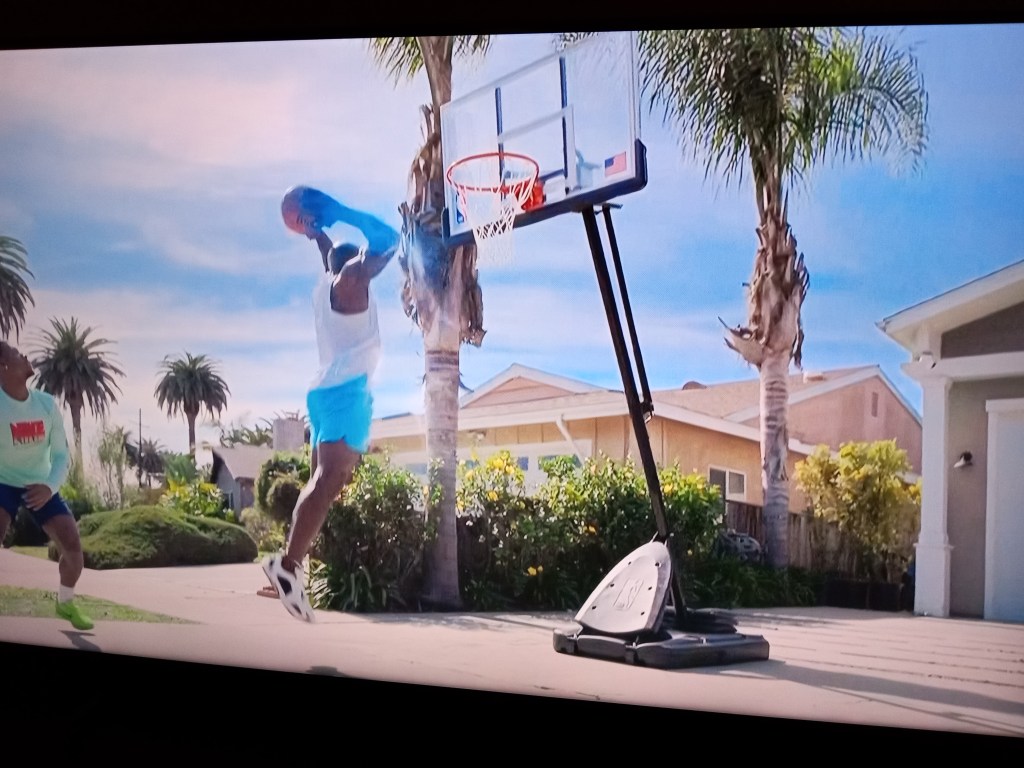
An NBA Playoffs commercial touting “playoff mode” includes the line “from suburbia to Serbia, it’s unbelievable” alongside this image of suburban basketball:

What stands out in this depiction of suburbia? A few things:

  1. Outdoor basketball with palm trees on a beautiful day of sunshine. Is this southern California? I assume this is a good spot to play basketball outdoors for most of the year. Not all places in the United States can claim this.
  2. This is a hoop in the driveway of a single-family home. The two players are not at the park playing basketball; they are playing in a private setting (though the street is presumably just out of view).
  3. How many players can dunk on the hoop set up in their driveway? It is hard to tell from the angle of the shot – the camera is just a foot or two off the ground – whether the hoop is at ten feet.

It does look like fun is being had with two guys playing hoops in the American suburbs…or a studio backlot made to look like one. While the line in the commercial tries to drive home the appeal of playoff basketball in two places with alliterative names, are the driveways of the American suburbs one of the key sites for basketball?

Fighting for suburban voters ahead of 2024, Carmel, IN edition

A mayoral race in a well-regarded suburb hints at suburban voting patterns for 2024?

Photo by Element5 Digital on Pexels.com

Tuesday’s electoral results show in miniature the national Republicans’ weakening grip on the suburbs. Come November, the race will also be a key post-midterms bellwether for both parties. Democrats made big gains in suburbs nationally in 2018 and 2020.

Nowhere else is that more apparent than Carmel. Slowly, this city has become more diverse and seen an influx of younger, more moderate voters who flock here for its award-winning school system, public art, affordability and culture (it’s home to a $126 million concert hall drawing national acts like the singer and songwriter Jason Isbell, and boasts more than 138 roundabouts, more than any other city in the U.S.). Students of the public school system speak 65 languages from 55 countries. Though many of its communities are gated, it’s not been walled-off from social change: Black Lives Matter marches snaked down the Monon Trail in Carmel amid $1 million townhouses and an upscale steakhouse in the summer of 2020…

Now, the Indiana Democratic Party is eyeing Carmel as a potential pickup this November. Mike Schmuhl, Pete Buttigieg’s former campaign manager and the state party chairman, is targeting this suburb in hopes of flipping it blue.

“The city has changed a lot,” Schmuhl said over lunch today at Fat Dan’s Chicago Deli in Carmel. “This used to be a rock-ribbed, Republican, conservative area but the Republican Party has changed a lot, too. So what you have up in Carmel is a lot of development, a lot of families, educated voters, hard working people, and the Democratic Party’s values appeal to those people.”

As someone who studies suburbs, four things I would note about Carmel that are relevant for this story:

  1. It is regularly named a Best Place to Live in Money’s list.
  2. It is right outside the combined Indianapolis-Marion County unigov arrangement. While that move was intended to help the city capture some suburban growth, Carmel sits right outs Marion County in neighboring Hamilton County.
  3. The population growth since 1960 has been astounding as it had just less than 1,500 residents in the 1960 Census. The suburb has had more than 25% population growth every decade since then and now has just under 100,000 residents.
  4. It has plenty of white-collar jobs due to corporate headquarters and offices.

Carmel exemplifies complex suburbia where larger suburbs can be more diverse, have more economic activity, and experience rapid growth and change. This can include changing political patterns at the state and national level but within communities where many do not vote in local elections.

The number of suburbs – or communities overall – that look like Carmel is small. At the same time, these larger suburbs have a higher status ad get more attention. As the political parties continue to fight over suburban voters, pundits will continue to look to growing and changing suburbs to see which ways the winds are blowing.

Secretariat as the sports figure with the most streets named after them

A few years ago, ESPN looked at how many American roads are named after athletes. Secretariat led the field:

Photo by Mu00eddia on Pexels.com

But perhaps nothing drives home the impact of Secretariat’s life more than looking at a map. Like, any map. We know because we’ve looked at them. All of them. In an effort to identify roads in the U.S. named for athletes, ESPN cross-referenced 2010 Census data with Google Maps. We were stunned to uncover 263 roads named after the horse — far more than for any other athlete, human or otherwise. “I’m not that surprised,” says Kate Chenery Tweedy, whose mother, Penny, raised and owned Secretariat. “Secretariat came along at a time of great crisis in this country — Watergate, the Vietnam War, Nixon’s impeachment. And unlike any other athlete ever has, he restored our sense that there is beauty and good in the world.”…

Born in Virginia. Won Triple Crown races in Kentucky, Maryland and New York. So it makes perfect sense that the states with the most Secretariat streets are … Florida and Texas?…

Road experts say there is little rhyme or reason to the way our streets get their names. It’s mostly just real estate developers who submit names to their town, there’s usually a relatively easy approval process, and voilà. Case in point: Somebody in Butte, Alaska, sure likes horse racing. You can take Sea Biscuit Lane to E. Man o’ War Drive, then hang a right onto E. Secretariat Drive — the most northerly road named for Secretariat. And if you wanted to ride Secretariat the 3,920 miles back to his burial site? At the record 37.8 mph he ran the Belmont in, he’d have gotten you there in a little over four days.

As someone who studies suburbs, here is my own theory for this naming pattern. Developers often want names for nicer subdivisions connected to tradition, certain lifestyles, and success. Why not reference both horse racing and one of the most successful horses ever? Horse racing requires money to participate and the audience for horse racing might fit particular demographics. Additionally, horse racing hints at nature. Secretariat is a well-known athlete. Such names will help establish their subdivision as an exciting place for people with means.

My own community has at least a few street names that connect to horse racing. This is not just a connection to racing in the abstract; our suburb has links to horse racing near these sites with a racetrack that was in existence in the early 1900s and another farm with wealthy owners who bred and raced horses in the second half of the twentieth century.

By linking single-family homes to horses and one of the most famous American athletes, how can a developer go wrong?

An acceptable suburban lawn must be green, full, weed-free, and an even height

At this time of year, the lawns of the Chicago area are slowly emerging. Some residents are already mowing to address one key feature of an acceptable suburban lawn: it must be even.

You can have a green, full, and weed-free lawn but it is not complete if it is uneven. This primarily has to do with grass height. The acceptable lawn is uniform. The grass looks like a flat surface. It does not have to look exactly like a golf fairway or green but the idea is the same. A lawn with weird dips and rises can also make it look uneven compared to a flat surface or a continually sloping area.

In the spring, the grass may be particularly uneven. Some of it is due to the activity of dogs. Some of it has to do with all the rain and moisture the grass has had. The growth might be different across a lawn, meaning mowing would lower the height of the grass in some spots and not be needed elsewhere.

This time will pass as more growth, higher temperatures, and regular mowing evens out lawns. For those who like lawns that do not have a uniform height, now is the time to enjoy.

How suburbs can lose millions in revenue when office parks sit empty

The changes to offices in one Minneapolis suburb illustrate the money at stake for suburban communities:

One surprising victim might be the Twin Cities suburbs. Take the 64,000-person suburb of Eagan, Minnesota where, earlier this year, two announcements upended the commercial landscape. Two of the city’s largest employers terminated leases at massive office parks, both of which served as local corporate headquarters…

Because commercial property is taxed at a higher rate than residential, for a city like Eagan, with a $42 million budget, the loss of two large corporate headquarters is a hit to its bottom line. In 2022, the two office parks provided about $3 million in tax dollars to the city, county and school board. (The city of Eagan’s cut of the tax revenue sits at around a third of that total.) 

Whatever happens to these two sites, they’ll likely be assessed at much lower values moving forward, likely swaying the rest of the suburban commercial real estate market. This puts pressure on Eagan’s single-family residential property to make up the difference, shifting the low-tax balance that draws people to live second-ring suburbs in the first place.

For their part, Eagan city leaders say these kinds of economic changes are nothing new, and the city is well-positioned to survive…

She cited the changing loss of previous corporate headquarters in the city, including Lockheed Martin and Northwest Airlines, both of which disappeared due to mergers or outsourcing.

Multiple forces are at work:

  1. Corporate offices change over time, before and after COVID-19. This suburb has seen companies go before and they found different businesses to lease office space.
  2. It is less clear the direction of the current office space market and financial markets are nervous. With more work from home and more Internet business, how much physical office space is necessary in the coming years?
  3. Filled office parks can help suburbs generate significant revenues and reduce tax burdens for others. Vacant buildings do not this at the same rate.
  4. Buildings that are vacant long-term are negative symbols. Communities want to have thriving businesses, not empty buildings. The longer the vacancy stretches, the bigger the consequences.
  5. Communities can redevelop such properties but this requires money, proactive local officials, and partners.

If we could come back to Eagan in a decade or two, will these properties be redeveloped mixed-use properties, vacant sites, or office parks operating at a decent capacity?

Suburbanites who dread the “pop pop pop” of pickleball

Some suburban residents who live next to pickleball courts have concerns about the noise:

Photo by Ono Kosuki on Pexels.com

While the noise isn’t as much of an issue with indoor courts and outdoor courts away from residential neighborhoods, it’s become a nuisance for folks like Matulyauskas, who lives within yards of a converted tennis court at Abbeywood Park in Lisle…

There are websites and online forums dedicated to pickleball noise, and decibel meters are keeping tabs on “pop pop pop” levels from coast to coast.

Legal action to stop the noise is ongoing in communities from Arlington, Virginia, to Phoenix, Arizona…

In response, the park district installed Acoustifence soundproofing panels to mitigate the sound…

The Naperville Park District is investing more than $500,000 in new pickleball courts at the Frontier Sports Complex. To deaden the noise, officials there also installed natural buffers such as vegetation, berms and fencing.

The pickleball craze continues…and attracts detractors.

Suburbanites often express concerns about noise regarding nearby land uses or proposed development. This can range from traffic noise to school noise to loud music to firework use during what they think should be quieter hours. The assumption is that life among single-family homes is supposed to be quiet.

Generally, suburbanites would see parks as amenities. They provide green space and recreational options. But, perhaps many would not want to live right next to one? Being near a park could include noise from playgrounds, ball games, pools, mowers, and more. The communities discussed above tried different options, like sound-dampening surfaces or particular hours for play.

As another park noise example, I was surprised not only to see a new basketball court recently but also to note how close the court was to nearby homes. The sound of bouncing basketballs can reverberate on exterior surfaces, plus whatever additional noise is generated by people playing.

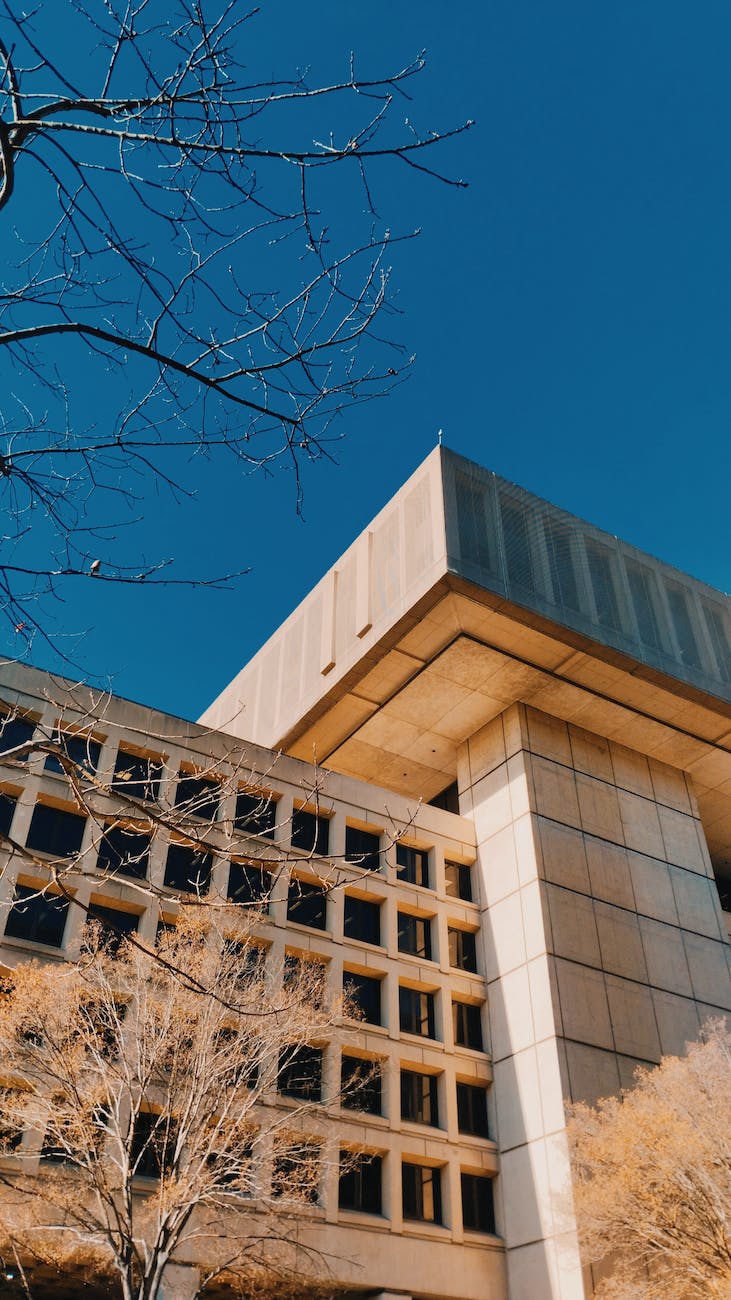
Maryland and Virginia suburbs competing for new FBI headquarters

Which DC suburb will be home to the new FBI headquarters? The competition is heating up:

Photo by Pierre Miyamoto on Pexels.com

The process of selecting a site for a gleaming, modern, suburban campus–style headquarters—one that could host roughly 8,000 FBI employees—began in President Obama’s first term. There was a four-year interruption during the Trump administration, but then the plan got back on track. With a final decision looming, elbows have gotten a lot sharper and complaints a lot louder.

To many of the aides and politicians involved, the end can’t come soon enough. It’s gotten bitter. The Virginians cite the “raw application of power” by Hoyer and others as the source of the bad feelings. The Marylanders argue that the bad vibes come from the FBI, which they claim has shown favoritism toward Virginia. All Maryland’s delegation is trying to do, they argue, is even the playing field.

The process has also activated deep-seated frustrations from Marylanders about why northern Virginia, which has boomed with corporate relocations and a government-contract explosion in recent decades, gets to have it all, while Prince George’s County—which, they hasten to note, is a majority-Black suburban county in Maryland—seemingly goes overlooked. The Virginians vent that Maryland is desperate and doing whatever it can to work the refs.

What both delegations agree on is that this is a once-in-a-generation contract that could serve as a 50-year anchor for either community, potentially bringing tens of thousands of jobs and billions of dollars to the winner. There are political legacies at stake here. Plus, there’s the CIA angle, which no one can talk about.

In many ways, this sounds like a typical competition between suburbs for a corporate headquarters or a sizable new development. On the line are jobs, status, new buildings, and potentially new residents and businesses who will want to locate nearby.

But, this is also different. The government makes this decision, not a private company. The buildings, jobs, and status may have more staying power because it is backed by the federal government.

When a decision is made, it will be interesting to hear the explanation from the FBI and the federal government on how they made the choice. Are there roughly equal options and a choice had to be made? Or, does the FBI have specific priorities when choosing a suburban community?