Kotkin argues both political parties want to destroy single-family home suburbia

The single-family home may be the bedrock of the American suburbs and Joel Kotkin suggests both political parties ignore this at their own peril:

However much they might detest Trump , suburbanites are not likely to rally long-term to a party that seeks to wipe out their way of life. The assault on suburbia, both from the ultra-capitalist right and socialist-minded left, neglects the very reasons—space and privacy—people of all ethnicities move to suburbia. Just as Republicans can ignore the unintended consequences of ultra-free market policies, Democrats ignore the aspirations of their own voters.

More important still, the anti-single-family campaign undermines the foundation of our democracy. The essence of American civilization has been the pursuit of a better life for oneself and one’s family. Take away the ability to own one’s home and we are well on our road to a neo-feudal society where the masses will need to rely on the state not only for housing but, without meaningful assets, to finance their retirement.

The clamor to restrict single-family homes and thus push the American dream further out of many Americans’ reach, represents an assault on what both parties once espoused. An America without widespread homeownership is no longer an aspirational country, but a place where people remain imprisoned by their class and unable to pursue what they perceive as a better quality of life.

Kotkin’s argument seems to go like this:

  1. The suburbs are the way they are because the American people wanted to live in suburbia. Both political parties supported this mission for much of the 20th century through monies and programs.
  2. Unless Democrats and Republicans cater to suburban voters, they will have a difficult future as political parties.

But, this seems to assume that this suburban way of life based around a home and emphasis on family will always continue this way. To some degree, Americans did desire land and privacy from the beginning yet the suburban experience was really made available to the masses first around the turn of the twentieth century and then even more so after World War II. Younger or future Americans could decide they would prefer cities and denser areas or even rural areas and the political parties could help lead them in that direction.

All that to say, I think Kotkin is right in that a majority of Americans continue to profess interest in living in suburbia. At the same time, this could change in the future and one or both of the political parties could start leading in that direction. Not all Americans want to be suburbanites so there is political room to suggest alternatives.

Defining the suburban aspects of the movie “Eighth Grade”

Defining the suburbs, whether considering geography or social life, can be complex. So when the film Eighth Grade claims to depict “the tidal wave of contemporary suburban adolescence,” how is suburbia depicted? Here are some key traits according to the film:

  1. People live in single-family homes. Kayla is shown going from house to house and acts as if her bedroom is a personal sanctuary from the outside world.
  2. The story revolves around the lives of children, a key emphasis of suburban life. When not in a home, Kayla is at school. Her social life revolves around school. Family life is critical as the primary relationship Kayla has is with her father who tries at various points to encourage her.
  3. A land of plenty. No one in the film lacks for anything and all the teenagers apparently have phones and devices to connect with each other and broadcast their lives. Some people in the film have more than others but consumer goods are not an issue in the suburbs depicted. Everyone is middle class or above even though we see little of what people do for work.
  4. The shopping mall is part of a key scene, one of the iconic places where teenagers can interact and consume.
  5. There is a good amount of driving required to get from home to home or to the shopping mall.
  6. The teenagers and families depicted are mostly white.

On one hand, the movie depicts a fairly typical residential suburban place. Many of the features of the suburbs listed above are on my list of Why Americans Love Suburbs.

On the other hand, the film does a lot with Kayla engrossed with her phone and social media. Could this take place anywhere? Or, is the film suggesting the particular combination of suburbs and social media leads to a negative outcome (too much online immersion) or positive (the values or features of suburbia help give her a broader perspective about live)?

Furthermore, the film primarily works within a well-worn depiction of suburbia: largely white, middle-class and above, revolving around teenagers, school, and families. Thinking like a sociologist in terms of variables, would it have been too much to situate a similar story in a more complex suburbia with more racial/ethnic and class diversity and a different physical landscape?

Data centers in the suburbs

Data centers are important elements in the infrastructure of a Internet-based, networked world. So, it should not be a surprise to see them pop up in suburbs in the Chicago region:

Data center provider Element Critical is expanding into the Chicago market with the acquisition of two data centers in suburban Wood Dale, Illinois, the company announced today. The deal provides a third market for Element Critical, which currently has operations in Silicon Valley and Northern Virginia…

The two data centers the company has acquired in Chicago encompass 195,000 square feet of data center space. Wood Dale is in the suburban Chicago market, 17 miles west of downtown Chicago and two miles from O’Hare International airport. Element Critical did not identify the seller, but Sungard Availability Services is listed as operating two facilities in Wood Dale…

Last week CIM Group and fifteenfortyseven Critical Systems Realty (1547) acquired a data center at 725 South Wells in Chicago’s business district. The 66,000-square-foot facility was purchased from Digital Capital Partners, a wholesale data center provider. The building has 5 megawatts of capacity.

On Monday, New Continuum said that it has acquired its flagship data center at 603 Discovery Drive in West Chicago, Illinois. The company has been leasing the site since 2013, and was supported with financing by Post Road Group, a leading real estate bridge lender

I would guess that (1) very few Internet users think about data centers and (2) very few nearby residents could identify a data center from another kind of facility. For example, here is a Google Street View image of the Discovery Drive facility mentioned above:

DiscoveryDriveDataCenter.png

There are numerous good reasons to not widely broadcast what is taking place in such facilities – with similarities to urban buildings that house telecommunication centers – yet such buildings will increasingly become regular parts of urban and suburban landscapes.

When saying that Harry Reid lives in a McMansion, is this meant as a negative?

The term McMansion is rarely used in a positive manner. Yet, a recent profile of former Senator Harry Reid’s life after politics describes his home as a McMansion:

Early on the afternoon of Dec. 11, about an hour after an Oval Office meeting between President Trump, the Senate minority leader Chuck Schumer and the incoming House speaker Nancy Pelosi devolved on live TV into a shouting match — a “tinkle contest with a skunk,” in Pelosi’s postgame grandiloquence — I pulled up to a McMansion in a gated community outside Las Vegas. I presented my ID and pre-issued bar-code pass to a security guard. Another guard emerged from a sedan in the driveway, instructed me to leave my rental car across the street and pointed me to the front door.

And a later paragraph says more about the location of the home:

Reid has decided to live out his last years in Henderson, a fast-growing and transient Las Vegas suburb. His house is in the upscale Anthem neighborhood: a fortified village of beige dwellings of various sizes and otherwise indistinguishable appearances. There is a Witness Protection Program vibe to the place, accentuated by the security detail.

The descriptions of Reid’s home draw on several traits of McMansions: an “indistinguishable appearance,” located in a gated and wealthy suburban neighborhood. Presumably, the home is large though little is said about this.

To the main point: few people use McMansion as a positive term. By saying that Reid lives in a McMansion, the writer is suggesting the home is a negative. And in the way that Americans tend to operate – what you own says something about you – then Reid himself is a negative figure. This may fit with the overall tenor of the article which suggests Reid is an unusual and odd guy:

One of Reid’s assets as a leader, when he was in office, was his willingness to feed the egos of his colleagues before his own; he was happy to yield credit, attention and TV appearances. Yet when I visited Reid in Nevada, I detected a whiff of, if not neediness per se, maybe a need to remind me that he has not been forgotten. He told me that he received a lovely call that morning from Barbara Boxer, the former Democratic senator from California. He gets calls from his former colleagues all the time, he said, and they tell Reid he is missed. He had a final conversation with John McCain over the summer, just before McCain died, punctuated with “I love you”s.

Reading Reid can be difficult. Is he playing a game or working an angle or even laughing at a private joke he just told himself? When speaking of his final goodbye with McCain, he broke into a strange little grin, his lips pressed upward as if he could have been stifling either amusement or tears. It occurred to me that Reid, typically as self-aware as he is unsentimental, could have been engaged in a gentle playacting of how two old Senate combatants of a fast-vanishing era are supposed to say goodbye to each other for posterity.

Do odd or hard-to-read politicians live in McMansions? Can a leading Senator truly be a person of the people if he lives in a McMansion in a wealthy suburban neighborhood? The choice of calling Reid’s home a McMansion at least hints at these possibilities.


Comfort of suburbia allows for the flourishing of comedy and creativity?

I recently ran across a Will Ferrell quote where he discusses where his brand of comedy developed:

“I’ve got no dark secrets, I wasn’t beaten up, my parents were kind to me and there was a low crime rate where we lived. Maybe that’s where the comedy comes from, as some sort of reaction to the safe, boring suburbs. Although, I gotta say, I never had any resentment of the place. I loved the suburbs”, he told The Observer.

Right before this quote, the profile suggests this bucolic upbringing is unusual:

Oddly for a comedian, his was a golden and uneventful Californian childhood.

Rather than a reaction to adversity, it sounds like Ferrell had a number of advantages – including later attending USC – that gave him freedom to explore comedy. Or, perhaps this relative comfort channeled his energy into more zany humor rather than dark humor.

I am not sure it is worth a full study to explore the connections between place of upbringing and how this affects comedians but a broader look at place of upbringing and artistic creativity more broadly could provide interesting. Given that America is largely a suburban nation today, are the majority of its creative types from the suburbs or from cities? The biggest cities have long been upheld as more cosmopolitan and cultured places in addition to often serving as homes of clusters of artists and performers. In comparison, stereotypes of conformist and homogeneous suburbs abound even as a good number of those who grew up there would have had opportunities that may not have been available elsewhere.

Another quick thought: how many celebrities and famous today would freely admit “I loved the suburbs”?

A vote against urban McMansions in 2018

One design and architecture writer takes aim at urban McMansions as a tired trend from 2018:

Allison Arieff (columnist, New York Times):

Urban McMansions. I gotta ask these folks—was it always your dream to live in the Apple store? And if you want to live in 10,000 square feet, maybe you should move to the suburbs?”

Arieff draws attention to three traits of McMansions which she sees as negative:

  1. Their large size. She pegs the size at 10,000 square feet though I would argue that once you are at 10,000 square feet and above, this is more of a mansion than a McMansion.
  2. Their poor or low quality architecture. The comparison here is to an Apple store, presumably a structure of a lot of glass and silver metal. This may be appropriate if you are selling trendy phones and tablets but perhaps not so much in a new residence.
  3. A connection to the suburbs. Whereas McMansions are expected to arise from empty fields, plopping a large McMansion in an urban neighborhood, particularly an older one, could be viewed more negatively. How exactly does a big and poorly-designed single-family home contribute to a vibrant and cosmopolitan city scene?

Together, these homes are an inappropriate size, do not look good, and are meant for a different kind of streetscape and lifestyle. For more, refer to my four traits that can define a McMansion.

Decades-long trend: complex suburbia

A 2018 review of what we learned about American suburbs ends with this:

It all added up to a portrait of suburbia as a landscape of dynamic cultural and structural change, not sleepy stasis.

I would suggest this is a change that has been happening for decades. Here are the first four features of a more complex suburbia that come to mind. They each go back quite a while:

  1. Different kinds of suburban communities. The prototypical suburban community looks like Riverside, Illinois or Levittown, New York, places primarily for commuters, consisting of single-family homes., and attracting middle to upper-class residents. These communities had a limited numbers of jobs and local businesses and men were expected to commute to the big city (via train or automobile). The problem with this view, common to find since any book on the history of the suburbs mentions these two bedroom suburbs, is that different kinds of suburbs have been around for at least a century. Different kinds of suburbs included: working-class suburbs, suburbs of non-white residents, industrial suburbs, and suburbs with various levels of density of housing and commercial or industrial property (including edge cities).
  2. The move of industry and jobs to the suburbs. Even as a good number of early suburbs were bedroom suburbs, the suburbs also proved attractive to industry because of cheap land, access to transportation, and the ability to pollute away from millions of residents in the big city. East St. Louis, Illinois or Gary, Indiana grew as industrial suburbs. After World War Two, the number of jobs grew in suburbs as businesses moved to the suburbs to be closer to workers (or perhaps closer to their CEOs) and suburban residents desired more goods and shopping options (shopping malls, big box stores, restaurants, etc.). By more recent years, the most common commute in the United States was suburb to suburb, not the supposedly typical suburb to big city commute.
  3. Changing suburban populations. While most early suburbs were white (notwithstanding the occasional community of non-white suburbanites who could not live in white suburbs), suburbs in recent decades have become home to an increasing number of non-white residents. Additionally, poorer residents have made their way to the suburbs in recent decades. These non-white and poorer populations may have hit a certain critical mass in recent years but the trends go back at least a few decades.
  4. Growing cultural and entertainment options in the suburbs. This trend is more recent than the first three but is still relatively common across metropolitan areas: suburbanites do not need to go into the big city for entertainment and cultural options. The suburbs feature a number of restaurants, museums, parks, music venues, festivals, and other options that make it easier for suburbanites to rarely need to go into the big city for a night out. Certain cultural options may still be richer in the big cities but more regular cultural options are now often found just a few suburbs over.

All of these suburban features may be coming together in new ways or presenting challenges to more suburbs that never thought they would change dramatically from their character at founding. Additionally, thinking about these intertwined suburban traits could help us move past seeing cities and suburbs in a strict dichotomy and instead view metropolitan regions as more cohesive wholes with similar interests and problems to address.

Every house should come with pictures of the land before houses were built

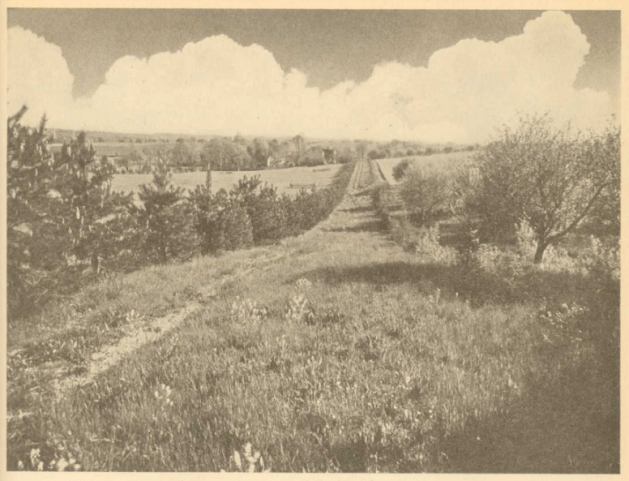
While recently working on a research project, I found 1930s pictures of the place where my in-laws live. Later the home to a master-planned suburban community, the picture presents quite an alternative vision:

SuburbanFields

Having such images could help give current suburbanites a better sense of what came before their home as well as some insight into how their home fits into an altered landscape. There would be some continuity between then and now – similar natural elements including wildlife, foliage, and topography – and notable differences such as the presence of modern roads and buildings.

Tracking down these images is often not easy. Many communities have historical societies or museums that keep such images. To see them, a community member or researcher would have to go ask for them. (And there is no guarantee they have pictures of every property; they are likely to have pictures of the more famous buildings in town.) Searching online can reveal some old maps and images of places but much of the material of local historical groups is not kept online.

Americans love It’s A Wonderful Life but did not heed its main lessons, Part Two

Americans like the movie It’s A Wonderful Life (see its ranking according to the American Film Institute). Yet, I am not sure that those same viewers and reviewers have taken the morals of the film to heart. Part Two today:

George spirals downward because of financial problems at the savings and loan. Additionally, he was not sure about a life running the family business (which he thought his brother Harry would do). In the end, he finds joy in his family and friends in the community. The local relationships, from the local girl he married to the people who utilized the savings and loan, provide him reasons to keep living.

Yet, since the film came out (1946), Americans have moved away from the close-knit relationships. This has happened in two noticeable ways. The shift to suburbs from both big cities and more rural areas led to different kinds of social ties. Suburbanites can be fairly transient and build relationships around avoiding open conflict (see The Moral Order of a Suburb) and through local institutions (like school districts rather than because of immediate geographic proximity.

Additionally, sociologists and others have suggested Americans have fewer close friendships. Even if our social media and online friends and followers have exploded, these are different kinds of relationships compared to close relationships with people with interact with regularly in-person. Furthermore, advice columnists regularly suggest seeing therapists or counselors, more impartial third-party professionals, to work out issues.

Clarence shows George that the lives of those who cares about would be markedly different if he was not around. The closing scene finds the townspeople rallying around George and a proclamation that he is rich because of his relationships. How many people today would hope for such an ending? (Granted, this is a film so how often such joyous community celebrations happened is unknown.)

Of course, the appeal of It’s A Wonderful Life may just be its nostalgia for an age that seems long gone. In an often harried and disconnected world, Americans may yearn for a (fictional?) world where the good guys win, local companies and residents help each other, people have rich friendships, and people live in small towns. But, if anything, our collective decisions since the release of the film have likely moved us further away from these realities.

Limiting suburban redtape to installing solar panels

A program is helping a number of Chicago area communities make it easier for residents to add solar panels:

If you want to install solar panels for your house or business, you’re likely to find a faster and more user-friendly permitting process if your community has earned a SolSmart designation.

Illinois has 18 SolSmart communities, including Aurora, Hanover Park, South Barrington, and Cook and Kane counties. Another 22 — including Elgin, Lake in the Hills, Naperville and DuPage County — started the designation procedure last month.

The designation means towns and counties have streamlined processes and reviewed ordinances to clearly spell out requirements, and staff members have been trained to properly examine installation plans and inspect the finished work…

There are 223 SolSmart communities across the country. The program launched in April 2016 with funding from the U.S. Department of Energy to the International City/County Management Association and The Solar Foundation, which provides technical assistance.

Residents of the American suburbs like their local government and local control yet this is an example where local bodies can get in the way: does every suburb have to go through separate processes to address solar panels? It sounds like the SolMart program helps provide resources and guidance so that suburbs do not have to do all the work on their own.

Thinking more broadly, what other suburban initiatives could be addressed at a similar level? I’m guessing a national campaign to have more permeable driveways might not work as well or one that installs containers to catch rainwater from gutters. I wonder if the solar panels issue works in part because the demand for them is still relatively small in the Chicago suburbs. Or, perhaps it is because it deals with roofs – a part of buildings that is not as visible – so concern is minimized.