On this winter day, there were at least a few people walking laps around the mall. Others sat in the empty food court. Security walked around.
The directory was about 5-6 years old. At that point, the mall still had a lot of retailers.
In the background of the image, you can see the Sears sign. Almost all of the anchor stores are long gone. Most storefronts are empty. The movie theater is shuttered.
The decline of this mall did not happen immediately. Combine online shopping, lots of shopping options in the Chicago region, and COVID-19 and you get a nearly empty mall. And it will take years to redevelop the property and incorporate the new elements into the community.
US banks hold about $2.7 trillion in commercial real estate loans. The majority of that, about 80%, according to Goldman Sachs economists, is held by smaller, regional banks — the ones that the US government hasn’t classified as “too big to fail.”
Much of that debt is about to mature, and, in a troubled market, regional banks might have problems collecting on those loans. More than $2.2 trillion will come due between now and the end of 2027, according to data firm Trepp.
Fears were exacerbated last week when New York Community Bancorp (NYCB) reported a surprise loss of $252 million last quarter compared to a $172 million profit in the fourth quarter of 2022. The company also reported $552 million in loan losses, a significant increase from $62 million the prior quarter. The increase was driven partly by expected losses on commercial real estate loans, it said.
Because I know little about this, this leads to several questions:
If patterns from earlier crises hold up, does this mean that when regional banks suffer difficulties they will be gobbled up by the larger banks?
What do regional banks have more of these loans – is this more of their specialty or they are more familiar with the local markets?
Who exactly decides which financial institutions are too big to fail and at what point might these regional banks qualify?
If these are the losses of just one regional bank, what might we expect throughout the entire US within the next few years?
The moves reflect an overall trend of tenants looking for higher-quality properties with financial stability, said Savills Regional Research Director Anders Klein…
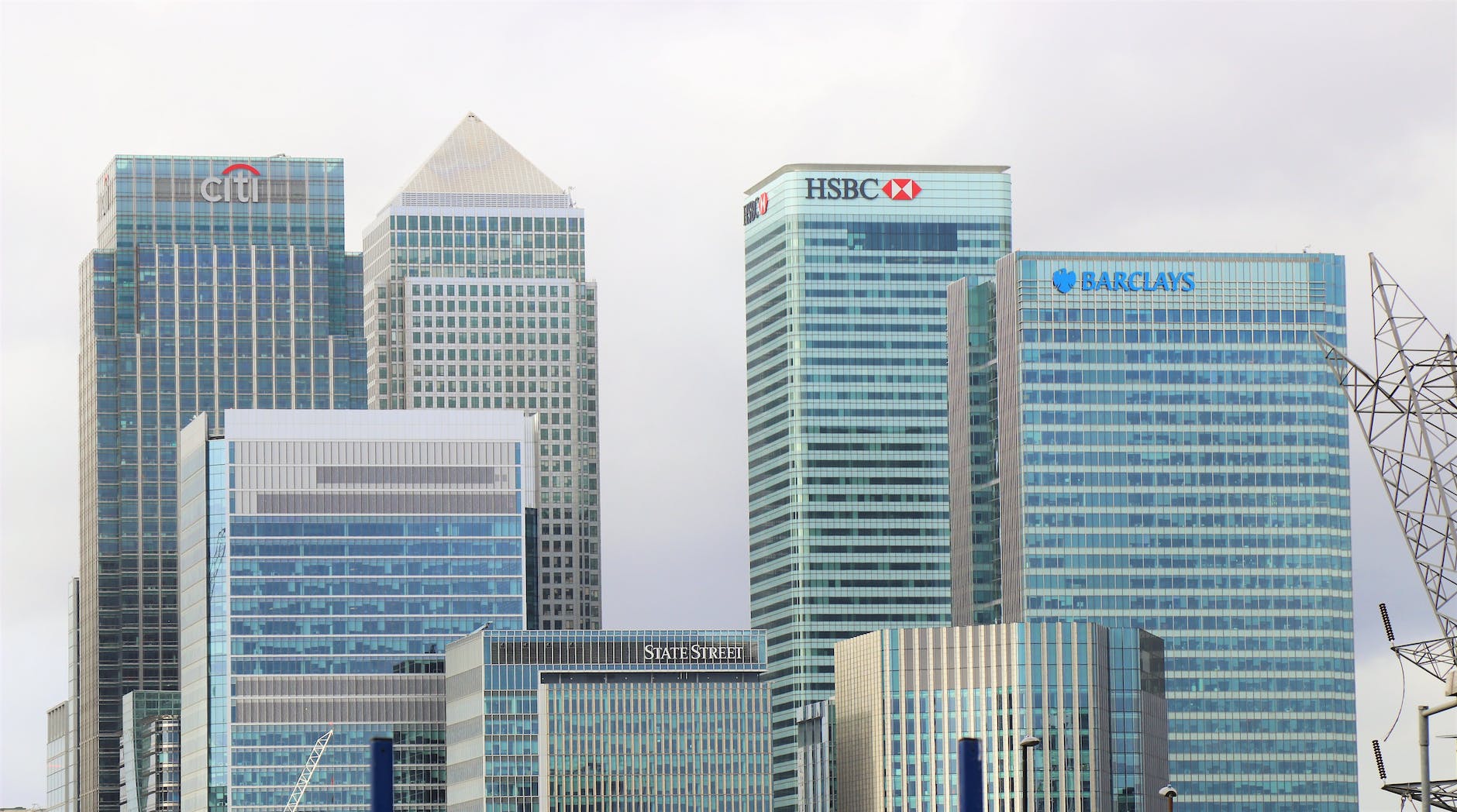
Throughout 2023, trends saw office tenants move from larger spaces in older and more bare-bones Class B and C office properties to smaller spaces in well-maintained Class A buildings with more amenities.
Several thoughts about this:
It would be interesting to see how much less companies pay for office space if this is the trade-off.
Having a nicer location and more amenities on-site might also help companies make the pitch to have employees in the office.
What are the new trends for nice office spaces? We have had a few decades now of gyms, meals, on-site services, etc.
What happens to the less desirable office space? The article suggests some is converted to other uses, like for data centers. other properties might be redeveloped for housing or mixed-use projects.
Could these opposing trends mean office space will look significantly different in the United States in a few decades or will offices still be the offices we know today?
West Dundee and Bloomingdale officials have similar visions for the mall properties in their towns.
West Dundee sees a mixed-use development with residential, office, retail and entertainment. Bloomingdale’s consultants have drawn up conceptual plans showing residential, commercial and recreational development in place of the mall’s former retail buildings and parking lots.
Typically, villages stay out of the real estate business and leave redevelopment of retail centers to developers. But for West Dundee and Bloomingdale, taking ownership of their malls and clearing some obstacles, such as multiple property owners or restrictive covenants, were deemed essential for future redevelopment.
“Almost uniformly, every developer with whom we spoke stated that the site has too many complications — too many owners, too many covenants, too many uncertainties,” Nelson said last year. “The village’s aim is to bring simplicity to the process so reliable developers with established track records will be interested in partnering to reformat the area. Without municipal intervention, that simply won’t happen.”
I wonder if this is an instance where a large property owner – the owners of these malls – can afford to sit on these properties for a while to see if there will be a bigger financial return later. I remember reading in the past about parking lots in downtown areas; they are not flashing and they are not the preferred land use but the company who owns that lot can wait until there is significant demand for the property and then make a lot of money on selling the parking lot. Compared to these suburbs, the property owners may be less interested in moving quickly on a redevelopment plan. (This could also apply to recent conversations about suburban office parks and downtown office buildings: even vacant buildings might not need to be sold or redeveloped if an owner can afford to hang on to them.)
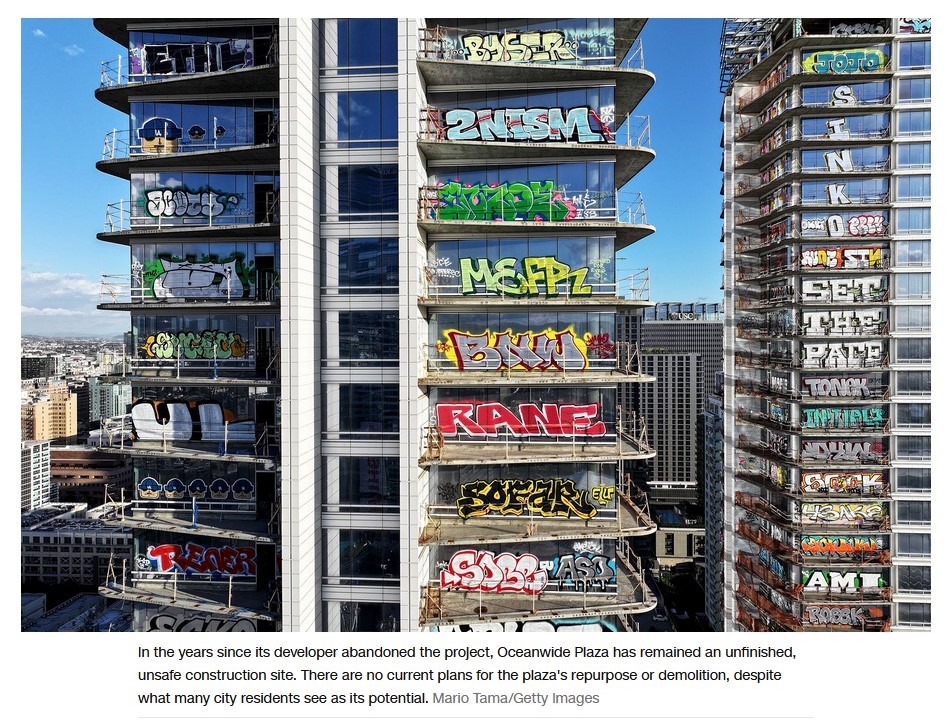
America’s offices are emptier than at any point in at least four decades, reflecting years of overbuilding and shifting work habits that were accelerated by the pandemic.
A staggering 19.6% of office space in major U.S. cities wasn’t leased as of the fourth quarter, according to Moody’s Analytics, up from 18.8% a year earlier. That is slightly above the previous records of 19.3% set in 1986 and 1991 and the highest number since at least 1979, which is as far back as Moody’s data go…
That glut weighs on the office market to this day and helps explain why vacancies are far higher in the U.S. than in Europe or Asia. Many office parks built in the 1980s and earlier struggle to find tenants as companies cut back on space or leave for more modern buildings.
“The bulk of the vacant space are buildings that were built in the 1950s, ’60s, ’70s and ’80s,” said Mary Ann Tighe, chief executive of the New York tri-state region at real-estate brokerage CBRE.
And just as in the early ’90s, it is the overbuilt South that is hit hardest. Today, the three major U.S. cities with the country’s highest office-vacancy rates are Houston, Dallas and Austin, Texas, according to Moody’s. In 1991, Palm Beach and Fort Lauderdale in Florida and San Antonio held those positions.
This sounds like a cyclical market: during financial downturns, fewer companies want office space and vacancies rise. During economic success, more companies expand and make use of the space. When more space is built during the good times, that same space is not necessarily needed later.
Does that mean that COVID-19 was only a partial contributor to office vacancies? Was a reckoning going to come for urban office space even without a global pandemic? Or might office space be back in demand again soon as economic conditions change?
I can see why new office space is desirable to fund and build. Whether it should be built, given the cycles discussed above, is another story. And if office space cannot be easily converted to other uses, how much more is really needed in major cities?
Burlington, Michaels, Barnes & Noble, Ollie’s Bargain Outlet, Macy’s, HomeGoods and other chains have replaced old Bed Bath & Beyond stores. Indoor pickleball courts, trampoline parks and bowling alleys have also filled up the vacancies…
The majority of Bed Bath & Beyond’s stores are in the suburbs of mid-size and large cities, and are under 50,000 square feet. These are appealing qualities for retailers as some companies favor smaller spaces, instead of mega stores, to save on rent and labor and as shoppers buy more online. Macy’s, for example, is opening its smaller “Market by Macy’s” versions at old Bed Bath & Beyond stores…
Bed Bath & Beyond spaces have been grabbed up swiftly at rents of up to 50% what Bed Bath & Beyond was paying, according to commercial real estate investment firm CBRE. Landlords are taking advantage of the vacancies, with some dividing former Bed Bath spaces into smaller sizes, said Brandon Isner, CBRE’s head of retail research for the Americas.
“There is little to no concern that any of the spaces will go vacant for long,” he said…
It is interesting to hear that some suburban retail real estate is in demand. This would contrast with the negative news about shopping malls or about some big box and strip mall properties. Perhaps it is the particular size of these stores – a medium size that could appeal to a lot of other retailers – or perhaps it is the low price – which cuts the cost of doing business.
I hope there are some large-scale studies going on regarding the transformation of retail spaces in the suburbs. Imagine taking pictures at 5 year intervals in major shopping districts or along major roadways. At the least, it could detail the changes in buildings and what retailers are present. But, it could also catalogue major changes to structures, what kinds of retailers are present, and how popular these sites are. Just as the shopping mall defined life for suburban teenagers for at least a decade, the major shopping centers and strip malls in suburbs defined life for millions over multiple decades. Plenty of people visited Bed Bath & Beyond and many more could visit these structures – with whatever is in them- for years to come.
So if COVID isn’t to blame for all the shuttered stores, what is? Well, when a landlord doesn’t lower the rent to get a new retail tenant, it’s because that landlord can’t. The market that sets retail rents isn’t only between tenants and landlords. It’s also between landlords and the banks that finance the buildings. And the banks, in many cases, won’t let property owners lower their rents enough to fill their properties. The pandemic may have emptied out America’s storefronts, but it’s banks that are keeping them that way…
So if you’re trying to lower the rent on your retail space, your bank may say no. And even if it says yes, it might demand you pay off a chunk of the mortgage up front, to account for the way you’re lowering the building’s value by lowering its rental income. In short, reducing the rent on your storefront might land you a tenant — but it could cost you big-time with your bank.
Of course, nothing is forcing banks to be all hard-assed about it. They’re free to renegotiate or refinance the terms of mortgages, given the extraordinary downturn facing retail storefronts. In some cases, according to real-estate brokers I spoke with, banks have apparently decided not to stand in the way of landlords in San Francisco who are offering shorter-term leases and lowering retail rents anywhere from 20% to 50%. One popular restaurant space in the city’s tech-heavy South of Market neighborhood that has been dark since 2020 is finally set to reopen this year as a bar and “entertainment concept” — but only because the landlord is offering the new tenant a below-market rate and improvements to the space…
You’d think everyone involved would be motivated to fill an empty storefront — landlords aren’t making money, cities aren’t getting taxes, and the neighborhood has an eyesore. But that eyesore may actually still be profitable to the landlord and the banks. “In SoHo, something vacant isn’t necessarily vacant,” says Ortiz. “Someone’s paying rent there, and the landlord’s perfectly fine with it. It’s a vacancy to the pedestrian, but not to the landlord.”
Vacant properties can create all sorts of problems for communities. The focus on this story is on city properties but vacant properties are issues in suburbs as well. As the story suggests at the end, encouraging properties to be vacant for shorter periods of time and/or for banks to be more flexible might require some creativity.
I wonder if there is more third party actors – not the lender or the current lease holder – could do to provide solutions. Are there certain land uses that could be more temporary but fill vacant spaces? Are there agreements to be made between lenders and a tenant to make something of the property without t being a fully functioning property?
Could communities also more directly pressure lenders about vacant properties? Perhaps this happens more behind the scenes but imagine a community group organizes around asking a specific lender about a particular property in the neighborhood. They make some noise, make the lender public, ask for changes.
The company plans to repurpose vacant big-box retail spaces in Mundelein, Naperville and Villa Park with openings anticipated in December.
Nine courts are planned in Naperville with eight each in Mundelein and Villa Park as the first entries in the Midwest.
The 80 planned facilities are being pursued by 13 new franchisees in the first part of the expansion. More than 300 locations across the U.S. are envisioned, according to Schubiger…
Bringing in pickleball could help address these problems. The building is kept up. It can bring people in and out of the building. Pickleball is on the rise and can bring new energy to an older structure. New revenues might be generated.
Is a pickleball facility on par with the large-scale retail efforts that generated lots of tax revenues? Maybe not but the alternative of empty big box stores is not desirable.
DuPage County, Illinois is a vibrant suburban county with over 930,000 residents, lots of jobs, and numerous communities. Like many suburbs, it has become more complex in recent years due to demographic, cultural, economic, and social changes. It is also home to hundreds of religious congregations.
Brian Miller (Professor of Sociology, Wheaton College, and co-author of Building Faith: A Sociology of Religious Structures) is using a quantitative approach focusing on DuPage County in Illinois, which is home to hundreds of religious organizations. He is documenting the number and types of transitioned congregations in the suburban context, looking for patterns of building usage and community impact.
I have started looking at sources that will help with the project. Here are two that are proving very helpful:
This builds on earlier work I have done regarding religious buildings. Based on existing research, I would expect a variety of outcomes for former religious buildings from no building present on the site to empty structures to buildings converted for other uses.
Detroit officials want to triple property-tax rates on vacant land and reduce rates by an average of 30% for homeowners. The idea is to spur development on 30,000 neglected vacant lots held by owners who pay almost no taxes. It is a tall order. The city’s population has fallen by two-thirds since its 1950s heyday, and the Detroit land bank holds another 63,000 vacant lots.
In Pittsburgh, the city council this month passed a measure to more easily transfer the 13,000 or so city-owned lots and vacant properties to a municipal land bank and into the hands of developers or nonprofits. The city’s population is down by more than half since its peak in the 1950s.
Chicago, whose population has fallen by about a quarter since the 1950s, has more than 10,000 city-owned vacant lots. Another 16,634 are caught in a limbo of back taxes and unpaid fees. Every other year, the county tries to unload such properties in a tax-lien auction known as the Scavenger Sale. Only about 8% of the properties in the auctions from 2007 to 2019 went to buyers who managed to obtain a clear title, the Cook County Treasurer’s office found…
A measure signed into law last week by Illinois Gov. J.B. Pritzker aims to resuscitate such properties. It cuts interest rates on overdue property taxes to 9% from 18%. It also allows Cook County to automatically acquire tax liens on delinquent properties before they reach the Scavenger Sale, reducing the time it takes to clear titles and transfer them to developers or nonprofits.
Even with reduced obstacles, it will take time for the number of vacant properties to be significantly reduced.
Once the property can be purchased and redeveloped, new questions emerge. What will be built there? What do owners, developers, and builders see as the price points that make it worth their time? How do new buildings and/or land uses fit with the existing neighborhood?
In other words, this is a multi-decade story worth paying attention. How did these properties become vacant and where did the residents go? Where do things stand now? What will they look like in the future? Specific decisions now could help alter the story to come.