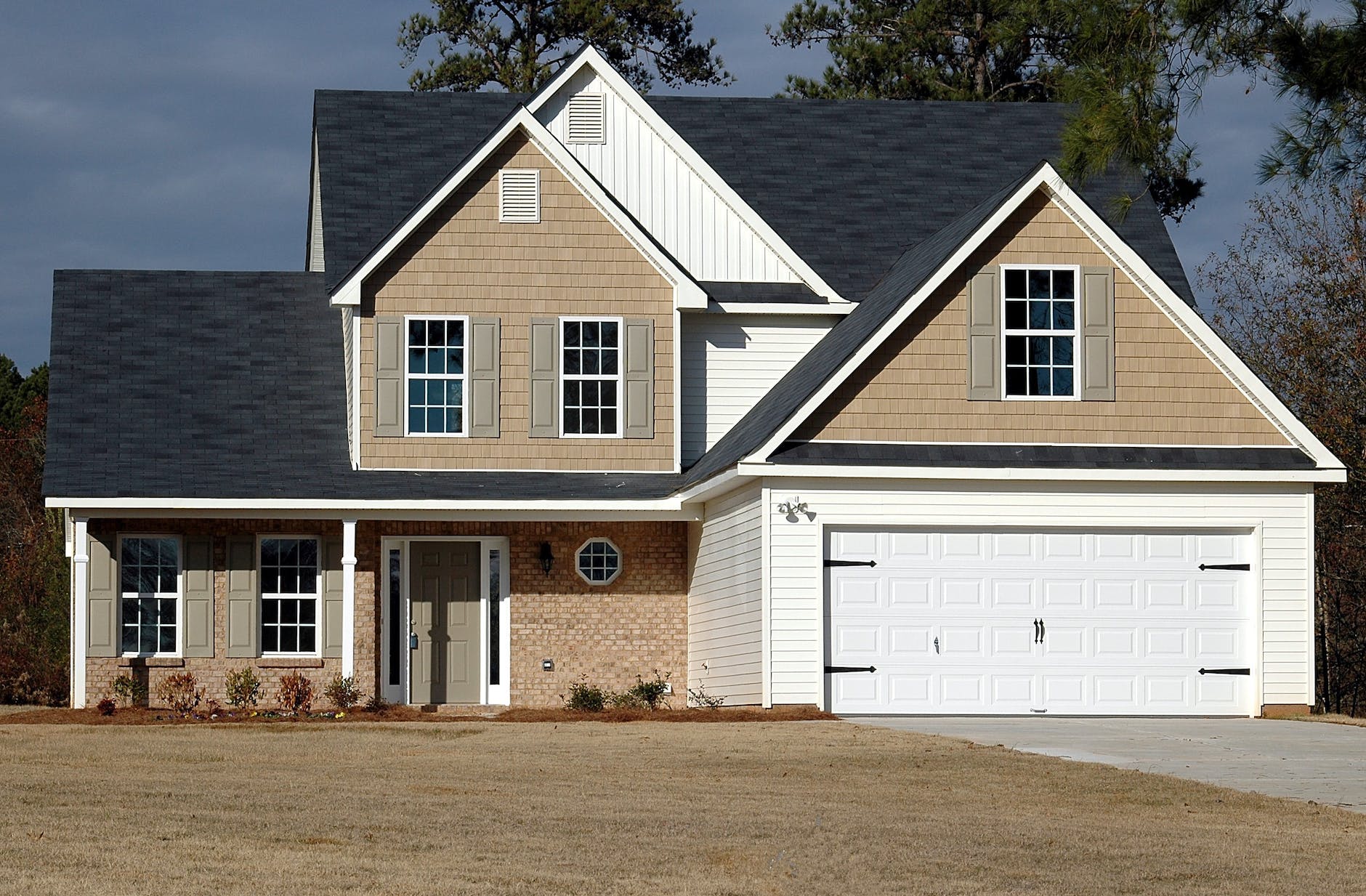
How young homebuyers say they will come up with a down payment

Earlier this year, Redfin research looked at how younger adults will find the money to purchase a home:

Photo by Feedyourvision on Pexels.com

More than one-third (36%) of Gen Zers and millennials who plan to buy a home soon expect to receive a cash gift from family to help fund their down payment…

Young homebuyers are also receiving help from family members in other ways. Roughly one in six (16%) Gen Zers and millennials say they’ll use an inheritance to help fund their down payment, and 13% plan to live with their parents or other family members.

Working to earn money is the most common way for young buyers to fund down payments: 60% report they’ll save directly from paychecks, and 39% are likely to work a second job, the most common responses to this question…

Just 18% of millennials used a cash gift from family to help fund their down payment in 2019, according to a Redfin survey from that time, and the share had only increased to 23% by 2023. Note that the 2019 and 2023 survey results noted here are for millennials only, while the 2024 results in this report are for millennials combined with Gen Zers. 

This is one way that wealth is passed from one generation to another. As the parents have resources (including possibly through the increase in value of their own residence), they can pass them along to their children at key moments to improve their prospects. And if parents do not have these resources, it would then take longer to amass a down payment.

One twist here is the suggestion that more parents are providing funds for down payments than in the past. The comparison is between 2019 and 2024. Were the numbers ever higher at some point in the past or perhaps higher among certain segments of the population?

What would it take for third parties to get in on this? Imagine a lending company says we will provide a large percentage of the down payment and you then owe us X amount of dollars when you sell the home at fair market value. I remember receiving some solicitations in the mail with a similar scheme for home equity loans; why not for down payments with bigger returns for the investors down the road?


Americans on what they think the cutoffs are to be considered “financially comfortable” and “wealthy”

A recent survey asked Americans how much wealth someone would need to fit into different categories. Here are some of the results:

Photo by Pixabay on Pexels.com

Charles Schwab today released additional findings from its 2024 Modern Wealth Survey. Since 2017, Schwab has collected data annually on Americans’ perspectives on saving, spending, investing, and wealth. This year’s study reveals that Americans now think it takes an average of $2.5 million to be considered wealthy – which is up slightly from 2023 and 2022 ($2.2 million).

By generation, Boomers have the highest threshold of what it takes to be considered wealthy, at $2.8 million, while the younger generations, Millennials and Gen Z, have lower thresholds of what is considered wealthy. At the same time, Americans say that the average net worth required to be financially comfortable is $778,000. The average net worth required for financial comfort reached a peak last year at $1 million, but this year, Americans’ estimations are more in line with 2022 ($775,000) and show an upward trend when compared with 2021 ($624,000).

Income is one measure of considering status and social class and wealth – adding up assets and subtracting debts – is another way. It may have benchmark figures like income does; perhaps making six figures is similar to being a millionaire or the median income might be akin to median wealth.

The survey referenced above has less intuitive figures after considering all the responses. To be wealthy, $2.5 million is up from previous years. It is certainly above $1 million and $2 million. It feels oddly specific, as if having $2.3 million would not quite qualify but $2.8 million certainly does (even for Boomers!).

The figure for being financially comfortable is also interesting: $778,000. Less than $1 million, more than $500,000. The figure has gone up and done in recent years. Having less than $778k feels uncomfortable and insufficient?

This would be fascinating to track over time with multiple kinds of data. If asked to add up different costs or expenses people might face, would the responses from the survey be revised upward or downward? Does this depend highly on the respondent’s current income level or cost of living or other traits? How much do broader economic factors affect the responses people give?

Large wealth disparities in Chicago by race and ethnicity

A new report shows differences in wealth and assets by race and ethnicity in Chicago:

Photo by Airam Dato-on on Pexels.com

Disparities across groups are stark. According to the study, data collected in 2022 showed Chicago’s white families have the highest median net wealth ($210,000), while typical Black families report no wealth ($0). Chicago’s U.S.-born Mexican families have 19% ($40,500) of a typical white family’s wealth, while foreign-born Mexican families have 3% ($6,000) and Puerto Rican families have 11% ($24,000).

As for median asset values, Black families have $20,000, foreign-born Mexican families have $26,000 and white families have $325,500.

The study also found Black families had the lowest estimated rate of home ownership at 34%, while white families had the highest at 72%, reflecting the city’s historic discrimination against people of color through redlining, racial covenants, a lack of checking or savings accounts, and payday lending, where unsecured loans with high interest rates are used as emergency financing that keeps borrowers in a cycle of long-term debt.

The researchers asked people about possible interventions:

“The Color of Wealth in Chicago” study also surveyed people about potential policy proposals for addressing structural economic disparities. Data shows that public support for interventions on local and federal levels would have a meaningful impact on racial wealth inequities. Wealth-building options such as guaranteed income projects, a Medicare for All program, and baby bonds, which are government-issued trust accounts for newborns, garnered support from the bulk of respondents, including families at or above the median net worth.

Wealth matters because it affects all kinds of life chances, including where people live, access to education and medical care, and nearby jobs.

While these figures echo national patterns, Chicago (and the region) also has a particular history that contributed to these gaps. See a recent court settlement intended to help address public housing discrimination or efforts in nearby Evanston to provide reparations for housing or suburban discussions about who affordable housing is intended for. To assume that federal and/or state policies alone will address these disparities misses the potential to develop and harness local collective will and resources. Wasn’t this part of conversations about the legacy of former mayor Rahm Emanuel and whether his policies favored downtown or the whole city? Could the whole region come together to address these concerns (which are not just limited to the city of Chicago)? Wouldn’t addressing these disparities now help lead to a better future for more people?

Are houses in the American Dream primarily about building wealth?

A recent article about the economic struggles of millennials describes the American Dream this way:

Photo by Oleksandr P on Pexels.com

Central to the pitch of the American Dream is a house. Homeownership, the traditional thinking goes, is the surest way to build wealth. Save up for a down payment, buy a starter home, and definitely don’t spend too long throwing money away on rent.

That dream has become more fantasy in the Covid-era economy.

The first sentence describes a longstanding sentiment: Americans want a house.

The second sentence goes a different direction. Buying a house is about making money. This might be in addition to other reasons for buying a home including: the status of owning a home; enjoying the home; maintaining and improving a piece of private property; and being a part of the community.

This short section highlights a larger shift in how Americans view homes. With the increase in housing values, more people view homes as a significant investment. They expect to make money on their homes. They plan to live in their homes for a while and experience profits when they sell. They make a home a part of their portfolio. And if different groups do not have as much access as homeownership to others, then wealth disparities exist and could grow.

How much do Americans deserve to own a home?

Building on yesterday’s post regarding the growing homeownership rate of millennials, I wonder: how much do Americans today feel they deserve to be able to own a home? It is one thing to make a choice to buy a property, it is another to feel that the economic and social conditions render this difficult or impossible. Here are several factors complicating this issue:

Photo by Pixabay on Pexels.com

-For at least one hundred years, American leaders and residents and cultural narratives have held up homeownership as an important marker of success.

American policies have also helped make homeownership possible. It is not just that people wanted to own homes; the American system helped make this possible.

Homes are a primary driver of wealth. If Americans feel they cannot purchase a home, they are missing out on this wealth-building instrument.

Homeownership is often viewed more favorably than renting. To own suggests stability and involvement in the community. To rent suggests transience and lack of financial resources.

-There is an expectation that younger or upcoming generations will able to achieve more than previous generations. This is part of the American Dream and tied to homeownership: shouldn’t younger Americans have bigger and better housing options?

The American social contract includes a house. Many Americans expect they should be able to purchase a home. I would guess that Americans and the American structures will continue to pursue and promote homeownership, even when it might be difficult. A big change might require a significant event or a steady long-term process moving toward different housing preferences and possibilities.

Catching up: over 50% of millennials own a house

The first part of the title of the post works two ways: I somehow missed this news earlier this year and the absolute number of the homeownership rate for millennials may matter less than how it compares to previous generations.

Photo by MART PRODUCTION on Pexels.com

The nation’s largest generation made the jump to a homeowner majority last year, reaching more than 18 million, according to a recent report from Rent Café. 

Rent Café’s report found that 51.5 percent of millennials now own a home. This population, which consists of those born between 1981 and 1996, added seven million homeowners in the previous five years alone…

Millennials became a homeowner majority generation when the average member was 34 years old while Gen X reached the milestone by 32 and baby boomers by 33…

Sky high mortgage rates also pushed many buyers out of the market and back toward renting. Rent Café’s report showed millennials are still the dominant renter generation in 2022

It takes time in life to develop the resources and connections to achieve homeownership. Since owning a home is an American ideal, it can serve as a marker of how successful Americans are.

Thus, the data cites above provides some hints regarding millennials. They were slightly older than the two previous generations for the average age for becoming a homeowner. Millennials have more renters than previous generations.

Trends could change in the future. Economic conditions could again become more favorable. New forms of housing options may develop. New policies could help promote homeownership.

However, this narrative is going pretty strong for the moment: millennials have had a harder time pursuing this basic marker of American success. And because the American dream is supposed to be attainable, this will have implications for discussions, policies, and communities.

Average sales price of houses up over 500% since 1983

An article on generational wealth transfers in the United States highlighted this significant rise in the average selling price of homes from 1983 to today:

From reading the chart, the rise in average prices is over 500% from roughly $90,000 in late 1983 to over $500,000 in early 2023. This, presumably, can be seen in communities across the country.

This is quite the rise. In this time, leaders promoted the ideology of homeownership. Americans came to see housing as more of a financial investment. It was the time of McMansions. Sprawl continued and zoning protected single-family homes.

Now there is a lot of money tied up in homes and real estate plus homes have become an even more important marker of wealth. As the article asked, will the transfer of wealth in these homes simply reproduce existing disparities in housing? Or, might there be ways that the increased value of housing help promote access and opportunities for others?

Homeowner’s wealth drops in recent months but still up significantly from beginning of pandemic

The amount of wealth homeowners in the United States has dropped in recent months:

U.S. homeowners have lost $2.3 trillion since June, according to a new report from the real-estate brokerage Redfin. The total value of U.S. homes was $45.3 trillion at the end of 2022, down 4.9% from a record high of $47.7 trillion in June. That figure signifies the largest June-to-December percentage decline since 2008.

But housing wealth is significantly up since the beginning of COVID-19:

“The housing market has shed some of its value, but most homeowners will still reap big rewards from the pandemic housing boom. The total value of U.S. homes remains roughly $13 trillion higher than it was in February 2020, the month before the coronavirus was declared a pandemic,” said Redfin Economics Research Lead Chen Zhao in the report.

“Unfortunately, a lot of people were left behind. Many Americans couldn’t afford to buy homes even when mortgage rates hit rock bottom in 2021, which means they missed out on a significant wealth building opportunity,” Zhao added.

If many Americans view housing as an investment, then owning a home during the pandemic has paid off. Just by being a homeowner at the right time, they benefited.

Hence, I am a little confused by the story that leads with the recent data. The recent drop is just a portion of the big gain from February 2020 on. People do feel losses strongly but the bigger picture is that homeowners have gained much in recent years.

When the values of homes quintuple over 5 decades by just being there

I recently saw a house near me that was for sale. Checking the online property history, I found that the home is now worth roughly 5 times more than what it sold for in the early 1980s. By just being there for the last four decades, the home has quintupled in value.

Photo by Nataliya Vaitkevich on Pexels.com

This is not a phenomena restricted to our suburban area. Recently following an Internet rabbit trail, I was looking up property values in Levittowns on the East Coast. I remember seeing that their values had at least tripled or quadrupled over a similar span. What were once cheap and simple suburban homes became homes with values significantly above the median value for owner-occupied homes.

Homeowners would likely say that the values have increased because of the maintenance and upgrades in the homes and properties. There has been change; the homes near us have been updated and added to over the last fifty years while the Levittown houses have been transformed in numerous ways over the decades.

But, those positive changes do not add up to such an increase in value. Much of the increase in value has come from just being there. Being in the right location. The owners who lived in such homes benefited financially from a positive return on investment and could roll that new found wealth into other homes, investments, or opportunities.

Limited options for building wealth for those who cannot achieve homeownership

In an article examining building wealth through homeownership, there seem to be limited alternatives:

Photo by Monstera on Pexels.com

Herbert says there are ways for renters to build wealth outside of home ownership, and he points to stocks and bonds as one example. In some cases, this may be a better investment than housing, he says.

“Renters can do well if they are able to put money into those financial instruments. The rate of return on stocks and bonds over the long term has certainly been higher than the rate of return on homeownership,” he says.

Still, Herbert is optimistic the housing market will improve in 2023 for those who want to go that route.

There are other investment options but this article does not expand much on them. The focus instead is on homeownership and the lengths people might go to achieve it or the ways opportunities might be expanded to more people.

One aspect of the article that struck me was the emotional component of status and success regarding homeownership. Owning a home and/or having a mortgage is not just a financial transaction that will likely pay off one day. It also involves providing for household members, signaling success, and joining a particular social class. It is hard to separate the financial investment and the emotional investment in American society.

Is the key then to promoting other investments or celebrating renting to successfully develop positive connotations and feelings? What if renting was viewed as a flexible form of provision that allowed households the nimbleness needed in today’s uncertain world? or, is investing in stocks and bonds an honorable investment in the future?

Finally, wealth and homeownership do not necessarily have to go together. New structures or systems might decouple this connection or provide multiple pathways to economic success.