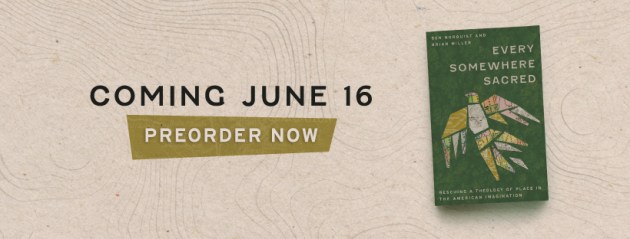
Writing a book does not just involve putting words on a page, or, more accurately, typing letters into computer software. It involves thinking, discussing, doing. I find it hard to write something without first turning it through in my mind over and over as well as living out the ideas and the questions. Here are two examples from the process of creating Every Somewhere Sacred.
First, I live in the suburbs of the United States. These are unique settings with particular histories. A majority of Americans live there, including many American Christians. (Read Sanctifying Suburbia for more on this.) What does difference, if any, should it make to be Christian and live in the suburbs?
Thinking about this is important. It is easy to live a suburban life, including doing Christian things as part of this life. Doing is also important: Christians are to use their minds and their bodies as they live out their faith.
Second, lots of American communities are home to Christian congregations and organizations. How do these Christian groups shape places and land? Are they primarily focused on their own internal activities or do they contribute to the flourishing of communities and places?
I ask this as I live and work in a suburb partly known for its religious character. In addition to being home to a known evangelical college, it is home to 40+ churches and many evangelical organizations are in the suburb or nearby. Does this mean the character of the community is different in terms of how people interact (interpersonally and collectively) and how land and creation are treated?
I hope the years spent working with Ben on writing this book also influenced how I act. My question about living in the suburbs or Christians meeting together in certain locations could apply to any place and setting. We address both thinking and doing in Every Somewhere Sacred. We argue we need new tools, metaphors, and lenses to help us recognize what is going on in lands and places and to see what God is doing. We want to act with these lenses, listening to others, open to what we might have missed, and acting in ways that are consistent with God’s mission. If we can see land and place as a gift, sacrament, kin, or home, it can prompt us to better participate in what God is already doing in these settings.