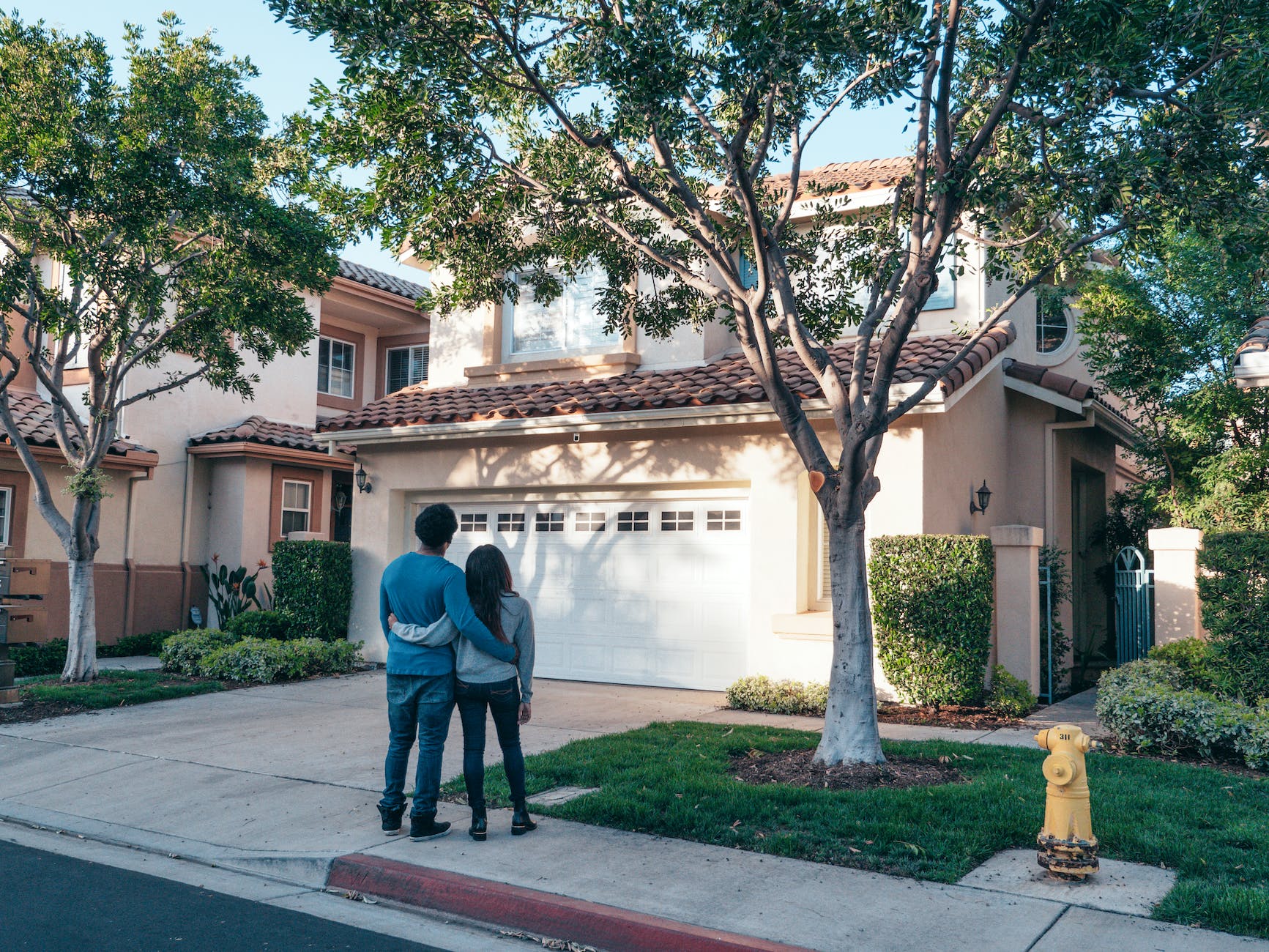
“We’re still here,” says Kent Griswold, 63, who lives in Bend, Ore., and is the founder of the Tiny House Blog, which is believed to be one of the first blogs about tiny houses. “The movement hasn’t stopped growing, it’s just not in the public eye as much anymore.”…
Laubach says due to the pandemic, which has made people re-evaluate what is important, retirees, mature widows and single women are driving much of the demand today…
Griswold agrees, but says instead of just the novelty of people looking for tiny homes on wheels, which really drove the movement during the 2007-09 recession, people are looking at other ways to live small…
“Tiny homes on wheels or park models are thought of as RVs, but many jurisdictions are starting to think of them as Accessory Dwelling Units (ADUs). Still, the code problems can get frustrating for people,” says Laubach.
COVID-19 and the housing affordability issues in many metropolitan regions would seem to be the conditions under which tiny houses would thrive. People want to get away from typical locations and they need cheaper spaces.
At the same time, more uncertain economic conditions might mean that people are less likely than ever to be lenient about zoning and codes. This limits where tiny houses are possible. This is, of course, a much broader issue: many communities want to protect single-family homes at all costs.
Does this mean something has to give in the future? Can people have really high property values, complain about the lack of affordable housing or housing options, and continue to restrict other housing options like tiny houses?
The tiny house movement might be small and it might work steadily but its ongoing presence is at least a reminder that other housing options are possible.
By 2020, the A’s were the only team left. But they made it clear they were prepared to leave, too. Last May, majority owner John Fisher and team president Dave Kaval—resident cartoon villains of what remains of the Oakland sports scene—began threatening to follow in the Raiders’ footsteps and relocate Oakland’s last pro team to Las Vegas … unless the Oakland City Council voted to help them build a $12 billion stadium “district”—replete with condos, hotels, and apartment buildings—on a wedge of waterfront property operated by the Port of Oakland just west of Jack London Square. If approved, the project would constitute one of the largest and most transformative development deals in California state history. It would likewise require hundreds of millions of dollars in public funding to complete. Fisher, who is heir to the Gap Inc. fortune and has a net worth north of $2 billion, has committed to privately finance the construction of the stadium itself, but the project isn’t viable without a suite of infrastructure improvements to the surrounding area. These improvements are what the A’s asked the city to find ways to pay for.
It was a familiar ploy. As journalists Neil deMause and Joanna Cagan write in Field of Schemes: How the Great Stadium Swindle Turns Public Money Into Private Profit, since roughly 1984, when the Colts left Baltimore for Indianapolis, team owners across the country have worked systematically to “supplement profits by extorting money from their hometowns,” usually “under threat of moving.” Starting around last summer, Fisher and Kaval began to expand upon their means of municipal extortion. In the run-up to a series of contentious City Council meetings, Kaval took to posting videos of himself on Twitter jubilantly attending Las Vegas Knights games, as if to spur the city into supporting his proposal out of jealous insecurity. Fisher, meanwhile, enlisted MLB commissioner Rob Manfred to act as muscle. “Thinking about this as a bluff is a mistake,” Manfred told the BWAA in July 2021. “This is the decision point for Oakland as to whether they want Major League Baseball going forward.”
Oakland has been struggling to make that decision ever since. Some, like Marcus Thompson, an East Oakland native, 2021 California Sportswriter of the Year, and author of Golden: The Miraculous Rise of Steph Curry,resent Fisher and Kaval’s tactics, and say that Oakland’s political leaders “should not be caving to an owner” worth over $2 billion who has “shown zero desire to be a meaningful member of our community unless it is profitable.” Certain Oakland political leaders, such as Councilmember Carroll Fife, who represents the district in West Oakland where the A’s stadium would be built, agree. “There are so many dire issues in Oakland right now,” Fife told me in February—citing, among other things, Oakland’s crises of gentrification, affordability, and homelessness, which the United Nations has singled out as “cruel.” Fife said she doesn’t believe “a sports team is going to address” any of them. “We should use public resources toward addressing residents’ immediate needs.”
Others believe the economic benefits of a new stadium are worth pursuing in and of themselves. “Building the new A’s ballpark would be a blessing,” Mitchell Schwarzer, historian, professor, and author of Hella Town: Oakland’s History of Development and Disruption, told me in an email. It would “bring crowds to adjacent Jack London Square,” and fill “its vacant spaces with places to eat, drink and shop.” Oakland’s mayor, Libby Schaaf, agrees, calling the A’s stadium project “a world-class waterfront ballpark district” with the potential to “benefit Bay Area residents for generations to come.”
No major city or leader wants to lose a major sports team. And the Oakland case is unique with multiple teams leaving in recent years.
However, the price that is often paid to keep a team is not worth it. The costs are too big, taxpayers lose other opportunities, the money would be spent elsewhere in the city if not at sporting events, and the owners are the ones who truly win with the increasing value of their team.
The Oakland case is also different because of the way the Athletics are run. The team has a Billy Beane approach that suggests an excellent team can be created with a limited payroll and an ability to exploit market inefficiencies. The A’s have done this a few times in the last two decades…and then they sell off all of their good players and start again. They just did this going into the 2022 season and have a minimal payroll of just under $50 million, second-lowest in baseball and roughly one-fifth of the biggest spenders in the sport. In addition to the economic case for taxpayers, is this a team worth supporting?
The wildland urban interface often leads to stories about suburbanites encountering animals they might not expect. Recently in the Chicago region: a bison free in the northern suburbs.
One resident in Hawthorn Woods recently captured footage of a buffalo out and about, just walking around. Believe it or not, this isn’t the first time one has been spotted roaming the region.
Vince Clemens noticed the giant animal outside his home Friday, and his daughter, Michelle, captured video of the buffalo just minding its own business.
“I looked outside and saw the buffalo walking down the street,” Vince Clemens told NBC 5. “[She] broke free from a farm months ago, and is no stranger to people in the Northwest Suburbs…”
The wayward animal’s identity hasn’t been confirmed, but some wonder if its “Tyson the Bison.” Tyson escaped last September while being unloaded at her new home at a farm in unincorporated Wauconda.
More Americans may be much more familiar with seeing bison in captivity, such as in the zoo as in the picture above. They do not expect them to wander through suburban yards.
However, bison were regulars in the Chicago region prior to settlement by white Europeans. See these maps from Wikipedia (and the zoo has a similar map):
While bison will not be roaming the suburbs in large numbers anytime soon, suburbanites seem consistently surprised by coyotes and other animals that do not fit their suburban experiences or images. Yet, as the suburbs continue to mature – the Chicago area suburbs are over 150 years old – and nature continues to adapt, the suburban flora and fauna will change.
“Probably the strongest work ethic of laborers is the folks in the Midwest,” the Houston-based founder of SparrowHawk Real Estate Strategists said, definitely not rhyming. “They’re just, I don’t know what they put in the water there, but they’re hard workers. And so you’ve got a good labor force.”…
Illinois Manufacturing Association president and CEO Mark Denzler recalls a businesswoman who recently moved her small manufacturing operations of about 50-70 workers to Mississippi with the goal of saving on costs. She regrets the decision, he said…
“When I’m around the warehouse workers in the Midwest — Chicago and all these other Midwestern cities — they’re different than the folks in the southeast and the folks in the West Coast. They just have a different work ethic,” he said…
“It would be really hard. I’d be suspicious of anybody who said they can do it,” Bruno said. “But there is this strong experience with work in the Midwest that it’s part of your development. It’s connected to your health and well-being.”
Contrary to the final paragraph above, I bet this could be measured. But, what would it show? And how would workers in Boston or New York City or Atlanta or San Francisco respond to the argument that Chicago workers have a stronger work ethic? Or, within the Midwest and Rust Belt, how about workers in Milwaukee, Cleveland, or Pittsburgh?
This is part of a bigger narrative about Chicago. it is part of its character. Even as it is a global city with an important finance sector and many professional and white-collar workers, it imagines itself as a blue-collar city relying on manufacturing. The loss of manufacturing jobs in the last sixty years hit Chicago hard, as it did many cities, yet the narrative continues.
I would be interested in a more recent study that looks at how residents of the Chicago area think about the purported work ethic. Does the narrative hold across locations, groups, and occupations? Does the idea of “the city that works” extend throughout the region and different kinds of workers?
If, after reading this, your reaction is to say, “Well, duh, predictions are difficult. I’d like to see you try it”—I agree. Predictions are difficult. Even experts are really bad at making them, and doing so in a fast-moving crisis is bound to lead to some monumental errors. But we can learn from past failures. And even if only some of these miscalculations were avoidable, all of them are instructive.
Here are four reasons I see for the failed economic forecasting of the pandemic era. Not all of these causes speak to every failure, but they do overlap…
In a crisis, credibility is extremely important to garnering policy change. And failed predictions may contribute to an unhealthy skepticism that much of the population has developed toward expertise. Panfil, the housing researcher, worries about exactly that: “We have this entire narrative from one side of the country that’s very anti-science and anti-data … These sorts of things play right into that narrative, and that is damaging long-term.”
My sense as a sociologist is that the world is in a weird position: people expect relatively quick solutions to complex problems, there is plenty of data to think about (even as the quality of the data varies widely), and there are a lot of actors interpreting and acting on data or evidence. Put this all together and it is can be difficult to collect good data, make sound interpretations of data, and make good choices regarding acting on those interpretations.
In addition, making predictions about the future is already difficult even with good information, interpretation, and policy options.
So, what should social scientists take from this? I would hope we can continue to improve our abilities to respond quickly and well to changing conditions. Typical research cycles take years but this is not possible in certain situations. There are newer methodological options that allow for quicker data collection and new kinds of data; all of this needs to be evaluated and tested. We need better processes of reaching consensus at quicker rates.
Will we ever be at a point where society is predictable? This might be the ultimate dream of social science if only we had enough data and the correct models. I am skeptical but certainly our methods and interpretation of data can always be improved.
House prices were up less than 1% last quarter from a year earlier in Westchester, New York, for example — and not much more than that in Montgomery County, Maryland, a favorite of wealthy commuters to the capital.
The trend isn’t limited to the east coast, with Chicago’s Cook County posting an increase of 2%. By comparison, almost two-thirds of the counties surveyed saw prices rise more than 10%…
“Demand today tends to be stronger at the entry and mid-priced tiers of the market than at the higher end,” said Rick Sharga, Attom’s executive vice president of market intelligence. “Price appreciation tends to rise more quickly in counties with a higher percentage of lower-priced homes available.”…
In more than three-quarters of the 586 counties analyzed by Attom, housing was less affordable than in the past relative to incomes.
Interpreting this report about the data and trends, it sounds like housing prices increased faster than incomes in many places but not all places. Additionally, housing did not appreciate at the same rate; places with more cheaper housing appreciated more.
Two quick thoughts in response:
There is a need to both see housing as a national issue and a need to understand local variation in housing. While so much about housing can be local, there is also a tendency to make sweeping claims about housing across the country as a whole. Better addressing both levels of analysis requires better reporting of data and different kinds of analysis. (And this is why national housing policy is so difficult.)
There is an idea that people who need cheaper housing can move to places or markets with cheaper housing. What if enough people move to those cheaper housing areas so that there is no longer cheaper housing? I’m thinking of the rapid housing value increases in Austin. In the first place, not everyone can simply move to take advantage of that cheaper housing, but, even if they did, this would defeat the purposes of moving as housing prices would increase.
Without getting into the particular politics of Richard Irvin’s campaign for Illinois governor, it is worth noting the position from which he approaches his run: as mayor of Aurora, Illinois, the largest suburb in the Chicago region and the second largest city in Illinois. Some notes about Aurora and what leading that city might mean for leading Illinois:
-Aurora has unique history. With its location roughly 40 miles outside downtown Chicago, it has an industrial background with its location on the Fox River and its railroad connections. For Naperville residents at the turn of the 20th century, a trip to Aurora along the rail line was a big deal.
-The city experienced a renaissance in recent decades plus high population growth between 1980 and 2010 – going from over 81,000 residents to over 197,000 residents – before a slight downturn in the 2010s to a population of just over 180,000.
-That population growth means Aurora is now solidly the second largest city in Illinois.
-It is a racially diverse suburb with 2021 Census estimates putting the population at 42.7% Latino, 34.9% White alone, 10.5% Black, and 9.3% Asian.
-A relatively recent rebranding campaign took the city’s longtime motto of “The City of Lights” and updated it.
In advertisements, Irvin has highlighted his experience as a mayor of a decent sized city. A governor’s race between a politician identified with Chicago and another identified with the biggest suburb and second biggest city could present some interesting contrasts.
What’s the biggest TV you can buy? If we’re talking about conventional televisions, the TCL 98R754 is a staggering 98-inches wide. But if you’re willing to consider a laser or short-throw projector TV, Samsung’s The Premier is capable of showing a screen up to 130 inches. But unless you live in a cavernous McMansion with 18-foot cathedral ceilings and a sprawling layout, you won’t be able to get them to fit in your living room, let alone be able to take full advantage of their features.
How can I know if an 85-inch TV will fit in my room?
The best way to find out is to measure (in inches) from where the TV will be wall mounted or placed on a stand to where you will be sitting, and then divide that measurement by 2. If your couch is anywhere from 150 to 170 inches (12.5 to 14 feet) from the TV, an 85-inch screen will be an almost perfect fit. You can, of course, go a bit bigger (if possible) or smaller depending on what your budget is and what is available from each brand. But a screen that is too big can overwhelm your space and even cause motion sickness while one that is too small will make it feel cavernous and force everyone to crowd around in order to see.
Presumably, there is some limit to how big a television can or should be. Perhaps this is about the ability to see what is happening on the entire screen. Perhaps rooms truly can only be so large. Perhaps screen technology will be replaced by an entertainment chip in glasses. Or, people might get tired of important rooms in their house being dominated by a gigantic screen.
On the other hand, perhaps this helps signal a shift away from homes leading with their garages – the so-called “snout houses” – and instead leading with a giant screen. Imagine walking in the front door and the major room is devoted to the biggest possible screen. The screen is something to show off and impress visitors with. Homes could even be designed so that the outside would make clear the giant screen and the room it sits in.
Anyone interested in mediating the worst ongoing outcomes of the present climate catastrophe must also disconnect the idea of development from our notion that it proceeds only in cycles of demolition and new construction—a pattern that prevails because it is maximally legible to our existing structures of debt, financialization, and speculation. About 80 percent or more of a typical new house’s lifetime ecological and energetic impact comes through the operations of initial material extraction, manufacturing, transportation, and construction; and then of eventual demolition, further transportation, and decay. Sustainable buildings are therefore not new buildings—however fuel-efficient their machines and materials. Sustainable buildings are buildings that have been sustained. Merely by being seventy-five years old and in working order, Geller I was radically sustainable. For that matter, any dumb 1990s McMansion down the block is almost as ecologically precious as Geller I. That McMansion’s judicious conservation, too, is part of ecological stewardship.
This kind of conservation comes not by preserving any one house exactly as it is, but by shifting from a fantasy of perpetual newness or untouchable oldness to the best practices that Gropius and Breuer cherished in old New England farmhouses: renovation, addition, retrofitting, and all manner of adaptive reuse that allows ever more lively and dignified density. The model of development becomes less one of the sudden appearance and disappearance of structures, and more one of continuous emendation and repair. Not incidentally, this affords ever more innovative ways of living intergenerationally and integratively—rather than dwelling in the built residue of past generations’ conventions about how families and communities ought to live.
Demolition and rebuilding takes a lot of resources. Additionally, rehabbing existing homes can help keep the character of a neighborhood or community consistent.
The Reedy Creek Development Act can be traced back to 1967.
It was a pivotal negotiating factor in convincing Disney to locate his company in Florida and allows the company to do just about whatever it wants on its land.
“The ability, the power to build a nuclear power plant, an airport manufacturer, distill and distribute alcoholic beverages and lots of other things,” said Dr. Richard Foglesong, author of “Married to the Mouse” in an interview with WFTV in 2021.
Many would love to have this kind of freedom to do what they want with a large property. In contrast to what was possible through this act, many property owners would have to apply to local governments for uses of the property beyond what is allowed through the local zoning.
If leaders in Florida follow through with revoking this act and Disney wants to go elsewhere, does this shape up to be a second Amazon HQ #2 situation? Or, does Disney have a lot fewer possible locations to go to given its need for a lot of land and good weather?