I believe this best fits McMansion Trait #1 referring to the structure’s size. It could provide a lot of space for a few chickens or house a lot of chickens. It is probably larger than a lot of backyard coops.
At some point the chicken structure becomes too large to be a McMansion. If it is for large-scale operations, does it qualify as a chicken mansion?
As I have studied McMansions, I found numerous suggestions that aging residents may not want such homes given their current needs. This recent explanation sums up some of the possible issues older residents face:
The McMansion purchased years ago with its acres of ground might now seem too much to handle. With younger family members gone, there may not seem to be so much motivation for larger space. Homes with high balconies and difficult to maneuver staircases present safety challenges. Communities that maintain the grounds can be attractive.
Do the issues older residents face necessarily preclude having a McMansion? In the paragraph above, here are the issues mentioned and the ways McMansions might actually help address these issues:
Too much property. Could the McMansion be expanded to take up even more of the property? Or, convert that two-story McMansion into a more sprawling McMansion ranch. While McMansions are sometimes criticized for their size compared to their neighbors, having loss property to maintain could be a plus.
High balconies and interesting staircases could pose problems. Yet, with the space inside a McMansion, could not all of these areas be addressed by renovations? Instead of a twisting staircase, make use of some of that grand foyer to build a straight staircase with a lift.
How about more McMansion neighborhoods with HOAs? Millions of Americans already live with HOAs so why not put them to work here making sure grounds and housing exteriors are kept up as residents age?
Sure, smaller spaces might be attractive for seniors but it can be hard to give up space once one has lived with it. There may be plenty of opportunities for older Americans to remain in McMansions if they want to and there are models for how this can be done.
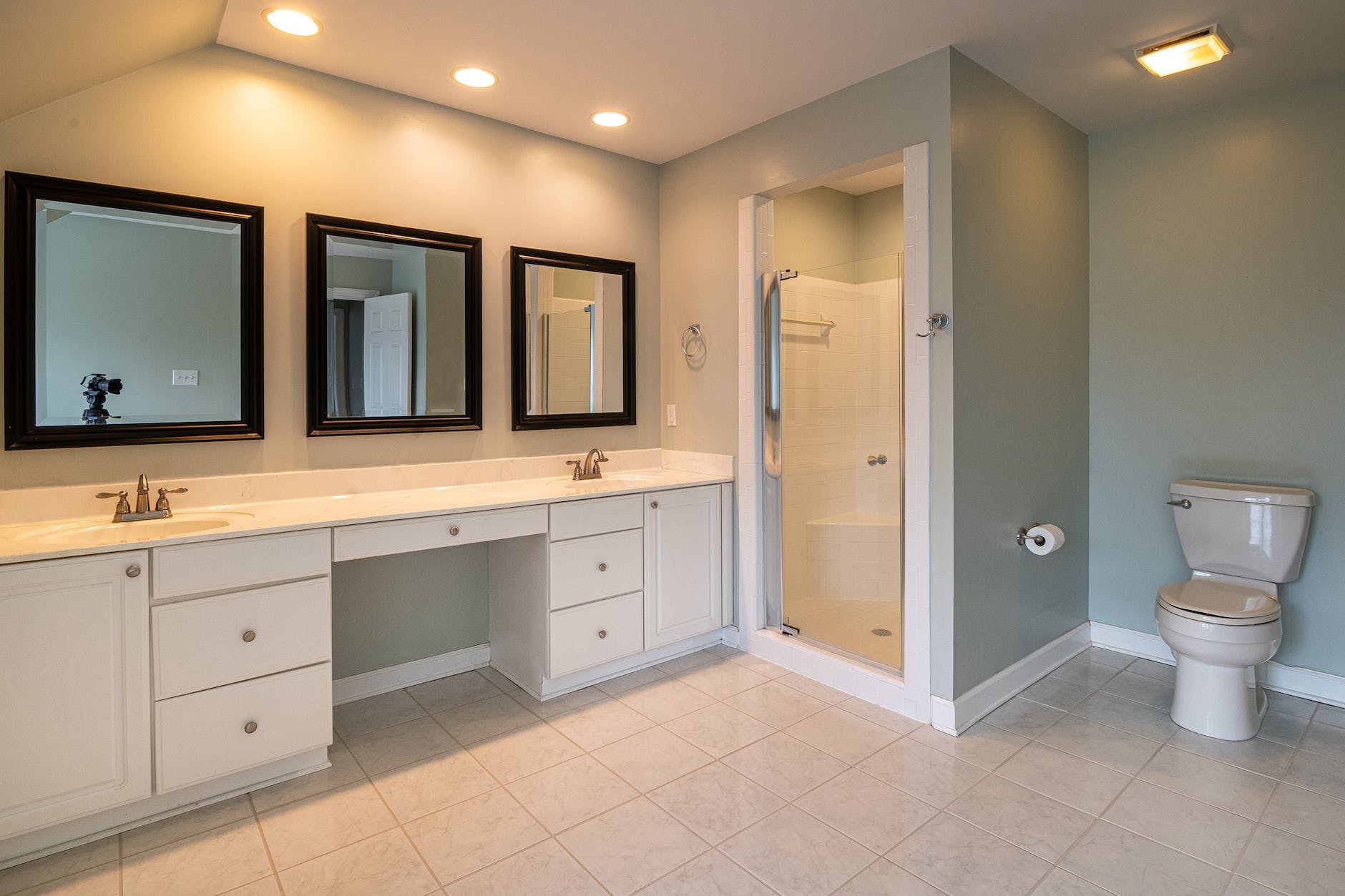
I’m referring to the handful of gargantuan McMansions cropping up now, and, insult to injury, all seem to hug their property line so closely as to case a gray shadow on their neighbor and to heighten the anticipation of hearing the next time your neighbor flushes his toilet. Do these owners have 35 grandchildren to bed over the winter? Or are we seeing the beginnings of a contest to see who can build the biggest and gaudiest house on the island? Nantucket, here we come!
The idea that you can hear the flushing of a toilet from next door might be a bit of an exaggeration. Put this next to the 35 grandchildren and some creative license might be at work.
But, let’s say there might be some truth to this. Are we talking about McMansions within five to ten feet of each other? There may be some windows or doors facing the neighboring home. If it is a quiet neighborhood, house noise might travel. Residents of single-family homes tend not to like noise from nearby (examples here and here).
If it is a sizable home, could a neighbor identify which bathroom is the source of the noise? A home of over 3,000 square feet could have numerous restrooms. Perhaps some are located closer to exterior walls. Perhaps some have louder commodes than others. Perhaps some bathrooms are used more regularly.
A recent ad for “Share the Lamb” includes McMansions as part of its easter eggs:
Screenshot from the end of the “Share the Lamb” advertisement.
Whether these discussions are taking place between patrons in the local pub or constituents in the local council chambers, being dubbed ‘Un-Australian’ has become the ultimate insult to throw in somebody’s face. Generally used as a dig, the term describes something that goes against traditional Australian ideals, thus calling into question aspects of the culture typically associated with national pride. While clearly a country-specific remark, these nationalistic and ethnocentrist themes have become widely recognisable, as cultural identities around the world continue to merge.
This year, Meat and Livestock Australia’s (MLA) annual summer ‘Share the Lamb’ campaign decided to hone in on the absurdity of this very phrase. Advertising agency The Monkeys, part of Accenture Song, recruited talented director, Yianni Warnock. Known for his ability to draw out the paradoxical humour of a subject, Yianni was tasked with directing this tongue in cheek campaign that pokes fun at the unreasonable – and entirely subjective – specifications of what constitutes ‘Un-Australian.’…
Working with Yianni, we worked out that if the characters left a little something behind as they disappeared it would really help sell the effect, and amplify the comedy. The timing of the disappearance also became part of the comedic timing. The big wide-end scene was stitched together from lots of sources. We had a lot of fun putting some Easter eggs in there of various things that might be considered Un-Australian, from ‘McMansions’ to jet skis.
There are lots of questions of national identity to explore. What makes an Australian? If everyone thinks they are un-Australian, does this make them all Australian?
But, I am most intrigued by the reference to McMansions in the scene captured above. There are a lot of depictions and ideas embedded in this one image. I believe the McMansion is just under the bridge the rises in the top center of the scene. When I zoomed in on this dwelling, it is not as egregious as it might be. The home appears large with an imposing entrance, lots of windows, and a unique architectural style (sort of Mediterranean but some weird angles). I do not know if the impression it makes or better or worse without any other homes around it.
I suppose this means that McMansions are then Australian by being un-Australian? In a country with some of the biggest houses in the world, perhaps McMansions are just extreme or extra-large versions of the homes that mark Australian life.
The monograph, which the publishers say is “the first architectural survey of the world’s best-selling dollhouse”, features glossy images of the houses captured by fashion photographer Evelyn Pustka, alongside detailed architectural drawings…
The homes themselves range from contemporary influencer houses all the way back to the mid-century bungalow of the 60s.
In this way, the book establishes the Dreamhouse as an early example of homes turning from private domains into a means of expressing and performing our personality for others – alongside the Eames house, the Playboy apartments and Jackie Kennedy’s televised tour of the White House in 1962…
“So there’s this bifurcation where the Dreamhouse is more in conversation with McMansions, which might reference postmodern architecture but lose the kind of ironic quoting involved in using Doric columns.”
The emphasis here seems to be on how the Barbie homes reflected architectural styles. However, how much did these toys shape architectural styles? As people played with these houses, how did it change their perceptions of houses? This might be difficult to ascertain but presentations of homes and what is normal or aspirational can help shape what people expect.
A question: have any constructed houses been inspired by the Barbie DreamHouses? This could be another signal of how Barbie has affected homes.
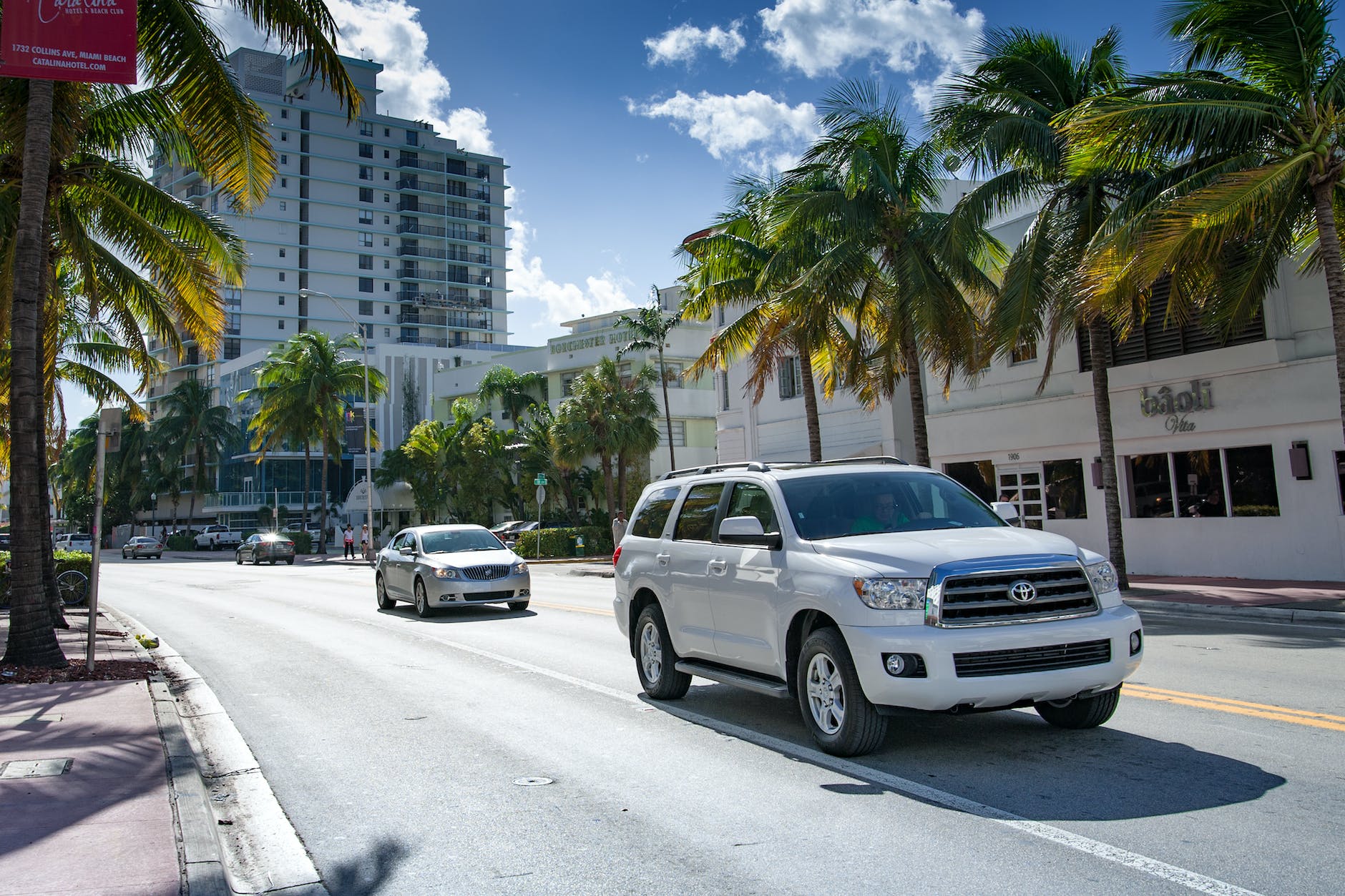
When I set out to study McMansions, I found regular reference to McMansions alongside SUVs. In the time period I examined, the New York Times put these two phenomena together 33 times. Both the homes and vehicles emerged in a similar time period, the end of the twentieth century, and embodied a consumption economy with a bigger is better mentality.
Looking from the vantage point of 2023, SUVs far exceeded McMansions. Even accounting for the differences in price and resources needed, can we declare the SUV the more successful cousin? This particular statistic helped me come to this conclusion:
The best counter-argument I can imagine would go like this: do bigger vehicles and more driving enable McMansions or does a love of single-family homes fuel driving SUVs? Americans like big houses and this encouraged more big vehicles to travel to and from these hours.
However, the sheer number of SUVs is hard to overcome. Millions upon millions. How many McMansions are there? Plenty, but they are clustered in particular places. The SUVs are everywhere and not fading anytime soon.
The house, which is still under construction, is now sporting a bright purple trim right around the multiple eaves, and from what we understand, the owner (who also owns the neighbouring section) is perfectly entitled to do this…
But not everyone is opposed to the colour. “Brings diversity and a spot of colour to the neighbourhood,” one wrote, while another suggested the owners must be Melbourne Storm rugby league supporters.
Negative comments about the design and colour (“Barbie McMansion”) are also slammed by other residents, who think homeowners should be free to do their own thing: “It’s not my cup of tea, but each to their own. They own the land and they build to their specifications, it doesn’t matter what anyone else thinks.”…
“Those colours should be illegal,” writes another local. “With all the compliance you need to go through to build anything I can’t believe this got through council. Go them if they like the colours and can navigate their way through the criteria.”
The discussion, as described here, seems to involve the property rights of the owners and whether such color and design are in good taste. There do not appear to be restrictions on the color. This would be true in many places in the United States that are not governed by homeowners associations or preservation guidelines. At the same time, official guidelines on colors are different than what people expect to see on homes. Purple is not a color that would be viewed favorably in many American neighborhoods. While it could fit in some locations where the color palette is different for exterior parts of houses, it would be viewed as inappropriate in many settings.
Mix these two discussion points regarding McMansions, homes that often involve property rights – can people build a giant house wherever they want or right next to homes of different sizes? – and aesthetic judgments – are McMansions out of proportion, built poorly, and badly designed? – and the simple choice of a trim color mixes with numerous emotions. It is hard to be neutral with such a negative term for a house.
In the long run, could the purple-trimmed McMansion end up becoming a kind of local oddity? Some might not want to live near such a home but others might find it interesting to view when out for a drive or as part of a varied local landscape.
The simplify movement that’s been on a low simmer in the United States for years often shows up as a reason for downsizing one’s house. The simple life, after all, can’t take place in a McMansion. Or can it? It depends on what you mean by “simple” and what ultimately makes you happy. After all, homes don’t just have costs. You pay a price for utility, and you must not neglect that side of the equation.
The article provides a number of pros and cons for downsizing one’s residence. The argument here is that the answer is not to simply avoid McMansions and all the square footage they offer; the issue is right-sizing:
Ultimately, whether downsizing is a good idea for any of us is the wrong question. The issue isn’t necessarily moving down in size, but in moving toward the right fit for our values and preferences: right-sizing. It’s possible that a house of the same size, situated elsewhere, is what you need. Or even, conceivably, a larger home.
An emphasis on right-sizing allows individual homeowners to determine what is best for them and allows that some could find that a McMansion is a good choice.
Dear Prudence, My husband and I are moving to the city where one of my dearest friends lives. She really wants us to move to her neighborhood (“You can walk over for barbecues! Go on morning runs together!”). I love the idea of being close, except I hate her neighborhood. It’s a bunch of huge McMansions with things like fake turrets and nonsensical designs. I get why she and her husband chose it—there’s lots of space for their big family—but you couldn’t pay me to live there. On paper, though, it makes a lot of sense: It’s close to my work, in my price range, etc., so my friend doesn’t seem to catch on to my polite demurrals (“That might be a little too much house for us” or “We’re looking in a lot of neighborhoods.”) What can I tell her besides “your house is hideous”? —Hideous House
Unless she’s calling you every day and going through all the listings in her neighborhood, I think it’s fine to keep offering her polite-yet-accurate demurrals until you eventually find a house elsewhere. There’s a natural expiration date to this conversation, and that will be when you move into a house in a different neighborhood. In the meantime, you can stress how great it is that you two will finally be living in the same city. If you absolutely can’t stand her gentle but insistent questions, then pick a household feature or two you know her neighborhood can’t provide that are absolute necessities for you and tell her: “We’re looking for something with less than 2,000 square feet, and [your neighborhood] just doesn’t fit the bill. Tell me what you think of these two houses we’ve been looking at.”
The term McMansion is typically negative. The answer above suggests it is best not to call out the friend’s home as a McMansion. This might not go over well, even if the person picked the McMansion because they liked it. Instead, emphasize how your own interests are different and move on.
I have wondered about this very topic for years: it is one thing to dislike McMansions from afar or in the abstract. But, what happens if someone you know and/or like lives in a McMansion and likes it? Is having a McMansion a barrier to friendship or a deeper relationship? Should one who dislikes McMansions express this opinion and the ways that McMansions bring blight to the earth? How does it work to criticize McMansions strongly and then know that at least a few McMansions like them and purchase them? Are these sorts of differences part of the sorting of people into different communities and social spheres?
These dynamics play out regularly in many communities, whether they have subdivisions full of McMansions or teardown McMansions. How exactly they affect interpersonal and community interactions and relationships could be studied further.
The 1989 film (which is about a boy setting booby traps in his mansion on Christmas Eve to stop a killer Santa) earned a small measure of fame when its creators sued the makers of Home Alone (which is about a boy setting booby traps in his McMansion on Christmas Eve to stop some robbers) for the similarities between the two.
Is the Winnetka, Illinois home a McMansion or a mansion? Several pieces of evidence for the latter:
–Atlas Obscura calls it a mansion and says, “Built in the 1920s, the building is comprised of red brick and was built in the colonial Georgian style.” It is hard to call a home as old as this as a McMansion. Additionally, it is built in a classic style, not imitating a classic style.
–According to Zillow, the home has 5,398 square feet, 6 bedrooms, and 6 bathrooms. It is worth over $2 million. While the home size is in McMansion territory, that price is not.