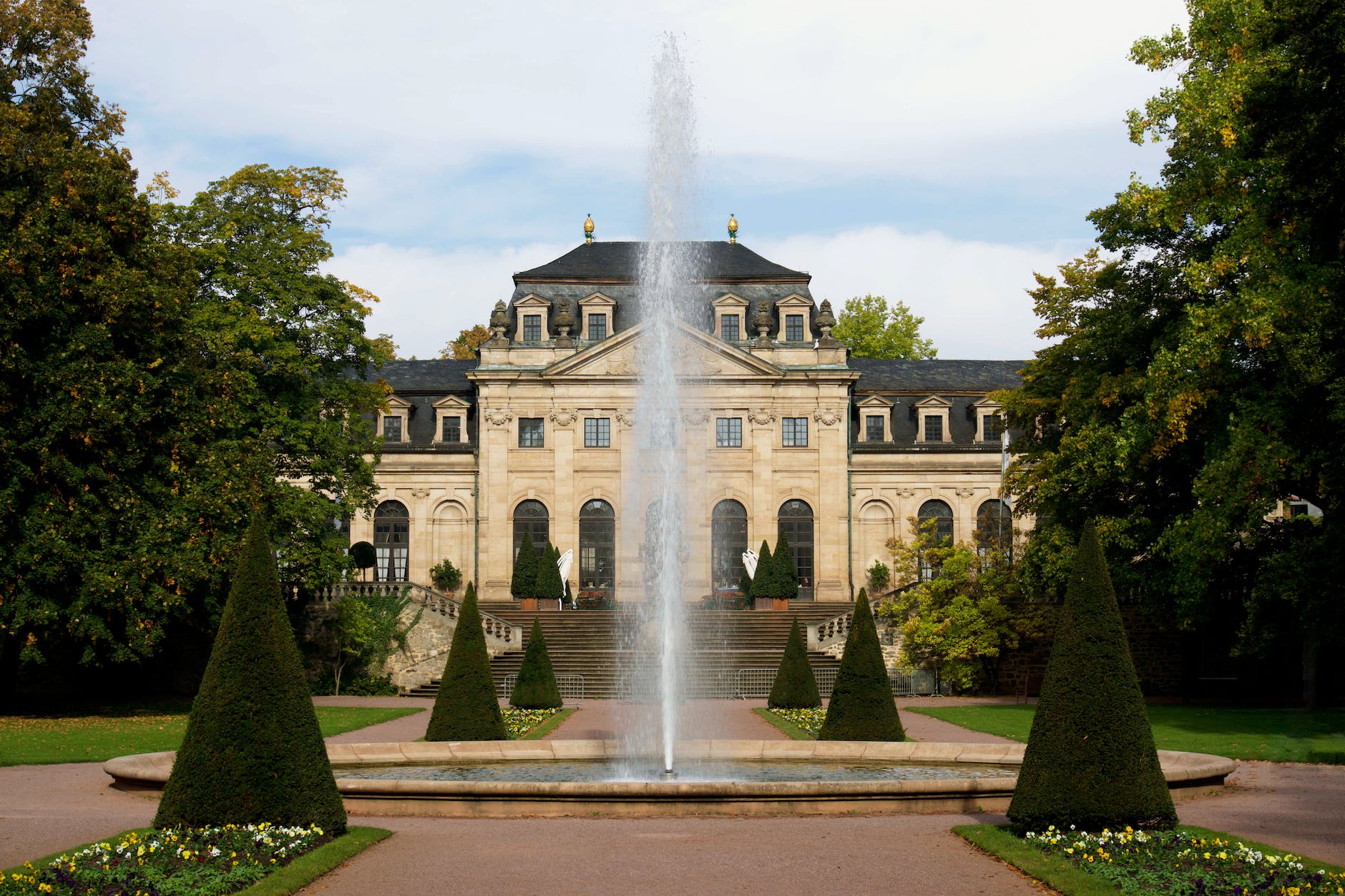
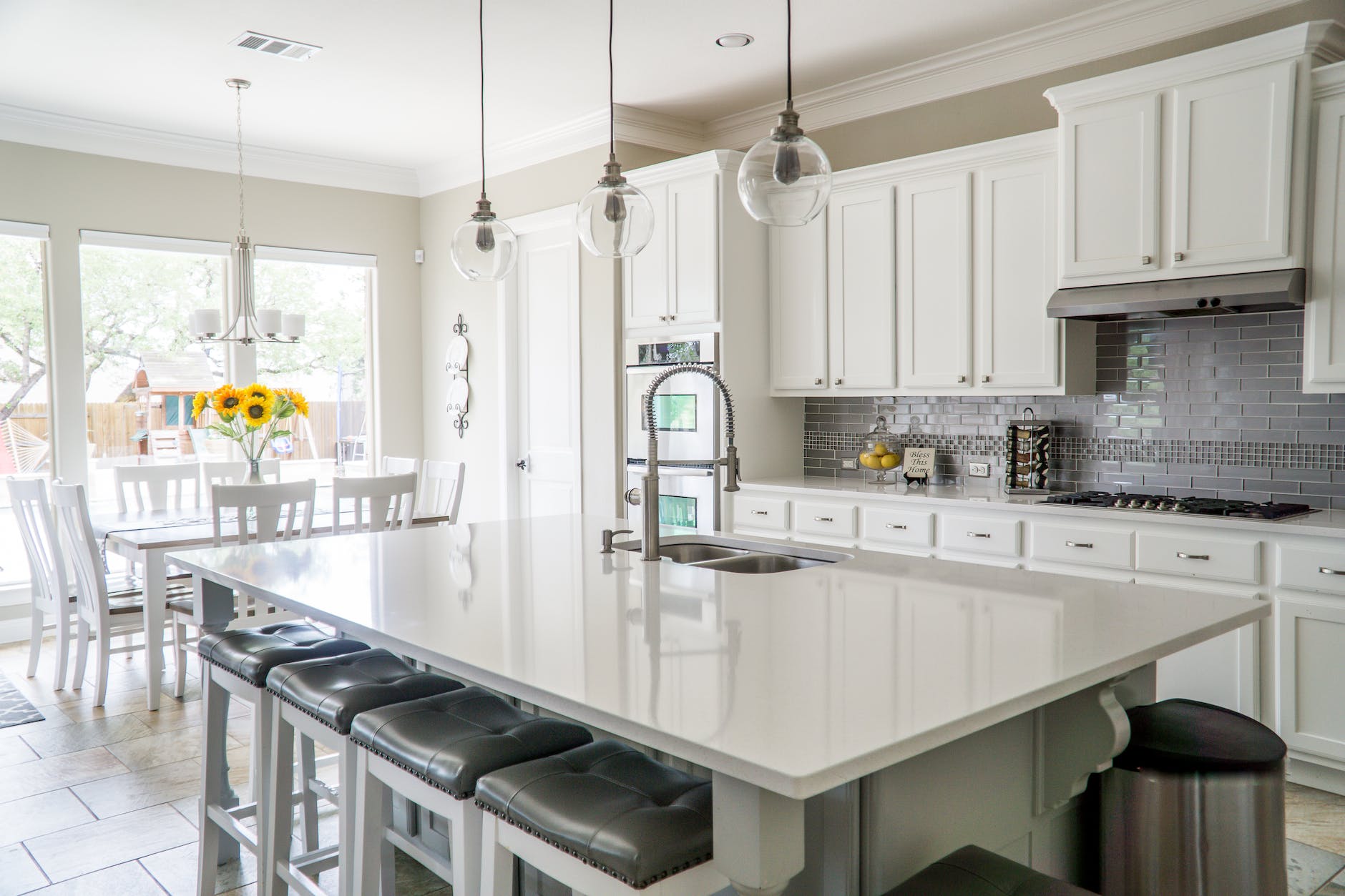
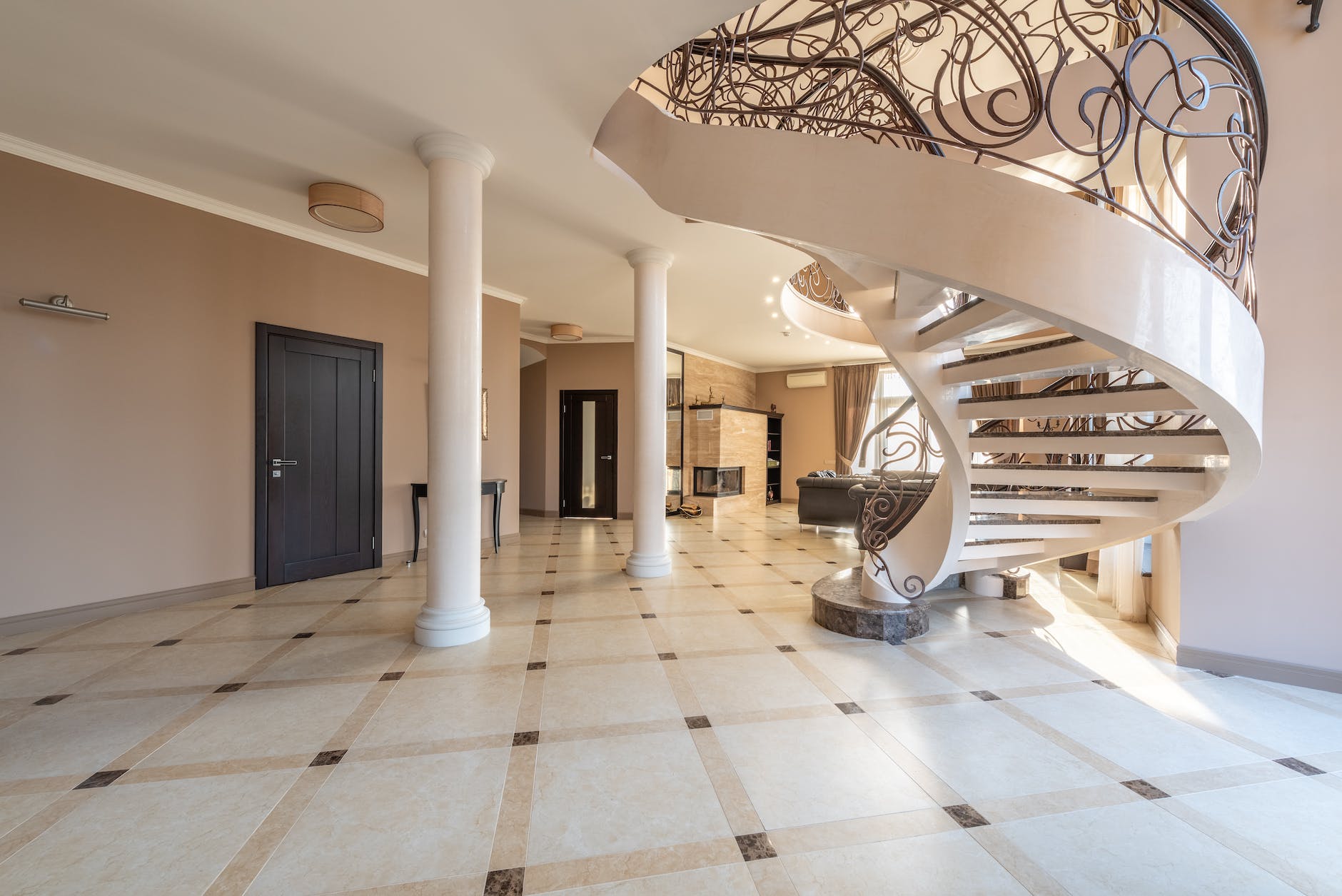
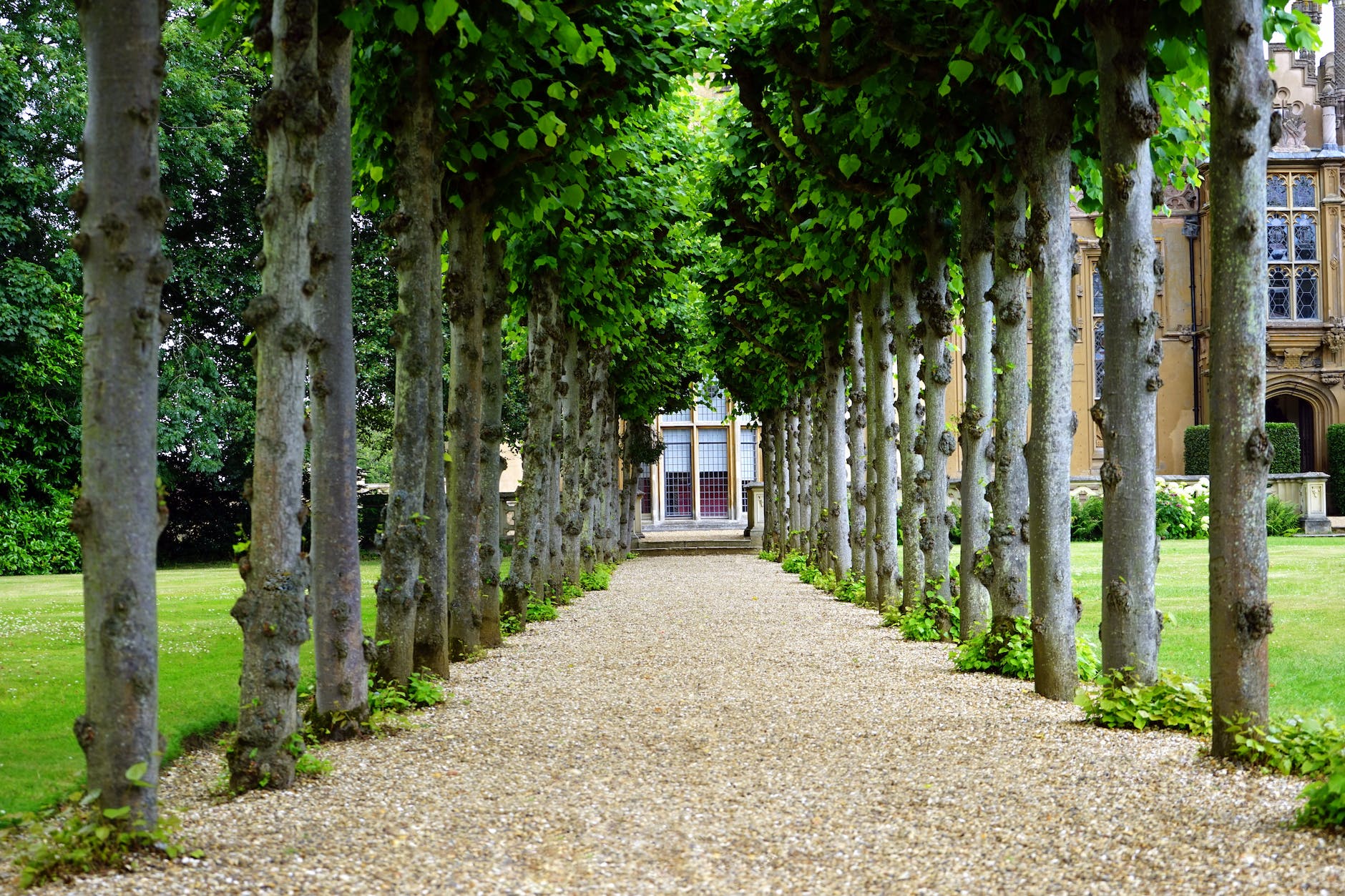
There are few fantasies more persuasive or alluring than that of the expansive estate. When you think of big houses, your mind may immediately jump to the McMansions of yore, those garish homes you’d expect to see on an episode of MTV Cribs. The ones we can’t stop daydreaming about more closely resemble graceful, though still boldly luxurious, homes like the central property of Downton Abbey or the setting of Bodies, Bodies, Bodies before the horror film took a dark turn. Below we highlight 12 properties featured in AD that contain enviable amenities, from indoor tennis courts and home spas to guest houses and verdant gardens.
Three features of this that struck me:
Dreaming of McMansions exhibits poor taste. Dream bigger, more refined. Do not settle for the garish cookie-cutter version of a big house.
The scale of these homes goes beyond the McMansion in numerous key ways. They are often far beyond the 3,000-5,000 square feet of a suburban McMansion. Some have much more square footage, others have numerous buildings. The properties are often much larger than the typical city or suburban lot. And the amenities are more plentiful and higher-end. Think special pools, gardens, and gathering spaces.
The McMansion is much more attainable for people than the extra-large property. Does the McMansion offer enough of a taste of the high-end property?
We were looking for the Voze mansion and having trouble finding an exterior and interior to match, as most wealthy estate-type people heavily renovate their interiors and look more McMansion inside. The exterior was a house in Pasadena.
I think this is saying that they had a problem finding a home fit for wealthy characters because the homes with the gravitas-invoking exterior did not necessarily have the same kind of interior. Having lots of money can be associated with a particular aesthetic. Describing a portion of the home as having a McMansion look is not usually a good thing. It is a negative term. I imagine a McMansion interior could involve the latest trends, having large spaces, and going for shock and awe rather than refined details.
Through the magic of filming and editing, a different exterior and interior can be put together without too much evidence otherwise. Of course, it is also fun to watch for situations where they do not exactly match.
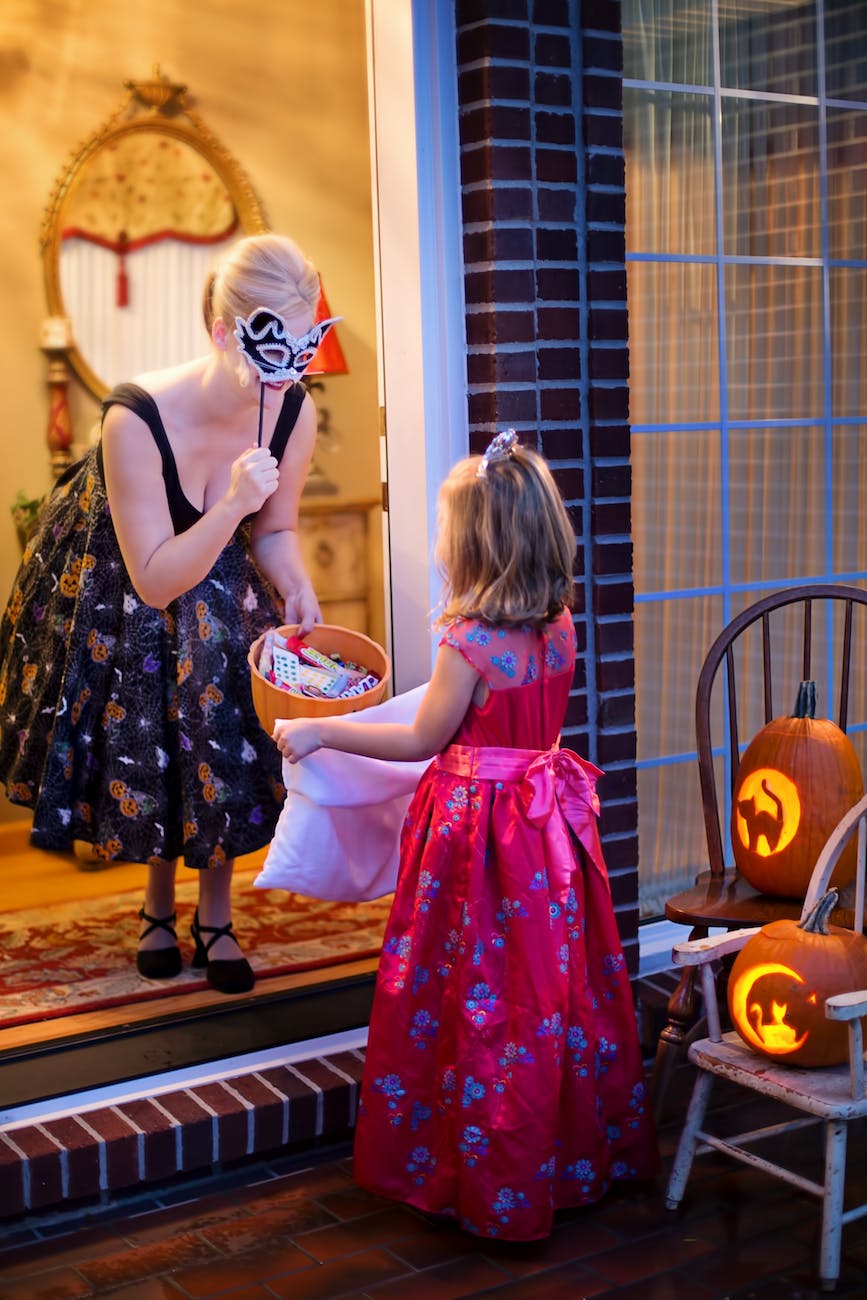
Certain neighborhoods just do Halloween better, drawing folks from ho-hum suburbs because the McMansion community three hidden-oaks-fox-glens over is the place to be.
In this consideration of social class and who is welcome to trick-or-treat in which neighborhoods, this might just be a throwaway example. Perhaps McMansions just quickly refers to homeowners with means.
But, it does raise a possible question: is Halloween celebrated in particular and better ways among McMansion owners? How would this be measured: more enthusiasm for the holiday? More and bigger decorations? Specific candy handed out? Lots of children on relatively quiet streets on Halloween?
I am guessing there are at least plenty of folk theories out there on what neighborhoods – in the abstract and specific locations within communities – are best at Halloween. I am not sure McMansion-lands would necessarily come out on top but they have some qualities that suggest they could be in the running.
Robert I. Toll, L’66, a former University Trustee, an emeritus member of the Carey Law School Board of Advisors, and the co-founder of transformative home construction company Toll Brothers, died on October 7 at home in Manhattan. He was 81.
Mr. Toll was born in Philadelphia suburb Elkins Park, Pennsylvania, to a father who was involved in Philadelphia real estate and who had successfully rebuilt his career after the Great Depression. Mr. Toll graduated from Cornell University in 1963 with a bachelor’s degree in political science, then graduated from Penn’s Law School three years later. He briefly worked at the Philadelphia law firm Wolf, Block, Schorr, and Solis-Cohen, but then founded Toll Brothers with his younger brother Bruce in 1967. To start out, “we built two homes,” Mr. Toll recalled. “Instead of selling them, we used them as samples for the lots we owned down the street.” These sample homes landed the brothers contracts to build 20 more homes, which each sold for $17,500. Robert, Bruce, and Alan Toll were among the first postwar housing developers to recognize how trends in highway construction would allow access to swaths of farmland for housing and shopping developments.
Over the next five decades, under Robert Toll’s leadership of the company as chair and CEO, Toll Brothers rapidly grew to become, as the company’s slogan boasts today, “America’s luxury home builder.” The company recognized shifting demographics in the U.S. during the 1970s and targeted baby boomers looking to trade upward. The Toll Brothers blueprint included targeted land purchases, appeals for quick zoning approval, and predesigned houses that allow room for personalized changes by buyers. Boosted by the proliferation of McMansions and the implementation by zoning boards of two-acre lot sizes in many American suburbs, Toll Brothers became a force in the American housing market. Today, over 150,000 American families in 24 states live in a Toll Brothers-built home. Toll Brothers appeared on the Fortune 500 list, and Robert Toll spearheaded several philanthropic initiatives, including Seeds of Peace, a summer camp in Maine for children from global conflict. His many professional honors included recognition as one of the world’s top 30 CEOs by Barron’s magazine in 2005 and as best CEO in the Homebuilders and Building Products Industry by Institutional Investor magazine in 2008 and 2009. The Wall Street Journal once called Mr. Toll “the best CEO in the housing business.”
Did Toll Brothers take advantage of an opportunity to sell luxury homes to a growing market or help create and establish a growing market? Would they call their luxury homes McMansions or is that a term applied by others?
No matter how these questions are answered, it is clear Toll Brothers contributed to the trend of larger and more expensive homes in the United States. Over 150,000 homes is a sizable number of dwellings. The shift to large-scale builders in the mid-twentieth century is an important factor in suburbanization and housing more broadly.
Additionally, what will happen to all of these luxury homes? Will they be updated and renovated for decades? I assume a good number are situated in neighborhoods and communities where they will not be near any cheaper or denser housing. Will some become teardowns? Will at least a few be preserved? There is still more of the Toll Brothers story to tell.
In each of these places (that last one is Austin), modest entry-level housing has been replaced over time by far larger and more expensive homes out of reach of most first-time home buyers. Neighbors sometimes sneer at such new additions as “McMansions” (but note the regional variation in McMansion architecture). I often hear from readers and residents during my reporting that it’s a shame the developers who built them tore down “perfectly good houses.”
This has consequences:
There is nothing inherently bad about small 100-year-old houses getting replaced by larger, modern ones (indeed, many planners, historians and economists would say there is something bad about insisting that communities must remain exactly the same forever). Tastes change. Consumer demands and demographics shift. Americans, on average, have become wealthier over time, capable of affording more housing than the typical family could three generations ago.
But the reality is that most communities effectively ensure that the only viable replacement for a starter home on expensive land is a new home that’s much larger and more expensive. That stance contributes to the affordable housing crisis. If communities struggling with it want to rebuild the entry-level end of the housing market over time, that will almost certainly require allowing a new generation of starter homes that look more like duplexes or condos, or small homes on subdivided lots.
Over time, the number of smaller homes in desirable communities or neighborhoods dwindle as property owners and new buyers want homes that reflect more current trends. Another way to think about this: the supply of starter homes or smaller homes is reduced in particular places (if it is already not that affordable because of the demand in desirable places) and it is not necessarily being replaced nearby, if at all within a region.
It may be worth noting that this teardown pattern does not happen everywhere in cities and suburbs or even in most places. While I have not looked at the issue systematically in the Chicago region, the evidence I have seen is that teardowns are taking place in larger numbers only in certain locations.
He liked how certain details — the neighborhood of manses behind gates and shrouded with trees; the house’s circular drive and imposing view — gave the ordinary McMansion an estate feel. He eventually dotted the lawn with gargoyles and Renaissance-style statues.
In this example, a McMansion feels more like an estate when it has added levels of privacy (gates, lots of trees blocking views of houses), a particular kind of driveway, and a particular view. Presumably, normal McMansions do not have these features or have imitations of these features. The suburban subdivision of McMansions offers limited privacy. The straight driveway leads to a big garage. The view is not imposing.
Is there a market for upselling McMansions? Take your typical newer McMansion, whether in a new development or in a teardown setting. What small features would differentiate it from similar homes and translate to a higher value? At the same time, adding special touches to McMansions goes against the mass-produced image of such homes.
Are the boundaries between McMansion and estate different than those between McMansions and mansions? In this second comparison, the size of the home itself seems to matter. The McMansion is roughly 3,000 to 10,000 square feet while the McMansion is larger.
The affordable end of the market has been squeezed from every side. Land costs have risen steeply in booming parts of the country. Construction materials and government fees have become more expensive. And communities nationwide are far more prescriptive today than decades ago about what housing should look like and how big it must be. Some ban vinyl siding. Others require two-car garages. Nearly all make it difficult to build the kind of home that could sell for $200,000 today…
Nationwide, the small detached house has all but vanished from new construction. Only about 8 percent of new single-family homes today are 1,400 square feet or less. In the 1940s, according to CoreLogic, nearly 70 percent of new houses were that small…
But the economics of the housing market — and the local rules that shape it — have dictated today that many small homes are replaced by McMansions, or that their moderate-income residents are replaced by wealthier ones. (A little 1948 Levittown house on Long Island, the prototypical postwar suburban starter home, now goes with a few updates for $550,000.)…
The costs – financial, regulatory – are too high for the construction of lots of starter homes. The proposed solution is to try to reduce those costs by placing multiple residents on one lot and/or increasing density in communities and developments.
I wonder if the best path forward is for certain communities to pursue starter homes successfully and show that it is possible. Of course, one danger is that even if it works well in some communities, other communities might leave the burden of such housing to a small number of communities. However, if starter homes can be constructed in such a way that they are perceived as an asset to the community and not a threat to property values, they might catch on. Are there several communities that would fit the bill?
-This particular film follows 7 friends. This means plenty of space for people to sleep, live, and interact. A McMansion provides plenty of space.
-The tackiness or gaudiness or lack of authenticity of a McMansion can provide a creepy or unsettling backdrop.
-The McMansion falls apart at a key moment or the limited architectural quality lets the characters down.
-The extra interior square footage a McMansion offers provides more space for nefarious actors to operate.
-The McMansion could be set in a neighborhood of McMansions, perhaps unfinished, that are all creepy and ominous.
–A horror film set in suburbia can play off a common idea that suburban life is not as happy or successful as it seems. How much more so could this be true in a McMansion, a home that tries to broadcast its success in obvious ways.
What happens when the needs of a church for a larger parsonage converge with the interests present in a district of older single-family homes where teardown McMansions occur? Here is a case from the Buckhead neighborhood of Atlanta:
The 81-year-old house at 3210 West Shadowlawn Ave. is listed as contributing to the Alberta Drive-Mathieson Drive-West Shadowlawn Avenue Historic District, which was added to the National Register of Historic Places in 2015. But that does not prevent demolition and the property has no City historic protections. The church claims the house is “uninhabitable” and can’t meet its mother organization’s requirements for large parsonages…
The historic district application was filed with the National Park Service in 2014 by the Georgia Historic Preservation Division. The filing says the neighborhoods are historically significant as part of a building boom that followed a 1907 trolley line extension on Peachtree, and for its wealth of intact architecture dating from the 1910s through the 1960s. West Shadowlawn, the filing says, was named for a subdivision called Shadow Lawn, which started construction in 1922. The filing includes a photo of the house at 3210. The main church property is not included in the historic district.
Rev. Bill Britt, the church’s senior minister, told the DRC that the plan is to build a parsonage as a home for a member of its clergy who currently rents elsewhere in the city. The existing one-story house would be replaced with a larger, two-story version…
Project architect Brandon Ingram noted that many houses on the street date to the period of the 1920s through 1940s. He said the church wanted the new parsonage to be be “respectful” of that aesthetic and look “a little bit more vintage” rather than “some giant Buckhead McMansion.”
This sounds like a typical teardown situation: there is an older property in a desirable single-family home neighborhood that needs some work. It does not have modern features or the size of new homes today. A property owner wants to tear it down and build a new home. Some in the community want to preserve the old home and worry that a new home changes the local character. Some in the community want property owners to have the right to do what they want with their property and be able to reap the benefits of what might come along.
Does it change the situation if it is a local church that wants to pursue the teardown? The church will likely profit from a teardown – increased property value, a newer home – but it is also a community or non-profit actor and not just a private owner. The church has been around a long time and the parsonage may not change hands for a long time. The intended use is for church staff.
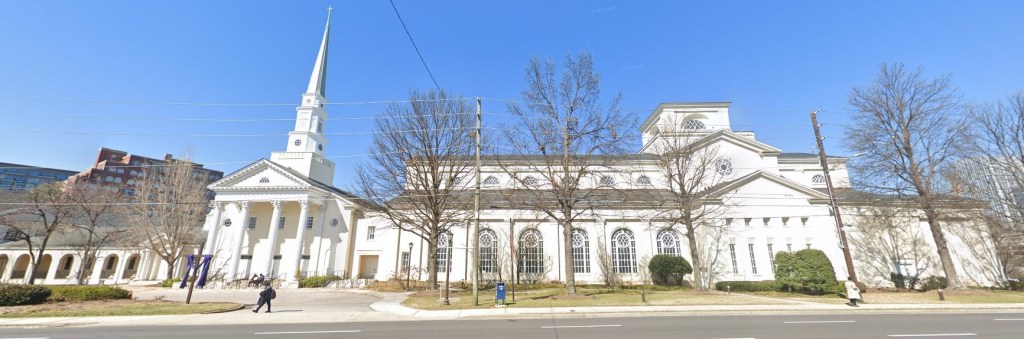
Is a church that is a long-term member of the community less likely to construct a McMansion and instead lean more toward the existing architecture of the neighborhood? Trying to picture a McMansion nearby a historic looking church building – see image below – does not work as well as imagining a McMansion near a newer megachurch in the sprawling suburbs.
Google Street View of Peachtree Road United Methodist Church
If religious congregations are in the business of building McMansions, there may be an interesting story to tell.
Nearly 5,000 residential demolition permits have been issued in Tampa in the last decade — including 709 in 2021. That’s the most in any single year since at least 2005, according to city data.
“Having all of these homes torn down is a wrinkle we haven’t had before,” says Tampa historian Rodney Kite-Powell, “and the pace is really incredible.”
A blogger has tried to keep up with“The McMansioning of South Tampa.” About 2,700 razed dwellings are pictured. Some of the lost homes are majestic and sad. Many, though, were tired and untended. The sheer volume is beyond what a single blogger could chronicle. Ten of the 14 homes knocked down this century on Jerry’s block aren’t depicted on the site’s map. Even so, the layers upon layers of red pins are striking…
Not everyone is happy. Search the local Nextdoor site for the term “McMansions” and you’ll encounter one of the more passionate running discussions in the city. When a one-story home came on the market at the start of the pandemic, neighbors implored the owner to seek a buyer who would maintain it. “I beg you not to sell it to a builder that will level it and build a ridiculously oversized McMansion that ruins the charm of our neighborhood,” wrote Lisa Donaldson. “Please.”…
Others counter that the older homes are no longer functional and that the newer onesraise the value of those around them. “The curmudgeons will always complain … until they are ready to cash out,” posted Marc Edelman. “Tampa is progressing for the better.”
A few quick thoughts in response:
If just looking at economic factors, teardowns tend to occur in desirable neighborhoods where the new homes can fetch a significant profit compared to the previous dwelling.
Socially, teardowns are more difficult to navigate given the competing interests of property owners who want to make money, builders and developers looking for opportunities, neighbors who might be opposed to a changing neighborhood, those interested in local history and preservation who might prefer to keep older dwellings, and local leaders who may or may not support teardowns.
Sunbelt cities and communities have experienced much growth in recent decades. People are used to change and growing populations. But, this is a different kind of change where existing homes are replaced rather than new subdivisions spreading across available land. There is now an established landscape that could look quite different in coming decades.
Sunbelt communities are generally pro-growth. Does this change at some point given population sizes and composition, the availability of resources, and several decades of established history?