How many communities in the United States have histories we should know?

After seeing SNPJ, Pennsylvania on the map and recently reading Radical Suburbs by Amanda Kolson Hurley (recommended), I thought about this question: how many more histories of communities in the United States should we know? SNPJ appears to have a unique background and purpose and Hurley considers multiple suburbs with different visions of what a suburban community could be. But, there are thousands of communities in the United States – are they all unique enough to pay attention to?

Photo by Engin Akyurt on Pexels.com

One way to consider this is to think about patterns in we might pay attention to some communities and not others. In the United States, population size and growth is often emphasized. Bigger places often receive more attention and their unique histories and features are more known. At the same time, it takes efforts by numerous actors for history to become known and narrated over time. Discrimination, a lack of power, and limited resources mean some histories are not as known.

There is certainly value for people living in a community to know their own local history. I have written about seven steps for knowing your suburb and how to take additional steps. This local knowledge can help longstanding members of a community, new residents, and visitors. It can take some digging to hear multiple voices, see what is told and not told, and think about how a community came to be.

In the next post, I will explain why I see value in both larger categories – such as examining suburbs as distinct places compared to cities and rural areas – and looking at specific histories and characters of communities. In my own work, I found linking these two levels can provide further insights into places and experiences within them.

Seeing the community SNPJ on a map

On drives from the Midwest to locations further east, we often pass a community with an interesting name: SNPJ, Pennsylvania. This is an unusual name. No vowels. An acronym? A misprint? Wikipedia suggests this is an unusual place with just 15 residents:

Photo by Pixabay on Pexels.com

S.N.P.J. stands for “Slovenska Narodna Podporna Jednota” (Slovene National Benefit Society), a fraternal society and financial co-operative based in North Fayette, Pennsylvania. The society applied to have their 500-acre (200 ha) recreation center in western Pennsylvania designated as a separate municipality in 1977. The S.N.P.J. borough was created so that the society could, among other things, get its own liquor license. North Beaver Township, the municipality in which the center was originally located, restricted the sale of alcohol on Sundays (blue law)…

It is more of a recreation complex than a community, and has 60 rental cabins, 115 mobile home slots, and an artificial lake. It is open to the public as a summertime resort and facility for bingo, weddings, and dances. Members of the society get a discount on the events.

Wikipedia offers few additional details but there is enough here to hint at an interesting history: a fraternal group for a white ethnic group, efforts to bypass liquor laws, providing recreational opportunities, and very few permanent residents.

This leads to the post for tomorrow: how many communities across the United States have unique histories worth knowing? How many communities are like SNPJ and does it matter if there are just a few or a lot?

Barbie could only live in the Los Angeles region

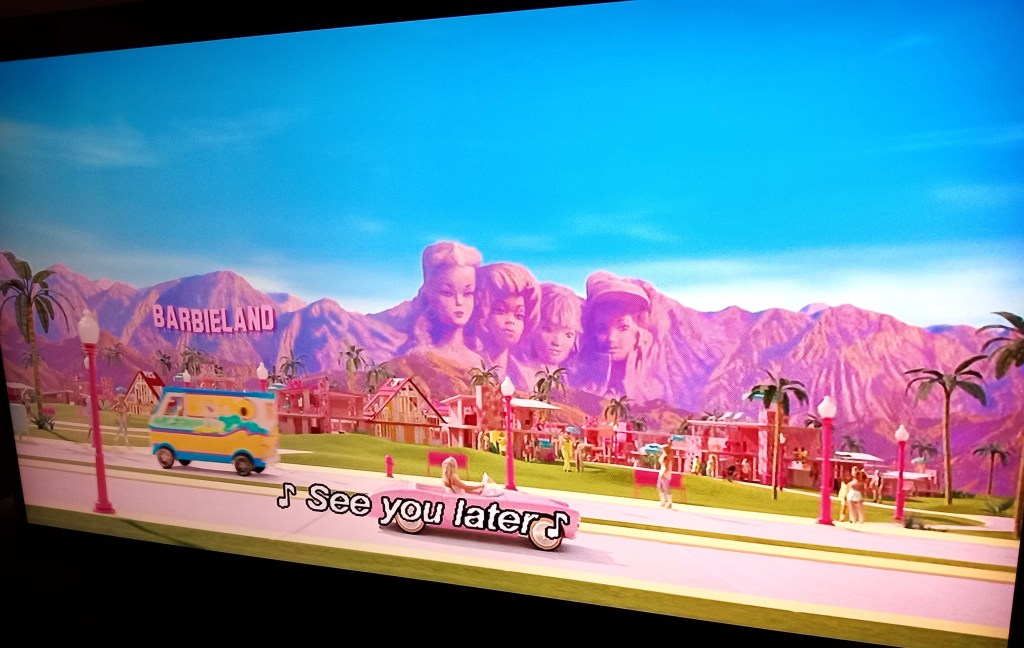
Barbie is one of the most famous toys and she resides near Los Angeles. Could she live anywhere else? I pondered this when seeing Barbie:

This scene, along with others in the movie, firmly place Barbie in and around Los Angeles. There are palm trees. Beach scenes along the ocean and boardwalk. The mountains looming in the background. A replacement for the “Hollywood” sign. Her dreamhouse is in Malibu.

Could Barbie live in other locations? How about Manhattan Barbie? Atlanta Barbie? Omaha Barbie? These are harder to imagine. Barbie has a lifestyle tied to a postwar vision of the American Dream exemplified by life in Los Angeles. She was not alone; TV shows endlessly showed life in southern California, Disneyland first opened there, and sprawling suburbia became a model.

A new city and/or region could become the marker of a new era and new toys. Perhaps Houston? A different city that will grow rapidly and look different or exhibit different patterns of life and development?

Can we now regularly compare NYC, LA, Chicago, and Houston?

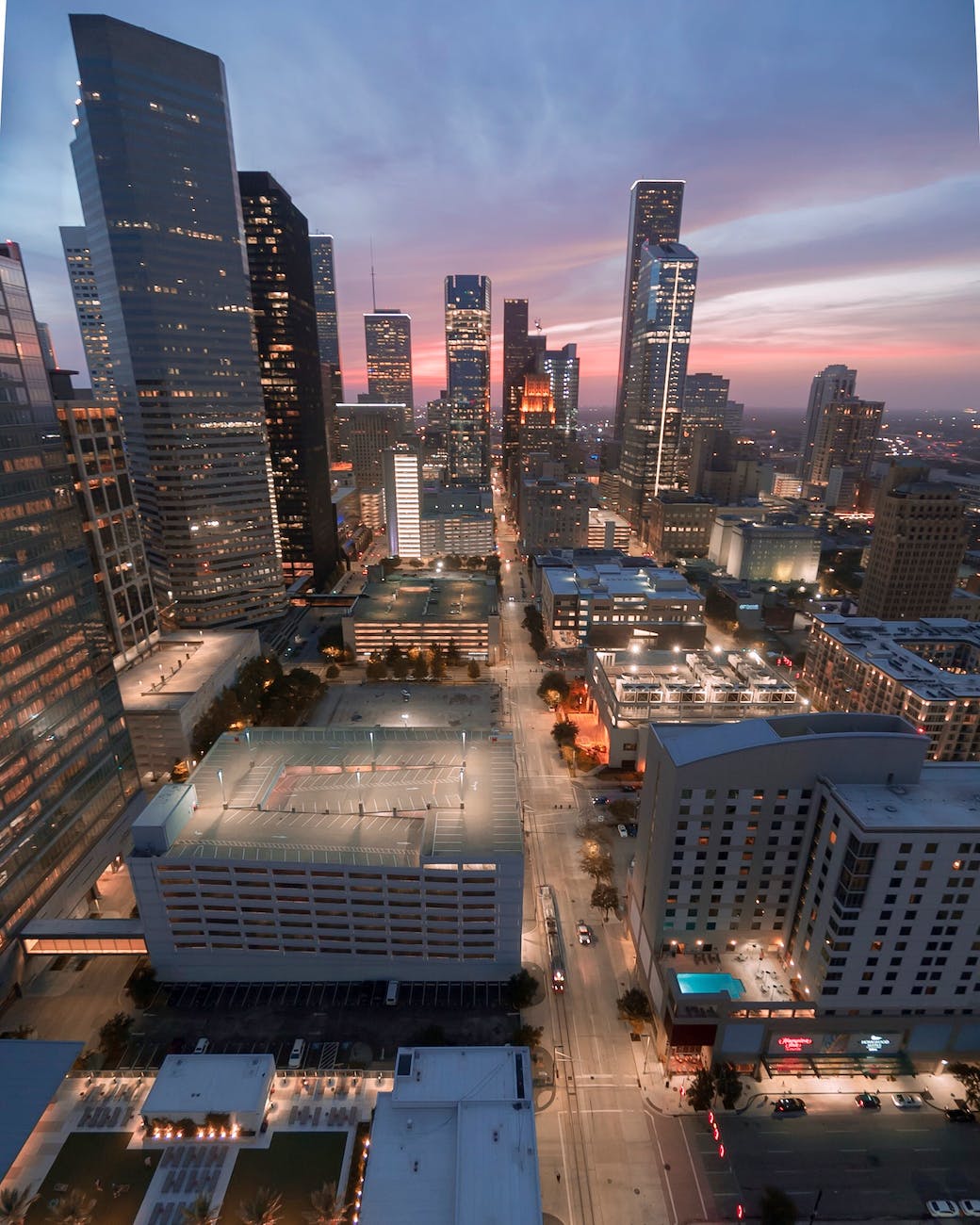
Comments from the newly-elected mayor of Houston compare the four largest cities in the United States. The Chicago Tribune editorial board thinks this is a problem for Chicago.

Photo by Nick Bee on Pexels.com

“We’re not New York. We’re not L.A. We’re sure not Chicago. We fix our problems.”

Quick quiz: Who recently said that? Ron DeSantis? Greg Abbott? Nikki Haley?

The answer is John Whitmire, a Democrat who over the weekend resoundingly won election as mayor of Houston, the nation’s fourth largest city and on track to overtake Chicago as third largest if present demographic trends continue…

Politically, Chicago comes across to much of the rest of the country as a city that’s off course, focusing not on the issues at the top of residents’ priority list (public safety, jobs, public transit, for example) but on progressive to-do lists. Not only are Johnson and his City Council allies choosing to spend their time and political capital on issues the majority of Chicagoans view as less than pressing, they’re doing a poor job even when it comes to their own priorities.

Several factors appear to be at work. First, as noted, Houston is approaching Chicago’s population. Chicago was once the second city, then became the third city, and likely will soon be the fourth city. This means a decline a status, both internally and from the outside.

Second, Chicago has long had a reputation as “the city that works.” It might have all sorts of problems but things got done. If the perception inside and outside is that things do not get done, then people might have concerns.

Both of these might be existential issues for a city that is regarded as a global city and has always been behind at least one other major American city.

Additionally, are New York and LA ready to be mentioned in the same breath as Houston?

Naperville is the equivalent of 4th and 29 for a Bears opponent

Naperville is a highly-ranked suburb but is rarely described in sports terms. On the Fox broadcast of Bears-Lions yesterday, play-by-play announcer Adam Amin invoked Naperville in a difficult late-game situation for the Lions:

Why Naperville? Two quick theories. First, Amin announces a lot of games in Chicago due to being the play-by-play guy for the Chicago Bulls. He would be more familiar with the region and local communities. The Bulls do not have many ties to Naperville but it is the third largest community in the region (after Chicago and Aurora).

Second, Naperville is sufficiently far from Chicago and Soldier Field to be the distance equivalent of needing 29 yards for a first down. Naperville is roughly 30 miles southwest of downtown. Fourth and 40 might get you to Elgin and Fourth and 45 might get you to Joliet. I am up for more yard-to-mileage comparisons in Bears broadcasts though it might work better on a local radio call than a national broadcast.

And if the Bears end up in Arlington Heights or Naperville or another suburb, then can the fourth down distance go the other direction? “It’s fourth-and-Bronzeville” or “fourth-and-Logan Square”.

Places that represent America, in memes and other forms

Ohio is a running meme in social media:

Photo by Mohan Reddy on Pexels.com

According to Know Your Meme, treating Ohio as a joke started in 2016 after the meme “Ohio vs the world” went viral on Tumblr. User @screenshotsofdespair posted a photo of a digital marquee in an unknown city that read, “Ohio will be eliminated.”

At the time, the joke was Ohio was secretly plotting to take over the world, hence the photo calling for its silencing. By the time 2020 rolled around, jokes about the state had evolved…

Now, most memes about the state are saying “so Ohio” or “only in Ohio” about something bizarre or random. It’s usually tied to images, GIFs or videos that highlight something ridiculous. The memes imply that Ohio is a place where strange things happen. Ironically, it’s actually been named one of the “most normal” states in the U.S.

Describing the internet trend, Know Your Meme explains how the memes have essentially re-branded Ohio. Now it is “an American middle place, existing as a capitalist wasteland of chaos and mayhem, akin to creepypastas, lore and randomness, becoming an imagined epitome of American signifiers such as Breezewood, Pennsylvania.”

The Ohio memes have become so near-constant that they’ve taken on a life of their own. To date, the hashtag #Ohio has 33 billion views on TikTok, while #OnlyInOhio has about three billion. In some cases, people have made memes about the memes.

I am intrigued by this idea of particular places embodying America, whether normal or weird. Breezewood? I look forward to driving by it several times a year. The Midwest as the “heartland”? In the sociological tradition, how about “Middletown” and the long set of studies devoted to this community (which was Muncie, Indiana)? Or, what about the claim that Chicago is the most American city? Or, the idea that one can see real America at Walmart or at an emergency room on a weekend night? Perhaps this has a long tradition, even if it is now taking the form of memes.

And then there could be places and communities that are known but cannot embody all of America. Could New York City all about America or does its status as the leading global city and its particular history and character mean that it cannot embody all of the United States? (Perhaps normal American cities are Cleveland.)

Trying to diversify a city economy through sports

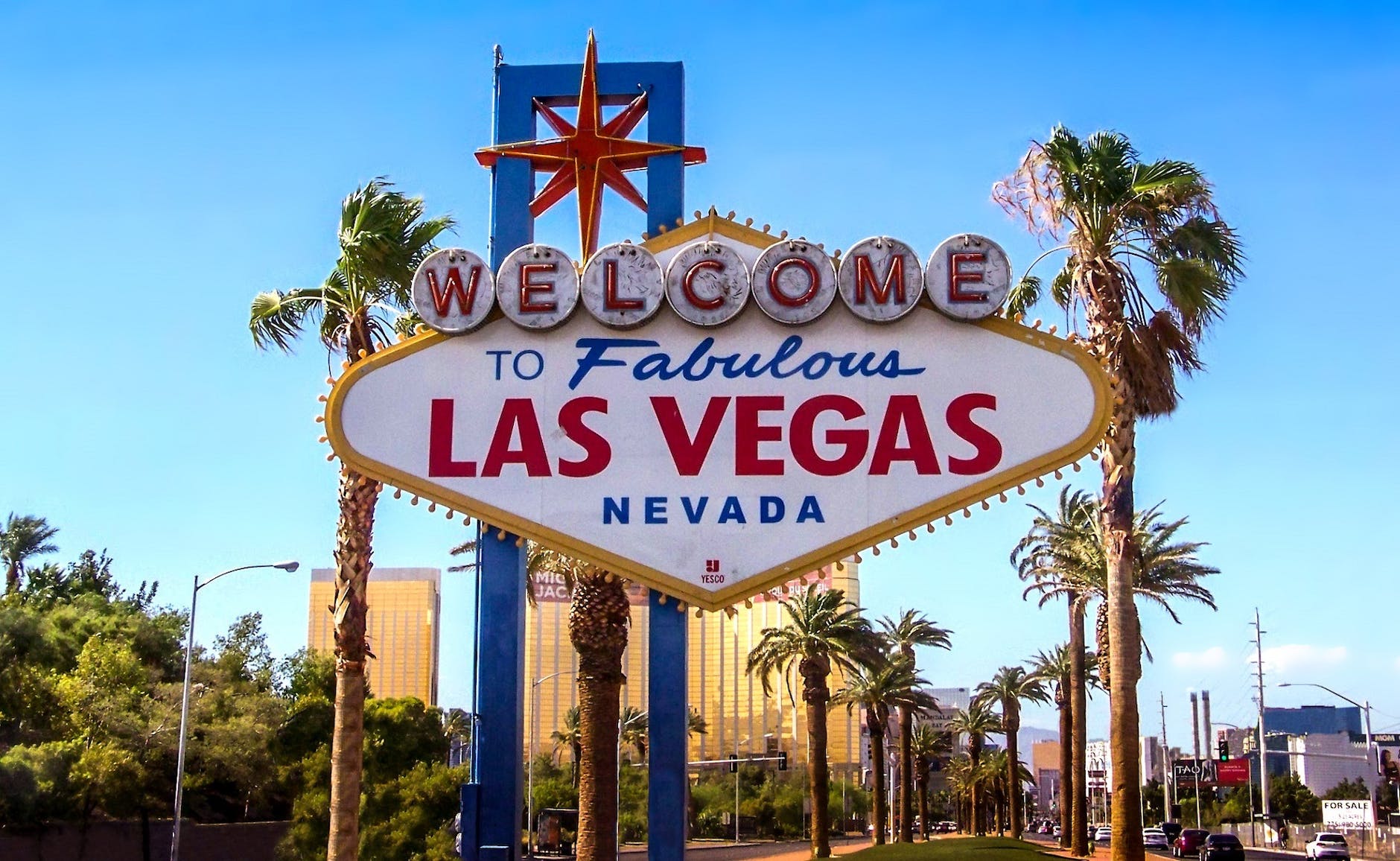
Las Vegas has gambling and all that goes with it, including significant recent investments in sports:

Photo by Pixabay on Pexels.com

In under a decade’s time, the desert city long known for its casinos, food and live entertainment has become the home to four major league sports teams (the latest being MLB’s Athletics), six minor league teams, a major sports organization in the Ultimate Fighting Champion, and four large sports venues playing host to events such as NCAA tournament games, NFL Pro Bowls, and, coming this February, Super Bowl LVIII.

At least a half-dozen more venues are in the planning stages, and the city appears poised to be one of the top picks for an NBA expansion team and an MLS team, as well…

The initial economic impact estimates for Sunday’s Formula 1 Las Vegas Grand Prix and the February 2024 Super Bowl were $1.3 billion, and $500 million, respectively. (But this was before ticket prices slid for F1 when the championship was won earlier in the season).

That total would match the estimated $1.8 billion contributed to the metro area by all sporting events from July 2021 to June 2022, according to an economic impact study released this summer by the Center for Business and Economic Research at UNLV’s Lee Business School.

Earlier research on public money used for new stadiums suggested teams benefit the most from that spending. Will the money spent here on facilities increase the size of the economy, generate additional new jobs, and other benefits or does it simply shift money around? Will residents and businesses move to Las Vegas just because of sports?

Perhaps the pitch with Las Vegas is that it has the added bonus of lots of tourists. If some of them can be enticed to sporting events and other local attractions, this is extra money. This might work for major events, but I would guess it is harder for a regular season MLB game.

Here is just one guess of how this all might look in 10-15 years: local officials will say that sports helped enhance the city’s status, the team owners will be happy with their facilities and revenues, and the local economy will not be enhanced much just because of sports (when accounting for the debt and costs associated with sports).

Is Times Square beautiful?

While busking as Mario, one writer describes Times Square in New York City:

Photo by Vlad Alexandru Popa on Pexels.com

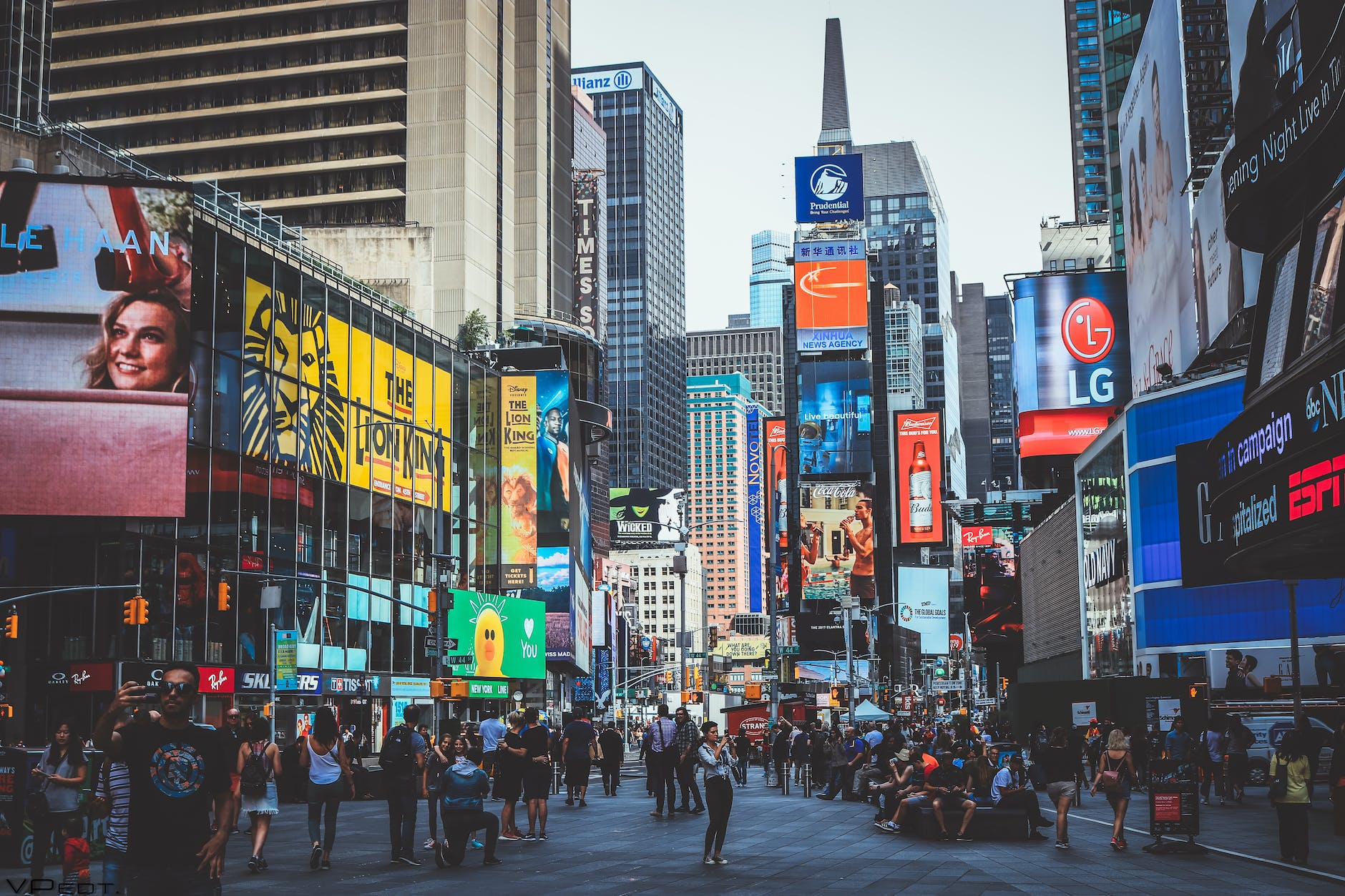
Times Square is beautiful when you judge it by aesthetics alone. Yes, plenty of great American sights are more spiritually fulfilling than this Cathedral of Stuff, but if you’re willing to set aside those exasperating anti-capitalist ethics for a few moments, I recommend letting the financial majesty of midtown wash over you. There is truly no joy quite like becoming entranced by a particularly sublime Coca-Cola advertisement, or being inexplicably inspired to take a picture of the Disney Store, and letting your brain cells atrophy away in dumbstruck glory. No, the only problem with Times Square is the obnoxious people who occupy it, and as I stood under the scarlet glow of an H&M sign, dressed in full Super Mario garb, gesturing toward the young families hurrying by—who were doing everything possible to finish up their Manhattan vacation without getting hustled into oblivion—I felt as if I was finally doing my part to make this city worse.

It is for sure a spectacle. Lights, noise, crowds. Activity at all hours. A place to see things and be seen. Can feel like the center of a universe.

Whether it is aesthetically pleasing is a whole different question. How do we judge beauty in cities? I suspect we could ask dozens of New Yorkers about what they find beautiful in their city and get even more responses. Is the problem the people who get in the way of the beautiful modern capitalist tableau?

There is nothing “natural” about Central Park

Humans like to cultivate nature in the city. Central Park in New York City is a great example. This 13 minute video from Architectural Digest explains.

Photo by Pixabay on Pexels.com

From the video:

Vaux and Olmsted’s design called for a radical departure in the thinking of what a grand civic garden should be. They rejected the idea of highly formal rigid gardens like those designed exclusively for the wealthy. Instead, they proposed a naturalistic setting, filled with meadows, woodlands, gurgling streams, and surprising vistas. The resulting work involved shifting over 5 million cubic yards of soil, planting over 500,000 trees and shrubs, and excavating more than seven lakes and other bodies of water, all done by hand. In fact, the boulders like this one, which the bolt is sticking out of are the only original pieces of natural landscape in the park, and even many of these were unearthed, scraped, and cleaned to appear as they do today.

It is hard to imagine New York City without this park yet it radically transformed the setting.

One of the world’s wealthiest men has a plan for Miami and thinks it could eclipse New York’s financial sector

Ken Griffin has a lot of money and big hopes for Miami:

Photo by Elvis Vasquez on Pexels.com

“We’ll see how big Wall Street South becomes,” Griffin said in an interview Tuesday with Bloomberg News at the Citadel Securities Global Macro Conference in Miami. “We’re on Brickell Bay, and maybe in 50 years it will be Brickell Bay North how we refer to New York in finance.”

Titans of Wall Street have flocked to South Florida in recent years, attracted by warm weather and lack of state income tax. But Griffin, who moved to Miami last year, plans to outdo them all by changing the face of the city with a more than $1 billion waterfront tower that will serve as Citadel’s headquarters, as well as political and philanthropic donations ranging from a children’s hospital to soccer.

Griffin, who is worth $35.4 billion, according to the Bloomberg Billionaires Index, still has high praise for New York, where Citadel maintains a considerable presence and intends to build an office tower. Citadel is planning a massive new Manhattan skyscraper that could rise to roughly 1,350 feet (411 meters) with 51 office floors and seven terraces…

“Miami, I think, represents the future of America,” he said.

Griffin has a vested interest in this matter. He just came from Chicago, a place where his politics did not necessarily align with others. He suggests Miami is pro-growth. He wants to spend his money locally.

It is true that New York City does not necessarily have to be the global financial capital forever. Places change, statuses rise and fall, industries shift and move. But, it would take a lot of change for New York City to be eclipsed by Miami as a financial center. For example, one ranking of global cities does not include Miami in its top 30 and New York City is #1. And the financial center aspect of New York is just one part of a city with numerous features and resources.

This sounds like boosterism. Griffin wants to raise the profile of Miami. He wants others to come to join him. He and the city can ascend together. There is money to be made in Miami – and in New York and in Chicago and in numerous other cities.