Who won with a massive tax break affecting a major corporation and a Chicago suburb?

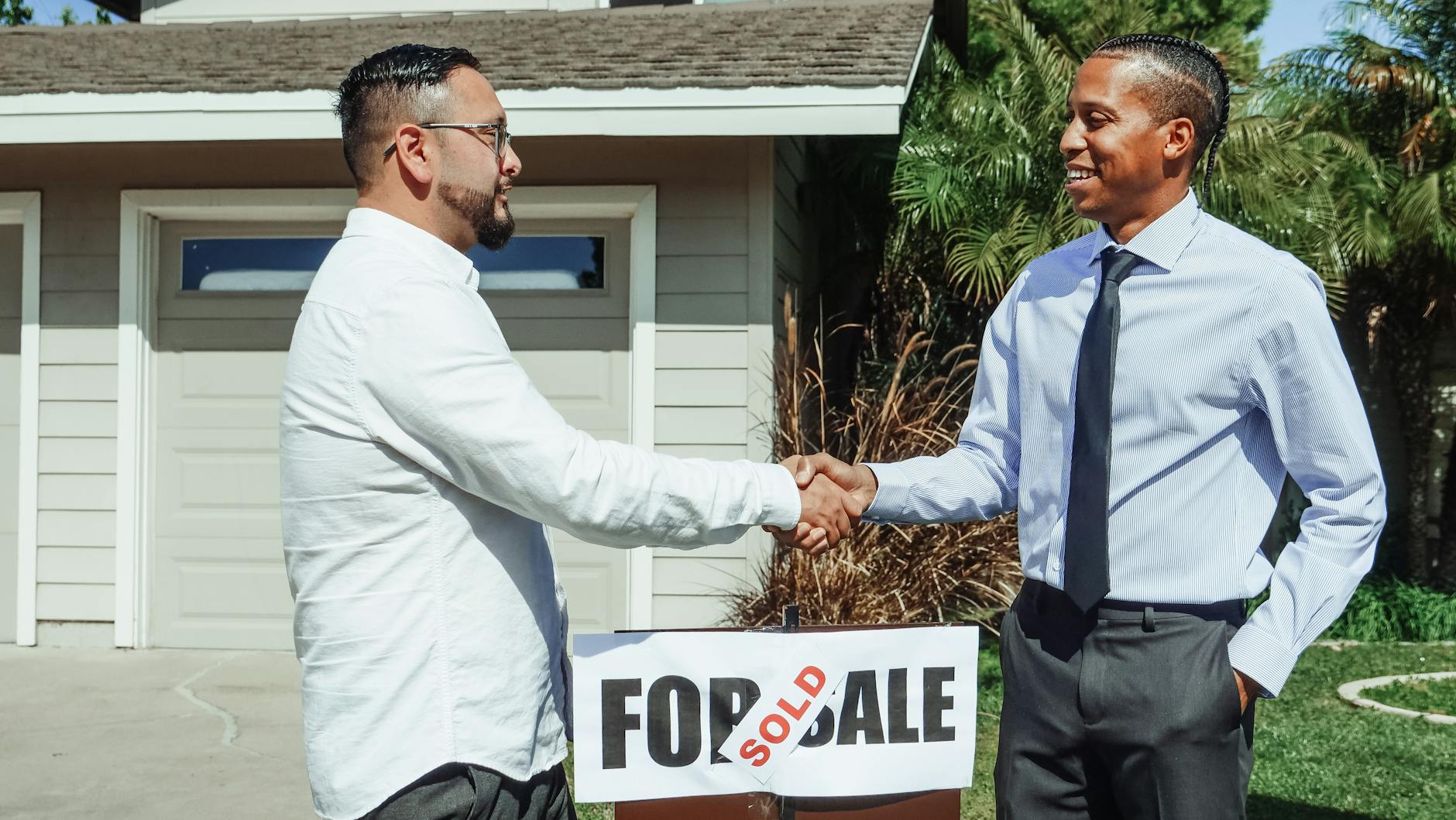
This story is from 2020 but I found it interesting: what happened when the State of Illinois gave Sears large amounts of money to relocate to suburban Hoffman Estates? From ProPublica and the Daily Herald in 2020:

Photo by Airam Dato-on on Pexels.com

The deal cemented that day would permanently change Illinois, as politicians embraced the use of taxpayer funds to stop a growing exodus of jobs from the state. Since 1989, state and local officials have given $5.3 billion in government incentives to corporations, according to Good Jobs First, a non profit which compiles data on tax deals.

In Sears’ case, state and local officials awarded the company subsidies and tax deals worth more than $536 million over the past three decades — the largest package of governmental incentives ever given to a single company in Illinois.

The tax breaks and credits would transform Hoffman Estates, then a suburb of 45,000 that lay among cornfields 30 miles northwest of Chicago. Sears worked with state and local politicians to build a sprawling corporate headquarters, new roads, tollway interchanges and other infrastructure in the growing village.

Was it a “success”?

ProPublica and the Daily Herald wanted to know whether the investment paid off. Where has the deal succeeded? Where has it failed? What did Illinois and Hoffman Estates taxpayers get for the half billion dollars awarded to Sears?

The review of the Sears deal shows that 30 years of spending public money on private interests failed to deliver the economic bonanza envisioned by corporate, state and local officials.

Reading through the report, it seems that a few parties might claim victory decades later. Local officials attracted a major corporation and jobs. Illinois officials could claim they saved jobs and promoted economic development. And Sears got lots of money (even if the company’s long-term trajectory was not good).

Was it worth more $536 million? Could the money have been better invested elsewhere? Would the story be any different if Sears went to a different community or a different state and got similar amounts of money?

Offering these kinds of incentives is now common across American communities. It may have been Sears in the late 1980s but more recently it was Amazon and a possible second headquarters and Foxconn and Samsung and many others. If communities do not participate, they will “lose out” as other places claim a victory.

Do local residents win in the long run? How do the fates of the communities who got the spoils versus those who did not and/or those who did not compete? Is this the only way to play the game to lead to flourishing suburbs and metropolitan areas?

Unique noise features in populated areas

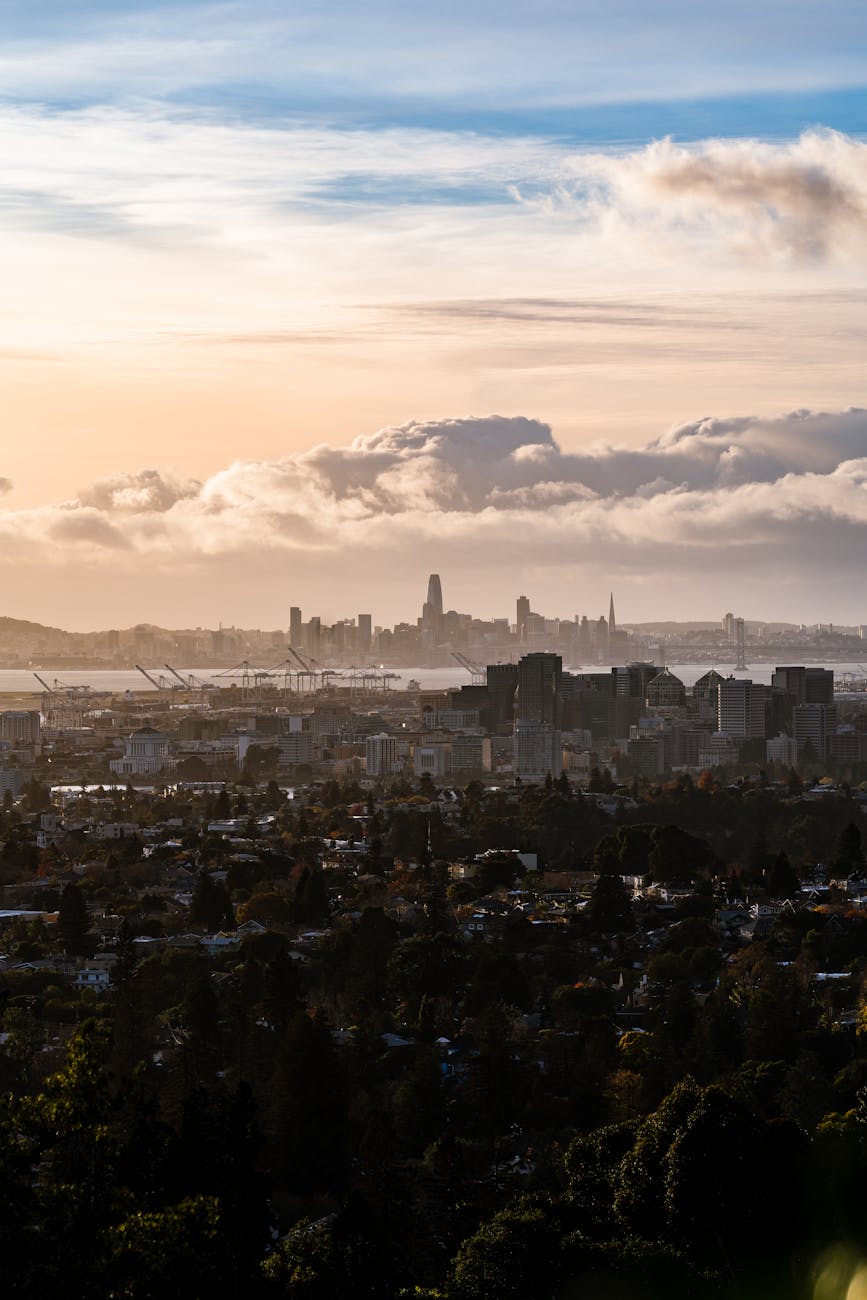
People might generally think of cities as noisy. Amid this volume level, there can be unique noise phenomena in cities and populated areas. Here are two examples, starting with temperature inversion layers:

Photo by Anthony ud83dude42 on Pexels.com

Temperature inversion layers, like the one happening the night Tamblyn heard Billy Joel from her backyard, occur when cool air gets trapped underneath a layer of warm air.

The warm air prevents the cool air from rising, along with smog and sound. The sound waves bend away from the inversion layer and back to the ground, bouncing across further distances.

This is more likely to happen during the fall season, as well as during certain times of day.

The second example involves different kinds of surfaces:

Skyscrapers lining the street can amplify city sounds, according to acoustic consultant Scott Pfeiffer.

That’s because sound waves easily reflect off rigid, hard surfaces, like glass and brick, Pfeiffer said. Sounds bounce back and forth like the two sides of the street are playing tennis.

The end result is a sound “canyon,” which often creates an echo…

Trees, grass and other plant life act as natural absorbers and deflectors of sound.

Three thoughts in response:

  1. Does public noise matter less in an era where lots of people use AirPods and other headphones? People have used headphones for decades but the noise-cancelling features of today’s devices plus their ubiquity might mean more people are in their own soundscapes.
  2. If cities are greener in the future, particularly with more plants and greenery among the buildings, does this mean they would be quieter? Having fewer motorized vehicles could also help.
  3. It is common to think of cities in terms of neighborhoods or scenes. These are often defined with physical boundaries. Do sound boundaries roughly match these boundaries or are there different sonic neighborhoods in places?

Can you have “high-end, custom homes” that are within a few feet of the neighbors?

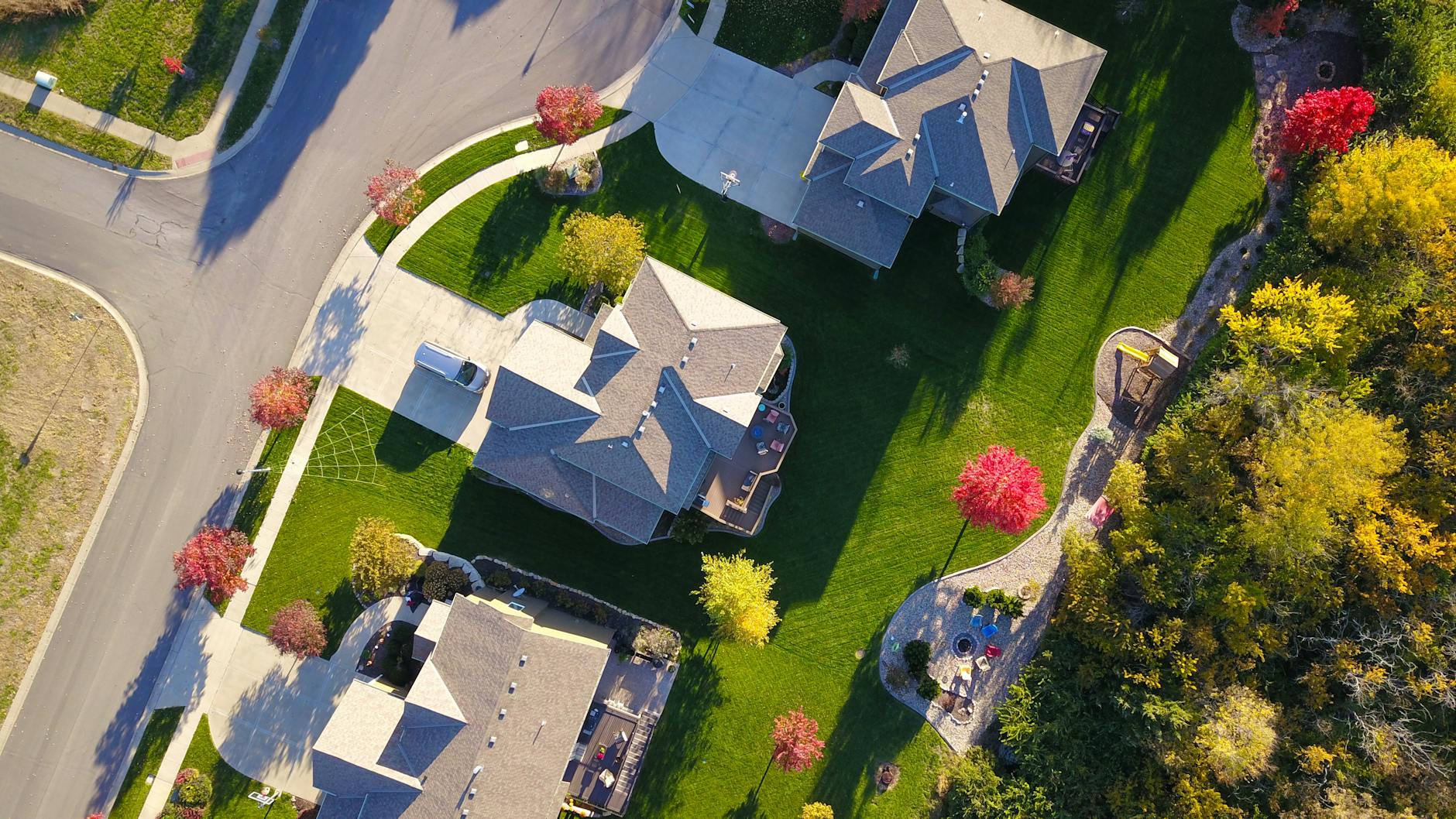
A new proposed subdivision in one Chicago suburb will have “custom, high-end homes.” But the image provided suggests these homes will be right next to their neighbors. Do these things go together?

https://www.dailyherald.com/20240903/news/custom-home-developer-asks-lombard-to-annex-site/

A description of “high-end” and “custom” plus looking at the rendering suggests these will be pricey homes. To have this square footage with a garage in a new single-family home build in an older suburb will cost buyers a good amount.

But the homes are so close to each other! Americans like single-family homes in the suburbs but they also like a little space. They like a lawn and an approximation of nature. They like some privacy and an ability to do what they want with their property.

The demand will be there for these homes, yards or not. Housing supply is limited. Some buyers want to pay for less yard space. The new spacious interior with features will outweigh other downsides. If plenty of Americans prefer private interior spaces, these homes will offer that. Like many in the suburbs, people can drive into their garage, close the door, and do their thing inside with little interaction with neighbors or the community.

I also imagine there are a good number of people in the United States who would look at the drawing above and not have any interest due to the lack of space around each house. These are denser suburban homes that do not appeal to everyone.

The new 10-to-4 office hours and commuting patterns

When rush hour is continues to change:

Photo by Pixabay on Pexels.com

The traditional American 9-to-5 has shifted to 10-to-4, according to the 2023 Global Traffic Scorecard released in June by INRIX Inc., a traffic-data analysis firm.

“There is less of a morning commute, less of an evening commute and much more afternoon activity,” said Bob Pishue, a transportation analyst and author of the report. “This is more of the new normal.”

Now, there is a “midday rush hour,” the INRIX report found, with almost as many trips to and from the office being made at noon as there are at 9 a.m. and 5 p.m.

Also, commuters have all but given up on public transportation. Ridership sank during the pandemic, Federal Reserve Bank of St. Louis data shows, and never fully recovered.

The rush hour increasingly seems to be “traffic all the time!”

Since this has now been going on for a few years and also includes changes to truck use and ride sharing, what are cities and regions doing differently? What incentives do drivers and organizations have to choose other than drive by themselves when they want?

There does seem to be some possible good will to change traffic patterns when there are major issues, like significant highway repairs or the Olympics. When does regular traffic become a large enough issue that people start acting together?

Like I asked yesterday, are there cities and regions that do a better job at this than others?

What US metro areas do suburb to suburb mass transit well?

Public hearings about mass transit consolidation in the Chicago region highlight a persistent issue: where is the mass transit to serve all the people who commute suburb to suburb?

Photo by Jou00e3o Jesus on Pexels.com

“Right now, our transit system reflects an old design,” DuPage County Board Chair Deb Conroy testified in Naperville. “One that saw commuting as merely bedroom communities serving downtown workplaces.”

“All suburban residents deserve the same level and access to and from Naperville to Rosemont or from Oak Park to the Morton Arboretum in Lisle.”

College of DuPage student Rowan Julian experienced that disconnect trying to get from Wheaton to Batavia to see a friend, a 20-minute car trip. She wanted to use public transit but found it could take up to one hour and 40 minutes.

“For me I felt like I had no choice … so I chose to take my car,” she said.

Chicago, like many older metro areas, has a hub-and-spoke model where the train lines feed the center of the city. This fit a particular era when there was a mass of jobs and economic activity in the center of cities.

Today, metropolitan regions are sprawling and many commuters do not need to go to the big city for work: there are all sorts of jobs all throughout the region. This presents particular challenges for mass transit. Buses can use existing roadways but tend to be slower than cars. Trains can connect nodes but then there needs to be additional service from the train stations. Access via walking or biking might be theoretically possible in some suburban areas but it is often dangerous. Communities and the region can encourage more development around existing transit nodes. And Americans often seem to like driving because of the individual freedom it offers and go when they want and where they want.

What American regions do this well? Could be older regions or newer regions. Who has a model that other regions can emulate? How can regions build this capacity and pay for it? When much of the money is funneled to maintaining existing roads and building new ones, how can suburban places find resources for mass transit?

Searching for the best home for the apocalypse

How many American homes would survive the end times? You can search for homes now that might have a better chance of surviving a major crisis.

Photo by Erik Mclean on Pexels.com

One critique of mass produced postwar homes is that they would not stand the test of time. They were not built well. They were constructed quickly and lacked quality.

Many of them are still standing. Many of them have been improved over time with renovations, additions, and changes. But how many would survive a global pandemic or major natural disaster or the explosion of a nuclear device in the big city 25 miles away?

Part of the issue would be how close the homes are to the issue at hand. A second is whether the people living there can access resources to keep the home maintained. A third concern is whether people can keep living in the home or if they must flee elsewhere; a home with no one there will suffer over time.

If someone has the money and the fears (or foresight?) to buy a home that prepares them for a period of crisis, now is the time to purchase before the properties get snapped up or they become more expensive. The rest of the residents of the United States will have to wait for the mass produced version…

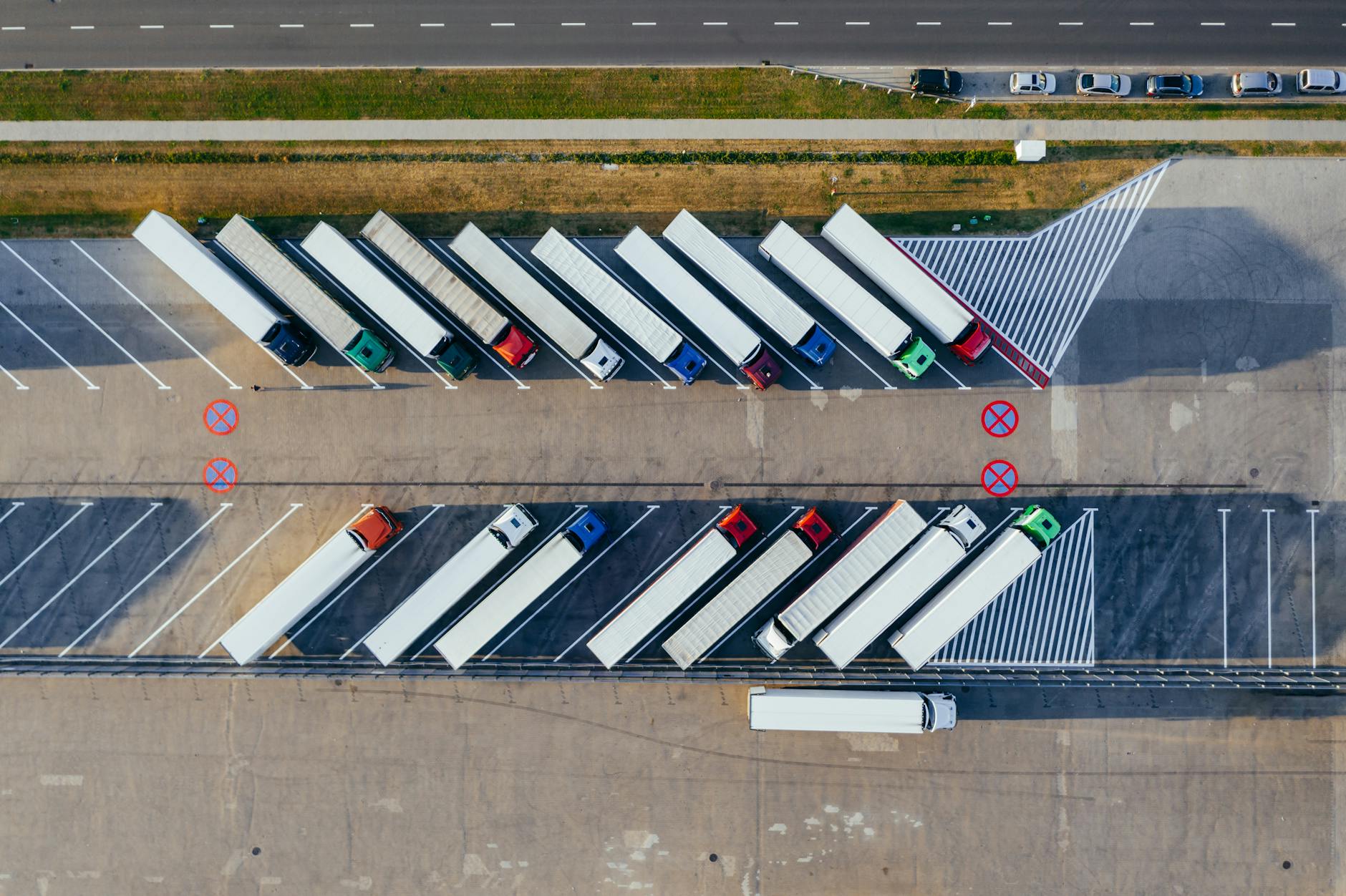
Warmer temperatures and transporting and storing frozen food

If outside temperatures are warmer, it takes more energy to cool food. This could be a problem:

Photo by Gustavo Fring on Pexels.com

It’s easy to take the huge variety of foods available at the grocery store for granted. But it’s possible because of the technology—and huge amount of energy—that keeps dairy, meat, fruits, and vegetables cold, safe from rot, and free of bacteria growth. To find out how the heat is affecting the process of keeping things cool, I talked to Nicola Twilley, the author of Frostbite: How Refrigeration Changed Our Food, Our Planet, and Ourselves. Our interview has been condensed and edited for clarity…

The estimate is that for every degree-Fahrenheit rise in ambient temperature, your refrigerator uses 2 to 2½ percent more energy. So it’s significant. It has to work significantly harder to cool things. So there is a real problem…

We can’t just store our food at a much warmer temperature. But there actually is a big push to raise the temperature that frozen food is stored at by a couple of degrees. Currently frozen food should be transported at minus 18 degrees Celsius, or zero degrees Fahrenheit. But for every degree that you go below minus 12 degrees Celsius, you’re using an extra 2 or 3 percent energy.

The company that owns Birds Eye [the frozen foods giant] has studied this and found that if their foods were stored at minus 15 degrees centigrade, rather than minus 18, it wouldn’t affect the food safety or the texture or taste or nutrition level. And it would likely reduce energy consumption by about 10 percent, which is a lot. All the big frozen-food warehouses and shipping companies are behind this right now.

It sounds like transporting frozen food at slightly warmer temperatures could work.

But there are bigger issues at play here. How much frozen food should there be and how far should it be shipped? How about refrigerated food? Americans are pretty used to all sorts of cold and frozen food options that come from who knows where.

Talk about needing more local food has been going on for a while. Some had concerns about oil use; what does it take to transport food thousands of miles to please consumers elsewhere in the globe? Or it might be about agriculture more broadly: do people eat what is available each season instead of depending on food grown elsewhere that makes certain food available all year round?

I would guess many American consumers still have little idea where their food – fresh or frozen – comes from. It is just available. I can go roughly two and a half miles from where I live and visit five different sizable grocery stores. Expand that radius to five miles and it adds numerous stores. What if I had fewer shopping options, whether in terms of locations or fewer food items when shopping in each store?

It is interesting to hear that companies might be willing to make changes as it could save money and be more sustainable. What other parts of the system, whether at the policy level or for those who transport goods or on the consumer side, would address the issue of energy use for frozen and cold food?

Record high rents in NYC

Remember lower rents in New York City during COVID-19? A new report about high rents suggests any price drops in the city are long gone:

Photo by Pixabay on Pexels.com

The cost of renting a one-bedroom apartment in New York City reached an all-time high for the second month in a row in August, according to Zumper’s latest National Rent Report.

Residents are paying a median amount of $4,500 for a one-bedroom apartment in the city, up 12.8 percent compared to a year earlier and 3.4 percent compared to July. Those renting out two-bedroom apartments are not doing much better. According to Zumper, the median two-bedroom rent reached a record high of $5,100 in August, up 13.3 percent year-over-year and 3.7 percent month-over-month…

But the rent increases in New York mark a resurgence for the city’s market, after rent dropped to a four-year low in January 2021 during the COVID-19 pandemic. At the time, the median one-bedroom rent was $2,350. Since then, rent has nearly doubled—confirming New York’s rental market to be the most expensive in the nation.

Three quick thoughts in response:

  1. Who can afford such prices?
  2. Is this just supply and demand where the number of housing units is not keeping up with all the people who want to live in NYC? How do public and private actors continue to contribute to such an expensive housing market?
  3. For better or worse, these are the sorts of numbers that people remember when they think about housing prices. Most housing markets in the United States are not Manhattan or San Francisco or Seattle. But people generally know these places are expensive and those costs produce all sorts of reactions. Could a national policy to addressing housing costs, such as hinted at recently by one presidential candidate, address the issue in New York City and in other places?

The bipartisan coalition that keeps funneling money to highways and roads

Americans like highways and driving. The construction and maintenance of roads is often supported across the political spectrum:

Photo by Antonio Avanti on Pexels.com

Even in deep-blue states, a bipartisan coalition keeps the highway funding spigot open, said Amy Lee, a postdoc at the University of California, Los Angeles who wrote her dissertation about California’s failure to constrain highway growth. “The construction-materials companies tend to be very big on the right, and organized labor tends to be very powerful on the left,” she said, and these forces form a pro-highway juggernaut. In January, a coalition of construction companies and labor groups sent a letter to California’s top elected leaders defending “funding for infrastructure projects that may potentially increase vehicle miles traveled”—i.e., highway expansions. (The Laborers’ International Union of North America did not respond to repeated requests for comment for this article.) As with electric vehicles, highway construction seems to be a topic in which environmental and union interests diverge.

Transportation departments don’t want to hear no on highways. In 2022 Oklahoma’s department of transportation preemptively bought 23 web domains, like oklahomansagainstturnpikes.com and stoptheeasternloop.com, that could theoretically be used to rally opposition to the state’s $5 billion highway plan. Speaking up against pavement within a department can be difficult and risky. Last year, Jeanie Ward-Waller, a Massachusetts Institute of Technology–trained engineer who served as the deputy director of planning and modal programs for California’s Caltrans, was demoted after questioning her agency’s plans to widen I-80 between Sacramento and Davis. In an editorial published in the San Francisco Chronicle, Ward-Waller wrote, “My concerns were repeatedly brushed off by my bosses, who seemed more concerned about getting the next widening project underway than following the law.”

At the federal level, even asking questions about the collective climate impact of highway building appears verboten. In 2022 Stephanie Pollack, the acting head of the Federal Highway Administration, called on state DOTs to measure the carbon emissions attributable to their highway systems. Republicans were incensed; 21 states filed a suit, and Republican Senate Minority Leader Mitch McConnell advised governors to simply ignore her.

Democrats have supported highway expansions too. The White House called the Bipartisan Infrastructure Law “a critical step towards reaching President Biden’s goal of a net-zero emissions economy by 2050,” but subsequent analysis by Transportation for America found that state DOTs used nearly a quarter of the $270 billion they received through the law to expand highways, a move sure to increase emissions. (After the infrastructure bill was passed, the head of Louisiana’s transportation department said that “some of the winners I think from this project funding will be things like the Inter-City Connector,” referring to the Shreveport project.)

With so many forces pushing for roadway expansions, opposing them requires political bravery.

At this point in American history, highways might seem “inevitable” or “natural.” For decades, highways have helped bring all sorts of features of American society, including big box stores, road trips, and suburban subdivisions.

As noted above, this system requires resources. And both major political parties tend to support it. They might fight particular projects (also highlighted in the article) but they generally find the money needed for fixing roads and creating new ones.

To reverse course then requires a major political change. Resources could be funneled elsewhere. The topic could become a regular campaign issue. It could join with popular support. How might it be pitched? Here are two areas where I could guess these political appeals might work:

  1. The individual costs of driving are high. Paying for gas, insurance, maintenance, storing a vehicle, and more add up. Are all people interested in paying this year after year after year?
  2. A desire among some (not all) for denser living areas that can support less driving. Even American cities can be sprawling but it seems there is some interest for communities that are more walkable and accessible by other means.

There are other arguments to make, of course. The two I listed get at different opportunities people might want. Pivoting from a transportation method that tends to privilege individual choices to travel wherever they want whenever they want might require providing different opportunities.

New mosque on 248th Avenue in Naperville almost complete after a long process

There is an update on a case of zoning conflict in Naperville regarding a proposed mosque (see a 2019 journal article here and two blog posts here and here):

An aerial view of the property circa 2011 when originally purchased by the Islamic Center of Naperville.

Nearly two years after breaking ground, the first phase of the Islamic Center of Naperville’s mosque complex on 248th Avenue is nearly complete.

Phase one work — the construction of a 28,400-square-foot mosque — is set to finish in October, according to Islamic Center President Anees Rahman. As of mid-August, Rahman estimated the mosque was about 90% to 95% complete…

It took 15 meetings held over nine months for the proposed complex to receive a positive recommendation in October 2021 from the city’s Planning and Zoning Commission. The Naperville City Council unanimously OK’d the venture a month later — with a slate of restrictions.

Those included conditions aimed at addressing traffic, parking, fire safety and noise concerns raised by neighboring residents. As part of the approved plans, ICN agreed it would not proceed past phase two — a 41,749-square-foot school — until improvements to 248th Avenue are complete…

With traffic projections estimating the road will average 18,000 vehicles daily by 2050, the city is planning to widen 248th Avenue to five lanes between 95th and 103rd streets and to add storm sewers, curbs, gutters, street lighting, sidewalks and noise walls.

This sounds like a good outcome for the group and its members as the building will open soon. This provides space for worship and fellowship.

At the same time, this was a long process with a lot of public involvement. The property was originally owned by a church who did not build a church building on it. When it was sold to the Islamic Center of Naperville and they put forward plans, neighbors and others responded.

Given what I found in two studies (see more about the second one involving the New York City area) regarding local zoning conflict and religious buildings, proposals from Muslim groups receive more scrutiny. This particular building is almost complete but what are the consequences of longer processes and more questions compared to what others face?