Goodbye dining rooms in American residences

Hello great rooms, goodbye dining rooms:

Photo by Pixabay on Pexels.com

But in many new apartments, even a space to put a table and chairs is absent. Eating is relegated to couches and bedrooms, and hosting a meal has become virtually impossible. This isn’t simply a response to consumer preferences. The housing crisis—and the arbitrary regulations that fuel it—is killing off places to eat whether we like it or not, designing loneliness into American floor plans. If dining space keeps dying, the U.S. might not have a chance to get it back…

According to surveys in 2015 and 2016 by the National Association of Home Builders, 86 percent of households want a combined kitchen and dining room—a preference accommodated by only 75 percent of new homes. If anything, the classic dining room isn’t dying fast enough for most people’s taste…

“For the most part, apartments are built for Netflix and chill,” Bobby Fijan, a real-estate developer and floor-plan expert, told me. “The reason the dining room is disappearing is that we are allocating [our] limited space to bedrooms and walk-in closets.” Even though we’re dining at home more and more—going to restaurants peaked in 2000—many new apartments offer only a kitchen island as an obvious place to eat.

The article does a nice job laying out some of the reasons for these shifts. Builders and consumers have reasons for moving away from dining rooms.

Another way to think about this: sitting down an eating is now a secondary task to other matters including watching screens and being near kitchen activity (food preparation, socializing). Having a dedicated spot to sit and eat – which then can lead to conversation and togetherness – is less of a priority.

Does having a dining room lead to more meals eaten together? Does having a dining room lead people to spend more time there or does the dining room get put to other uses?

Costs rising for owning and maintaining a home

A new report suggests owning a home has become more expensive in recent years:

Photo by Monstera Production on Pexels.com

US homeowners are now paying an average of $18,118 a year on property taxes, homeowners’ insurance, maintenance, energy and various other expenses linked to owning a home, according to a new Bankrate study.

That’s nearly the cost to buy a used car and represents a 26% increase from four years ago when it cost $14,428 annually to own and maintain a home…

The per-month cost of owning and maintaining a home has gone from $1,202 a month in 2020 to $1,510 now, Bankrate found…

Of course, the silver lining for homeowners is the fact that home values have gone up significantly since 2020.

Those gains have padded the net worth of millions of Americans. Median inflation-adjusted net worth swelled by 37% between 2019 to 2022, according to the Federal Reserve.

These two trends above might be hard to reconcile: having a home costs more but the value of that home keeps going up. So a homeowner can feel crunched at the moment as they can anticipate a strong return on investment. Which one will they feel more – what feels like a loss in expenses or anticipated value down the road?

Argument: you cannot understand the attachment to smartphones and social media today without accounting for the decline in community life starting in the 1960s

Jonathan Haidt, author of the recent book The Anxious Generation, argued the recent development of a phone-based childhood was preceded by a decline in childhood play. He now wants to add to this argument: both of these followed a decline in local community.

Photo by Matheus Bertelli on Pexels.com

When I was writing The Anxious Generation, I thought of it as a tragedy in two acts: In Act I, we took away the play-based childhood (1990-2010), and in Act II, we gave kids the phone-based childhood (2010-2015). Teen mental health plunged in the middle of Act II. 

But as Zach and I were finishing up the revisions of the book in the fall of 2023, and Zach was running additional analyses and making additional graphs, we began to realize that there was a third act, which predated Act I and caused it: the decline of local community, trust, and social capital. That’s the long process charted in Robert Putnam’s 2000 masterpiece Bowling Alone: The Collapse and Revival of American Community and updated in his more recent book, The Upswing: How America Came Together a Century Ago and How We Can Do It Again.

This is an argument about historical change and processes emerging from existing conditions. Put in other words, the United States had close-knit local communities and many local organizations which then declined which led parents and communities to pull back on children playing which created a vacuum into which smartphones and social media stepped into.

In Bowling Alone, Putnam describes multiple factors at work in the decline of community and local organizations. This includes the expansion of suburbs and the spread of television. And in The Upswing, Putnam argues civic participation and community life of the mid-twentieth century arose from lower levels earlier in the twentieth century.

All this suggests social capital and community life can rise and fall over longer periods with numerous social forces at work. What is going on now may not be what is happening in 20 years or 50 years and these future permutations may not look like the past. With smartphones, the emergence of artificial intelligence, and all the other social conditions of today, what kind of community life might emerge?

From railroad easement to tax deduction during railroad merger to Millennium Park

Where did the land for Chicago’s Millennium Park come from?

In 1993, I went to work with Forrest Claypool in the Chicago Park District. I was responsible for the lakefront district. It always made no sense to me that there was this muddy, ugly hole right off Michigan Avenue. It also made no sense that if the Illinois Central Railroad owned that land, they would use it as a surface parking lot. You would think they would do something else with it. The other thing that stood out was that there was one track on the eastern edge with a single boxcar on it. It was just an eyesore. For a century, city and parks groups would try to buy the land, and the railroad would never sell it…

I did a title search. I just wanted to get to the bottom of it. I was sort of a zealot about the use of public land. I found out that the railroad didn’t own the land after all. It was always the city’s land. What the railroad had was an easement. So they could use the land for rail purposes, but they couldn’t build a building. They had no air rights. And to maintain the fiction of rail purposes, they kept the single track and the single boxcar. The railroad was happy to make some ancillary revenue as a parking operation. At this point, Forrest and I advised the mayor of what we had found. And [in 1996] the park district and the city Law Department together sued the railroad.

Without Randy Mehrberg’s discovery, none of this happens. Daley was in action mode almost immediately. As in: “Let’s go through the legal process here to get this thing done.” It was not until this sort of virgin land in the middle of the city became available that he saw that this was the chance.

The railroad was not terribly happy or receptive. But a funny thing happened: The Illinois Central was in the process of being sold to the Canadian National Railway. And I suggested to the railroad that instead of litigating with us, they make a donation to the city of all of their title and interest rights from Randolph Street to McCormick Place. They would get a nice tax deduction, and it would enhance their merger, because the purchase price was based on a multiple of earnings, and a large tax deduction would improve their earnings. We were able to negotiate that.

The area around the Chicago River and the lakefront was a shipping area with railroads converging and boats coming in and out. Yet, it sounds like it took a while to figure out what to do with all this space once transportation activity moved elsewhere. It is not as if Chicago stopped being a transportation center; the action shifted and this area eventually became a park.

Having been in Millennium Park many times, I do not recall seeing any documentation of the previous history of the land. If it is not marked, why not tell some of the story of railroads and other lakefront uses in the past to what the park is today? I am in favor of more resources for residents and visitors to learn and visualize what used to be where they are standing or looking. (Some of this could come from virtual reality or augmented reality devices but we are not there yet.)

What it might take for the Supreme Court to limit exclusionary zoning

Two law professors argue that the Supreme Court could utilize the Fifth Amendment to make exclusionary zoning less common:

Photo by Phung Touch on Pexels.com

No one simple solution to this problem exists. But a crucial tool may lie in the Constitution: the takings clause of the Fifth Amendment. The clause requires that, when the government takes “private property,” it must pay “just compensation” (usually the fair market value of the property rights taken). As we argue in a forthcoming Texas Law Review article, because exclusionary zoning severely restricts property owners’ right to use their land, we believe that it qualifies as such a taking, and is therefore unconstitutional unless the government pays compensation. Consistent enforcement of this interpretation would severely constrain exclusionary zoning, limiting it to cases where policy makers believe the benefits are worth the costs of paying compensation—and where they have the resources to do so.

Here is what the authors conclude with regarding what would be required to lead to a Supreme Court decision:

Historically, successful constitutional-reform movements have combined legal and political action, and have not relied on one to the exclusion of the other. That was true for the civil-rights movement, the women’s-rights movement, advocates of same-sex marriage, gun-rights advocates, and others. The cross-ideological YIMBY movement should do the same.

What steps might this involve? Some thoughts:

  1. At least several states make significant shifts at the state level.
  2. Sustained political and judicial attention to the issue of exclusionary zoning (competing with other issues that attract more attention).
  3. At least one, if not a few, compelling cases where making such a ruling makes sense given the parties involved and local and historical circumstances.
  4. Public support for a change to exclusionary zoning. I do not know where polling stands on this issue or even if the public is asked about this issue.
  5. Coordinated advocacy efforts across organizations and locations.
  6. Different members of the Supreme Court?

I have argued before that it is difficult to address housing at the national level in the United States. That does not mean laws and policies cannot change but it will require a lot of effort.

The Home Alone house as one of the most newsworthy houses in America?

I saw the news: the Home Alone house has been sold.

Photo by Alena Darmel on Pexels.com

The red brick Georgian Revival mansion in Winnetka made famous by the 1990 film “Home Alone” garnered much attention when it was listed on May 24 for $5.25 million — more than three times what it had sold for in 2012 to its current owners — and in a testament both to the condition of the home and the popularity of Winnetka, the mansion found a buyer just one week later.

How many houses generate this much interest when they are on the market or even when they are not? The same story above noted the number of visitors to the fictional home of the McCallisters:

A 1992 Chicago Tribune headline for a story about the home being placed on a local house walk called the mansion “a “home that’s never left alone.” Then-owner Cynthia Abendshien told the Tribune even back then that “there are a lot of people, especially children, that will knock on the door and ask to see the house.”

It’s not much different today, although the mansion now is set behind a wrought iron fence and gate. On a nice day, a visitor showing up to gawk at the mansion soon will discover that there’s company — other visitors there for the same purpose.

There are historic mansions that get a lot of visitors. Think Hearst Castle, Biltmore. Lots of communities have preserved older homes or historic preservation districts. Homes designed by well-known architects, like Frank Lloyd Wright, draw the attention of visitors.

But homes made famous by a movie? Particularly a movie aimed at kids? That when it goes on sale prompts articles by the New York Times, Architectural Digest, and the Today Show? It may be an particular confluence of when the movie was made, the way news outlets today report similar stories, and the interest people have in famous or celebrity houses. I am sure the home will be back in the news at some point, though the movie is now over 30 years old and real estate markets change.

“Phoenix is a guide to our future”

A new cover story in The Atlantic looks at Phoenix, Arizona and considers what the United States is and what it could be:

NASA Satellite Captures Super Bowl Cities – Phoenix [annotated] by NASA Goddard Photo and Video is licensed under CC-BY 2.0

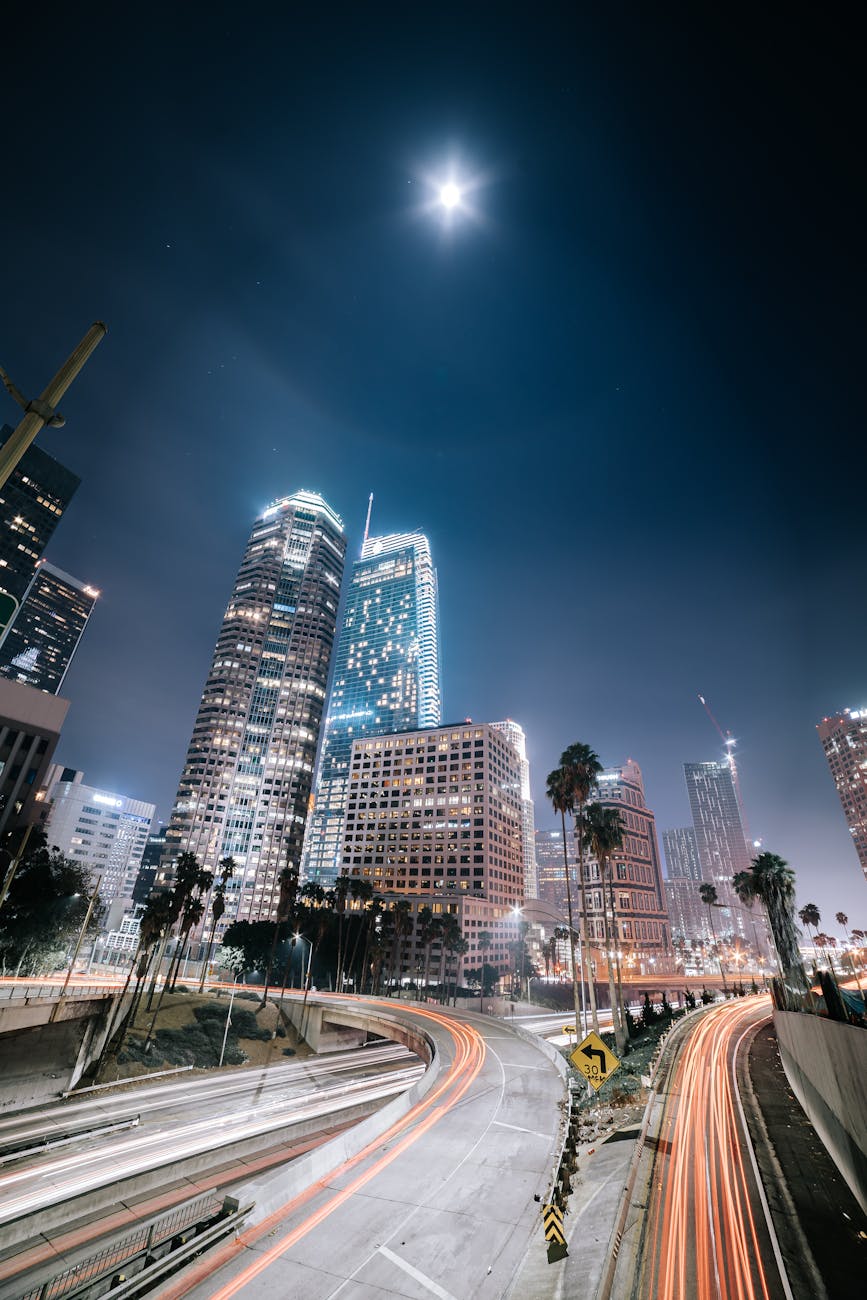
The Valley is one of the fastest-growing regions in America, where a developer decided to put a city of the future on a piece of virgin desert miles from anything. At night, from the air, the Phoenix metroplex looks like a glittering alien craft that has landed where the Earth is flat and wide enough to host it. The street grids and subdivisions spreading across retired farmland end only when they’re stopped by the borders of a tribal reservation or the dark folds of mountains, some of them surrounded on all sides by sprawl.

Phoenix makes you keenly aware of human artifice—its ingenuity and its fragility. The American lust for new things and new ideas, good and bad ones, is most palpable here in the West, but the dynamo that generates all the microchip factories and battery plants and downtown high-rises and master-planned suburbs runs so high that it suggests its own oblivion. New Yorkers and Chicagoans don’t wonder how long their cities will go on existing, but in Phoenix in August, when the heat has broken 110 degrees for a month straight, the desert golf courses and urban freeways give this civilization an air of impermanence, like a mirage composed of sheer hubris, and a surprising number of inhabitants begin to brood on its disappearance.

Growth keeps coming at a furious pace, despite decades of drought, and despite political extremism that makes every election a crisis threatening violence. Democracy is also a fragile artifice. It depends less on tradition and law than on the shifting contents of individual skulls—belief, virtue, restraint. Its durability under natural and human stress is being put to an intense test in the Valley. And because a vision of vanishing now haunts the whole country, Phoenix is a guide to our future.

Several thoughts in response:

  1. How many Americans know Phoenix is the fifth-largest city in the country – growing from over 106,000 residents in 1950 to over 1.6 million today – and the tenth-largest metropolitan area?
  2. Like many American communities, Phoenix and the region depends on growth. More residents, more business activity, more infrastructure. What happens to Phoenix when/if growth slows? How would a mature region in 50 or 100 years look similar or different?
  3. The environment plays a role in Phoenix and the region. At the same time, Phoenix expanded at a particular point in American history, later than many big cities. How do these two factors intersect?
  4. How would urban sociologists think about Phoenix compared to other American cities and region? Is it more unusual or does it follow similar patterns to other sprawling regions? What marks Phoenix as unique? Do the same social, political, and economic factors propel the region or is there something different going on?

How about a speed range rather than a speed limit?

It is rare to find drivers on major roads that will only go as fast as the speed limit. If anything, the speed limit seems like an anchor at the bottom end of possible speeds so that people do not just drive at whatever speed they want. If the speed limit is 45, few will go only 42 or 44 but the speed limit might keep them from going 75 because that is far away from 45. Future technology might change this: if cars have speed limiters, where will the line be set?

Photo by Castorly Stock on Pexels.com

One way to address this is to have no speed limit. Only a few places do this.

Why not try a speed range? Imagine Chicago highways that have a speed limit of 50-70. Some people might feel more comfortable at the lower end, some at the higher end.

Is the real issue that drivers will not follow any limit unless there is enforcement? Technology could lead to automatically fining drivers (speed cameras, GPS, toll devices, etc.). Or, is it about current conditions (less traffic can lead to higher speeds, more congestion slows speeds)? Some roadways now have variable speeds where digital signs change the speed limits for the given conditions.

All this to say, a speed limit seems more like a number that most American drivers treat as a recommendation and not an imperative. This has big implications for the driving experience, how Americans regard driving, and safety.

Rolling ball machine sculptures: art and fun

I like the work of artist George Rhoads. He made “rolling ball machine sculptures” that can be found in some children’s museums and other public spaces. More about Rhoads in the image below is from the Rockford Discovery Center Museum:

What do they have? Balls moving along interesting paths, noise, color, and lots of action.

See a 1993 creation in action or this one at the Franklin Institute in Philadelphia.

Turning former shopping spaces into entertainment centers

Imagine a shopping mall less about shopping and more about entertainment. This is what is happening to at least a few vacant big box and department stores:

Photo by Alena Darmel on Pexels.com

Oca’s client, real estate investment firm E8 Properties, has been buying empty Sears stores, dusting them off and converting them into “Elev8 Fun,” a massive indoor family entertainment park created in partnership with Primetime Amusements, a provider of video arcade machine.

The first one, designed by Oca and his team and housed in a 120,000-square-foot former Sears building attached to the Seminole Town Center Mall in Sanford, Florida, opened in January 2022…

To his point, increasingly, more malls are morphing into family entertainment destinations where shopping may not even be what draws shoppers in.

Industry analysts said research shows that adding entertainment experiences shifts more money to mall retailers and not away from them. Through the pandemic and coming out of it, the popularity of pickleball made its way into malls with courts popping up next to skating rinks. Indoor skydiving, Legoland theme parks, virtual golf and microbreweries are other concepts catching on.

Shopping can be its own kind of entertainment. It is not just about buying goods, whether they are necessary for life or not. It is about looking, considering, interacting with people you are with, seeing other people shopping, and participating in particular lifestyles.

But these entertainment centers are offering something else: games, competition, novelty, having fun with others.

Longer-term, does this mean hopping is less entertaining and more efficient when done online? Is shopping more often a private activity since it takes place online? Do people still want to have experiences around or near others, even if the forms of doing so have changed?