Turning down a big proposed warehouse, thinking about affordable housing for certain members of the community

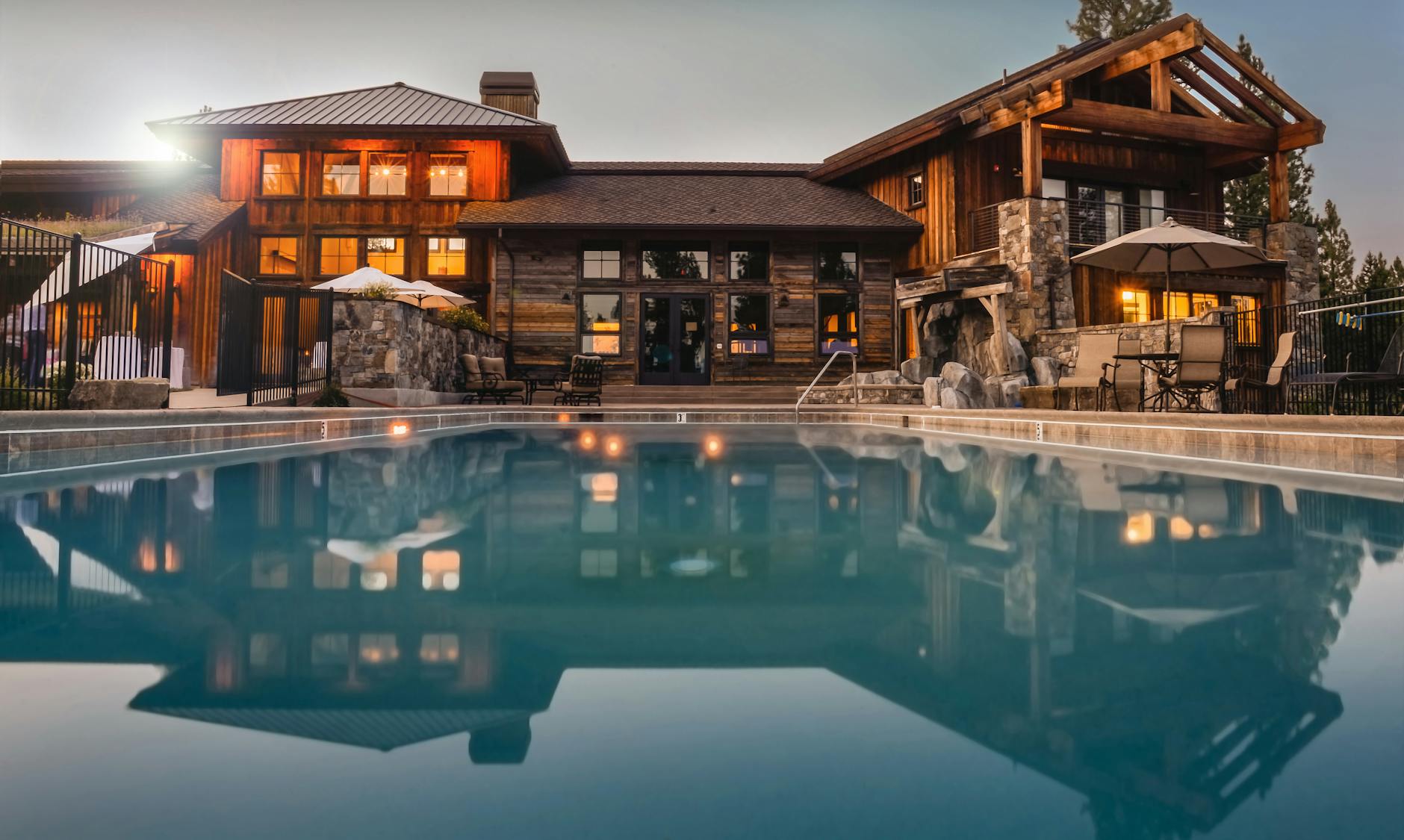
The spread of warehouses in suburban areas can meet opposition:

Photo by Thijs van der Weide on Pexels.com

For the second time in less than a year, the Geneva Planning and Zoning Commission is recommending the denial of a request to allow a 719,200-square-foot warehouse on the northeast corner of Kirk Road and Fabyan Parkway.

The commission voted 4-1 Thursday against Venture One Acquisitions LLC of Rosemont’s requests to amend the city’s comprehensive plan for the 55.62-acre site, changing it from rural single-family residential to light industrial, and approving a site plan.

If not warehouses at a site of suburban open space, what else could go there?

Walendziak said the east-side residents do not want more diesel pollution and truck noise.

“What the residents do want is residential,” Walendziak said. “We need affordable housing in Geneva. This is one of the last big sites left. … Housing for starting families, for seniors that they can afford to stay living here in Geneva.”

Commissioner Mim Evans also suggested that housing is the best use for the site.

“We need housing in this town, even if it isn’t technically affordable housing,” Evans said. “Housing is needed everywhere at every price point, at every level of density.”

If warehouses are the enemy – traffic, noise, out of character for a community due to their scale and industrial aspects – then housing may be more desirable. And housing for certain people groups, including families or young professionals starting out and older residents of the community who want to downsize and stay.

It may be helpful to look at the longer trends. Suburban residents and leaders have had heated debates about land use since at least the beginning of the postwar era. Big proposals could generate conversations about what the community could become. Community needs shift over time as social and economic conditions change.

At the same time, I wonder if there is extra urgency these days due to two factors. First, many suburbs have few large parcels left. This means that decisions like those above feel extra consequential. Second, housing prices are high enough in many places that people want to protect their housing values and extend housing opportunities to certain people.

Figuring what happens with this particular property might take years from additional discussions to planning to actual construction.

A common suburban playbook: zone for big lots, oppose apartments

A new book about Southlake, Texas discusses some of the mechanisms used to keep the community white:

These approaches are found across American suburbs. Start with zoning for larger residential lots which has several effects. It keeps houses further apart. It maintains a more rural image. It avoids having dense housing. It raises the price of homes as each lot is bigger and costs more and the houses can be bigger since there is more space to build.

Next, take apartments and why a good number of suburbanites do not like them. They are denser housing. Suburbanites prefer homeowners, who they think have more commitment to the community and to the property in which they live. They are cheaper and this may drive property values down.

Put these two together and suburbs can keep housing values up and limit who can live in a community. This is not an accident; suburbs often have particular residents in mind when they think about development and the future of their community.

Almost half of Americans live in the Eastern time zone; what effect does this have?

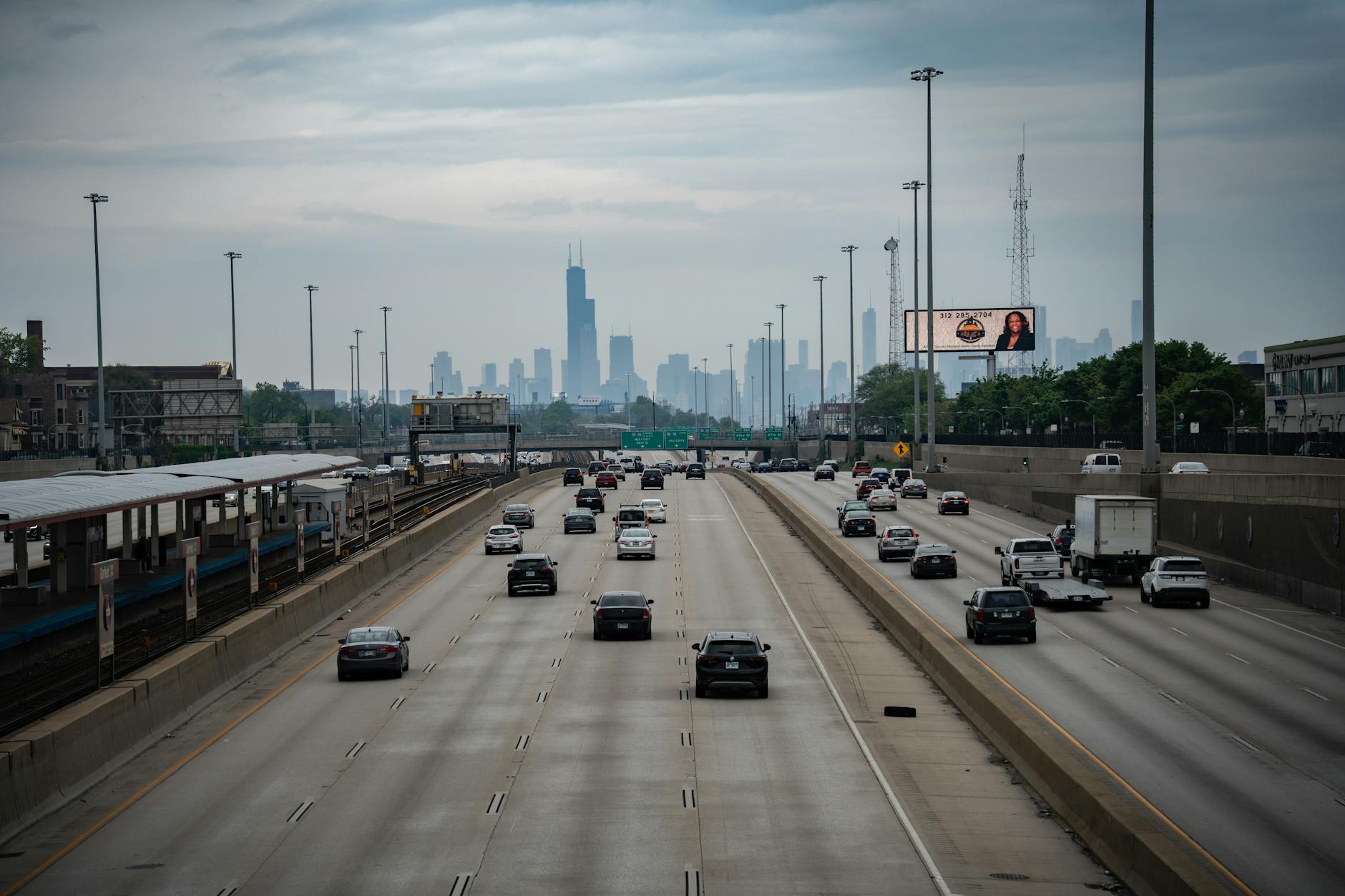
One time zone in the United States has the largest percentage of residents living in it:

Photo by Andrey Grushnikov on Pexels.com

I moved here from eastern, which is the nation’s anchor time zone. I say that not because of its affiliation with New York City or Washington, D.C., but because almost half the U.S. population holds to its authority. Boston, Baltimore, Philadelphia, and Atlanta are on eastern time, along with almost all of Florida and Michigan, the whole of Ohio, and other less notable places made more notable simply by their participation in the most normal time in America.

Eastern time starts the day; it sets the pace for the nation. The stock market opens on Wall Street, corporate lawyers file into Back Bay offices, spoons swirl café cubanos in Miami. It’s morning again in America. On the other coast, where it’s three hours earlier, nobody cares. Such is the glory of the Pacific time zone, which houses a smaller sliver of the country’s population—just 16 percent or so. Some West Coasters—surfers, almond farmers, theme-park vendors—may be up during the eastern a.m. hours, though not because investment bankers or media professionals compel them. But the whole Atlantic Seaboard morning has elapsed by the time that most Pacific-time professionals have stumbled to the office, smoothies in hand. They will always be behind, no matter what they do. This is not a disadvantage; it’s a lifestyle.

I am confused by the conflation of time zones – a concept invented by humans relatively recently to try to cope with the modern world – and influence. The eastern time zone does have a lot of people. This is notable. This means there is a lot of activity that affects people in the rest of the country and the world. (Is this nearly half figure similar to the number showing a big majority of Canadians live within 100 miles of the border with the United States?)

This sounds like a testable hypothesis: do certain time zones have particular advantages due to a competitive edge, historical patterns, and/or perceptions about time zones? Are there notable examples of countries or places where the east to west gradient of influence is not true or opposite?

And what happens in settings where the interaction or collaboration occurs around the globe? How much does it matter that Asia or Europe are earlier in the day than the United States when doing international work?

Are these 15 factors that decide the best suburb or community the ones people to use to make a decision?

In recently looking at the list of the “2024 Best Suburbs to Live in America” according to Niche, I was curious about their methodology. Here are the factors they consider:

This is a long list and it is hard to quickly think of something that should be on the list that is not.

But is this how people select a house or a community? Do they look at all of these factors? Do some of these play a more outsized role than others? Imagine a realtor having a list like this with potential buyers and going through each factor. If you put people in a more controlled setting and asked them to decide between potential suburban places to live, is this how they would decide?

I suspect making a decision is less rational than this full list suggests and is more about having a feeling about a particular house, neighborhood, and/or community. They hear from people or they enjoy driving through the community or what they see in a particular residence appeals to them. Of course, different buyers or potential residents might emphasize different factors and still arrive at the same outcome.

Friends was almost exclusively filmed on studio backlots

Friends is a television show closely tied to New York City. Yet, almost all the show was shot in Hollywood studios:

Photo by Nino Souza on Pexels.com

Although the producers always wanted to find the right stories to take advantage of being on location, Friends was never shot in New York. Bright felt that filming outside the studio made episodes less funny, even when shooting on the lot outside, and that the live audience was an integral part of the series.[58] When the series was criticized for incorrectly depicting New York, with the financially struggling group of friends being able to afford huge apartments, Bright noted that the set had to be big enough for the cameras, lighting, and “for the audience to be able to see what’s going on”.[58] The apartments also needed to provide a place for the actors to execute the actions in the scripts.[58]

The fourth-season finale was shot on location in London because the producers were aware of the series’ popularity in the UK.[58] The scenes were shot in a studio with three audiences each made up of 500 people. These were the show’s largest audiences throughout its run. The fifth-season finale, set in Las Vegas, was filmed at Warner Bros. Studios, although Bright met people who thought it was filmed on location.[72]

The show has a close tie to New York City. Could Friends have even existed in another American city? If it had been in Chicago or Atlanta or Austin, would it have been the same show or had the same success?

Yet, almost all of this was done with away from New York City. It was filmed in an environment that could be made to look like New York.

I would guess most viewers do not care whether the show was filmed in New York; it was set in New York, it had enough to look somewhat convincing of being in New York, and that’s enough. I, however, find this disconnect interesting as it commonly happens in TV shows and movies. When we see a “place” on screen, is it really that place?

How come there are not more colleges with “suburb” or “suburban” in their name?

There are plenty of colleges and universities in the United States named after communities. And many schools are in suburbs outside of cities. But, I had a hard time coming up with colleges with “suburb” or a form of that word in them. Here is the only one listed on a site containing over 6,500 colleges and universities:

Photo by Shvets Anna on Pexels.com

-South Suburban College in South Holland, Illinois.

A good number of schools were founded before the mass suburbia of the twentieth century but many have started since then. Is “suburb” or “suburban” too generic? Does it not provide the level of prestige or status a school seeks? It is hard to drum up for support for a school linked to a sector of a metropolitan region or identified with suburban life?

When housing values and property taxes both go up

American homeowners want their property values to increase. It builds their wealth. The equity they have in the home can be used for other purposes. They can feel like they made a good investment.

Photo by Karolina Grabowska on Pexels.com

On the other hand, fewer homeowners like the idea of paying higher property taxes. Particularly in states with higher property taxes, like Illinois, this is a constant source of frustration: don’t we pay too much? How come other states get away with much lower property taxes?

But, these two forces might just be linked. If your property is worth more, the taxes you pay on that property are likely to go up. In other words, the kind of property appreciation many homeowners want means higher taxes on that more valuable property. (This is not always the case: the value may go up but the property tax rate goes down or some program or exemption limits the property tax amount.)

In a dream world for homeowners, their property would get more valuable and they pay less in taxes. It does not often work this way so instead they may complain about having to pay more in the short term for the ability to gain more money down the road when they sell the property.

Suburbanites in these 6 states will get a lot of attention from presidential campaigns in the next six months

Political strategists suggest six states may determine the 2024 presidential election:

Photo by cottonbro studio on Pexels.com

The titanic Biden-Trump election likely will be decided by roughly 6% of voters in just six states, top strategists in both parties tell us.

  • Each side will spend billions to reach those voters over the next six months…

In which states?

Zoom in: Both campaigns are obsessed with six states — Arizona, Georgia, Michigan, Nevada, Pennsylvania and Wisconsin.

And which voters within these six states?

We perked up our ears when we heard a Biden insider use the “6% of six states” formulation as a proxy for how narrow a group of voters are considered truly in play — swing voters in swing states.

  • Republicans are making a similar calculation. A Trump insider told us that persuadable voters are below 10% in every battleground: “I think it’s probably 6% in Wisconsin but 8% in Michigan, and lower in Arizona.”

Given the way recent elections have gone regarding the importance of suburban voters, would a big proportion of those 6% live in suburbs? If so, these suburban voters can expect many appeals to come their direction from a variety of methods. Targeted ads online, TV and radio ads, mailers, campaign events, local gatherings, and door to door appeals. Lots of conversation about these voters and what they are thinking. Many media stories about them.

Does the average suburban voter in this 6% like that their vote matters or tire of lots of political attention?

The symbiotic relationship between online shopping and brick and mortar stores

Can online shopping and brick and mortar stores benefit each other?

Photo by Andrea Piacquadio on Pexels.com

“There was a narrative that as online grew, stores would become less relevant. But it hasn’t worked out that way,” said Neil Saunders, managing director at GlobalData. “In many ways, the store is still the heart or hub of retail.”

It is another example of how online-only retail has its limits, and why physical stores are making a comeback. After years of overbuilding that lead to a sharp contraction, retailers are on track to open more stores than they close in 2024 for the third consecutive year, according to advisory and research firm Coresight Research.

Many retailers have found that it is too expensive and difficult to attract and retain customers without physical stores. And using stores as pickup and drop-off points helps lower the labor, packaging and shipping costs involved in online orders…

Kohl’s now fulfills more than a third of its online orders in stores, Walmart more than half, and Target nearly all its sales from its network of roughly 2,000 locations, according to the companies.

Americans like shopping. This story makes me think that shopping can even be more pervasive. You can be shopping online and in person. You can shop from anywhere and everywhere. It can happen in the online and offline worlds. It is a self-reinforcing system.

Oh yeah, there is still that pesky problem of people not feeling financially comfortable. Is the all-encompassing shopping realm able to overcome this? Is it just a matter of finding good deals or working with some credit or debt to make purchases?

And if shopping is everywhere, there will likely be more need for companies to differentiate their products and services. What will make someone click on that email or that Instagram ad? What will drive people to that location as opposed to making the purchase online?

The key to the American middle class is feeling middle class

Forget material measures of being middle-class; what if the key is that people in the American middle class feel that they are comfortably middle class?

Photo by Engin Akyurt on Pexels.com

Vincent is among a growing group of middle-class Americans — most recently defined in 2022 by the Pew Research Center as households earning between $48,500 and $145,500 — who don’t feel they can’t afford to live a traditional middle-class life, replete with a home and a comfortable retirement…

Collins suspects that most middle-class Americans feel anxious about their financial situation due to financial shock fatigue — the exhaustion of navigating one big economic shock after another — as well as a lack of financial planning…

Financial anxiety has hit an all-time high, according to a survey from Northwestern Mutual, and a survey from Primerica found that half of middle-class households say their financial situation is “not so good” or outright “poor.”…

Buying a home may be the greatest example of a tenet of middle-class life feeling out of reach for many, and that struggle is very real rather than merely negatively perceived.

The suggestion is that people feel less certain of their social class status because of financial uncertainty at the moment and in recent years. They may have resources, particularly a certain income level, but they do not feel secure.

What might this mean for defining the middle class? Perhaps this should lead to changing what it means. If people do not feel that certain markers provide a middle class status, then change the markers. These variables might need to change as economic conditions change.

It would also be interesting to see what social class those feeling financial anxiety say they are in. Traditionally, being in the middle class was a sign of making it and being successful. Would someone who might be classified as middle class by income and other markers say they are working class? Is there a big shift away from identifying as middle class?