“Phoenix is a guide to our future”

A new cover story in The Atlantic looks at Phoenix, Arizona and considers what the United States is and what it could be:

NASA Satellite Captures Super Bowl Cities – Phoenix [annotated] by NASA Goddard Photo and Video is licensed under CC-BY 2.0

The Valley is one of the fastest-growing regions in America, where a developer decided to put a city of the future on a piece of virgin desert miles from anything. At night, from the air, the Phoenix metroplex looks like a glittering alien craft that has landed where the Earth is flat and wide enough to host it. The street grids and subdivisions spreading across retired farmland end only when they’re stopped by the borders of a tribal reservation or the dark folds of mountains, some of them surrounded on all sides by sprawl.

Phoenix makes you keenly aware of human artifice—its ingenuity and its fragility. The American lust for new things and new ideas, good and bad ones, is most palpable here in the West, but the dynamo that generates all the microchip factories and battery plants and downtown high-rises and master-planned suburbs runs so high that it suggests its own oblivion. New Yorkers and Chicagoans don’t wonder how long their cities will go on existing, but in Phoenix in August, when the heat has broken 110 degrees for a month straight, the desert golf courses and urban freeways give this civilization an air of impermanence, like a mirage composed of sheer hubris, and a surprising number of inhabitants begin to brood on its disappearance.

Growth keeps coming at a furious pace, despite decades of drought, and despite political extremism that makes every election a crisis threatening violence. Democracy is also a fragile artifice. It depends less on tradition and law than on the shifting contents of individual skulls—belief, virtue, restraint. Its durability under natural and human stress is being put to an intense test in the Valley. And because a vision of vanishing now haunts the whole country, Phoenix is a guide to our future.

Several thoughts in response:

  1. How many Americans know Phoenix is the fifth-largest city in the country – growing from over 106,000 residents in 1950 to over 1.6 million today – and the tenth-largest metropolitan area?
  2. Like many American communities, Phoenix and the region depends on growth. More residents, more business activity, more infrastructure. What happens to Phoenix when/if growth slows? How would a mature region in 50 or 100 years look similar or different?
  3. The environment plays a role in Phoenix and the region. At the same time, Phoenix expanded at a particular point in American history, later than many big cities. How do these two factors intersect?
  4. How would urban sociologists think about Phoenix compared to other American cities and region? Is it more unusual or does it follow similar patterns to other sprawling regions? What marks Phoenix as unique? Do the same social, political, and economic factors propel the region or is there something different going on?

How about a speed range rather than a speed limit?

It is rare to find drivers on major roads that will only go as fast as the speed limit. If anything, the speed limit seems like an anchor at the bottom end of possible speeds so that people do not just drive at whatever speed they want. If the speed limit is 45, few will go only 42 or 44 but the speed limit might keep them from going 75 because that is far away from 45. Future technology might change this: if cars have speed limiters, where will the line be set?

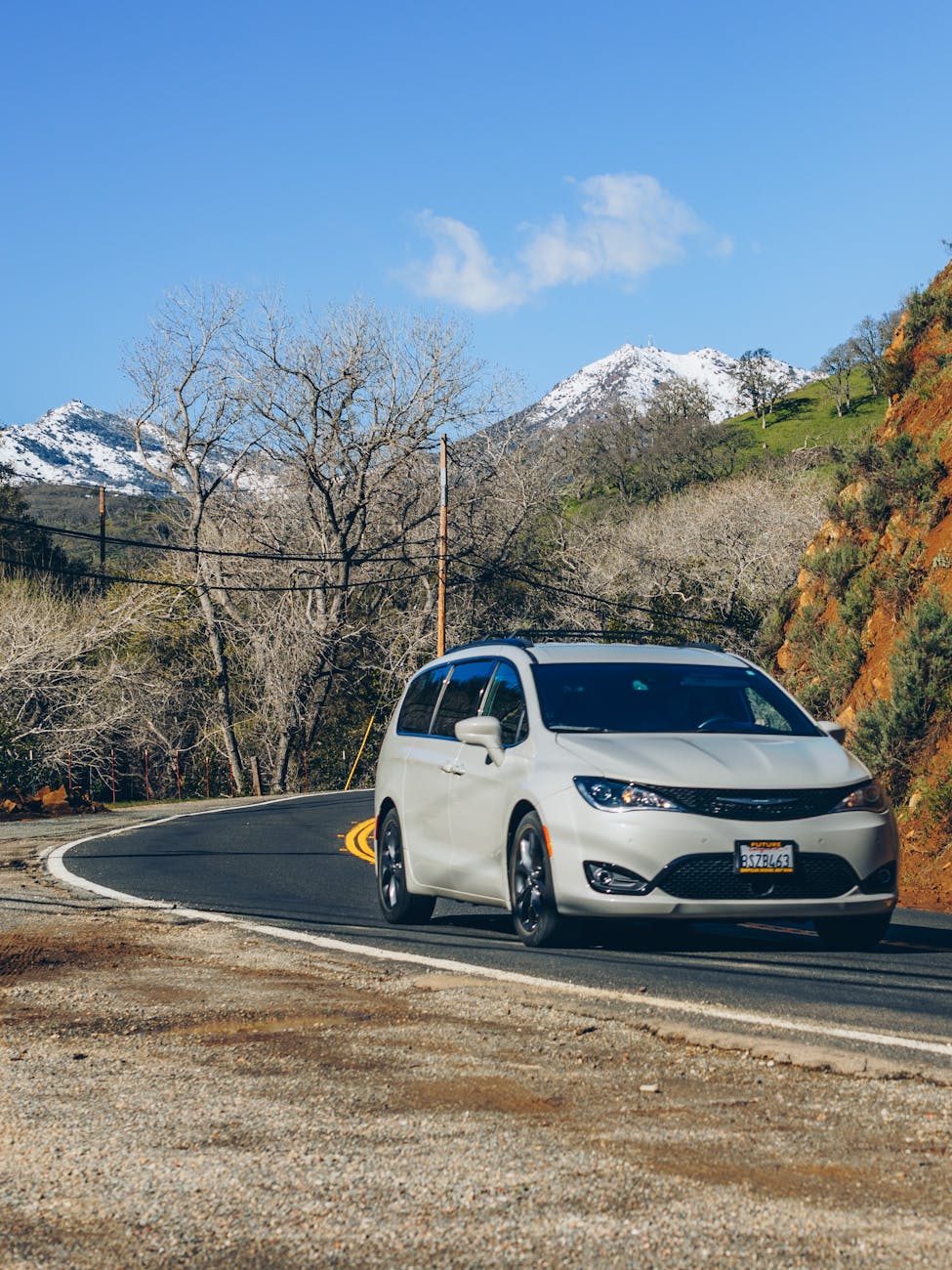
Photo by Castorly Stock on Pexels.com

One way to address this is to have no speed limit. Only a few places do this.

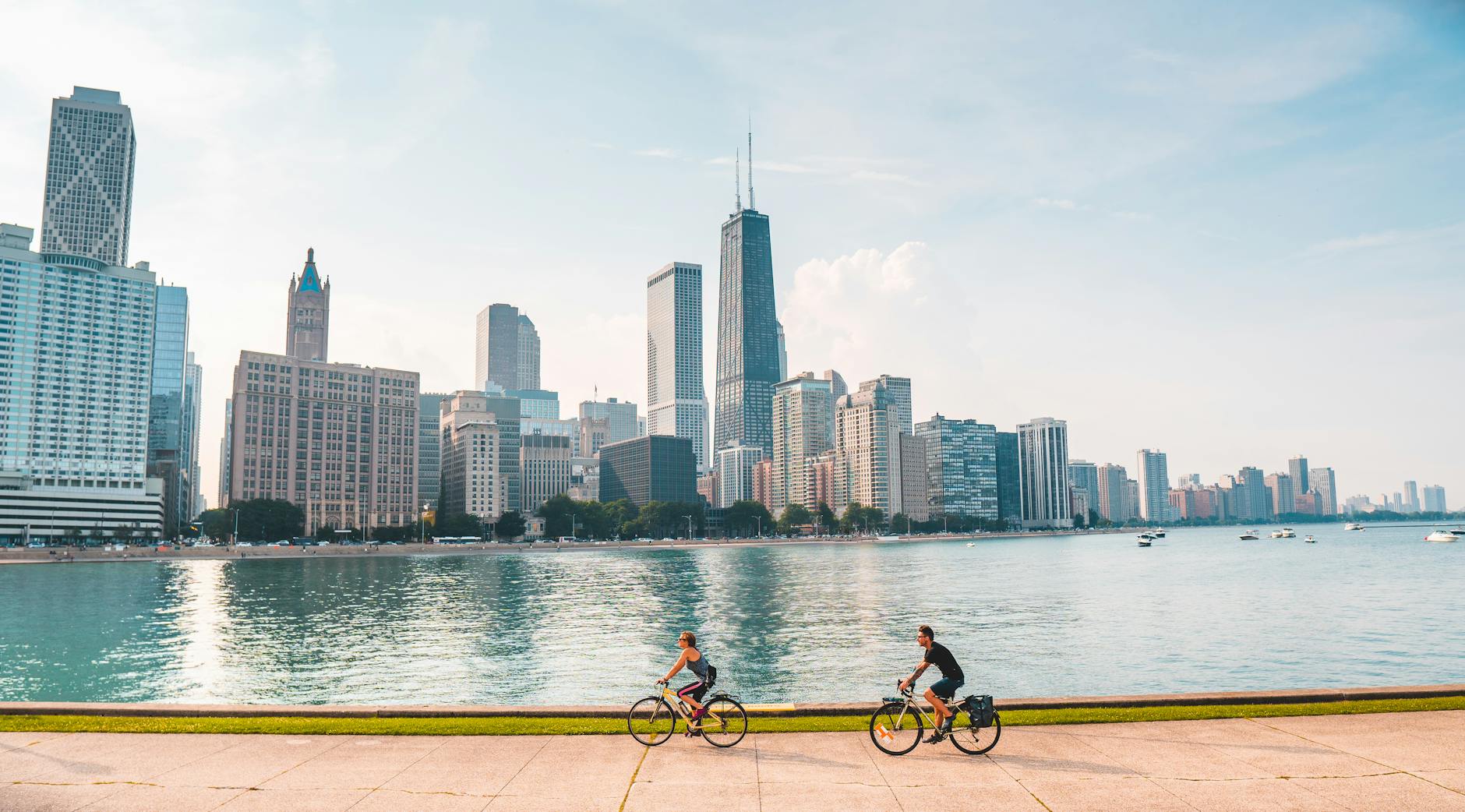
Why not try a speed range? Imagine Chicago highways that have a speed limit of 50-70. Some people might feel more comfortable at the lower end, some at the higher end.

Is the real issue that drivers will not follow any limit unless there is enforcement? Technology could lead to automatically fining drivers (speed cameras, GPS, toll devices, etc.). Or, is it about current conditions (less traffic can lead to higher speeds, more congestion slows speeds)? Some roadways now have variable speeds where digital signs change the speed limits for the given conditions.

All this to say, a speed limit seems more like a number that most American drivers treat as a recommendation and not an imperative. This has big implications for the driving experience, how Americans regard driving, and safety.

Rolling ball machine sculptures: art and fun

I like the work of artist George Rhoads. He made “rolling ball machine sculptures” that can be found in some children’s museums and other public spaces. More about Rhoads in the image below is from the Rockford Discovery Center Museum:

What do they have? Balls moving along interesting paths, noise, color, and lots of action.

See a 1993 creation in action or this one at the Franklin Institute in Philadelphia.

Turning former shopping spaces into entertainment centers

Imagine a shopping mall less about shopping and more about entertainment. This is what is happening to at least a few vacant big box and department stores:

Photo by Alena Darmel on Pexels.com

Oca’s client, real estate investment firm E8 Properties, has been buying empty Sears stores, dusting them off and converting them into “Elev8 Fun,” a massive indoor family entertainment park created in partnership with Primetime Amusements, a provider of video arcade machine.

The first one, designed by Oca and his team and housed in a 120,000-square-foot former Sears building attached to the Seminole Town Center Mall in Sanford, Florida, opened in January 2022…

To his point, increasingly, more malls are morphing into family entertainment destinations where shopping may not even be what draws shoppers in.

Industry analysts said research shows that adding entertainment experiences shifts more money to mall retailers and not away from them. Through the pandemic and coming out of it, the popularity of pickleball made its way into malls with courts popping up next to skating rinks. Indoor skydiving, Legoland theme parks, virtual golf and microbreweries are other concepts catching on.

Shopping can be its own kind of entertainment. It is not just about buying goods, whether they are necessary for life or not. It is about looking, considering, interacting with people you are with, seeing other people shopping, and participating in particular lifestyles.

But these entertainment centers are offering something else: games, competition, novelty, having fun with others.

Longer-term, does this mean hopping is less entertaining and more efficient when done online? Is shopping more often a private activity since it takes place online? Do people still want to have experiences around or near others, even if the forms of doing so have changed?

Manhattan congestion pricing plan delayed to persuade suburban swing voters?

New York City was set to roll out congestion pricing for Manhattan but one writer suggests it was delayed to influence suburban voters:

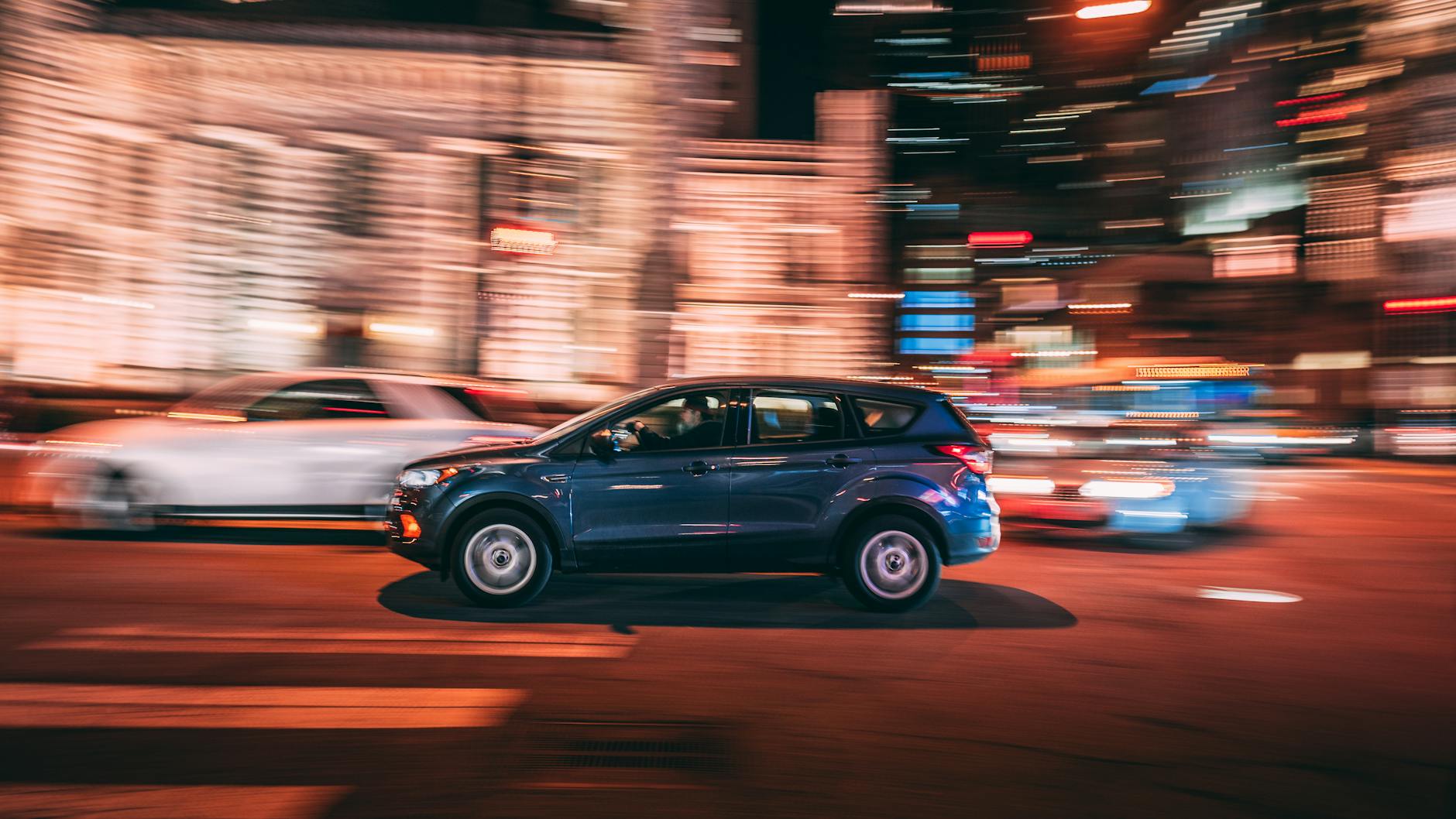
Photo by Malcolm Garret on Pexels.com

Hochul was just touting the benefits of congestion pricing two weeks ago, but she appears to no longer see things that way. According to a Tuesday night Politico report, House Minority Leader Hakeem Jeffries started raising his concerns with Hochul, claiming that if the plan were to go into effect during this election year, the ensuing buzz could make it harder for New York Democrats to win back the House of Representatives. The proposed $15 fee for drivers heading into lower and midtown Manhattan—whether from the outer boroughs or from the broader tri-state region—remains unpopular with the types of wealthy, swingy suburban voters national Democrats need on their side. And considering how badly New York Dems botched the 2022 midterms, losing House seats that could have cut into Republicans’ narrow majority in the chamber, Jeffries would like to do anything he can to regain those seats—including mollifying the New Yorkers who own cars only because they make it easier to flee to the Hamptons. Hochul herself says her decision is based on concern that congestion pricing might deter people from heading into Manhattan at a time when the city is still recovering from COVID-era business losses.

As politicians and political parties consider the 2024 elections, they are likely focusing a lot of attention on pockets of suburbanites who can be swayed to go different ways with their votes. This has been important for a number of election cycles now with a country that is majority suburban and more predictable voting results in big cities and more rural areas. Thus, the national parties fight over middle suburbia.

In this particular case, I would be interested in seeing more numbers. How many suburbanites are affected by the congestion tax? How many suburbanites might change their votes based on this issue? Is the fate of the US House in the hands of a congestion tax?

More broadly, how often does traffic and congestion decide local, state, or national elections? People generally do not like traffic or congestion but also may not like new or higher taxes or resist impediments to drive when or where they want.

Creating new communities to better benefit from their tax money paid (and support whiter, wealthier residents)

Residents of several places in the South have worked in recent years to form new communities:

Photo by Monstera Production on Pexels.com

The Louisiana Supreme Court last month cleared a path for the creation of a new city, St. George, after a prolonged legal battle over the feasibility of the city and its implications for tax revenue.

St. George would take almost 100,000 residents away from East Baton Rouge Parish, and critics say it will deplete the parish of the resources from this wealthier, whiter community…

White fortressing, and other kinds of opportunity hoarding, concentrates resources — such as well-funded public schools, access to local revenue and zoning control — among white communities that are already economically and politically advantaged. Meanwhile, they also constrain access to opportunity among people of color.

Proponents of the new city in Louisiana argue that this is a move towards fairness, rather than isolation. On their website, they state: “St. George’s taxpayers provide two-thirds of the revenue to the East Baton Rouge Parish government with only one-third of that government’s expense in return. Incorporating a city would reverse this unjust circumstance to an extent.” This has been a relatively common argument among similar movements since the post-war era, something Princeton University historian Kevin Kruse documents in his work around white flight in Atlanta. When residents of the Buckhead neighborhood in Atlanta were advocating for secession in 2022, they also argued that they were “not getting back in services what they [were] paying in city taxes.”

These movements have persisted for decades, and they are not slowing down. Georgia has added 11 new cities around Metro Atlanta since 2005, most of which are affluent white communities that broke away from majority-Black/nonwhite counties. Last month, residents of a wealthy, majority-white community in Gwinnett County, the northern suburbs just above Atlanta, voted to approve forming the new city of Mulberry, just as the county has become majority-Black.

Several thoughts in response:

  1. This has happened in the United States for a long time in many different forms. These forms include: limited annexation expansion of Midwestern and Northeastern cities starting in the late 1800s as suburbanites no longer wanted to be part of the big city; white flight, urban renewal, and federal support for suburbanization in the mid-twentieth century; formal and informal policies and actions to enforce residential boundaries; and a persistent presence of residential segregation.
  2. Such actions do not reckon with the broader and longer-term consequences of inequalities across places. Those who live in a wealthier community may experience a particular day-to-day life but they are not fully insulated from the concerns of the broader metropolitan region or society at large. Do communities have responsibilities to their residents and to society more broadly?
  3. I wonder how many Americans would agree that what they pay in taxes should roughly return to them in similar amounts from the government.

The International Car Wash Association, the American Beefalo Association, and the purpose of business associations

I recently drove by the headquarters of the International Car Wash Association. I did not know this group existed and I wanted to learn more. According to their website, here is what this group does:

Photo by Pixabay on Pexels.com

International Carwash Association (ICA) is the nonprofit organization representing the car wash industry in the United States, and uniting it around the world. Its members own, operate or support nearly every car wash business in dozens of countries. ICA offers the world’s largest car wash events and exhibitions, the leading online manager training program (LEAD™), news and inspiration through CAR WASH Magazine™ and a variety of industry research products (Pulse™).

Why did this catch my eye? In graduate school, I made a very small contribution to a research project by sociologist Lyn Spillman that involved me going through a multi-volume set of American business associations and coding basic information from the entries. I read a lot of entries about organizations that I never knew existed. Only the name of one group stuck with me from that work: the American Beefalo Association. From their website, here is more information about beefalo and the group:

Beefalo was developed in the early 1970’s by a Californian producer who successfully interbreed American Bison with domesticated cattle. After nearly 150 years of selective breeding, the perfect balance was found in 3/8th’s Bison and 5/8th’s domestic cattle. This new cross had high fertility success and a superior balance of traits for modern-day uses and needs. With this cross, the hardiness of the bison was retained but was melded the easy temperament, superior carcass structure and meat quality of domesticated cattle. In 1975 the American Beefalo Association was formed as the breeds popularity sky-rocketed. By 1985, USDA meat testing had concluded substantial differences in Beefalo’s nutrition profile when compared with traditional beef warranting beefalo it’s own meat label and regulations. Today beefalo is experiencing a resurgence in the health food market as consumers are actively becoming more conscious about where their foods come from, invested in animal welfare and engaged in sustainability efforts.

Spillman went on to write a book – Solidarity in Strategy: Making Business Meaningful in American Trade Associations – explaining how these organizations bring meaning to business activity. Spillman writes, “Associations often dwell on shared identity, admire technical excellence, highlight contributions to the group, and express occupational camaraderie, with little attention to strategic economic purposes.” (13) In other words, the International Car Wash Association and the American Beefalo Association might be assumed to be about generating revenues but they may be more about bringing people across an industry together and creating solidarity.

When major water pipes break in a major American city

Water is generally taken for granted in American cities and metropolitan areas. So when major pipes break in Atlanta, it has major ramifications:

Photo by Nithin PA on Pexels.com

Atlanta’s Department of Watershed Management announced water service would be halted at 5 p.m. Friday in much of Atlanta, including all of downtown, so crews can work to repair breaks on a 48-inch and 36-inch transmission line “that carries large volumes of water to the metropolitan area.”

Just after 2 p.m., the Watershed Management Department issued a boil water advisory “out of an abundance of caution.” The advisory affects any Atlanta water customers who have experienced a water outage or low water pressure. The order was still in place on Sunday afternoon, even though repairs were completed on the major break near Joseph E. Boone Boulevard. Other repairs were continuing.

More details on water main breaks and pipes in Atlanta:

The problems began Friday morning where three large water mains intersect just west of downtown. Wiggins said at a Saturday news conference that at least some of the pipes that burst were old and corroded. With pipes coming together in a confined area, it was a tight squeeze to make repairs, with only one worker at a time working in the manhole accessing the junction. Repairs were completed Saturday evening, officials said.

Another water main later burst in the city’s Midtown neighborhood, which is studded with new office, hotel and apartment towers. Wiggins said Saturday that officials weren’t sure yet why that pipe had broken. That leak continued to gush through the city streets Sunday. City officials said Saturday that they were working on ways to isolate the leak from the larger water system and were awaiting a part needed to repair to the pipe. Dickens declared a state of emergency so the city could buy materials and hire workers without following the normal purchasing laws.

Faltering infrastructure is a common story in older parts of American cities. Atlanta has spent billions in recent years to upgrade its aging sewer and water infrastructure, including a tunnel drilled through 5 miles of rock to provide the city more than 30 days of stored water. Last month, voters approved continuing a 1-cent sales tax to pay for federally mandated sewer upgrades. The city at one time routinely dumped untreated sewage into creeks and the Chattahoochee River.

What are the odds of multiple major breaks in one weekend? Is the best way to address this to completely update the system?

Vital infrastructure is not just built once and then runs forever. It needs to be maintained. Expanding regions and changing conditions may require major updates. Constructing these systems in the first place required a lot of work; keeping these systems fit for the future may require even more.

Some stories in recent years have drawn attention to urban water issues. Water problems in Flint. Lead pipes throughout Chicago. Drought in California. Addressing these issues might not be exciting but it is essential to current residents, let alone visions of a bright future.

I imagine there is some sort of story that already tackles this but what happens in a large city if there is no water for more than a few days. What happens? Who is prepared?

Americans will watch TV where they could learn something – if it is competitive

Could the Spelling Bee bring Americans together? One commentator makes the case:

Photo by Nataliya Vaitkevich on Pexels.com

The Spelling Bee is the rare event that would get people to tune in due to word of mouth. It would become the rare communal event in 2024.

You have to watch it live.

Thursday night, the Spelling Bee went to a lightning-round tiebreaker and 12-year-old seventh grader, Bruhat Soma, came out on top.

Sounds awesome. It would’ve been fun to watch it with everyone else.

That is a tall order for the fragmented world – entertainment-wise, politically, socially, economically – of 2024.

Jeopardy! is another show that comes to mind as contestants show off their knowledge and win money. It has a good audience and show happenings can generate strong online/social media debate.

But how many shows involving learning or knowledge would Americans watch if there was not competition? Can learning itself make for compelling television?

Sprint, acronyms, and building infrastructure along railroad lines

I recently learned that the company named Sprint had an acronym for a name:

Photo by Pixabay on Pexels.com

Sprint also traces its roots back to the Southern Pacific Railroad (SPR), which was founded in the 1860s as a subsidiary of the Southern Pacific Company (SPC). The company operated thousands of miles of track as well as telegraph wire that ran along those tracks. In the early 1970s, the company began looking for ways to use its existing communications lines for long-distance calling.[22] This division of the business was named the Southern Pacific Communications Company.[29] By the mid 1970s, SPC was beginning to take business away from AT&T, which held a monopoly at the time.[22] A number of lawsuits between SPC and AT&T took place throughout the 1970s; the majority were decided in favor of increased competition.[29] Prior attempts at offering long-distance voice services had not been approved by the U.S. Federal Communications Commission (FCC), although a fax service (called SpeedFAX) was permitted.[30]

In the mid-1970s, SPC held a contest to select a new name for the company.[31] The winning entry was “SPRINT”, an acronym for “Southern Pacific Railroad Internal Networking Telephony”.[31]

This is clever. The acronym also hints at the history of the company that was partially born out of railroad operations. The railroad made all sorts of notable changes to the American landscape: it increased the speed of travel for passengers and goods, it connected far-flung places, and it brought activity to new places.

It also enabled other infrastructure. In the case of Sprint, the same right-of-way that carried train traffic could carry messages via telegraph. This substantially increased the speed of communication. Today, we think very little of messages and texts and information flying across geographies in seconds. That same railroad that allowed speeds significantly faster than horses or humans also made space for bits and data to speed around the world.

Put another way, could the online and smartphone world we know today have happened without telegraph and phone infrastructure that provided foundational space for new technology to take advantage of? I do not know the answer to this question but Sprint and other telecom companies made use of existing infrastructure to help bring about new technologies.