“There are no known organized efforts in the suburbs for residents to take in asylum-seekers.”

As municipalities in the Chicago region develop regulations to limit migrants from staying in their communities, one local leader wonders if residents would house migrants in their homes:

Photo by khairul nizam on Pexels.com

McBroom said Naperville has provided migrants safe passage to Chicago without spending taxpayer dollars to house or aid them.

But with more migrants arriving in the area, McBroom says the city should look into whether any residents or organizations are willing to help.

“My idea would be let’s find out … let’s find out who’s willing to help,” he said, adding that Naperville is an affluent community with many large homes. “If there are people who would do that, God bless them.”

There are no known organized efforts in the suburbs for residents to take in asylum-seekers…

Meanwhile, McBroom acknowledges there are many unanswered questions about his idea to have Naperville residents voluntarily house migrants. Some of those include the impact the proposal may have on local schools and what role the city would play in managing a list of volunteer hosts.

Thus far, few communities have indicated much interest in helping migrants find opportunities in the suburbs. I have only seen efforts in this direction from Oak Park. Most communities in the news have been developing regulations so that migrants do not stay and/or they are making sure migrants dropped at suburban train stations make their way to Chicago.

This idea has the potential to bypass community-level initiatives and instead coordinate efforts of residents and property owners. How much space might be available in homes and buildings in a suburb with nearly 150,000 residents? How many people would volunteer?

I could only imagine what might happen among (1) neighbors of people who are willing to house migrants and (2) if names and addresses of individual hosts became known to the public.

We will see where this goes, but I imagine it would not go too far if there is the possibility of state money available to communities in the near future.

Baby Boomers own a lot of large homes

A new analysis suggests older adults own a larger proportion of large homes than they did 10 years ago:

Photo by Matthias Zomer on Pexels.com

As a result, empty-nest Baby Boomers own 28% of large homes — and Milliennials with kids own just 14%, according to a Redfin analysis released Tuesday. Gen Z families own just 0.3% of homes with three bedrooms or more…

This is a change from the historical norm, according to the research. Ten years ago young families were just as likely as empty nesters to own large homes…

For those who own their home outright, the median monthly cost of owning a home, which includes insurance and property taxes, among other costs, is just $612, according to the report.

“Logically, empty nesters are the most likely group to sell big homes and downsize,” said Bokhari. “They no longer have children living at home and don’t need as much space. The problem for younger families who wish their parents’ generation would list their big homes: Boomers don’t have much motivation to sell, financially or otherwise.”…

This speaks to one of the assumptions of American housing: older adults are expected to move out of larger homes and move to smaller homes or ones that better suit their needs later in life. This frees up their homes for the next generation to move into.

Is this the way it has always worked? Might patterns change heading into the future?

Several thoughts on these trends:

  1. Americans like bigger homes. As the size of American homes has increased, might Americans want to keep these larger homes as long as possible?
  2. Houses are places to live and strategic investments. Older residents may not need all that space but wouldn’t they want to cash out as late as possible on this large asset?
  3. An emphasis on living independently and youthfully may mean that staying in a house is a sign of vitality (while moving would be a sign of weakness). Why sell if you can still live in a big house?

This could be the product of a unique confluence of factors in recent decades: a sizable birth cohort, a change in what housing is and what housing is available, and an unprecedented growth in housing values.

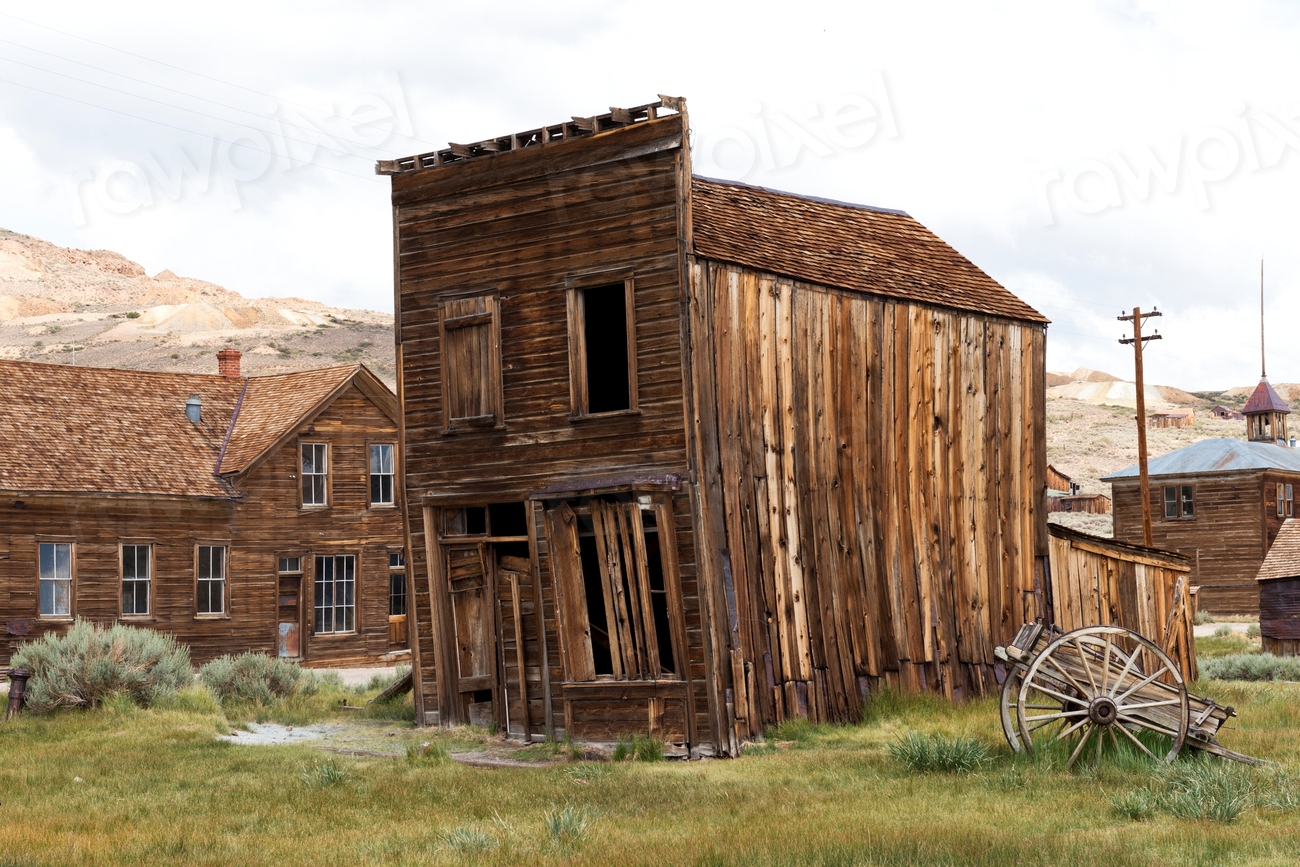
A declining urban population does not necessarily lead to a “ghost town”

Some American cities are predicted to lose residents in the coming decades:

Bodie is ghost town Bodie by Carol M Highsmith is licensed under CC-CC0 1.0

Many cities across the United States could become ghost towns by 2100, according to new research published Thursday.

“Close to half of the nearly 30,000 cities in the United States will face some sort of population decline,” researchers from the University of Chicago in Illinois wrote in a journal article published in Nature Cities.

Major cities in the Northeast and Midwest are already slowly losing population. While cities in the South and West regions are experiencing a population increase, some major cities in Alabama, Georgia and Tennessee are slowly depopulating, the researchers found.

Cleveland, Buffalo, and Pittsburgh could see depopulation of 12 to 23 percent by 2100 while cities like Louisville, New Haven and Syracuse — not currently showing declines – likely could soon.

Many cities in the Northeast and Midwest peaked in population decades ago. This is not good for communities in the United States; population loss or even stagnation is viewed as a problem or failure. The reminder here that there are some cities with growing populations could feed into this. (Extrapolate from here and Dallas-Fort Worth will lead the country in residents soon!)

But, even more interesting is the use of the term “ghost town” in the headline and opening paragraph. Losing 20% of residents over the next 80 years is undesirable but this is different from making these communities a ghost town. These are typically empty communities. Perhaps they are communities wiped off the map.

Take Cleveland since it is cited above. If it loses 20% of its population by 2100, it would lose 75,000 residents. Even after these loses, roughly 290,000 residents would still live there. Is this a ghost town or a significantly changed city? Cleveland will continue to be a major regional center and the region has over 2 million people.

I wonder if being less sensational about population loss figures and exhibiting willingness to be adaptable to changing conditions could go a long way toward adjusting to these realities. Some cities will lose people and some will grow. Both kinds of changes mean communities change.

Create property tax exemptions for homeowners and some communities have to make up the revenue elsewhere

Homeowners generally like to pay lower property taxes. But, according to a new report looking at Cook County, reducing their own property taxes can affect the community as a whole:

Photo by Pixabay on Pexels.com

UIC professors David Merriman and Rachel Weber, experienced researchers on property taxes and government finances who led the report, said this is one of the first attempts to measure the impacts of exemptions on the county as a whole. In total, $15.8 billion worth of property value in Cook County was unavailable for governments to tax in 2021 because of those breaks, their research found.

That translates into about $1.6 billion in tax revenue, which governments simply shift onto other property owners…

To respond to tax spikes or inflation, state lawmakers have expanded breaks over the past half century. They now include eight types of homestead exemptions: homeowners, seniors, veterans, people with disabilities and those making improvements on their home. Exemptions typically cut down the taxable value of a home to provide relief.

The report noted the effects of these exemptions are not the same in every community. The tax base of the community matters:

Those unintended consequences also aren’t the case everywhere. The effects of homestead exemptions are negligible in cities and villages with a bigger industrial property base, like McCook and Bedford Park, with a concentration of more valuable properties like Winnetka or Kenilworth, or with a lower share of homeowners who qualify, like Chicago.

It sounds like this affects communities that do not have great tax bases to start with. Already behind, homeowner’s exemptions then contribute to a lack of community funds compared to other communities.

I would guess Cook County and Chicago area homeowners would point to the fact that they pay some of the highest property taxes in the nation. In a country that prizes homeownership, these exemptions help enable people to live in their homes. But, as the article notes, there are other ways to fund public goods and services. This reminds me of Prop 13 in California which since 1978 has limited property tax revenues. Without those local tax revenues, governments have sought out other means.

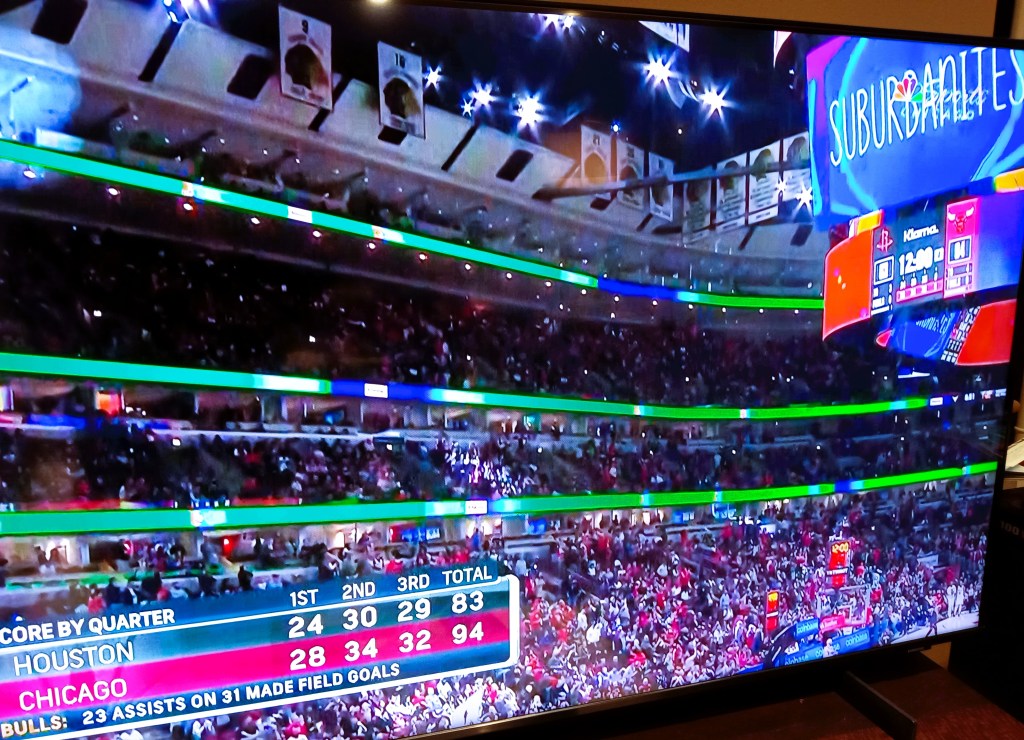
Highlighting “suburbanites” at a Bulls game

I could not tell exactly what was happening because I caught this recently on TV but I was still interested to see what was on the scoreboard at the United Center during a Bulls game:

Was this a cheering contest between Chicago residents and suburbanites? Some camera shots on the big screen? A trivia contest?

Given the population of the Chicago region, there were probably a lot of suburbanites at the game. In 2020, Chicago had 2.74 million residents and the region had 9.61 million residents. This puts the suburban population at 6.87 million. This means over 71% of people in the region live in the suburbs.

The Chicago Bulls tend to have good attendance, even if the team is not doing great. This year, the team is under .500 and the team is second in the league in home attendance. (They also have one of the largest arenas.)

Suburbanites have ideas about Chicago and its residents and vice versa. Does identifying the two groups at a Bulls game exacerbate these differences or help bring them together around their common Bulls fandom? (I am guessing it is the second as Bulls games usually are good experiences, even if the home team is not great.)

Suburbs buying vacant malls to try to simplify redevelopment process

Two Chicago suburbs are purchasing mostly empty malls with the goal of redeveloping the properties:

Photo by Pixabay on Pexels.com

West Dundee and Bloomingdale officials have similar visions for the mall properties in their towns.

West Dundee sees a mixed-use development with residential, office, retail and entertainment. Bloomingdale’s consultants have drawn up conceptual plans showing residential, commercial and recreational development in place of the mall’s former retail buildings and parking lots.

Typically, villages stay out of the real estate business and leave redevelopment of retail centers to developers. But for West Dundee and Bloomingdale, taking ownership of their malls and clearing some obstacles, such as multiple property owners or restrictive covenants, were deemed essential for future redevelopment.

“Almost uniformly, every developer with whom we spoke stated that the site has too many complications ­— too many owners, too many covenants, too many uncertainties,” Nelson said last year. “The village’s aim is to bring simplicity to the process so reliable developers with established track records will be interested in partnering to reformat the area. Without municipal intervention, that simply won’t happen.”

Two thoughts come to mind:

  1. It is not too surprising that suburban communities want to guide the redevelopment. Suburban residents and suburban community leaders are often picky about what they might want to replace a shopping mall. By purchasing the property, the suburb can choose the developer and the zoning while also setting a vision.
  2. I wonder if this is an instance where a large property owner – the owners of these malls – can afford to sit on these properties for a while to see if there will be a bigger financial return later. I remember reading in the past about parking lots in downtown areas; they are not flashing and they are not the preferred land use but the company who owns that lot can wait until there is significant demand for the property and then make a lot of money on selling the parking lot. Compared to these suburbs, the property owners may be less interested in moving quickly on a redevelopment plan. (This could also apply to recent conversations about suburban office parks and downtown office buildings: even vacant buildings might not need to be sold or redeveloped if an owner can afford to hang on to them.)

The optimal weather for infrastructure is probably not Chicago’s

Imagine the best weather for infrastructure. It is probably not the four seasons of weather in the Chicago region:

From the State Climatologist Office in Illinois:

Chicago lies midway between the Continental Divide and the Atlantic Ocean, and is 900 miles north of the Gulf of Mexico. Chicago’s climate is typically continental with cold winters, warm summers, and frequent short fluctuations in temperature, humidity, cloudiness, and wind direction. Many consider the more moderate temperatures of spring and fall to be the most pleasant. Lake Michigan provides a moderating influence on temperature while boosting the amount of snowfall received in the city.

Such fluctuations in the Chicago region lead to potholes, closures of airports and roads plus delays, flooding, and pressure on systems at both the hot and cold ends of the temperature spectrum. Coming out of a major snow storm and heading into several days of subzero temperatures, some of everyday activity is disrupted but mostly life goes on. Humans have developed systems and practices that make it possible to live in many different conditions.

What might be ideal? How about a place with more consistent temperatures, few storms, and no flooding? I am sure there are locations in the United States that meet this more than others. Everywhere else, people and systems adapt.

Modern infrastructure that makes everyday life possible is remarkable enough in addition to adaptability to different climates and making repairs when local conditions make it difficult.

American drivers cause many accidents and deaths

Americans like to drive. And American drivers contribute to a lot of accidents and deaths:

Photo by Taras Makarenko on Pexels.com

Above all, though, the problem seems to be us — the American public, the American driver. “It’s not an exaggeration to say behavior on the road today is the worst I’ve ever seen,” Capt. Michael Brown, a state police district commander in Michigan, told me. “It’s not just the volume. It’s the variety. There’s impaired driving, which constituted 40 percent of our fatalities last year. There are people going twice the legal limit on surface streets. There’s road rage,” Brown went on. “There’s impatience — right before we started talking, I got an email from a woman who was driving along in traffic and saw some guy fly by her off the roadway, on the shoulder, at 80, 90 miles an hour.” Brown stressed it was rare to receive such a message: “It’s got so bad, so extremely typical,” he said, “that people aren’t going to alert us unless it’s super egregious.”

In 2020 and 2021, the National Highway Traffic Safety Administration has calculated, approximately a quarter of all fatal wrecks in the United States involved vehicles traveling above the posted speed limit; a significant percentage of the dead, whether passenger or driver, were not wearing seatbelts. In line with the trends documented by Kuhls in Nevada — and observed firsthand by Brown in Michigan — national intoxicated-driving rates have surged to the extent that one in every 10 arrests is now linked to a suspected D.U.I. And aggressive driving, defined by AAA as “tailgating, erratic lane changing or illegal passing,” factors into 56 percent of crashes resulting in a fatality. (Distressingly, this statistic does not cover the tens of thousands of people injured, often critically, by aggressive drivers, or the 550 people shot annually after or during road-rage incidents — or the growing number of pedestrians and cyclists deliberately targeted by incensed motorists.)

Take the bad behavior and add the perils of distraction by smartphone — responsible, by one conservative estimate, for about 3,500 deaths annually — and you’re left with what Emily Schweninger, a senior policy adviser at the U.S. Department of Transportation, described to me as a “genuine public-health crisis” on the level of cancer, suicide and heart disease.

Much could change in the coming years to address this issue. Safety features in vehicles. Changed designs of roadways and spaces for pedestrians and bicyclists. Other efforts need more time and capabilities: self-driving vehicles, a changed culture around roads, driving, and community life.

But, part of the issue is whether these accidents and deaths are a problem or not. Americans like to complain about other drivers and tend to see their own driving as okay. Driving is required in many places. Some drivers might even enjoy driving. The delivery of many of our goods requires driving. Are deaths via vehicle just the price Americans are willing to pay for driving?

Addressing this issue is a long-term project. All of daily life contains some risks but Americans tend to not think much about the risks of driving even as it impacts many lives on a daily basis. Does this mean a national safety campaign is needed? A serious conversation about how necessary driving should be? A need to invest in new technologies and options? On one hand, plenty of people would have experience with this issue. On the other hand, it will take a lot of work to convince people to support significant changes to American driving and all that goes with it.

US urban office space vacancies related to earlier office building booms

With the vacancy rate for office space in the major US cities almost at 20%, is now safe to conclude too much space was constructed in the first place?

Photo by Scott Webb on Pexels.com

America’s offices are emptier than at any point in at least four decades, reflecting years of overbuilding and shifting work habits that were accelerated by the pandemic.

A staggering 19.6% of office space in major U.S. cities wasn’t leased as of the fourth quarter, according to Moody’s Analytics, up from 18.8% a year earlier. That is slightly above the previous records of 19.3% set in 1986 and 1991 and the highest number since at least 1979, which is as far back as Moody’s data go…

That glut weighs on the office market to this day and helps explain why vacancies are far higher in the U.S. than in Europe or Asia. Many office parks built in the 1980s and earlier struggle to find tenants as companies cut back on space or leave for more modern buildings.

“The bulk of the vacant space are buildings that were built in the 1950s, ’60s, ’70s and ’80s,” said Mary Ann Tighe, chief executive of the New York tri-state region at real-estate brokerage CBRE.

And just as in the early ’90s, it is the overbuilt South that is hit hardest. Today, the three major U.S. cities with the country’s highest office-vacancy rates are Houston, Dallas and Austin, Texas, according to Moody’s. In 1991, Palm Beach and Fort Lauderdale in Florida and San Antonio held those positions.

This sounds like a cyclical market: during financial downturns, fewer companies want office space and vacancies rise. During economic success, more companies expand and make use of the space. When more space is built during the good times, that same space is not necessarily needed later.

Does that mean that COVID-19 was only a partial contributor to office vacancies? Was a reckoning going to come for urban office space even without a global pandemic? Or might office space be back in demand again soon as economic conditions change?

I can see why new office space is desirable to fund and build. Whether it should be built, given the cycles discussed above, is another story. And if office space cannot be easily converted to other uses, how much more is really needed in major cities?