Eviction filings over the past year in a half-dozen cities and surrounding metropolitan areas are up 35% or more compared with pre-2020 norms, according to the Eviction Lab, a research unit at Princeton University.
This includes Las Vegas, Houston, and in Phoenix, where landlords filed more than 8,000 eviction notices in January. That was the most ever in a single month for the county that includes the Arizona capital. Phoenix eviction-court hearings often run for less than a minute. One judge signed off on an eviction after the tenant admitted to missing two rent payments…
Overall, eviction notices were up 15% or more compared with the period before the pandemic for 10 of the 33 cities tracked by the Eviction Lab, which looked at filings over the past 12 months…
Even with the higher eviction rates in several major cities, evictions more broadly have settled to roughly where they were before the pandemic. The first five months of the year had about 422,000 filings for eviction across the 33 cities and an additional 10 states tracked, down slightly from prepandemic norms in those same places.
In New York City, Philadelphia and some other cities, filings have stayed down due in part to increased protections for renters.
The article does not list all the cities involved but it looks like those with higher evictions post-pandemic are growing Sunbelt cities. The article suggests the differences are due to more protections for renters in some places than others. I wonder if this goes along with several other factors:
These regions are growing at faster rates than some other regions, particularly in the Northeast and Midwest.
Different political regimes in different regions. Are the different levels of renter protections about whether the region (and the state it is in) leans more conservative or liberal?
Different regional histories.
How much did the pandemic affect local eviction policies? It could have led to more protections in some places.
It is cool to now have this data over time. I recommend reading the work – Evicted– that helped make this work possible.
At the daily late-morning editorial meeting, the photo editor brought in images, many taken by paparazzi, that had come in over the wires overnight. He spread the color print-outs of celebrities all over the table: movie premieres, vacations, nights on the town. Bonnie sifted through them and focused on a photo of Drew Barrymore leaning over to fetch a coin off the sidewalk.
“Look at Drew Barrymore picking up a penny,” she said. “It’s like, stars, they’re just like us.”
Drew Barrymore picking up that penny went on to change Us Weekly, tabloid media, the paparazzi economy, and the celebrity ecosystem as a whole. A photo of an actress casually bending over on the street was suddenly interesting to readers and valuable to editors, which incentivized photographers to capture more everyday moments, and ultimately nudged celebrities to become willing participants in the process. A penny shot quickly turned into a money shot.
The 65-year-old actor told the magazine that he wore his custom camouflage getup to The Grove LA, a popular outdoor mall in Los Angeles. Amongst all the visitors, he blended in.
“Nobody recognized me,” he said.
But, living out his dream wasn’t what he imagined.
“People were kind of pushing past me, not being nice,” he recalled. “Nobody said, ‘I love you.’ I had to wait in line to, I don’t know, buy a f––ing coffee or whatever.”
He swiftly realized he wanted to return to his A-list status.
“I was like, ‘This sucks. I want to go back to being famous,’” he added.
This is just one experience. But once you are at some level of social status – whether the leader of a known organization or a Hollywood star or a member of the 1% – how possible is it to live a “normal” life, whether judged from one’s own experiences or by those around you?
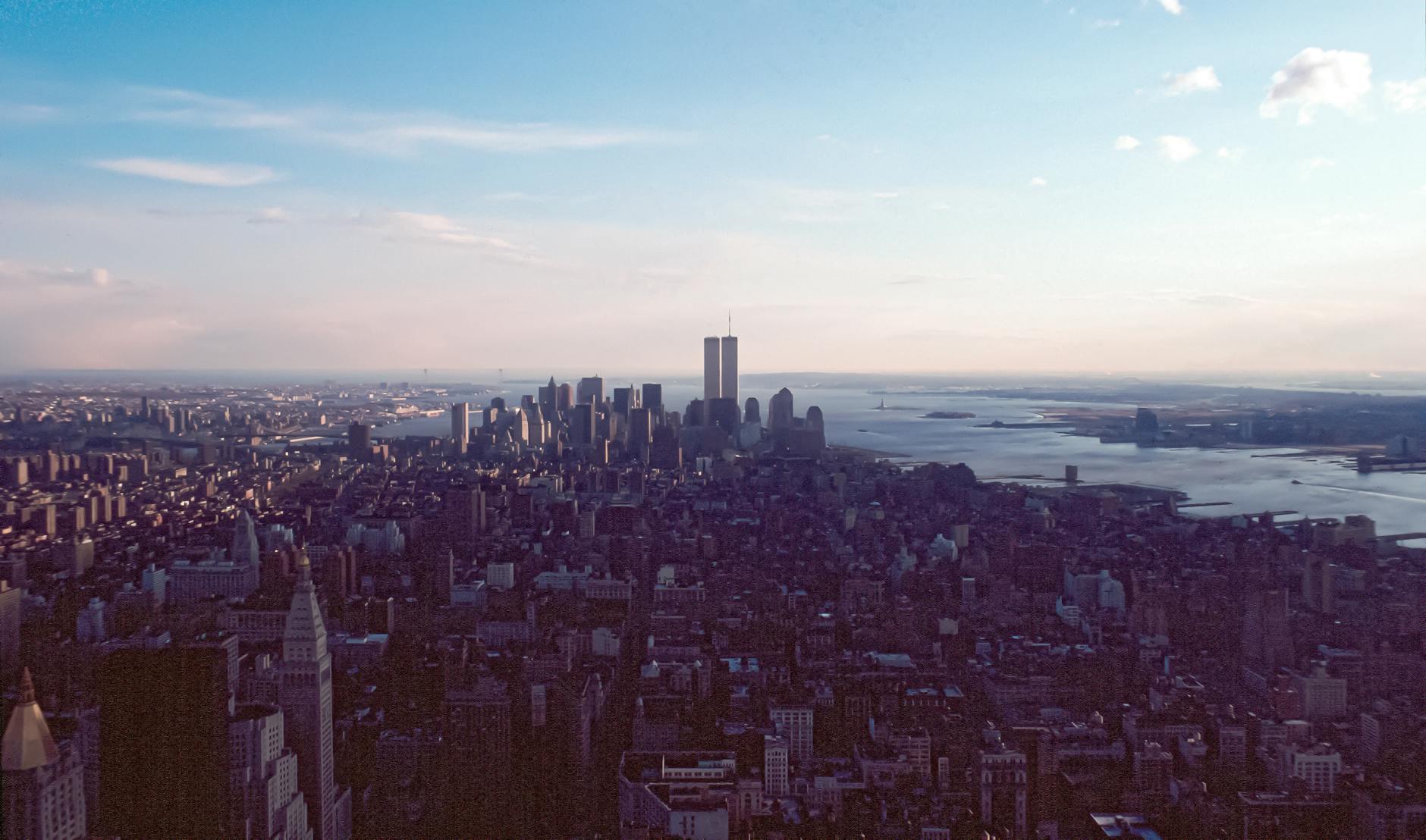
Skyscrapers do not emerge only from private sector. The former World Trade Center in lower Manhattan is one example (with quotes below from pages 198-199 of Cities in the Sky by economist James Barr):
Despite the destruction on September 11, 2001, the legacy of the Twin Towers remains strong. it was the first time that an American government agency – or likely any government agency the world over – directly developed and managed supertall skyscrapers meant to compete with the private sector. Historically, governments built tall buildings for their own needs. City halls competed with houses of worship to be the tallest in each city. But here was a regional governmental entity producing building space to earn a profit.
More importantly, it showed, over time, that placemaking via record-breaking skyscrapers was a viable option for cities, as the Twin Towers became instant icons of the Manhattan skyline. Just as important was their economic success, which created a new model: Build a record breaker with state support. If need be, fill it up with government agencies (or state-owned businesses outside the United States), give it time for neighborhood growth to kick in, and reap the returns.
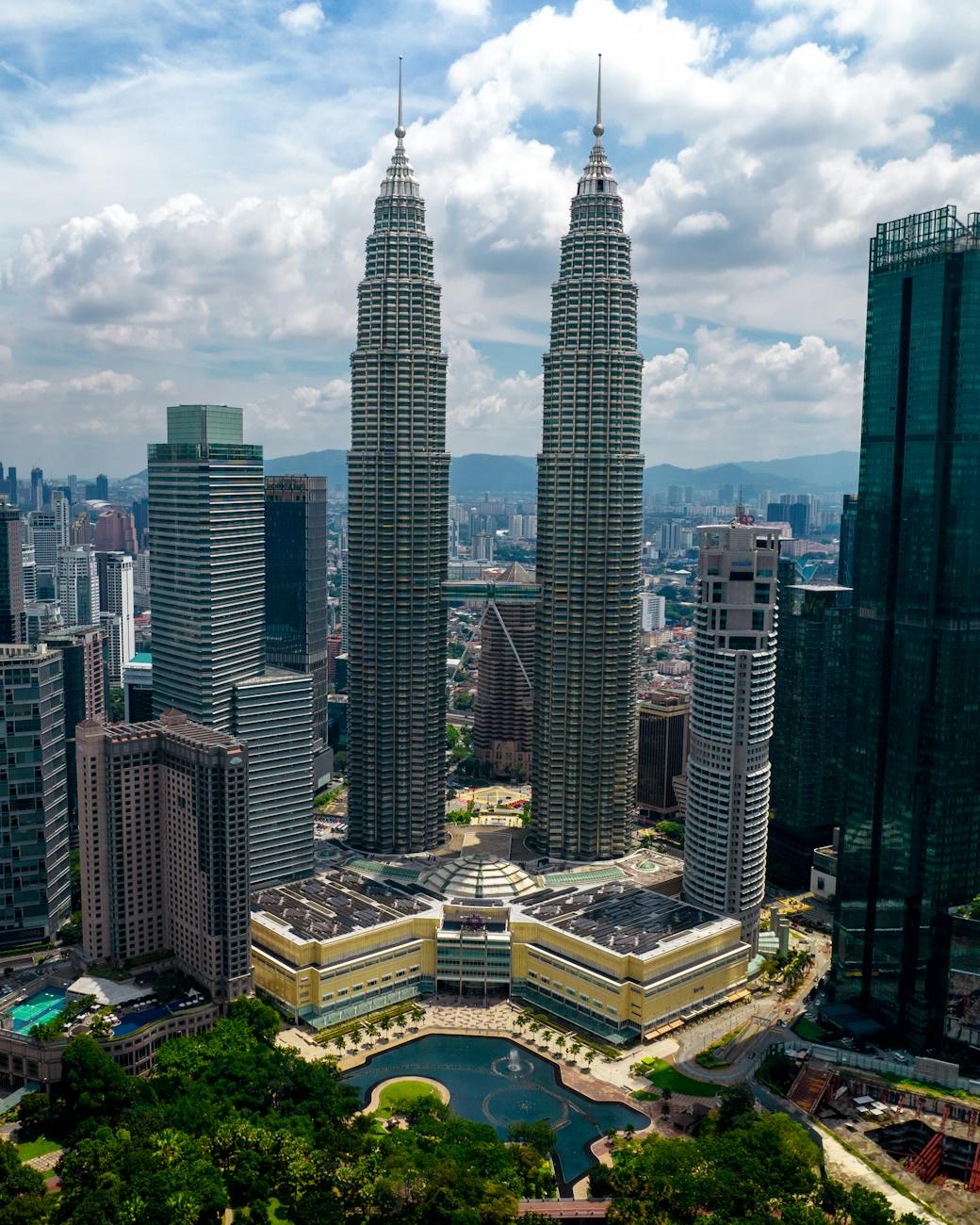
That it took till 1998 for this strategy to surface in Asia – starting with the Petronas Towers in Kuala Lumpur – was due to the time Asia needed to catch up with its economic development and infrastructure. That it wasn’t replicated in the United States after that was because by the end of the 1970s America’s era of big government-funded urban renewal projects was over, while in Asia government-funded projects were just beginning.
Might this happen again in the future in the United States? Leaders seem quite open to public-private partnerships when it is deemed necessary to boost development and growth.
Venture west of Wausau, and you’ll find yourself meandering down a country road that leads to a point of global significance—a point where latitude and longitude find harmony at 45 degrees North and 90 degrees West.
Visualize yourself standing at this exact midpoint, not just in a geographical sense between the North Pole and the Equator, but also between the prime meridian and its direct opposite across the globe…
If you pulled out a map, you’d find yourself at the intersection of some of the world’s most important lines of navigation.
Of the four such points globally, Poniatowski’s slice of longitude and latitude is the only one that’s readily accessible.
The others?
They’re either swimming with the fishes in oceanic depths or hiding in landscapes far less hospitable…
The original marker was a humble signpost in a field, but today, thanks to generous community efforts, there stands a clear path, welcoming benches, and an official marker that stakes its claim in the ground.
While this claim is based on imposing coordinates on the surface of the planet, I wonder how people around the world would answer this question: “What do you consider to be the center of the world?” Would it be major cities, like New York City or Tokyo? Religious sites? Their homes or land? A natural spot?
Or it might be interesting to investigate which places claim to be at the center of things. A place could be at the geographic or social center of a country. Where are the center points of cities or regions? Is it more important to be at the geographic or social center (see this example from the United States)?
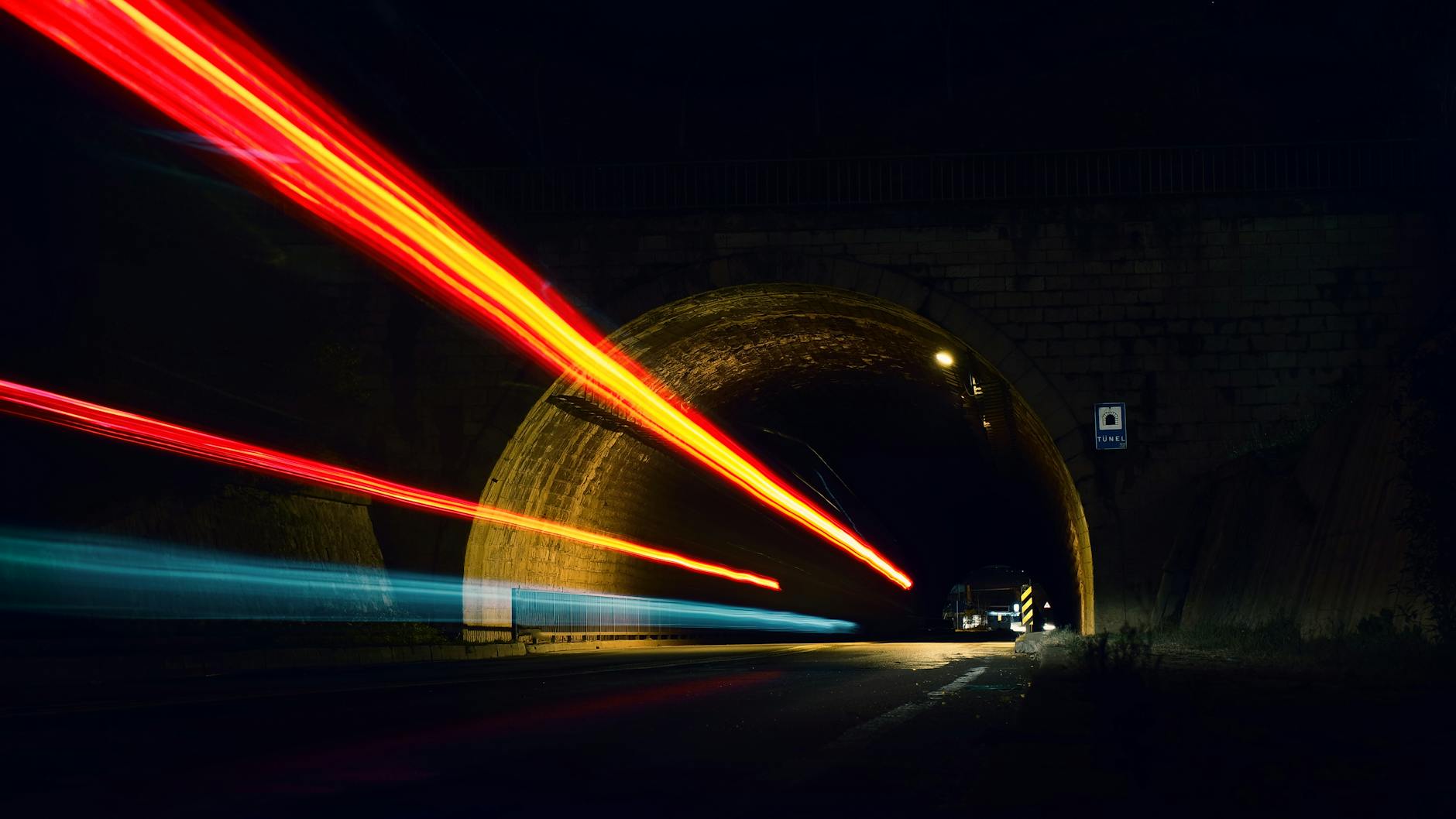
The attention Fox is about to get is a perfect illustration of what researchers refer to as the invisibility of infrastructure. It’s only when infrastructure breaks, whether it’s a closed tunnel, a broken cell phone tower, or a delayed train, that the public seems to notice it exists. “Unfortunately, we usually take for granted when things work, and we don’t value maintenance as much as we probably should,” says Cristina Torres-Machi, an assistant professor of civil engineering at the University of Colorado Boulder. “But we also do that in our daily life. We only remember how good the dishwasher is when it’s not working.”
With America’s golden era of infrastructure construction behind us—a period which arguably began with New Deal public works projects in the 1930s and ended with the completion of President Dwight D. Eisenhower’s Interstate Highway System in 1992 just down the road in Glenwood Canyon—there’s been a shift in both academic thought and in practice at various levels of government to elevate infrastructure maintenance in the national consciousness, lest it arrive unbidden. In the Centennial State, there’s no better embodiment of this shift than the EJMT. It cost $262 million to build both bores between 1968 and 1979, or the equivalent of about $1.2 billion today. But calculating the cost of adding a third tunnel bore—something CDOT has identified as essential for alleviating congestion on the I-70 mountain corridor—isn’t as simple as adjusting for inflation. Modern environmental protections, safety standards, and construction techniques all drive up the costs of these massive projects, a serious problem considering the agency’s 2024–’25 budget is only $1.7 billion. When I ask how much a third bore would cost, Fox jokingly throws out a figure: $300 billion. Bob Fifer, CDOT’s deputy director of operations, echoes the sentiment…
The inability to green-light ambitious infrastructure projects is happening all over the country. Most of President Joe Biden’s lauded $1.2 trillion Infrastructure Investment and Jobs Act, for example, will go toward repairing or upgrading existing infrastructure instead of funding new projects on the scale of the EJMT. Even that $1.2 trillion is half of what the American Society of Civil Engineers estimates the United States would need to invest over the next decade to simply maintain its ports, electrical grids, bridges, and transportation networks in a “state of good repair.” “There is something kind of nostalgic [about the EJMT]—that they could gather the will and the funding and the common commitment to build these kinds of incredible engineering marvels,” says Steven Jackson, a Cornell University professor whose areas of study include the maintenance of infrastructure systems. “There’s some question if we even remember how to do that or know how to do it together anymore.”
Jackson agrees with Fox and Fifer that escalating expenses are a major reason grand public works like the EJMT aren’t often attempted anymore, but he also believes there could be a deeper, societal issue at play. “[Back then], there was a notion of government being a conduit for collective purpose that could gather and channel resources for projects like the tunnels, but it’s harder to see in our current moment,” he says. “The tunnels almost feel like relics of a bygone bipartisan world.”
So costs plus a lack of collective will means American infrastructure is in danger long-term? The solutions to these two issues would be to pay up and gather support among leaders and the public. Will more things need to break before action is taken?
But I wonder if there might be other options. Imagine new infrastructure that means older systems do not need to be maintained. New cost-saving measures. New needs for daily life.
Some of this is hard to imagine. The tunnels discussed above would no longer be needed because of what, flying cars or a hyperloop? Lead drinking pipes won’t need to be replaced because we will get water how, from personal devices that pull water out of the air?
At some point, the infrastructure issues will force a reckoning. Regular maintenance will help. But at some point, even well-maintained infrastructure might not be worth keeping given what else might be possible.
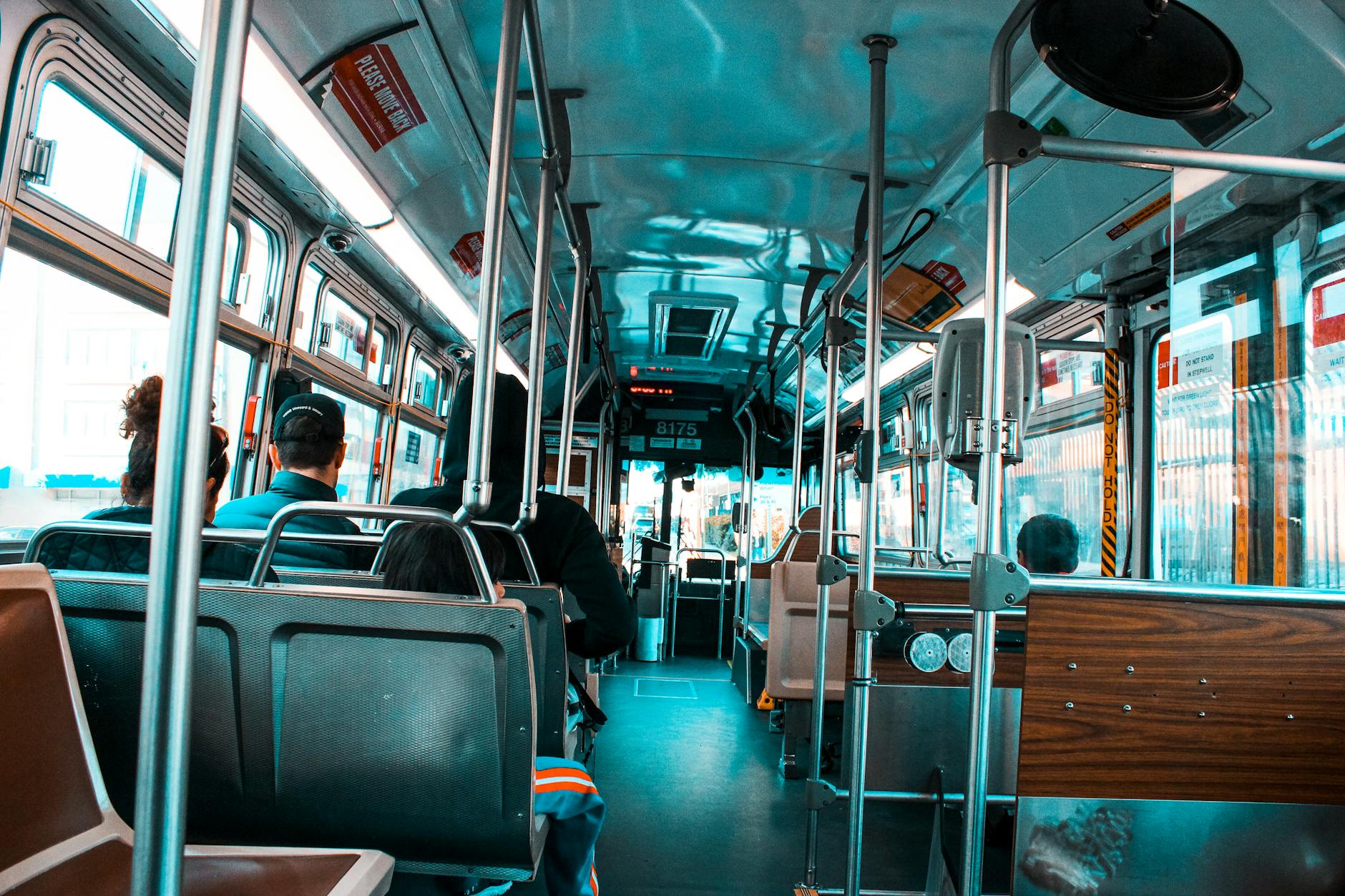
“Our No. 1 priority is we need to make the case for public transit to the general public,” said state Sen. Ram Villivalam, the committee’s chair. “We need to make sure that we’re building a transit system for the year 2050 and not just plugging a hole.”
This could be a difficult sell throughout a metropolitan region for multiple reasons. Here are a few issues suburban residents might raise:
Those with the ability to do so would often choose to drive.
Will mass transit be on time and what happens if it is not?
Does this mean the money that goes to mass transit will be taken away from roadways?
Who will be using mass transit?
Will we see the money we contribute in taxes in services we will use?
These are broad issues on top of the particular issues the Chicago area and Illinois face, including budget issues, residential segregation, a history of separate agencies, and wrangling between different levels of government.
That said, a sustained case made for Chicago area mass transit would be interesting to see and hear. Would suburbanites pay more attention if mass transit could limit traffic and congestion? How about if it provided cost savings compared to driving (time, gas, maintenance, insurance)? How about transit opening up other local amenities (such as transit-oriented development to help address housing concerns)? Efficiencies in government operation? The ways mass transit can enrich the entire region? I do not know if such campaigns have been tried in the past but starting now could help provide for a healthier region decades down the road.
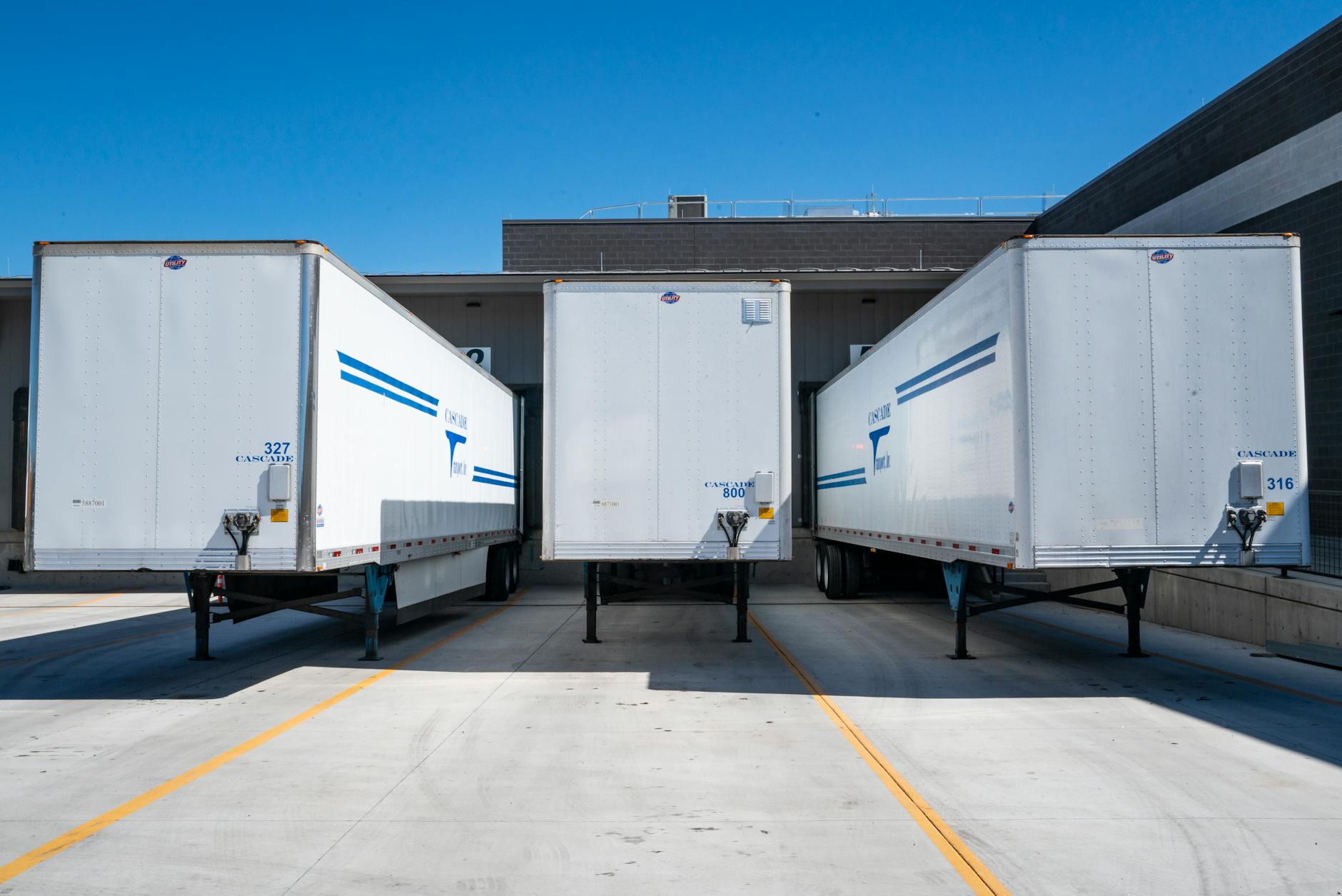
Shippensburg, Pennsylvania, and nearby rural towns like it are being drastically transformed into distribution hotspots for major retailers like Amazon and Walmart – to the dismay of some longtime residents.
With its endless acres of farmland, the tiny town is seemingly the perfect location for huge warehouses – and it is at most a day’s drive away from one-third of the US population and half of Canada‘s, making it the ideal delivery truck epicenter…
P&G, which owns Charmin, Crest, Gillette and Pampers, was one of the first to do so in 2014, followed by Amazon.com, DHL, FedEx, Home Depot, Kohler, Lowe’s, Office Depot, Pepsi, SC Johnson, Staples, Target, Ulta Beauty, Unilever and UPS, among many others…
What’s happening in Shippensburg is similar to what’s already happened to California’s Inland Empire, which used to be a major center of agriculture. Now, this area of southern California is the nation’s warehouse capital, home to Amazon and Walmart facilities.
Take out a map, draw circles around major population centers, and see the places where these circles intersect. That places like Shippensburg could be so close to so many people marks it for these changes.
This could help remind people of the ongoing connections between cities and rural areas. In today’s changing world, it is not just about farming versus commercial and industrial activity; the two spaces are tied together by trade, social networks, and an awareness of each other.
While his parents grew up in a “thick” immigrant culture surrounded by other Catholic families, practices and symbols, Cavanaugh feels that his own upbringing in an assimilating American Church revealed a “thinned” bond. One might hear his future mentor Stanley Hauerwas’ judgment in this appraisal: The Church went out to convert America, but America converted the Church. Devotional objects adorned the Cavanaughs’ suburban Chicago home (until, as teens, William and his sister secretly discarded many of them), but his family’s “practice of the faith was primarily going to church on Sunday.”
Still, he felt Catholicism held out the hope of something “less banal than suburban life filled with Wonder Bread and Gilligan’s Island.” It captured his interest, he says, “precisely for the way in which it was indigestible to mainstream American culture. So, it became my little way of being outside of the mainstream.”
The particular examples Cavanaugh cites are interesting. “Wonder Bread” began in the 1920s and became a symbol of a booming consumerist economy. Gilligan’s Island was a comedy that ran three seasons on television, another key part of an emerging suburban society. Food and entertainment are pretty central to life today. Did religion in suburbia become another consumable? Cavanaugh suggests Catholicism was “indigestible” for this way of life even as millions found ways to pursue religious beliefs, belonging, and behaviors in the American suburbs.
Together, the center becomes a chaotic yet controlled sociological soup: the mix of the mundane with the mighty. Looking down from the Empire State Building, I can see it all.
This reminds me of sociologist Robert Park calling the city a laboratory. Does suggesting it is a soup imply different things about the city?
I wonder if anyone has compiled a large or comprehensive list of metaphors for big cities. Given that they are relatively rare and in human history (a few large cities in the past not withstanding), what are frequent or unique images used to try to understand them? How many metaphors invoke food?
The costs of a typical home — including mortgage payments, property insurance and taxes — consumed 35.1% of the average wage in the second quarter, the highest share since 2007 and up from 32.1% a year earlier, according to a new report from Attom.
Growth in expenses, along with mortgage rates hovering around 7%, have outpaced income gains as a persistent shortage of listings pushed the median home price to a record-high $360,000, Attom said. In more than a third of US markets, ownership costs ate up 43% of average local wages, far above the 28% considered to be a guideline for affordability.
The new figures are tied to two other numbers: (1) what were homeownership costs in the past and (2) what are the guidelines for how much money should go toward housing. For the first, it would be interesting to see longer-term data; is 35.1% significantly higher than times in the past? How has this figure fluctuated during different economic and social conditions? When were the periods when average income allowed purchasing homes at lower percentages? For the second, is 28% the recommendation or is 1/3 of one’s income the recommendation or is a higher percentage okay (and particularly in certain circumstances, such as in an expensive housing market or if renting is not as viable)?
At the same time, comparing these current figures to the renting might also be helpful. Is renting cheaper and, if so, how much cheaper?







 Legally Sociable