From the perspective of this college professor, I tend to like the end of the semester. We are wrapping up our work. We have spent weeks talking together and considering readings. We have learned and put into practice knowledge and skills. And, perhaps most importantly, the final work – whether exams or papers or discussions – demonstrate how students have grown from the beginning of the course to the end.
And then we start over again. In the middle of the school year, this involves several weeks off. In the summer, this involves months. The class process starts again, sometimes from the very beginning in some classes and sometimes building off what you and students did in the previous semester.
This is a rhythm and cycle I am very familiar with after being in college/university settings for over half of my life. It can be exhausting and life-giving. It can be both in the same semester, depending on courses and contexts. It will continue ad infinitum whether I am involved with it or not.
May all who have an upcoming break from school find it to actually be a break.
The “American Dream” costs about $3.4 million to achieve over the course of a lifetime, from getting married to saving for retirement, according to a recent analysis from financial site Investopedia.
Meanwhile, median lifetime earnings for the typical U.S. worker stand at $1.7 million, earlier research from the Georgetown University has found.
Such figures underline the financial pressures that many families face trying to afford a middle-class life as expenses like child care, college tuition and buying a home continue to climb. The Investopedia analysis tallies the average cost of achieving other aspects traditionally associated with the American Dream, such as owning a house and raising two children to age 18.
Another analysis, from USA Today, found that funding the American Dream costs about $130,000 a year for a family of four. Median household income stands at about $74,450, according to the Census Bureau.
One key facet of the American Dream is that it is supposed to be available to all. That never meant everyone would achieve it, particularly as Americans often emphasize individual hard work and taking advantage of opportunities. But, it should be reachable in a society where many Americans value and see themselves as middle-class.
Perhaps this is why there is a market or demand for particular experiences that provide part of the American Dream or a taste of it. One traditional marker of the American Dream in the United States is owning a home. This is displayed on TV, illustrated in toys, and promoted by presidents. If people can just own a home, they have a strong case to make for attaining the American Dream. Or, consider the freedom of driving down the road in your vehicle to wherever you want. This experience offers a taste of the larger American Dream.
If large numbers of Americans cannot obtain the American Dream now and in the coming years, this could mean the Dream becomes redefined. Maybe it will have different elements. Or, perhaps it will be more commonly viewed as attainable only by some. It could be a status symbol of the elite. Or, new policies and conditions could renew aid and efforts toward achieving the American Dream. Politicians could run on this idea while grassroots movements could promote it.
As things stand right now, there are no protections that would prevent future owners from altering or tearing down the house. Its location is just outside of the Naperville Historic District, where regulations dictate standards for exterior home improvements. It is part of a federal historic district, but their rules is not nearly as restrictive, according to the Illinois Historic Preservation Office.
Preservation is possible were it to be made a city landmark, a process open to any Naperville property over 50 years old, but that requires the recommendation of the Naperville Historic Preservation Commission and the approval of the Naperville City Council.
There are only four historic landmarks in Naperville.
Heap said he and his fellow co-owners are keeping options open but acknowledges the house’s future will hinge on who it’s sold to. That also goes for whether Heap’s law practice stays on as tenants.
This is not a new debate in Naperville. As the article notes, the suburb has a historic district that developed over time and through much discussion. Naperville has lots of teardowns where public debate could pit the property rights of the owners against the interests of neighbors or the community.
Is four historic landmarks, then, good or enough? The current four include two houses, one former church, and a former library building. One way to figure this out would be to do some comparing to other suburbs. I do not know these figures but someone or an organization might have them. Another way to think about it is that Naperville has a track record of preserving its past and telling its own story, such as through Naper Settlement and other actors. A third option would be to have some sense of what leaders and residents want concerning landmarks; do they want to save particular structures or have guidelines for more buildings and properties?
The matter of preserving buildings in the suburbs is an ongoing conversation as buildings from a prior era come up against changing conditions and styles. This includes homes (even McMansions eventually?) but also civic buildings and business structures. The American suburbs have had a particular look for decades but there is no guarantee that much or all of that remain in the future unless there are dedicated efforts to the contrary.
“We’re not New York. We’re not L.A. We’re sure not Chicago. We fix our problems.”
Quick quiz: Who recently said that? Ron DeSantis? Greg Abbott? Nikki Haley?
The answer is John Whitmire, a Democrat who over the weekend resoundingly won election as mayor of Houston, the nation’s fourth largest city and on track to overtake Chicago as third largest if present demographic trends continue…
Politically, Chicago comes across to much of the rest of the country as a city that’s off course, focusing not on the issues at the top of residents’ priority list (public safety, jobs, public transit, for example) but on progressive to-do lists. Not only are Johnson and his City Council allies choosing to spend their time and political capital on issues the majority of Chicagoans view as less than pressing, they’re doing a poor job even when it comes to their own priorities.
Several factors appear to be at work. First, as noted, Houston is approaching Chicago’s population. Chicago was once the second city, then became the third city, and likely will soon be the fourth city. This means a decline a status, both internally and from the outside.
Second, Chicago has long had a reputation as “the city that works.” It might have all sorts of problems but things got done. If the perception inside and outside is that things do not get done, then people might have concerns.
“I live near a paddle tennis court, which is basically tennis but on a small court. And at these courts, I saw this big sign that said, ‘Pickleball players, go home’ or ‘Pickleball was not welcome here.’ And I was like, What is going on? What happened was that pickleball players were sneaking onto the courts when they were open and playing pickleball when this was supposed to be a court for paddle tennis only,” Koebler said. “When I saw that sign, I was like, I bet these people are complaining to the government about the pickleball people.”
It turns out that these people were complaining. A lot. And not just in Koebler’s neighborhood. The city of Dallas told him that it had more than 100,000 emails mentioning the word pickleball. They couldn’t even begin to forward them all. The city of Fort Lauderdale said it would need $10,000 to produce all of its pickleball discourse.
These emails are about who can take up public space, and whether pickleballers are taking up too much of it. And if you’re thinking, Who cares?, Koebler says that the fight over who can take up space in this country—it’s kind of at the heart of the whole American project…
I’m going to generalize here and stereotype. But pickleball players are far more organized than other players of other sports, based on thousands of emails that I read. There are these people in city after city who are “pickleball ambassadors.” And they are given a tool kit from this group called USA Pickleball about how to talk to local government to gain access to more public spaces. And USA Pickleball’s strategy is to try to convince city council or the parks department or your local politician to build new pickleball courts. But because of this NIMBY aspect where homeowners don’t want pickleball in their backyard, it’s really hard to build new pickleball courts in certain places. And so what is happening is pickleball players have to use already-existing public infrastructure. This means basketball courts, hockey courts, tennis courts, of course. And if there’s a permitting system, they’re organized and they make sure to book out all of the permits. If there is not a permitting system, I saw emails where it’s like, I will bring my net for crack of dawn to the tennis court and set up my pickleball net. And then we will play in shifts all day so that we keep the court and the tennis players can’t get on here.
I am surprised that taxes did not come up in the conversation. Americans pay property taxes to local government bodies that, among other things, build and maintain parks and public spaces. Homeowners, renters, and businesses contribute these taxes. They can all make requests or demands about how this public space is used. In this case, there is a limited public good – courts where people can play tennis or pickleball or in engage in other activity – and people could claim they are paying to provide space for the activity they want to pursue.
Given how American space is used, is this a zero-sum game: if pickleball players play, does that mean other sports must lose? Can tennis courts and pickleball courts stand side by side and be available to players of each sport? Will private pickleball facilities or clubs help alleviate these issues?
Why Naperville? Two quick theories. First, Amin announces a lot of games in Chicago due to being the play-by-play guy for the Chicago Bulls. He would be more familiar with the region and local communities. The Bulls do not have many ties to Naperville but it is the third largest community in the region (after Chicago and Aurora).
Second, Naperville is sufficiently far from Chicago and Soldier Field to be the distance equivalent of needing 29 yards for a first down. Naperville is roughly 30 miles southwest of downtown. Fourth and 40 might get you to Elgin and Fourth and 45 might get you to Joliet. I am up for more yard-to-mileage comparisons in Bears broadcasts though it might work better on a local radio call than a national broadcast.
I like to read and I see a lot of texts and information. But, sometimes a sentence or paragraph or idea sticks out and makes me stop. Here is one such recent example:
Adam Smith wrote the Wealth of Nations (1776) in a mercantilist era, when the only free market was the slave trade, about which he wrote nothing (Appleby 2010). He was thus not describing existing conditions. Instead, he was proposing an answer to the most important question to thinkers of his time: how to sustain a social order outside of a theological framework in which God served as both keystone and source of legitimation (Dumont 1977; Rosanvallon 1979; Carrier 1997). Early industrialization and the rise of the bourgeoisie had threatened the theological foundations of monarchical and noble rule. In response, Enlightenment political philosophy produced two conceptual pillars for the new society. One was the State, founded on popular sovereignty and the social contract. The other was the Market, based on a supposed natural right to property and the freedom to exchange (Donegani and Sadoun 2007; Audard 2009). The Classical economists’ ideal, self-regulating market, in other words, was a mechanism to replace God. (Gauthier, Francois and James Spickard. 2023. “”Pay No Attention to That Man Behind the Curtain”: a Critique of the Rational Choice Approach to Religion.” Method and Theory in the Study of Religion 35:151)
I do not have the expertise to weigh these claims. But, the final sentence caught my attention: in the shift away from religion, the market could be a substitute. Appealing to the workings of the market could fit where previously people and institutions might have appealed to religion. Where might this fit with Weber’s argument that the intertwining of religion and capitalism faded away as economic and rational logic took over? How does this fit with certain religious traditions and institutions that embrace a free market logic that might have attempted to replace them?
Because it is the end of the semester, I have limited time to follow up on this. Yet, I will explore more later. And I can clearly remember other books and articles that produced “aha” moments or unlocked a series of thoughts and other ideas that proved interesting. Maybe someday I will compile a list of such sources; they do not necessarily come along often and they are worth noting.
According to Know Your Meme, treating Ohio as a joke started in 2016 after the meme “Ohio vs the world” went viral on Tumblr. User @screenshotsofdespair posted a photo of a digital marquee in an unknown city that read, “Ohio will be eliminated.”
At the time, the joke was Ohio was secretly plotting to take over the world, hence the photo calling for its silencing. By the time 2020 rolled around, jokes about the state had evolved…
Now, most memes about the state are saying “so Ohio” or “only in Ohio” about something bizarre or random. It’s usually tied to images, GIFs or videos that highlight something ridiculous. The memes imply that Ohio is a place where strange things happen. Ironically, it’s actually been named one of the “most normal” states in the U.S.
Describing the internet trend, Know Your Meme explains how the memes have essentially re-branded Ohio. Now it is “an American middle place, existing as a capitalist wasteland of chaos and mayhem, akin to creepypastas, lore and randomness, becoming an imagined epitome of American signifiers such as Breezewood, Pennsylvania.”
The Ohio memes have become so near-constant that they’ve taken on a life of their own. To date, the hashtag #Ohio has 33 billion views on TikTok, while #OnlyInOhio has about three billion. In some cases, people have made memes about the memes.
And then there could be places and communities that are known but cannot embody all of America. Could New York City all about America or does its status as the leading global city and its particular history and character mean that it cannot embody all of the United States? (Perhaps normal American cities are Cleveland.)
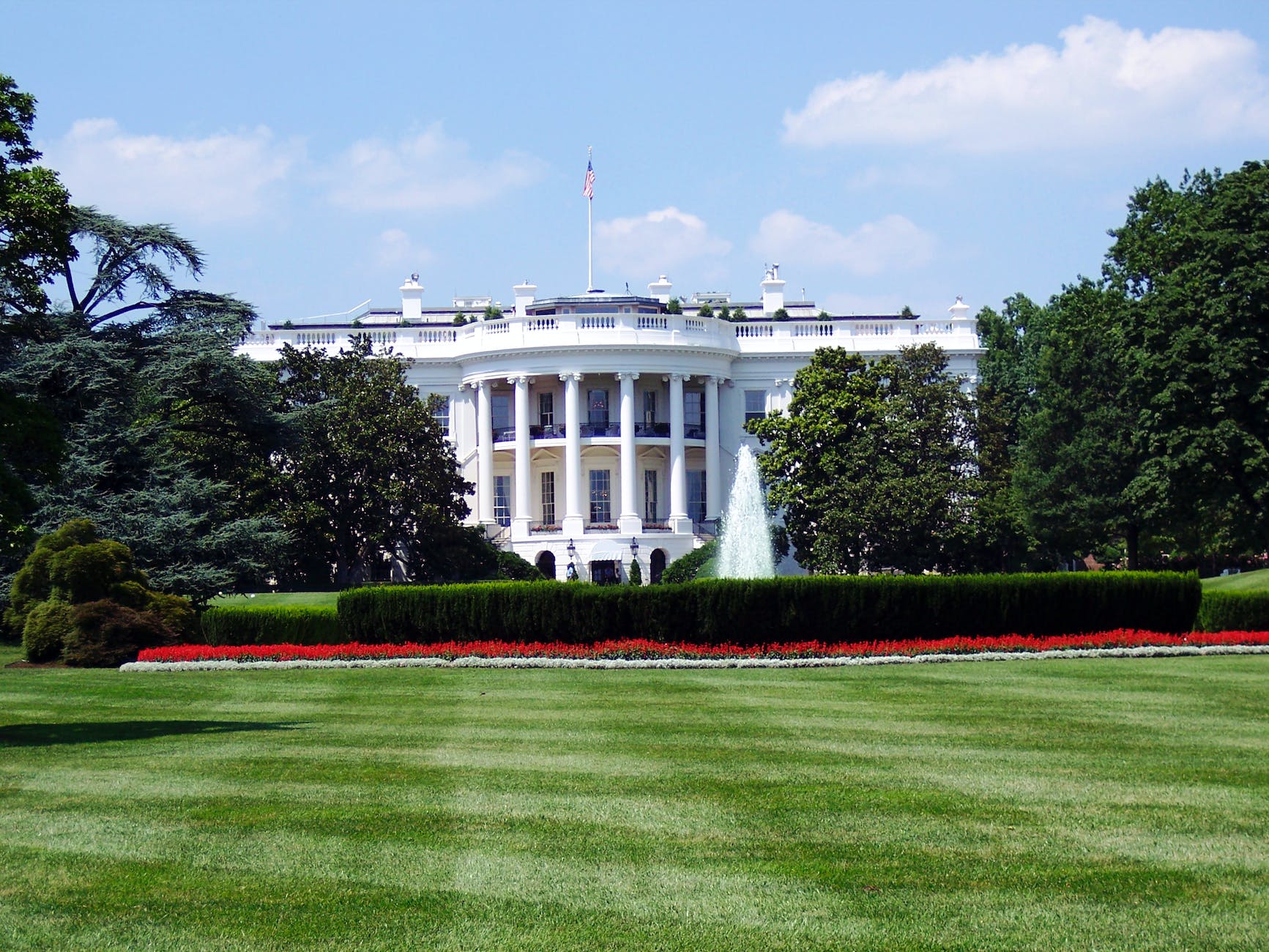
Given the high cost of purchasing a home at the current moment in the United States, what can the President and the Executive Branch do on their own? In addition to supporting legislation for a new tax credit, the Biden White House has ideas about its own actions:
Brainard suggested that President Joe Biden will not wait for Congress. The administration, for example, said that it was advocating for zoning reforms that will help unlock the construction of affordable homes.
“Our Department of Transportation is making billions of dollars in low-cost loans available for developing housing near transportation,” Brainard said.
The administration has also been trying to help first-time buyers who have struggled to gain a foothold into homeownership. Home prices were nearly 6 times the median potential first-time homebuyer income in the third quarter, according to NerdWallet’s recent analysis.
The White House pointed out that it was trying to reduce costs for first-time buyers through the the Federal Housing Administration program. The effort, it said, helped reduce mortgage insurance premiums by 0.3 percent.
Many presidents from the early 20th century onward have promoted homeownership in rhetoric and policy. These proposed actions would continue this pattern. Could a president even if elected if they did not support homeownership for the masses? See great quotes in homeownership.
Of course, the President and the Executive Branch can only do so much in this area. Yet, a number of important changes to housing policy have come through this branch. Will Biden make a significant change or is this about temporary salves? All of these proposals do not alter the fundamental economic realities that make current homes so expensive. They offer incentives or help around the edges. Addressing zoning from a federal level could prove interesting as it is such a local matter.








 Legally Sociable