The mostly Christian US House and Senate

How does the religious affiliation of the members of Congress compare to the religious affiliation of Americans as a whole? This came up recently in a conversation about religiosity and government so I tracked down some data.

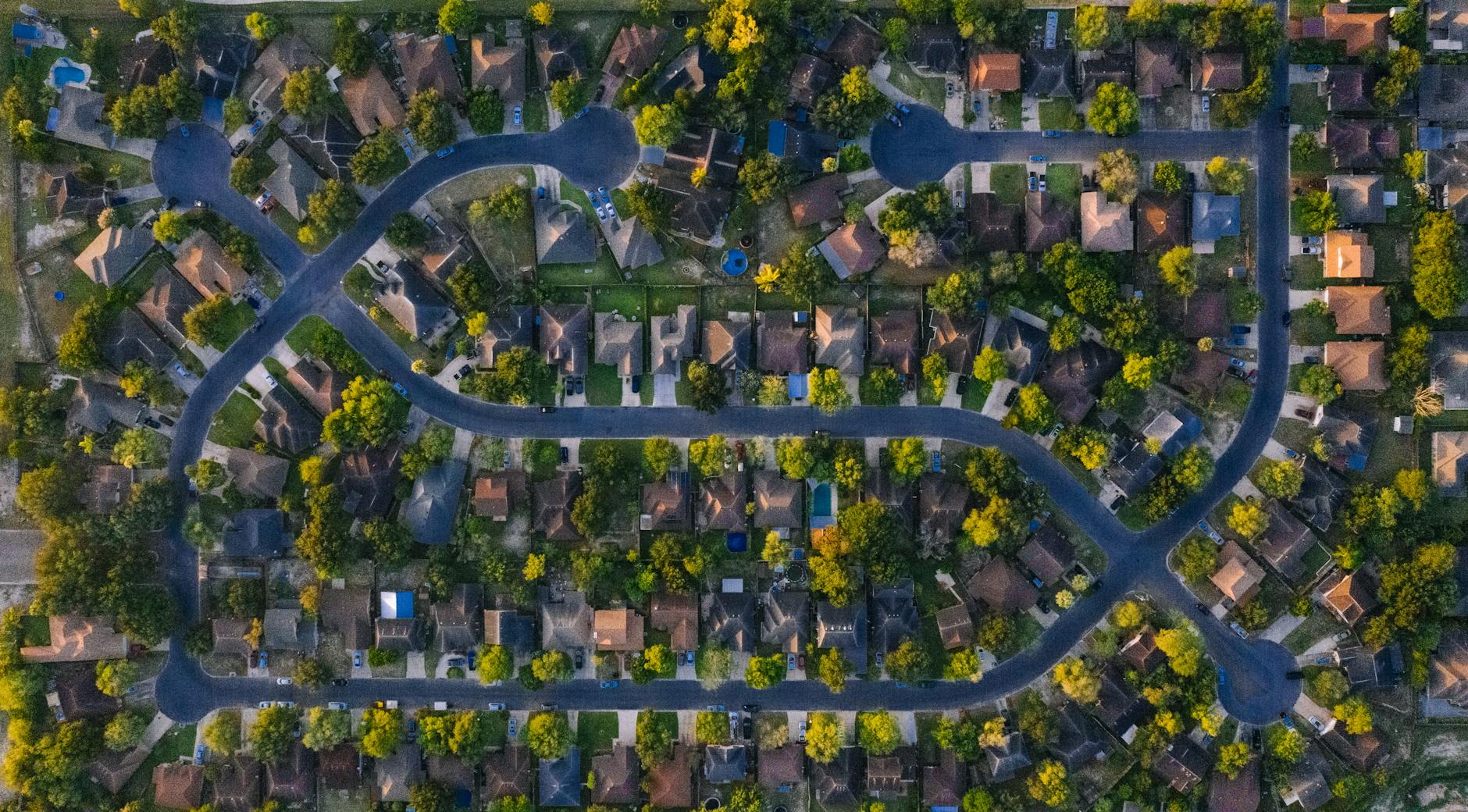
Photo by Kendall Hoopes on Pexels.com

For the religious affiliation of Americans as a whole, here are figures from the Pew Religious Landscape Survey with data collected in 2023-24 from more than 35,000 respondents. With 62% of American adults identifying as Christian, here are the percentages for particular religious traditions:

-23% evangelical Protestant

-11% mainline Protestant

-5% Black Protestant

-19% Catholic

-2% Latter-day Saint

-2% Jewish

-1% Orthodox Christian

-1% Muslim

-1% Buddhist

-1% Hindu

-29% religiously unaffiliated

For the religious affiliations of members of Congress, here is a summary of what Wikipedia has for House members and Senate members. The categories are not the same as the religious traditions for the Pew Religious Landscape Survey but there are points to compare. Starting with members of the House of Representatives:

-375 of the 435 (86%) are Christian. Of these Christians, 236 are Protestants in specified traditions (including 63 Baptists, 22 Methodists, 16 Episcopalians, 15 Presbyterians, 13 Lutherans, 10 non-denominationals) and 88 are unspecified Protestants. Of the 375 Christians, 126 are Catholics, 7 are Eastern Orthodox, and 6 are Latter-day Saints.

-24 of the 435 (6%) are Jewish.

-4 of the 435 (1%) are Muslim

-4 of the 435 (1%) are Hindus

-2 of the 435 (0.5%) are Buddhist

-18 (4%) are unknown or refused to state.

-4 (1%) are unaffiliated.

And here is the religious affiliation for members of the Senate:

-86 of the 100 (86%) are Christian. Of these Christians, 59 are Protestants in specified traditions (including 12 Baptists, 5 Methodists, 5 Episcopalians, 12 Presbyterians, 6 Lutherans, 6 non-denominationals) and 5 are unspecified Protestants. Of the 86 Christians, 24 are Catholics, 7 are Eastern Orthodox, and 3 are Latter-day Saints.

-9 of the 100 (9%) are Jewish.

-1 of the 100 (1%) are Buddhist

-4 (4%) are unknown or refused to state.

How does the religiosity of Congress compare to the country as a whole? Pew sums up:

Christians will make up 87% of voting members in the Senate and House of Representatives, combined, in the 2025-27 congressional session. That’s down from 88% in the last session and 92% a decade ago...

And yet, at 87%, Christians still make up the lion’s share of the Congress, far exceeding the Christian share of all U.S. adults, which stands at 62% after several decades of decline…

The new Congress is also more religious than the general population by another, related measure: Nearly three-in-ten Americans (28%) are religiously unaffiliated, meaning they are atheist or agnostic or say their religion is “nothing in particular.” But less than 1% of Congress falls into this category…

In a country where a majority of adults identify as Christian, Congress is roughly 25% more Christian than the population as a whole. This may change in the coming years as more American adults do not identify with any religious tradition or group.

Some American cities have seen no gain in housing values for decades, others with large gains

Looking at long-term data regarding housing values in different American cities shows large differences across places:

What drives these differences?

When we stopped to think about that, we couldn’t get it out of our heads. So many of us have internalized the lesson that homes are speculative, flippable investment vehicles, yet in much of the country — Cleveland, Memphis, Detroit, we could keep going — housing has been a truly quotidian commodity. There, home prices simply keep pace with inflation over the long run, no different from spaghetti or sprockets…

Consider that Dallas, Houston, Seattle and Portland, Oregon, all had what the researchers would classify as high demand for housing. But prices in Dallas and Houston have only roughly doubled in price since 1890, compared with a more than sixfold jump in Portland, or almost fivefold in Seattle…

“If prices go up,” Lyons asked us rhetorically, “does supply come on stream to follow? Do people look to build homes?”

Since 1970, the metros where housing stock grew the least relative to population growth — think Los Angeles, San Francisco, San Diego or Seattle — saw the some of the fastest home price growth. While metros that built enough housing — such as Atlanta, Phoenix and Charleston, South Carolina, saw home prices rise much less rapidly, even as their populations soared.

Does this suggest that Americans have come to view houses as investments when some places in the country have not experienced large increases in housing values over time?

For the cities with big increases over time, how do local leaders and residents see the jump in property values? It clearly leads to issues with affordable housing: rising housing values prices some people out of the market, particularly compared to what that market was and what residents had previously experienced. But rising housing costs can be viewed positively: people can sell their properties for more money and rising values can be associated with success.

This might be another reason why it is difficult to address housing issues at a national level. Housing is a very local issue and the cities in the top row of the graphic above have very different conditions compared to the cities in the bottom row.

No Kings protests throughout the Chicago suburbs

In the last decade or so, protests in the United States do not just take place in big cities. For example, the No Kings website listed over 30 gatherings in the suburbs of Chicago:

The website listed 7 sites in Chicago itself, including the primary site in the Loop which drew over 100,000 people. But people in the region had plenty of options where they could join others. Some of these locations are close to the city while others are on the edges of the metropolitan region. From what I can see on the map, most residents were with 10-15 miles of a protest site and many could access multiple options.

Three related thoughts:

  1. The portrayals of suburbia in the postwar era tended to emphasize its conservative or Republican bent. This may have been true in numerous places but is harder to sustain these days with suburbs closer to cities often leaning Democratic and suburbs on the suburban edges often leaning Republican.
  2. It would be interesting to look more closely at these suburban protest sites. Where can people gather in the suburbs for political purposes? Suburban downtowns or city halls? Shopping areas or busy streets? Public parks and public spaces? Which places helped increase the solidarity among those gathered and which ones helped them reach others who did not come?
  3. The suburbs are built around driving. How many protesters around the Chicago region drove, parked, and then protested? Protests tend to happen on foot but people have to be able to get there and options are limited in some suburban settings.

New publication – Finding Congregations through Online Searches: Possibilities and Perils

Review of Religious Research just published online a research note I wrote titled “Finding Congregations through Online Searches: Possibilities and Perils.” This comes out of research I have been conducting the last few years looking for religious congregations in the suburbs. With all the congregations with online presences, whether on social media or on websites or in online directories, what can researchers learn? Here is the abstract for the article:

Photo by Afif Ramdhasuma on Pexels.com

Many religious congregations are active online and people seek out congregations online but existing research is less clear about whether all congregations within a geographic area are discoverable through online searches and what information about congregations is available online. Searching for congregations in a large suburban county on five online platforms – three directories (YellowPages.comYelp.comChurchFinder.com) and two social media platforms (Facebook, Instagram) – revealed over 700 congregations. The counts showed similarities and differences for certain religious groups compared to the 2020 U.S. Religion Census. It is difficult to have certainty regarding obtaining a complete population of congregations in this county given the ambiguity of some online information and the possible number of congregations not online. Of congregations found online, the different platforms enable researchers to examine locations, buildings, images, posts, links, activities, and interactions with online actors. These findings point to a need for more online searching for congregations in order to study hundreds of congregations at a time, compare online search results to other methods for finding congregations, and contribute to research on congregational activity, online interactions, and closures.

I have analyzed the online presence of congregations in several works as it enables researchers to look across a large number of cases. And it provides needed insights into what congregations are doing online and offline as the worlds are more overlapping than some might imagine. Can looking at congregations online find all the congregations or tell a researcher everything about congregational activity? No, but it offers opportunities that might be hard to match with other methods and insights into the influential online realm.

How to make Toronto’s suburban streets look like Chicago’s suburban streets on screen

A new Peacock show on John Wayne Gacy filmed many scenes in Toronto but wanted them to look like Chicago. Here is how they did it:

Photo by Andre Furtado on Pexels.com

The series was filmed largely in Toronto, though the sets bear a striking resemblance to Chicago’s suburban sprawls in the 1970s. Macmanus works with a private researcher, Patrick Murphy, on most projects; Murphy scoured local reports from the Chicago Sun-Times and the Chicago Tribune, as well as news footage, and produced a “great bible of photos” that was passed off to the production team to scout and replicate.

And they needed the scenes to look like a particular Chicago neighborhood (Norwood Park):

“I didn’t realize how close he was to O’Hare. That was just shocking, in the sense that he truly was hiding in plain sight. The house wasn’t in some remote area, it was a suburban street like so many other suburban streets, with houses right next to each other, right next to the airport,” Chernus said in a recent chat over Zoom.

Will the average viewer be able to tell that the filmed scenes are in Toronto and not actually in Chicago? Probably not. If the production team found similar settings and then adds a combination of establishing shots and internal sets (that could be located anywhere), it may be hard even for people with lots of Chicago experience to spot differences.

I have heard people suggest Toronto and Chicago are similar in character (and population). How much harder would it be to make it look like Chicago if it were filmed in Vancouver (a common Canadian setting for American production) or Atlanta (still in the same country but different landscape) or another American city with bigger tax breaks?

Is there any evidence that filming in the actual location improves the final product? If filming elsewhere is about saving money, what could be gained by filming on location in Chicago? Are there particular producers or networks that prioritize filming in the actual location?

Building a suburb or a “cozy city” in a video game

A review of a new video game suggests players can build suburbs:

Photo by Kaique Rocha on Pexels.com

Town to City, developed by Galaxy Grove and published by Kwalee, is a cozy, casual city-builder that focuses on developing a small town, decorating buildings with small dynamic details, and providing a beautiful suburban environment for our voxel citizens. The game was released into Early Access recently with a decent amount of content and a relatively polished experience.

The game’s page on Steam describes it this way:

Build an idyllic 19th century Mediterranean town and help it flourish into a prosperous city. Freely place and customise each element to create the perfect home for your growing population in this cozy city builder from the creators of Station to Station.

Town, city, community, suburb. Is there a big difference in what these places look like in this game? These are not always interchangeable terms and using them hints at their overlap and their distinctions.

The majority of my experience in city-building games comes years ago with various iterations of Simcity. The goal there seemed to be to create a large city. You could build lighter density residential units but the push was to keep increasing your population, which could lead to redeveloping those lighter residential areas.

If this game is truly about creating a suburb or small town, it would be interesting to consider how the game experience could be different. How might the unique features of a small town or suburb translate into different decisions to make about development? Does this game or other games incorporate the kinds of zoning issues that come up in suburban communities? Or can players feel the reasons Americans love suburbs while they oversee the construction and maintenance of a suburban community? Do they get to consider the increasing diversity in suburbia?

And if there was a game that simulated building suburban communities in the United States, how many people would be willing to play? The majority of Americans live in suburbs but would they want to play in them, as opposed to building massive cities or playing Farming Simulator.

Memorializing shopping malls that are demolished

Thinking about two suburban shopping malls recently demolished in the western suburbs of Chicago (here and here), how might a suburb go about marking – if at all – where the shopping mall once stood?

Photo by Felipe Jimu00e9nez on Pexels.com

Both malls operated for over four decades. People from the suburb in which they were located and nearby suburbs shopped and gathered there. The communities in which they were located gathered and used the tax revenue generated by the mall.

As redevelopment plans get underway, is it worth marking where the mall once stood? Imagine a roadside marker that says “Former site of the Stratford Square Mall.” Or within the new development some indication on the ground of the footprint of the mall. Or naming some part of the new development after the mall that was once there.

Perhaps marking the former mall site in some way is going too far. Plenty of suburban redevelopment happens without much concern with what was there before. Historic preservation groups and efforts can save or identify properties worth holding on to. But it takes money and local will to remember past land uses and buildings. Would there be enough interest in remembering these shopping malls?

One feature I like about Google Streetview is that with over a decade of streetscape images, you can go back and see what an address looked like years ago. This might be possible to do with other mediums, such as overlaying older photographs or drawings over current images, but it can be difficult to track down such images. The malls will live on in Streetview, even as the sites are transformed.

Music in public considering that the United States once had 500,000 jukeboxes

Less than a century ago, the United States was full of jukeboxes:

Photo by Pixabay on Pexels.com

By the early 1940s, about 500,000 jukeboxes dotted the country, sometimes inspiring too much of a ruckus: Newspapers frequently reported on bar fights over music selections and complaints about noise. Snootier critics, meanwhile, voiced more petulant grievances: “The contrivance is everywhere and is always booming its inanities,” one Los Angeles Times writer lamented in 1941.

Private spaces have multiple options for providing music. They could use a speaker system to play music (radio, recordings, etc.). They could have live music. They could go with silence. A jukebox puts the control of the music into the hands of the visitor or customer, letting them select songs.

Alternatively, consider the options visitors to spaces have in more recent decades. Each person can choose their own music without subjecting others to it. A Walkman allowed for hearing the radio or a cassette, a portable CD player for a CD. The spread of digital music – MP3 player, smartphone with built-in storage or streaming music – provided even more private options. Go with headphones or earbuds and someone could be in their own aural world even with a blaring jukebox.

Could having a common aural experience bring people together in ways that separating them into their podcast/music/Youtube streams does not? Not everyone would necessarily like what was playing on the jukebox near them but they would be exposed to the same music as everyone else. And then they could put something on the jukebox for others to hear. Of course, the limited selection of the jukebox and the processes that go into getting records into the jukeboxes might lead to a more homogeneous musical experience.

China leads the world in highway miles – and has 24 hour traffic jams

With a lot of highway miles comes the potential for large traffic jams?

Photo by Barry Tan on Pexels.com

China boasts more than 100,000 miles of motorways – more than any other country in the world.

A staggering achievement, considering the country had no motorways at all in 1988.

And one city recently hosted a large traffic jam:

Footage shows the 24-hour traffic jam at Wuzhuang toll station, which left thousands stranded with “no way out”…

According to authorities, roughly 120,000 vehicles passed that day.

The unusually long queues were caused by millions of locals returning home after a national holiday, which spans across eight days from October 1 to October 8.

Do highways inevitable lead to traffic? Or would any amount of planning be able to avoid having traffic jams?

It would be interesting to consider how traffic jams are perceived around the world. I am familiar with the American experience and glad to not have to commute via highway every day.

And in today’s world of social media, is there a point where a traffic jam – typically regarded as an annoyance, an unhappy time – could become a chance to gain status and followers? The absurdity of being stuck for hours could lead to commentary and interaction.

Jobs as economic engines and prestige for big cities

Walgreens recently announced it will move employees from Chicago’s Loop to its suburban headquarters. The Chicago Tribune discusses the consequences:

Photo by Yuugen Rai on Pexels.com

But let’s be honest: this news stings. The city loses many hundreds of workers who are downtown most days of the week. Grabbing lunch. Shopping. Going out after work.

And it loses just a little bit more prestige.

Jobs are often thought of in terms of their economic benefits. A company is hiring and paying people. Those employees then spend money in the community. Having lots of good-paying and/or stable jobs can be a sign of a strong local economy.

But jobs are also about prestige for cities. In this case, the jobs are attached to a large company founded in the city. Having jobs of prominent companies in a community suggests the community is a desirable place to be.

Politicians and leaders love to talk about gaining jobs. “We added this many jobs.” Or “major corporations added jobs here.” It is partly about economics but it is also about status; they can claim to be the one who brought the jobs to the community or they created the conditions that led to the jobs.

In other words, a region may have lots of jobs but if there are constantly stories – or even just perceptions – that companies are eliminating jobs in a city, this can be a blow to the place’s prestige. To lose jobs to another community hints that the place losing the jobs is not as desirable.