So long to the long tail of movies

Netflix, once the purveyor of many movie options, now has a much more restricted catalog:

Photo by Anastasia Shuraeva on Pexels.com

In the early years of the new millennium, internet theorists and tech startups were fixated on the long tail, the idea, popularized by a 2004 Wired article and subsequent book, that on-demand manufacturing and digital distribution would disrupt the winner-take-all logic of monopoly capitalism and allow businesses to profit by making a nigh-infinite variety of products available to any audience, no matter how small. You could sell one book to a million people, but you could also sell them a million different books, especially once you were freed from the storage constraints of a brick-and-mortar store. The problem is that this theory, that “the future of business is selling less of more,” turned out to be, at least in some cases, almost exactly wrong. Faced with the internet’s overwhelming range of choices, people retreat to the familiar, or flock to the latest TikTok trend. In a 2018 study, researchers found that increasing the number of available movies by a mere 1,000 titles decreased the market share occupied by the bottom 1 percent of DVDs—the ones the long-tail effect should benefit most—by more than 20 percent. Faced with even more options, people just gave up entirely. “When instead of 20,000 DVDs you can choose from 50,000 or 100,000 or 1 million,” the study’s co-author, Wharton professor Serguei Netessine, explained, “what happens is demand for all movies goes down.”…

Netflix won’t say how many movies are on the service at any given time, but estimates put it at fewer than 4,000, less than a hundredth of the vast universe it once provided. Where Netflix’s disc-by-mail service promised you could watch anything you wanted, its streaming incarnation merely promises that you’ll always be able to watch something. In the DVD era, Netflix’s queue would not only show you what was available but what wasn’t—if a disc ended up lost or damaged, the title would be grayed out and it would sink to the bottom of the page. But if a title on your list leaves the site, as dozens do every month, it just disappears: off of Netflix, out of mind. I rarely look at my list at all these days, but when I do, I’m vaguely annoyed that it’s full of things I’ve already watched, as if one time through Army of the Dead wasn’t enough. It’s no longer an agenda, something to be meticulously arranged and checked off one item at a time. (The cinephiles have Letterboxd for that now.) It’s just a pile of stuff.

When Hollywood’s legacy conglomerates launched their own streaming services in 2020, they followed Netflix’s initial model: one low price for a mountain of content. For less than $10 a month, you could access every movie Disney ever made, plus all the Marvels and NatGeo specials you could stuff your eyeballs with. Twice that, and HBO Max would serve up a vast trove of Hollywood history, from Batman to Casablanca, not to mention Game of Thrones and Friends. But they followed Netflix’s arc at an accelerated clip. Two and a half years after HBO Max launched, it started pulling down titles by the fistful, and six months later, Disney+ and Hulu followed suit. “This whole idea of warehousing content on Max, on a streaming platform, in retrospect is incomprehensible,” the CFO of HBO’s parent company, Warner Bros. Discovery, recently told investors. “A small percentage of titles really drives the vast majority of viewership and engagement.” Any title outside that small percentage is at risk of being removed, and while a movie or a TV show that went off the air might once have still been available on disc at your local video store, now, not even the people who create the content own their own copies.

The unchecked sluice of streaming can make it seem like you’ll never run out of things to watch, but that doesn’t mean you can watch anything you want to. When the director William Friedkin died last month, many people were unpleasantly surprised to find his cult favorite To Live and Die in L.A. unavailable to stream at any price, even as a digital rental or purchase. The movie is available on Blu-ray, but while Netflix once had a copy in its library of discs, they didn’t in August. (My local library, at least, does.) In the streaming era, we’ve come to accept such artistic lacunae as a way of life, and if To Live and Die in L.A. isn’t available, you can still watch The Exorcist and The French Connection—not to mention Sorcerer and Cruising and Killer Joe. How much William Friedkin does one person need, anyway?

This sounds like the ongoing issue facing the culture industries: how do they know what will be a hit and which products generate the most interest and money? In the world of movies, TV shows, books, music, and similar media, it is hard to know what viewers, readers, and consumers might find worth their time. Thus, these industries produce hundreds and thousands of options each year. A small group will generate a lot of money and help make the rest of the production possible.

Netflix offered a different possibility: the ability to profit from the edges of the catalog. By being the place where movie viewers could find particular options, they could offer a unique product. Other Internet-based companies, such as Amazon, could offer similar opportunities.

But it sounds like Netflix does not think it profits enough from the long tail. The goal is to make a smaller catalog available and focus on finding the big hits. If this is the plan moving forward, the culture industries continue on a long term path: try to crack the code on what becomes a hit and funnel resources to similar products.

My interpretation of what Americans mean when they say “renting is throwing away money”

I recently read through some social media discussion of this particular phrase: “renting is throwing away money.” As someone who studies suburbs and housing, what do people mean in the United States with this phrase? Here are a few dimensions of this and some historical and social context:

Photo by Kindel Media on Pexels.com
  1. In more recent decades, Americans have shifted to viewing homeownership more as a vehicle for investment and making money. Houses are not just places to live; people expect them to appreciate in value and provide profits over the years. (And in some places, homes have quintupled in value over several decades.) Renters do not get to share in this built equity while the landlord could cash out both in monthly payments and a sale down the road. If homeownership is primarily about buying a property to see it appreciate, then renters are missing out on this opportunity.
  2. However, homeownership in the United States is not just about making money. Homeownership signals something involving status, social class, and a commitment to a community. Homeowners have made it. Their ability to purchase a home is a signal of their industriousness and commitment to a community. They may raise a family there. Yes, they can sell the home down the road but they have bought into a particular place and put their money into a particular community. This is less about a personal return on investment and more of a marker of the homeowner and their ties to their neighbors and neighborhood.
  3. In contrast, renters are often treated differently than homeowners. They can be viewed as more transient and less interested in building up the local community. They may be assumed to be lower-income or less desirable residents for the community. Rentable units are a threat to community and single-family home property owners. (I have found this particularly true in wealthier suburban settings where opposition to apartments is often framed in terms of who might live there. More expensive apartments do not attract the same opposition even if residents still might be opposed to density, the height of the building, traffic, etc.)

Summing up: in an era with a hyperfocus on investment, homeownership can be viewed as a better long-term return on investment than renting. Additionally, Americans often view homeownership as more virtuous and more desirable for community life than renting. Put these together and there are long-standing concerns regarding renting and apartments.

“Suburban Screams” and the horror of the suburbs

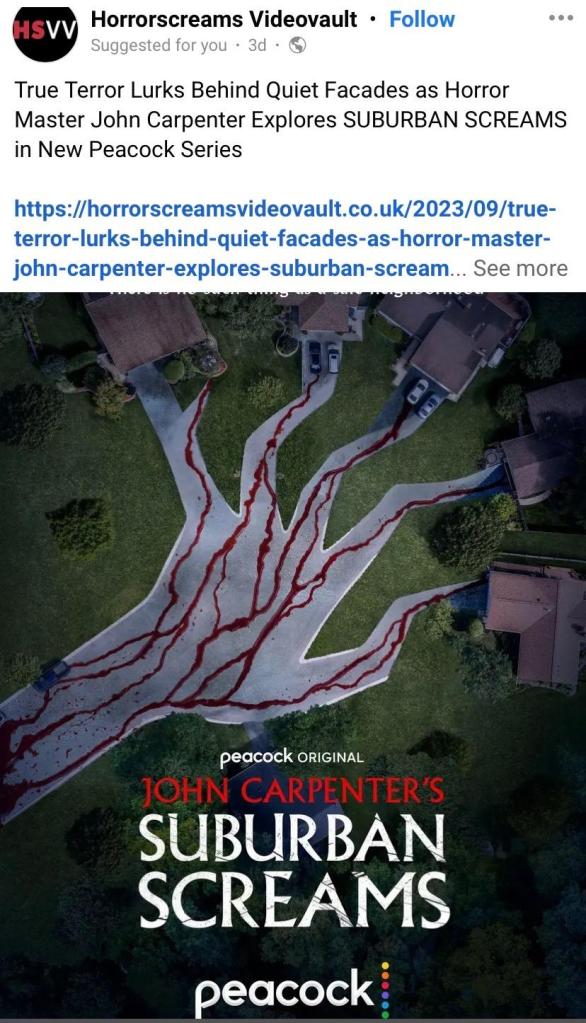
A new television show debuting in a few weeks involves horror in the suburbs:

It is an evocative image: the pleasant suburban cul-de-sac has been replaced by a street and driveways shaped like a hand with blood flowing from the homes.

Here is a description of the show from the Peacock website:

Peacock has shared the official trailer for John Carpenter’s Suburban Screams, a six-episode horror anthology series from the mind of the legendary namesake director, writer, and producer, exploring true tales of terror in suburbia. 

Each episode will delve into the monstrous evil that lurks beneath the surface of friendly suburbia through the lens of one frightful tale. In addition to firsthand accounts, the episodes will include cinematic reenactments, personal archives, and historic town press coverage.

Many cultural products in the last one hundred or so years have endeavored to tell the dark truths of suburbia. Behind the smiling nuclear family or the facade of the new suburban single-family home are less desirable practices and relationships. These stories suggest the suburbs put on a particular face but they are actually something else.

Placing horror in the middle of the suburbs builds on this. Not only might viewers or readers want to learn about the dirtier parts of suburbia; they might want scares and terror.

“Terror” is not typically a term used to describe the suburbs nor is the idea of “monstrous evil.” But that both are “lurking beneath the surface of friendly suburbia” continues an ongoing narrative that the suburbs are not what they seem.

Turning empty big box stores into pickleball facilities

More suburbs could empty big box stores turned into indoor pickleball facilities:

Photo by Anna Tarazevich on Pexels.com

The Picklr, which has seven corporate-owned facilities, is accelerating its franchising and plans 80 facilities in 11 states including Illinois as the first wave of a major expansion…

The company plans to repurpose vacant big-box retail spaces in Mundelein, Naperville and Villa Park with openings anticipated in December.

Nine courts are planned in Naperville with eight each in Mundelein and Villa Park as the first entries in the Midwest.

The 80 planned facilities are being pursued by 13 new franchisees in the first part of the expansion. More than 300 locations across the U.S. are envisioned, according to Schubiger…

Among them are Sure Shot Pickleball, which debuted Sunday with 11 courts in Naperville, and Pickle Haus, a pickleball-themed restaurant set to open in November with 12 courts in Algonquin. In Vernon Hills, final approval is expected today for PickleMall Inc. to renovate the former Toys R Us a

Large vacant buildings, particularly big box stores, are a problem for suburban communities. When they are empty, they are not bringing in sales tax revenues. Empty storefronts give the impression that there is a lack of interest and activity in the community. It can be hard to find new tenants for existing properties when building a new structure is a cheap option.

Bringing in pickleball could help address these problems. The building is kept up. It can bring people in and out of the building. Pickleball is on the rise and can bring new energy to an older structure. New revenues might be generated.

Is a pickleball facility on par with the large-scale retail efforts that generated lots of tax revenues? Maybe not but the alternative of empty big box stores is not desirable.

Suburban aesthetic regulations for homes and solar panels on the roof

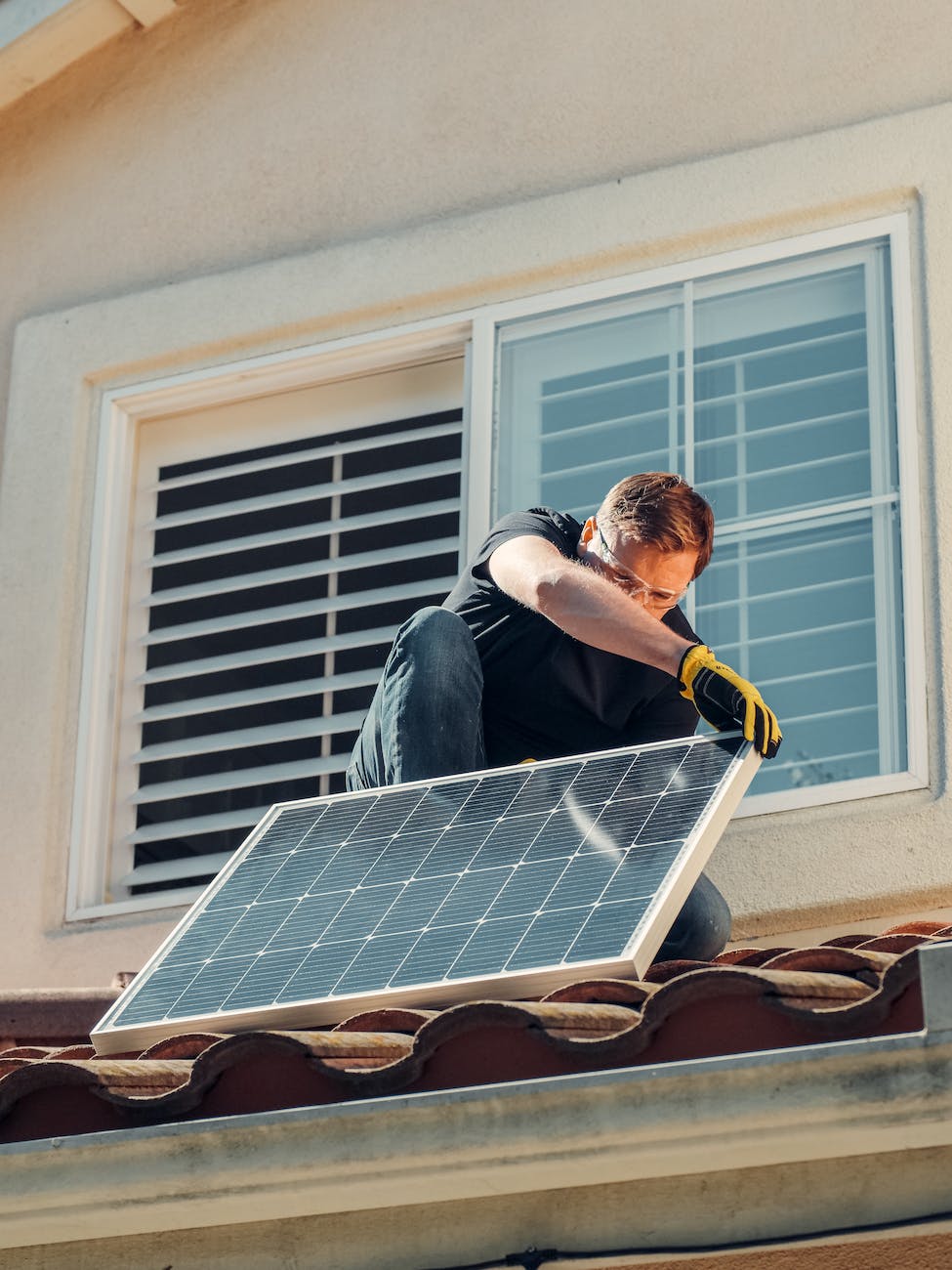
One wealthy Chicago suburb does not allow solar panels on the roofs of houses due to concerns about their appearance:

Photo by Kindel Media on Pexels.com

In an attempt to stay true to its motto — “A Unique Village in a Natural Setting” — Kildeer is one of the few Illinois municipalities that bans roof-mounted solar panels from residential buildings.

The reason? Village leaders think they’re ugly…

Residents may install only the generally pricier version of solar energy collection: integrated solar roofs, which are made of solar shingles that blend into a home’s appearance…

Restrictions on solar-power equipment to certain materials and designs is not unusual for the village, said Chief Village Officer Michael Talbett. The municipality already restricts building materials based on quality and aesthetic concerns, he said. For instance, the village does not permit vinyl siding on its homes…

Golf, a small Cook County community just north of Morton Grove, has a moratorium in place on solar development while it finds “the best fit” for its community, village administrator Michelle Shapiro said.

It sounds like property values are the primary concern here. If certain materials are used on a house in a neighborhood or community with more expensive houses, some fear a threat to values and neighborhood continuity. Americans like to talk about the rights of individual property owners but also are very willing at times to regulate property owners to counter perceived threats and interactions with neighbors (think HOAs, local regulations, etc.)

Do solar panels on the roof mar a house or do they indicate a certain class status? Or, as the article indicates, there are higher-end solar panel options that would satisfy those with aesthetic concerns.

“The modern farmhouse is the millennial answer to the baby boomer McMansion”

Of modern farmhouses and McMansions:

Photo by Erik Mclean on Pexels.com

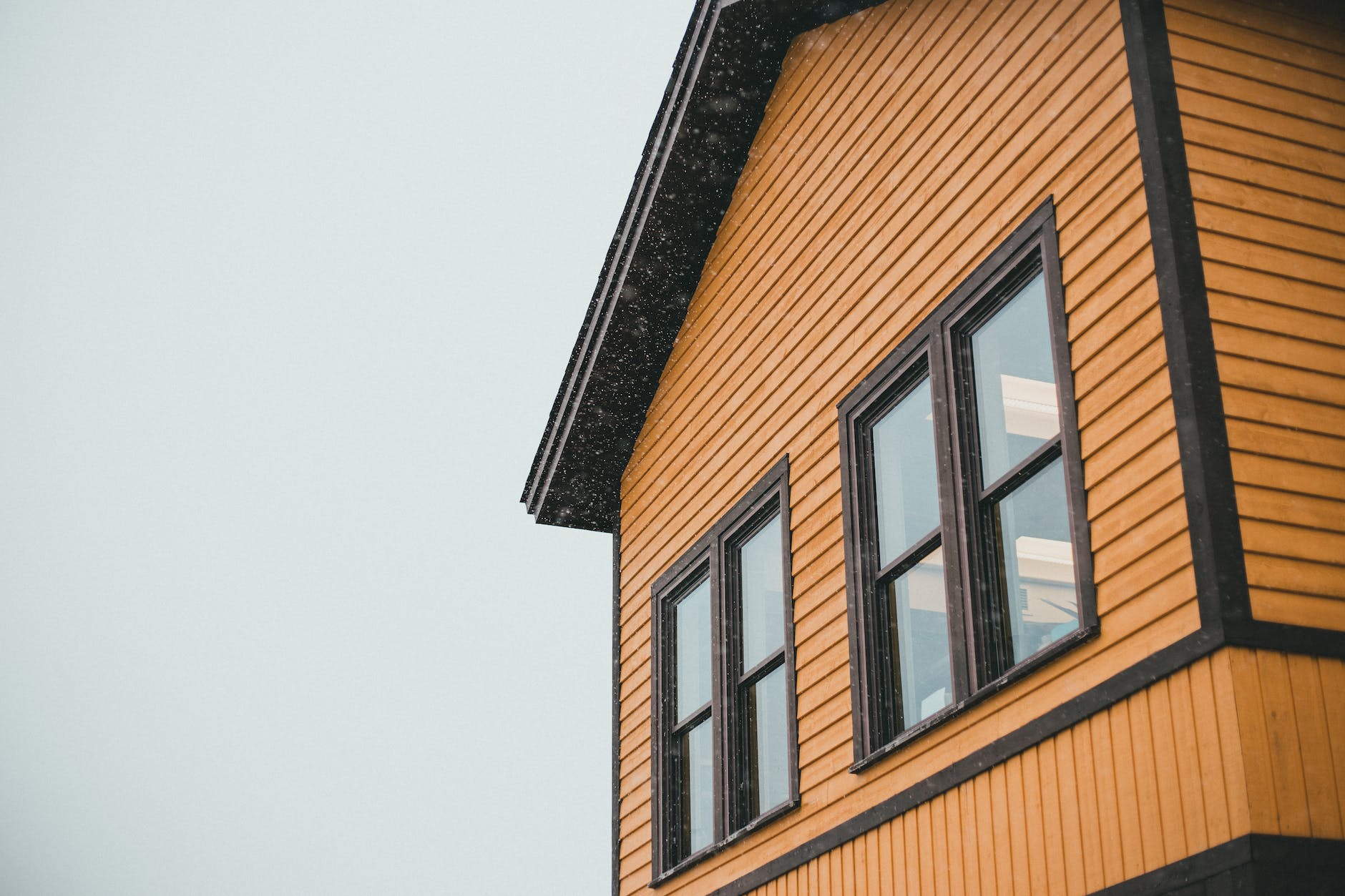
This post-agrarian look is the defining style of the current era — dominating renovations, new construction and subdivisions in communities with no connection to farming, with interiors that have open concept floor plans, wide plank wood floors, plenty of shiplap, and kitchens with apron sinks and floating shelves made of reclaimed wood. Even multifamily homes are getting the modern farmhouse treatment, falling into the barndominium category, as they embrace vertical siding, gables and tin roofs, giving a folksy nod to apartment complexes…

Modern farmhouse, a contemporary style that bears a passing resemblance to a traditional farmhouse, first entered the American lexicon a decade ago on “Fixer Upper,” the HGTV sensation that catapulted the hosts, Chip and Joanna Gaines, onto the national stage, and persuaded homeowners to decorate their walls with enormous clocks and word art proclaiming the banal — Family! Eat! Coffee!…

The National Association of Home Builders does not track the popularity of the style. But Deryl Patterson, the president of Housing Design Matters, which designs homes for builders, says the look accounts for more than a quarter of her company’s work. “If a builder says, ‘I need three elevations,’ one will always be modern farmhouse,” she said…

Now, at a moment when populism has taken hold amid deep political divisions, the style of the day is one that imagines a romanticized and fantastical agrarian past — a real farmhouse doesn’t have a walk-in shower with a waterfall showerhead or a sliding barn door to hide a well-appointed laundry room with a weathered placard that says “wash and dry.” As the country grapples with existential questions about its identity and its future, the house of choice makes you think about spinning wool into yarn.

Several thoughts come to mind:

-The suggestion here is that housing design trends come in waves. The McMansions of the 1990s and early 2000s have largely come and gone. They are driven by social, cultural, and economic changes. What comes after modern farmhouse? (Just as an example of a housing style that has not had such a large wave, modernist structures have had their proponents for decades and have not caught on in a large way – even if elements end up in new homes today).

-The connection in the headline to McMansions means that homes in this style may not be long-lasting. Is the quality of the modern farmhouse in question? Are they just imitating other homes?

-The nod to an agrarian past is connected to real occupational patterns. For example, in the early 1900s, more than 30% of Americans worked in agriculture. Not so much any longer.

-How much of this is driven by particular real estate owners? The examples in this story involve fairly expensive homes and renovations. HGTV appeals to particular audiences. There are examples in this story of less expensive modern farmhouse items but purchasing a modern farmhouse can require a lot of resources.

We will see how many modern farmhouses are built and/or created and what then happens to them down the road.

Does smartphone use while driving make traffic worse?

Driving while texting and/or using a smartphone could lead to more unsafe driving but might it also make traffic worse? Here are a few things I observed recently:

Photo by Aayush Srivastava on Pexels.com

-The delayed start from a traffic light. Vehicles at the start of the line may not move for a few seconds after the light turns green, even when the path is clear. This slows down the rest of traffic, particularly when there are a lot of traffic lights in a row.

-The increased distance between vehicles. If drivers think they need more margin because they are not fully paying attention to the road, vehicles will be further spaced out.

-Not paying attention to directions or turns might mean people have to cut across lanes or make alternative paths.

Since traffic can act like waves, then even a slight disruption can have a ripple effect.

If all drivers took the “most efficient” or “fastest” routes according to their apps, would these hits to traffic be cancelled out?

It might also be worth remembering that one of the appeals of self-driving vehicles is that they could better address these issues. They could better safe themselves and adjust to changes in conditions around them.

Turning landfills in the suburbs into desirable locations

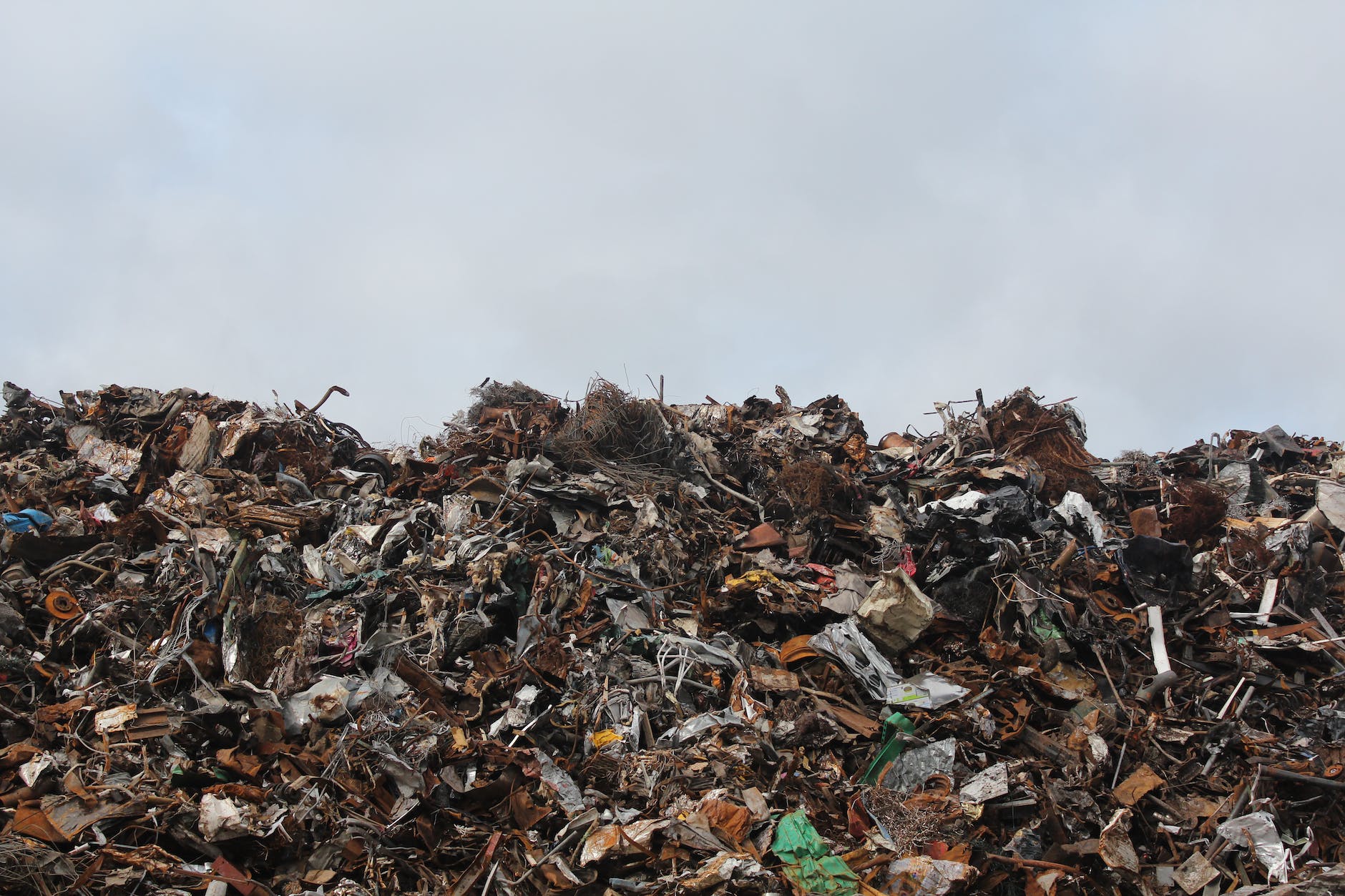
In numerous locations in DuPage County, former garbage dumps have been turned into something else:

Photo by Emmet on Pexels.com

When well-taken-care-of, closed landfills can have multiple uses. They can generate renewable natural gas, host solar panels and even provide valuable natural habitat.

Atop the district’s Greene Valley landfill, for instance, a thriving prairie is home to seven state endangered birds, one state threatened bird and even a gas-to-electric power plant.

At Mallard North landfill, a grove of 8,500 trees treat contaminated rainwater — also known as leachate — while providing sanctuary to local birds and other wildlife…

“The landfills are here forever, and they’re always going to need special care,” said Jessica Ortega, the district manager of strategic plans and initiatives. “It’s unavoidable that landfills are going to continue to emit greenhouse gasses, therefore it’s important to explore opportunities to implement strategies to minimize and reduce greenhouse gas emissions from landfills and to care for the sites as naturalized areas.”

What were once landfills at the edges of the metropolitan region are now firmly integrated into a Forest Preserve system. Bonus: they are some of the highest hills around.

I bet there are some interesting stories that could be told here. Who lived next to these landfills decades ago? What were the obstacles to converting these to other uses? What are these sites expected to look like in 50 or 100 years?

Available electricity helping to make the Chicago region a desirable place for data centers

As data centers emerge in the Chicago suburbs and the Chicago region, here are some reasons why these are attractive locations:

Photo by Miguel u00c1. Padriu00f1u00e1n on Pexels.com

Illinois’ attractiveness for data centers stems from economic incentives, an already improved power infrastructure and its being a net exporter of electricity, he said.

Furthermore, the use of clean-energy sources, including nuclear power plants and solar, is a draw for public companies with an environmental awareness that lead the data center industry, Sitar added.

This reminds me of the book Urban Fortunes where sociologists John Logan and Harvey Molotch discuss some of the actors involved in and benefiting from growth machines. They include utilities. Growth means more potential customers. In this particular case, data centers need a lot of electricity. ComEd, the primary electricity provider in the Chicago area, can make that happen:

A number of factors contribute to the suitability of a property like the former Sears campus in Hoffman Estates for the development of data centers, but access to an extraordinary amount of electricity is one that’s a make-or-break element.

And while the developer and municipality must rely on ComEd for that side of the project, the electric company’s expertise doesn’t make such a task easy or routine.

The article suggests a new data center will require its own substation.

Of course, one could ask about the impact of using all of that electricity. At the same time, the utility likely has a big customer who will be there for a while.

Working on research about closed religious congregations in DuPage County

DuPage County, Illinois is a vibrant suburban county with over 930,000 residents, lots of jobs, and numerous communities. Like many suburbs, it has become more complex in recent years due to demographic, cultural, economic, and social changes. It is also home to hundreds of religious congregations.

As part of a larger research project looking at the congregations in the county, I am also pursuing work on what happened to former religious buildings. I will report the findings to Partners for Sacred Places in Spring 2024 and here is their summary of my project:

Brian Miller (Professor of Sociology, Wheaton College, and co-author of Building Faith: A Sociology of Religious Structures) is using a quantitative approach focusing on DuPage County in Illinois, which is home to hundreds of religious organizations. He is documenting the number and types of transitioned congregations in the suburban context, looking for patterns of building usage and community impact.

I have started looking at sources that will help with the project. Here are two that are proving very helpful:

This builds on earlier work I have done regarding religious buildings. Based on existing research, I would expect a variety of outcomes for former religious buildings from no building present on the site to empty structures to buildings converted for other uses.