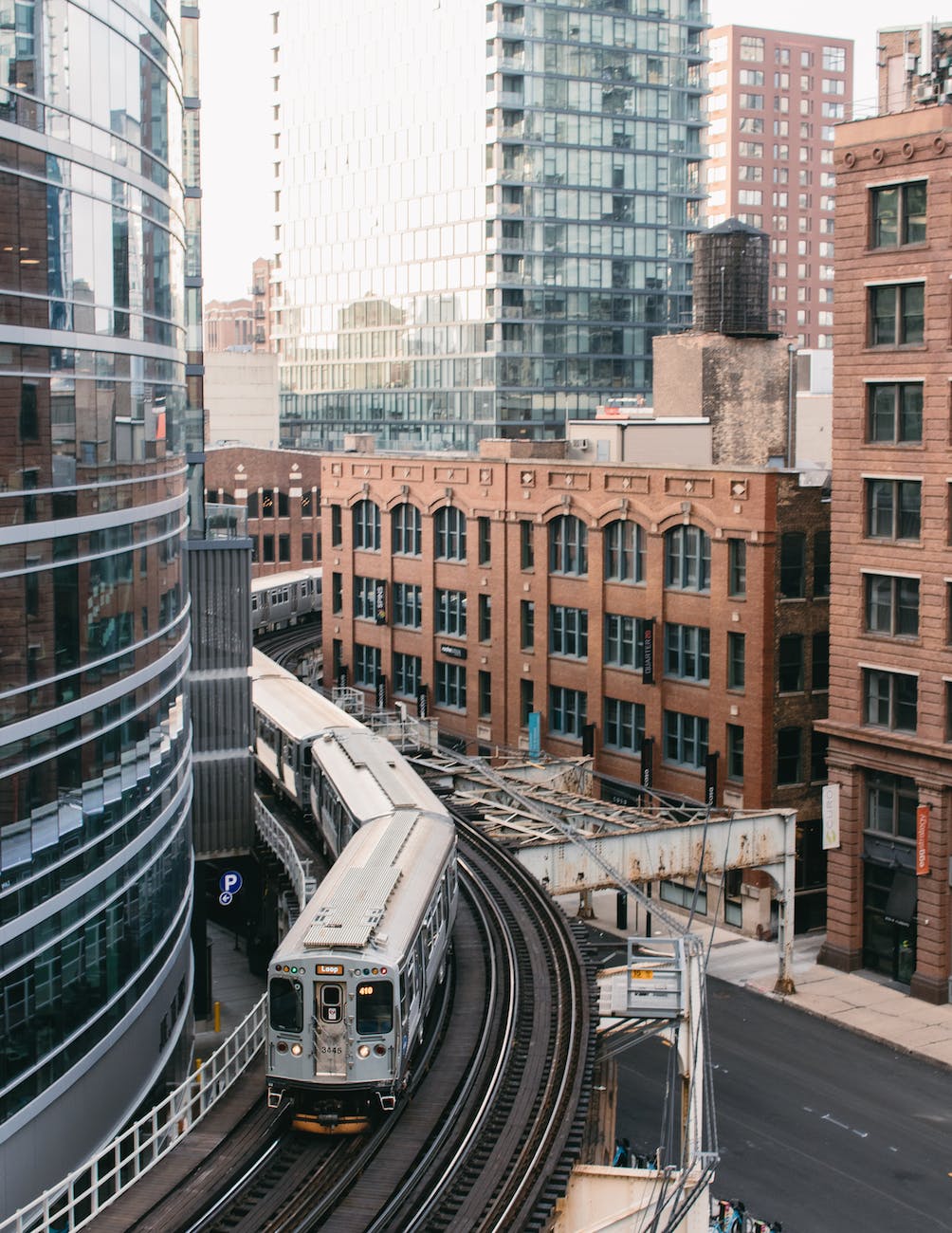
Chicago and the counties in the region agree to compete for businesses as a group and not explicitly against each other

As part of a new Chicago region economic partnership, Chicago and seven counties agreed to this:

Photo by Nataliya Vaitkevich on Pexels.com

The partnership agreement features a code of professional conduct that prevents members from soliciting businesses from other participants’ jurisdictions, or disparaging those communities when a business considers relocation. The agreement also calls for the participants to share information and produce 150 “pro-Chicagoland” decisions.

This addresses an ongoing issue: in a region with hundreds of communities and multiple joint interests, is it good for the city, suburbs, counties, and other groups to battle for businesses and growth in the region? Is the move of a company in the suburbs to Chicago a loss or gain? What about tax breaks from different communities that companies take advantage of?

This still ensures competition can occur between the Chicago area and other parts of Illinois, between metropolitan regions, and between Illinois and other states. Indeed, this regional partnership can help improve the Chicago region’s chances to compete with other entities:

Michael Fassnacht, president and CEO of World Business Chicago, said that after 23 years, the city’s public‑private economic development agency is becoming a regional operation. The region’s gross domestic product is not only the third-largest in the nation, but the size of some nations’, including Sweden and Poland, he added…

By getting investors to view the region as a whole, it has a better chance of landing valuable projects for the good of all, Conroy said…

Having traveled the world in search of foreign investment, Reynolds said potential partners speak of Chicagoland, not just Chicago. And so he was happy Wednesday to have heard local leaders use that term more in one morning than they had in decades.

It will be interesting to see what the first successful efforts of this partnership yields. Or, conversely, the first conflict where actors and municipalities in the region do not agree.

A large majority of American young adults live near where they grew up

Young adults in the United States often do not live far from home:

Photo by Kelly on Pexels.com

In fact, analysis by the Census Bureau and Harvard University earlier this year found that 80% of young adults now live less than 100 miles from where they grew up.

This statistic could be parsed a few different ways. This includes

-This percentage would include the significant numbers that are living at home with family.

-One hundred miles is not a small distance. This would cover almost all of the largest metropolitan regions. This probably puts people within a two hour distance of home. It does mean that someone could live in a very different setting and still be close to home.

-What does this number mean in the long run? How does it compare to other years and eras? If Americans move less frequently, does that mean they also do not move as far? There is a narrative in the United States that people strike out on their own for new, usually economic, opportunities. Does this data fit that?

Many Chicago area suburbs with significant increases in sales tax revenues

For a number of suburbs in the Chicago region, 2022 was a good year for sales tax revenues:

Photo by Karolina Grabowska on Pexels.com

A Daily Herald analysis of 95 suburban sales tax receipts during the state’s 2021 and 2022 fiscal years shows the towns combined to average a 28.6% increase in sales tax revenues, resulting in nearly $230 million more…

First, federal and state laws that took effect in January 2021 required companies to assess sales taxes for online purchases at the rate of the buyer’s hometown…

Then, COVID-19 stimulus funds paid directly to Americans reinvigorated purchases on physical products…

And the final catalyst for sales tax revenue growth statewide has been the historic increase in the inflation rate.

The article goes on to discuss two issues I was wondering about: how will these communities spend this money and will this revenue increase last?

My guess is that there will not be too many major changes even with these increases. Because it is not clear whether the money will continue to come in at similar rates (though the online source sounds durable), the money could be limited to particular items or shorter projects.

At the same time, an increase in monies could help address important needs and build a good foundation for the next few years. Could some communities complete a project that they had been waiting on? Or, could they start something rolling for the longer-term that needed resources to get rolling?

These increases could also lead to some interesting conversations about what to prioritize and spend on. (Additionally, communities without bumps might have interesting discussions.)

Americans who leave the country move all over the world

Here is some data on where Americans go when they leave the United States as well as some of the reasons they move:

Photo by Karolina Grabowska on Pexels.com

While the United States is the top destination for immigrants worldwide, hosting about three times as many immigrants as runners-up Germany and Saudi Arabia, it’s a paltry 26th in terms of sending immigrants abroad. Our analysis of U.N. data finds that just one American emigrates for every six Indians or four Mexicans.

And unlike emigrants from other countries, Americans go everywhere. We’re the most widely distributed people on the planet. No other nation has as few people concentrated in its top 10 (or top 25, or top 50) destinations, a Washington Post analysis shows.

In part, this wide distribution is probably a legacy of America’s immigrant roots. America is the top destination for migrants from about 40 countries, and many Americans remain linked to their ancestral homelands. It also reflects the wide reach of the U.S. military, as well as civilian organizations such as the Peace Corps and Christian missionaries…

Instead, Klekowski von Koppenfels’s research with Helen B. Marrow of Tufts University shows that a large majority of Americans want to move abroad to explore or have an adventure. Emigration almost always has more than one cause, they say, and some especially common ones are the desire to retire abroad, work abroad and get out of a bad situation at home. However, the desire to explore — “to lean forward to the next crazy venture beneath the skies,” as Kerouac wrote — is the American impulse that dominates.

The “nation of immigrants” is sort of a nation of emigrants? It would be interesting to compare these narratives.

Similarly, given the more limited geographic mobility within the United States in recent years plus the difficulty in collecting data on people who leave the United States, is it possible to compare trends over time on mobility within the country versus mobility abroad? Is one growing or slowing more than the other?

Why we play Simcity and not Sim Nimby

A game released earlier this year accounts for the NIMBY behavior of city dwellers:

Photo by Buro Millennial on Pexels.com

Imagine an even-simpler version of the original late-’80s “SimCity” video game: a crude digital map dotted with a handful of pixelated single-family houses. But try to click on the screen — like, say, on the icon of a bulldozer or a factory, or just anything — so you can start laying out commercial blocks and parks and creating your pretend metropolis, which is the objective of most city-building sims, and you’ll be met with a jarring sound effect and a pop-up message: “ERROR. CAN’T BUILD IN NIMBYVILLE.”

Below that is one of many snarky excuses: “Housing is a human right! Just why does it have to be here?”

Such are the Sisyphean pleasures of “Sim Nimby,” a new desktop city-building game where more clicks just lead to more error messages, and nothing ever gets built. The only winners in Nimbyville are the ones programmed to prevail: Not In My Backyard neighbors, or NIMBYs, who block new housing developments at every turn…

So Nass and Weeks hunkered down in a Park Slope bar one evening and hashed out the litany of anti-development NIMBY-isms — more than 50 in total — that the game spits back at prospective builders as a jazzy 8-bit music theme plays. There’s some comic hyperbole at the expense of preservationists (“We can’t tear down that historic brownstone. It’s where Gene Quintano wrote ‘Police Academy 3: Back in Training’”) and some dad-joke-grade gags (“The only thing urban I want to see here is Keith Urban”). Other one-liners — “This is a NICE neighborhood,” “Will someone please think of the property values?” and “Affordable housing? What, you gonna build them an affordable country club too?” — are perhaps less fanciful to housing advocates.

How realistic should city building games be? I have wondered this for years starting with playing Simcity in the late 1980s. How much does the game reflect actual city planing practices and urban outcomes versus presenting a glamorized experience where it is easy to plop in properties, development happens easily, and issues are quickly addressed (as long as the player has enough money and a little bit of sense). Overall, it is pretty easy to build a thriving city.

This version might be too realistic. Players of video games want some level of difficulty or obstacles to overcome but not ever-present problems that make it difficult to do anything. Random disaster? Okay, a player can deal with that. A never-ending chorus of NIMBY concerns? It is too much to handle. The concerns of residents in Simcity are usually addressable; for example, move the residence further from industry, quickly put a park nearby to quiet the criticism, or find another way to improve the quality of life.

I do not know if the player gets some extreme options to address the NIMBY concerns. Have them annex themselves into their own community and build in a neighboring community? Remove all of the residences via eminent domain? Wage a political battle against them? If this is a Simcity where the residents do not want anything new, then growth is not possible and that does not work even in video games.

The changed traffic patterns in the Chicago region

A global pandemic plus other changes mean that there are new patterns of traffic in Chicagoland:

Photo by Jeffrey Czum on Pexels.com

The Chicago Metropolitan Agency for Planning (CMAP), which tracks these patterns, has found that drivers are taking trips on different days, at different times, and sticking closer to home than they used to. An analysis done for WGN-TV shows fewer trips being made at the familiar times and locations of rush hours. “Instead, they are more spread-out, making travel and congestion unpredictable,” WGN reported.

Another big factor in this traffic roulette is the continued rise of e-commerce. Amazon, FedEx and UPS trucks are everywhere, it seems, stopping-and-going, and sometimes blocking streets as drivers deliver online orders. CMAP reports that single-unit truck traffic (including those delivery vans) has shot up 20% since early 2020.

The third variable is public transit. Ridership on CTA, Metra and Pace continues to lag pre-pandemic levels, thanks in no small part to the perception that they are either unsafe, inconvenient or both, meaning more commuters are driving. As a result, motoring to and from downtown can be as rough as ever, especially on Tuesdays, Wednesdays and Thursdays, when employers are more likely to require the physical presence of their office workers.

While these patterns will continue to evolve in the years ahead, working and shopping from home are here to stay, and public transit has a long journey to win back its customers. Planners need to adjust accordingly, and that probably means re-engineering traffic systems.

Summary: Tuesday through Thursday are now the worst “regular” rush hour days, trucks and traffic can be anywhere, and fewer people are using mass transit.

Does the Chicago area have an advantage because of its grid network? If drivers encounter a problem, it is not hard to find an alternative route. Compared to cities with longer histories and fewer major roads in the Northeast, Chicagoans have a plethora of options. On the other hand, the Chicago area is limited in terms of highways and sprawling roads compared to some places in the South and West.

Even with a grid and flat surface, one of the biggest problems seems to be that traffic – driving and rail – tends to end up in particular chokepoints that are more unpredictable in their use. Drivers still go through the Jane Byrne Interchange. Freight traffic needs to get through railyards and across at-grade crossings. Could this traffic be effectively lessened or rerouted in ways that help people and goods flow more quickly?

If there was an issue that the over 9 million people in the Chicago region could address together, this might be it. Yes, few people want to pay for solutions they do not directly benefit from. However, solutions to these issues across the region would benefit everyone.

When a populous suburban county has no property available for a second waste transfer station

DuPage County has only one waste transfer station and residents of one its suburbs do not want a second one in their community:

Photo by Tom Fisk on Pexels.com

The idea has outraged many residents who believe the city is being unfairly targeted as the “garbage capital” of the Western suburbs. Citing a threat to their home values and quality of life, they say a second waste transfer station should be built elsewhere in the county or not at all because of a lack of need.

In comparison, there are more than 20 transfer stations spread throughout Cook County.

Representatives from LRS insist a second DuPage County facility — one that is state-of-the-art and environmentally sound — is necessary to maintain healthy competition with other major waste companies. Another transfer station, officials say, would reduce garbage bills for residents and bring hundreds of thousands of dollars in fees from LRS to West Chicago coffers…

West Chicago residents say they’ve already done their part with one facility in their city, and a second DuPage County station should be built elsewhere. LRS officials, however, say they’ve looked elsewhere and couldn’t find another parcel that meets zoning and setback regulations.

This is a common issue in metropolitan regions: there are certain land uses that relatively few people want to live near. Since individual communities can set their zoning guidelines and communities with money and influence can fight particular land uses, it can be difficult to find a home for these land uses.

One solution? Push the garbage transfer station outside of DuPage County to another community that might want it or will not fight it.

Another solution (unlikely in the short-term but perhaps doable in the long-run): the need for more metropolitan level planning. With all of the people and business in the Chicago region, how can garbage be dealt with on a regional level?

A third and unlikely solution: significantly reduce the amount of waste produced by residents so fewer waste transfer stations are needed.

If West Chicago residents band together enough, they can likely convince local officials to turn down this proposed waste transfer station. Where exactly the garbage will go is unclear but West Chicago residents could be happy that it will not take place in their community. However, it is going to happen somewhere…to be determined.

I just want housing for Christmas, New Year’s, and the years to come

How about more housing for the holidays?

Photo by Michael Tuszynski on Pexels.com

“We have a supply problem with housing,” Marc Norman, associate dean at the NYU Schack Institute of Real Estate, told Yahoo Finance Live (video above). “We’ll see the price declines, but I think the income gains that we are seeing lately are still not keeping up with the prices that we are seeing in the market — in most markets.”…

“We, for the last 20 years, have underbuilt the housing,” Norman said. “In 2008, we saw the sort of demand go down, but it never came back in terms of supply.”

After the 2008 real estate crash, residential construction activities in the private sector never recovered to the level of 2006. Although home building slowly increased year over year during the last decade, projects remained well below early 2000 levels, according to figures from the Census Bureau and. Department of Housing and Urban Development.

Several thoughts in response:

  1. The United States has never fully recovered from the housing bubble in the late 2000s. The rise in housing values, homeownership, and lending activity led to a lot of trouble.
  2. How much money has the real estate and development sector made since the late 2000s? How much money has been left on the table by not building (or not being able to build, as discussed in the article, due to zoning and other restrictions)?
  3. How many older homes are retrofitted or renovated to meet current standards and tastes each year compared to how many new housing units are needed? Both routes could help provide housing.

All of this could set up nicely for giving housing as a Christmas present in the future.

The marketing pitch in Chicago’s motto “Urbs in Horto”

Chicago’s official motto helped sell the city in the mid-1800s:

But as European descendants forcibly settled the region, and began turning land over to agriculture and then urbanization, the trees that remained were sparse holdovers from pre-settlement times. Many of the new trees they planted were non-native species for landscaping purposes, while animals distributed invasive tree species.

So the idea that Chicago was a “City in a Garden” when the motto Urbs in Horto was adopted by the city government in the 1830s is a bit of a misnomer, said Julia Bachrach, former historian for the Chicago Park District.

Bachrach said the 1830s brought a flurry of land speculation in the Chicago area, which city officials encouraged by enticing East Coast developers to buy up stretches of land. But first they had to convince developers the land was valuable.

“It was a bit of a PR move to call this marshy, windswept, ‘smelly onion’ city the ‘City in a Garden’,” Bachrach explained.

As this article goes on to describe in more detail, many of the trees, parks, and boulevards came later to Chicago. And many of the things Chicago later became known for – including “the city of broad shoulders,” skyscrapers, meatpacking, and divides – have few clear links to gardens and trees.

I recall reading Ann Durkin Keating’s Rising Up From Indian Country and being surprised by the presence of sand dunes along the shores of Lake Michigan in the early days of white settlement. As a kid reading and hearing about Chicago, the story always seemed to go the other way: filling in land along the lake with refuse from the great fire, reversing the flow of the Chicago River, and building a booming metropolis over whatever was there before. Chicago conquered nature to become what it was and then thought of parks, trees, gardens, and a lakefront. That it could feature nature in particular ways was a product of this mechanical and human progress.

Bonus facts: the motto is featured at the bottom of Chicago’s seal and is represented by one of the points of the fourth star on the Chicago flag.

Housing, the holidays, and the economy

Just before Christmas, President Joe Biden touted the economic strength of the United States:

Photo by Jamie Lee on Pexels.com

Americans have been through a tough few years, but I am optimistic about our country’s economic prospects. Americans’ resilience has helped us recover from the economic crisis created by the COVID-19 pandemic, families are finally getting more breathing room, and my economic plan is making the United States a powerhouse for innovation and manufacturing once again.

In the list of economic accomplishments, I could find no mention of housing. None. Zero. There could be a few reasons for this:

  1. There is little good news on the housing front.
  2. The new about housing is less good or clear than the areas Biden cites.
  3. Housing is not viewed as a winning political topic.

What could political leaders do to help deliver a Christmas housing present for Americans? How can they talk about jobs, incomes, taxes, and opportunities without mentioning one of the most basic pieces of the good life in the United States: a pleasant home or residence in a decent location?

I keep thinking about the car commercials that have run for years featuring people getting new cars, SUVs, or trucks as Christmas gifts (sometimes with a bow). This might be the ultimate in Christmas consumption: a true big ticket purchase on the biggest consumer day. At the same time, Americans like cars and driving and are willing to shell out for it. Americans also like single-family homes; could someone develop a Christmas housing share gift program? Or, “give a mortgage”?

Even George Bailey, who realizes life is worth living, has a home to come back to at the end of the classic film. How many Americans want a storybook ending that includes such a home this Christmas?