Geography and why there is so much bad weather in the United States

Storms and natural disasters seem to occur regularly in the United States. Why?

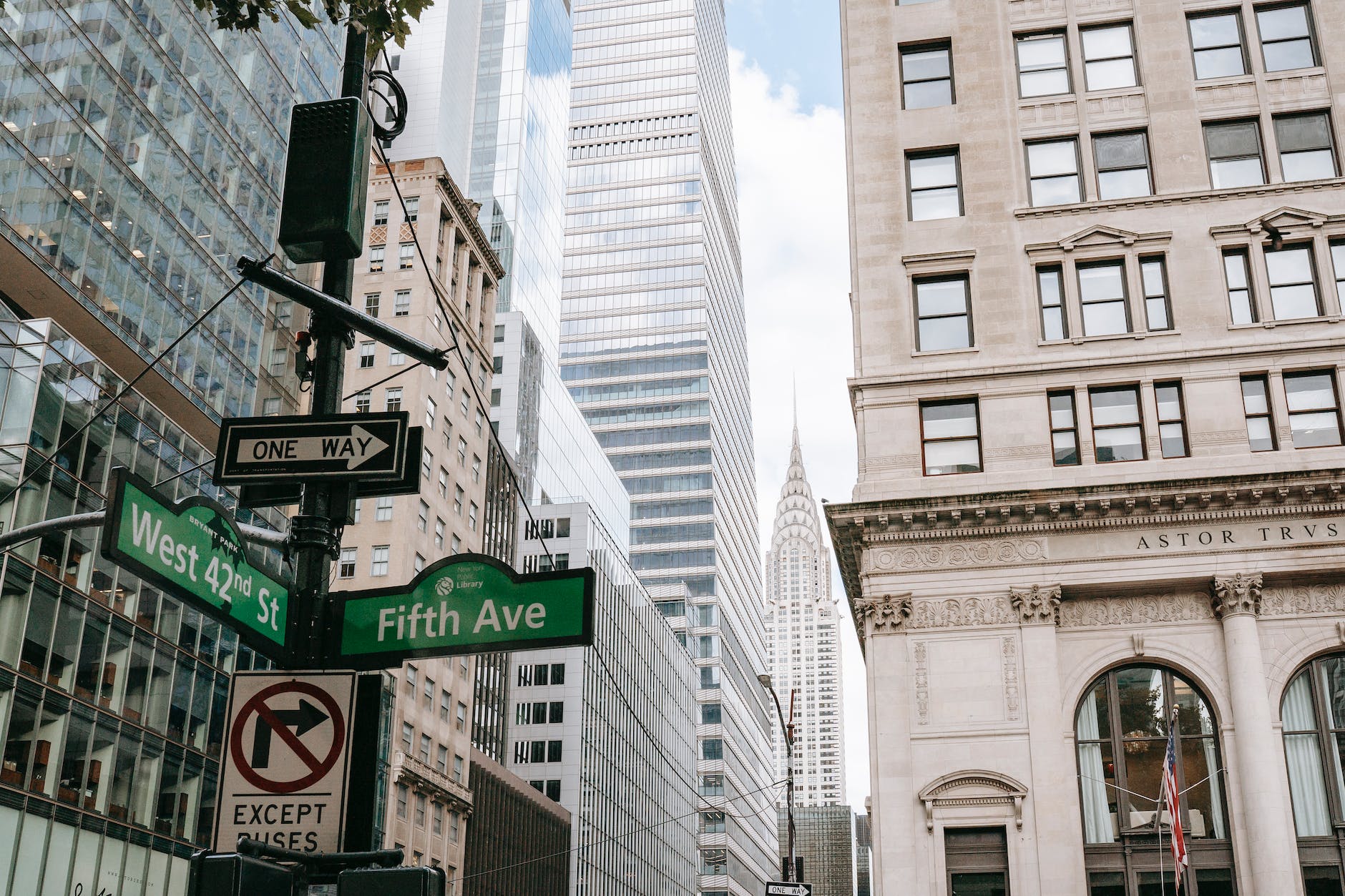
Photo by Pixabay on Pexels.com

It starts with “where we are on the globe,” North Carolina state climatologist Kathie Dello said. “It’s truly a little bit … unlucky.”

China may have more people, and a large land area like the United States, but “they don’t have the same kind of clash of air masses as much as you do in the U.S. that is producing a lot of the severe weather,” said Susan Cutter, director of the Hazards Vulnerability and Resilience Institute at the University of South Carolina…

With colder air up in the Arctic and warmer air in the tropics, the area between them — the mid-latitudes, where the United States is — gets the most interesting weather because of how the air acts in clashing temperatures, and that north-south temperature gradient drives the jet stream, said Northern Illinois meteorology professor Walker Ashley.

Then add mountain ranges that go north-south, jutting into the winds flowing from west to east, and underneath it all the toasty Gulf of Mexico.

The geography of the Untied States is often described as an advantage. Lots of land. Many natural resources. A range of temperatures and climates. Across the oceans from major global conflicts.

In this case, the unique geography leads to issues. The expanse and variation in land puts air masses in conflict.

As the article suggests, have American communities adapted to this? If bad weather and disasters are somewhat predictable, do we have structures and planning that mitigates some of this impact? Just as one example, suburban sprawl with its balloon-frame houses and reliance on driving could be prone to particular ill effects.

Paris discourages use of cars so underground parking garages need to change

If Paris has fewer cars on its streets, what happens to its underground parking?

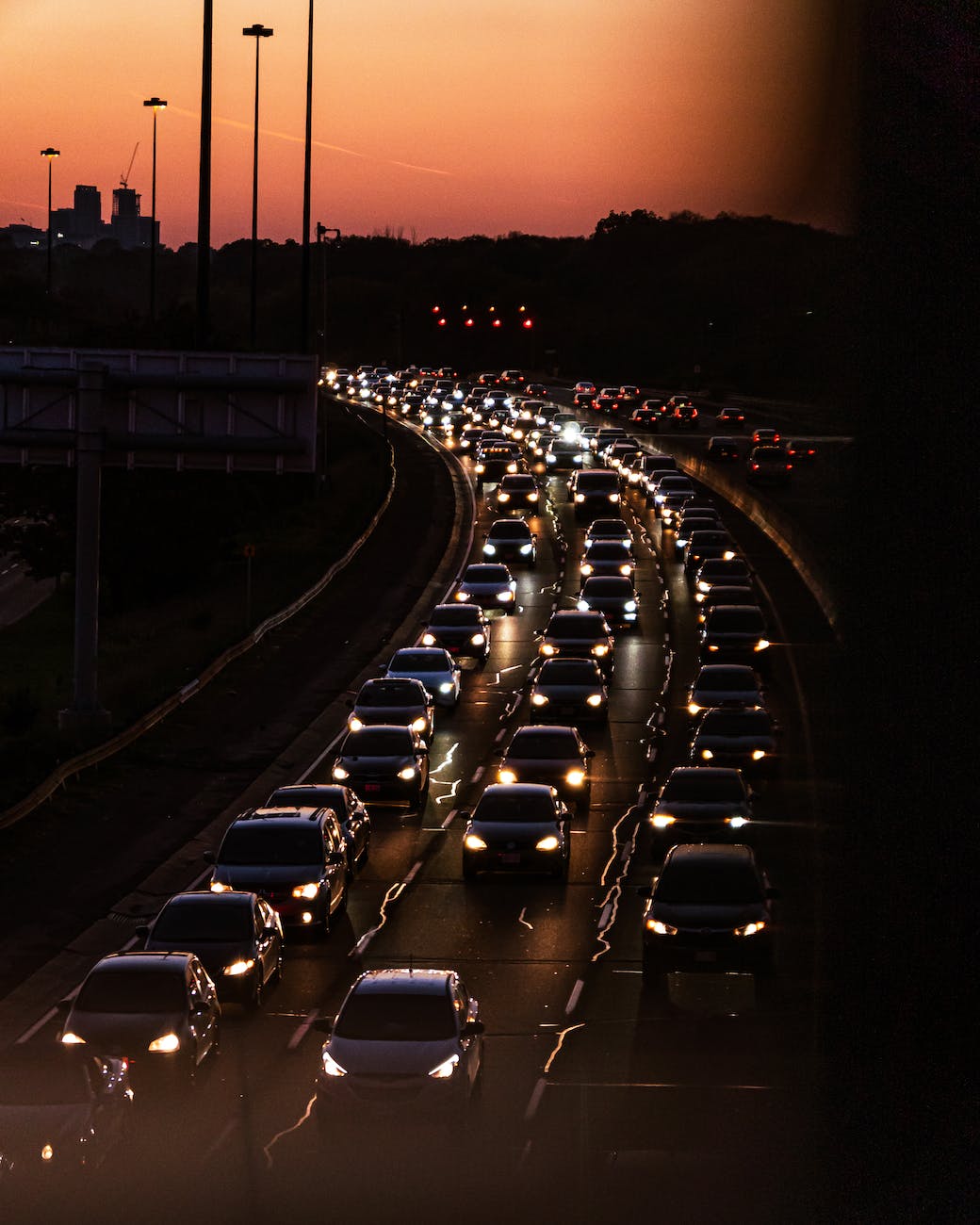
Photo by Daniel Frese on Pexels.com

Today Indigo operates 2,700 garages on three continents. But it’s here in Paris, where the company now manages more than a third of publicly accessible garage parking, that Indigo is beginning to develop a new underground commercial ecosystem. There are car repair shops, car rental offices, and click-and-collect lockers from Amazon. Larger-scale ventures the company is pioneering for lower levels include storage facilities and data centers. One private, non-Indigo garage has even been turned into a farm for mushrooms and endives.

Retrofitting parking is complicated, said Arnaud Viardin, Indigo’s director of partnerships. Counterintuitively, garage floors have less load-bearing capacity than homes or offices. Garages also have very low ceilings, threaded with beams and utility conduits that can limit adaptive reuse: It’s hard to market a storage facility that’s not accessible by box truck. Energy-intensive vehicle chargers require drilling through concrete to lay new electrical cables, and just about anything you do demands a time-consuming review with the Fire Department. Rarely do these new leases pay more than a constant stream of drivers charged hourly parking rates. But they pay more than an empty parking garage.

Indigo’s underground real estate has few competitors. Hundreds of thousands of square feet are now dedicated to alternative uses across France, mostly in Paris. “Finding real estate under Place Vendôme, under Place Dauphine?” Fraisse put it to me, pointing to two of the capital’s ritziest addresses. “We’re capable of proposing square footage at prices that have nothing to do with what you’ll find aboveground. Ten, 20, 50 times cheaper.”…

For logistics clients, the value of Indigo’s space is hard to beat. MonMarché is a spinoff of a larger French grocery chain, Grand Frais, whose stores are suburban big boxes with ample parking. “We had to find another solution for the Parisian market, which is the biggest,” said Demond, slicing open the packing tape on a Styrofoam box of durian, the odoriferous East Asian fruit. “The cost of real estate is so high.”

Cities have gone underground for numerous reasons: space above ground is limited, certain land uses are less desirable, underground uses can be more efficient. Putting cars underground made a lot of sense in previous decades when there was a lot of traffic and parking aboveground takes up a lot of space.

How far can underground redevelopment of parking garages go? Would people be willing to spend long amounts of time in such spaces if they were adapted for commercial, office, or residential use?

If these underground spaces become desirable opportunities, how high might rents and resale values go?

Large (fake) animals trying to get into buildings

The first thing I saw on a recent visit to The Children’s Museum of Indianapolis was this:

Seeing this reminded me of this:

I am in favor of both of these for multiple reasons:

-They are whimsical. This is public art but somewhat absurd and fun art. They liven up existing spaces. Both of the buildings above are glass, modernist structures and the animals are a good complement for the style.

-They are unusual. How often does a giant animal appear in these situations? They catch your attention, both outside and inside.

-They are memorable. Museums and convention centers have a certain feel about them. These creatures are a memory in themselves, helping the building and setting to stand out. (They were not created for this reason but these are certainly selfie and social media opportunities.)

All that said, if animals like these were everywhere, they would not be as worthwhile. Take the painted cows campaign in Chicago years ago: it works well once or twice but when lots of communities try it with lots of animals, it becomes less memorable.

Former Dominick’s in Schaumburg vacant for ten years until a new grocery store opened this week

The closing of Dominick’s stores in the Chicago region left a number of large vacant stores. One location in Schaumburg is now no longer vacant after ten years:

Photo by Anna Tarazevich on Pexels.com

When first elected four years ago, Dailly said negotiating an end to the vacancy was among his top priorities.

Tony’s bought the Town Center anchor site at 200 S. Roselle Road in 2015. But because of the Albertsons lease, work to prepare it for a new grocery store was stalled until 2021…

The village’s redevelopment agreement with Tony’s ensures the employment of at least 200 workers and a minimum $10 million investment in the building. The store is expected to generate more than $300,000 in annual sales taxes and food and beverage taxes for the village.

In addition to recommending approval of a Class 7b Cook County property tax break lasting 12 years, Schaumburg trustees agreed to provide $3 million in village funds for the expected $13 million renovation of the building.

The building’s vacancy potentially could have lasted until 2036 if Albertsons hadn’t stopped exercising its long-term lease options.

It is interesting to read about the tax breaks and agreements needed to help fill this vacancy. Is this standard fare in the difficult days of bricks and mortar business or is it that hard to fill a big, vacant site?

Ten years is a long time for an empty building to sit. Was Albertsons doing this to prevent competition with its own stores in the area or looking for a good payout from a new property owner or lessee?

In the long run, how many vacant properties can we expect in suburban shopping areas? If there are more coming, does this mean some retail space will be demolished or are there new uses for former shopping spaces?

Are McMansions Australian or un-Australian?

A recent ad for “Share the Lamb” includes McMansions as part of its easter eggs:

Screenshot from the end of the “Share the Lamb” advertisement.

Whether these discussions are taking place between patrons in the local pub or constituents in the local council chambers, being dubbed ‘Un-Australian’ has become the ultimate insult to throw in somebody’s face. Generally used as a dig, the term describes something that goes against traditional Australian ideals, thus calling into question aspects of the culture typically associated with national pride. While clearly a country-specific remark, these nationalistic and ethnocentrist themes have become widely recognisable, as cultural identities around the world continue to merge. 

This year, Meat and Livestock Australia’s (MLA) annual summer ‘Share the Lamb’ campaign decided to hone in on the absurdity of this very phrase. Advertising agency The Monkeys, part of Accenture Song, recruited talented director, Yianni Warnock. Known for his ability to draw out the paradoxical humour of a subject, Yianni was tasked with directing this tongue in cheek campaign that pokes fun at the unreasonable – and entirely subjective – specifications of what constitutes ‘Un-Australian.’

Working with Yianni, we worked out that if the characters left a little something behind as they disappeared it would really help sell the effect, and amplify the comedy. The timing of the disappearance also became part of the comedic timing. The big wide-end scene was stitched together from lots of sources. We had a lot of fun putting some Easter eggs in there of various things that might be considered Un-Australian, from ‘McMansions’ to jet skis.  

There are lots of questions of national identity to explore. What makes an Australian? If everyone thinks they are un-Australian, does this make them all Australian?

But, I am most intrigued by the reference to McMansions in the scene captured above. There are a lot of depictions and ideas embedded in this one image. I believe the McMansion is just under the bridge the rises in the top center of the scene. When I zoomed in on this dwelling, it is not as egregious as it might be. The home appears large with an imposing entrance, lots of windows, and a unique architectural style (sort of Mediterranean but some weird angles). I do not know if the impression it makes or better or worse without any other homes around it.

I suppose this means that McMansions are then Australian by being un-Australian? In a country with some of the biggest houses in the world, perhaps McMansions are just extreme or extra-large versions of the homes that mark Australian life.

Radio interview on Illinois history, race, and property on “The 21st Show” on Illinois Public Media yesterday

On Monday, March 27, I contributed to a conversation on “The 21st Show” titled “Illinois’ history with slavery and its links to the present.” You can listen here and I first talk at the 39:55 mark.

Photo by Jean Balzan on Pexels.com

Some of the conversation is based on a co-authored research article in progress with Caroline Kisiel of DePaul University. We discuss the working out and legacy of race and property over 300 years of Illinois history. My previous work in looking at the development of several suburbs in western DuPage County – earlier work published here, here, and here – adds to the latter portion of this history as race and ethnicity influenced decisions about development, zoning, and who was welcome in different communities.

Life expectancy in the US drops again

Certain demographic trends are worth noting. That the life expectancy in the United States dropped again is one:

Photo by Pixabay on Pexels.com

Just before Christmas, federal health officials confirmed life expectancy in America had dropped for a nearly unprecedented second year in a row – down to 76 years. While countries all over the world saw life expectancy rebound during the second year of the pandemic after the arrival of vaccines, the U.S. did not

The researchers catalog what they call the “U.S. health disadvantage” – the fact that living in America is worse for your health and makes you more likely to die younger than if you lived in another rich country like the U.K., Switzerland or Japan…

“We were very systematic and thorough about how we thought about this,” says Woolf. The panel looked at American life and death in terms of the public health and medical care system, individual behaviors like diet and tobacco use, social factors like poverty and inequality, the physical environment, and public policies and values. “In every one of those five buckets, we found problems that distinguish the United States from other countries.”…

The answer is varied. A big part of the difference between life and death in the U.S. and its peer countries is people dying or being killed before age 50. The “Shorter Lives” report specifically points to factors like teen pregnancy, drug overdoses, HIV, fatal car crashes, injuries, and violence.

This reminds me of a Hans Rosling video where he shows the rapid rise in life expectancy around the world in the last century or so.

If this is happening in the United States and not in other developed nations, does this mean the country is significantly in decline? Why does life expectancy not get the same kind of attention as other public matters, such as economic indicators or political fates? The ability to have a long life seems like a baseline matter that undergirds a lot of others

From subprime mortgage issues to superprime mortgage issues

The most recent financial uncertainty includes mortgages in a superprime era:

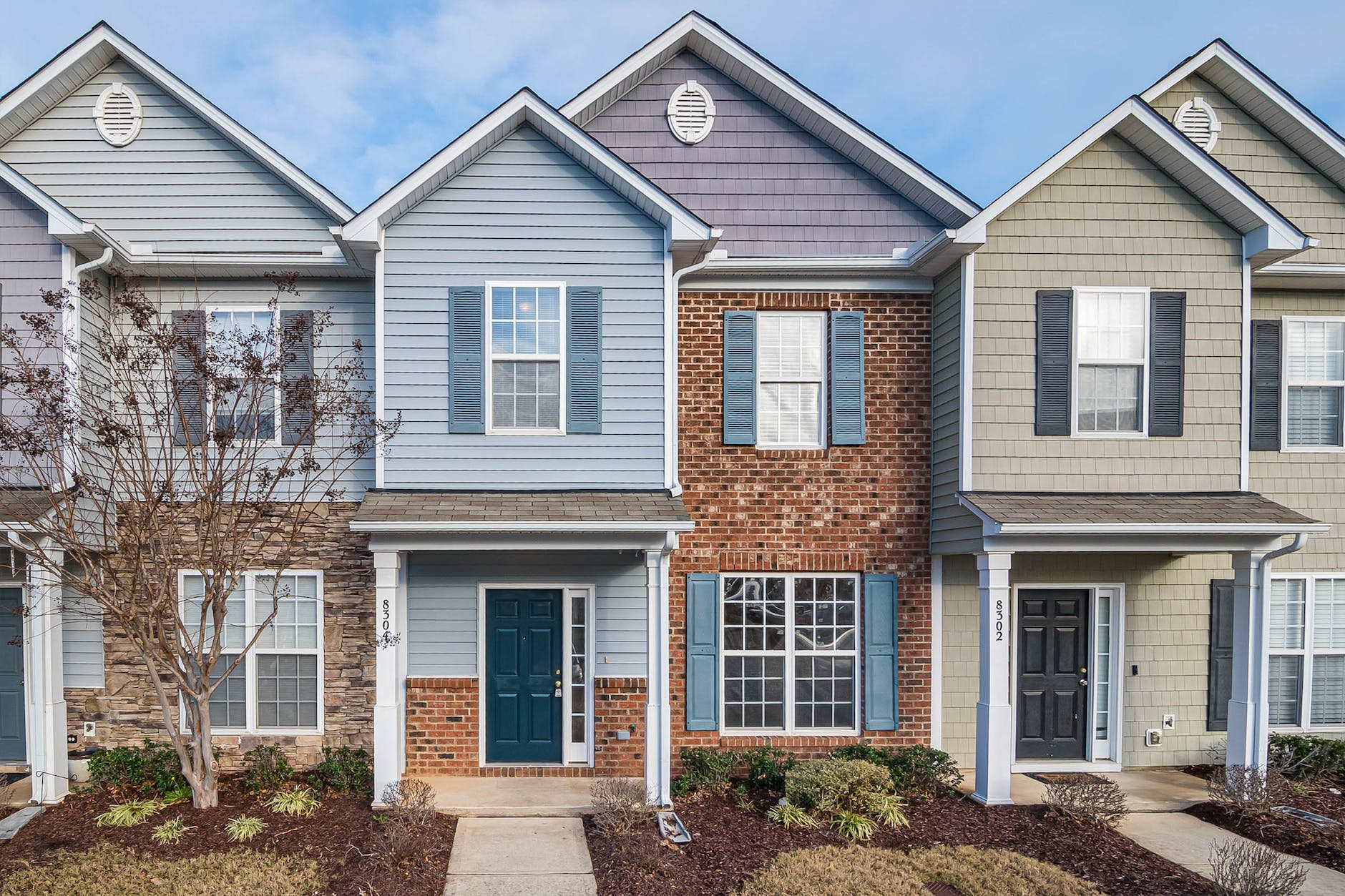
Photo by Expect Best on Pexels.com

This is quite the turnaround. After 2008, banking the rich was often touted as a far better model. Even the biggest banks began aiming more of their consumer lending and wealth management at relatively better-off customers, and they scaled back on serving subprime customers. Wealthy customers seldom default, they bring lots of cash and commercial banking business and pay big fees for investments and advice, the thinking went.

But when interest rates shot up last year, it exposed weaknesses in the strategy. It isn’t that the rich are defaulting on loans in droves. But the most flush depositors with excess cash last year started taking their cash and seeking out higher yields in online banks, money funds or Treasurys. On top of that, startups and other private businesses started burning more cash, leading to deposit outflows…

A major way that the better-off do borrow from banks is to buy homes, and often in the form of what are known as jumbo mortgages. Jumbos are for loan amounts over $726,200 in most places, and over $1,089,300 in high-cost cities such as New York or San Francisco. Jumbo mortgages bring wealthy customers with lots of cash. They also are typically more difficult to sell to the market, in part because they aren’t guaranteed by government-sponsored enterprises such as Fannie Mae or Freddie Mac. So banks often sit on them. But the value of these mortgages, many of which are fixed at low rates for the foreseeable future, have dropped as interest rates have risen.

To be sure, not all banks that focus on wealthier individual clients are under intense pressure. Shares of Morgan Stanley and Goldman Sachs, are down less than half as much this month as the nearly 30% decline for the KBW Nasdaq Bank index. But those banks are more diversified and focus more on the steadier, fee-generating parts of the wealth business, such as stock trading and asset management, than on mortgages or deposits.

I interpret this to mean that there is less money – or lower rates of return – to be made on big mortgages. Wealthy people will want to buy real estate, particularly because it is often assumed that the value of real estate will be good long-term, but the money does not generate the amount of money banks want.

If mortgages are too “boring” or do not generate enough money, could we be headed to an era where banks do not want to do mortgages? Money for mortgages could come from elsewhere.

Neighbors fighting over the presence of pickleball at the local park

I am convinced many communities do not want basketball courts in their parks. Perhaps some also do not want pickleball, a growing sport? An example from Chicago:

Photo by Digital Buggu on Pexels.com

Disgruntled residents unhappy with the noise and the pickleball takeover of the “unique wide-open blacktop area” launched a petition to boot pickleball from the park and restore it to “a safe and open space for kids to play in Lincoln Park,” according to the petition which has garnered more than 780 signatures…

“The confrontations, complaints and frustrations are a direct result of this dishonest and unethical action,” wrote Leslie Miller, who started the anti-pickleball petition, in a March 10 update on the online petition. “Moreover, this dispute has created an atmosphere of tension and unpredictability that feels unsafe for children.”

Pickleball players have countered with their own petition in support of the game, which has attracted nearly 700 signatures so far. Myers said issues with pickleball at the park seem to stem from wanting control, and he can understand some of the counter pickleball points, such as the noise complaints, but not necessarily agree with them…

In a statement Tuesday, the Park District said it “is committed to balancing the needs and interests of the community surrounding Bauler Park. The district recently implemented a plan to dedicate space for pickleball at Bauler Park, Monday through Friday from 10 a.m. to 2 p.m. With the exception of these designated times, the space will remain open for other recreational activities during normal park hours. The Park District will continue to work with the community to identify additional locations to support the sport.”

These concerns are many of the same ones neighbors fight over in neighborhoods and communities across the United States. Who gets to control the use of the property? What land uses are desirable? What about the children? Is there too much noise? The only two common ones missing: any concerns about water (do pickleball courts contribute to water runoff, particularly compared to play areas for kids?) and property values.

On the other hand, it is good that people are using the park and are engaged with its use. Given all of the possible activities residents might want to do in the park, balancing all of these interests can be tricky. Do all parks have to offer certain amenities? How far are people willing to go to find their preferred activity? What should be left to the private sector.

Given the relatively recent rise of pickleball, perhaps this will all die down soon. Or, perhaps this fight is coming to many parks across the country as more established uses give way to more recent trends.

Midwest leads the way in homes selling for under $250k in February

In a larger story about home prices falling in February, this graphic shows the percent of homes in each region sold in different price categories:

Only in the Midwest region are close to 50% of the homes sold at $250,000 or under. The Northeast is roughly at 33%, the South is roughly at 26%, and the West is roughly at 6%.

So does this mean there are more starter homes in the Midwest? Not necessarily. Perhaps this is linked to incomes in the region and less household wealth for people to spend on homes. Perhaps the housing stock of the homes is older and the homes need more rehab. Perhaps there is less demand for the homes due to slower population growth.

Still, the differences are stark. Could Midwestern states and communities advertise that they have cheaper housing? (Of course, an influx of residents could push housing prices up as has happened in certain locations throughout the United States.)