Like Wakanda, drop the suburbs so cities and rural areas are closer

Why do we need suburbs between city and rural life? Perhaps the fictional Wakanda offers an answer:

Photo by Pixabay on Pexels.com

“One of the things I love about Wakanda, if you notice, if you watch ‘Black Panther’ carefully, there’s the city, the city’s got all this mass transit and all this housing parks and all this stuff,” explained Chakrabarti, who wrote a book called “A Country of Cities: A Manifesto for an Urban America.” “And the moment you leave the city, you’re in farmland. And there’s this connection between rural life and urban life.”

He added: “I just think that is a really interesting paradigm to think about people, either living in super dense circumstances or really living in true rural hinterland and doing the things that we need everyone to do in farmland, which is grow our food and all of that stuff. And it would mean you would use a lot less land on this planet at the end of the day.”…

Whether major American cities ever transform from where we are today — heavily suburbanized and car-dependent — remains to be seen. But all we have to do is look to Wakanda for an idea of how our cities of the future could work.

I would argue that the American suburbs are popular, in part, because they appear to offer both features of city and rural life. Suburbanites like access to housing, jobs, and cultural amenities but they also want smaller communities and proximity to nature. With cars, they can on their own schedule access these features.

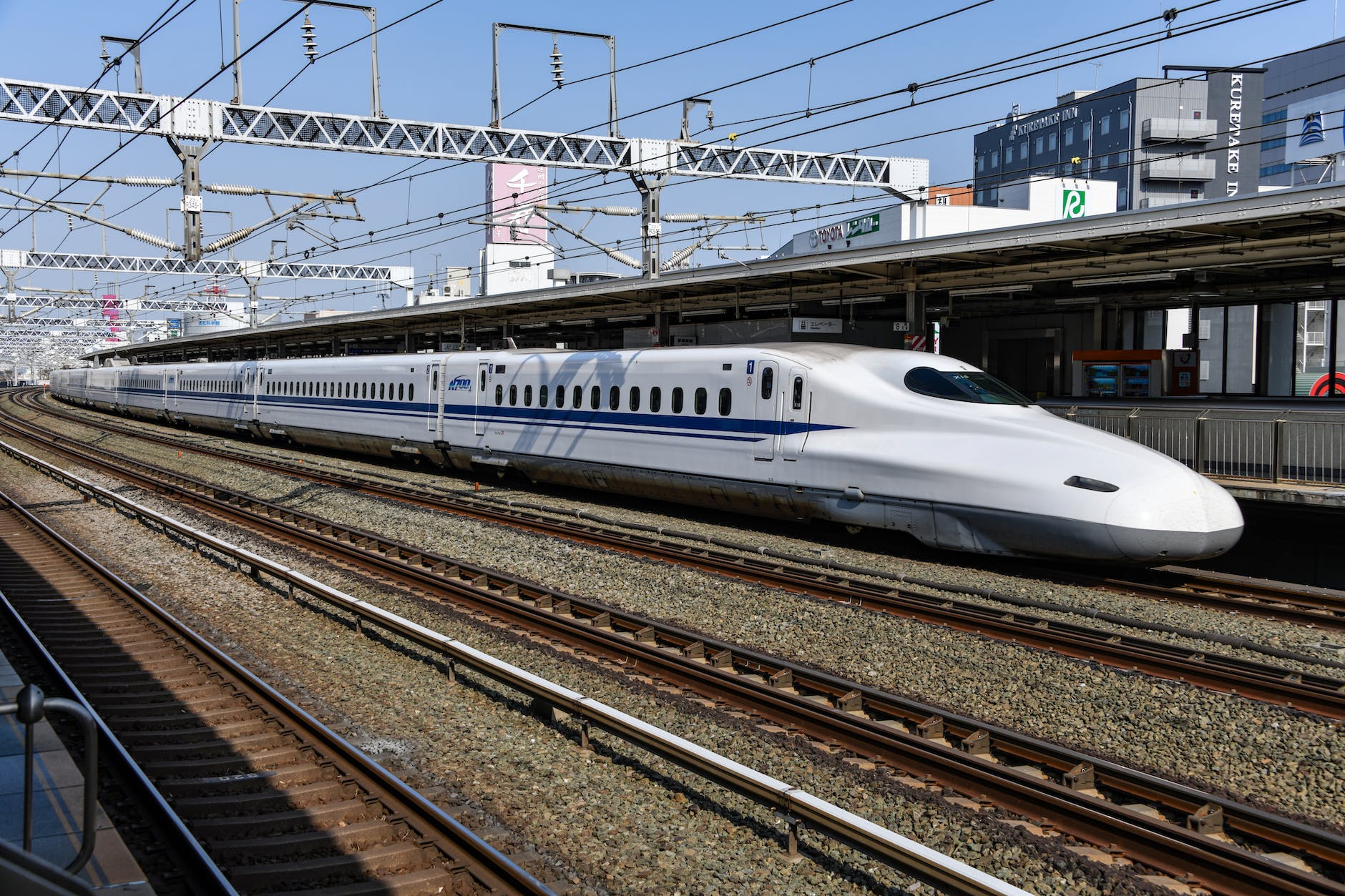
I remember the first time I saw in person this cleaner break between a city and rural areas. I had a chance to spend several days in Tokyo while in college. On one day, we took a train out of the city. As we moved at a high speed away from the city center, we suddenly moved from the denser city to fields. The same break could be seen from the air when flying in and out of the city.

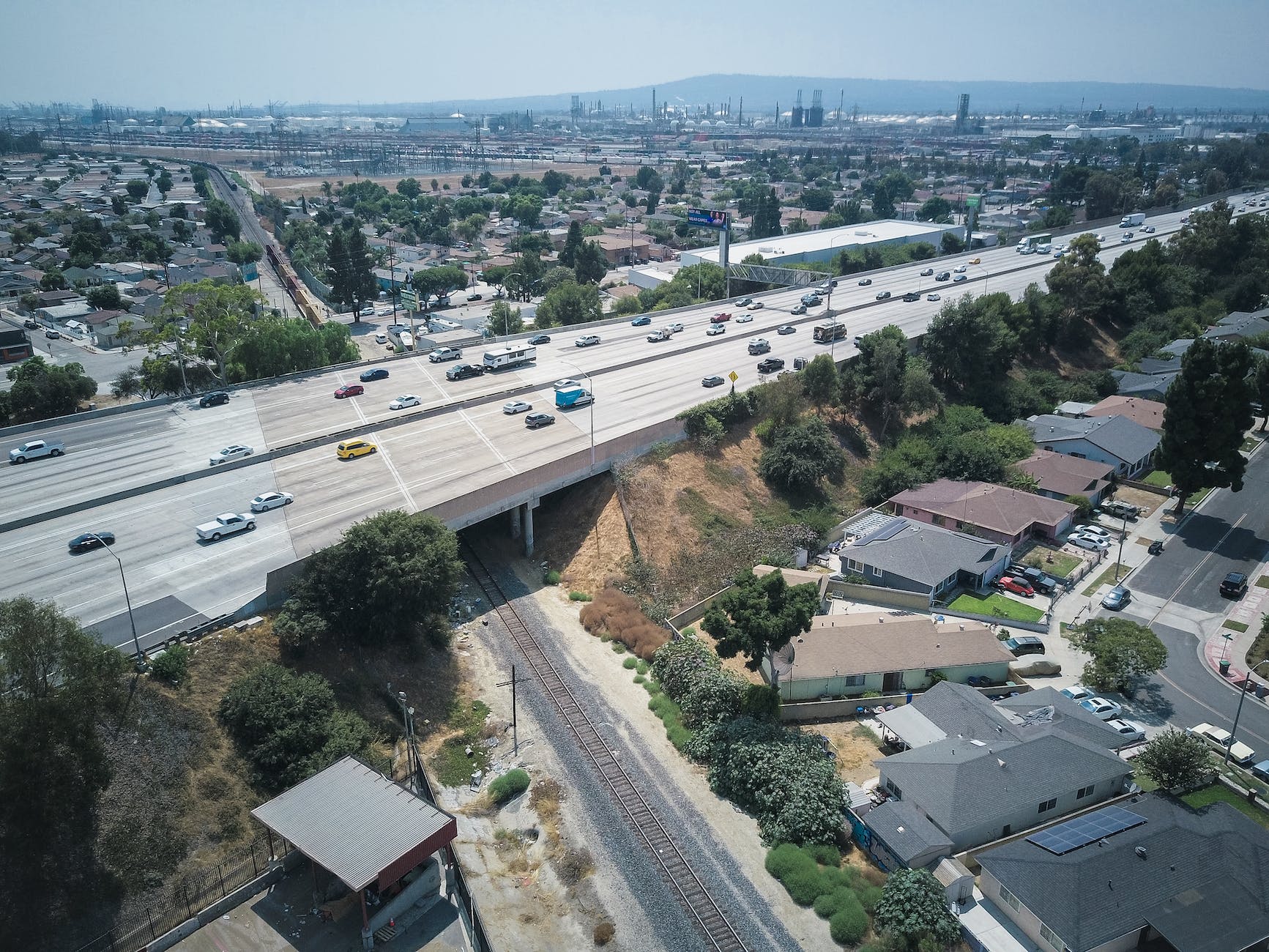
This is not typically the case in the United States where suburbs might stretch for dozens of miles from the city limits before finally dwindling out. Moving more people into denser locations would indeed free up land or freezing development in metropolitan regions within an established boundary would do the same.

I enjoy maps in the ground – and cite three examples

It is one thing to hold a paper map or look at a map in a book; it is another to encounter a map in the ground. In a recent trip to Holland, Michigan, I enjoyed seeing this map in the ground of a park overlooking Lake Michigan:

While the installation highlights the location of Holland, it also shows the size of Lake Michigan, one of the biggest freshwater lakes in the world.

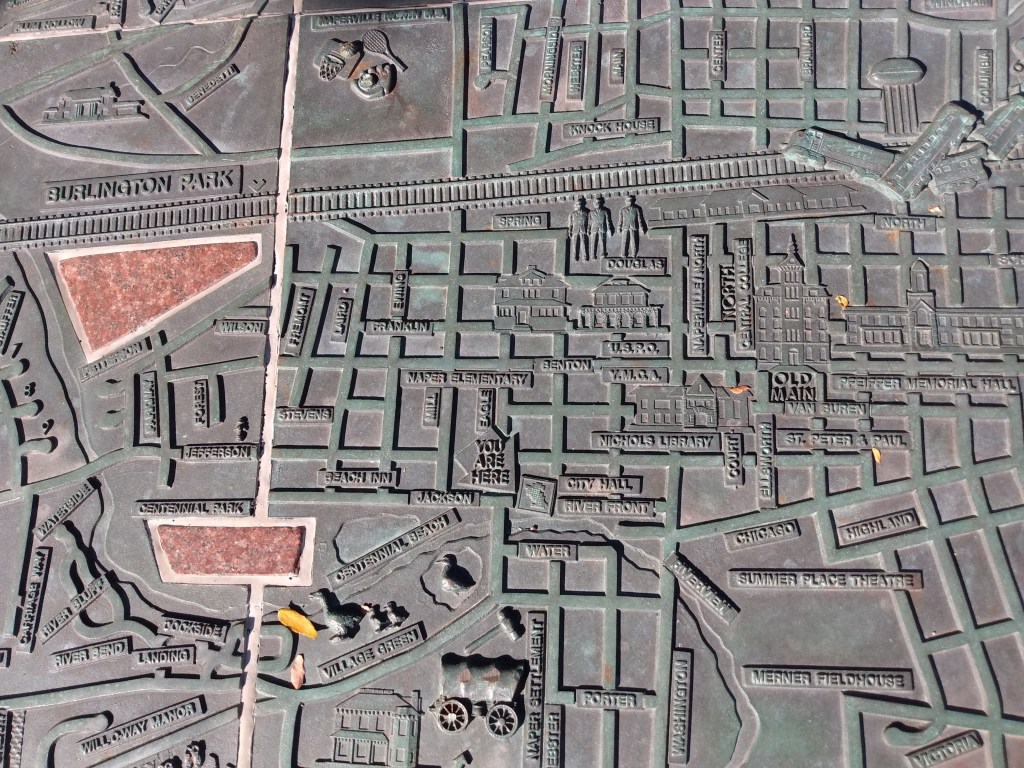
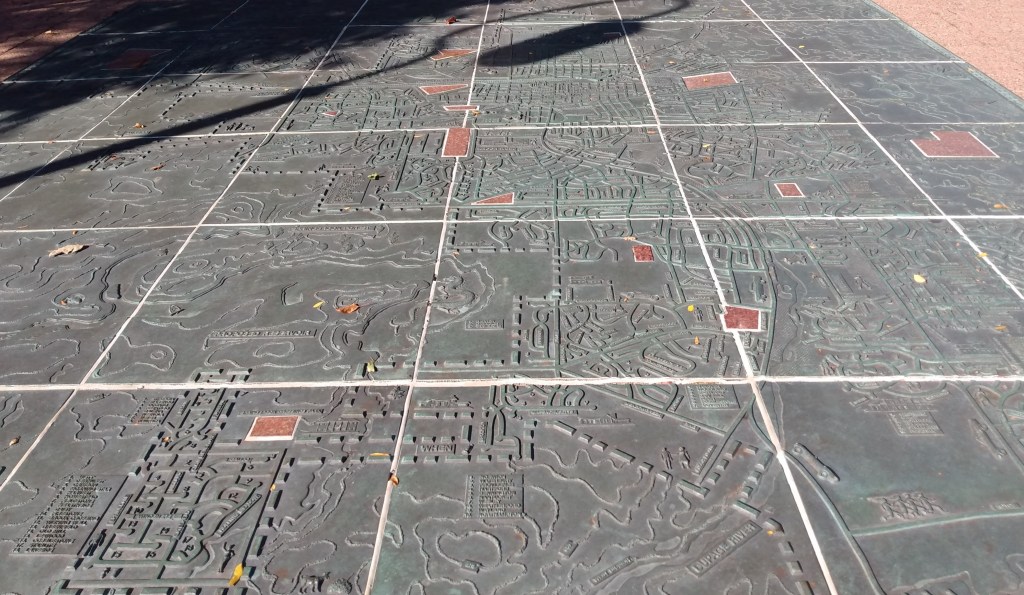
Here is another in-ground map, this time just southwest of the main library in downtown Naperville, Illinois:

The large map hints at the sprawling nature of the suburb while you can also see some of the details the community feels are important (see some of them in the close-up image of the downtown).

A third in-ground map that made a memorable impression of me as a kid was the Mississippi River installation on Mud Island in Memphis, Tennessee. To walk the vast length of the river, see important points along the way, and even play in the water was much fun.

To make the abstract map more concrete provides an opportunity to share places with a broad range of people passing by and help them better visualize the whole and its parts.

A marker of a certain kind of community: lots of Teslas on suburban roads

I believe I have seen a growing number of Teslas on local suburban roads. How much is this tied to the kind of community I live in plus the character and demographics of nearby communities? A few thoughts:

Photo by Matt Weissinger on Pexels.com
  1. Teslas are not cheap. There is not a big used market. People need money to purchase Teslas. (New cars are not cheap in the US overall.)
  2. Teslas are electric and electric car owners may have particular political and social patterns. This area has leaned slightly Democratic in recent national elections. As a company, Tesla itself may be more aligned with libertarian or conservative causes, but I do not see large numbers of other electric vehicles. (There are plenty of Prii.)
  3. Teslas are a particular status symbol. They are cool. Some have a cool matte finish or special trim levels. Particular suburbanites want to have one. (Particularly compare them to other “cool” suburban driving options, whether the latest SUV or a sports car.)
  4. The people here take a lot of shorter trips and/or have access to electric chargers. Even the vacation destinations of many in this area – whether Wisconsin or southwest Michigan – are within a single charge.
  5. They are available at local showrooms and dealers. One can go to a nearby suburban shopping mall and check out a Tesla.

If it is true that you can tell something about a community by looking at what cars are in parking lots or driveways, all of these Teslas say something.

Can a successful suburb have a thriving downtown and a stadium-driven mixed-use district?

With the Chicago Bears considering building in Arlington Heights, one village trustee expressed concerns that a sizable project would compete with the suburb’s successful downtown:

Photo by Philipp Silbernagl on Pexels.com

But, he said, “I’m going to tell you right now I’m not a fan of the site plan. And I hope this doesn’t blow up and ruin things for you in any way because I’m just one person sitting up here. But I have to be true to myself and true to my thoughts.”

Tinaglia, who founded his Tinaglia Architects firm in Arlington Heights in 1991, blasted the mixed-use transit-oriented development aspect of the Bears’ proposal, arguing the plans for restaurants, stores, offices, hotels, homes and more on 206 acres of the 326-acre property would detract from what is in downtown Arlington Heights.

“For a community that doesn’t have a downtown — that doesn’t have what Arlington Heights already has — that community would die to have this,” Tinaglia said. But he said he didn’t believe Arlington Heights’ current business owners could survive the competition from the kind of development being proposed.

Just how many entertainment centers can exist in the suburbs, let alone in one community?

Many suburbs would like to have a thriving downtown. Arlington Heights has one. It boosts the status of the community with its older buildings, current businesses bringing in residents and visitors, and possibly residents living downtown and also visiting local businesses and restaurants. Not all suburbs have downtowns; some never had them due to consisting of multiple suburban subdivisions joined together while others may have had a downtown that is now struggling or non-existent. The suburban downtown has had numerous challenges over the years – strip malls, shopping malls, driving and parking, big box stores, and more – so having a successful one is not something a suburb would lightly give up.

On the other hand, not every suburb has an opportunity to be home to a major sports stadium and all of the development around it. This is a new opportunity that could be worth a lot in terms of business activity and tax revenue, population growth, and status tied to being the home of an important football franchise.

It will be interesting to see if there is a compromise to be had here where both a downtown and a new mixed-use development coexist. Do they have to be in competition or can they serve different audiences?

Americans may move close to home to be near politically like-minded residents

How far are Americans willing to move to be in a political environment they are comfortable with? Fewer may move to other countries or other states compared to those who move within a county or region to find residents or communities with similar political views:

Photo by Element5 Digital on Pexels.com

“This idea of ‘red state versus blue state’ misses a great deal of heterogeneity within states, as well as clusters and spatial patterns that occur within states,” said Ryan Strickler, a political scientist at Colorado State University, Pueblo. “Instead, we’re seeing more of a micro level of political sorting.” …

[E]xperts say the more significant phenomenon is people moving within the same state where they can find others who are politically like-minded. These migrations aren’t about specific political outcomes like the Dobbs decision. Instead, they’re linked to social polarization. “There’s a lot of local reshuffling,” said Alexander Bendeck, a Ph.D. student in the Georgia Institute of Technology’s School of Interactive Computing.

In one of his current projects, Bendeck explores U.S. relocation patterns in the 2010s, using population migration data from the IRS to track the number of migrants between counties nationwide. Bendeck recognized the shift in migration from the coasts to the South or Midwest but also emphasized the effects of moving within metropolitan areas. Many natives of major Southern cities have moved out to the suburbs or to smaller cities. And the locals of those suburbs or cities move to more rural areas or even smaller cities.

But there’s a huge caveat to any migration data: It is impossible to attribute all instances of relocation, even within the same state, to politics. In fact, politics has not been a major factor why most Americans have moved in recent history, Strickler said. Instead, migration is more financially driven, whether people are seeking out a lower cost of living, better job prospects or proximity to family. 

I would be very interested in seeing more data on this micro-sorting within region. As noted in this piece, regions are often broken up this way: denser cities at the core vote more Democratic, far-flung suburbs vote more Republican, and in-between suburbs are more mixed. When people move within a region, how often do they end up in a community that aligns with their political sensibilities compared to their previous home?

One way to interpret this is that people are more tied to finances, jobs, and family within local places or geographies than to politics. Another way to put this is that Americans may express concerns about political trends, but they can often find more agreeable conditions not too far from where they currently live.

This highlights the importance of local government and politics even as there is a lot of attention paid to national politics. Even as state or national patterns may not be what individuals desire, they can rest assured that local communities or representatives share their positions. This could be related to the pattern where more Americans approve of their local Congressional representative than they approve of Congress as a whole.

The American difficulty in building and funding major infrastructure projects, California high-speed train edition

The cost and time needed to build a high-speed rail line in California keeps increasing:

Photo by David Dibert on Pexels.com

A New York Times review of hundreds of pages of documents, engineering reports, meeting transcripts and interviews with dozens of key political leaders show that the detour through the Mojave Desert was part of a string of decisions that, in hindsight, have seriously impeded the state’s ability to deliver on its promise to create a new way of transporting people in an era of climate change…

When California voters first approved a bond issue for the project in 2008, the rail line was to be completed by 2020, and its cost seemed astronomical at the time — $33 billion — but it was still considered worthwhile as an alternative to the state’s endless web of freeways and the carbon emissions generated.

Fourteen years later, construction is underway on part of a 171-mile “starter” line connecting a few cities in the middle of California, which has been promised for 2030.

Meanwhile, costs have continued to escalate. When the California High-Speed Rail Authority issued its new 2022 draft business plan in February, it estimated an ultimate cost as high as $105 billion. Less than three months later, the “final plan” raised the estimate to $113 billion.

This is not the first time this has happened in the United States. Many major projects, ranging from highway construction to tunnels to bridges, involve expanding timelines and budgets. Even though people may not care as much about these changes once the project is done and things work, the extra time and money comes from somewhere and can affect a lot of people.

There must be some major projects that are completed on time and on budget. Are these properly celebrated?

Tearing down what used to be starter homes and replacing them with McMansions

This sounds like what I found among teardowns in Naperville, Illinois: some desirable lots that used to contain starter homes now are home to McMansions.

Photo by Pixabay on Pexels.com

In each of these places (that last one is Austin), modest entry-level housing has been replaced over time by far larger and more expensive homes out of reach of most first-time home buyers. Neighbors sometimes sneer at such new additions as “McMansions” (but note the regional variation in McMansion architecture). I often hear from readers and residents during my reporting that it’s a shame the developers who built them tore down “perfectly good houses.”

This has consequences:

There is nothing inherently bad about small 100-year-old houses getting replaced by larger, modern ones (indeed, many planners, historians and economists would say there is something bad about insisting that communities must remain exactly the same forever). Tastes change. Consumer demands and demographics shift. Americans, on average, have become wealthier over time, capable of affording more housing than the typical family could three generations ago.

But the reality is that most communities effectively ensure that the only viable replacement for a starter home on expensive land is a new home that’s much larger and more expensive. That stance contributes to the affordable housing crisis. If communities struggling with it want to rebuild the entry-level end of the housing market over time, that will almost certainly require allowing a new generation of starter homes that look more like duplexes or condos, or small homes on subdivided lots.

Over time, the number of smaller homes in desirable communities or neighborhoods dwindle as property owners and new buyers want homes that reflect more current trends. Another way to think about this: the supply of starter homes or smaller homes is reduced in particular places (if it is already not that affordable because of the demand in desirable places) and it is not necessarily being replaced nearby, if at all within a region.

It may be worth noting that this teardown pattern does not happen everywhere in cities and suburbs or even in most places. While I have not looked at the issue systematically in the Chicago region, the evidence I have seen is that teardowns are taking place in larger numbers only in certain locations.

Removing a mound and landmark to supply 1800s development

The landscape of the Chicago region has a limited range of elevation. One of the natural mounds and an early landmark disappeared at the hand of a local company for local building:

Photo by Photo Collections on Pexels.com

Long ago, a mound jutted up from the flood plain flatlands surrounding the Des Plaines River in what is now a mostly industrial area on the southwest side of Joliet.

It was a significant feature and guidepost for travelers plying the Illinois waterway in the earliest days of recorded history, and a mainstay on maps for decades. Some speculated it was a creation of the mound building civilization that had populated these lands for centuries, best known for its world class city at Cahokia.

Subsequent digging didn’t turn up valuable artifacts, but instead revealed valuable gravel and sand deposited during the ice age, and a short-lived company made quick work of Mount Joliet, dispersing its innards for use in roadways and other projects as the modern development of the region began in earnest in the second half of the 1800s…

Another feature used by centuries of travelers in the area has survived to the present day. In fact, besides giving river navigators a guide point, Mount Joliet may have been one of the landmarks as well along the Great Sauk Trail, an ancient roadway connecting the Mississippi River to what is now the Detroit area.

According to another source:

The mound was destroyed when it’s clay contents were mined to make sewer tiles by the Drain Tile Manufactory of the Joliet Mound Company in the 19th century.

White European settlers to northeast Illinois altered the landscape when they moved into the region in the 1830s. They altered waterways, cleared trees and forests, drained swamps, dug up prairie, made plowable farmland, laid railroad lines, and created plats for sale and development. It does not sound like this mound was in the way of anything; rather, it offered raw material for objects helpful to new development.

I am grateful for maps and other efforts that show what metropolitan regions looked like before white European settlers and then prior to all of the urbanization and suburbanization of the 1800s onward. For example, I have seen multiple versions of this for Manhattan and New York City, discussing and showing streams, hills, and habitats that are hard to imagine in such a large city. Likewise, maps and narratives of the Chicago region highlight a verdant area at the southwest edge of Lake Michigan – that just happened to be an easy portage point to connect the Great Lakes and the Mississippi. Today, it is hard to imagine significant hills or mounds in a region where the flat grid predominates.

Suburban fiction and the unhappy white suburban families of Jonathan Franzen

There exists a common fictional narrative involving the American suburbs: the white nuclear family that looks successful from the outside – home, children who achieve, high-status communities, good jobs, well-educated, etc. – is internally falling apart. The suburban veneer is thin; when it is scratched away or falls off, the white suburban family is hurting. Such a story has been told in various forms for decades.

Photo by Kindel Media on Pexels.com

I have recently read several of the big novels of Jonathan Franzen. In both The Corrections and Freedom, the various members of white suburban families are not doing well and neither is the family as a whole. He switches perspectives from different family members (and some connected characters) who are experiencing both their own personal struggles and ones connected to their upbringing and those ongoing ties. The suburban homes are not happy ones; they are settings for unresolved conflicts, anger, and a sense that life should have turned out better.

Is this the same kind of suburban fiction that has been tread many times before? The settings have changed a bit – the suburbs of the 2000s are not exactly the same as the new mass produced suburbs of the 1950s, there is new technology available, etc. – and Franzen has a particular style. However, the stories felt similar to others in key ways.

(Disclaimer: I have not read all of Franzen’s work or his most recent novel set in the Chicago suburbs.)

Déjà vu and spatial resemblance

A recent study look at the connections between places and a sense of déjà vu:

Photo by cottonbro on Pexels.com

To investigate this idea in the laboratory, my team used virtual reality to place people within scenes. That way we could manipulate the environments people found themselves in – some scenes shared the same spatial layout while otherwise being distinct. As predicted, déjà vu was more likely to happen when people were in a scene that contained the same spatial arrangement of elements as an earlier scene they viewed but didn’t recall.

This research suggests that one contributing factor to déjà vu can be spatial resemblance of a new scene to one in memory that fails to be consciously called to mind at the moment. However, it does not mean that spatial resemblance is the only cause of déjà vu. Very likely, many factors can contribute to what makes a scene or a situation feel familiar. More research is underway to investigate additional possible factors at play in this mysterious phenomenon.

One thought in response as someone who studies places. We may as individuals not be always consciously aware of spatial arrangements or places. Particularly in today’s world, we may zoom by particular settings in cars or be in a lot of different spatial arrangements in a short amount of time. Yet, in each of these places we are taking in the setting and it is making an impression on us. It may not register at the time or we may not know what it means for us. But, it can influence our later experiences and interpretations of the world around us.