“We need a White House that is not for the tech billionaires, but for forgotten Americans,” he said.
“In that spirit, we should ask Americans — in rural communities, urban centers and hollowed-out factory towns — for their ideas of what to do with the space,” Khanna said.
This is an interesting comment as it contrasts that who have a lot versus those who are forgotten. Rather than note what these forgotten Americans do or do not have, they are instead linked to geographic areas. Three in particular: rural areas, the centers of big cities, and factory towns.
The primary residential and business space left out of this list is the suburbs. These areas are often assumed to be wealthy, full of people who have made it in American life. They have at least some major control of their own destiny. They may not be tech billionaires but they are not forgotten.
There are communities in the suburbs not doing well. There are suburbs that are more rural than urban, suburbs that experience similar issues facing urban centers, and suburbs that have lost important jobs ad have limited business activity. These struggling suburbs can sometimes be near wealthy suburbs.
And it could be interesting to see how such designations line up with survey responses from Americans regarding whether they feel forgotten and where they live.
A real estate agent might know a lot about neighborhoods or communities. Looking at the local marketing realtors do, I see that they claim to know about different suburbs. In particular, they have knowledge about the local housing market through what has sold and what has not. They can also talk about other aspects of the community, such as schools and nearby amenities.
If I go to websites like Zillow or Realtors.com, they offer neighborhood information with each property listing. This includes a map, walkability scores, ratings of local schools, other nearby listings and recent sales, and more.
But what does it take to know about a neighborhood? Who can accurately describe what it is like to live there or how the character of a place plays out? Does anyone offer insights from local residents? Do real estate agents live in the communities they sell in or have secondhand information from local residents and organizations?
This reminds me of two posts I put together years ago on how to learn about a suburb. There are lots of sources of information about communities and some of it is available online. But some of it is not. Talking to people or walking through a community or reading local histories can provide some insights that are harder to intuit online.
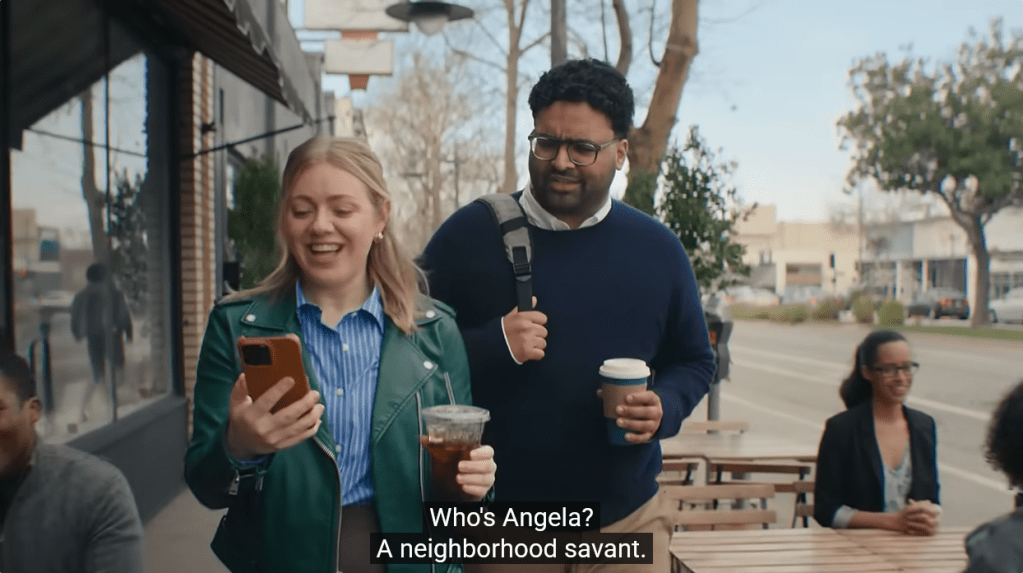
Who else might be a “neighborhood savant”? A local journalist, where they are still available. A local political official or a longstanding member of a community institution. A local historian. Residents who take an interest in and actively participate in their neighborhood.
“Libertyville will be featured quite a bit,” he said. All the business names were kept as is and some of the shopkeepers appear in the film, he added.
The village was to have been one of the locations for another of his holiday films, Charles said. That was delayed but filming for “Christmas at the Zoo” has been approved by the village and is planned for December.
“Libertyville has been on our radar for some time,” he said. “Having had a great experience shooting ‘Exes’ there, we’re happy to be coming back.”…
Local actors will be used in the film and Libertyville will be listed as an official filming location on the IMDb website.
With all these real shots of Libertyville, it appears the film does not say it takes place in Libertyville. From one Facebook post and a brief shot in the movie trailer, it appears the community in the film is named “Mill Creek.” According to Wikipedia, there are at least a few communities in the United States named “Mill Creek.”
I have wondered about whether filming in real locations matters for those watching a film or TV show. Couldn’t they just have found some establishing shots or used a studio to film? This is commonly done so how much does it matter that this was set in a real place that the film’s creators were familiar with? Perhaps the residents of Libertyville can watch and discuss and then compare what people who watch from elsewhere think.
I remember a time when a 40-year mortgage — and a 50-year adjustable rate mortgage — built some buzz back around 2006 and 2007 for people who were struggling to buy a home. It didn’t work out well if you had to sell when home prices collapsed.
The 40-year mortgage has a history going back to the early 1980s, according to an earlier report in the Detroit Free Press, part of the USA TODAY Network, when 18% fixed-interest rates were squeezing consumers out of buying homes. It never proved to be the most popular product…
Rocket Mortgage notes online that the Detroit-based giant offers a 40-year mortgage with the first 10 years being interest-only payments. These mortgages can be available for loan amounts between $125,000 to $2 million.
I wonder how many people apply for and receive 40 year mortgages.
Reading the reactions to the idea of a 50 year mortgage, I was struck by how much of the conversation was dominated by financial details. How much equity would a homeowner have after 20 years? When would the interest parts of the payment taper off compared to paying down principal? How would interest rates be different for a 50 year loan? I should not be surprised given how much homeownership is now seen in the United States as a financial investment. It is a tool to build wealth, perhaps the biggest tool most people will have.
But homes are about more than that. Americans have ideas about the virtues of owning a home compared to being a renter. A homeowner might feel differently and act differently regarding their property if they have a mortgage. Numerous neighborhoods and communities are structured around homeownership (such as many suburbs). Having a stable and affordable residence can help contribute to numerous positive outcomes.
Are we at a stage when public discussions about housing then are exclusively or are primarily about the finances of owning a home – which are certainly important – and not any influential factors that might encourage or discourage people from owning homes in the United States?
But to get around metropolitan areas in the United States almost requires using highways. Driving is required in most places and people might be able to avoid faster roads for specific destinations or shorter trips. However, completing a lot of trips – whether suburb to suburb or in and out of major population centers – will involve highway travel.
There are already numerous efforts to make highway driving safer. Vehicle features. Signs. Public service announcements. Traffic enforcement. Are there other methods to try or is this more of a question of public will – are people willing to change driving habits and our public infrastructure in order to reduce the number of deaths?
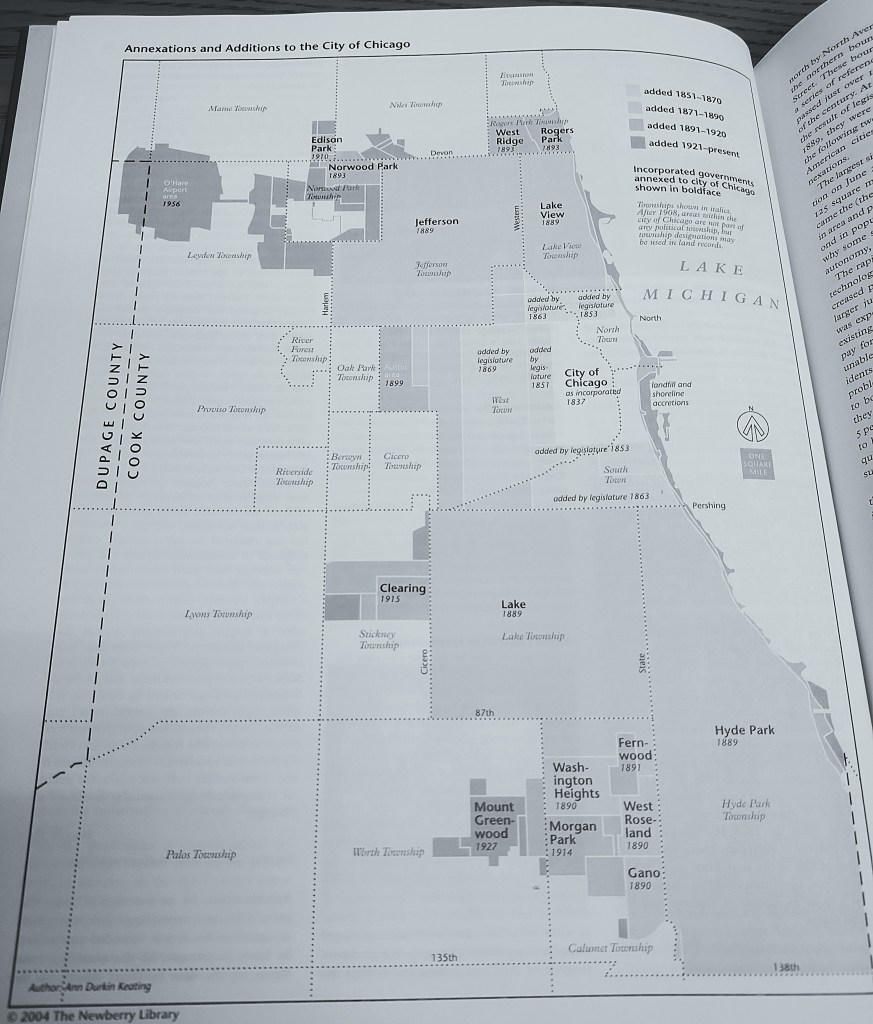
Chicago grew in a way that many American cities have grown: they annexed land and communities just outside their borders. Famously, New York City annexed Brooklyn in 1898 when the separate community across the East River was one of the most populous communities in the United States. But Chicago also had its share of large annexations that helped it add neighborhoods and expand to the borders it has today. The Encyclopedia of Chicago summarizes this process:
The Encyclopedia of Chicago (The University of Chicago Press, 2004), 22
For Chicago, the period of extensive annexations extended from 1851 to 1920. The largest annexation occurred in 1889, when four of five incorporated townships surrounding Chicago (as well as a part of the fifth) were annexed to the city. Most annexations to Chicago during these years came because Chicago offered superior services, from better water connections in the nineteenth century to better high schools in the early twentieth. Later, prior incorporations and suburban resistance to the power and urban complexity of Chicago halted the process.
As these suburban areas became part of the city, they received city services and became part of the larger city’s fabric. They added residents and structures. But they also have hints of suburban life. Row upon row of single-family homes. Strip malls and big box stores. Residents might drive more.
Such neighborhoods can be found in many American cities. Big cities are not just the dense downtowns with skyscrapers, major corporate offices, and certain cultural institutions. They include numerous residential, commercial, and industrial neighborhoods on their edges where the borders of municipal boundaries can blur.
The show’s audience of Millennials, coming of age in an era defined by consumption, learned to take their cues from celebrities. These role models accumulated traditional markers of wealth while also having fun subverting them: In their respective episodes of Cribs, the That ’70s Show actor Wilmer Valderrama highlighted red Solo cups and paper plates on display in a china cabinet, and Missy Elliott gestured to her decorative, seminude Greek statues, remarking, “Naked a-s-s all around the house.” The show featured nouveau riche celebrities who proudly referred to themselves as outsiders; the rapper Juelz Santana was still a “hood dude,” and the record producer Master P claimed that he’d come “from the ghetto.”
These scenes were designed for the average young viewer to enjoy, yet their appeal was offset by their unattainability. Even the celebrities themselves hadn’t always attained Cribs’ vision of the so-called good life. On occasion, the show constructed complete fantasies: Bow Wow and 50 Cent supplemented their car collections with luxury rental vehicles, and the singer JoJo presented her uncle’s lake house as her own. On camera, T-Pain and Missy Elliott admitted to staging their homes—with a frosted cake and a colony of goldfish, respectively—several hours before filming. These contrivances became so well known that, in 2009, the All-American Rejects guitarist Nick Wheeler spent much of his appearance mocking them. “I went down to Enterprise and picked up what they had,” he said, standing beside his Mitsubishi and Mazda sedans, before flaunting his notably sparse kitchen. “I didn’t just do this for Cribs,” he said, evoking an earlier episode in which Kim Kardashian insisted that the cookies on display in her kitchen were homemade, despite their striking resemblance to a popular prepackaged variety…
The secret of Cribs, though, was that even amid its less relatable moments, the show found a way for viewers to feel included in the fantasy: It taught the audience what to consume as well as why they should, by demonstrating how a person’s property—both its literal value and its aesthetic qualities—could define them. Viewers could seek to understand a celebrity’s personality by studying their domestic environment. “The subject of house furnishing is more important than is often realized,” said the Cribs companion book, explicitly articulating this connection:
Everyone is free to change his surroundings. Hence the furniture and the decorations of a house, and the condition of the house and grounds, are properly considered as index to the character of its occupants.
It sounds like one lesson is that the ways someone inhabits a space says a lot about them. Sure, some people have more resources to work with but decorating a home is about self-expression. The homeowner gets to narrate their choices and what they are trying to say about themselves. (Now I am wondering how often this happens when someone provides a house tour to someone visiting; is the focus on the residence or what the house says about the people living there?)
At the same time, I wonder if the size of the dwellings depicted and the amount of things within those spacious spaces affects viewers. I first read sociologist Juliet Schor’s book The Overspent Americanin graduate school. She argues that watching television shows helped shape what Americans expected from homes. If you watch a typical drama or sitcom, you tend to see people living in large residences with nice furnishings. With Americans watching a lot of television in the postwar era, they could consider the characters on television as a reference group. Rather than just looking at family or neighbors for what is normal or possible regarding housing and consumption, they could now turn to TV depictions of regular life. For example, how did those young adults on Friends afford those apartments and lifestyles? Did regular viewers of Cribs then envision larger homes for themselves?
I have not read any studies that look specifically at that question: did watching specific television shows directly affect choices about where to live? Broader data can look at the possible relationship between how many hours of TV people watched and their consumer choices. Did watching Cribs or HGTV or any number of shows that prominently feature well-appointed spaces change real behavior, and if so, how?
When churches and properties of the Catholic Church are sold, what happens to them? In the last few days, I saw two articles that highlight several of the possible outcomes. First, they can become homes for other congregations:
Local Catholic leaders tend to be grateful that others can use the space for worship and service. But it’s not always a smooth transition. Evangelical churches without experience with bigger facilities may not be ready for the upkeep. And local Catholic parishioners may feel the emotional sting of seeing their former sacred spaces dismantled and reused by other traditions…
Real estate broker Matt Messier, whose company Foundry Commercial has sold around 3,000 churches over the last 50 years, estimates that more than half of church properties—whether Catholic or mainline Protestant—get bought by a fellow faith group…
An ongoing study on Chicago churches by the University of Notre Dame researchers found the same. “The most common reuse of dedicated church buildings—not only Catholic church buildings—is reuse for another church,” said program director Maddy Johnson.
A Wisconsin religious community says it has completed the first known instance of a Catholic group returning land to a Native American tribe, hailing it as a move made in the “spirit of relationship and healing.”
The Franciscan Sisters of Perpetual Adoration announced the transfer in an Oct. 31 news release on its website. The community is located in La Crosse, Wisconsin, near the state’s border with Minnesota.
The sisters had purchased the land from the Lac du Flambeau Band of the Lake Superior Chippewa tribe in 1966 and used the property for its Marywood Franciscan Spirituality Center.
The sisters said they sold the property to the tribe for $30,000, the exact amount for which they paid for the land six decades ago. The modern sale price represented “just over 1% of [the land’s] current market value,” the sisters said.
The first set of outcomes is more common than the second. There are plenty of religious congregations who need buildings as constructing a new building is expensive – buying the property, erecting a building, etc. – and time consuming – it could take years to raise funds, obtain approval, complete the construction, etc. Given more recent discussion of colonialism and history, perhaps there will be more instances of religious groups giving land to Native tribes.
There are some guidelines in place regarding who the Church might sell to:
“Catholic bishops are required to protect former Catholic worship sites from what canon law calls ‘sordid use,’” said Notre Dame’s Johnson. “In addition, recent Vatican guidance has encouraged, where possible, proactively finding mission-aligned reuses. What this means for non-Catholic religious reuse of former Catholic sites is a point of debate.”
With the number of church closures in recent years and expected in the coming years, keep an eye out for research regarding what happens to properties, buildings, and congregations. My recently published look at how many congregations researchers can find online has implications for studying closed congregations and the fate of their properties.
Nearly every high school nickname in Illinois, and across the country, is a product of a local history. Your nickname, blandly innocuous or a 300-year-old derogatory insult toward indigenous people, is not special. More than 30 schools in Illinois currently claim Native American-related nicknames. There are also 36 schools that are Eagles, 29 that are Bulldogs and 29 that are Tigers…
Heritage and lore are often behind nicknames: Outside Champaign, the Bunnies of Fisher Jr./Sr. High School took their name from a century-old tradition, when players carried rabbit-feet. The DeKalb Barbs nod to DeKalb as the origin of barbed wire. In Brighton, Southwestern High School — honoring the area’s Native background without making a whole group of people a caricature — are Piasa Birds, a reference to the mythical creatures found painted into cliffs on the nearby Mississippi River.
Some of the best Illinois nicknames play off a town’s industry: The Rochelle Hubs honor Rochelle’s history as a travel junction, where rail lines and several interstates converge. The Cornjerkers of Hoopeston — home of the National Sweetcorn Festival — is another example of a team turning an insult (here, against corn farmers) into a point of pride. There’s a similarly defiant streak about Farmington Farmers and Coal City Coalers.
Discussions of changing the mascot often invoke this history:
“My first death threat I ever got as a legislator was after I filed that first mascot bill,” West said. “You hear, ‘If I see you crossing the street, I promise to forget how to use my brakes.’ My goodness — over a mascot! You are coming for their traditions, they say. Tradition is always the main argument. Finances too — how much it will cost to get new uniforms and so on. But the energy, and anger, in these conversations is about history.”
Local history is important to many communities. But there are also plenty of moments in history where communities make decisions to go different directions. As they consider external pressures and internal pressures, communities come together and discuss how they would like to respond. My research considered decisions about development but this could also apply to mascots. Have the times changed? How do newer residents in a community feel? What is the broader purpose of schools? The discussion may be about the name of the high school names bu tit likely invokes broader questions about how communities think about themselves and the world around them.
Of the examples of high school mascots provided in the article, the names highlighting a local industry are intriguing. What might this look like in the twenty-first century? The Office Parks? The Hospitalists? The Data Centers or Warehousers? The Drivers? New traditions could begin with names fitting more recent work and industry patterns.
By 1870 Chicago’s five thousand black residents lived in every ward of the city as well as numerous suburbs. Chicago had instituted some progressive policies during Reconstruction, including a civil rights law and, in 1874, an officially desegregated school system. After the collapse of Reconstruction, many blacks who had held political office in southern states relocated to Chicago in what observers called “the Migration of the Talented Tenth.” By 1893 Chicago’s black population was fifteen thousand, still just a small fraction of the more than million Chicagoans. Some blacks settled north of Chicago, near domestic service jobs in the suburb of Evanston, as well as on the near West Side. Many gathered in the neighborhood around Clark and Harrison Streets, on the south fringe of Chicago’s business district, an area that escaped the Great Fire of 1871 but was completely burned in 1874.
During the 1880s and 1890s, pushed by racism and pulled by their own preferences for living near black-led institutions, new black migrants were increasingly limited to Chicago’s Black Belt on the South Side. Extending just two blocks west and east of State Street, stretching south to Thirty-fifth Street and eventually Fifty-fifth, this narrow strip contained 56 percent of Chicago’s blacks in 1900, 78 percent, and 90 percent by 1930. (152-153)
This mirrors national trends. W. E. B. Du Bois discusses this in The Souls of Black Folkwhere he looks at what was possible during Reconstruction and then quickly disappears once that period ends. James Loewen argues in Sundown Townsthat after the movement of Black residents all over the United States after the Civil War, many communities in the United States by the late 1800s restricted Black people and other people of color from staying or living in their towns.
And Chicago is a particularly noteworthy example of this because of how strong these geographic lines become. By the early 1900s, violence, formal and informal policies, and social interactions reinforce these boundaries in such a way that Chicago is one of the most racially segregated cities in the United States by the end of the century.
But these boundaries were not always there. They do not have to be there in the future. Lewinnek argues they were the result of particular actions and conditions, including the efforts of working-class homeowners.






 Legally Sociable