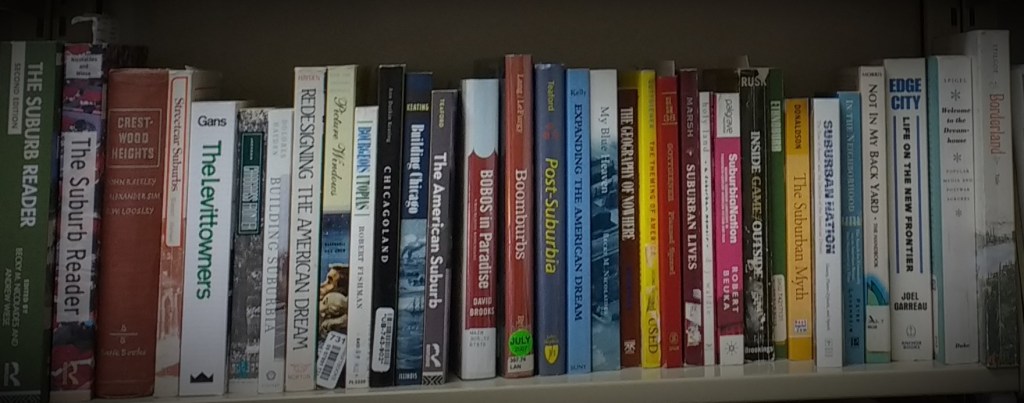
“Who sings the song of suburbia?” Part Three on screens (TV and movies)

Poets, as described by Jo Gill in The Poetics of the American Suburbs, and novelists, with two key works by Jurca and Beuka analyzing themes, wrote about the growing American suburbs. But, the cultural products most studied that depicted and commented on suburbs are television shows and films. Writers, actors, networks and production companies, and others helped bring the suburbs to many screens. Some of these products are well known – think the suburban sitcoms of the 1950s and 1960s that still influence scripts today or the Oscar winning film American Beauty – while others are more obscure.
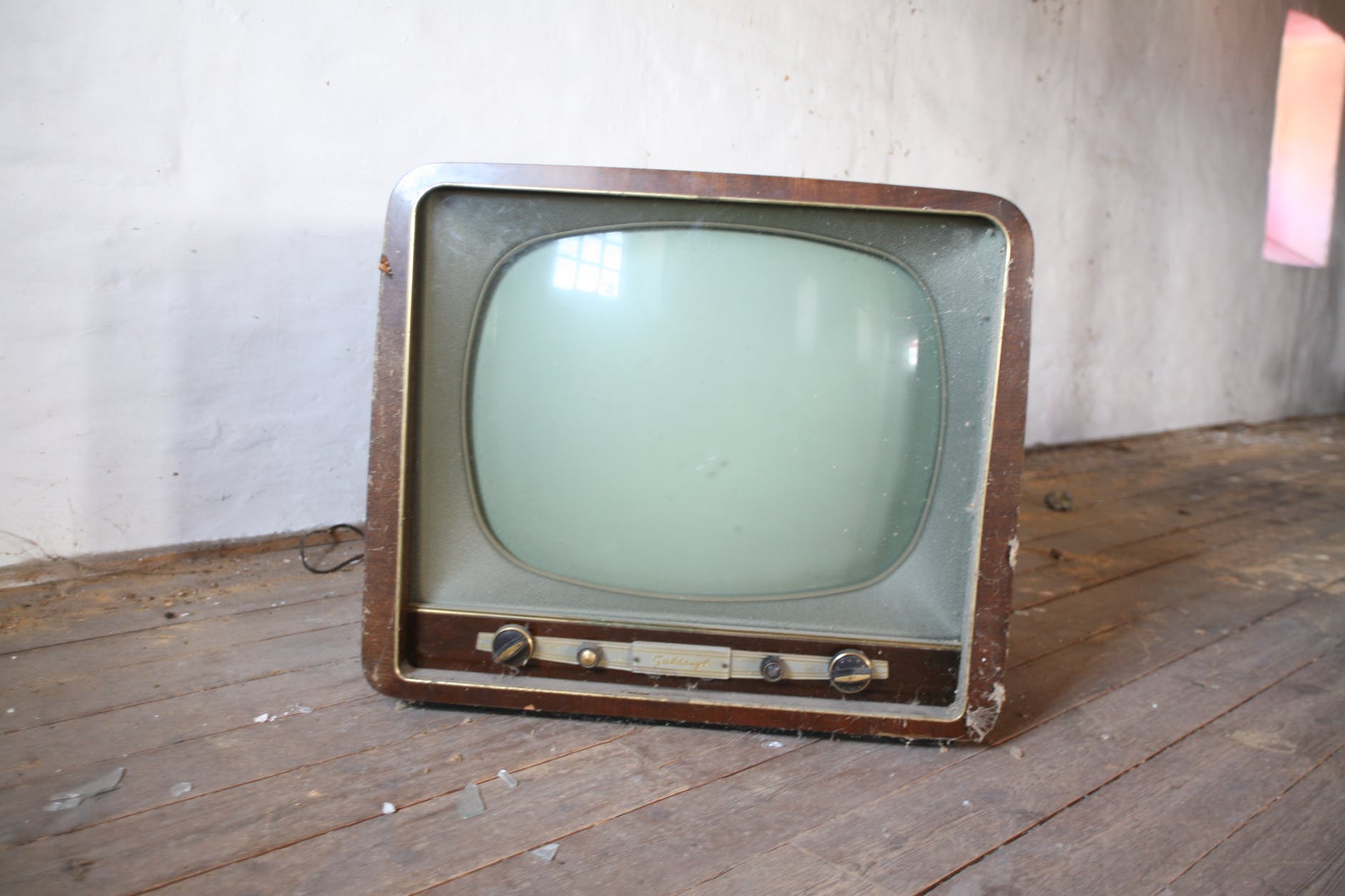
Photo by Rene Asmussen on Pexels.com

With all of this academic study, I want to highlight the work of one scholar whose work I have found very helpful in my own research on suburbs on screens. After that, I will list several other books that cover similar ground from different angles.

Lynn Spigel published Welcome to the Dreamhouse: Popular Media and the Postwar Suburbs in 2001. This collection of essays covers a lot of cultural objects but the work on television in fascinating. This includes analysis of the “fantastic” family sitcom, television for children, and how TV reruns affected the memory of viewers. After finding this book, I went back to her earlier 1992 book Make Room for TV: Television and the Family Ideal in Postwar America. In this book, Spigel considers how Americans discussed the role of this rapidly-adopted technology and how its presence affected everyday life. Combined with her numerous additional works on television and other parts of popular culture and her focus on gender, I would recommend anyone interested in screens and suburbs start here.

A number of other scholars have also addressed screens and suburbs. Here is the bibliographic information for several recent texts I have cited multiple times in my work:

Coon, David R. 2014. Look Closer: Suburban Narratives and American Values in Film and Television.

Huq, Rupa. 2013. Making Sense of Suburbia Through Popular Culture.

Rowley, Stephen. 2015. Movie Towns and Sitcom Suburbs: Building Hollywood’s Ideal Communities.

Vermeulen, Timotheus. 2014. Scenes from the Suburbs: The Suburb in Contemporary US Film and Television.

It makes sense that there is more academic work on television and movies and suburbs. As mass suburbanization picks up in the United States after World War II, television spreads rapidly and Americans quickly devote hours a day to watching the box in their living room. And television often had a particular angle on the suburbs, as the studies above suggest. While films had been around longer, the prosperous postwar era expanded their reach. Furthermore, while poetry or novels might appeal to a smaller slice of the American population, these mediums are clearly popular and accessible. Together, these dominant visual mediums in the twentieth century provided many images of the suburbs.

Tomorrow, I will come back to the question at the start of Gill’s book – “who sings the song of suburbia?” – and address studies of music about the suburbs.


“Who sings the song of suburbia?” Part Two on novels

Jo Giles’ book The Poetics of the American Suburbs is the first academic study I have seen of poetry about or influenced by the suburbs. And the questions posed at the beginning of the book are worth considering – see Part One.

Photo by Suzy Hazelwood on Pexels.com

At the same time, the study of other cultural products or works about the suburbs is alive and well. Today, I will profile several academic studies involving novels and the suburbs. Poetry and novels might be very different forms of writing yet there is some overlap in themes. Additionally, writing and reading a novel might be more similar to poetry than other forms of cultural products – like television and film – which I will address tomorrow. (On Thursday, I will address a fourth category of works – music – that some commonalities with poetry.)

Two scholarly books, in particular, are great introductions to examining novels about the suburbs. In the 2001 book White Diaspora: The Suburb and the Twentieth Century American Novel, Catherine Jurca looks at how such works discuss the homelessness of suburbanites even as they have succeeded by acquiring the suburban single-family house and the representation of suburbanites as a whole – “empty white people” – as a sociological fact. In the Introduction, Jurca puts these two narrative strands together:

this study examines the tendency in twentieth-century literary treatments of the American suburb to convert the rights and privileges of living there into spiritual, cultural, and political problems of displacement, in which being white and middle class is imagined to have as much or more to do with subjugation as with social dominance.

Robert Beuka’s 2004 book SuburbiaNation: Reading Suburban Landscape in Twentieth Century American Film and Fiction emphasizes the important role of place and how fictional works addressed both fixed ideas about suburbs and variation within suburbia. From the end of the introduction of the book:

For the authors and filmmakers I discuss, the suburbs present a reflection of both the values and the anxieties of dominant U.S. culture. Their various gazes into the heterotropic “mirror” of suburbia reveal a landscape both energized and compromised by manifold cultural aspirations and fears.

These two books cover a lot of literary ground: there are a number of novels that explicitly address suburban life. Additionally, their analytical lenses help shed light on important themes and patterns. There are lived suburban experiences and then there are narratives about suburban life. Both are important and influence each other – both facts and interpretation matter for a full understanding of suburban life.

More broadly, novels are important. Long, important books are signs of culture and sophistication. I am thinking of sociologist Wendy Griswold’s work on the development of a reading culture that requires a number of elements to come into place for producers to create novels and a reading public to consume them. Perhaps it is not surprising that a number of novels and the suburbs converged given the significant social change of suburbanization as well as the development of the American literary scene. For novels and fictional works to coalesce around certain themes involving suburbia matters.

Tomorrow, several of the important scholarly works I have drawn on that analyze television and film representations of the suburbs.

“Who sings the song of suburbia?” Part One

The Introduction to Jo Gill’s The Poetics of the American Suburbs starts with a question and conclusion from a 1989 essay by Philip Nicholson:

Photo by Pixabay on Pexels.com

“Who sings the song of suburbia? Where is its poet?” In his conclusion he answers his own question firmly and in the negative: “There is no official school or philosophy of suburban culture; just as there is not poet, artist, or sculptor to present its voice, its face, or the dimensions of its imagination” (206, 208). (Gill 2013:1)

Before I go on to read the entirety of Gill’s text, these are provocative questions about who speaks for the suburbs and whether there is a specific suburban culture. I will offer a few thoughts on these questions today and then in subsequent posts highlight several scholars whose work I appreciate in helping to answer these questions regarding cultural products and suburbs.

The question of who speaks for the suburbs is a fascinating one. Particularly in the postwar era, the suburbs are often discussed as a mass of largely white residents flocking to new subdivisions. Is there anything interesting about this mass? Later academic works help explain important variations across suburbia – like Andrew Wiese’s Places of Their Own or My Blue Heaven by Becky Nicolaides – but it was relatively rare to even get in-depth studies of suburban life – such as The Levittowners by Herbert Gans or The Moral Order of the Suburbs by M. P. Baumgartner – as it was happening. This mass was critiqued from numerous sides for its conformity, consumerism, and exclusion, among other issues.

There is indeed a specific suburban culture. The particular way of life connected to the American suburbs involves single-family homes, an emphasis on family life, driving, exclusion, middle-class expectations and lifestyles, a preference for local government, and proximity to nature. See my seven posts on Why Americans Love Suburbs. But, I suspect this is not the target of Nicholson’s question. What great cultural works have come out of the suburbs or what ideas and works have been created with a suburban ethos? A typical look at this might instead emphasize the consuming nature of suburbs where suburbanites take in culture from elsewhere rather than focusing on what is produced in suburban settings. And if culture is produced in the suburbs, is it worth considering or is it tacky and low-brow?

Tomorrow, I will continue the discussion of academic work that examines cultural products and suburbs by focusing on works that I have drawn on in my own research on this topic.

Miming playing an instrument is not an easy task

My academic department recently put together a lip sync video of “Blue Christmas.” For part of my time, I played the alto saxophone.

I first took up the instrument in middle school and played regularly through college in band, marching band, and pep band. Even with this familiarity, miming playing a song was difficult. I did not know what key it was in. I could move my fingers to the music and go up or down when needed but this does not mean I was close to the right notes. As a musician, it felt strange. (Yes, if I had a little more time I could have figured out the key of the song and transposed for the saxophone.)

I have thought about this numerous times before with television shows and movies when they depict people playing instruments. Since I play piano and can strum a few guitar chords, these performances especially catch my attention. For piano, they often show separate shots of playing the keys and the person sitting at the piano with their hands hidden. For guitar, you can sometimes see which chords are being played or see the strumming patterns. But, this too can be hidden or obscured.

All of this reminds me that musicians like the Beatles sometimes had to mime playing their instruments on television because of particular rules. In these situations, I assume professional musicians with all of their training could play without sound. In music (and much of the rest of life), practice makes perfect, even if it is not a full performance.

Perhaps the normal viewer does not think about this much. This may matter more in films where music is at the heart of the story but if you do not watch too closely or the shots do not really show much, any issues may not be noticeable. The music generally sounds fine, regardless of what the musicians on screen is depicted as doing. And if people want to see musicians play, there are many fine music videos and recorded performances available for viewing. Still, this ended any dreams I might harbor of adding saxophone to numerous lip syncing videos – I will need to leave that to the professional musicians and cinematographers.

86% of global respondents agree to quadruple-barreled question about the world after COVID-19

According to Ipsos, a significant majority of people around the world want life to be better in 2021:

Globally, 86% of all adults surveyed agree that, “I want the world to change significantly and become more sustainable and equitable rather than returning to how it was before the COVID-19 [crisis]”. More precisely, 46% strongly agree and 41% somewhat agree with that proposition, while 14% disagree (10% somewhat and 4% strongly).

Survey questions are supposed to address one issue per question. The question above is trying to get at a general question – do you want the world to be better after COVID-19 – but it adds several dimensions to this question. I count four:

  1. “change significantly”
  2. “become more sustainable”
  3. “become…more equitable”
  4. “rather than returning to how it was before the COVID-19.”

When people agree with this statement, which of these four or how many of these four are they agreeing to? One could want significant change but not care much about sustainability. Or, someone could be in favor of more equitable but not necessarily want much change.

With all of these issues conflated, the general question might be answered. Yes, citizens of the world want a better world in the future. See the summary statement within the report:

But, the question offers no insights and perhaps even muddles things more regarding which aspects of the world should be better. Do people care about equity? Sustainability? Change? A new start? This question does not help in this regard.

The most popular posts of 2020

With the start of 2021, here on thoughts on the top five posts of 2020 on LegallySociable:

Photo by Markus Winkler on Pexels.com
  1. Demolish a vacant mall anchor store, build new apartments. This post about possible changes to the Fox Valley Mall in Aurora, Illinois had the most views. The local aspect of the story hints at the local dimensions of this list: #1, #4, and #5 had specific mentions of nearby suburbs.
  2. New York City, Los Angeles on different COVID-19 trajectories. With much written about COVID-19’s effect on cities, this post from March 2020 hints at the different ways COVID-19 played out in different communities. This is still a story to watch in 2021.
  3. Designing your own Peytonville, Part 1. The Peytonville commercials started in Fall 2019 and I wrote five posts about specific aspects of the ads. The first one was the most popular.
  4. When protests make it to the wealthier suburbs, this means… The protests of 2020 took place in many communities, including suburbs. This post discusses the implications of protests moving to wealthier suburbs that are not used to protests.
  5. How garbage is moved out of suburbs. Posted just a few days ago, this one looked at the garbage infrastructure in suburban areas but likely received a lot of views due to local disagreement about the possible waste transfer station.

All of these popular posts had something to do with place. This is a primary focus of this blog with a particular emphasis on western suburbs of the Chicago region. The top five posts either involved suburbs or cities. Even as 2020 renewed focus on both locales – with effects from COVID-19 and its effects, police violence and protests, and national and local politics – I would argue that place and communities still do not receive enough attention. My published research attempts to tackle several of these dimensions. It is hard to predict what exactly will be worth posting about in 2021 but I do know I will continue to focus on places.

The Simpsons portrayed a (rare?) comfortable working-class family life

If television helps provide viewers reference groups to compare themselves with, The Simpsons suggests working-class Americans can have a decent life:

Photo by Jonathan Petersson on Pexels.com

The 1996 episode “Much Apu About Nothing” shows Homer’s paycheck. He grosses $479.60 per week, making his annual income about $25,000. My parents’ paychecks in the mid-’90s were similar. So were their educational backgrounds. My father had a two-year degree from the local community college, which he paid for while working nights; my mother had no education beyond high school. Until my parents’ divorce, we were a family of three living primarily on my mother’s salary as a physician’s receptionist, a working-class job like Homer’s…

The Simpsons started its 32nd season this past fall. Homer is still the family’s breadwinner. Although he’s had many jobs throughout the show’s run—he was even briefly a roadie for the Rolling Stones—he’s back at the power plant. Marge is still a stay-at-home parent, taking point on raising Bart, Lisa, and Maggie and maintaining the family’s suburban home. But their life no longer resembles reality for many American middle-class families.

Adjusted for inflation, Homer’s 1996 income of $25,000 would be roughly $42,000 today, about 60 percent of the 2019 median U.S. income. But salary aside, the world for someone like Homer Simpson is far less secure. Union membership, which protects wages and benefits for millions of workers in positions like Homer’s, dropped from 14.5 percent in 1996 to 10.3 percent today. With that decline came the loss of income security and many guaranteed benefits, including health insurance and pension plans. In 1993’s episode “Last Exit to Springfield,” Lisa needs braces at the same time that Homer’s dental plan evaporates. Unable to afford Lisa’s orthodontia without that insurance, Homer leads a strike. Mr. Burns, the boss, eventually capitulates to the union’s demand for dental coverage, resulting in shiny new braces for Lisa and one fewer financial headache for her parents. What would Homer have done today without the support of his union?

The purchasing power of Homer’s paycheck, moreover, has shrunk dramatically. The median house costs 2.4 times what it did in the mid-’90s. Health-care expenses for one person are three times what they were 25 years ago. The median tuition for a four-year college is 1.8 times what it was then. In today’s world, Marge would have to get a job too. But even then, they would struggle. Inflation and stagnant wages have led to a rise in two-income households, but to an erosion of economic stability for the people who occupy them.

This critique hints at broader patterns of how television depicts the working class. The 2005 documentary Class Dismissed: How TV Frames the Working Class discusses how television tends to minimize the difficulties of working class life. The Simpsons fits some of these patterns: Homer still somehow keeps working despite his mistakes and anti-intellectualism, the family does not really get ahead, and the family seems happy-go-lucky. Shows with working class characters rarely challenge the economic and social systems that constrain working class Americans.

Similarly, The Simpsons falls into the mold of many sitcoms in television history where there are happy endings and the characters end with good relationships. Despite all the controversy about the show in its early years, the show is at its heart a typical sitcom. While the show does poke fun at many people and aspects of American life, at its basis is a loving nuclear family living in a single-family home with Homer having a steady job. The Simpsons is not a critique of working class life in the United States. Perhaps the portrayal of Mr. Burns best critiques the systems that keep the Simpsons in place.

One place for wiggle room in this critique may be the location of Springfield. The show has been very careful to not reveal where Springfield is within the United States. Homer’s income might be meager but cost of living does differ by region.

Selling the perfect bookshelf to Zoom users

With all the videoconferencing taking place during COVID-19, the business of selling books to people for their backdrop picked up:

Books by the Foot, a service run by the Maryland-based bookseller Wonder Book, has become a go-to curator of Washington bookshelves, offering precisely what its name sounds like it does. As retro as a shelf of books might seem in an era of flat-panel screens, Books by the Foot has thrived through Democratic and Republican administrations, including that of the book-averse Donald Trump. And this year, the company has seen a twist: When the coronavirus pandemic arrived, Books by the Foot had to adapt to a downturn in office- and hotel-decor business—and an uptick in home-office Zoom backdrops for the talking-head class.

The Wonder Book staff doesn’t pry too much into which objective a particular client is after. If an order were to come in for, say, 12 feet of books about politics, specifically with a progressive or liberal tilt—as one did in August—Wonder Book’s manager, Jessica Bowman, would simply send one of her more politics-savvy staffers to the enormous box labeled “Politically Incorrect” (the name of Books by the Foot’s politics package) to select about 120 books by authors like Hillary Clinton, Bill Maher, Al Franken and Bob Woodward. The books would then be “staged,” or arranged with the same care a florist might extend to a bouquet of flowers, on a library cart; double-checked by a second staffer; and then shipped off to the residence or commercial space where they would eventually be shelved and displayed (or shelved and taken down to read)…

Located in Frederick, Wonder Book’s 3-acre warehouse full of 4 million books is a short jaunt from the nation‘s capital. While the company ships nationally, it gets a hefty portion of its business from major cities including Washington. And, over the past two decades, Books by the Foot’s books-as-decor designs have become a fixture in the world of American politics, filling local appetite for books as status symbols, objects with the power to silently confer taste, intellect, sophistication or ideology upon the places they’re displayed or the people who own them…

Another force at work, however, was the rise of the well-stocked shelf as a coveted home-office prop. When workplaces went remote and suddenly Zoom allowed co-workers new glimpses into one another’s homes, what New York Times writer Amanda Hess dubbed the “credibility bookcase” became the hot-ticket item. (“For a certain class of people, the home must function not only as a pandemic hunkering nest but also be optimized for presentation to the outside world,” she wrote.) And while Roberts makes an effort not to infer too much about his clients or ask too many questions about their intent, he did notice a very telling micro-trend in orders he was getting from all across the United States.

A lot could be said about books as status symbols. In certain circles, books imply a certain level of education, curiosity, and acquisition. Books and refinement and culture go together. Just having the books present is meant to impress in the same way a flashy car might be impressive driving down the street or the same way a McMansion looks to impress people passing by with its facade.

Think about the supply side of these books. There are companies that can acquire many many titles for relatively cheap. They can store all of these books until someone is willing to pay a decent price to put those books in their spaces. These books with all of their accumulated knowledge and status are simply another commodity that can be moved around to boost someone’s status when needed. And when COVID-19 ends or video conferencing slows down? The books can be discarded until needed again as a status symbol.

An interesting contrast would be between certain commentators and networks. I have seen at least a few bookshelves behind sports commentators. They often have a few books but also more prominently features sports equipment or trophies. The bookshelf is not just about education; the books are mixed with symbols of achievement or fandom.

Without asking how the books in the backdrop were acquired, viewers or other participants might ask about favorite books or how many books have been read. I have been asked this multiple times in the last few years, whether with bookshelves in my office and at home. It could be interpreted as an invasive question – taken as a challenge about whether the books are just there as status symbols – or provide an opening for the person to explain more about their reading (and the connected education and status) and/or share about books that really matter to them.

One expert says roughly 25% of shopping malls will survive

Shopping malls were in trouble before COVID-19 but add that in and experts suggest many malls will need to shut down or transform:

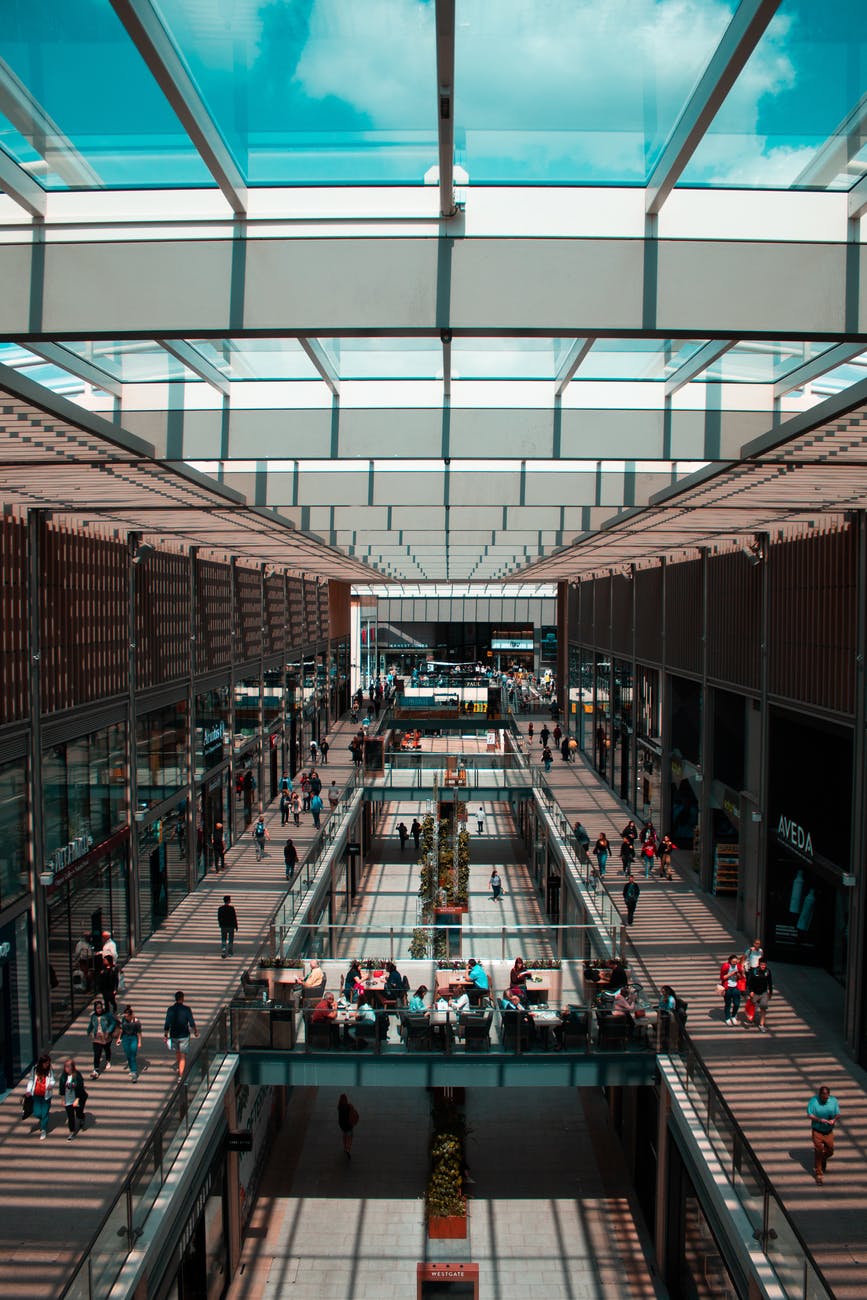
Photo by Laurentiu Robu on Pexels.com

Of the roughly 1,100 malls left in America, Kniffen believes only 278 are viable in the post pandemic world where online shopping will reign even more supreme. These would be the best of the best malls — or “A” malls as experts call them — that are in densely populated areas and target higher income shoppers…

The pandemic has just sped up the day of reckoning for vast stretches of zombie retail real estate. America had a glut of retail space before COVID-19, with twice as many square feet dedicated to shopping as any other country in the world. Retail is oversupplied by six square feet per capita compared to Europe, according to the International Council of Shopping Centers for U.S. merchants, a New York-based retail trade group…

In the U.S., 20%-25% of retail spaces will become vacant in the next few years due to the pandemic, Crowe estimates. Half of the malls in America will disappear over time, said Najla Kayyem, senior vice president of marketing for Pacific Retail Capital Partners, a California-based retail investment and management company

In the end, the concept of a community gathering place known as a mall still makes sense, experts believe. But the days of malls simply being stuffed with pizza places, apparel stores and various kiosks are over. COVID-19 hasn’t killed the mall, rather accelerated its rebirth into something far more useful for the modern era.

Such changes could have wide-ranging effects:

  1. This could produce nostalgia for the era of thriving shopping malls. Imagine a lot more television shows and movies portraying life between the 1960s and 2000s featuring the shopping mall as something from a bygone era.
  2. If many malls need to close, what happens to all the debt involving these properties? Someone will be on the hook for this though perhaps some of the problems could be averted if the pace of closings is slower and some malls are reinvented.
  3. Where will people go to gather? While shopping malls were never public spaces, they did provide space for people to be around each other.
  4. This will likely affect different communities in different ways. Shopping malls in wealthier areas will likely have a better chance of survival – continuing to bring in revenue for communities – while malls in other communities will close and communities will struggle to fill the land.
  5. As is noted in the article, this presents a lot of redevelopment opportunities. Will there be a common approach across shopping malls that everyone tries to copy or will this look different from mall to mall?

Continuing suburban life next to a Karen

The suburbs often operate under a code of moral minimalism. But, when open conflict does occur, it involves race, and it goes viral, how do suburban residents move on? A case from Montclair, New Jersey involving a reaction to the construction of a small patio:

Photo by Pixabay on Pexels.com

“It shouldn’t have started any conversation,” Norrinda replied. The Hayats spent most of the summer hoping the conversation would die out, if she was being honest. In the end, they didn’t write back to the people vowing to curse Schulz on their behalf; they didn’t take that discount at the restaurant. They chose not to cooperate with the prosecutor. “Personally, I think if [Schulz] had been prosecuted and found guilty in any way, even just paid a $500 fine, I think this would have gone away for her a lot faster,” suggested a Montclair resident who had tracked the situation…

Fareed posed a question in one of our talks: “White supremacy that’s alive and well and a part of all of us,” he said, “and the question is, How much of it are we going to reject? And how much are we willing to sacrifice ourselves in order to continue to move forward?” He asked it from an intellectual distance, as if he were delivering closing arguments or posing a question to his class. But at close range, the question simply is, Would my neighbors step up to defend me again? And will they continue to want to have this conversation about race now that the immediate drama is over?…

As for Schulz, Norrinda thought she once saw her in the grocery store. Fareed told their boys they needed to be careful with the balls in the yard. He doesn’t want things to escalate. They finally have peace. Everyone wants it to stay that way.

But sometimes, well, often, when he’s standing in his house, looking out over the fence, he sees Schulz in her yard, or even just the empty yard, and it hits him. Just for an instant. Maybe it was silly or naïve or too optimistic, but there was an expectation that in Montclair he could be aware of the reality of being Black in America without having to confront it or acknowledge it in his daily life. But now, “we do actively acknowledge it,” he said. “It’s just a reminder of that reality.”

The American suburbs are built in part on a legacy of exclusion. Yet, racial incidents in wealthier suburbs might be rare and so surprising when they do occur (see other examples) for multiple reasons:

  1. There are relatively few interactions between wealthier suburbanites and Blacks and Latino neighbors. If wealthier communities have policies, housing, and character that discourage certain people from living in the community, there are fewer opportunities for being neighbors or regular interaction.
  2. As I noted in the introduction to the post, moral minimalism suggests open conflict in suburbs is undesirable. Instead, conflict is mediated through other actors or institutions such as schools.
  3. As the article notes, wealthier communities would often say they open to diversity. But, given #1 and #2 above, this does not mean they are really welcoming of residents different than the majority.

Even without the viral incident/open conflict, this does not mean suburbs are open to all. Technically, yes. In practice, not really.