For some in the city’s cultural community, the demolition of the historic grain silos represents a visual gut-punch. The structures — icons of urban decay as they sat empty for nearly five decades — have been a popular backdrop for filmmakers, musicians and skyline photographers and served as a canvas for many graffiti artists who ignored the “No Trespassing” signs. The silos even appeared in the 2014 movie Transformers: Age of Extinction…
Whether you think of them as eyesores or historically significant structures, the Damen Silos will soon vanish from the Southwest Side’s skyline. By the end of last week, a squat building along Damen Avenue had been reduced to rubble. Heneghan Wrecking’s crews were working next to the tall silos, where the noise of a jackhammer rang out. Workers sprayed water to prevent clouds of dust from filling the air.
“We are extremely disappointed about the demolition,” said Kate Eakin, managing director of the McKinley Park Development Council. “It represents a gross lack of imagination about what the site could be, as well as failures of government at several levels to communicate with each other.” Eakin’s local neighborhood group hoped to see the site transformed into a music venue and park that could host festivals. Other grain silos have been repurposed in similar ways: An art museum fills a former silo in South Africa, while Minneapolis left a silo standing in the middle of a popular tourism district…
“The Damen Silos are among the last remaining reminders of the agricultural trade that literally built the city,” said Tom Leslie, an architecture professor at the University of Illinois at Urbana-Champaign. “Losing the Damen Silos means yet another lost opportunity to celebrate the city’s history as the center of agricultural trade.”
This single case hints at multiple interesting questions communities consider. At what point does an abandoned building or property become worth preserving? Which buildings can or should be repurposed for cultural or recreational use? Who should make these decisions and who can or should fund decisions?
But this case also involves ruins, industrial ones at that. This is a different kind of case than a once opulent theater or a once thriving neighborhood. How many industrial sites in the United States are preserved? There would be no shortage of such sites across American cities, particularly in the Midwest and Northeast.
For cities and communities in the United States, growth is good. It signals progress, status, new development. To be flat in population or to lose residents hints at problems or failure.
Throughout the history of the United States, the growth rate each decade has been over 10% for every decade except for 4 (1930s, 1980s, 2000s, 2010s). The population growth came through births and immigration. This population growth means many communities could grow. Some places might lose people – such as several prominent cities in the second half of the twentieth century – but there was growth in many places.
So if population growth across the United States slows, how can many cities, suburbs, and metropolitan areas also grow? There will be fewer people to go around. This could lead to some different outcomes:
There will be clearer “winners” and “losers” in population.
Communities and commentators could adjust their image of how much growth is needed. They could adjust their expectations down.
Americans could decouple population figures from their ideas about quality of life. Perhaps population change has little relationship with whether communities are doing well.
My guess is that #1 would lead the way as people are used to growth and the perceived benefits that go with it. #2 and #3 could happen but would take time as people adjust to different realities where growth is more limited and fewer communities can expand in population.
And if population growth is harder to attain, what might communities and governments do to try to encourage more of it? Bigger incentives? More advertising? Promoting particular amenities or quality of life concerns?
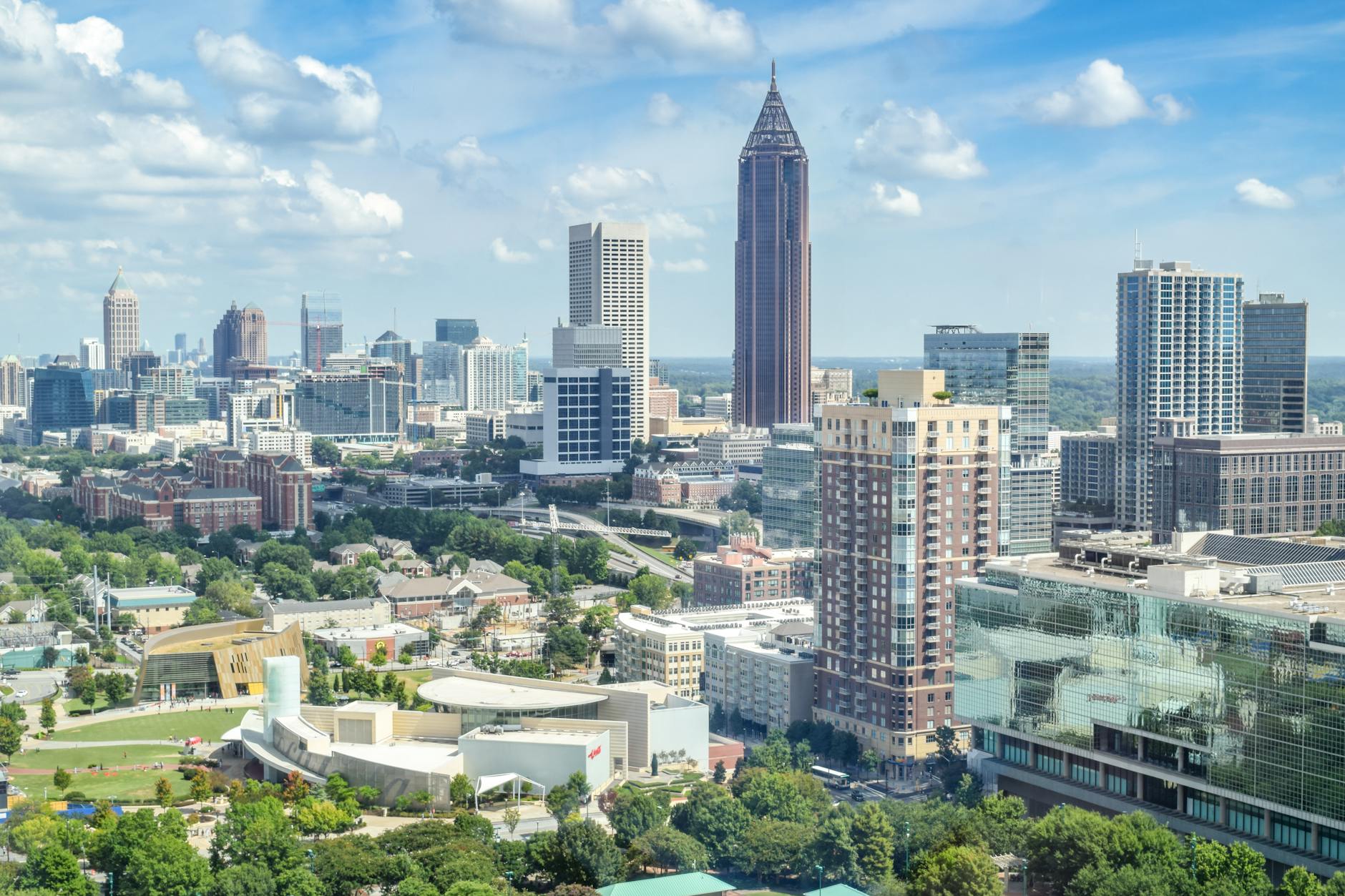
Census data show more people from within the U.S. left metro Atlanta than moved to it during the 12 months that ended in mid-2024. It was a modest decline, about 1,330 people. But it heralds a significant moment for the longtime growth magnet: This is the first time metro Atlanta lost domestic migrants since the Census Bureau started detailing these numbers three decades ago.
If people are not moving to the Atlanta, where are they going instead? Here are some hints:
Growth in some other big Sunbelt metros has slowed, too, after pandemic-fueled population surges, including around Phoenix and Tampa, Fla., the census data show. Recent Bank of America change-of-address data also show big metros in the region losing steam…
“We just couldn’t afford to live there and have the lifestyle we wanted,” said Adelia Fish, 29 years old, who left suburban Atlanta with her husband in May for a newly built, three-bedroom home in Chattanooga, Tenn…
Whether that big-metro slowdown continues remains to be seen. But census data also indicate many smaller regions in the South—places like Huntsville, Ala., Wilmington, N.C., and Knoxville and Chattanooga in Tennessee—are picking up the slack. Their metros are all running ahead of pre-Covid trends.
The article hints at multiple reasons for this:
Bigger metropolitan regions like Atlanta have advantages but they are at a point where the costs of living there are now higher – housing costs, traffic, limited housing options.
Smaller metro areas can provide cheaper housing and a smaller scale.
Certain jobs or careers are portable or can be done in multiple places, not just in the biggest metro areas.
What does this do to Atlanta and other places that have been used to growth for decades? It is about status – we are on the rise! – and about planning – continued demand for land and buildings leads to different options.
If these patterns continue, keep on eye on what metropolitan areas become the hot ones in the next 5-10 years. How do they respond to a new status and local changes?
In the span of a few minutes the other day, I heard radio commercials for two suburbs. One was aimed more at businesses and residents moving to the community, the second was about visiting and enjoying the amenities there. Do these advertisements work?
There are multiple ways organizations could measure this. The most common one I have seen in today’s age is the online or email survey question: “how did you hear about us/this?” Then the respondent can select among many options, including radio ads.
But if someone were moving to a suburb, starting a business in a suburb, or visiting a suburb, how likely would it be that they would receive such a survey? What would trigger this survey?
There are, of course, other techniques. We could rely on anecdotes and the occasional story people tell. Perhaps focus groups of recent movers or visitors could explore this. Maybe someone contacts the community directly and describes hearing the advertisement. Maybe seeing an uptick in population or visitors or business activity in the community after airing the ad could lead to people saying the ad worked.
None of these are likely great options. Getting people to participate in research studies is hard. The commercial is one out of many people will hear or encounter each day.
It is hard to brand a suburb when there are many – over 300 – in the Chicago area and in a media saturated landscape. What can reflect the community well and stand out to people (and then hopefully prompt them to act)?
The Chicago Department of Transportation reports it’s aware of 250 that appear on landscaping lists. The department is currently not clear on the likely sizable number of circles that require no landscaping.
One of the best features of traffic circles is that they force drivers to slow down and pay attention. They cannot blow through a stop sign or traffic light or unmarked intersection. If they can successfully yield and do not need to stop, they can keep their momentum going at a more reasonable speed.
This is an interesting way to count road features: those that need landscaping need to be on some list so that maintenance can be done. Those without the landscaping need would have to be on some other list to be counted. Is this the sort of task AI could do in the future with access to websites with satellite imagery?
In life, in order to be successful — and you people are well on the road to success — you have to find out what makes you excited, what makes you want to get up each morning and go to work? You have to find it. If you love what you do and dedicate yourself to your work, then you will gain momentum? And look, you have to. You need the word “momentum.” You will gain that momentum. And each success will create another success. The word “momentum.” I’ll tell you a story that’s very interesting for me. When I was young there was a man named William Levitt. You have some here. You have some in different states. Anybody ever hear of Levittown? (APPLAUSE) And he was a very successful man, became unbelievable — he was a home builder, became an unbelievable success, and got more and more successful. And he’d build homes, and at night he’d go to these major sites with teams of people, and he’d scour the sites for nails, and sawdust and small pieces of wood, and they cleaned the site, so when the workers came in the next morning, the sites would be spotless and clean, and he did it properly. And he did this for 20 years, and then he was offered a lot of money for his company, and he sold his company, for a tremendous amount of money, at the time especially. This is a long time ago. Sold his company for a tremendous amount of money. And he went out and bought a big yacht, and he had a very interesting life. I won’t go any more than that, because you’re Boy Scouts so I’m not going to tell you what he did. (CROWD CHANTING) Should I tell you? Should I tell you? (APPLAUSE) You’re Boy Scouts, but you know life. You know life. So look at you. Who would think this is the Boy Scouts, right? So he had a very, very interesting life, and the company that bought his company was a big conglomerate, and they didn’t know anything about building homes, and they didn’t know anything about picking up the nails and the sawdust and selling it, and the scraps of wood. This was a big conglomerate based in New York City. And after about a 10-year period, there were losing a lot with it. It didn’t mean anything to them. And they couldn’t sell it. So they called William Levitt up, and they said, would you like to buy back your company, and he said, yes, I would. He so badly wanted it. He got bored with this life of yachts, and sailing, and all of the things he did in the south of France and other places. You won’t get bored, right? You know, truthfully, you’re workers. You’ll get bored too, believe me. Of course having a few good years like that isn’t so bad. But what happened is he bought back his company, and he bought back a lot of empty land, and he worked hard at getting zoning, and he worked hard on starting to develop, and in the end he failed, and he failed badly, lost all of his money. He went personally bankrupt, and he was now much older. And I saw him at a cocktail party. And it was very sad because the hottest people in New York were at this party. It was the party of Steve Ross — Steve Ross, who was one of the great people. He came up and discovered, really founded Time Warner, and he was a great guy. He had a lot of successful people at the party. And I was doing well, so I got invited to the party. I was very young. And I go in, but I’m in the real estate business, and I see a hundred people, some of whom I recognize, and they’re big in the entertainment business. And I see sitting in the corner was a little old man who was all by himself. Nobody was talking to him. I immediately recognized that that man was the once great William Levitt, of Levittown, and I immediately went over. I wanted to talk to him more than the Hollywood, show business, communications people. So I went over and talked to him, and I said, “Mr. Levitt, I’m Donald Trump.” He said, “I know.” I said, “Mr. Levitt, how are you doing?” He goes, “Not well, not well at all.” And I knew that. But he said, “Not well at all.” And he explained what was happening and how bad it’s been and how hard it’s been. And I said, “What exactly happened? Why did this happen to you? You’re one of the greats ever in our industry. Why did this happen to you?” And he said, “Donald, I lost my momentum. I lost my momentum.” A word you never hear when you’re talking about success when some of these guys that never made 10 cents, they’re on television giving you things about how you’re going to be successful, and the only thing they ever did was a book and a tape. But I tell you — I’ll tell you, it was very sad, and I never forgot that moment. And I thought about it, and it’s exactly true. He lost his momentum, meaning he took this period of time off, long, years, and then when he got back, he didn’t have that same momentum. In life, I always tell this to people, you have to know whether or not you continue to have the momentum. And if you don’t have it, that’s OK. Because you’re going to go on, and you’re going to learn and you’re going to do things that are great. But you have to know about the word “momentum.” But the big thing, never quit, never give up; do something you love.
The moral of the story seems to be about momentum: Trump says Levitt once had it and then he didn’t. The Levittowns were built and Levitt was well known but then his later projects and efforts did not go as well.
Three things strike me about this story. First, is this what is expected of hot shot or important developers? Berenson describes how Levitt funded many of his projects. The selling of homes in the first section or subdivisions in communities then funded later houses. If sales slowed, the project lagged. If sales were brisk – and they were particularly quick in the 1950s – then the project could flow along. Donald Trump also leverages previous assets to fund projects. Perhaps this is just the game is played in real estate but it might not be the way many average Americans operate.
Second, Berenson details the yachting/wealthy life Levitt lived. Levitt at one point had the third biggest yacht in the world. He and his wife entertained at some of the hottest social spots. This brings him into contact with numerous famous people. This includes people like Donald Trump – a younger developer – and politicians – like Joe Biden. He did this all with relatively little real wealth; his money was tied up and not really growing. When the money started running out, he did not have many options.
Third, what counts as positive or negative momentum? This particular story is told in such a way that there is a clear rise and fall: Levitt made it to the top and then dropped to the bottom. Most lives or careers may not fit this simple structure. People and businesses face obstacles, make progress, take a step forward and a step back. How many people could even somewhat closely fit a story of only positive momentum or only upward progress?
Sometimes working together, sometimes working separately, NIMBYs have manipulated a web of local laws and requirements—such as exclusionary zoning, minimum lot sizes, and parking minimums—to reduce production of homes. As with any production cap, the result is higher prices for new residents and higher profits for incumbents, and a transfer of wealth and power from buyers and renters to existing owners.
The article places this in the context of antitrust efforts. Local residents and officials are able to operate a monopoly with local land and regulations, thus limiting any competition. Loosen the monopoly’s hold, others can promote and build housing, and housing prices might be more reasonable and more units are available to those who could not otherwise more there.
In the suburban context, one of the reasons Americans tend to like suburbs is because of this local control. They want to buy a home in a community, enjoy the benefits of that community, and then see their property values appreciate as they are there for a while. More housing units is perceived to do multiple things: (1) threaten the amenities of the community – through density, traffic, new residents, etc. and (2) threaten property values.
The author describes efforts in Washington state to counter local NIMBY efforts. It sounds like efforts at the state level changed what local communities could do. It remains to be seen how much local change will now occur and it is not clear how many states would be willing to go as far as Washington. How many local residents would support state-wide efforts that could overrule community interests regarding housing/
Suburban teenagers and others have taken to e-bikes and electric scooters to get around communities which often require a vehicle to get from place to place. But now some suburbs have responded with new rules:
In passing the new rules, Elk Grove has joined a growing list of Chicago suburbs that have enacted tougher e-bike regulations due to growing safety concerns. Several communities — including Highland Park, Schaumburg, Glen Ellyn and Lombard — have recently imposed age limits on riders, while Burr Ridge has banned e-scooters from its streets.
Illinois law divides e-bikes into three classes based on their maximum assisted speed and whether the motor requires the rider to pedal. No one under 16 is allowed to ride a bike that can reach more than 20 mph under Illinois law.
State regulations also require riders to label their bikes with the motor wattage and classification type. Elk Grove Village officials, however, believe it’s more important for riders to follow the rules of the road, said Scott Eisenmenger, the deputy police chief…
Under the town’s rules, anyone younger than 16 can ride less powerful Class 1 and Class 2 e-bikes without motor assistance, relying on pedal power alone. Like Illinois law, Roselle ordinance prohibits anyone under 16 from riding a Class 3 bike, which reaches up to 28 mph before the motor cuts out. Additionally, no one under 18 can operate a low speed electric scooter.
Suburbs are built around cars and driving. It is part of living in a single-family home, having a suburban lifestyle, and is often necessary from getting from place to place because of the size of communities and limited additional transportation options.
Teenagers are often in a particular predicament. Herbert Gans noted this in his book The Levittowners: in new sprawling suburban communities, what could teenagers do and where could they go? With subdivisions and homes structured around private family life and cars necessary to get places, what could teenagers seeing independence do? Americans see teenagerdom as a life stage of trying out independence but without viable transportation this may be hard to do.
Enter e-bikes and electric scooters. They are now widely available. They are easy to operate. The local infrastructure is set up for cars, not pedestrians, bicyclists, or others. Vehicles are large. Safety can be an issue for anyone else trying to use a roadway.
Perhaps the bigger question is not about e-bikes and scooters; it is about possibilities for transportation options across suburbs. Teenagers may have their own interests but they are not the only ones limited in suburbia if you do not have a car.
What made Willingboro different was the existence of strong anti-discrimination state laws and courts willing to enforce them. Neither New York nor Pennsylvania had such laws when their Levittowns were being built. The New Jersey laws forced Levitt to drop his whites-only policy, and he decided that since integration was going to happen, it should unfold as smoothly as possible. Above all, Levitt wanted to avoid another situation like the one that greeted the Myerses in his Pennsylvania development, which had given Levitton a bad name both among white segregationists, who now saw Levittown’s whites-only promise as unreliable, and more liberal-minded people unwilling to live in a community known for racial antagonism. (156-157)
In his previous two communities, pressure brought by organizations and individuals was not enough to push Levitt to allow Black residents. But the conditions were different in New Jersey: the state had already acted. And the way it sounds above, Levitt wanted to both work with the different context and avoid bad publicity.
Earlier in the book, Berenson describes how Levitt said he limited his communities to whites because he was worried about how potential white buyers would respond to integrated communities. He might have been looking out for his bottom line but state legislation or policies could take a different or broader view.
“We have seen the rent increases in the suburban market in general have been pretty strong over the last few years,” he said. “There’s a lot of people who normally would have gone out and maybe rented for a few years and then bought a home, are not doing that. They’re staying in apartments longer.
“So you have the natural flow of new people coming in and less people walking out the door for home ownership, and a lot of that is just due to the high interest rate environment and people wanting to retain the flexibility of renting right now,” Devries explained.
Is this “natural” that more people or certain people at the moment are willing to rent compared to own? These two paragraphs mention several reasons why this shift did not just happen:
Increase in rents. This means at least some apartments are available to those with the resources to pay for it.
Higher mortgage rates mean homeowner’s monthly payments are higher.
Renting can offer flexibility in a tight housing market or when people are feeling economic uncertainty.
These are the result of social, economic, and political forces. And I wonder if all of these people who find it “natural” to rent now would prefer to own a property. If conditions were different, would they rather purchase a home, condo, or townhome? Or what if this to-be-constructed building did not contain apartments but rather contained condos?
The “natural” flow in American life for roughly the last century has been toward single-family homes and homeownership. This takes different forms – not just homes but condos and townhouses – and may not appeal or be available to everyone. But my guess is that if the three listed conditions above were more favorable toward purchasing units, that is what more people would seek and developers/builders would produce.










 Legally Sociable