Who suburban leaders say affordable housing is for – another example

Federal money will help in constructing a new affordable housing apartment building in suburban Glen Ellyn. Who might live there?

Photo by Bidvine on Pexels.com

Chicago-based nonprofit Full Circle Communities is seeking to build an apartment complex with up to 42 units. The developer would set aside no less than 30% of the units as permanent supportive housing for people with disabilities under the terms of an agreement to purchase a portion of the village-owned property.

U.S. Rep. Delia Ramirez requested federal dollars for demolition and site remediation work to make room for the proposed affordable housing project. Ramirez, whose 3rd Congressional District runs from Chicago’s Northwest Side into DuPage County, announced the funding at a news conference with Glen Ellyn Village President Mark Senak and other elected officials last week.

Affordable housing allows “senior members of our communities to stay close to their families so that grandparents can see their grandchildren,” Senak said, echoing remarks he made at a village board meeting last month.

“It gives adults with developmental disabilities the opportunity to remain in the community where they went to school, where they grew up, where their families live, where their friends live, and where many of them work,” Senak said.

This follows a common pattern among west suburban leaders in recent years. Affordable housing is for (1) seniors who want to stay in their community and (2) adults with developmental disabilities who want to stay in their community. These are indeed groups with housing needs.

Would more communities be open to affordable housing for people who do not have much money? The two examples above suggest affordable housing is for people already in the community who want to stay. Is there interest in housing for workers with lower wages?

My study of suburbs suggests that in wealthier suburban areas there is less interest in affordable housing that is open to any residents who might qualify. Americans generally do not like the idea of government money for public housing, with some exceptions. This is probably even more true in suburbs where a primary focus is on single-family housing.


25% of Parisian residents live in public housing; hard to imagine this in the United States

A sizable portion of Paris residents live in public housing:

Photo by Chris Molloy on Pexels.com

This summer, when the French capital welcomes upward of 15 million visitors for the Olympic Games, it will showcase a city engineered by government policies to achieve mixité sociale — residents from a broad cross-section of society. One quarter of all Paris residents now live in public housing, up from 13 percent in the late 1990s. The mixité sociale policy, promoted most forcefully by left-wing political parties, notably the French Communist Party, targets the economic segregation seen in many world cities.

“Our guiding philosophy is that those who produce the riches of the city must have the right to live in it,” said Ian Brossat, a communist senator who served for a decade as City Hall’s head of housing. Teachers, sanitation workers, nurses, college students, bakers and butchers are among those who benefit from the program.

Making the philosophy a reality is increasingly hard — the wait list for public housing in Paris is more than six years long. “I won’t say this is easy and that we have solved the problem,” Mr. Brossat said…

City Hall has a direct hand in the types of businesses that take root and survive in Paris because it is the landlord, through its real estate subsidiaries, of 19 percent of the city’s shops. Nicolas Bonnet-Oulaldj, the city counselor who oversees the city’s commercial landholdings, said his office is constantly studying neighborhoods to maintain a balance of essential shops and limit the number of chains, which can usually pay higher rent.

Three related reasons come to mind for why this would not happen in an American city, even with significant needs for housing:

  1. A supposed free market approach to housing. Americans prioritize policies and programs for single-family homes, not denser urban housing with subsidized rents. Why should public housing take up valuable real estate that would go for much higher prices on the open market?
  2. Many Americans think public housing has already failed in the United States. The story might go like this: the limited project that began in the first few decades of the twentieth century led to disastrous high-rise public housing projects in big cities and a subsequent retreat from public housing (shifting to providing housing vouchers).
  3. Less interest in centralized planning and government control. Would Americans want the government choosing housing and business opportunities in major cities? You mean Paris is not organically developed?

Overall, American cities pursue market approaches to social issues.

Crows take to American cities

The humble – mighty? – crow is congregating in some American cities:

Photo by Mike Bird on Pexels.com

Across North America, crow populations have been declining for decades. But crows appear to be flocking to cities more than ever before. Cities from Sunnyvale, California, to Danville, Illinois, to Poughkeepsie, New York, host thousands of crows each winter. Some popular urban roosts host more than 100,000 crows each night.

Crows are territorial during the spring and summer breeding season, but during the rest of the year, they sleep in large groups known as roosts. Sometimes a roost occupies a single tree; sometimes it’s spread over multiple perching sites—usually flat roofs or treetops—in a consistent area. Roosting has clear advantages for crows, especially during winter. “They’re better off being in a big group, where they get the benefit of all those eyes looking out for danger. It’s also warmer,” John Marzluff, the author of Gifts of the Crow, told me.

City roosts offer even more advantages. The very features of urban life that harm other species—fragmented landscapes, bright lights at night, and open stretches of grass in parks—benefit crows. Lights make it easier to spot predators, such as owls. Grass doesn’t offer much in the way of food or shelter for many animals, but crows will happily dig through it for beetle larvae and other snacks. Also, Marzluff told me, crows like that we humans often plant grass close to clusters of trees, where they can sleep or nest, and other food sources, such as our trash. Fragmented habitats, such as a group of trees in a park surrounded by asphalt, harm other species because they aren’t big enough to foster genetic diversity. But they are ideal for crows, who can fly between pockets of greenery and like to have a variety of options for their nesting areas and foraging sites.

Crows, in other words, move to urban areas for the same reason humans do: Cities offer just about everything they need within flapping distance. During the breeding season, Marzluff said, crows even decamp to the suburbs to raise their families, just like humans. And once even small roosts are established, many of them grow year after year, from perhaps a few hundred birds to a few hundred thousand. News spreads fast through the crow community, Marzluff said: Crows share information with one another and develop traditions and culture within populations, including roosting habits, though scientists still don’t know exactly how they do it.

These birds are real!

This reminds me of the book Subirdia which suggested some bird species can thrive with human development and others do not. Crows are likely not the only birds or animal species that finds cities to be a good habitat.

The article ends with suggestions from some that humans should embrace crows in cities. However, if the headline is prescient, would crows go the way of pigeons? Or might some another birds take over from the crows?

Using community wayfinding signs for religious congregations

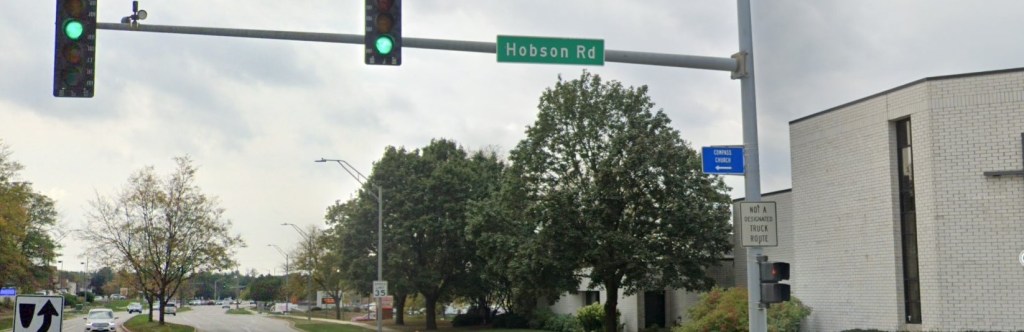
Drive through a community in the Chicago area and you see a lot of signs. One small set of these direct travelers toward religious congregations. Here is one example from Google Street View:

Image from Google Street View

See the small blue sign on the traffic light pole? It directs people to a church a half a mile down the road.

A few observations in seeing such signs:

  1. Not all congregations have a sign. Could all congregations request one and then have at least one pointing toward them?
  2. The signs are pretty small. How many drivers see them.
  3. The signs tend to be posted at busier intersections. Some drives from those intersections are shorter and easier to navigate than others. For example, a driver might see a sign pointing in a direction but it may take a little while before finding the congregation roughly in that direction.

Given that these signs are likely provided as a community good, can their use be improved in significant ways?

Low turnout elections and planning tax-related questions on the ballot

A low percent of eligible suburban voters turn out in some years, meaning relatively few people often decide the fate of certain questions on the ballot:

Photo by Karolina Grabowska on Pexels.com

But a Daily Herald analysis of vote totals for 22 ballot questions posed to suburban voters in Cook, DuPage, Kane, Lake and McHenry counties last April showed District 101’s turnout was the highest of those initiatives. Fifteen of the 22 were decided by less than a quarter of the eligible voters, including four that were decided by less than 10% of eligible voters, records show…

Another analysis showed similar findings of recent ballot questions in Cook County:

The study showed that 75 property tax-related questions posed to voters during that time were decided by less than a third of those eligible to cast ballots.

Having these tax-related questions on the ballot in low-turnout elections may be intentional:

Ryan Tolley, executive director of Change Illinois, a nonpartisan, nonprofit group that advocates for ethical government and elections, said taxing bodies are deliberate about when they decide to pose questions to voters that could affect their property tax bills.

“They’re thinking about it strategically by putting them in an election when voter turnout is traditionally low,” he said. “Low voter turnout is often advantageous to them at the ballot box.”

Because voter turnout is traditionally highest for presidential elections, many taxing bodies try to avoid posing expensive ballot questions to voters then. Instead, they rely on voter apathy during local elections in odd-numbered years, nonpresidential general elections or primaries like the one coming up in a few days.

Suburbanites have opinions about local taxes in Illinois, a state with a lot of governmental bodies and high property taxes. Yet, voter turnout is often low, even with questions involving taxes up for vote.

In the short term, I do not think it is easy to boost turnout. This has been a trend for years now. Many people do not exercise their right to vote.

In the long term, one solution would be to limit the number of election cycles governments have. Why not limit local elections to 2 and 4 year cycles that line up with House and national elections? This would also save money as governments could consolidate election resources.

Another option would be to reduce the number of local government bodies in Illinois, thus reducing the number of elected members and initiatives. For example, abolishing townships would eliminate one layer of government whose services could be picked up by others.

Can pro-housing movements be bipartisan in a polarized era?

Jerusalem Demsas tackles an interesting question: how can housing advocates navigate a society marked by political polarization?

Photo by Simon Rizzi on Pexels.com

One thing that helps bind an ideologically diverse pro-housing movement is that everyone in a community suffers when housing prices soar. Checking Zillow is a nonpartisan activity. The other thing keeping the coalition together is that, well, it’s barely a coalition at all. YIMBYs work in the context of their own states and cities. No national group dictates the bills they support or the messages they send.

On the other hand:

That doesn’t mean the bill will become law. Hobbs told reporters she’s still considering whether or not to sign the Arizona Starter Homes Act, noting that she prefers legislation with support from local jurisdictions, and this bill has been opposed by the local-government lobby. Either way, the political price is low. In a state as divided as Arizona, where the last gubernatorial election was between Hobbs and the right-wing firebrand Kari Lake, no one’s switching their votes over zoning policy.

Not even die-hard YIMBYs. “I’m a Democrat; I voted for the governor,” Solorio told me. “And if she ended up being the biggest NIMBY in our state, I’d still vote for her reelection because zoning, even though I’m one of the biggest zoning-reform advocates in the state … still doesn’t rise high enough for me to flip my vote.”

I have argued before that housing is a local issue. Theoretically, Americans are less partisan at the local government level as they focus more on addressing community needs. Or, perhaps they are just less partisan here compared to the state or national levels.

If the YIMBY movement is able to be less partisan, is this partly because such movements are still rare or not that popular? It takes a lot of work to convince American property owners that more housing should be added near them. It is one thing to support housing in the abstract and another to support it nearby.

Might another path forward be to have third-party candidates that only promote more housing? This means they would not get entangled in other issues and could focus on one issue.

The (declining) number of farms in the United States

A long-term trend continues as the number of farms in the United States drops again:

Photo by DESPIERRES Cu00e9cile on Pexels.com

Between 2017 and 2022, the number of farms in the U.S. declined by 141,733 or 7%, according to USDA’s 2022 Census of Agriculture, released on Feb. 13. Acres operated by farm operations during the same timeframe declined by 20.1 million (2.2%), a loss equivalent to an area about the size of Maine. Only 1.88% of acres operated and 1% of farm operations were classified under a non-family corporate farm structure…

In addition to Ag Census data, USDA releases survey-based estimates on farm numbers once every year. Using this annual survey data dating back to 1950, the trend of fewer operations farming fewer acres becomes even more obvious. Since 1950, the number of farm operations has declined by 3.75 million (66%) and the number of acres farmed declined by 323 million (27%) – slightly less than twice the size of Texas. Technological advancements that have increased productivity, such as feed conversion ratios in livestock and yield per acre in crops, have allowed farmers and ranchers to produce more with less even as the U.S. population more than doubled, going from 159 million in 1950 to 340 million in 2023, and the global population more than tripled (2.5 billion to 8 billion) during the same period.

Add to this the drop in the number of people involved in farming or agricultural work over the last century. This all adds up to more and more people living in urban areas, particularly in suburbs where over half of the American population lives.

Even with all of this, the United States produces more food in the long run. Efficiency and innovation mean more can come from the same amount of land. This frees up people and resources for other activities.

The numbers cited above also mean there are still a lot of farms in the United States. The country may no longer be anchored in small towns and family farms – if is ever was – but many continue on with food produced for the country and world.

Workers cottages and a growing suburban dream in the Chicago region

What kinds of homes did early suburbanites in the Chicago area live in? Some lived in workers cottages:

Photo by Steve Johnson on Pexels.com

Thanks to a plentiful supply of lumber from old growth pine forests in Wisconsin and Michigan, as well as new milling processes such as kiln drying that gave precut wood precise standardized measurements, a new form of structure started appearing. Workers cottages were more affordable than elaborate, but they came with the promise of a better standard of living for working class families.

A century and a half after they started being built in earnest, an effort is afoot to celebrate and preserve the cottages, houses that have continued to offer utility and accessibility for generations…

The lecture was arranged by the nonprofit Chicago Workers Cottage Initiative, a group organized to celebrate and promote the houses, built mostly from the 1880s to the 1910s, that they say “represent the origins of the ‘American Dream’ of homeownership and the investment and pride of Chicago’s new immigrants.”…

“Some of these cottages were really spartan four-room houses,” Bigott said. “They cost like $600 on a $200 lot. It was a simple frame building, with two bedrooms, a living room, a kitchen.”…

It was a model that worked, and its backbone was the workers cottage. Elaine Lewinnek, a professor of American Studies at California State University, Fullerton, argues in her 2014 book “The Working Man’s Reward: Chicago’s Early Suburbs and the Roots of American Sprawl” that the idea of house ownership as “the working man’s reward” was one of Chicago’s most impactful exports, setting the scene for suburbs everywhere.

The suburbs have a longstanding reputation that they are full of people of wealth who are able to purchase a home and afford a suburban lifestyle. Imagine neighborhoods of McMansions, rampant consumerism, and newer vehicles.

This may be largely true and yet it is not entirely true. The homes described above could house the working class in suburban settings. This is not the only area where this occurred; historian Becky Nicolaides described working class houses in the Los Angeles suburbs.

And the housing today in the suburbs can also be varied. Postwar housing also had some variety from larger homes to smaller ranches. Wealthy suburban communities in the Chicago region today sit not far from neighborhoods with more modest housing.

If this article looks back at what was over 100+ years ago, what housing today will be viewed as housing for the working person in the suburbs in 2100?

You should know your neighbors – so you can save money?

This story highlights an interesting gap in who knows their neighbors. Yet, this statistic is brought up so you can make sure you are not paying their utility bills. First, the statistic:

Photo by Airam Dato-on on Pexels.com

However, chatting to your neighbors is not as common as it used to be. A Pew Center study shows that fewer young Americans are familiar with their neighbors. Among adults under age 30, about a quarter (23%) claim to not know any of their neighbors, compared with 4% of those aged 65 and up.

Why might it be useful to know your neighbors?

That’s what happened to Brooke Patterson. She took to TikTok to explain how she realized that she had apparently been paying for her entire apartment building’s utility bills — for two years.

The gap cited above could be the result of multiple factors. People 65 and up might have lived in places longer. They had different social norms regarding neighborly interaction. They might not rely on technology as much in order to interact with people.

Is the primary goal to knowing your neighbors to save money? Or others might suggest your neighbors could help you look out for your property. Other primary goals for knowing your neighbors could include acting neighborly – looking out for each other, offering aid when helpful – and building community. That could come with cost savings down the road or even positive money if the character of the neighborhood helps boost property values. This might be another difference over time: what people hope to gain through social interaction.

Five reasons the United States is so suburban

I was recently asked about the history of the development of suburbs in the United States. Here was my brief answer regarding important factors in that history (not exhaustive, not ranked in a particular order):

Photo by Kaveh Saidi on Pexels.com
  1. The importance of single-family homes and private property that started in the mid-1850s with the idea of a little cottage in the woods.
  2. Anti-urban and pro-small town sentiments among Americans. These particularly developed as American cities start growing rapidly in the 1800s. Suburbs offer access to cities and their amenities while retaining some qualities of smaller towns like less distance between residents and local government.
  3. Race, class, and gender. This includes: white flight of residents, businesses, religious congregations, etc. from cities to suburbs; the idea of a suburban middle-class who should live a particular lifestyle in the suburbs; and expectations about nuclear family life in the suburbs.
  4. Government policy that consistently promoted suburban life including changes to mortgages in the first half of the twentieth century and largely funding the federal interstate system (while also putting less money into public housing, public transportation, etc.).
  5. The role of transportation technologies enabling faster travel from further distances (railroad, streetcars, automobiles). This gave rise to commuting, further separation of work and home, and suburban lives oriented around driving everywhere.

These factors are not new to this blog or the scholarship on suburbs. However, limiting the number of factors to five does make it interesting in terms of thinking through important factors. (See a related post: Why Americans Love Suburbs – seven reasons.)