America’s religious nones: “They. Really. Don’t. Like. Organized. Religion.”

New data on the growing number of “religious nones” in the United States, those who do not identify with any religion , shows they do not like organized religion:

Photo by Francesco Ungaro on Pexels.com

While the nones’ diversity splinters them into myriad subgroups, most of them have this in common:

They. Really. Don’t. Like. Organized. Religion.

Nor its leaders. Nor its politics and social stances. That’s according to a large majority of nones in the AP-NORC survey.

From a related article with some numbers on this:

Among the nones who say they are also not personally religious, 68% cited their dislike of organized religion as a very or extremely important reason. For 63%, a top reason is their dislike of the stances religious faiths take on social and political issues, while 54% say the same about reports of abuse or misconduct by religious leaders. Forty-six percent cite disbelieving in God as a top reason. That was true of 81% of atheists, but just 40% of agnostics and 32% of nothings in particular.

The last paragraph suggests there are multiple influential reasons the nones cite, with a dislike for organized religion leading the way.

It is interesting to see this alongside recent figures showing declines in trust in all sorts of institutions in American life.

This also makes me think about how religious or spiritual ideas can begin or start and then there are processes that transform them into institutionalized religion. Beyond just leaving religion and spirituality solely up to individuals, how do different religious groups push against institutionalization and rationalization?
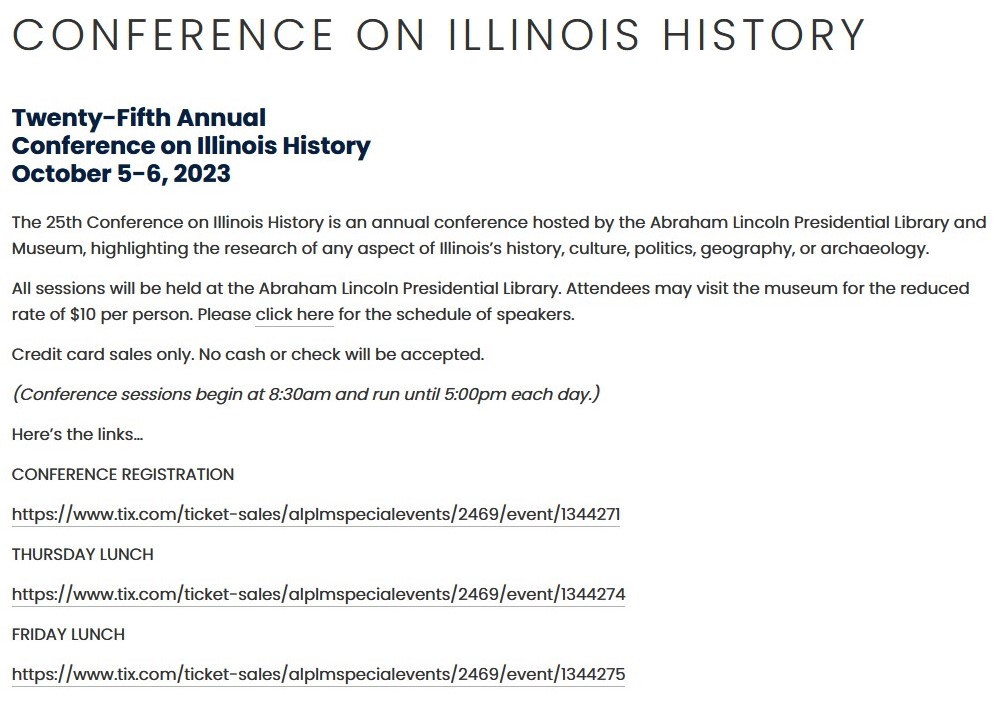
Presenting at the Conference on Illinois History and crossing disciplinary boundaries in research

Later this morning, I will present at the Conference on Illinois History. The title of my talk is “Racial Exclusion, Public Housing, and Affordable Housing: The Cases of Chicago and Naperville” and I present in a session with my collaborator Caroline Kisiel of DePaul University.

This talk builds on previous research I did involving Cabrini-Green in Chicago and in my dissertation on the development and trajectories of three Chicago suburbs. The work is sociological but also historical. The larger scope of research involved weeks in archives looking at primary and secondary sources, reading through newspaper accounts, reading academic histories, and conducting interviews with leaders. I published portions of this work in several outlets, including the Journal of Urban History (Cabrini-Green, the surprising growth of Naperville) and Urban Affairs Review (key character moments in suburban development). Additionally, I have published work in what might be considered media studies. For example, looking at the McMansion on The Sopranos (Journal of Popular Film and Television). Or, examining the architecture and design of teardowns (Journal of Urban Design).

I have done this all with professional training in sociology. Some sociologists do more historical-comparative work and I did have some training in this during my sociology Ph.D. program. I would consider all of this work to be sociological in nature, even if conventions regarding writing, evidence, and making strong arguments differs across academic fields. I have learned much by engaging with work in other fields and it has pushed me to develop my own thinking and writing.

I am grateful for conferences, colleagues, and journals that have been gracious with a sociologist stepping into these fields.

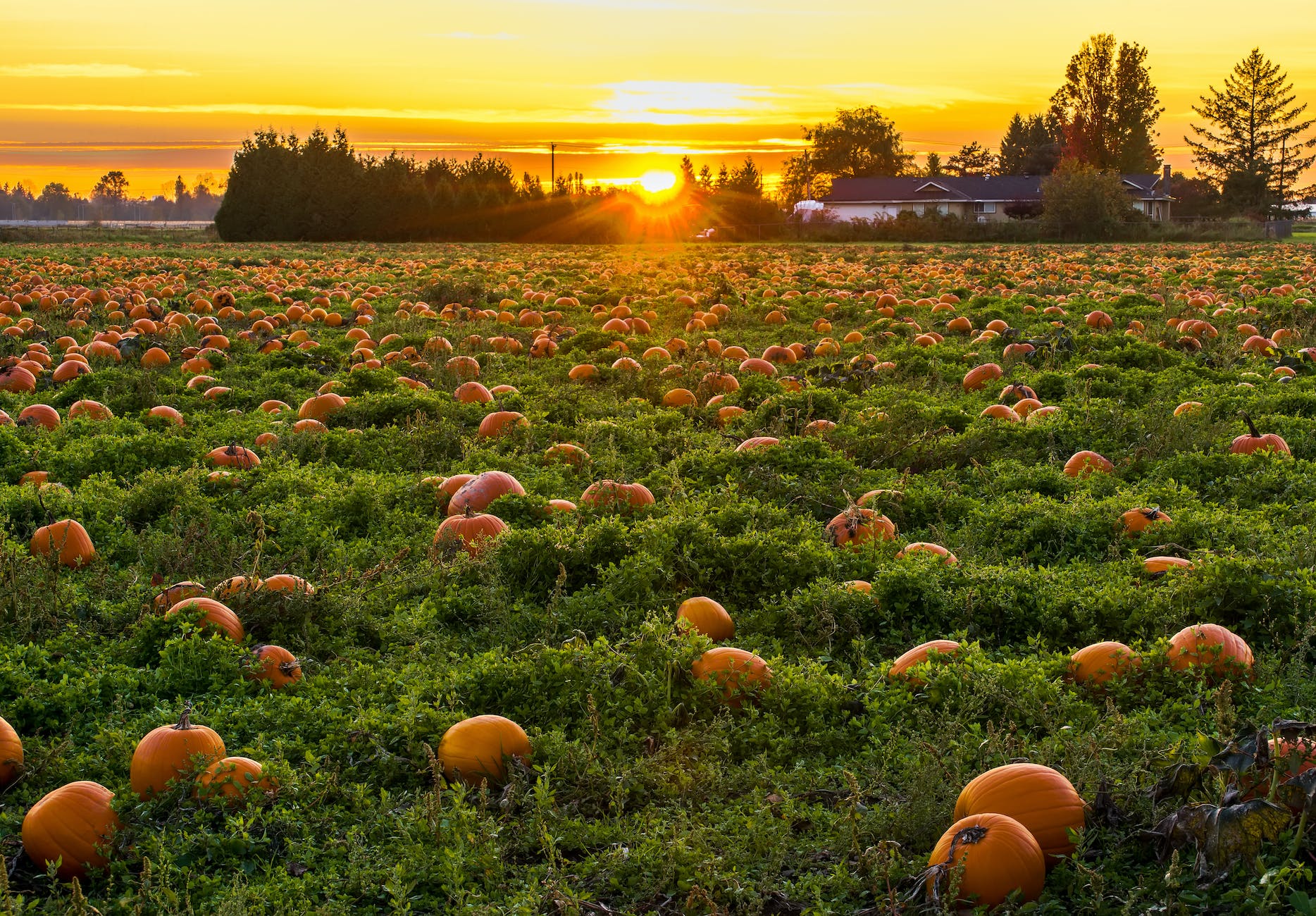
Taking on the identity of the #1 pumpkin state

What is the state of Illinois known for? Lincoln and Chicago come to mind. But, what if Illinois is the leader in growing pumpkins in the United States – where does this fit?

Photo by James Wheeler on Pexels.com

But we can chant, “We’re No. 1!” with pride, as the pumpkin provider to the nation.

And despite a rough start to the season, Illinois is poised to retain the title, according to Raghela Scavuzzo, associate director of food systems development at the Illinois Farm Bureau…

She anticipates this year’s crop will weigh at least 650 million pounds. In 2021, 652 million pounds of the gourd were gathered, according to the Agriculture Department’s Census of Agriculture, more than the next five states combined…

There are two types of pumpkin businesses in Illinois; Those that make money off jack-o’-lanterns, and those that make pumpkin pie possible. Illinois really rules the latter — about 80% of the acreage is devoted to pumpkins for processing.

In a world of place-based marketing and branding, I could imagine a number of different campaigns to highlight this unique feature of Illinois. Lincoln with a pumpkin? Signs welcoming visitors to Illinois include a pumpkin added for the fall season? Pumpkin patches and fall farms covered with all sorts of iconic Illinois images or places?

Beyond marketing, it would be interesting to know how much pumpkins contribute socially and economically to the state. Is the pumpkin growing related to declines in growing other crops? How many jobs does pumpkin growing entail? How does growing pumpkins and selling them compare to other options?

Too bad Charles Schulz, creator of Linus and the Great Pumpkin, was from Minnesota…are there Illinois natives who have creatively invoked pumpkins in works?

Look out for the floating house

Could floating houses become more popular in the coming years?

Photo by Matt Hardy on Pexels.com

About 3 billion people, roughly half of the world’s population, lives within 125 miles of a coastline, according to the Population Reference Bureau. Eventually, coastal cities could claim not just the waterfront, but also the water, building in their harbors, bays, canals and rivers.

It’s already happening in the Netherlands. With a third of its land below sea level, the country has floating offices, a floating dairy farm and a floating pavilion. Floating buildings are often built atop concrete and foam pontoon foundations, allowing them to sit on the water, and rise and fall with currents.

Proponents of the design argue that these buildings protect the environment. While a 2022 study published in the Journal of Water & Climate Change found that floating structures can have a positive benefit, attracting birds to nest and providing habitat and food for sea life, the study also found that they can impact light, currents, wind patterns and water quality…

Yet, as sea levels rise, low-lying countries like the Maldives are grappling with an existential threat, and building on the water is a way to create land from the encroaching sea. The government, in partnership with the developer Dutch Docklands, is building an entire floating neighborhood in a lagoon 10 minutes by boat from Malé, the nation’s capital.

Next year, the first phase of the 5,000-modular unit development will open — apartments, schools, shops and restaurants built on a floating landscape of serpentine jetties fitted together like Lego pieces. “That is the future,” said Mr. Olthuis, the Dutch architect, who developed the master plan for the Maldives development.

Even without the threat of climate change, these options could create interesting new possibilities in places around the world. Imagine visiting a floating area or more residential units with waterfront views and access.

At the same time, I imagine it would take some work to start mass-producing floating housing. Would there be common sizes or units? Is the infrastructure in place in many locations to accommodate such housing?

How much do Americans deserve to own a home?

Building on yesterday’s post regarding the growing homeownership rate of millennials, I wonder: how much do Americans today feel they deserve to be able to own a home? It is one thing to make a choice to buy a property, it is another to feel that the economic and social conditions render this difficult or impossible. Here are several factors complicating this issue:

Photo by Pixabay on Pexels.com

-For at least one hundred years, American leaders and residents and cultural narratives have held up homeownership as an important marker of success.

American policies have also helped make homeownership possible. It is not just that people wanted to own homes; the American system helped make this possible.

Homes are a primary driver of wealth. If Americans feel they cannot purchase a home, they are missing out on this wealth-building instrument.

Homeownership is often viewed more favorably than renting. To own suggests stability and involvement in the community. To rent suggests transience and lack of financial resources.

-There is an expectation that younger or upcoming generations will able to achieve more than previous generations. This is part of the American Dream and tied to homeownership: shouldn’t younger Americans have bigger and better housing options?

The American social contract includes a house. Many Americans expect they should be able to purchase a home. I would guess that Americans and the American structures will continue to pursue and promote homeownership, even when it might be difficult. A big change might require a significant event or a steady long-term process moving toward different housing preferences and possibilities.

Catching up: over 50% of millennials own a house

The first part of the title of the post works two ways: I somehow missed this news earlier this year and the absolute number of the homeownership rate for millennials may matter less than how it compares to previous generations.

Photo by MART PRODUCTION on Pexels.com

The nation’s largest generation made the jump to a homeowner majority last year, reaching more than 18 million, according to a recent report from Rent Café. 

Rent Café’s report found that 51.5 percent of millennials now own a home. This population, which consists of those born between 1981 and 1996, added seven million homeowners in the previous five years alone…

Millennials became a homeowner majority generation when the average member was 34 years old while Gen X reached the milestone by 32 and baby boomers by 33…

Sky high mortgage rates also pushed many buyers out of the market and back toward renting. Rent Café’s report showed millennials are still the dominant renter generation in 2022

It takes time in life to develop the resources and connections to achieve homeownership. Since owning a home is an American ideal, it can serve as a marker of how successful Americans are.

Thus, the data cites above provides some hints regarding millennials. They were slightly older than the two previous generations for the average age for becoming a homeowner. Millennials have more renters than previous generations.

Trends could change in the future. Economic conditions could again become more favorable. New forms of housing options may develop. New policies could help promote homeownership.

However, this narrative is going pretty strong for the moment: millennials have had a harder time pursuing this basic marker of American success. And because the American dream is supposed to be attainable, this will have implications for discussions, policies, and communities.

Tiny houses may be popular on social media but that does not mean people want to move into such homes

What housing attracts views on social media may not exactly be what people want to live in:

Photo by mikoto.raw Photographer on Pexels.com

Social media platforms are having a field day with microapartments and tiny homes like Mr. Marshall’s, breathing life into the curiosity about that way of living. The small spaces have captivated viewers, whether they are responding to soaring housing prices or to a boundary-pushing alternate lifestyle, as seen on platforms like the Never Too Small YouTube channel. But while there is no precise count on the number of tiny homes and microapartments on the market, the attention on social media has not necessarily made viewers beat a path in droves to move in, perhaps because the spaces sometimes can be a pain to live in…

Viewers of microapartment videos are like visitors to the Alcatraz Federal Penitentiary in San Francisco Bay who “get inside of a cell and have the door closed,” said Karen North, a professor of digital social media at the University of Southern California.

Social media users want to experience what it’s like at the “anomalously small end” of the housing scale, she explained…

Pablo J. Boczkowski, a professor of communications studies at Northwestern University, said that despite the belief that new technologies have a powerful influence, millions of clicks don’t translate into people making a wholesale lifestyle change.

Perhaps it will take a long term social media effort for people to adopt tiny homes? What could be curiosity at the beginning could become normalized as more and more people are exposed to popular images. If such tiny homes are still drawing a lot of views and engagement in a few years, could this add up to something?

Yet, any tiny home revolution has not materialized, at least to this point. Having an extremely small home does not seem appealing long term. It might be an option for vacations or in an extreme housing price situation or better than the alternative of no housing. If people have some resources, they will seek out and find other options.

Still, I would not be surprised if more tiny or smaller residences attract social media hits in the coming years. If under 100 or 200 square feet is too small, could more housing options at 200-500 feet prove attractive in real life and on smartphones?

High housing prices lead to housing pod innovation (?) in California

With the high prices of housing in California these days, one company is offering 3.5 by 4 foot pods:

Photo by Heloisa Vecchio on Pexels.com

With locations in Palo Alto, San Francisco and Bakersfield, Brownstone Shared Housing has converted two homes and an office space into dwellings for dozens of people, with rents ranging from $500 to $900 per month.

The basic pods are a very cozy 3.5 feet wide and 4 feet tall, just big enough to fit a twin mattress. They feature amenities such as charging stations, LED lights and individual climate control systems.

Residents share bathrooms and utilize storage lockers for their belongings, most of which won’t fit into the pods.

And even though $500 to $900 may sound like a lot for such limited space, the rates are far cheaper than most alternatives on the traditional rental market.

In Bakersfield, the median studio apartment rents for $995, according to Zillow. In San Francisco, the figure is $2,200. And in Palo Alto, the median studio rents for $2,300.

Several thoughts in response:

  1. I suspect this kind of housing would appeal to particular audiences and not others.
  2. Is it possible to scale this up? At some point, these might appear to be close to single room occupancy that used to be more common in many cities.
  3. How does zoning work within local municipalities? Would the density levels be acceptable to local officials and residents?
  4. While this might be an innovative way to address the cost of housing, how does this fit with or help spur larger-scale changes that would make affordable housing available to more people?

The sorting of suburban residents either far or near to undesirable land uses

Ongoing concerns from residents about a possible second waste transfer station in the suburb of West Chicago highlights the issue of which suburbanites live further from or closer to undesirable land uses:

Photo by zydeaosika on Pexels.com

West Chicago is home to the county’s only garbage-transfer station — an in-between location before waste is hauled to a landfill. Earlier this year, city officials gave the green light to add a second facility that would be run by trash hauler LRS and bring 650 tons of solid waste a day and air pollution from hundreds of large garbage and semi-trailer trucks weekly to the city of 25,000…

On Thursday, lawyers for Alcántar-Garcia will argue to state officials that the trash facility should be blocked. 

The Illinois Pollution Control Board has the final say in the matter, and a panel of Gov. J.B. Pritzker’s appointees will be asked to decide whether the city of West Chicago met all the criteria to determine that the new garbage site will not harm the health of nearby residents. That final decision is expected early next year. 

West Chicago is around half Latino, and that raises questions for Alcántar-Garcia’s legal team as to why it is the only DuPage County community targeted for two of these waste sites. Other municipalities, including those that are largely white and affluent, would benefit. 

Perhaps a thought experiment might shed some light on this problem. Imagine a metropolitan region where land uses were randomly distributed. The land uses suburbanites tend not to like, those that generate noise, traffic, and are perceived to threaten property values are randomly placed. Airports, garbage facilities, apartments, drug treatment facilities, railroad tracks, warehouses, and more are spread out. What would happen?

Assuming this is a blank landscape beyond these land uses, where would development pop up? Those with resources and influence might just happen to live and congregate in places away from those land uses. If locations are at least in part determined by the ability to purchase and develop land, those with more resources can better compete for desirable land. And those with fewer options might live closer to those less desirable land uses.

Of course, we do not have random metropolitan landscapes or centralized bodies that could make wise choices about where less desirable but necessary land uses should go. Instead, we have ongoing patterns by race, social class, and durable local history that help guide land uses to certain locations and not others.

Leaves will soon be coming to suburban lawns – and homeowners will respond in one of a few ways

After a period of rain and wind in our area, I noticed that leaves are starting to fall from the trees. How will suburbanites respond to this threat or opportunity for their lawns this fall and in the years to come?

The general trend with American lawns is to leave them spotless, free of leaves, weeds, and other obstructions. Will this continue in the future? Some thoughts:

-There is more interest in battery-powered lawn equipment so clearing the lawn with a gas blower and gas mower may be on the wane. Using electric versions of these tools means clearing leaves will be quieter. This could also limit pollution.

-Or, if people do not want to use energy from gas or battery equipment, perhaps raking will be back in vogue.

-An alternative to both options above is that people could let the leaves stay on the lawn. This has benefits for the lawn as leaves break down. This goes against the spotless ideal of the American lawn but it requires no work and has benefits for the environment.

The well-tended lawn ideal with all or most leaves cleared will likely stick around for a while. Yet, there is a chance that shifts in practice and ideology about lawns changes how Americans treat leaves that come down each year.