How about a speed range rather than a speed limit?

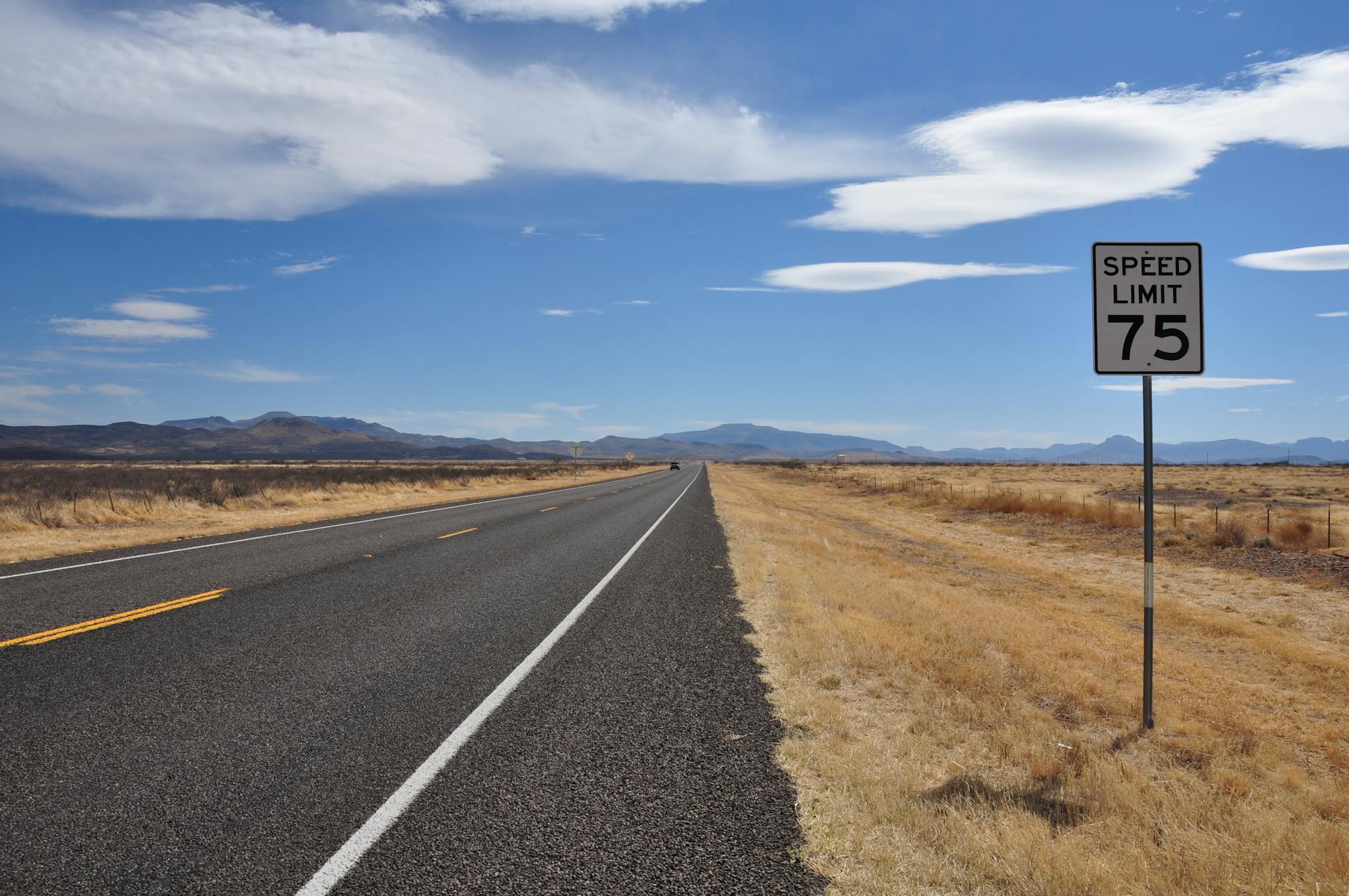
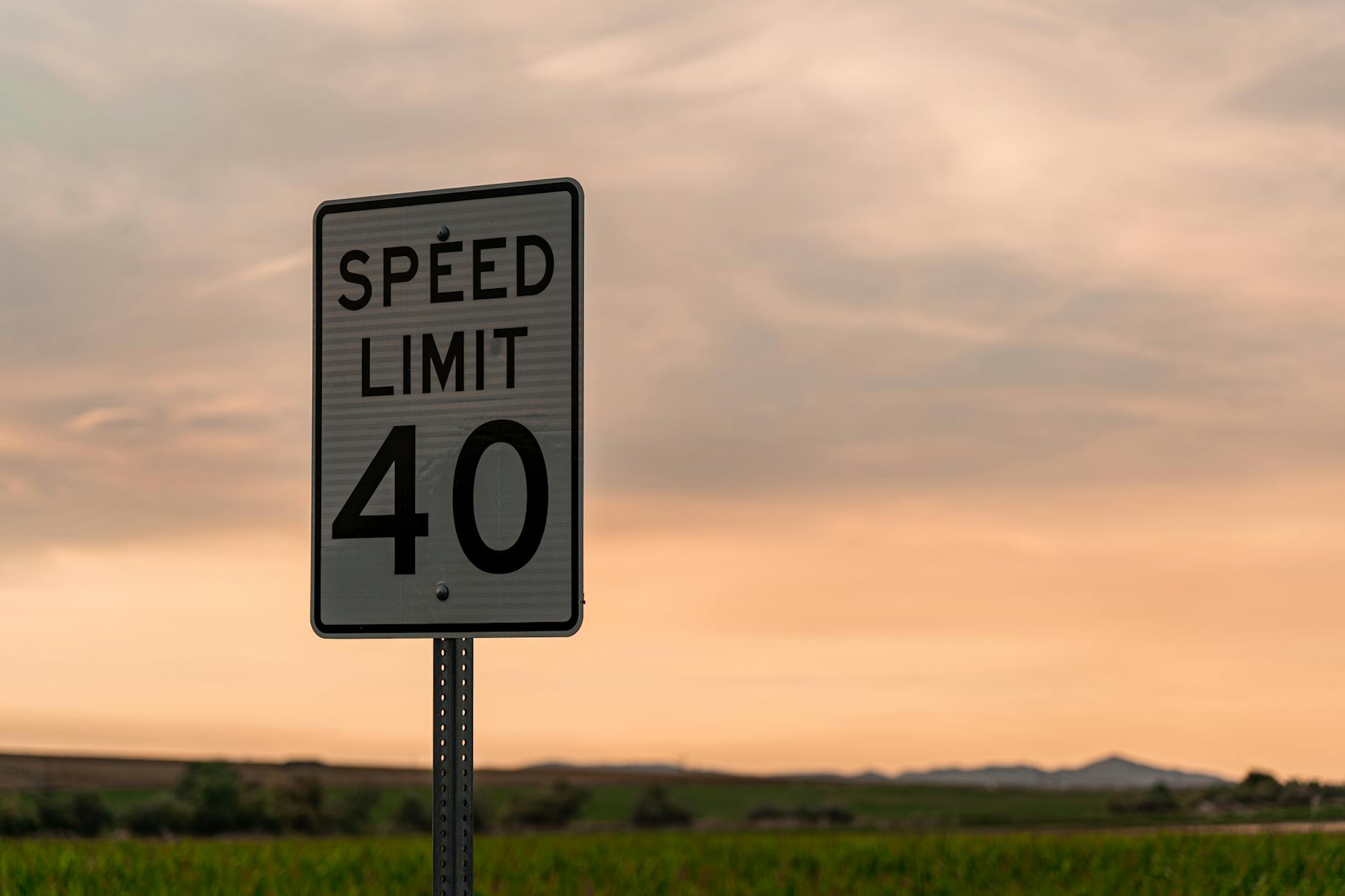
It is rare to find drivers on major roads that will only go as fast as the speed limit. If anything, the speed limit seems like an anchor at the bottom end of possible speeds so that people do not just drive at whatever speed they want. If the speed limit is 45, few will go only 42 or 44 but the speed limit might keep them from going 75 because that is far away from 45. Future technology might change this: if cars have speed limiters, where will the line be set?

Photo by Castorly Stock on Pexels.com

One way to address this is to have no speed limit. Only a few places do this.

Why not try a speed range? Imagine Chicago highways that have a speed limit of 50-70. Some people might feel more comfortable at the lower end, some at the higher end.

Is the real issue that drivers will not follow any limit unless there is enforcement? Technology could lead to automatically fining drivers (speed cameras, GPS, toll devices, etc.). Or, is it about current conditions (less traffic can lead to higher speeds, more congestion slows speeds)? Some roadways now have variable speeds where digital signs change the speed limits for the given conditions.

All this to say, a speed limit seems more like a number that most American drivers treat as a recommendation and not an imperative. This has big implications for the driving experience, how Americans regard driving, and safety.

Moving toward Illinois legislation to merge metropolitan transit agencies

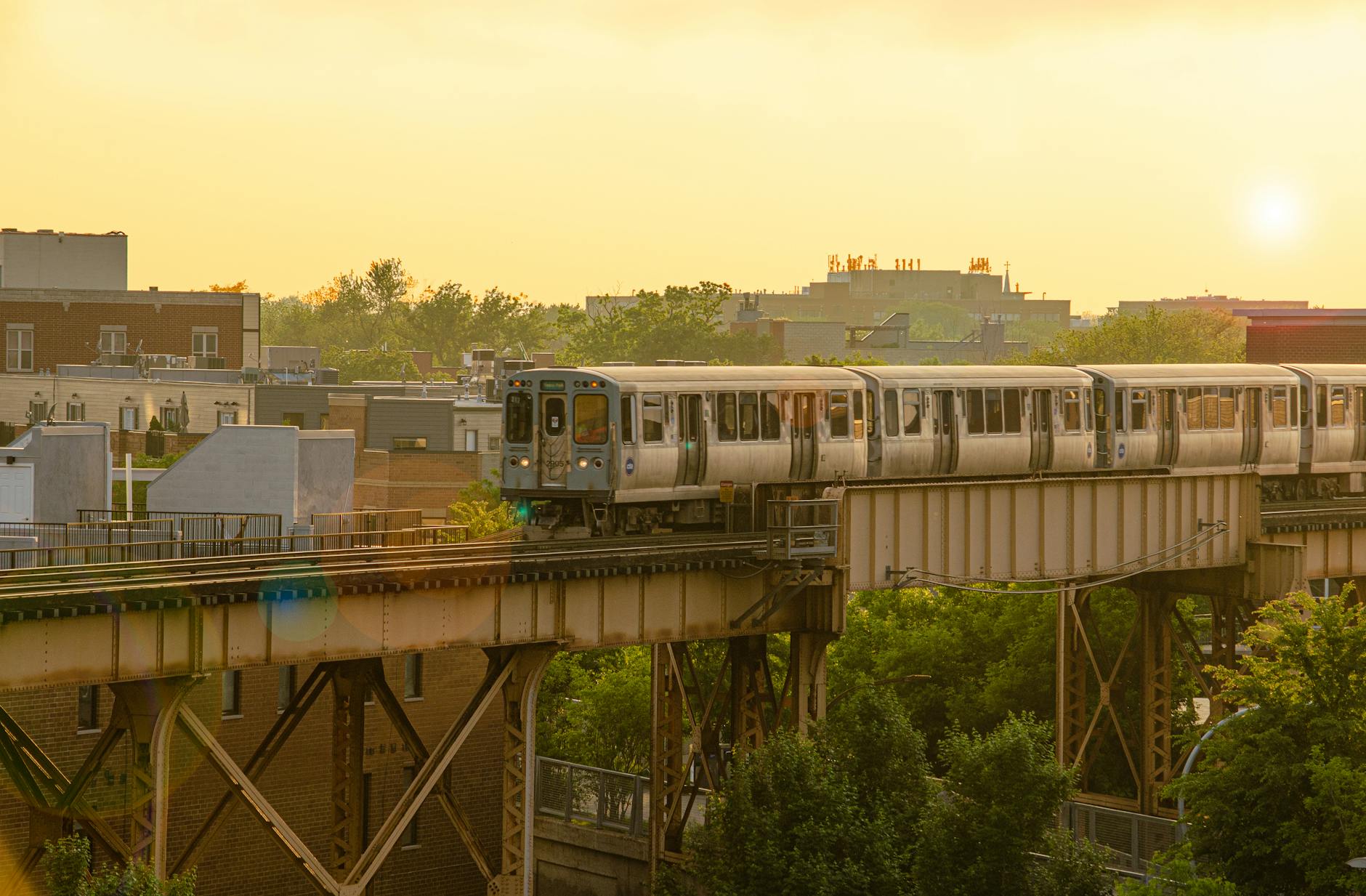
Limited budgets. Lots of traffic. Multiple regional actors, including city and suburban officials. A legislative process plus backroom conversations. All of these are involved in developing a proposal for merging Chicago area transit agencies:

Photo by Mike Wojan on Pexels.com

The proposal is part of a broader look at transit funding, as the region’s public transit agencies face a combined $730 million budget hole once federal COVID-19 relief funding starts running out, which could be as soon as 2025. Transit agencies have warned failure to plug the financial hole could lead to catastrophic service cuts and fare increases, and the Chicago Metropolitan Agency for Planning was tasked by the Illinois General Assembly with developing recommendations to overhaul transit, which were delivered to lawmakers in December.

The decision to introduce legislation is a signal of how some lawmakers and civic organizations want to proceed. Already, the transit agencies have sought more state funding, while the civic organizations and lawmakers say funding must be linked to changes to the way transit is overseen. But debate about consolidating the transit agencies and funding could prove thorny in Springfield.

Still, merging the transit agencies has garnered some support. The Civic Federation, a business-backed Chicago watchdog group, recently endorsed the idea, and Cook County Board President Toni Preckwinkle also previously expressed her support for the concept…

The proposal set to be introduced this week in Springfield is expected to replace the Regional Transportation Authority, which coordinates financing for the agencies, with a new Metropolitan Mobility Authority. The new agency would oversee the operation of buses, trains and paratransit, rather than having the CTA, Metra and Pace each operate their own services.

The proposal would revamp the number of board members on the new agency and who appoints them. The current system is complex and layered, regional planners have pointed out, with 47 board members across the agencies appointed by 21 elected officials. That has given nearly two dozen state, suburban and city officials varying levels of influence on the transit boards.

There is a lot to be worked out. No one community can address this issue. Even if the big city in a region has a great system, that city does not stand alone as people and business moves throughout the region. Indeed, in many regions, many of the jobs and much of the activity takes place in the suburbs where driving is even more prominent. Thus, I am in favor of this if it can improve transit options, create budget efficiencies, and help the region plan for the future.

One outcome is consistent in postwar era in the United States: we tend to get more roads and increasing traffic. In many regions, there are multiple competing interests regarding transportation. Do suburbanites want mass transit lines? What infrastructure already exists? Who controls the budgets? What political processes do ideas and plans need to work through? In a country devoted to driving, it can be hard to promote alternative options.

An American downtown with multiple traffic circles

On a recent visit to Sarasota, Florida, I discovered multiple traffic circles on a major roadway (US-41):

I was not there at the busiest time of the day but it seemed that all the traffic was flowing fine through the roundabout. The biggest issue I could imagine for drivers is getting into the correct lane for where the driver wants to exit the traffic circle. For example, in the image above, to go straight, the driver could be in either lane but to go left or right, one has to pick the correct lane and then exit appropriately.

These were not the only traffic circles spotted in western Florida. I saw several under construction, both on existing roadways and along new roadways. The more constructed, the more familiar drivers will be with them.

One big advantage of these is that traffic can often keep moving rather than the stopping required by stop signs or traffic lights. If the driver has yielded, there is no need to stop if the coast is clear.

I do not know which American communities have more traffic circles than others but this could be an interesting way for places to distinguish themselves from others.

Using community wayfinding signs for religious congregations

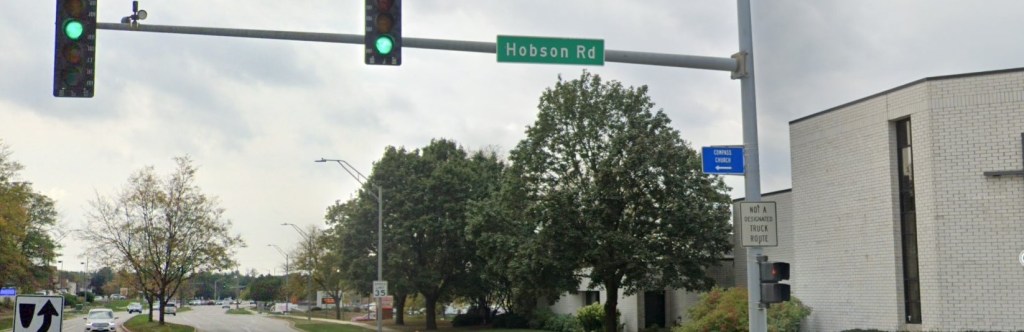
Drive through a community in the Chicago area and you see a lot of signs. One small set of these direct travelers toward religious congregations. Here is one example from Google Street View:

Image from Google Street View

See the small blue sign on the traffic light pole? It directs people to a church a half a mile down the road.

A few observations in seeing such signs:

  1. Not all congregations have a sign. Could all congregations request one and then have at least one pointing toward them?
  2. The signs are pretty small. How many drivers see them.
  3. The signs tend to be posted at busier intersections. Some drives from those intersections are shorter and easier to navigate than others. For example, a driver might see a sign pointing in a direction but it may take a little while before finding the congregation roughly in that direction.

Given that these signs are likely provided as a community good, can their use be improved in significant ways?

American drivers cause many accidents and deaths

Americans like to drive. And American drivers contribute to a lot of accidents and deaths:

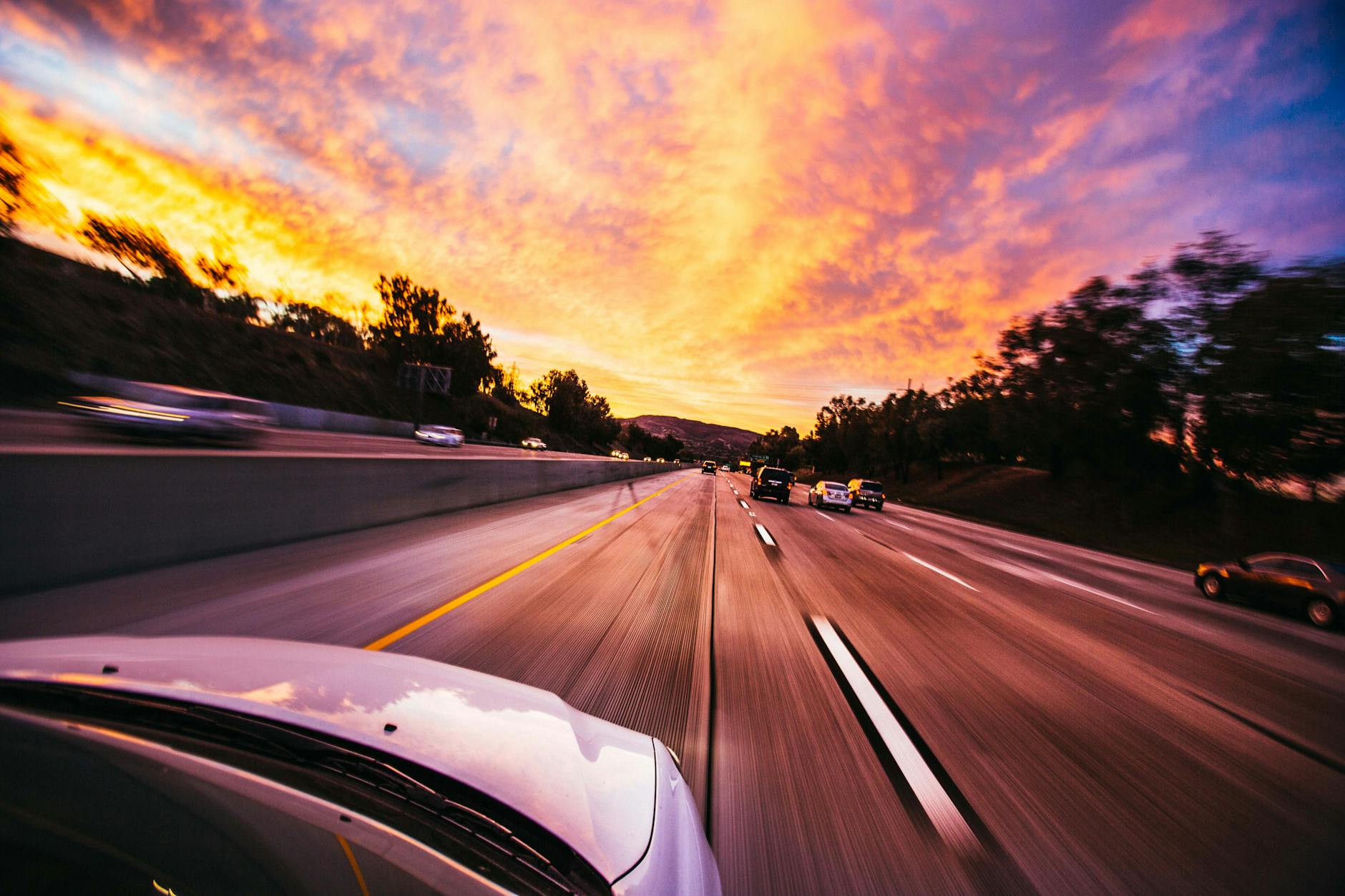
Photo by Taras Makarenko on Pexels.com

Above all, though, the problem seems to be us — the American public, the American driver. “It’s not an exaggeration to say behavior on the road today is the worst I’ve ever seen,” Capt. Michael Brown, a state police district commander in Michigan, told me. “It’s not just the volume. It’s the variety. There’s impaired driving, which constituted 40 percent of our fatalities last year. There are people going twice the legal limit on surface streets. There’s road rage,” Brown went on. “There’s impatience — right before we started talking, I got an email from a woman who was driving along in traffic and saw some guy fly by her off the roadway, on the shoulder, at 80, 90 miles an hour.” Brown stressed it was rare to receive such a message: “It’s got so bad, so extremely typical,” he said, “that people aren’t going to alert us unless it’s super egregious.”

In 2020 and 2021, the National Highway Traffic Safety Administration has calculated, approximately a quarter of all fatal wrecks in the United States involved vehicles traveling above the posted speed limit; a significant percentage of the dead, whether passenger or driver, were not wearing seatbelts. In line with the trends documented by Kuhls in Nevada — and observed firsthand by Brown in Michigan — national intoxicated-driving rates have surged to the extent that one in every 10 arrests is now linked to a suspected D.U.I. And aggressive driving, defined by AAA as “tailgating, erratic lane changing or illegal passing,” factors into 56 percent of crashes resulting in a fatality. (Distressingly, this statistic does not cover the tens of thousands of people injured, often critically, by aggressive drivers, or the 550 people shot annually after or during road-rage incidents — or the growing number of pedestrians and cyclists deliberately targeted by incensed motorists.)

Take the bad behavior and add the perils of distraction by smartphone — responsible, by one conservative estimate, for about 3,500 deaths annually — and you’re left with what Emily Schweninger, a senior policy adviser at the U.S. Department of Transportation, described to me as a “genuine public-health crisis” on the level of cancer, suicide and heart disease.

Much could change in the coming years to address this issue. Safety features in vehicles. Changed designs of roadways and spaces for pedestrians and bicyclists. Other efforts need more time and capabilities: self-driving vehicles, a changed culture around roads, driving, and community life.

But, part of the issue is whether these accidents and deaths are a problem or not. Americans like to complain about other drivers and tend to see their own driving as okay. Driving is required in many places. Some drivers might even enjoy driving. The delivery of many of our goods requires driving. Are deaths via vehicle just the price Americans are willing to pay for driving?

Addressing this issue is a long-term project. All of daily life contains some risks but Americans tend to not think much about the risks of driving even as it impacts many lives on a daily basis. Does this mean a national safety campaign is needed? A serious conversation about how necessary driving should be? A need to invest in new technologies and options? On one hand, plenty of people would have experience with this issue. On the other hand, it will take a lot of work to convince people to support significant changes to American driving and all that goes with it.

Americans need a lot of money to achieve the American Dream

Two estimates of how much money it takes to live out the American Dream suggest that many Americans will struggle to do so:

Photo by Nadi Lindsay on Pexels.com

The “American Dream” costs about $3.4 million to achieve over the course of a lifetime, from getting married to saving for retirement, according to a recent analysis from financial site Investopedia. 

Meanwhile, median lifetime earnings for the typical U.S. worker stand at $1.7 million, earlier research from the Georgetown University has found. 

Such figures underline the financial pressures that many families face trying to afford a middle-class life as expenses like child care, college tuition and buying a home continue to climb. The Investopedia analysis tallies the average cost of achieving other aspects traditionally associated with the American Dream, such as owning a house and raising two children to age 18. 

Another analysis, from USA Today, found that funding the American Dream costs about $130,000 a year for a family of four. Median household income stands at about $74,450, according to the Census Bureau.

One key facet of the American Dream is that it is supposed to be available to all. That never meant everyone would achieve it, particularly as Americans often emphasize individual hard work and taking advantage of opportunities. But, it should be reachable in a society where many Americans value and see themselves as middle-class.

Perhaps this is why there is a market or demand for particular experiences that provide part of the American Dream or a taste of it. One traditional marker of the American Dream in the United States is owning a home. This is displayed on TV, illustrated in toys, and promoted by presidents. If people can just own a home, they have a strong case to make for attaining the American Dream. Or, consider the freedom of driving down the road in your vehicle to wherever you want. This experience offers a taste of the larger American Dream.

If large numbers of Americans cannot obtain the American Dream now and in the coming years, this could mean the Dream becomes redefined. Maybe it will have different elements. Or, perhaps it will be more commonly viewed as attainable only by some. It could be a status symbol of the elite. Or, new policies and conditions could renew aid and efforts toward achieving the American Dream. Politicians could run on this idea while grassroots movements could promote it.

Moving forward with a congestion tax for entering Manhattan

A state board recommends vehicles entering Manhattan south of 60th Street pay the first congestion tax in the United States:

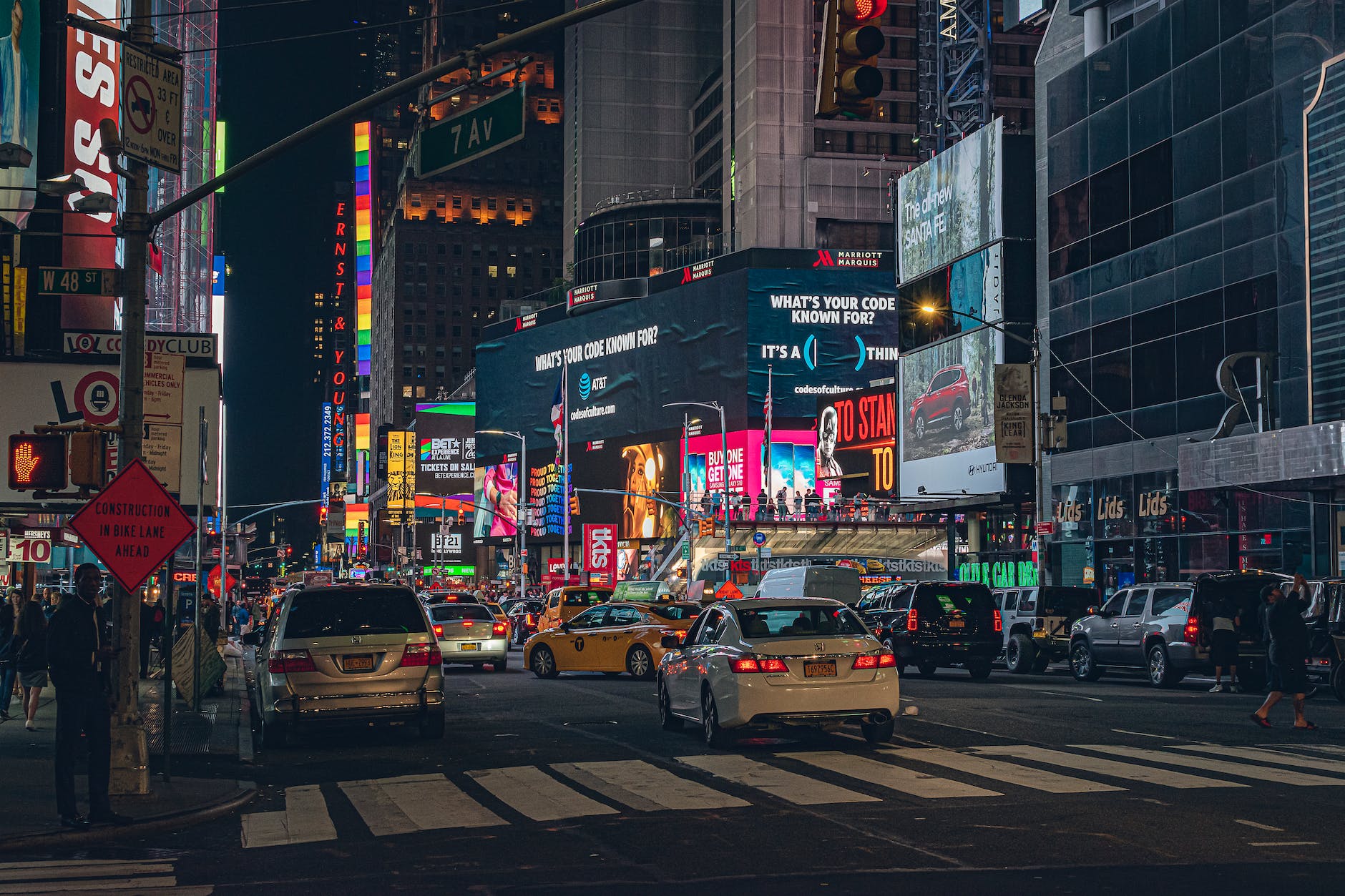
Photo by Udayaditya Barua on Pexels.com

Under the plan, passenger car drivers entering Manhattan south of 60th Street during daytime hours would be charged $15 electronically, while the fee for small trucks would be $24 and large trucks would be charged $36.

Cities such as London and Stockholm have similar programs in place, but New York City is poised to become the first in the U.S.

Revenue from the tolls, projected to be roughly $1 billion annually, would be used to finance borrowing to upgrade the city’s mass transit systems…

Officials say that in addition to funding needed transit improvements, congestion pricing will result in improved air quality and reduced traffic…

“The Traffic Mobility Review Board’s recommended credit structure is wholly inadequate, especially the total lack of toll credits for the George Washington Bridge, which will lead to toll shopping, increased congestion in underserved communities, and excessive tolling at New Jersey crossings into Manhattan,” Murphy, who filed a federal lawsuit over congestion pricing in July, said in a statement.

In the US city with the highest rate of mass transit usage, this makes some sense. The roadways are crowded. Mass transit systems need money. At least some of the vehicles entering the city can afford the fee.

At the same time, Americans like to drive free. Cars and driving are an essential part of American life, whether cruising down a highway or delivering many goods via truck. Many will not be happy to pay extra to drive down taxpayer roads into parts of the city when it used to be free.

If this goes forward in Manhattan, how soon until it comes to other American cities? Those places may have fewer alternatives to driving but the revenue – and other benefits – might be hard for other places to pass up.

Zipper merges work great at…McDonald’s?

Highway drivers sometimes struggle to use full lanes to merge when a lane is closing or ending. This is known as the “zipper merge.” Thankfully,McDonald’s has helped show Americans they can do it?

McDonald’s has several advantages in encouraging a smooth zipper merge process:

  1. A shorter runway to merging. You often go around a turn, order, and immediately merge. In contrast, highway merges can sometimes be seen from a mile or more away and some want to block all that space.
  2. A physical separation of the lanes before merging. The vehicles are ordering before merging and the need to have a display board and speaker means the lanes cannot be crossed into. Even if a driver wanted to block the other lane, the physical barriers make that difficult.
  3. People want to get their food. While driving on the highway, the goal is to get somewhere quickly. Different motivations.
  4. Might it matter that McDonald’s is private property while highways/roadways are more of open or public space?

Some of these principles could be applied to highways. Imagine temporary physical barriers between the lanes to force a merge closer to the end of the lanes. Or, reminders that blocking lanes has (legal?) consequences even though it is more public space.

From Carmageddon to Highway-Fire-Mageddon to new transportation options in LA

Whereas construction closed down a significant Los Angeles highway in 2011 (and a follow-up in 2012), a fire has now closed down a mile stretch of important highway in Los Angeles:

Photo by moein moradi on Pexels.com

The situation poses a commuting challenge that L.A. has not seen in years, with hundreds of thousands of commuters facing detours and heavier-than-normal traffic. Starting Monday, some worked from home and others took mass transit, but many simply endured the delays.

The closure caused gridlock in some areas, but there was general sentiment that L.A. survived the first morning and evening commute without too much chaos thanks in part to warnings sent to residents’ cellphones…

Federal, state and local agencies are scrambling to determine what happens next after the sudden closure of the mile-long section of the heavily trafficked freeway between Alameda Street and the East L.A interchange, a key east-west route through downtown. Mayor Karen Bass said that U.S. Secretary of Transportation Pete Buttigieg called and reassured her that federal officials were aware of the impact from closing one of the busiest freeway corridors in the country.

“Losing the stretch of the 10 Freeway will take time and money from people’s lives and businesses,” Bass said. “It’s disrupting in every way. Whether you were talking about traveling to and from work, or your child care plans, and the flow of goods and commerce, this will disrupt the lives of Angelenos.”

Los Angeles and the region depend heavily on highways. This is true of all metropolitan areas in the United States but Los Angeles is famous for its driving and its lack of mass transit within a sprawling region.

While I am sure the focus here will be on getting this highway going again as soon as possible, why not think as well as future transportation options? The initial Carmageddons in Los Angeles went rather smoothly but this is another chance to think about additional travel options and building an adaptable and redundant system. If for a variety of reasons residents of the region cannot drive to work or where they need to go, do they have viable alternatives? Fires like this are rare but individuals face all sorts of challenges in getting where they need to go.

More broadly, can more people in the region regularly shift their transportation away from driving alone to other options? As the population of the region grows, the traffic is not going away. Roads do need to be maintained. Accidents will happen on the roadways. When I rode the LA subway on a recent visit, it worked okay one-way (the return trip was derailed by a long delay that pushed me to walking several miles) but it had limited options of where I could go. Are many people willing to ride buses and other forms of mass transit when they might drive?

The highway detours will end at some point but will driving return to normal immediately? Probably yes…but there will likely be more opportunities to consider other transportation options in the years to come.

How many roundabouts can the suburbs have?

Roundabouts are slowing spreading in Lake County, Illinois:

The Lake County Division of Transportation (LCDOT) closed Darrell, Neville and Case roads in Wauconda to through traffic for 110 days to construct a roundabout and realign the intersections…

This is the ninth roundabout in the Lake County Division of Transportation system. The $8.1 million project is the first of three roundabouts to be built as part of the Darrell Road corridor improvement.

Suburbanites are used to traffic lights and stop signs. Adding roundabouts or diamond interchanges presents a new dimension to driving. The roundabout offers the possibility of a smoother journey – if there is not too much traffic – but requires a different level of attention as there are multiple yield points.

Suburbanites can come to like roundabouts with experience. But, local drivers will likely need some time to get used to them. I am curious to see how many roundabouts will eventually populate the suburbs. They are likely not possible in many places due to existing land uses. However, if they help move traffic, are safe, and people can drive through them, we will probably see more of them in the Chicago region.