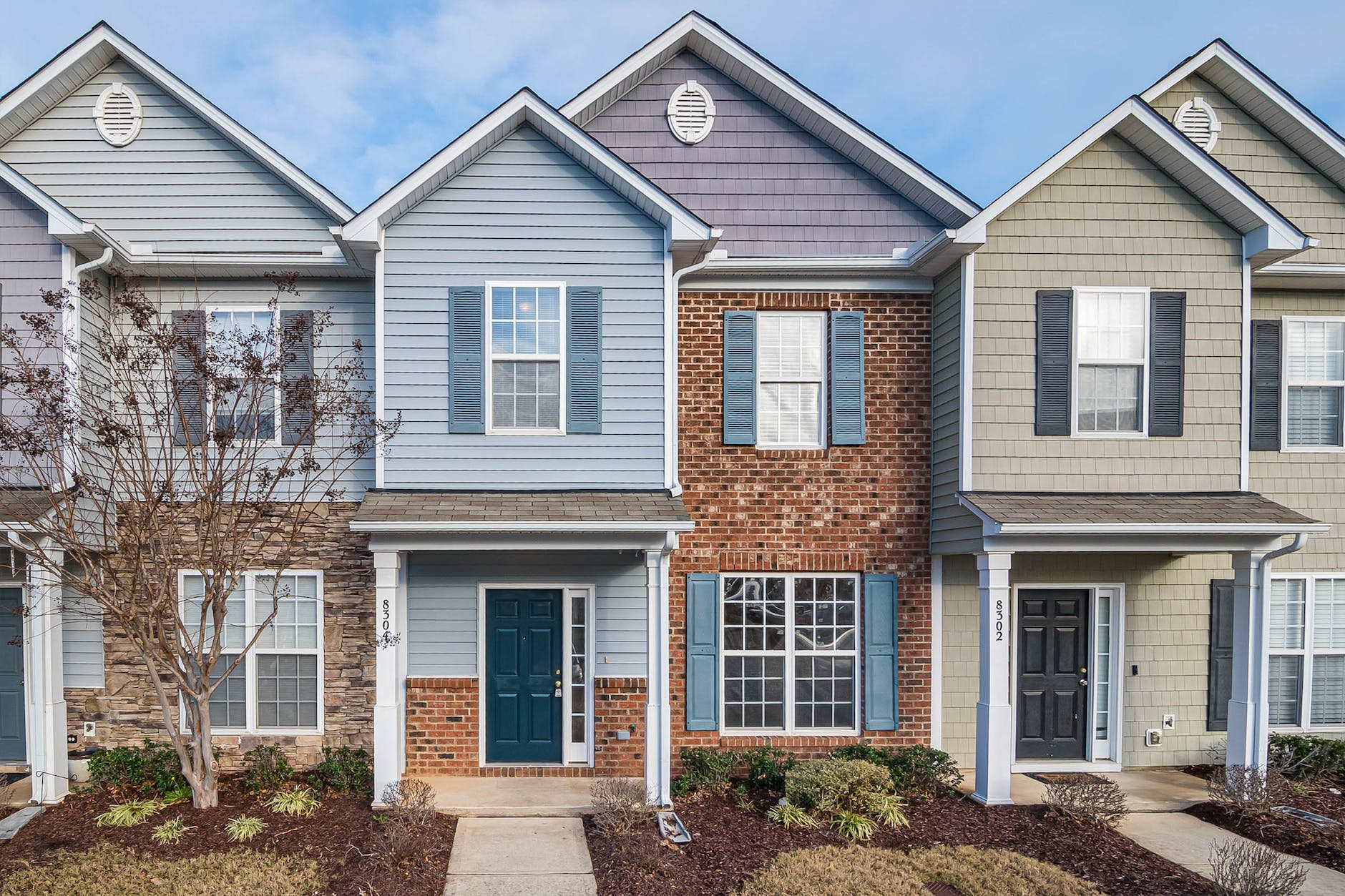
Condos, investment properties, and limited demand in Canada

Can condos help people find reasonably-priced housing and achieve homeownership? Maybe but viewing them more as investment properties for years means there may now be less demand for condos in Canada:

Photo by Amit Batra on Pexels.com

It didn’t take long to figure out why there were so many empty units on the market: it turns out nobody wants to rent a condo, and nobody wants to buy one either. Condo rents have dropped over the past two years, and according to a recent report from the Canada Mortgage and Housing Corporation, or CMHC, condo sales have fallen by 75 percent in the Greater Toronto Area and 37 percent in the Vancouver area since 2022. The market has become so dire that buyers of pre-construction condos are having difficulty closing their purchases. Banks lend money depending on the present value of the property, and some condos are worth less now than they were when the buyers made their first deposit. As a result, developers have been cancelling construction projects. Some experts say we should have seen this coming…

The simple answer is that many condos built between the late 2010s and early 2020s were constructed not for living but for investment. Since 2000, there has been a steady increase in the proportion of condos used as investment properties. To my surprise, most of the investors were not faceless corporations or foreign investors. Research done by Statistics Canada shows that the typical condo owner is a middle-aged, middle-class Canadian couple. The reigning logic for the middle class was that buying a condo, renting it out to pay for the mortgage, and eventually selling the unit was a solid way to make money. This was especially true in the late 2010s, a period of low interest rates and weak rent control policies. Steady demand for housing, partially caused by increasing immigration, made real estate seem like a sure bet.

Developers knew that most pre-construction buyers were investors rather than people looking to live in the apartments themselves. As a result, they focused on quantity over quality. Vishakh Alex, an architectural designer working in Toronto, said that the directive from developers in the late 2010s was to squeeze in as many units as possible. It is telling that between 1971 and 1990, the median condo in the city was approximately 1,000 square feet, but between 2016 and 2020, the number dropped to roughly 650 square feet…

Yet, as city populations continue to grow, there’s nowhere to build but up. It hardly bears repeating that there is a housing crisis in Canada. Young middle-class people looking to buy their first homes can rarely afford the kinds of houses that they might have grown up in—a cute triplex on a tree-lined street in Trinity-Bellwoods, Toronto, for example, or a townhouse in Kitsilano, Vancouver, with a view of the ocean. And so it is to the condos we must go.

But it is also true that condo living does not have to be, and perhaps should not be, defined by the biggest developers looking to squeeze every drop of profit from mom-and-pop investors and homebuyers.

This shift toward investor properties sounds similar to what has happened in the United States in recent decades with homeowners increasingly viewing their properties as investments and expecting certain returns.

One difference here is that more of these condos might have been second homes. In Privileging Place: How Second Homeowners Transform Communities and Themselves, sociologist Meaghan Stiman explains how only a second home influenced how property owners viewed places and themselves with consequences for communities where these second owners were sometimes present.

If people in cities in Canada and the United States have concerns about investors buying too many properties, whether investors from other countries or institutional investors, what do they make of middle- to upper-class residents buying condos for investments? As the author notes above, these cities clearly need housing. American cities and metropolitan regions need housing. Should certain kinds of investors have limits or should developers be limited in how many investment properties they can construct?

One upside could be that the glut of investment condos does provide some attainable housing. The prices might not fall too far given their initial cost but what if investment condos and homes start becoming options for residents for whom they were not originally intended?


When mortgage rates do not decrease as expected

The Fed cut interest rates. Mortgage rates did not go down; they went up:

Photo by Robin Schreiner on Pexels.com

Since Fed Chair Jerome Powell lowered interest rates by 50 basis points on September 18, the average 30-year fixed mortgage rate has moved higher, not lower.

According to data from Mortgage News Daily, the average 30-year fixed mortgage rate has jumped about 47 basis points since the Fed rate cut, to 6.62% from 6.15%…

Going forward, the situation hinges on the Fed’s rate-lowering schedule. At present time, market expectations — as calculated by the CME FedWatch tool — are for two more 25-basis-point cuts this year.

Whether that will manifest itself in lower mortgage rates is up in the air. Two major upcoming events are the Consumer Price Index release this Thursday, as well as the October jobs report in the first week of November.

Life does not always go as predicted. However, this saying does make it easier to work with the unexpected happenings. And with large-scale systems, lots of people might hold an expectation or be told something will happen. With all the moving pieces in the financial system (plus its interactions with other parts of the world), patterns can change or there can be exceptions to regular patterns. Since home sales are an important part of economic, social, and community life, any changes like these have ripple effects. If it slows down home purchases and selling, this affects a lot of actors.

One question to ask is whether there are certain periods or conditions when the predictable is less likely to happen. Is this rise in rates when they were expected to go down a one-time occurrence or part of broader instability? How predictable are mortgage interest rates given particular circumstances?

What if all the homeowners in a town or sizable neighborhood wanted to sell at once?

The second part of this headline is thought provoking: “In a Florida Town Ravaged by Storms, Homeowners All Want to Sell.” More from the story:

Photo by Kindel Media on Pexels.com

Hoping it was a fluke, Driscoll tore out the affected drywall and started fresh. After all, the four-bedroom home built in 1960 had no flood history. 

But then it happened again, and again. Like many others in the community, he put his home up for sale in the spring of this year. After seeing little interest, he cut the asking price…

Ballooning home insurance costs and the perennial threat of violent storms are starting to undermine housing markets throughout much of the state. But in few places has the turnaround been more dramatic than in low-lying communities up and down the coast of Florida that frequently flood. 

The Tampa Bay housing market had been softening even before Helene struck. While prices have been flat, the area experienced a 58% increase in supply in August compared with a year ago, and a 10% decrease in demand, according to Parcl Labs, a real-estate data and analytics firm. 

About half the homes listed for sale in Tampa experienced price reductions as of Sept. 9, the third highest share of all U.S. major metropolitan areas.   

It sounds like there has been an increase in people wanting to sell in this area. It is not quite “all” have their homes on the market. Perhaps “all” might want to sell?

Either way, the idea of a large number of homeowners moving away at once is likely rare in recent years. There are ghost towns across the American landscape, whether in mining communities or suburbs. In these cases, everyone left and decades later there are some remnants or possibly nothing left if other land development has taken place.

If residents all left these Tampa neighborhoods, what would happen to the land? It could remain unpopulated if it was determined that these are areas that frequently experience flooding. The land could become wetlands or a buffer zone for nearby land. Or it could be turned over to other developed uses that might be less affected by flooding, whether that might be a park or industrial space.

The modern box houses of Los Angeles

In the last few decades, more modern box houses have come to Los Angeles:

Photo by Fomstock .com on Pexels.com

During the 20th century, Los Angeles home styles were as eclectic as its populace. Wood-shingled Craftsmans mingled with white stucco bungalows. Depending on the neighborhood, you might get an ornate Victorian, chic Midcentury Modern or even a Mayan Revival-style showplace — something that begs you to look at it, admire it. A house that invites an opinion, good or bad.

But although the box houses’ bulk draws attention, its design is basic. They’re like an iPhone: simple and smooth. Clean lines, glass walls, simple shades of white or black. Critics see them as soulless and inert.

Modern homes don’t have time or money for a turret, overhanging eave or stained-glass windows. Sloped ceilings, skylights and other superfluous accents take away from the bottom line — the largest amount of square footage possible for the cheapest possible construction price…

When such homes started popping up in the wake of the housing crash in 2008, some assumed the trend would be temporary. But demand for the style still rages on today…

The “bento boxes of today,” as Parsons calls them, are shiny, sleek and sexy, but he said they’ll be tomorrow’s tear-downs.

The article suggests these architectural styles are cyclical: builders, developers, real estate agents, municipalities, buyers, and others are involved in changing architectural styles. So, then the question here is whether these homes are here to stay or whether another style will emerge and the modern box home will fade?

If I had to guess, I would suggest the modern box home will hang on as a consistent but small presence in the LA housing market for several reasons. They are simple and relatively cheap to build. They offer a lot of space. In uncertain economic times and pricey housing markets, these are hard factors to overlook.

There is also a segment of the market that finds them attractive. The modernist home has been around for decades. Most Americans might not choose it as their preferred style but some would. In a large metropolitan region like Los Angeles, some will prefer this design.

Given the unique housing market of Los Angeles, perhaps the real question is whether modern homes are catching on elsewhere in the United States. When housing costs are not as high, is the modernist house one people want? In my area, several such homes come to mind but they are rare.

Housing market slows, first-time buyers hit hard, higher priced homes not down as much

Headline: “June home sales drop to the slowest pace in 14 years as short supply chokes the market.” But, not everyone in the housing market is having the same experience:

Photo by RDNE Stock project on Pexels.com

First-time buyers are struggling the most. Their share of June sales fell to 26%, down from 30% in June 2022. That is the lowest share since the Realtors began tracking this metric.

The higher end of the market, however, appears to be recovering. While sales were down across all price points, they were down least at the higher end. That was not the case last year, when higher-priced home sales were dropping off sharply.

The bifurcated housing market continues. At the cheaper end, the bar for entering keeps rising. With prices up, mortgage rates up, and supply down, it is harder to purchase a first home. At the more expensive end, those with means continue to be able to buy and sell.

This is not new. The starter home is hard to find in the 2020s for multiple reasons. If people cannot buy a home early on, this limits opportunities down the road. If you are already in a more expensive home, you have more options.

Whether the differences between these two ends of the housing market is addressed in ways that help long-term remains to be seen.

The somewhat arbitrary percent Americans should devote to housing vs. what they actually spend

Where do recommendations come from regarding the percent of their incomes should Americans spend on their mortgage?

Photo by Karolina Grabowska on Pexels.com

I interviewed nine real-estate experts to help me understand why the numbers vary so much and, I hoped, help me figure out the right one to use for myself. They confirmed that, yes, the mortgage-affordability numbers are all different, and though some lenders use them to approve mortgages, they are basically guesstimates. “To some extent, they’re plucked out of the air,” Robert Van Order, an economics professor at George Washington University, told me. “A lot of these numbers are pretty arbitrary,” added Edward Seiler, the associate vice president of housing economics at the Mortgage Bankers Association. “It’s just based on people staring at data and thinking, What are the tipping points that force people into delinquency?” If the percentages don’t seem ironclad, it’s because they aren’t.

If these numbers are at the upper end of what people should spend, what do people actually spend?

Despite hearing the 30 percent figure from many of the experts I talked with, I was surprised to learn that most current homeowners actually spend much less on their housing. So do most renters. The median homeowner with a mortgage spends 16 percent of their gross income on their house payment, including taxes and insurance. That number is higher—24 percent—for low-income households, but it’s still less than 30 percent. Renters spend an average of 26 percent of their income on housing. In other words, if you take the mortgage calculators at their word and spend 28 percent, you’re paying much more for a house than the average American does.

Medians can disguise a lot of variability. In certain housing markets or in certain economic conditions or certain personal circumstances, the top end percent might be very helpful. In other situations, it may not matter as much.

Even with the variation in recommendations, it appears they roughly fall into a range of 25-35% of income. Would it be better then to suggest to people that they should aim to spend at most a quarter to one-third of their income on housing? This does not have the convenience of a single number but the range could fit a broader set of conditions and circumstances.

Responding to the affordability of suburbs outside America’s most expensive cities

A recent analysis looked at how affordable suburban residences were compared to prices in the most expensive cities in the U.S.:

Photo by Curtis Adams on Pexels.com

Buying a house in the suburbs isn’t just a little easier on the wallet for city dwellers. In some parts of the country, bedroom communities offer an entirely different real estate market. Over 600 of the 777 suburbs within 30 miles of the country’s 20 most expensive cities are more affordable in terms of price per square foot — up to 65% cheaper in some places.

The East Coast offers the most suburban alternatives to main cities: 95 of the top 100 suburbs with the biggest price differences are near New York, Washington D.C., Boston, and Miami…

These are the top 10 cities with the most relatively affordable suburbs for home buyers, ranked by the percentage of suburbs with a lower cost per square foot compared to the main city.

  1. Salt Lake City, Utah (100%)
  2. New York, New York (98%)
  3. Washington, D.C. (97%)
  4. Boston, Massachusetts (93%)
  5. Honolulu, Hawaii (90%)
  6. Austin, Texas (89%)
  7. Seattle, Washington (83%)
  8. Boise, Idaho (80%)
  9. Denver, Colorado (80%)
  10. Riverside, California (79%)

A few thoughts in response:

  1. Do people always seek out the cheapest housing and move to the suburbs? Some will move to the suburbs because of lower price points. Others might stay in the city or go to the suburbs for other reasons.
  2. Is 30 miles out from an expensive city a large enough radius? It might be for some of these cities and not for others. Additionally, many commutes are suburb to suburb to being 40 miles out and commuting to a suburb 25 miles from the city is a different comparison than city versus suburban settings.
  3. One reason the expensive cities are so pricey is that they are desirable. If more people move to a region, does this then decrease the affordability of suburbs as well?
  4. Is it safe to assume then that there are metro areas where city and suburb prices do not have much difference?

How might a prediction of a crash in housing prices in specific cities affect behavior?

Goldman Sachs is predicting a big drop in housing values in four American cities:

Photo by RODNAE Productions on Pexels.com

In a note to clients earlier this month, Goldman Sachs forecasted that four American cities in particular should gear up for a seismic decline compared to that of the 2008 housing crash.

San Jose, California; Austin, Texas; Phoenix, Arizona; and San Diego, California will likely see boom and bust declines of more than 25%.

Such declines would rival those seen around 15 years ago during the Great Recession. Home prices across the United States fell around 27%, according to the S&P CoreLogic Case-Shiller index…

In 2023, the investment bank expects home prices to barely fall in cities like New York (-0.3%) and Chicago (-1.8%) while predicting higher prices in Baltimore (+0.5%) and Miami (+0.8%).

It make sense that a company interested in investments and finance would want to make such a prediction. Will it change people’s behavior? A few ways this might matter:

-Local homeowners try to sell now before the big decline or prepare to stay put longer so they can see an increase in values. Either way, the supply of homes for sale is affected.

-Builders and developers reduce their construction and plans. They wait to see how long such a decline lasts. They hope to weather this and have higher profit margins later.

-Local governments steel for the impacts to tax revenues and population growth.

-People who might consider moving to or investing in the area reconsider. Would lower housing values make the area more attractive? (This might conflict with fewer homes for sale.)

Does such a prediction become a self-fulfilling prophecy to some degree as people wait for the drop in home prices?

The long-term consequences for those benefiting from buying a home during a recession

Thinking more about yesterday’s post on cooling home values in certain housing markets, how many people benefit from the lower prices? The typical emphasis in such economic times is to note the difficulty of buying a home when interest rates are higher and there is economic uncertainty.

Photo by RODNAE Productions on Pexels.com

But, lower prices means some might be able to buy when they could not otherwise. The hottest markets in good economic times have high prices and lots of competition. Even as borrowing money is harder in a recession, prices can be lower and the competition might not be as stiff.

Some people are still buying and selling homes during economic downturns. This leads to a long-term question: are those who buy during a recession more or less likely to hold tightly to the idea of a home as an investment? Is buying at the height of the market – famously, such as right before the housing bubble burst in the late 2000s – tied to a deeper focus on property values and a strong return on investment? Or, because a home purchased during a recession might emphasize scarcity and economic uncertainty, might this lead to more concerns about property values?

Large actors in the US housing market and building more homes

Derek Thompson argues those interested in more housing in the United States should be more concerned with local NIMBY activity than private investment firms buying up homes to rent:

Photo by Lady Emillia on Pexels.com

Far worse than corporations taking a few thousand units off the market for owners are the governments and noisy NIMBYish residents taking millions of units off the market for owners and renters alike—by blocking construction projects in the past few decades. (California alone has an estimated shortage of 3 million housing units.) From New York to California, deep-blue cities and states have amassed a pitiful record of blocking housing construction and failing to meet rising demand with adequate supply. Many of the people tweeting about BlackRock are represented by city councils and state governments, or are surrounded by zoning laws and local ordinances that make home construction something between onerous and impossible.

One of the issues at play here is a numbers one: who exactly is acting within the US housing market and how much sway do they have. Concerns about corporations and housing can be placed in the larger context of how many housing units there are and how many are being built. Here are the numbers Thompson provides:

The U.S. has roughly 140 million housing units, a broad category that includes mansions, tiny townhouses, and apartments of all sizes. Of those 140 million units, about 80 million are stand-alone single-family homes. Of those 80 million, about 15 million are rental properties. Of those 15 million single-family rentals, institutional investors own about 300,000; most of the rest are owned by individual landlords. Of that 300,000, BlackRock—largely through its investment in the real-estate rental company Invitation Homes—owns about 80,000. (To clear up a common confusion: The investment firm Blackstone established Invitation Homes, in which BlackRock, a separate investment firm, is now an investor. Don’t yell at me; I didn’t name them.)

If I am calculating correctly, institutional investors currently own 2% of the single-family rentals. Of course, this number could grow if these firms find this to be a good investment.

Also of interest is the number of new homes being constructed. Thompson links to figures from the National Association of Home Builders that shows 6.8 million new single-family units were created in the 2010s. So, concerns about big investors buying homes could be considered alongside housing construction: if the investors are buying more quickly than new homes are being built, this could be an issue.

Thompson settles on local actors – governments and residents – as holding back housing construction. In this numbers game, restrictions on a local level collectively are holding back the construction of single-family housing. If these restrictions were lifted or lessened, concerns about institutional investors would presumably diminish because there is a larger supply of houses to choose from.

One problem I see with this among the larger numbers: while local actors might in the aggregate have oversight over millions of units, they individually have control over relatively few units. Let’s say a particular suburb in the Bay Area (and this NIMBY argument often comes back to California) is against building new single-family homes. Depending on the size of the community and the availability of land, this might affect just a few homes to several thousand. This is not many. Zoom out to the whole region and many suburbs doing this adds up to tens of thousands of potential homes. Do this across all of California’s metro areas and the numbers add up. Similarly, you could do this across all the metro areas in the United States.

However, convincing all these municipalities to act in the interests of the region, state, or country as a whole regarding housing is a difficult task. Housing is local and this makes legislation at the state or federal level very difficult. California’s recent efforts with SB 50 did not go through. Illinois just recently gave some teeth – but not all the teeth – to affordable housing guidelines for communities set almost two decades ago. Federal guidelines are met with the suggestions that the suburbs are going to be abolished. One reason Americans like suburbs in the first place is that local government, presumably more responsive to the needs of residents, has the power to exclude (particularly on race and social class) and protect the existing single-family homes.

All of this does not necessarily mean Thompson is wrong. Yet, to get to the numbers of new homes constructed that would make a significant difference – whether in reducing the need many metro areas have for more affordable housing or outweighing the actions of investment firms – would require a lot of change across many communities. State or federal legislation may or may not be successful and would be unpopular in many places without a significant public groundswell of support that this is an issue that all or even most communities need to address.

Together, municipal changes regarding zoning and NIMBY could add up. But, changes would need to come across communities to make a big difference.