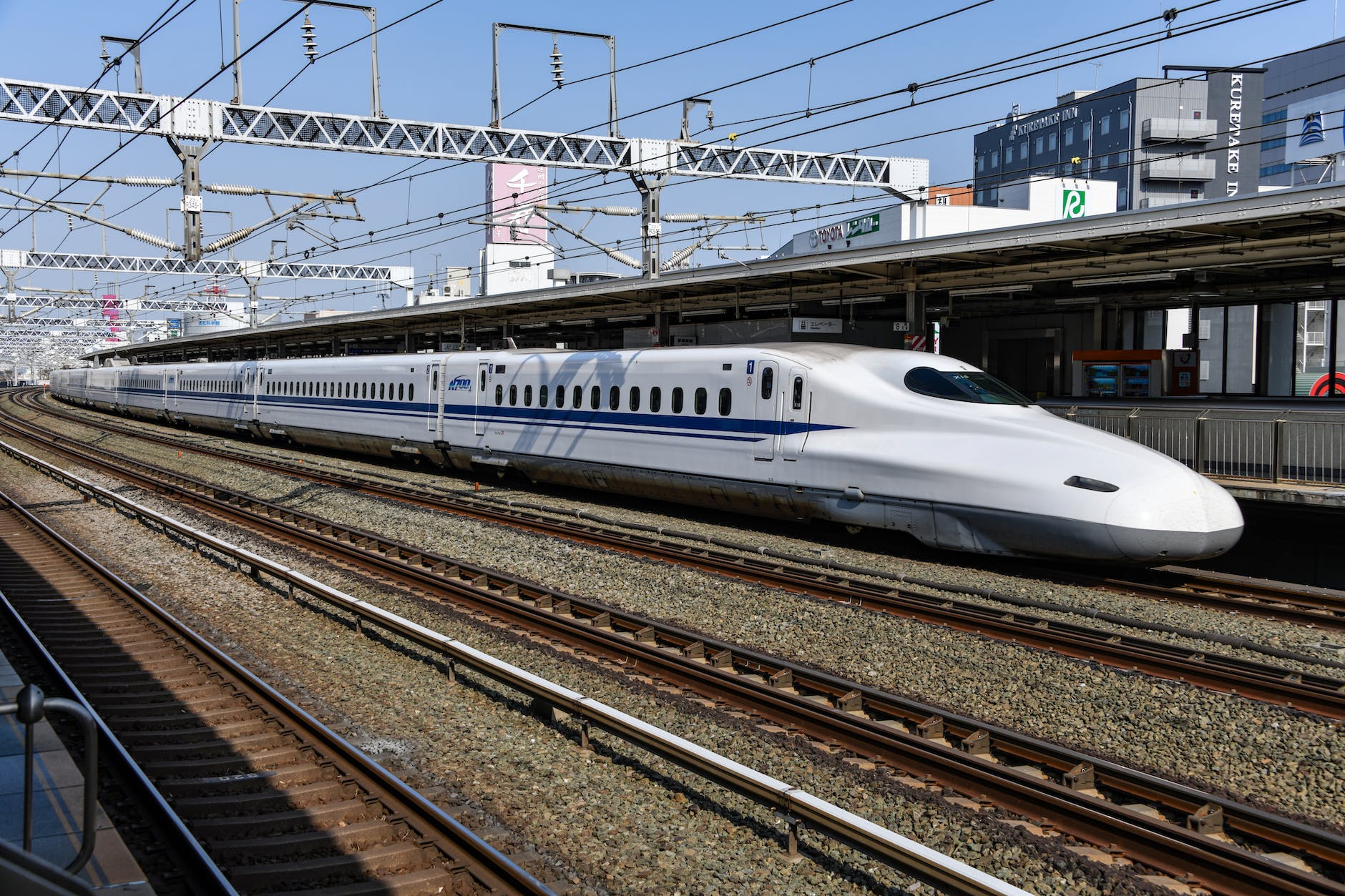
Imagine the best weather for infrastructure. It is probably not the four seasons of weather in the Chicago region:
From the State Climatologist Office in Illinois:
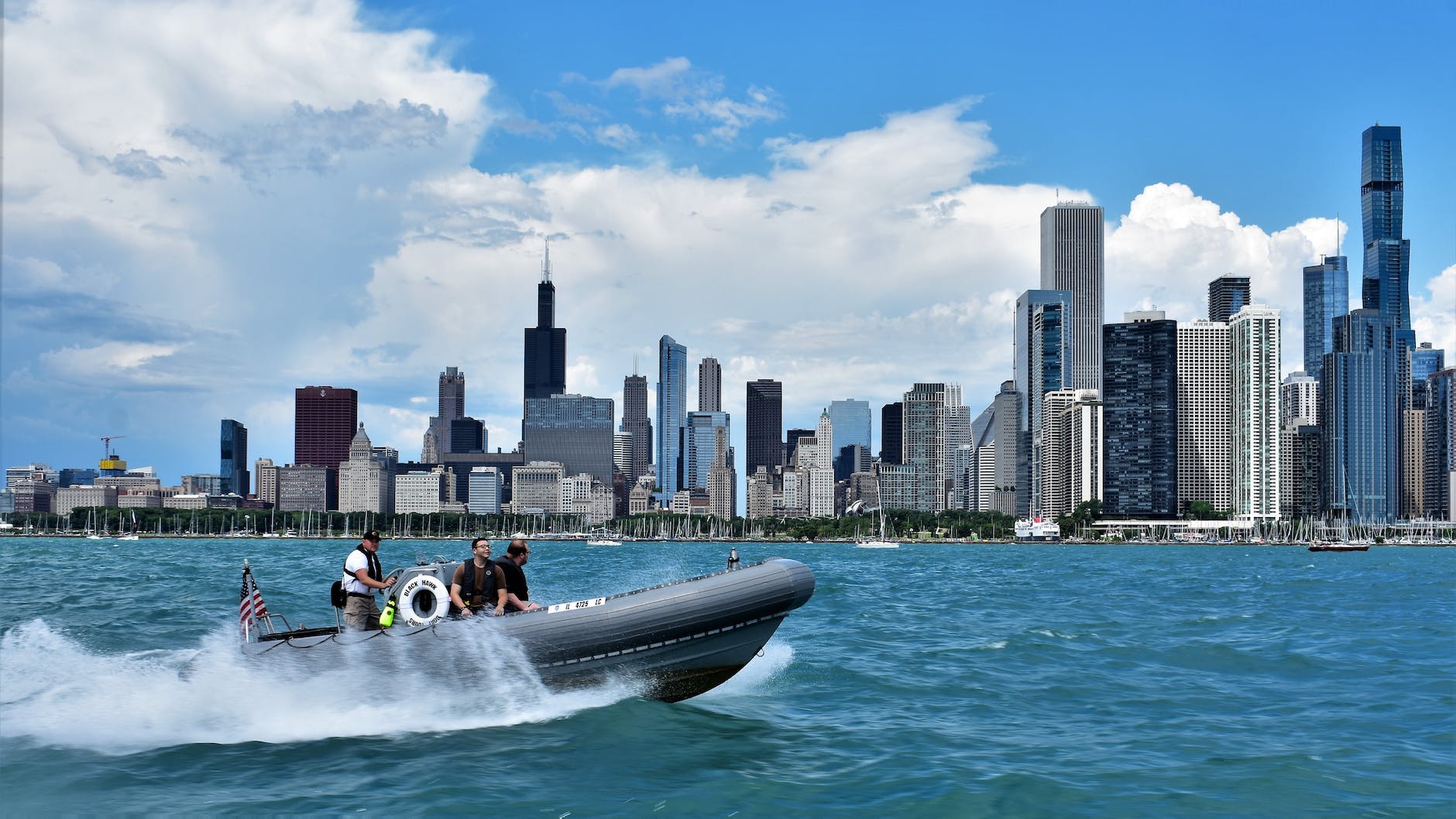
Chicago lies midway between the Continental Divide and the Atlantic Ocean, and is 900 miles north of the Gulf of Mexico. Chicago’s climate is typically continental with cold winters, warm summers, and frequent short fluctuations in temperature, humidity, cloudiness, and wind direction. Many consider the more moderate temperatures of spring and fall to be the most pleasant. Lake Michigan provides a moderating influence on temperature while boosting the amount of snowfall received in the city.
Such fluctuations in the Chicago region lead to potholes, closures of airports and roads plus delays, flooding, and pressure on systems at both the hot and cold ends of the temperature spectrum. Coming out of a major snow storm and heading into several days of subzero temperatures, some of everyday activity is disrupted but mostly life goes on. Humans have developed systems and practices that make it possible to live in many different conditions.
What might be ideal? How about a place with more consistent temperatures, few storms, and no flooding? I am sure there are locations in the United States that meet this more than others. Everywhere else, people and systems adapt.
Modern infrastructure that makes everyday life possible is remarkable enough in addition to adaptability to different climates and making repairs when local conditions make it difficult.
Photo by Miguel u00c1. Padriu00f1u00e1n on Pexels.com
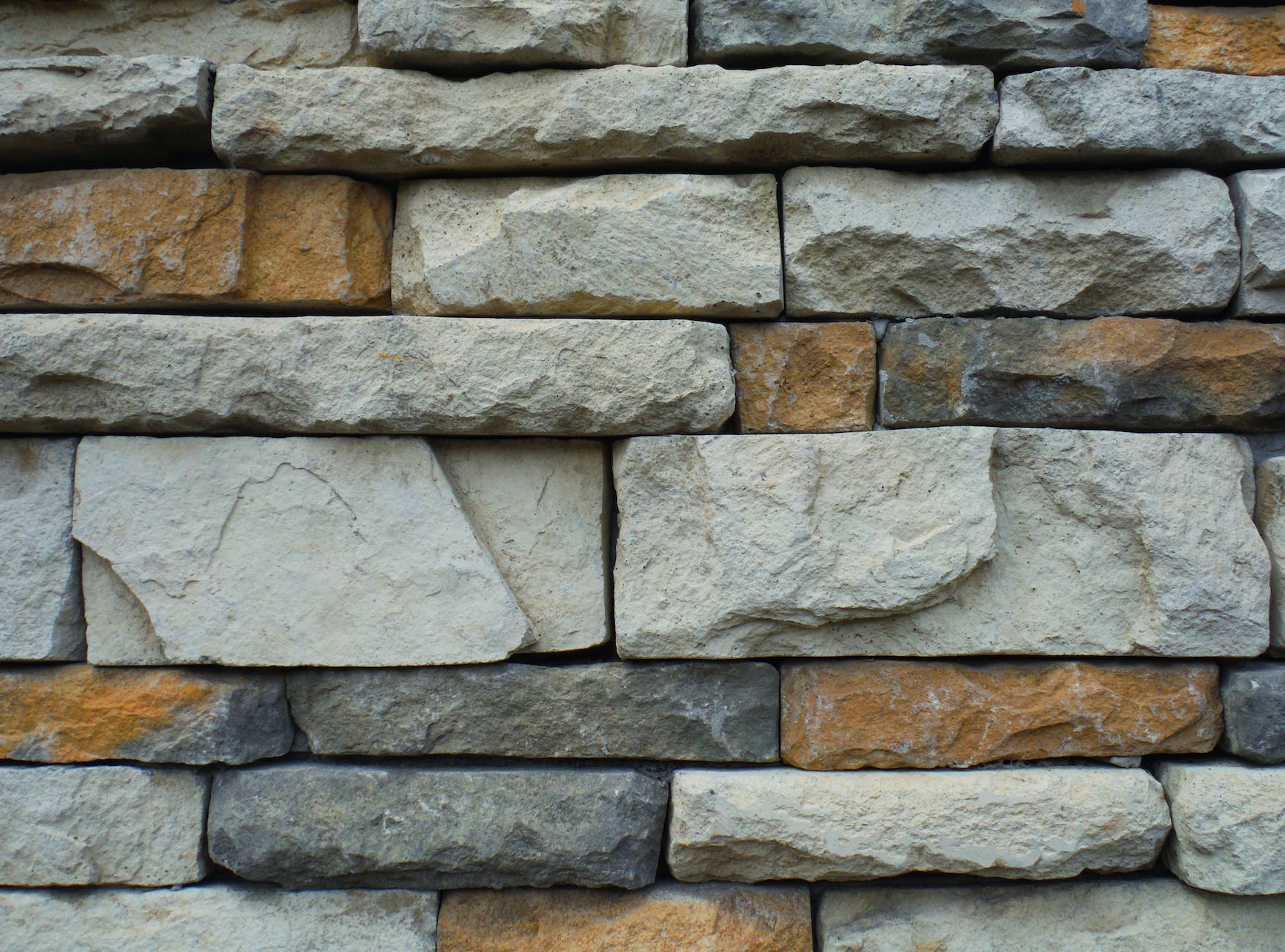
In 2018, UNESCO inscribed dry stone walling as an Intangible Cultural Heritage of Humanity, stating that “the technique exemplifies a harmonious relationship between human beings and nature.” When building a dry stone wall, Kaneko told me, you have to work with the contours of the land and irregularities of each stone. John New, the chair of the West of Scotland Dry Stone Walling Association, told me that “when you’re building a stone wall, you become part of the environment. Brown hares will just come up and stop and watch you.” Deer too. Almost as soon as it’s built, a stone wall is inhabited by insects—a key indicator of biodiversity—and small animals such as voles, chipmunks, and wrens. In China, researchers have documented the remarkable diversity of plants thriving on ancient stone walls—even in urban environments.
In rocky regions around the world, groups are working to preserve and promote the craft of dry stone walling, touting the benefits to biodiversity and low carbon footprint. These are inherently local efforts because building with stone makes the most sense when it can be sourced locally. (In the past, farmers used stone unearthed while clearing the very fields they needed to terrace or fence.) In Scotland, for example, trucking in material for a stock fence from far away could cost upwards of $5,000, New said. The most ambitious recent dry-stone-walling projects, such as the multimillion-dollar effort to restore the stone walls of Italy’s Cinque Terre, are in service of historical preservation. But Stone Walls for Life, the EU-funded project organizing the Cinque Terre restoration effort, argues that the walls strengthen resilience to climate change, too, by improving drainage and preventing landslides. They plan to replicate this kind of undertaking around the EU.
In Japan, Kaneko told me, most of the people who still know how to build simple utilitarian stone walls are in their 80s. In the past, if a stone wall along a rice paddy or road collapsed, the community would gather to repair it. This collective experience was key. When I met him again at a Kyoto café (in the concrete Kyoto International Conference Center, near a concrete-encased river), Kaneko told me about a 1919 Journal of Engineering article that emphasized the importance of human skill and discretion rather than objective numbers in stone-wall building. Although perfecting the craft of stone walling takes a lifetime, Kaneko said that an amateur, with no formal engineering experience, can learn the basics in about four days. Through workshops all over the country, he and Sanada teach people to place stones with the long side angled down into the slope, to make sure that each large stone touches at least two others, and to fill behind the large stones with small rocks or gravel as they build. There have been attempts to standardize and mechanize dry stone walling, using, for example, software and a robotic excavator. But Kaneko says that in many cases, the sites where he works are too narrow or steep for a machine to access. To him, stone walling’s reliance on man power instead of machine power, and passed-down knowledge instead of equations, is part of its value. “I like the very wild dry stone walls,” he told me.
Embracing those qualities, though, requires trust and experience. In July, Kaneko traveled to the town of Genkai, on Japan’s Southern island of Kyushu, to repair the walls at Hamanoura Tanada, a scenic and historic site where nearly 300 small terraced rice paddies chisel the dramatic slopes above an inlet of the Genkai Sea. A few years ago, the town’s planning and commerce division invited Kaneko to teach five local construction companies how to build dry stone walls so they could preserve the traditional scenery. But even with that training, none of them was willing to take on rebuilding stone walls. It’s seen as a labor-intensive and risky job, Kaneko said. Companies that use concrete can reliably calculate the strength of their walls, but it’s nearly impossible to estimate the engineered strength of any particular dry stone wall. Although villages and private landowners can choose stone over concrete, there have been no mainstream attempts to return to dry stone walling for major new public-works projects in Japan, Kaneko told me. In the United States, most landscaping walls shorter than three or four feet don’t need to be permitted, Alan Kren, a structural engineer at Rutherford + Chekene, told me. To build stone walls on any larger scale would likely require new standards for using these old techniques.
Lots of potential connections between this and the move to modernity more broadly:
-New crafts and methodologies that people know and use while older techniques fade away.
-Technological and scientific progress in new materials but costs with which we have not fully reckoned.
-Lost community moments replaced by private activity.
-Local efforts are difficult to sustain given broader global and social pressures.
The march of concrete will go on while some advocate for other options. And perhaps at some point concrete will be replaced by another material and the techniques of using concrete could be lost.
Crashes at one of the state’s most dangerous rail crossings, in Elmwood Park, have killed seven people and injured at least 27 over the last few decades. Village officials want to build an underpass to make the intersection safer, but the village can’t do it alone — the $121 million price tag is more than four times the western suburb’s annual budget, according to Village Manager Paul Volpe…
Elmwood Park has paid $230,000 since 2020 to the transportation lobbying firm Tai Ginsberg and Associates, according to federal lobbying records. So far, the village has received $3 million in federal funds, Volpe said…
Illinois cities, towns, villages and counties besides Chicago spent about $838,000 on federal lobbyists in 2020, $1 million in 2021 and $1.4 million in 2022, lobbying disclosure records kept by the U.S. Senate and analyzed by the Chicago Tribune/Pioneer Press show. This year, they have spent a total of $720,000 so far, per lobbying disclosures. The grand total is slightly inexact because lobbyists are not required to report receipts under $5,000.
One town that’s turned its attention to opportunities in Washington is north suburban Niles, where the village board recently renewed a $60,000 contract with lobbying firm Smith, Dawson and Andrews…
So far, Alpogianis said the village is more than satisfied with that change. He pointed to a recent $200,000 federal grant for the Niles Teen Center the village secured with the help of U.S. Sen. Dick Durbin’s office.
Suburbanites tend to like local government because they believe it is easier to convey their interests and they can see and experience local decisions. So getting more federal money that can be directly used to improve a local quality of life is a win, right?
I could imagine two primary objections:
Do lobbyists always pay for themselves? The story cited highlights several examples of successes. Does this work for every suburb?
Is federal money the money suburbs want? Local government beholden to federal dollars? Some might object, others may not care where helpful money comes from.
It would be interesting to hear from the lobbyist side about firms or individuals that do well for suburbs. What is their success rate?
When a large amount of rain is dumped on the Chicago region in a short amount of time, the infrastructure cannot keep up. The swamps underneath the third largest metropolitan region in the United States continue to influence everyday life:
The region’s struggle with chronic flooding begins with its location. Chicago and many of its suburbs were built on swamps, and storm runoff has become more difficult to manage as the region has been paved over.
These swamps had at least one advantage. The area between the Chicago River and the Des Plaines was swampy and this portage helped lead to Chicago’s growth as the Great Lakes and Mississippi could be connected.
But, think of all the effort required initially to drain the swamps or fill them in or build on and near them. Some early settlers built plank roads to try to stay above the mud. Then, there are consequences still today with major rains leading to flooded basements and sewage released into waterways. Planning for dealing with water requires resources and time, ranging from retention ponds to dealing with the effects of new nearby development to cleaning up after floods to building the massive Deep Tunnel project.
The article notes the decades-long efforts to address this. Communities within metropolitan regions might not like to pool resources but this seems like an issue that should bring together everyone to make serious headway on solutions in the next few decades.
The context for this quote is a dispute between local governments in the region about obtaining water. Hundreds of millions of dollars, perhaps billions, are on the line. People need water. For now, it is there and it probably will be there for a long time…but it is not guaranteed to be there.
The Metropolitan Water Reclamation District of Chicago holds tours for the public. I recently participated in a live zoom version. You can watch a version here.
The tour was very informative about water and processes. We learned about watersheds and the small hill that separates water going into the Great Lakes versus the Mississippi. We learned about how water is cleaned in water treatment plants. We learned about the reversal of the Chicago River. We learned about the Deep Tunnel system. All of this was accompanied by helpful visuals (maps, drone footage) and engaging hosts who answered questions as they arose.
And it was also a public relations exercise. We heard about the ways that the MWRD has improved. We heard about the benefits of all their efforts. They had booklets for people to access, including materials for kids and information in multiple languages. The presentation was smooth.
What the tour could not as easily touch on: is this the best way to deal with water and land in a metropolitan region? Are there harmful byproducts of these systems (how about forever chemicals in sludge sold to local farmers)? Does the Deep Tunnel system solve all the problems it was supposed to?
Infrastructure like this is essential to modern life. People expect clean water to be available. When it is not, it is very surprising. They may complain about water rates and tax bills, but the whole system as experienced in the United States is relatively cheap for consumers.
Thus, positive public relations involving infrastructure can help the public know about these systems that they contribute to and depend on. People do not like a highway construction project that is over budget and over time? They can be informed about how these processes work and about the benefits that will come eventually. The public does not like a rate hike? They can learn about all the amazing systems that make it possible to live modern life.
All of this does not mean that the public relations version should necessarily win the day. I am generally in favor of all of us knowing more about the infrastructure we rely on. Yet, there are also questions or concerns that public relations can not easily bat away. If we can have more informed conversation about infrastructure, perhaps we could avoid protracted debates or simplistic approaches.
At one time, this system may have made sense. The Chicago region, as in multiple regions in the Northeast and Midwest, was organized with a dense commercial district at the core. Today, this makes less sense in many US metropolitan regions where the many trips and commutes are suburb to suburb. Throughout a region, suburbs are job centers, entertainment centers, and residential communities.
Reconfiguring infrastructure like highways, railroads, and mass transit to fit these new realities – perhaps now exacerbated by more employees working from home – is a long process with multiple avenues to pursue.
Now, an international team has discovered ancient concrete-manufacturing techniques that incorporated several key “self-healing” properties. For years, researchers believed the key to the ancient concrete’s durability was one ingredient: pozzolanic material, such as volcanic ash from the area of Pozzuoli, on the Bay of Naples…
Historians say this specific kind of ash was shipped all across the Roman empire for use in construction projects, being described as a key ingredient for concrete at the time. After closer examination, these ancient samples also contain small, distinctive, millimeter-scale bright white mineral features. They were common component of Roman concretes. The white chunks — often called “lime clasts” — come from lime, another key ingredient in ancient concrete mix.
Masic adds that, during the hot mixing process, lime clasts develop a characteristically brittle nanoparticulate architecture. This creates an easily fractured and reactive calcium source, which could provide a “critical” self-healing ability for building materials. As soon as tiny cracks start to form within the concrete, they can preferentially travel through the high-surface-area lime clasts.
Prof. Masic explains that the material can then react with water, creating a calcium-saturated solution. It then recrystallizes as calcium carbonate and quickly fills the crack, or reacts with pozzolanic materials to further strengthen the material.
What I often wonder about inventions and techniques of the ancient world is how exactly they came about. How did Romans discover that a particular component – pozzolanic material – made concrete better in the long-term? I would guess there is evidence to suggest when this emerged and how it was dispersed but we may not know exactly how this formula developed.
If this could be incorporated into modern materials, could this make concrete even more important? I remember reading about the importance of concrete in How the World Really Works. Could this mean roads that do not need to be repaired as often, buildings that last longer, and numerous other applications?
This is also a reminder that infrastructure mattered for ancient empires and continues to matter today for modern everyday life. Even small improvements to basic materials or processes could have a tremendous effect given the scale and speed of today’s world.
A New York Times review of hundreds of pages of documents, engineering reports, meeting transcripts and interviews with dozens of key political leaders show that the detour through the Mojave Desert was part of a string of decisions that, in hindsight, have seriously impeded the state’s ability to deliver on its promise to create a new way of transporting people in an era of climate change…
When California voters first approved a bond issue for the project in 2008, the rail line was to be completed by 2020, and its cost seemed astronomical at the time — $33 billion — but it was still considered worthwhile as an alternative to the state’s endless web of freeways and the carbon emissions generated.
Fourteen years later, construction is underway on part of a 171-mile “starter” line connecting a few cities in the middle of California, which has been promised for 2030.
Meanwhile, costs have continued to escalate. When the California High-Speed Rail Authority issued its new 2022 draft business plan in February, it estimated an ultimate cost as high as $105 billion. Less than three months later, the “final plan” raised the estimate to $113 billion.
The recent traffic backups aren’t a mirage, say transportation officials. It’s really a perfect storm of ongoing construction projects occurring at nearly all points of the expressway system. This includes the Jane Byrne Interchange project, the behind schedule and over budget construction job that offers one of the worst choke points for congestion in the heart of downtown Chicago…
The last week in September saw some of the worst traffic in recent memory, thanks not only to the ongoing construction — including the start of three-weekend lane reductions on Interstate 57 to accommodate ramp patching and resurfacing — but also an emergency closure of the outbound Dan Ryan Expressway ramp to the outbound Stevenson Expressway that isn’t expected to completed until Sunday, according to IDOT…
Transit experts say that Chicago, which has some of the worst congestion of any American city, is also grappling with its return to normalcy following closures brought on by the pandemic. The added congestion comes at a time when many workers such as Cavanagh are returning to the office after two years of work-from-home protocols. Rider usage of transit systems such as the Chicago Transit Authority, Metra and Pace also haven’t yet returned to normal…
“In other words, drivers are making more trips, but they’re shorter trips on average,” Dan Ginsburg, TTWN’s director of operations said in an email.
So the old joke in Chicago, “there are two seasons: construction and winter,” rings true again?
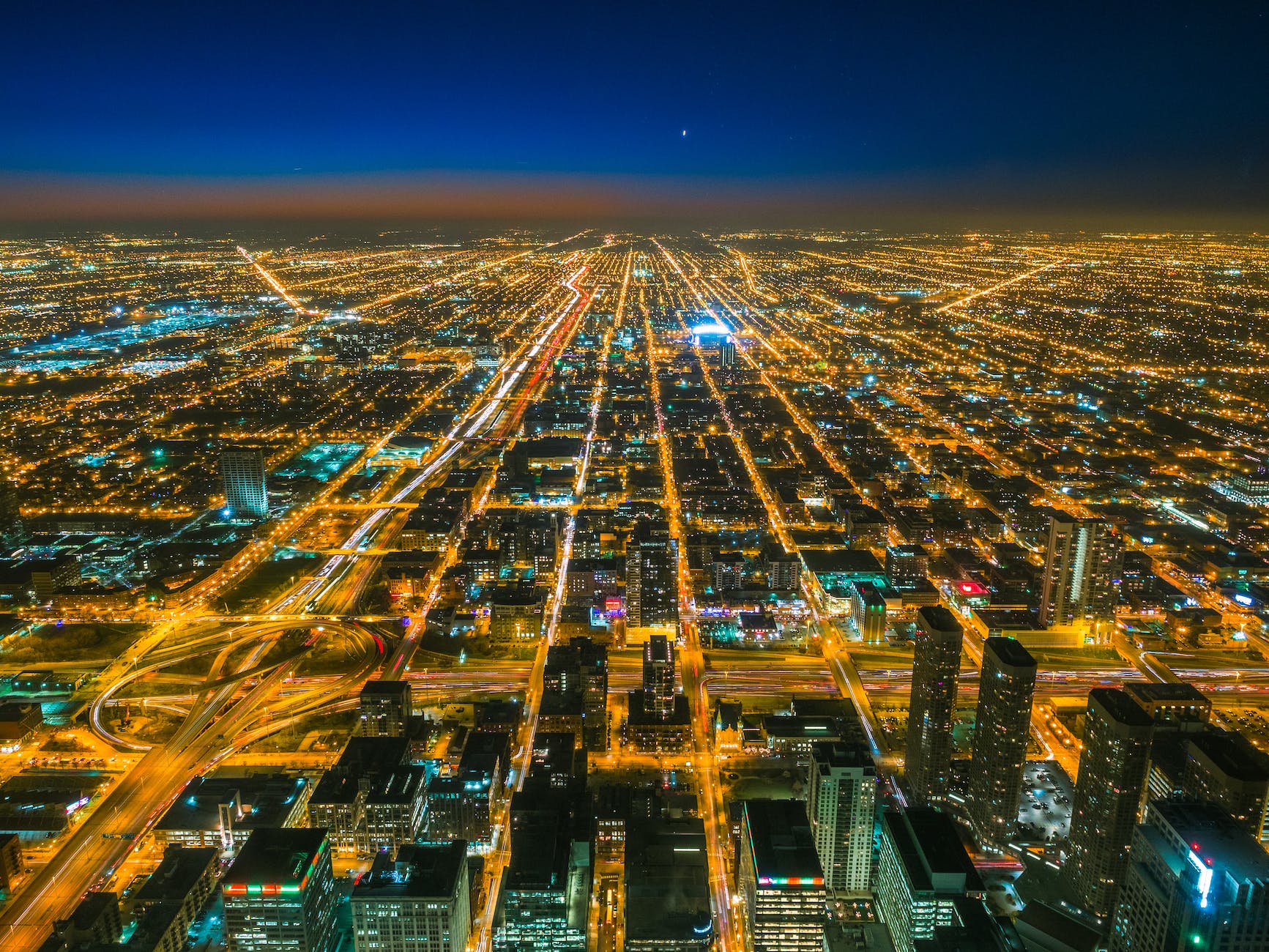
But, this is a bigger issue than just construction. The infrastructure needs help. More people are driving. People live and work in different locations. Mass transit is not being used much. Mass transit does not necessarily reach where it needs to reach. People want to drive faster. There is a lot of freight and cargo moving through the region and so on.
This “perfect storm” could be an opportunity to ask how to address traffic and congestion throughout the city and region for the next few decades? How will this get any better?