Widely shared on social media, the atmospheric black and white shots — a mother and her child starving in the Great Depression; an exhausted soldier in the Vietnam war — may look at first like real historic documents.
But they were created by artificial intelligence, and researchers fear they are muddying the waters of real history…
For now, Amaral and Teeuwissen believe they can still tell fake historical images from real ones just by looking at them.
AI-generated photos often have tell-tale glitches: too many fingers on a hand, missing details — such as the lack of a propeller on the Wright brothers’ plane — or, on the other hand, compositions that are too perfect.
“AI-generated pictures can recreate the look, but they miss the human element, the intent, the reason behind the photographer’s choices,” said Amaral.
With AI text and images, history could be all redone. What is available online, often the first or primary source for many, could provide different historical accounts and evidence.
Of course, history to some degree is always in flux as different actors and different contexts affect how we understand what happened in the past. There are things that happened and then perceptions and interpretations of those happenings that often take time to develop and solidify. AI joins an already existing process.
Do AI images then pose a unique threat to historical knowledge and narratives? If history is primarily created and understood through images online, perhaps. Will others find ways to demonstrate that certain images are truly from the past?
The world’s emails, TikToks, classified memos, bank transfers, satellite surveillance, and FaceTime calls travel on cables that are about as thin as a garden hose. There are about 800,000 miles of these skinny tubes crisscrossing the Earth’s oceans, representing nearly 600 different systems, according to the industry tracking organization TeleGeography. The cables are buried near shore, but for the vast majority of their length, they just sit amid the gray ooze and alien creatures of the ocean floor, the hair-thin strands of glass at their center glowing with lasers encoding the world’s data…
Fortunately, there is enough redundancy in the world’s cables to make it nearly impossible for a well-connected country to be cut off, but cable breaks do happen. On average, they happen every other day, about 200 times a year. The reason websites continue to load, bank transfers go through, and civilization persists is because of the thousand or so people living aboard 20-some ships stationed around the world, who race to fix each cable as soon as it breaks…
The world is in the midst of a cable boom, with multiple new transoceanic lines announced every year. But there is growing concern that the industry responsible for maintaining these cables is running perilously lean. There are 77 cable ships in the world, according to data supplied by SubTel Forum, but most are focused on the more profitable work of laying new systems. Only 22 are designated for repair, and it’s an aging and eclectic fleet. Often, maintenance is their second act. Some, like Alcatel’s Ile de Molene, are converted tugs. Others, like Global Marine’s Wave Sentinel, were once ferries. Global Marine recently told Data Centre Dynamics that it’s trying to extend the life of its ships to 40 years, citing a lack of money. One out of 4 repair ships have already passed that milestone. The design life for bulk carriers and oil tankers, by contrast, is 20 years…
“One of the biggest problems we have in this industry is attracting new people to it,” said Constable. He recalled another panel he was on in Singapore meant to introduce university students to the industry. “The audience was probably about 10 university kids and 60 old gray people from the industry just filling out their day,” he said. When he speaks with students looking to get into tech, he tries to convince them that subsea cables are also part — a foundational part — of the tech industry. “They all want to be data scientists and that sort of stuff,” he said. “But for me, I find this industry fascinating. You’re dealing with the most hostile environment on the planet, eight kilometers deep in the oceans, working with some pretty high technology, traveling all over the world. You’re on the forefront of geopolitics, and it’s critical for the whole way the world operates now.”
This is a great example of invisible infrastructure. How many Internet users each day think about the cables that support the system? I am guessing very few.
The article suggests the methods of repairing undersea cables resembles that of the first repairers of cables in the second half of the nineteenth century. Given our technological advances, are there quicker ways to do this? I imagine one reason these systems are still used is because they are considered economical. At what point do the cables go away in favor of a different system?
I often typed “hipster coffee shop” into the search bar as a shorthand because Yelp’s search algorithm always knew exactly what I meant by the phrase. It was the kind of cafe that someone like me – a western, twentysomething (at the time), internet-brained millennial acutely conscious of their own taste – would want to go to. Inevitably, I could quickly identify a cafe among the search results that had the requisite qualities: plentiful daylight through large storefront windows; industrial-size wood tables for accessible seating; a bright interior with walls painted white or covered in subway tiles; and wifi available for writing or procrastinating. Of course, the actual coffee mattered, too, and at these cafes you could be assured of getting a cappuccino made from fashionably light-roast espresso, your choice of milk variety and elaborate latte art. The most committed among the cafes would offer a flat white (a cappuccino variant that originated in Australia and New Zealand) and avocado toast, a simple dish, also with Australian origins, that over the 2010s became synonymous with millennial consumer preferences. (Infamous headlines blamed millennials’ predilection for expensive avocado toast for their inability to buy real estate in gentrifying cities.)
These cafes had all adopted similar aesthetics and offered similar menus, but they hadn’t been forced to do so by a corporate parent, the way a chain like Starbucks replicated itself. Instead, despite their vast geographical separation and total independence from each other, the cafes had all drifted toward the same end point. The sheer expanse of sameness was too shocking and new to be boring…
My theory was that all the physical places interconnected by apps had a way of resembling one another. In the case of the cafes, the growth of Instagram gave international cafe owners and baristas a way to follow one another in real time and gradually, via algorithmic recommendations, begin consuming the same kinds of content. One cafe owner’s personal taste would drift toward what the rest of them liked, too, eventually coalescing. On the customer side, Yelp, Foursquare and Google Maps drove people like me – who could also follow the popular coffee aesthetics on Instagram – toward cafes that conformed with what they wanted to see by putting them at the top of searches or highlighting them on a map…
Simply existing as a coffee shop isn’t enough; the business has to cultivate a parallel existence on the internet, which is a separate skill set entirely. “It almost feels like, you must have a social media acumen, you must be savvy in this area that is adjacent to your business, but not directly embedded in your business, in order to be successful and visible,” Walsh continued. That means plenty of tagged photos on Instagram and positive user reviews on the business’s listing on Yelp or Google Maps…
The other strategy is to remain consistent, not worrying about trends or engagement and simply sticking to what you know best – staying authentic to a personal ethos or brand identity in the deepest sense. In a way, coffee shops are physical filtering algorithms, too: they sort people based on their preferences, quietly attracting a particular crowd and repelling others by their design and menu choices. That kind of community formation might be more important in the long run than attaining perfect latte art and collecting Instagram followers. That is ultimately what Anca Ungureanu was trying to do in Bucharest. “We are a coffee shop where you can meet people like you, people that have interests like you,” she said. Her comment made me think that a certain amount of homogeneity might be an unavoidable consequence of algorithmic globalisation, simply because so many like-minded people are now moving through the same physical spaces, influenced by the same digital platforms. The sameness has a way of compounding.
As a different kind of place, fast food restaurants are often criticized for their sameness. As part of a larger brand, individual locations feature similar food, aesthetics, and signs that provide familiarity for patrons.
Coffee shops are supposed to be the antithesis. They are cool while fast food is formulaic and bad for you. They offer sophistication rather than mass production. They allow space for quietly working or interacting with friends while fast food places are about efficiency and moving people in and out.
But, this piece suggests the Internet and a particular class of people have helped contribute to sameness across continents. These may be independent coffee shops but they are trying to respond to global patterns. Do customers really want a unique place or do they want some predictability? The McDonaldization (from sociologist George Ritzer) of space is worth considering more as physical spaces are shaped by Internet realities. People operate and interact in both realms. The suggestion here is that the Internet is driving the shaping of physical spaces and the reverse could happen as well.
Los Angeles-based car YouTuber effspot stumbled across something we’ve heard about but haven’t been able to dig up solid evidence of: dealerships are hiding a ton of new inventory in secret locations. Now you might think these dealers are putting their overstock vehicles in some secure location like a warehouse or locked lot, and some definitely are, but effspot found hundreds of Jeeps, Dodges, Rams, and Chryslers stashed in a public parking garage, all apparently put there by just one dealership.
This is a potentially interesting find. How common is this?
Dealerships have been running this scheme for months and months, but it’s starting to fall apart despite some media outlets trying to claim there may be no return to normal for the car market. Instead, both the new and used markets are going in only one direction: down. Just how quickly and by how much remains to be seen, but don’t believe car dealerships have hardly any vehicles and need to overcharge you big time for the privilege of new car ownership.
So we go from one parking garage is “dealerships have been running this scheme for months and months”? Roughly 51 seconds into the YouTube video, the maker says “these dealerships, or at least this particular dealership” has engaged in these practices. Later, at 5:52, he asks whether this is happening around the country.
This does not necessarily mean the larger argument is not true. But, the evidence presented here shows one parking garage and cars from one dealer. How broad is this practice? We do not know from this video and story.
This might just be the daily story of the Internet and social media. Interesting things are posted. Information is shared. People describe their experiences. But, it is difficult to know how this matches larger patterns or not. An individual reader might be able to make connections across stories. Or, people online could connect the dots for others. For example, others could make videos on YouTube detailing their finds of auto inventory in different locations. Sometimes these connections are made, often they are not. The next day comes and there is more information to process and relatively little that helps fit all the pieces together.
The connection is not just the Internet and social media and the way they connect us to more people and narratives. This is a change in statistics: we think we can see larger patterns and we can access more information.
Whether what we see on social media is a real pattern might not matter. (A reminder: relatively few people are active on Twitter.) We see more online and we can see what people are highlighting. This might appear as a pattern.
Not too long ago, we were more limited in our ability to compare our actions to others. The mass media existed but in more packaged forms (television, radio, music, films, newspapers, etc.) rather than the user-driven content of social media. The comparisons to that mass media still mattered – I remember sociologist Juliet Schor’s argument in The Overspent American of how increased TV watching was related to increased consumption – but people’s ties to their family and friends in geographic proximity were likely stronger. Or, in Robert Putnam’s Bowling Alone world, people spent a lot more time in local organizations and groups rather than in the broad realms of the Internet and social media.
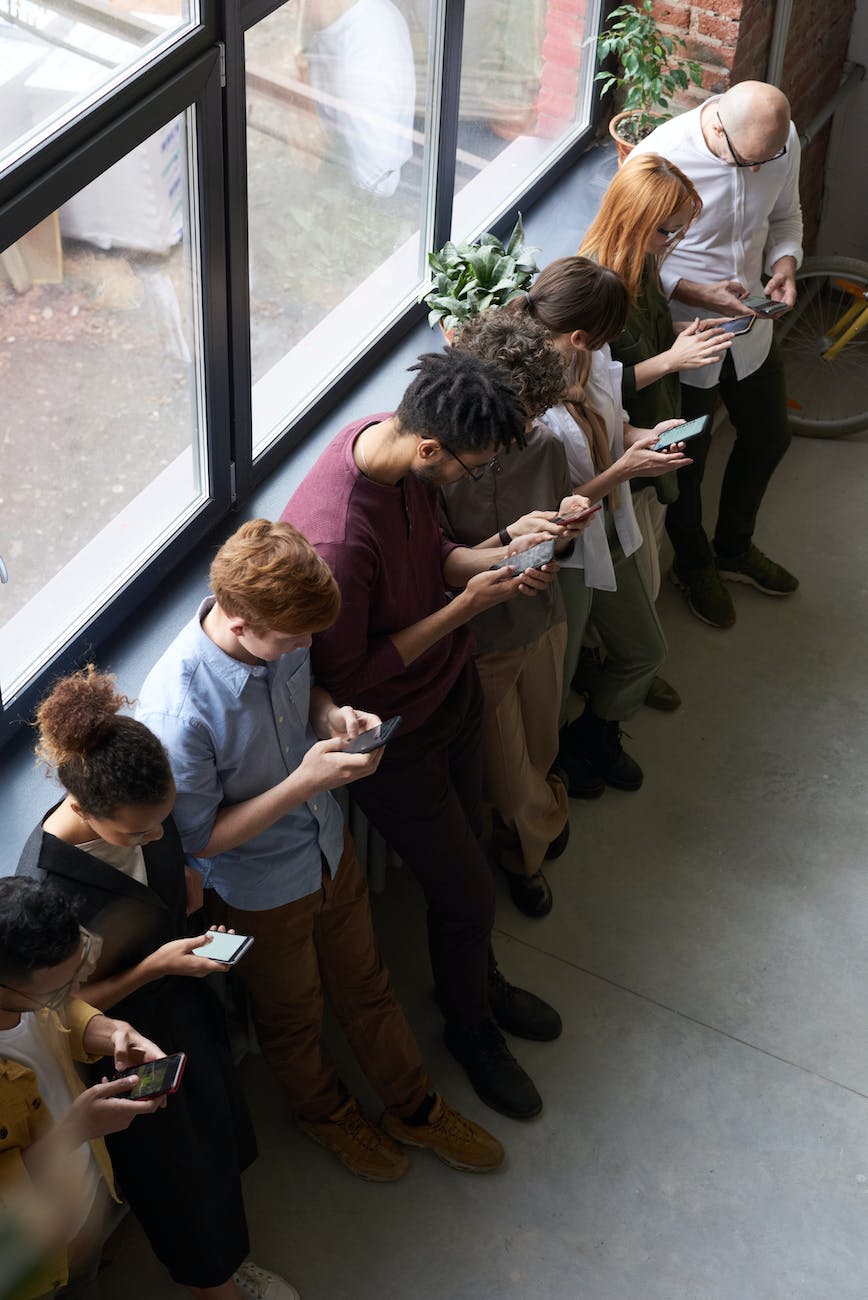
Now, we can easily see how our choices or circumstances compare to others. Even odd situations we find ourselves in quickly be matched across a vast set of platforms for similarities and differences. Whether our tastes are mainstream or unusual, we can see how they stack up. If I am on college campus X on one side of the country, I can easily see what is happening on college campuses around the world.
Even as the Internet and social media is not fully representative of people and society, it does offer a sample regarding what other people are doing. We may care less about what the people directly near us are doing and we can quickly see what broader groups are doing. We can live our everyday lives with a statistical approach: look at the big N sample and adjust accordingly.
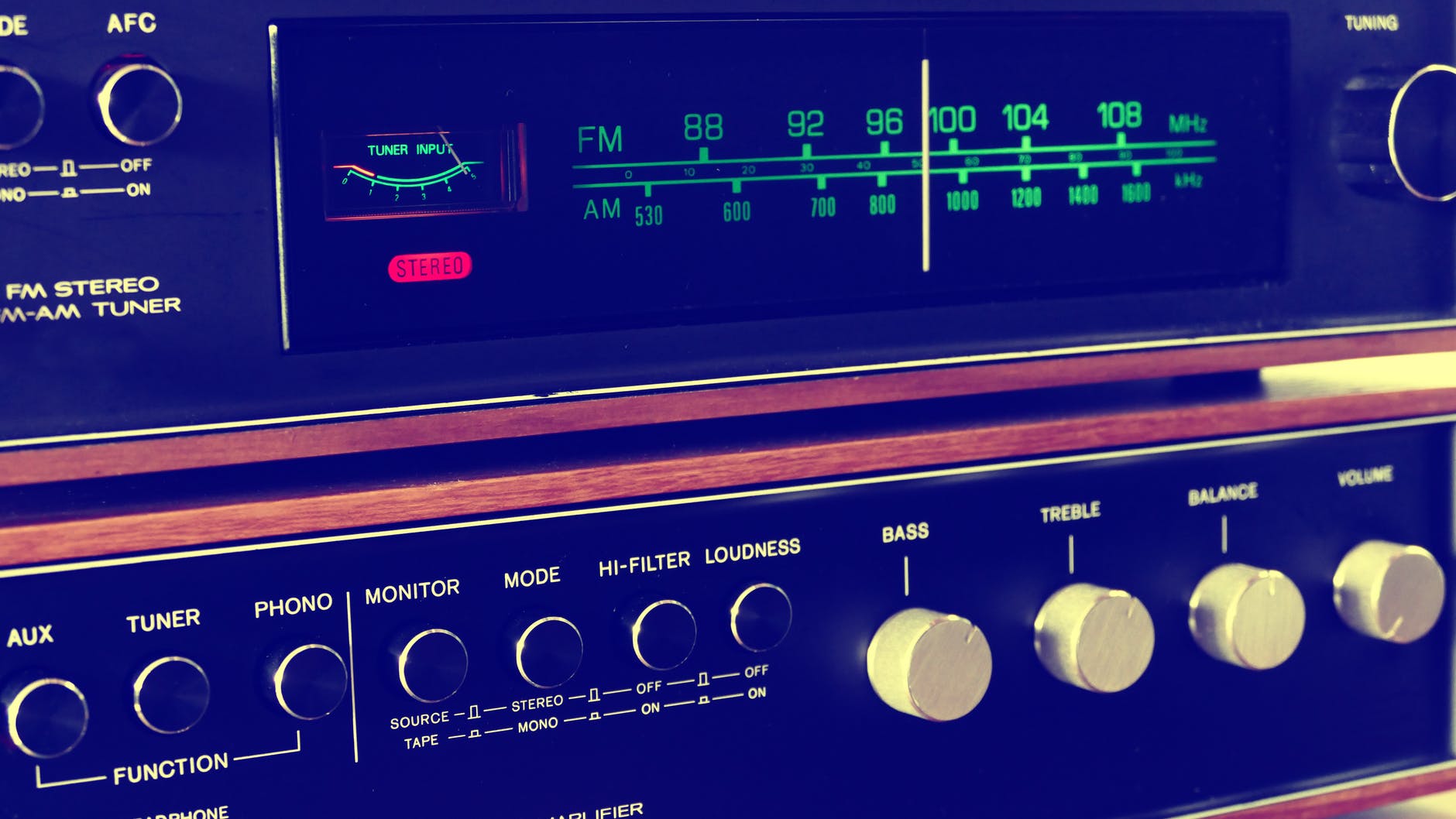
I enjoy listening to baseball games on the radio. The pace of the game, the voices of the announcers, and the ability to do other things while listening add up to an enjoyable experience.
Except for one growing trend: the number of commercial reads throughout the game. At this point, it seems like almost every baseball event has a sponsor. Strikeouts, walks, doubles, home runs, the fifth inning, the seventh inning…you get the idea. Baseball has a lot of small events and apparently they can be attached to an advertiser for the right price.
I am aware of multiple factors behind this. Radio is a dying business. Live sports is one of the few shining spots where there are certain to be listeners (or viewers). Commercialization is alive and well. There is money to be made here.
But, I can only imagine how this might spread to all areas of life. Go beyond the Internet and social media ads tied to your browsing and shopping habits. You tie your shoes; brought to you by [blank]. You run the dishwasher; brought to you by [blank]. You read a book; brought to you by [blank].
At this point, there do not seem to be any officials guardrails against more and more of this happening. People can push back but this has consequences. If I do not like the baseball ads, I can stop listening. But, if we move to more immersive devices – Google Glass, virtual reality headsets, a house full of Internet equipped objects – this will be very hard to push against or escape.
Sometimes you had to step away. So you threw up an Away Message: I’m not here. I’m in class/at the game/my dad needs to use the comp. I’ve left you with an emo quote that demonstrates how deep I am. Or, here’s a song lyric that signals I am so over you. Never mind that my Away Message is aimed at you.
I miss Away Messages. This nostalgia is layered in abstraction; I probably miss the newness of the internet of the 1990s, and I also miss just being … away. But this is about Away Messages themselves—the bits of code that constructed Maginot Lines around our availability. An Away Message was a text box full of possibilities, a mini-MySpace profile or a Facebook status update years before either existed. It was also a boundary: An Away Message not only popped up as a response after someone IM’d you, it was wholly visible to that person before they IM’d you.
Messaging today, whether through texting or apps, does not work the same way:
Catapulting even further back into the past for a moment: Old-fashioned phone calls used to, and sometimes still do, start with “Hey, you free?” Santamaria points out. “You were going to tell me if you could talk before we started the conversation.” There’s a version of this today—someone might preface their message with “Not urgent, respond when you can,” for example—but for the most part, we just send the text message without consideration, Santamaria says. Interruption is the default.
The ability to walk away from communication and the demands it makes on a person struck me as similar to one of the three “basic forms of social liberty” humans had before settling in cities and large societies. Anthropologists David Graeber and David Wengrow say the second form was “the freedom to ignore or disobey commands issued by others.” Text messages, emails, and messages in apps create a pressure for someone to respond. To not have these digital “commands,” one practically not use apps and devices.
Is this the freedom we have traded to use social media, the Internet, and smartphones? People can unplug but it is difficult to do that and still participate in regular social life today. Saying no to messages or refusing to respond will likely not garner many friends or close connections. And related to the first form of freedom, “the freedom to move away or relocate from one’s surroundings,” the messages and apps can follow us anywhere there is Internet access or cell coverage.
These platforms succeed by encouraging messaging and connections. But, what if a basic human freedom is the one to say no to that interaction when desired?
The average American received roughly 42 spam texts just in the month of March, according to new data from RoboKiller, an app that blocks spam calls and texts…
There were more spam calls last month than in any of the previous six months, per YouMail’s Robocall Index…
Spam emails rose by 30% from 2020 to 2021, according to a January report from the Washington Post…
There was an unprecedented increase in social media scams last year, according to data from the Federal Trade Commission. Many scams were related to bogus cryptocurrency investments.
As the article notes, it keeps going in part because the spammers are successful enough. Yet, it would be worth also seeing the bigger picture: how much time and mental effort is expended fighting off spam efforts? Even if the majority of people relatively quickly discard the emails and texts or even just glance quickly at them and then ignore them, what does this all add up to?
The glut of information we all face, some positive and some negative, requires time and mental space. Just to push it aside requires a choice. We may think it does not affect us – I have heard many people say the equivalent of “advertising does not affect me” – but it does.
Could we envision a future world where we only get the firehose of information that we truly want and discard all the rest? Imagine the echo chambers or media bubbles possible today plus the technical means or financial means to only get all that we want to handle? I am not sure how advertising or alternative viewpoints might fit into all of this but I would guess there would be at least a few people willing to pay a lot to achieve this state.
Watching dueling online and social media narratives can be quite a disorienting experience. Who is right? What are the facts? Does this story/anecdote/experience reflect and influence broader patterns in society?
It is this last question that interests me as a sociologist who has studied social network site use among emerging adults. How much does online activity reflect daily life among all Americans or people around the world? How much influence does online activity exert?
It is not necessarily reflective of everyone and their experiences. For example, a small segment of users can create a lot of content and drive traffic. Of those who use social media, not everyone engages much, and others do not use social media at all or use other platforms. What happens online is not always generalizable to broader social activity.
Yet, the actors and actions online can have a powerful influence in both the online and offline world. The way material is presented in social media and the Internet – or in any form of media – can influence beliefs and behaviors. Even if many people are not aware of something online or do not find it themselves, it can be important for those who make decisions or those who are following a particular conversation.
This is another reason that we should consider the online and offline realms as overlapping spheres, not separate worlds. Yes, there are some actors who may act very differently online than offline. Yet, even these behaviors are joined together within an individual who is operating in both realms. Online discussions and trends find their way to the offline world as offline activity gets picked up online. Money, power, influence, and beliefs pass back and through the two realms.
Recognizing this does not make it easier to reconcile competing online narratives. But, it does highlight how these are not just meaningless online discussions; they are linked to offline patterns.
Two years ago, I was deleting and undeleting my Instagram account, begging every expert I could find to tell me exactly how to live healthily with the internet in my pocket. In 2021, to do the same would seem a little silly. Netflix’s subscriber growth may be slowing, and Tinder videochats may soon fall out of favor, but it’s hard to imagine that a Great Offlining is really in the cards. Instead, we could be heading for a Great Rebalancing, where we reconfigure how we do our work and how we organize our time on the internet. We’ve grown more aware of how we rely on one another—online as well as off—and of the tools we have or could build for responding to a crisis. The biggest tech companies’ accrual of power remains one of the most serious problems of my lifetime, but I no longer talk about the internet itself as if it were an external and malignant force, now that I’ve lived in such intimate contact with it for so long.
I’m sure I’ll change my mind about everything I’ve just said, but sometimes you just need to time-stamp the moment. Going back through my essays from 2019, I was struck by how easily I had misremembered what the cultural conversation was about back then. Jenny Odell never argued that people should go offline completely. Rather, she told me that deleting your apps or throwing your phone in the ocean would represent a failure to recognize that “we actually really need something like social media.” The desire to go online is human, and “there’s nothing wrong with that part.” We just have to keep reminding ourselves why we’re doing it.
I think it is always a good idea to ask this question about many things with which we spend this time: how important is this to me? Is my time use what I want or did I just fall into this pattern? For better or worse, sometimes it takes a drastic change or crisis to ask this question. It is one thing to use a computer for work or browse social media, another to be on Zoom for hours because you cannot be in the office or go to school. If COVID-19 offers people the opportunity to step back and think again about what they want to do with their time, that would be good.
And I would hope that many would say they do not need social media or the Internet as much as they did in the past year. There are many worthwhile things to do, ranging from movement and exercise, reading, pursuing a non-work project or hobby, playing a game, interacting with the people around you, among other options.
More broadly, it is relatively easy to slip into particular time patterns during the day that may or may not be desired. The average American watches 4+ hours of television a day; is that planned and/or desired or does it just happen? Do people take the time they want to eat or not? Is work more time-consuming that people want? If you add up all of these hours across days, weeks, months, and years, it can be shocking to see how much is spent on certain activities. If people have priorities in what they want to do in life, it should be evident in their time use.
(On the other hand, I do not think it is that useful to micromanage your time to the level some have. I recently read about someone famous who scheduled their day in five minute increments in order to make sure things got done. There is a level of attention and time needed to do this that I would not find worthwhile.)







 Legally Sociable