As I regularly teach sociology courses, I continually come up against the idea that society constrains people. It tells them what to do. It limits them. It imposes behaviors and beliefs and belonging that they do not necessarily want. Society is an anchor many want to cut loose.
This may reflect my setting: teaching sociology within the United States, a country where students have heard they are to be free to follow their own paths, to pursue their own goals, to become successful on their own merit. Individualism is alive and well in the United States and perceived conformity and constraint are negative.
But I will argue in this post and four to follow that society enables people more than it constrains them. To be human is to participate in social relationships. To live the good life as an individual involves being part of society. To participate in and contribute to social life is empowering in the long run.
Another way to put this: there is no solo human being. To be cut off from others from a long period of time is not healthy. Yes, relationships and society can bring pain and destruction; this is true now and throughout human history. But to now be part of a collective, something bigger than each of us as individuals, is to miss out on something fundamental to humanity.
One brief example from the classroom illustrates these points. What might we gain if we take a college class together as opposed to learning on our own (books, online, etc.)? Many people might feel frustrated by the classroom setting where the instruction, pace, conversation, or setting may not be exactly what they want. But what if we, in the long run, learn from and through experiences with other people? One can have a conversation with oneself but this looks very different than the talk possible when people bring their knowledge, experiences, and struggles to a focused conversation together.
In the next post, I will use the analogies of (1) groups of musicians and (2) sports teams to further the argument that society enables people.
What do students learn by taking sociology? What is lost if fewer students do? It struck John Reynolds, a professor of sociology at Florida State University, that these are the kinds of questions his discipline can help answer. While the Board of Governors overseeing the state’s public universities on Wednesday voted against a proposal to pause and collect more evidence to assess the impact before taking its vote, the “budding social scientists” in his “Sociology of Education” course were learning the very skills needed to conduct such research. So he walked students through the process in class on Thursday.
Reynolds and his students examined various arguments key players had made for and against keeping sociology. Then Reynolds split the 37 students into small groups and had each propose a research study to evaluate those claims using one of the research methods they covered in the course — school ethnography, intensive interviews, social survey, and analysis of school administrative data. Reynolds plans to award a small prize to each group whose proposals “were most detailed and true to the strengths of the method they were assigned,” he told TheChronicle in an email…
Offering a course as an avenue for meeting a general-education requirement signifies that the state regards it as important, said Alison C. Cares, an associate professor and the associate chair of the sociology department at the University of Central Florida. And while there’s overlap among disciplines — students have many options for developing critical-thinking skills — sociology has something unique to offer, she believes. Sociology is a discipline that “really jolts students out of an individualistic approach,” Cares said. Of course people have individual agency, she added, but at the same time, “there are predictable patterns, based on how society is organized, that make decisions and actions more or less likely.” Understanding that can enhance the way a doctor cares for a patient, or a teacher instructs a student, or a businessperson leads a company.
The second reason involves the way that required general education courses help students find courses and what they want to study:
Students will still be able to take introductory sociology — and it could still meet other university-specific requirements — but professors anticipate that its absence from the gen-ed menu could significantly reduce enrollment. This is partly because of exposure — a large share of students likely have found or been pointed to the course in order to fulfill the social-sciences requirement. Sociology is what one professor called a “found major,” that is, one that students might not have heard about before they get to campus, but fall in love with during their first course…
That’s not the only problem. Some degree programs (or combinations thereof) have such exhaustive requirements that students often look to meet as many of them as efficiently as possible, so they are unlikely to take other courses even if they really want to. The ability to meet a state requirement while taking introductory sociology is especially helpful, Aranda said, for students planning to attend medical school, many of whom have sought out the course since the MCAT added a section on social sciences nearly a decade ago.
I imagine faculty in many disciplines would make this same argument. Their field of study offers a unique perspective that students benefit from. This is the reason we have different academic disciplines: they have particular ways that they study, write, and operate. Additionally, general education classes offer gateways for more students into that field of study. Not all disciplines are represented in required courses so this is valuable real estate.
Sociology and other disciplines will continue to have to make arguments for why they should be included in curricula and why students should take their courses. If college courses and majors are a marketplace where students respond to different incentives, disciplines offer different perceived advantages and disadvantages. Whether this market logic should determine the worthiness of disciplines and their presence is worth debating but there is no doubt that the market does have some patterns and cycles.
As a sociologist who has regularly taught Introduction to Sociology over the years, these two issues come up in this class. What value does sociology have to college students who may never touch sociology again or know little about it? I enjoy teaching sociology and its methods so this is a fun challenge.
To answer this question requires thinking less in terms of months and years, and more in terms of decades. It requires thinking less about specific neighborhoods and cities where violence is common, and more about larger metropolitan areas where inequality is extreme and the affluent live separated from the poor. And it requires thinking less about individual criminals and victims, and more about bigger social forces, including demographic shifts, changes in urban labor markets, and social policies implemented by states and the federal government. All told, nearly six decades of data on violence in Chicago’s neighborhoods point to an unmistakable conclusion: Producing a sustained reduction in violence may not be possible without addressing extreme, persistent segregation by race, ethnicity, and income…
But we must also expand outward in time and space, and consider why American neighborhoods are vulnerable to violence. Zooming out can help reveal the truth about violence in our cities: This is a whole-society problem, not one isolated in the neighborhoods where it roars. Addressing it requires our whole society’s concern, investment, and attention, and that attention must be sustained well beyond the periods when gun violence is surging.
This is a good example of a sociological approach. Look at deeper, underlying issues. Consider patterns and relationships across contexts and time. Analyze evidence across decades. Think about institutions, structures, and networks at multiple levels (neighborhood, city, nation). Examine multiple causal factors and how they interact with each other.
Whether such a perspective is welcomed or utilized is another story. For many social issues in the United States, it is easier for the public to look for the one factor that many believe will address the concern. Or, it can be difficult to wrestle with longer histories and patterns that involve many. Some might ask if this is just academics making something more complex than it needs to be or they might want proof that a sociological perspective is helpful.
I hope to explain something similar when teaching sociology, whether in Introduction to Sociology to Statistics to Urban Sociology. As Americans consider society, what does a sociological approach look like and bring to the table? At the least, it can help broaden perspectives beyond individualistic mindsets or ones that only highlight a few individual and social forces. At its best, it can be a lens that sheds light on how a large-scale society actually operates with institutions, structures, networks, and relationships shaping contexts and lives.
In recently watching the 2021 film version of West Side Story, this stanza from “Gee, Officer Krupke” stood out.
Yes, Officer Krupke you’re really a slob This boy don’t need a doctor just a good honest job Society’s played him a terrible trick And sociologically he’s sick
The whole song plays with this idea: the Jets are not responsible for their actions as they have been failed by their families and society. Elsewhere in the song, they are said to have a “social disease.” Sure, you could penalize an individual offender – with the police, analysts, social workers, and the courts involved in the song – but that would fail to reckon with the sizable social problems at hand. Of course, the song is meant to invoke laughs.
How much is an individual an individual given their social surroundings? This is one of the questions I raise early on in an Introduction to Sociology class. In the United States, the emphasis is typically on the individual: they make their own choices, develop their own identity, and are responsible for their own actions. Sociology pushes back on that individualistic emphasis by analyzing the social facts and forces that shape and outlive individuals. And West Side Story has its own ideas about individuals and society with its retelling of Romeo and Juliet.
An Introduction to Sociology course could be renamed “Introduction to Seeing Structural Patterns in Society.” For those not used to looking at the world with this particular lens, such a class can be an education. I recall being in this position as an undergraduate and feeling the challenge; how can you see and understand the world from a structural perspective?
Continually contrast structural perspective to a more individualistic view. As we discuss different topics, I often compare the ways we might individually experience life and particular social phenomena and the collective experience. Additionally, a common American individualistic approach – my decisions explain my circumstances – provides a foil to a sociological perspective. Even as we enact our own agency, we do so within conditions not entirely of our own making (as Marx suggested).
Provide multiple opportunities for students to practice deploying structural perspectives. Some of the assignments I have throughout the semester ask students to connect their own experiences to sociological analysis. To do this, they need to step outside of themselves to see the bigger picture. Is their experience typical, different, and how might a sociological theory or concept explain it? As Mills suggested, history and biography come together in “the sociological imagination.”
By the end of all of this, I hope students will be able to use this sociological lens in different situations. Even as many will not be sociology majors, their work in different disciplines and a variety of careers could be enhanced by thinking sociologically with an emphasis on large-scale patterns and forces.
The 1971 pilot of All in the Familyincluded Michael, son-in-law of Archie Bunker and a college student, as a main character. After the first commercial break, Michael and Archie go at it about Michael’s study of sociology (with some input from Gloria, Michael’s wife and Archie’s daughter):
Michael: What do you want from me anyway? I don’t have time to do anything. I’m studying six hours, I’m in class six hours. You know it’s not easy going to college, it’s hard work.
Archie: For you it’s like building the pyramids. I’ll tell you it’s all that sociology and studying that welfare stuff. I don’t call that no hard work.
Gloria: Oh Daddy, leave him alone. I think it’s beautiful that Michael wants to help the underprivileged.
Archie: Listen, if he wants to help the underprivileged let him start with himself. He’s got no brains, he’s got no ambitions, if that ain’t underprivileged, I don’t know what is.
On one side, sociology is the discipline of a younger generation interested in social change and improving society. Sociology can help the disadvantaged and provide for the better distribution of resources.
On the other side, sociology is a waste of time. It is a liberal enterprise composed of people who should themselves focus on working hard and not stirring up trouble.
Fifty years later, are these two reactions to sociology common? Given that sociology does not always get much attention on television or among the general public, have we advanced much in our public understanding of sociology?
This is the focus of the opening stages of my Introduction to Sociology courses: how does sociology view the world? What are its methods and theories? What do we hope to see? This takes more time than television sitcoms can provide.
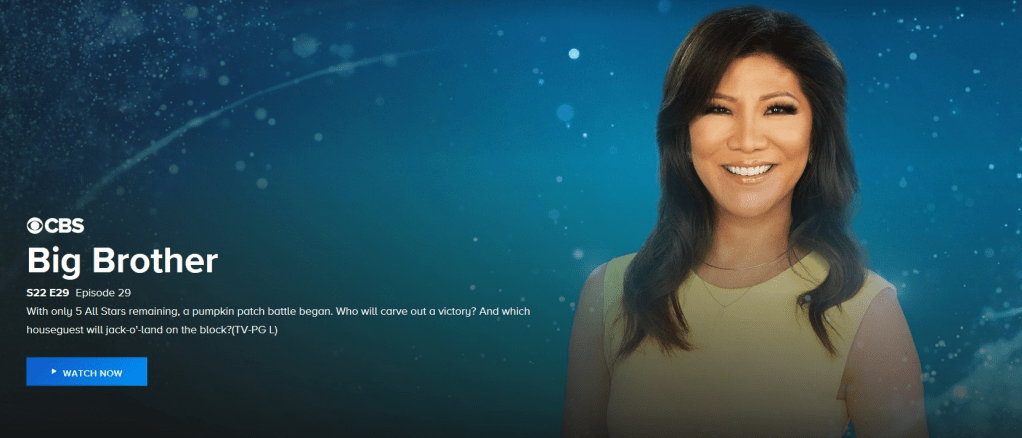
Houseguests talk about having “a social game.” This roughly means having good interactions with everyone. A more sociological term for this might be looking to accrue social capital. With so many players at the beginning, this might be hard: simply making connections, talking to a variety of people, discussing strategy, contribute positively to house life. But, this social capital can pay off as the numbers dwindle, people show their different capabilities, and the competition heats up. It could also be described as the ability to manipulate or coerce people without others hating you, particularly when it comes down to the jury selecting the winner among the final two.
Connected to the importance of social capital are the numerous social networks that develop quickly and can carry players to the end. The social networks can be larger or smaller (ranging from two people up to 6 or more), some people are in multiple networks (more central) while others may be in just one or none (less central), and the ties within networks can be very strong or relatively weak. At some point in a season, the overlapping or competing networks come into conflict and houseguests have to make decisions about which network commitments to honor – or reject.
There are plenty of instances where race, class, and gender and other social markers matter. A typical season has a mix of people. Relationships and alliances/networks can be built along certain lines. Competitions can highlight differences between people. The everyday interactions – or lack of interaction between certain people – can lead to harmony or tension. Some people may be more open about their backgrounds outside the house, others are quieter. With viewers selecting America’s Favorite Houseguest, there is also an opportunity to appeal to the public.
There is more that could be said here and in more depth. Indeed, a quick search of Google Scholar suggests a number of academics have studied the show. Yet, television shows are accessible to many and applying sociological concepts can be a good exercise for building up a sociological perspective. Even if the world does not operate like “Big Brother,” this does not mean that aspects of the show do not mirror social realities.
But for months, the burger had been traveling through a complex supply chain crippled by the novel coronavirus. Now it was about to end up in a takeout box…
On the burger’s journey from a Kansas farm to the engineer’s dinner plate, every person had a story like Solano’s. A rancher with five children who lost thousands every week. A factory worker who brought the virus home to her son. A courier who calculated the true cost of every delivery not in profit, but in the risk it required her to take.
To follow the burger is to glimpse the lasting toll of this pandemic: on the beef supply chain, on the restaurant industry, on the people who were struggling before this catastrophe began, kept going to work throughout it and are still waiting to see what their lives will become when it ends.
A few of the sociological concepts in the story:
The miracle of modern systems. The number of people involved, the travel, and the meanings and social policy it play all hint at the complexity and ability of rationalized processes to bring a burger to the home of city residents. Reminds me of Durkheim’s organic solidarity and division of labor as well as Ritzer’s McDonaldization.
The human involvement and costs all along the way. Producers and workers struggling, consumers eating the product with little idea of how it all happened, and an economic and social system that tried to make it as profitable as possible. Furthermore, many of the people are faceless and their personal and collective circumstances – whether race, class, or gender – are obscured or ignored. Reminds me of Marx and alienated workers as well as consumption patterns within modern capitalism.
I am struck by two additional factors that perhaps could be hinted at during Intro to Sociology: does this story illustrate urban-rural divides? The city residents, young 30-somethings order fancy burgers after a week of white-collar work, ranchers raise cattle in the middle of the country, and faceless workers in between facilitate the exchange. And does this illustrate how broad social change is within the United States over the last century? Some aspects of this story could fit 100 years ago – the shipment of beef and other agricultural commodities helped make Chicago and other places – while other aspects would be unheard of. People need to eat and make money but how this happens evolves over time.
Even in his school duds — no tie, sometimes even jeans, if you can believe it — Harry Rosen was the best-dressed student this fall in Intro Sociology.
“I dress casually for class, but never without a jacket,” stated the godfather of Canadian menswear, who, at 82, decided this year to start studying humanities at Ryerson University.
He has been excused from exams because he still juggles part-time duty with his luxury clothing empire — he has a meeting Friday with a customer who still prefers to “Ask Harry,” semi-retired or not; some are now fourth-generation clients. He also fundraises for Bridgepoint Health and the University Health Network’s stem-cell team that created a research chair in his name, and serves on boards of institutions such as Ryerson…
History Prof. Martin Greig said he enjoyed the “octogenarian sitting amongst the 17- and 18-year-olds who made up the bulk of this first year course on medieval Europe. He was very attentive and seemed genuinely appreciative of my efforts. It was fun to have him there and I hope that he follows through with his intention to take my Cold War course in the winter term.”
“I love learning and I need that activity, in good measure because of my regrets at not getting a university-level education when I was young,” said Rosen, a self-taught retail mogul who went from high school straight to work, opening a modest men’s shop with his brother and then spending the next 60 years learning what he needed from carefully chosen partners.
It is good to hear about life-long learners who want to find out more about the world. Of course, this doesn’t have to happen in a college classroom. Yet, I think his example could go a long way with younger college students. With some of the figures about student learning in college and completion rates, his interaction with students might be the most valuable thing that happens in the classroom.
But slowly, week by week, you became less interesting. I don’t know what it was, but I just didn’t want to see you anymore. I showed up, sure, and I continued to take notes, but my heart just wasn’t in the relationship like it had been in July. You had grown dull, boring. I wanted something better, something that kept my attention, and I thought of the classes I’d taken last fall, but I continued our weekly meetings.
The first mid-term came, which was wonderfully open book. I passed with minimal studying and flying colours. I think our relationship rekindled a bit there, because I remembered why I was so taken with you in the beginning: you were easy.
But then the second mid-term approached, and I knew I wasn’t prepared. All my note taking wasn’t enough to make sense of your endless rambles. What did I actually know of society, the course material, since I barely listened in class, choosing to read a novel in between writing down your notes. So I studied hard, not wanting you to know I was losing interest. I wanted you to believe that I still cared. And I passed, again, and I don’t think you knew just how little I wanted to see you anymore…
The final was today, and I have to say, I’m not going to miss you, Soc. Sure, we had some fun times, some great moments of discussion and humour, but we’re just not made for each other. I’m going to go back to journalism classes in the fall, I think you should know that. No, we can’t hang out anymore – you’re just not right for me. And despite my grades, I don’t care about you. I faked the whole relationship. I’m sorry.
While this could be taken as a story about the lack of effort from college students, I’m more interested in the other part: why take a sociology course in the first place? The early parts of this letter (not quoted above) share the student’s enthusiasm for the course. But, by the time the exams rolled around, the true sole reason emerges: the class was supposed to be easy and it didn’t quite turn out that way. And when it got a little tough, sociology suddenly didn’t seem so exciting.
I’m not surprised by this as sociology often has a reputation as an easy class. Doesn’t everyone know about society? Isn’t a lot of it common sense? I wonder if the student who wrote the letter might have had a different opinion if that first mid-term was challenging which might have led her to more engagement before the second mid-term. By asking interesting questions, sociologists can demonstrate that it is discipline that offers variety, complexity, and connections to individuals and groups. Indeed, a good portion of Introduction to Sociology is about showing that the richness of the discipline, one which many college students have not heard of or only have cursory knowledge. Humans present an ever-moving target with complex and fluid relationships. Collecting and analyzing data can be complicated. Working with and developing to explain (and perhaps even predict?) human behavior is messy. The (implicit) goal of Introduction to Sociology is to show all of this and present sociology as a worthy discipline that can enrich student’s lives as well as help the world.





 Legally Sociable