“Another Megachurch to Open College” – is this a trend?

Elevation Church in North Carolina is planning to open a college:
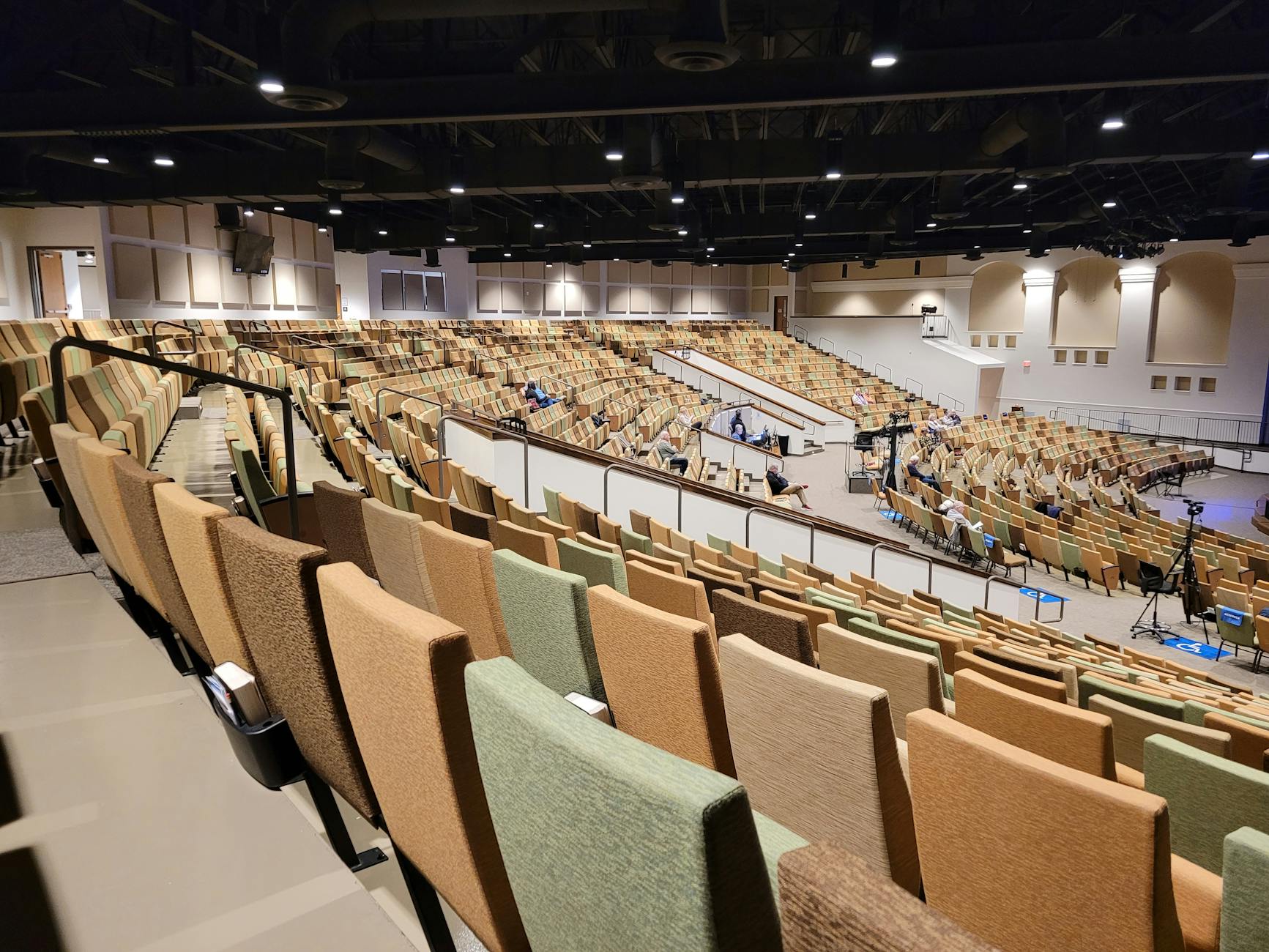
Photo by John Robertson on Pexels.com

Elevation Church announced that the new institution would offer two associate and eight bachelor’s programs, including ministerial leadership, biblical studies and digital media and design. Classes, a combination of regular SEU courses and those exclusive to Elevation students, will be delivered in online and hybrid formats.

However, students will be required to live in Charlotte, N.C., to participate in the programs and to complete “practicum experiences” at the megachurch…

Historically, a huge number of U.S. colleges and universities were founded in partnership with churches or began as seminaries. In recent years, a handful of megachurches—a relatively modern term referring to churches with particularly large buildings and weekly attendance of 2,000 people or more—have dipped their toes into education. For example, Highlands College, which was created by the Church of the Highlands, the largest church in Alabama, opened its doors in fall 2023. While the college was originally founded to train ministers for the Church of the Highlands, the institution has since branched out, announcing this year that it would launch a business school.

Celebration Church, a megachurch in Texas, launched a small institution called Austin Christian University in 2023 with just two dozen students. But the university, which is focused on Christian business education, has grown to enroll 63 students this past spring. Megachurches are also opening K–12 schools, such as Dream City Christian Academy, a school with nearly 800 students operated by Dream City Church in Phoenix.

The article mentions three megachurches that have opened colleges in recent years. Does this make a pattern or trend? Consider:

  1. There are lots of megachurches in the United States. See a list here.
  2. This is not exactly a boom time for colleges in the United States. These difficulties include a decrease in potential students in the coming years and lower public sentiment about a college education.
  3. It takes time to set up a college, attract students, run successful programs, and build a name.
  4. The main advantage a megachurch might have is a built in audience and brand. If it already has thousands of attendees plus those people (and others) trust the name, this could provide a certain number of interested students.

If this is a growing trend, it is a small one (if there are indeed 3 new colleges).

Another interesting matter from the article above: what curriculum would such a college offer? The theology and ministry degrees make sense given the church connections. And then add on digital media and design? A business school? As they look to establish themselves, they probably have some sense of what programs could serve the church as well as attract students. And these degrees would be marketed as alternatives to what typical colleges and universities offer.

The value of a discipline’s knowledge and methods in a gen ed curriculum (and introducing more students to the discipline)

With sociology removed from the general education curriculum in Florida, at least two arguments could be made opposing the move. The first reason involves the value of the discipline’s knowledge and methods:

Photo by Pixabay on Pexels.com

What do students learn by taking sociology? What is lost if fewer students do? It struck John Reynolds, a professor of sociology at Florida State University, that these are the kinds of questions his discipline can help answer. While the Board of Governors overseeing the state’s public universities on Wednesday voted against a proposal to pause and collect more evidence to assess the impact before taking its vote, the “budding social scientists” in his “Sociology of Education” course were learning the very skills needed to conduct such research. So he walked students through the process in class on Thursday.

Reynolds and his students examined various arguments key players had made for and against keeping sociology. Then Reynolds split the 37 students into small groups and had each propose a research study to evaluate those claims using one of the research methods they covered in the course — school ethnography, intensive interviews, social survey, and analysis of school administrative data. Reynolds plans to award a small prize to each group whose proposals “were most detailed and true to the strengths of the method they were assigned,” he told The Chronicle in an email…

Offering a course as an avenue for meeting a general-education requirement signifies that the state regards it as important, said Alison C. Cares, an associate professor and the associate chair of the sociology department at the University of Central Florida. And while there’s overlap among disciplines — students have many options for developing critical-thinking skills — sociology has something unique to offer, she believes. Sociology is a discipline that “really jolts students out of an individualistic approach,” Cares said. Of course people have individual agency, she added, but at the same time, “there are predictable patterns, based on how society is organized, that make decisions and actions more or less likely.” Understanding that can enhance the way a doctor cares for a patient, or a teacher instructs a student, or a businessperson leads a company.

The second reason involves the way that required general education courses help students find courses and what they want to study:

Students will still be able to take introductory sociology — and it could still meet other university-specific requirements — but professors anticipate that its absence from the gen-ed menu could significantly reduce enrollment. This is partly because of exposure — a large share of students likely have found or been pointed to the course in order to fulfill the social-sciences requirement. Sociology is what one professor called a “found major,” that is, one that students might not have heard about before they get to campus, but fall in love with during their first course…

That’s not the only problem. Some degree programs (or combinations thereof) have such exhaustive requirements that students often look to meet as many of them as efficiently as possible, so they are unlikely to take other courses even if they really want to. The ability to meet a state requirement while taking introductory sociology is especially helpful, Aranda said, for students planning to attend medical school, many of whom have sought out the course since the MCAT added a section on social sciences nearly a decade ago.

I imagine faculty in many disciplines would make this same argument. Their field of study offers a unique perspective that students benefit from. This is the reason we have different academic disciplines: they have particular ways that they study, write, and operate. Additionally, general education classes offer gateways for more students into that field of study. Not all disciplines are represented in required courses so this is valuable real estate.

Sociology and other disciplines will continue to have to make arguments for why they should be included in curricula and why students should take their courses. If college courses and majors are a marketplace where students respond to different incentives, disciplines offer different perceived advantages and disadvantages. Whether this market logic should determine the worthiness of disciplines and their presence is worth debating but there is no doubt that the market does have some patterns and cycles.

As a sociologist who has regularly taught Introduction to Sociology over the years, these two issues come up in this class. What value does sociology have to college students who may never touch sociology again or know little about it? I enjoy teaching sociology and its methods so this is a fun challenge.

Former US Rep, Rhodes Scholar, says Rhodes Scholar applicants have difficulty addressing the big issues

One of the debates surrounding college education in the United States is about its purpose: should it provide more job training (specialized, professional programs) or a broader approach (liberal arts, interdisciplinary)? Heather Wilson, a former US Representative and Rhodes Scholar, argues that current Rhodes Scholar applicants (and college students in general) would benefit from a broader approach:

I detect no lack of seriousness or ambition in these students. They believe they are exceptionally well-educated. They have jumped expertly through every hoop put in front of them to be the top of their classes in our country’s best universities, and they have been lavishly praised for doing so. They seem so surprised when asked simple direct questions that they have never considered.

We are blessed to live in a country that values education. Many of our young people spend four years getting very expensive college degrees. But our universities fail them and the nation if they continue to graduate students with expertise in biochemistry, mathematics or history without teaching them to think about what problems are important and why.

Wilson suggests that ability or smarts are not the issue. Rather, it is a matter of perspective: why does a college student desire to become a world-class doctor or scholar? Can these students help address the questions that humanity has raised for millenniums?

This sounds like someone making a good case for the liberal arts. Instead of specializing at the undergraduate level (which comes in graduate programs anyway), students are encouraged to take classes in a number of subjects they may not otherwise encounter. Throughout this broader curriculum, students learn about the varied approaches for answering these big questions and how different disciplines would propose solving the big issues.