Compelling evidence that wealthy New Yorkers are headed to the suburbs after election of a new mayor?

One article claims there is more evidence wealthy residents of New York City will move to the suburbs with the election of Zohran Mamdani:

Photo by Alena Darmel on Pexels.com

That urgency is showing up in the data. Pending home sales in Westchester are up roughly 15% from a year ago, while average showing activity has climbed more than 25% since midsummer, according to Compass agents Zach and Heather Harrison. “Concerns about higher taxes, safety, and a desire for more space are driving people to act quickly,” said Zach Harrison. “We’re seeing bidding wars well into the multimillion-dollar range.”

The rush has been so widespread that local agents have coined a term for it—the “Mamdani effect.” High-net-worth buyers from Manhattan and Brooklyn are placing offers sight unseen, often hundreds of thousands of dollars above asking, in a bid to outpace rivals. “It feels like the pandemic all over again, but with more urgency,” Heather Harrison said.

That sense of déjà vu is supported by market metrics. Nationwide, inventory has been growing for nearly two years, yet supply in affluent New York suburbs remains scarce. Realtor.com’s October Housing Report shows a 15.3% annual rise in active listings nationally, but that growth is tapering, with homes spending an average of 63 days on the market—five more than a year ago. In contrast, suburban markets ringing New York City are accelerating, defying the national slowdown…

Luxury enclaves like Greenwich, Conn., are seeing similar dynamics. Mark Pruner of Compass said inventory there is down more than 80% from 2019, leaving just 2.7 months of supply overall. “Contracts have surged in the past five weeks,” Pruner said, noting several listings that sold within days, including a $2.4 million home that fetched $2.96 million. “This is the strongest top-end market we’ve seen in years.”

I still have multiple questions, even with more evidence in this story than a previous one I wrote about:

  1. Would this come with a corresponding number of sales in New York City or will the new suburban purchases become the primary residence and the city properties can remain as investments?
  2. Who exactly are these people engaging in this real estate activity? Is it the over 100 billionaires who live in New York City? Is it the upper middle class? Are they people in particular industries or households or kids?
  3. What alternative factors could explain this increase in suburban real estate activity? The recent rise in the stock market?
  4. While there are consequences of people moving out of cities to the suburbs, the suggestion in the article is that they are staying in the region. How important is this in the long run – suburban residents still connected to city organizations and activity – compared to residents leaving the region all together?
  5. With political sorting and polarization in recent decades, there are regularly suggestions that people will make significant moves to be in places that are more amendable to their own political views. Is this particular example simply something we should now expect if cities or regions change politically?


And Area Median Income limits in California

The Chicago region has particular Area Median Income limits. How might they compare to the AMI limits in California?

Photo by Darin Phillips on Pexels.com

In Orange, Santa Barbara and San Diego counties, the threshold for a low-income single-person household will soon surpass $100,000 if current trends continue, according to data published by the California Department of Housing and Community Development in April.

They would join three Bay Area counties that already hit that bureaucratic threshold.

California defines income levels by how they compare with the area’s median income. But in areas with unusually low or high housing costs, those definitions are often tweaked to reflect the reality on the ground for residents. Therefore, someone earning $100,000 could be above the area’s median income line but be considered low-income because of the high cost of housing. A number of government programs use these income designations to determine who qualifies for benefits such as housing assistance…

Between 2020 and 2025, the threshold to be considered low-income rose 40% across Southern California’s ten counties, reflecting the rising cost of living across the region.

At the same time, median incomes — representing the middle, not the average — across the region rose 35%.

Similar concept applied to a very different housing situation yields very different AMI limits. California housing prices are higher to the degree that the median income needed is much higher than in the Chicago region. Someone from the Chicago region might see this story about California regions and think that the housing situations are barely comparable.

At the same time, both regions struggle to provide affordable housing. The income levels may differ as might the physical landscape but both share limited appetites from municipal officials, developers, and residents for affordable housing.

Thinking beyond these two regions, are there regions that are doing better at constructing more units of affordable housing? Where incentives and local guidelines and people encourage affordable housing? Where there is good housing available at more or all of the points of the AMI limits?

In a metropolitan transit system, should the city or suburbs get more votes?

As actors in the Chicago region consider the possibility of consolidating multiple transit agencies, the issue of voting members came up:

Photo by Alex Qian on Pexels.com

The MMA would have three directors appointed by the governor, five by Chicago’s mayor, five by the Cook County Board president and five by the chairs of the DuPage, Kane, Lake, McHenry and Will county boards.

Republican Rep. Dan Ugaste of Geneva said, “what’s very important to us in the collar counties and probably in some suburban Cook, as well, is how is this going to work? If we’re talking simple majorities, once we get to the voting structure — that’s going to effectively allow all these five other collar counties to be silenced if Cook and Chicago work together.”

Democratic state Rep. Eva-Dina Delgado of Chicago, who is sponsoring the MMA bill, countered that “for a long time it has been city versus suburbs. We have to change our mindset around that, as well, and see this as a regional issue.”

There could be many different ways to figure out the formula for the number of votes from each part of the region. Some options:

  1. Equal number of suburban and city votes, meaning an equal number from Chicago and equal number from the suburbs (with some way of figuring out which suburban areas are represented).
  2. More votes from Chicago compared to the suburbs. City residents may use transit more.
  3. More votes from the suburbs compared to Chicago. There are many more residents overall in the suburbs compared to the city.
  4. Wild card: more appointees at the state level than either local interests such that the governor or state leaders retain control over which way votes might go.

Beyond the complications of local Illinois politics, the broader issue is that American cities and the suburbs around them do not always see eye to eye on transit and other regional issues. If either side feels that they have to “win” this portion of the negotiations, does this limit what can be accomplished? Or if one side does not really want to participate but also may not want to be locked out of the political process, where does that lead?

The Chicago Tribune on the side of suburban commuters

An editorial in the Chicago Tribune details some of the issues commuters to Chicago face:

Photo by Cameron Casey on Pexels.com

But hope and optimism have their limits, even among the heartiest suburbanite, who likely saw the news about the Kennedy construction delay debacle and felt put upon and frustrated — but not surprised. After all, suburban commuters are just supposed to take it. Still, this one stings…

It’s not just the roads where suburban commuters get a rough deal — they’re constantly on guard against Metra fare hikes. Fares increased last year, and now Metra is threatening fare hikes again — plus service cuts — as the agency stares down the proverbial fiscal cliff. 

So the suburban commuter faces tortuous traffic on the highways, higher prices and worse service on the trains — yet the city wants them back downtown to buy their $20 lunches and restore the Loop’s economy. Businesses want the suburban commuter back downtown to occupy vast commercial office spaces to justify the rent. And everyone wants them to boost foot traffic, creating safety in numbers and making everyone feel a little safer walking to the office…

But the city often lacks warmth for the people trekking downtown. Not too long ago, the mayor of Chicago floated weaponizing taxes on suburbanites to extract more tax revenue via a Metra “city surcharge” and a “commuter tax” as a way to “make the suburbs … pay their fair share.” See above — they’re already paying a lot to get downtown. 

A hostile relationship between the city and the suburbs is no good. Suburban willingness to come to work downtown is a direct reflection on the city’s health. Is it safe? Is it clean? Is the restaurant scene thriving? If so, people will hop on the Metra and gladly make the trip. The more suburbanites, the better.

Four thoughts in response:

  1. What exactly would “warmth” for suburbanites look like?
  2. What about the many commuters in the region who go suburb to suburb? Are their trips easier?
  3. Do suburbanites need the city more or does the city need suburbanites more?
  4. Contrary to the zero-sum game assumption in #2 above, would it be better to think of suburban commuters and city residents as part of a larger metropolitan area? Better transportation options could be good for city and suburbs as could economic opportunities for both cities and suburbs.

The reasons Americans move to exurbs – including economic opportunities

An overview of some booming American exurbs explains why they are growing:

Photo by Ruslan Burlaka on Pexels.com

Exurbs are areas typically located 40 to 60 miles from city centers and are often appealing to families seeking more space, affordable homes and a quieter way of life.

The trend has transformed once-sleepy rural towns into thriving cultural communities with booming populations and housing markets…

The COVID-19 pandemic has played a significant role in the shift to the exurbs, with many people now able to make a living from home thanks to an increase in remote work opportunities. 

This means they are no longer tied to big hubs where offices are based.  

Skyrocketing housing costs in major cities have also pushed many families to seek more affordable and spacious alternatives.

Finding affordable housing is a significant issue across American metropolitan areas. The thought often goes that the further one moves out from the center the more house a buyer can get. (This can ignore the pockets of cheaper housing that do often exist closer to the center of regions but the assumption is those who want these cheaper homes also want a particular kind of suburban community or way of life.)

But there is another component to the growth of exurbs and the suburban fringe. There are jobs and other economic opportunities on the edge of regions. Commuting to the big city is arduous from these far-out locations. The article above hints at the possibilities of working from home but numerous exurbs grew before this. Where are people working?

They are often working at companies and organizations in the suburbs. If I live 60 miles outside the big city, I may commute to a job 45 miles from the big city. Those edge cities spread throughout regions can provide thousands of good jobs accessible to those living in the exurbs. Or the new growth generates jobs and opportunities in the exurbs. Yes, some people can work from home but these are particular kinds of jobs and new growth leads to medical jobs, service jobs, and jobs in other industries that also find it attractive to locate in exurbs.

In other words, you cannot have the cheaper housing of the exurbs without also having jobs and opportunities in and near the exurbs.

“Visit your local IKEA store”

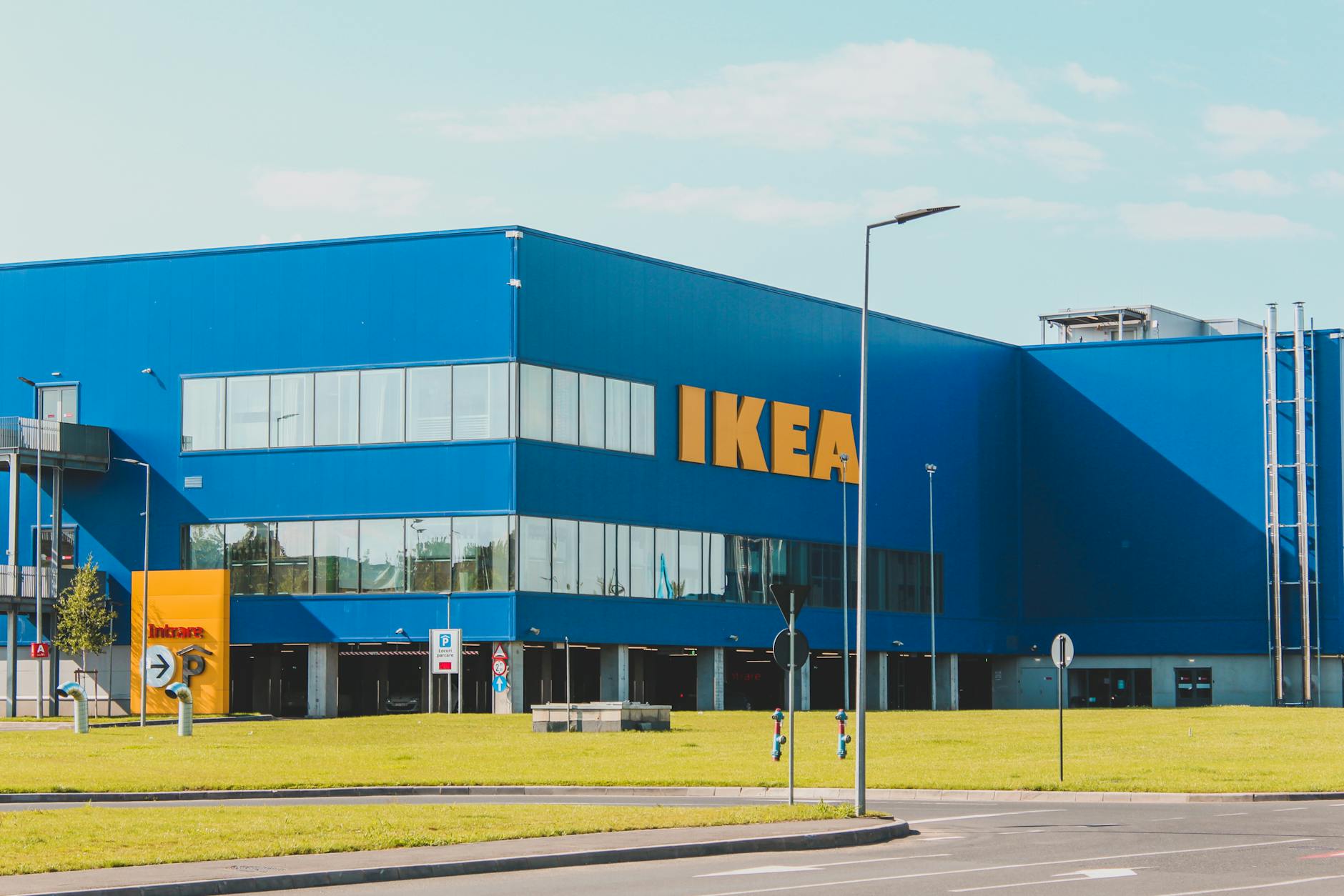
A recent advertisement encouraged people to “visit your local IKEA store.” I get the general idea: I can go find what their latest deals at my closest store.

Photo by Czapp u00c1rpu00e1d on Pexels.com

However, the “local” part of it stuck with me. Do I have a “local IKEA store”? Here is why the term might not work well:

  1. There are two IKEA stores in the entire Chicago region of over 9 million people. One is closer to those living toward the north, one is closer toward those living in the southern part of the region. Thus, many in the region will have to take a bit of a drive to reach a store. These are not stores found in numerous communities. How far away from a residence is a “local” store?
  2. Local can imply local business or smaller in scale and size. All of these might be in comparison to big box stores that offer predictability and many square feet. IKEA is more in this latter category with stores that are large, found along major roads, and are surrounded by large parking lots. These are not local businesses; this is a global corporation with a limited number of stores and pick-up sites in the United States (see the map here). These are destinations, not local businesses near the hearts of communities.

I, like many others, will make a trip to IKEA in the future to look for items and have an experience that cannot easily be found elsewhere. But I will not consider it a local store as I travel down highways to the sizable building located among many other national and international retailers at a convenient nexus of sprawling suburbia.

What US metro areas do suburb to suburb mass transit well?

Public hearings about mass transit consolidation in the Chicago region highlight a persistent issue: where is the mass transit to serve all the people who commute suburb to suburb?

Photo by Jou00e3o Jesus on Pexels.com

“Right now, our transit system reflects an old design,” DuPage County Board Chair Deb Conroy testified in Naperville. “One that saw commuting as merely bedroom communities serving downtown workplaces.”

“All suburban residents deserve the same level and access to and from Naperville to Rosemont or from Oak Park to the Morton Arboretum in Lisle.”

College of DuPage student Rowan Julian experienced that disconnect trying to get from Wheaton to Batavia to see a friend, a 20-minute car trip. She wanted to use public transit but found it could take up to one hour and 40 minutes.

“For me I felt like I had no choice … so I chose to take my car,” she said.

Chicago, like many older metro areas, has a hub-and-spoke model where the train lines feed the center of the city. This fit a particular era when there was a mass of jobs and economic activity in the center of cities.

Today, metropolitan regions are sprawling and many commuters do not need to go to the big city for work: there are all sorts of jobs all throughout the region. This presents particular challenges for mass transit. Buses can use existing roadways but tend to be slower than cars. Trains can connect nodes but then there needs to be additional service from the train stations. Access via walking or biking might be theoretically possible in some suburban areas but it is often dangerous. Communities and the region can encourage more development around existing transit nodes. And Americans often seem to like driving because of the individual freedom it offers and go when they want and where they want.

What American regions do this well? Could be older regions or newer regions. Who has a model that other regions can emulate? How can regions build this capacity and pay for it? When much of the money is funneled to maintaining existing roads and building new ones, how can suburban places find resources for mass transit?

Eight American metro areas have homes worth over $1 trillion – and one involves a large suburb

What do all the housing values in a city add up to? For eight American metro areas, the housing values are over $1 trillion:

Photo by Tara Winstead on Pexels.com

According to residential real estate website Redfin, less than 10 metro areas in America are now worth $1 trillion in collective real estate home values. Most of those areas make sense for the list, like New York, Boston and Atlanta (the latter of which has a metro population of more than 6 million people). Anaheim, on the other hand, has a population of about 350,000 people, and for years fought to disengage itself from the ignominious nickname “Anacrime,” despite being home to the so-called happiest place on Earth…

The Orange County city reached its recently minted status due to an explosion in the real estate market in that area, with home prices up more than 12% over the past year, Redfin says. To source its findings, the Seattle-based company relied on aggregate home sale data for almost 100 million homes across the U.S.

San Francisco, meanwhile, has not reached trillion-dollar status yet, but that’s only because the city itself is so small. When combined with other large area real estate markets in San Jose and Oakland, the number jumps to a staggering $2.5 trillion. The other cities that did cross the $1 trillion threshold are Chicago, Washington, D.C., and Phoenix.

Nationally, the biggest overall rise in home values comes from more rural and suburban areas, Redfin says. The high cost of homeownership in Anaheim specifically points to ongoing issues in California around housing supply and affordability. Orange County has long been a wealthy area in aggregate, with pockets of affordability. Now, many prospective homeowners may be feeling the squeeze to leave, departing for less expensive homes in places like the Inland Empire and Bakersfield.

To some degree, this measure may not have much value. The biggest metro areas are on this list. (Missing are Dallas and Houston.) Have a lot of people and have relatively high prices and a place ll make this list.

On the other hand, Anaheim does seem like a bit of a surprise. It is a suburb of Los Angeles. In 1950, it had just over 14,500 residents. It grew tremendously in the postwar era. According to the Census Bureau, it has a median housing value of over $713,000.

What other suburbs could be close to joining this list? They would need to be large and expensive. This would rule out many communities in the Northeast and Midwest where suburbs tend to be smaller. Are there some Sunbelt or West Coast suburbs that could join the list soon?

Post pandemic evictions up in some cities, down in others

Looking at evictions across American cities and regions after the pandemic shows differences:

Photo by Artem Podrez on Pexels.com

Eviction filings over the past year in a half-dozen cities and surrounding metropolitan areas are up 35% or more compared with pre-2020 norms, according to the Eviction Lab, a research unit at Princeton University.

This includes Las Vegas, Houston, and in Phoenix, where landlords filed more than 8,000 eviction notices in January. That was the most ever in a single month for the county that includes the Arizona capital. Phoenix eviction-court hearings often run for less than a minute. One judge signed off on an eviction after the tenant admitted to missing two rent payments…

Overall, eviction notices were up 15% or more compared with the period before the pandemic for 10 of the 33 cities tracked by the Eviction Lab, which looked at filings over the past 12 months…

Even with the higher eviction rates in several major cities, evictions more broadly have settled to roughly where they were before the pandemic. The first five months of the year had about 422,000 filings for eviction across the 33 cities and an additional 10 states tracked, down slightly from prepandemic norms in those same places. 

In New York City, Philadelphia and some other cities, filings have stayed down due in part to increased protections for renters.

The article does not list all the cities involved but it looks like those with higher evictions post-pandemic are growing Sunbelt cities. The article suggests the differences are due to more protections for renters in some places than others. I wonder if this goes along with several other factors:

  1. These regions are growing at faster rates than some other regions, particularly in the Northeast and Midwest.
  2. Different political regimes in different regions. Are the different levels of renter protections about whether the region (and the state it is in) leans more conservative or liberal?
  3. Different regional histories.
  4. How much did the pandemic affect local eviction policies? It could have led to more protections in some places.

It is cool to now have this data over time. I recommend reading the work – Evicted – that helped make this work possible.

Creating new communities to better benefit from their tax money paid (and support whiter, wealthier residents)

Residents of several places in the South have worked in recent years to form new communities:

Photo by Monstera Production on Pexels.com

The Louisiana Supreme Court last month cleared a path for the creation of a new city, St. George, after a prolonged legal battle over the feasibility of the city and its implications for tax revenue.

St. George would take almost 100,000 residents away from East Baton Rouge Parish, and critics say it will deplete the parish of the resources from this wealthier, whiter community…

White fortressing, and other kinds of opportunity hoarding, concentrates resources — such as well-funded public schools, access to local revenue and zoning control — among white communities that are already economically and politically advantaged. Meanwhile, they also constrain access to opportunity among people of color.

Proponents of the new city in Louisiana argue that this is a move towards fairness, rather than isolation. On their website, they state: “St. George’s taxpayers provide two-thirds of the revenue to the East Baton Rouge Parish government with only one-third of that government’s expense in return. Incorporating a city would reverse this unjust circumstance to an extent.” This has been a relatively common argument among similar movements since the post-war era, something Princeton University historian Kevin Kruse documents in his work around white flight in Atlanta. When residents of the Buckhead neighborhood in Atlanta were advocating for secession in 2022, they also argued that they were “not getting back in services what they [were] paying in city taxes.”

These movements have persisted for decades, and they are not slowing down. Georgia has added 11 new cities around Metro Atlanta since 2005, most of which are affluent white communities that broke away from majority-Black/nonwhite counties. Last month, residents of a wealthy, majority-white community in Gwinnett County, the northern suburbs just above Atlanta, voted to approve forming the new city of Mulberry, just as the county has become majority-Black.

Several thoughts in response:

  1. This has happened in the United States for a long time in many different forms. These forms include: limited annexation expansion of Midwestern and Northeastern cities starting in the late 1800s as suburbanites no longer wanted to be part of the big city; white flight, urban renewal, and federal support for suburbanization in the mid-twentieth century; formal and informal policies and actions to enforce residential boundaries; and a persistent presence of residential segregation.
  2. Such actions do not reckon with the broader and longer-term consequences of inequalities across places. Those who live in a wealthier community may experience a particular day-to-day life but they are not fully insulated from the concerns of the broader metropolitan region or society at large. Do communities have responsibilities to their residents and to society more broadly?
  3. I wonder how many Americans would agree that what they pay in taxes should roughly return to them in similar amounts from the government.