The ongoing transformation of the Bell Labs site that helped create modern Naperville

A large office building is coming down at the northwestern corner of Naperville and Warrenville Roads in Naperville. This is not just any office building; this is the site that helped jumpstart Naperville’s growth and status. Here are some details on the changes:

Constructed in 2000 at the northwest corner of Naperville and Warrenville roads, the five-story glass and steel complex at one time was touted as a technological hub with the potential to sustain thousands of jobs.

But with the recent arrival of cranes, excavators and other heavy equipment, a new era is beginning for the 41-acre site that’s part of the city’s Interstate 88 corridor.

Oak Brook-based Franklin Partners — which in April finalized the purchase of 1960 Lucent Lane for $4.75 million — in June received a demolition permit from the city to raze the 500,000-square-foot building and the three-story parking garages on either side…

Discouraged by city officials to develop warehouses on the property, Franklin Partners replied by saying it would seek a technology-based alternative.

I describe this property’ contribution to Naperville in a 2016 article titled “A Small Suburb Becomes a Boomburb” in the Journal of Urban History:

The arrival of a high-status tech company on this suburban plot helped give rise to more white-collar employers in Naperville plus numerous subdivisions.

This property has been ripe for change for a while now. Last year, I noted the amount of available parking behind the facility and a new subdivision back there as well (sign for the development, a new park).

It is too simple to say that the fate of this land could do much to affect Naperville’s future trajectory. At the same time, it is a large parcel of land that once helped affect Naperville’s future. It sounds like the city clearly does not want the property to become warehouses, but what could arise here that contributes to a vibrant future?

More suburban sprawl = disappearing night sky

A resident of Naperville, Illinois describes one consequence of the growth of the suburb and the Chicago region:

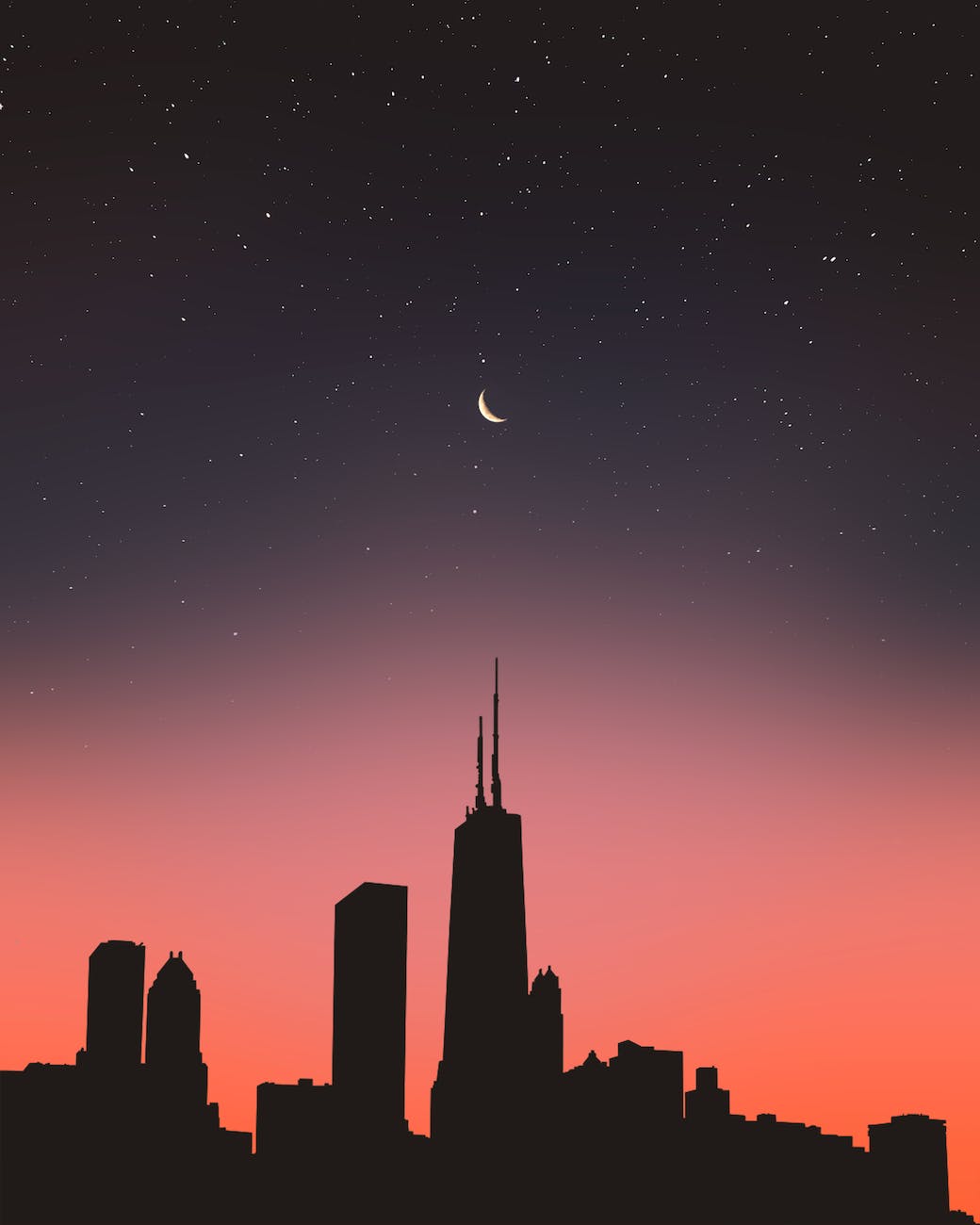
Photo by Benjamin Suter on Pexels.com

Growing up, Carhart said he learned the intricacies of the Milky Way from his suburban backyard in Naperville. But slowly, the 64-year-old said, he watched the stars disappear. If someone were to visit his childhood home today, he said, they could count the number of stars they see on their fingers…

“The light pollution is tremendously worse. Out by Naperville we could see the glow in the nighttime sky of Chicago off in the distance, but it only went a little ways up in the sky,” he said. “Over the years we watched it get brighter and then extend overhead and all the way to the other horizon and just take over the sky.”

What can help reduce this light pollution in a large metropolitan area?

The National Park Service suggests considering whether outdoor lighting is necessary, or if reflective tape or reflective surfaces could be used instead. Other sustainable outdoor light specifications, according to the Park Service, are LEDs at 2700 Kelvin. These lights emit a warm color hue instead of blue or white. The Park Service also recommends purchasing LED bulbs that have the lowest lumens possible — the unit of measurement used to specify brightness — and ones that can accommodate motion detectors or dimmers, which it says can enhance health and safety…

Referencing a study from 2020 that found only about 20% of a city’s brightness can be linked to streetlights, Walczak said regulation or policies surrounding light pollution should be directed toward commercial businesses, such as parking lots or building facades.

The proposed solutions – and another suggested later in the article that uses special equipment to avoid certain light wavelengths – are efforts to work around the sprawl of the region. If there are over nine million people living in the Chicago region, is it possible to have a visible night sky?

This could be another argument against suburban sprawl. As Americans develop more land outside of cities, light spreads. Homes and yards have lights. Roadways have lights. Buildings have lights.

Naperville’s success – rapid population growth, vibrant downtown, lots of jobs – comes with lights. It could come with less light than it might have now . But, how many suburbanites are willing to trade lights for seeing the night sky? How many lights are for safety purposes that suburbanites care about (roadways, properties, etc.)?

It would be interesting to see some major suburban communities lead the way on this. And it would likely take significant regional efforts or numerous communities going this direction to make a visible difference.

“While in the Chicago area, Naperville is a must-see tourist destination”

Naperville is the third largest city in the Chicago region and in Illinois. It is wealthy and has a thriving downtown. Is it also a tourist destination?

Photo by Tim Gouw on Pexels.com

Naperville, a charming western suburb of Chicago, Illinois, offers many activities catering to locals and visitors alike. Illinois is a well-known destination for tourists, but this area of the state has more to offer than meets the eye…

While in the Chicago area, Naperville is a must-see tourist destination. From beaches to museums to parks, and tasty pizza, Naperville, Illinois, can’t be beaten.

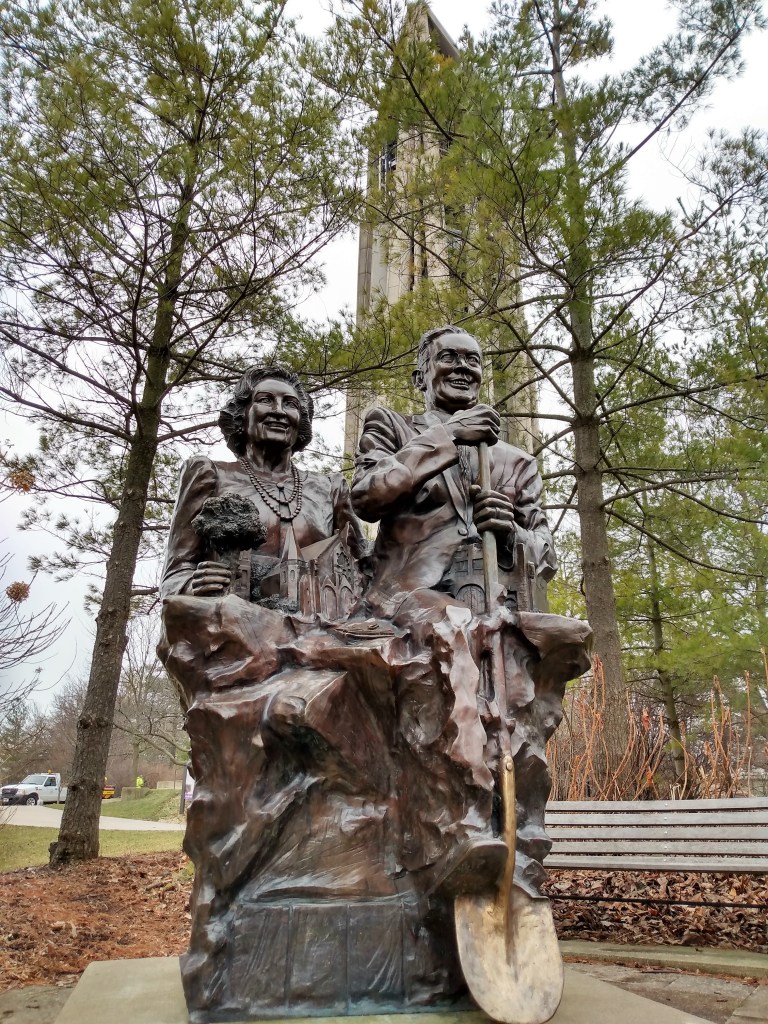
The ten recommended things to do are: Naper Settlement, the DuPage Children’s Museum, Morton Arboretum, the Millennium Carillon, iFly indoor skydiving, McDowell Grove Forest Preserve, BrightSide Theatre, Centennial Beach, Hollywood Palms Cinema, and RiddleBox Escape Room.

Several quick thoughts in response to this list:

-Nine of the ten are in Naperville while Morton Arboretum is outside city limits in Lisle.

-I am surprised the Riverwalk is not a must-see on its own. It is not along the biggest river but it is a popular spot with food, music, civic buildings, and people-watching all available.

-Of the ten things to do, some are more unique to the community than others. For example, escape rooms can be unique but they are available in lots of places. It is harder to find the particulars at Naper Settlement or a carillon tower or a large public pool near downtown made out of a quarry.

-How many people each year visit Naperville to see the suburb?

-More broadly, how many suburbs in the United States are tourist destinations?

Chicago (the big city) vs. Naperville (the suburbs)

Thanks to a recent local news segment that asked people in Naperville about Chicago politics, the two communities are being compared. Why?

Let’s be real, though: The mayor was also taking a dig at Naperville. It’s become a Chicago tradition. Whenever a Chicagoan complains about the proverbial suburbanite who claims to be from Chicago, it’s always someone “from Naperville.”…

I really wasn’t finding anything in Naperville that I couldn’t get in Chicago. That explains why I only visited every 10 years. I could live a complete life without ever going to Naperville, especially since it’s such a long haul on the train. But I’m sure that’s also true of Lemont or Schaumburg or Libertyville. Of all suburbs, why do Chicagoans single out Naperville for scorn? At the Naper Settlement, I met a woman who offered an answer. Jeanne Schultz Angel grew up in Naperville, went to Waubonsie Valley High School, then moved to Norwood Park, from which she commutes back to her hometown to work as associate vice president of the history museum. That evening, she was helping set up for a Weezer tribute concert.

“Speaking both languages, I think there’s this perception and then there’s the reality,” Angel said. “People in Chicago might think they know the brand, which is idyllic suburban. We always make the top lists of where to live. Chicagoans tend to get beaten up about living in Chicago. There’s a lot of learning curve that can increase understanding. People who think Naperville is this very idyllic, very American place, it does surprise. We have a Patel Brothers. Naperville has a constant transient population, but I think a lot of people who grew up in Naperville had their careers here and bought homes here. I love the city. I love Naperville, too. It’s a different kind of life.”

Chicagoans need to respect Naperville’s differences and stop cracking jokes at its expense. Stop thinking about Naperville altogether. It’s so far away. Why let it bother you? I just spent a day in Naperville and I probably won’t think about it for another decade, when I find a reason to visit again.

On one hand, these explanations make some sense. Naperville is a successful suburb. It is the second largest suburb – after Aurora – in a sprawling region of over six million suburbanites. Chicago is a big city whose big city problems can often be in the news or political conversations. Residents of the two communities might have different ideas about the kinds of lives they want to live. Thus, the two places serve as shorthand for a long-standing American competition between cities and places outside of them.

On the other hand, there are plenty of stories and reports that take a similar tack to this piece. The journalist or researcher from the city comes out to the suburbs to examine the life they find unusual. What do those suburbanites actually do day-to-day? How do they survive in such a place devoid of culture and sophistication?

The two municipalities might do better to cooperate more as leaders within a metropolitan region that could better coordinate its efforts to help all in the region thrive.

Playing Chicago suburbs off each other to get the best deal for the owners of the Bears

Which Chicago suburb might give the Bears the best option to make money off a new stadium and development around it? Enter Naperville, the largest suburb in the region:

Photo by Pixabay on Pexels.com

“We will continue the ongoing demolition activity and work toward a path forward in Arlington Heights, but it is no longer our singular focus,” Scott Hagel, the Bears senior vice president of marketing and communications said in a statement. “It is our responsibility to listen to other municipalities in Chicagoland about potential locations that can deliver on this transformational opportunity for our fans, our club and the state of Illinois.”…

This isn’t the first time there’s been hopes of a Bears move to the suburbs. Through the years, the Bears have considered sites in Hanover Park, Hoffman Estates, Aurora, Elk Grove Village and Waukegan. And once before in Arlington Heights.

Wehrli’s letter touts Naperville as accessible through major highways, such as the east-west Interstate 88 and the north-south Interstate 355, as well the city’s downtown Metra train station. There are also Metra stops in nearby Lisle and on Route 59 in Aurora.

The meeting is a major splash for Wehrli, who was elected in April and has been mayor for only a month. A lifelong Naperville resident with family roots in the community dating back to the 1840s, his letter to Warren stresses the impact an NFL stadium would have on the city.

This strategy works for the Bears because they can seek out a community that will give them a good deal on land, permits, taxes, and more. Their goal is to make money off the stadium and nearby development.

This strategy might work for individual suburbs beyond Arlington Heights. If the Bears do not come to Naperville, does the new mayor lose anything by reaching out? Even a short conversation keeps his community in the news. If the Bears come, it could be touted as a big deal. (On the other hand, just as some residents and taxing bodies in and near Arlington Heights are not thrilled about the Bears locating there, I imagine there would be some resistance in Naperville.)

Ultimately, providing public money for stadiums tends to benefit the team owners the most. Someone will host the Bears in the future but the team will end up as the biggest winner.

Do all mayors feel this way: “We’re the envy of what most cities want to be”

The outgoing mayor of Naperville considered his legacy and summed up his community compared to others:

Photo by Matheus Bertelli on Pexels.com

Q: What will be your legacy as mayor of Naperville?

A: It has to be the financial impact on the city. Eight years seems like a long time, but it’s not when you’re trying to turn a ship like that. To turn over the city with tons of cash, not to mention federal money we didn’t touch, they’re going to be able to do a lot. And that’s my gift, to make sure the city was on the right trajectory. We’re the envy of what most cities want to be.

One of the jobs of a mayor is to champion their community. They are often the chief booster. In many American communities, professional staff – a city manager and others – address day-to-day concerns while mayors work with a council and act as cheerleader. The outgoing mayor earlier in the interview described the suburb’s success in planning, development, and revenues. Yet, always highlighting the best of the community is key and Naperville has a precedent: former mayor George Pradel did this for decades. I assume mayors will say their community is great.

Yet, it can be interesting when mayors make statements that involve other communities, implied or otherwise. It is one thing to say your community is great; it is another to say that it compares well to other communities. Some communities can be leaders or models for others. In the United States, this might involve growth or a high quality of life or economic opportunities or tackling particular issues.

Do most cities want to be Naperville or like Naperville? This might be hard to answer, particularly if leaders elsewhere will tend to focus on the good things in their own communities.

An influential Naperville office building now with plenty of available parking

In 1964, Bell Labs announced plans to construct a new building just north of Naperville, Illinois and near an interchange on the East-West Tollway. That facility would later come to contain thousands of workers; “about 11,000,” according to Wikipedia. As I discuss in “A Small Suburb Becomes a Boomburb: Explaining Suburban Growth in Naperville, Illinois,” this suburban property helped set Naperville on a particular trajectory.

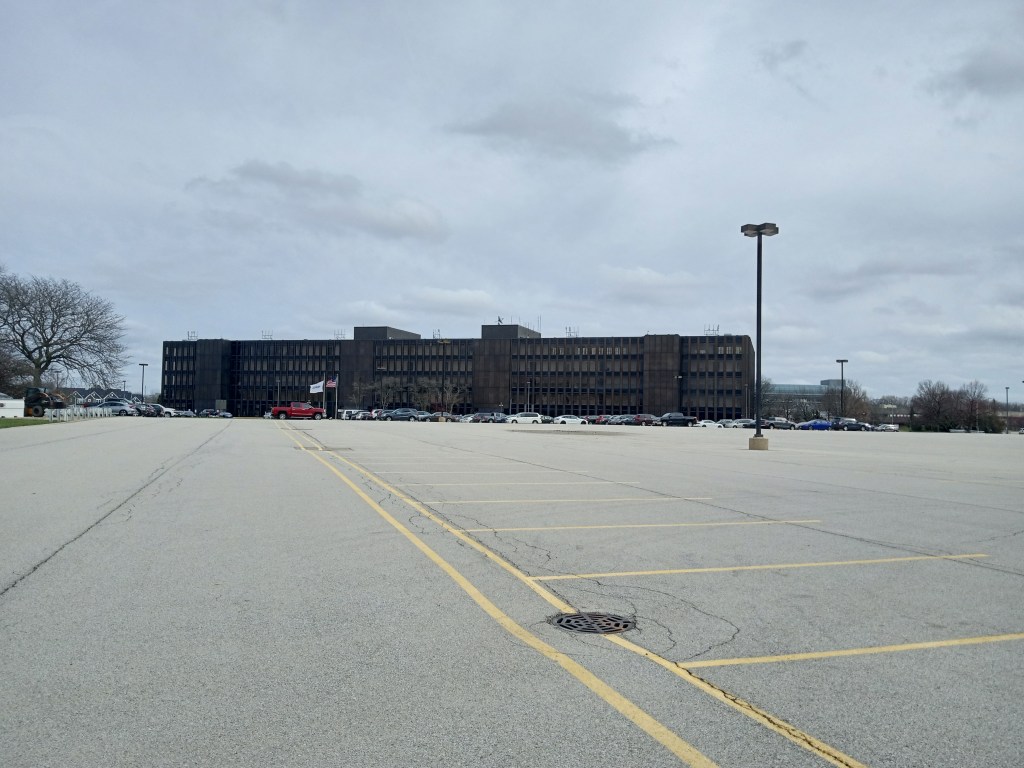
Here is a recent view of the back parking lot:

I know this is a far out view of the parking lot but it struck me that there were a limited number of cars here for such a large set of buildings. The number of workers on site is a lot smaller in recent years:

The 175-acre property near the intersection of Naperville and Warrenville Roads has the address of 1960-2000 Lucent Lane.

Nineteen-sixty Lucent Lane includes a vacant five-story 613,620-square-foot steel and glass office building, two three-story parking decks and surface parking lots. Nokia has consolidated its offices into the five-story 1-million-square-foot steel and glass building at 2000 Lucent Lane. The company occupies about 33% of the building, according to city documents.

At the north end of this property, behind where this picture was taken, is a new residential neighborhood of townhouses and single-family homes from Pulte.

What will become of this full property in the next few decades? Could it become a “metroburb” like another Bell Labs facility in a northwest Chicago suburb? The same property that helped lead Naperville to white-collar jobs and office buildings could become part of numerous transformations of suburban office parks into new uses.

The long wait for a train station parking permit in Naperville is ending

The busy Metra commuter rail train stations in Naperville meant that it could take years to get a parking permit. That is no longer true:

Photo by Pixabay on Pexels.com

All parking spaces in Naperville commuter rail lots will transition to daily fees in the coming months.

The Naperville City Council Tuesday voted to eliminate the parking permit system at the Route 59 and Naperville/Fourth Avenue Metra rail stations and require commuters to pay only for the days they park…

Even before the COVID-19 pandemic changed the frequency people commute to Chicago, city staff was working to address the problem of spaces not be used in permit lots.

Effective immediately, no new permits will be issued for any Naperville commuter parking lots.

In the coming months, staff will modify the municipal code for council consideration with a goal implementing the daily pay-by-plate fee model in July…

When demand does return, the city can look into implementing more technology, such as parking guidance and reservations systems, Louden said.

This is a big change in a community where finding parking at the train station was difficult for years. Suburbanites are often used to plentiful and cheap parking so both a waiting period for a permit and a shift to a first-come-first-served model can irk different people.

It would be interesting to hear more about how changing work patterns – more work from home, perhaps more suburb to suburb commuting over time compared to trips into Chicago – affect suburban life. Are we in for a significant reckoning with commuter rail and mass transit when fewer people use it regularly for work? How about big parking lots: do they survive? Or, do suburban schedules change when fewer people work 9-5 shifts?

Naperville supports affordable housing for households making $100,000-$125,000

Naperville is close to final approval for a new development on its southwest side that would include some affordable housing:

Photo by Pixabay on Pexels.com

The Naperville City Council this week gave the go-ahead for a developer to pursue an annexation agreement that would absorb the Naperville Polo Club into the city and open the door for the land to be transformed into a residential subdivision.

Mayor Steve Chirico and council members expressed support for the plan that would bring 252 single-family homes and 149 townhouses to 110 acres off 119th Street just east of Route 59. But they requested project tweaks mostly focusing on traffic flow and congestion…

Pulte plans to build four different home styles at differing price points, including a percentage of affordable housing dedicated to households earning $100,000 to $125,000 a year.

This is a follow-up to a recent post where I wondered about this being labeled as affordable housing. I would like to hear more from elected officials and city employees about how they see this serving the affordable housing needs of Naperville and the surrounding rea. Who exactly do they hope moves into such affordable housing? Why not offer cheaper housing? What does Pulte think of constructing affordable housing? There is a lot more that could be explored here but I suspect the involved parties will be happy to claim they helped provide “affordable housing” in a wealthy suburb.

I enjoy maps in the ground – and cite three examples

It is one thing to hold a paper map or look at a map in a book; it is another to encounter a map in the ground. In a recent trip to Holland, Michigan, I enjoyed seeing this map in the ground of a park overlooking Lake Michigan:

While the installation highlights the location of Holland, it also shows the size of Lake Michigan, one of the biggest freshwater lakes in the world.

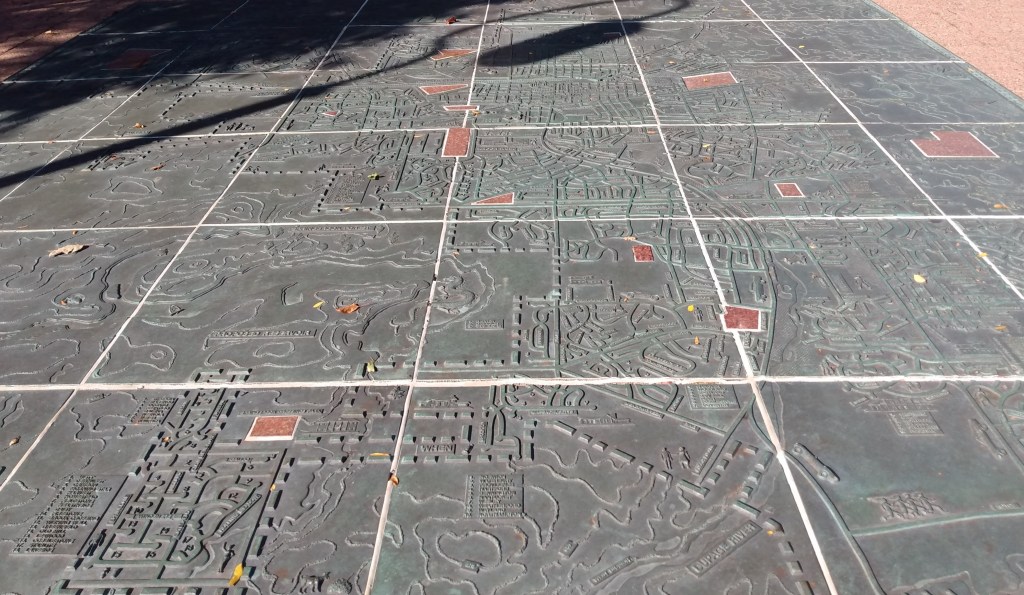
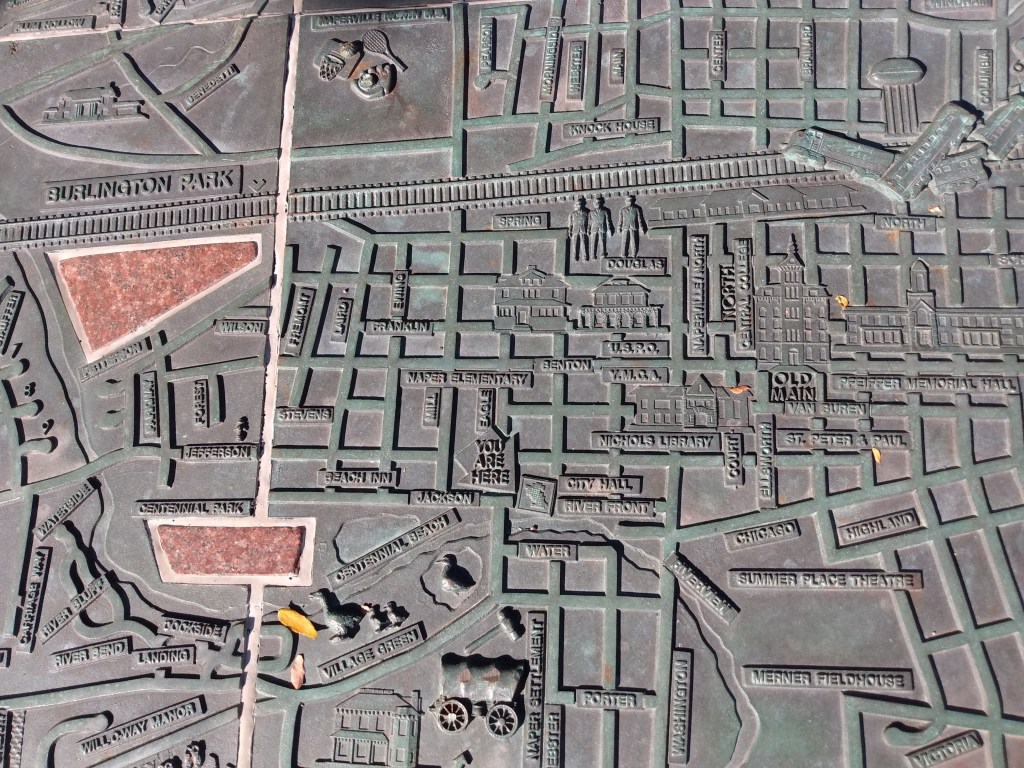
Here is another in-ground map, this time just southwest of the main library in downtown Naperville, Illinois:

The large map hints at the sprawling nature of the suburb while you can also see some of the details the community feels are important (see some of them in the close-up image of the downtown).

A third in-ground map that made a memorable impression of me as a kid was the Mississippi River installation on Mud Island in Memphis, Tennessee. To walk the vast length of the river, see important points along the way, and even play in the water was much fun.

To make the abstract map more concrete provides an opportunity to share places with a broad range of people passing by and help them better visualize the whole and its parts.