Compelling evidence that wealthy New Yorkers are headed to the suburbs after election of a new mayor?

One article claims there is more evidence wealthy residents of New York City will move to the suburbs with the election of Zohran Mamdani:

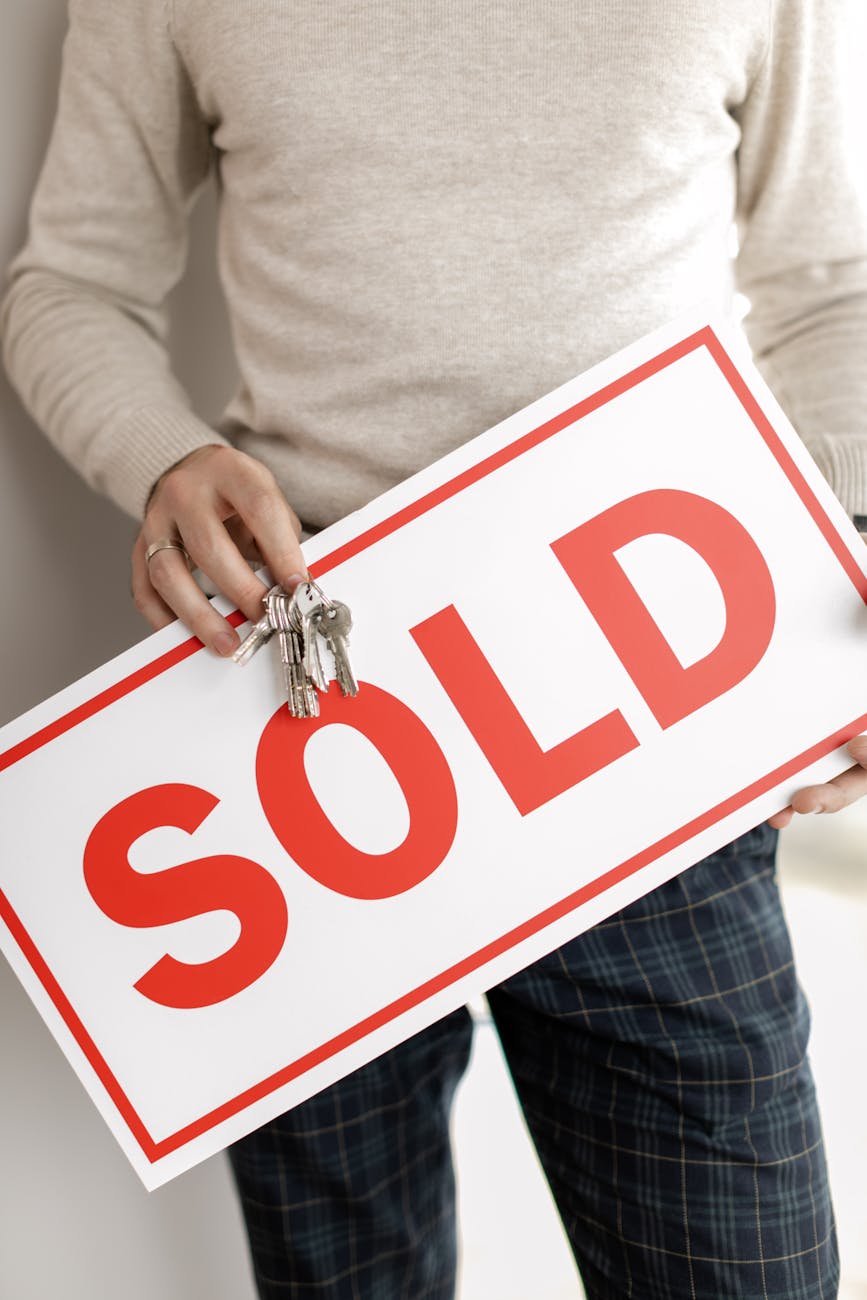
Photo by Alena Darmel on Pexels.com

That urgency is showing up in the data. Pending home sales in Westchester are up roughly 15% from a year ago, while average showing activity has climbed more than 25% since midsummer, according to Compass agents Zach and Heather Harrison. “Concerns about higher taxes, safety, and a desire for more space are driving people to act quickly,” said Zach Harrison. “We’re seeing bidding wars well into the multimillion-dollar range.”

The rush has been so widespread that local agents have coined a term for it—the “Mamdani effect.” High-net-worth buyers from Manhattan and Brooklyn are placing offers sight unseen, often hundreds of thousands of dollars above asking, in a bid to outpace rivals. “It feels like the pandemic all over again, but with more urgency,” Heather Harrison said.

That sense of déjà vu is supported by market metrics. Nationwide, inventory has been growing for nearly two years, yet supply in affluent New York suburbs remains scarce. Realtor.com’s October Housing Report shows a 15.3% annual rise in active listings nationally, but that growth is tapering, with homes spending an average of 63 days on the market—five more than a year ago. In contrast, suburban markets ringing New York City are accelerating, defying the national slowdown…

Luxury enclaves like Greenwich, Conn., are seeing similar dynamics. Mark Pruner of Compass said inventory there is down more than 80% from 2019, leaving just 2.7 months of supply overall. “Contracts have surged in the past five weeks,” Pruner said, noting several listings that sold within days, including a $2.4 million home that fetched $2.96 million. “This is the strongest top-end market we’ve seen in years.”

I still have multiple questions, even with more evidence in this story than a previous one I wrote about:

  1. Would this come with a corresponding number of sales in New York City or will the new suburban purchases become the primary residence and the city properties can remain as investments?
  2. Who exactly are these people engaging in this real estate activity? Is it the over 100 billionaires who live in New York City? Is it the upper middle class? Are they people in particular industries or households or kids?
  3. What alternative factors could explain this increase in suburban real estate activity? The recent rise in the stock market?
  4. While there are consequences of people moving out of cities to the suburbs, the suggestion in the article is that they are staying in the region. How important is this in the long run – suburban residents still connected to city organizations and activity – compared to residents leaving the region all together?
  5. With political sorting and polarization in recent decades, there are regularly suggestions that people will make significant moves to be in places that are more amendable to their own political views. Is this particular example simply something we should now expect if cities or regions change politically?

If New York City elects a progressive mayor, how many wealthy residents will flee for Westchester County?

With a mayoral election coming up in New York City, some residents are considering moving elsewhere:

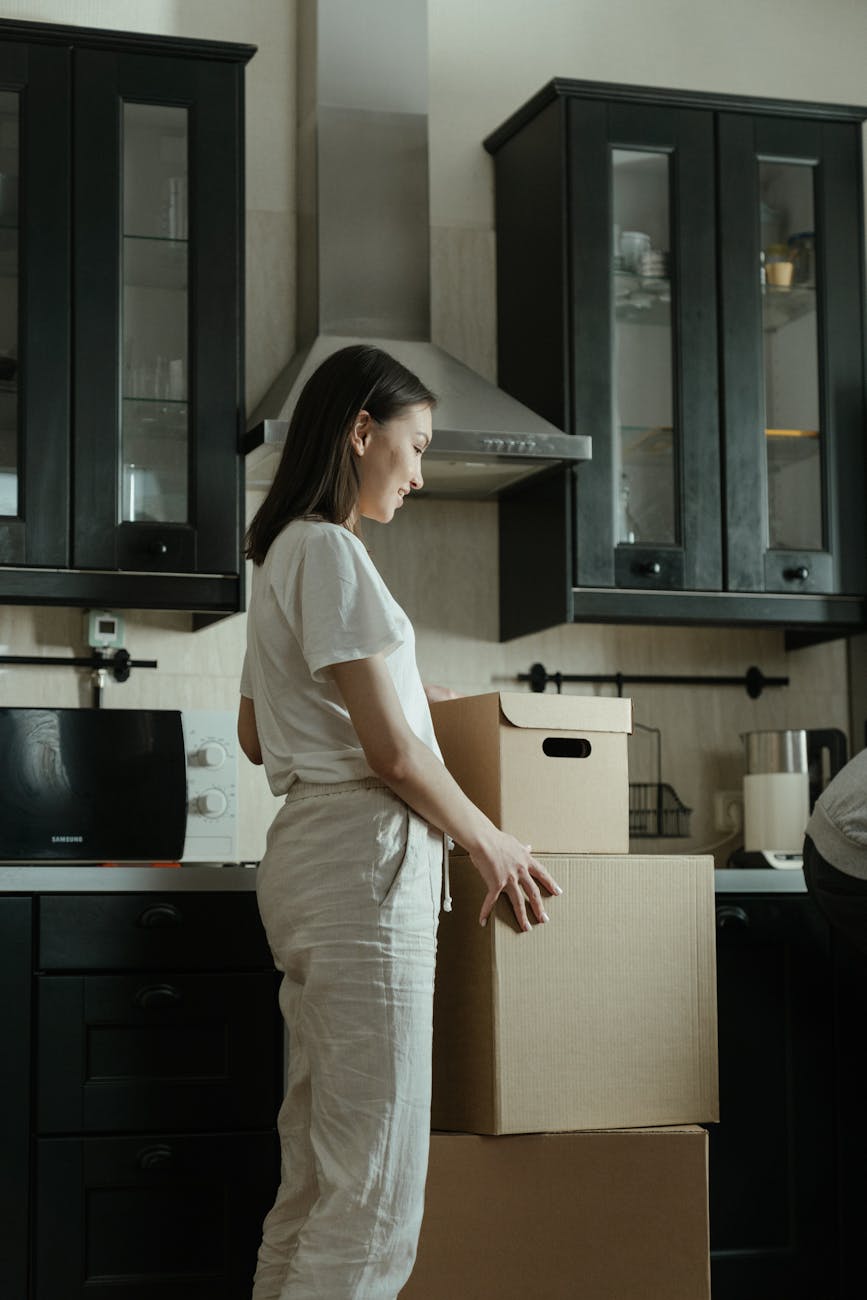
Photo by cottonbro studio on Pexels.com

As the reality settles in that Zohran Mamdani — a steadfast Democratic Socialist — may soon become New York City‘s mayor, many city-dwellers are planning their escape route.

This is because the policies at the core of Mamdani’s campaign are largely unpopular with wealthy and upper-middle class New Yorkers…

‘We are absolutely seeing a correlation between Zohran Mamdani’s surprise win in the Democratic primary and an uptick in real estate interest in Westchester,’ Zach and Heather Harrison, real estate agents in the area, noted.

‘Since the summer, nearly every buyer from the city we have taken out to see homes in Westchester has mentioned the mayoral election as one of the drivers for shopping in the suburbs,’ they told Realtor.com.

Since Mamdani won the Democratic primary in June, sales going into contract in Westchester County are up 15 percent compared to the same period last year, according to The Harrison Team…

In comparison to New York City, Westchester offers more space, lower crime rates, and often lower effective taxes.

Several quick thoughts:

  1. The article is vague on numbers. How many people have moved or might move? And separate from how many do move, how many would have to move for it to be meaningful as a media story or make a substantial difference in local activity?
  2. We hear similar claims about political changes or taxes at the state or national level; people with resources will leave if they think they are being targeted and/or conditions are better elsewhere. I do not know if I have heard this before suggesting people will move from the city to that city’s suburbs.
  3. Westchester County could be a paradigmatic suburban county in the United States. It borders New York City and it grew quickly in the early 1900s. It became a wealthy suburban setting with many houses, access to the city via highway and railroad, some green spaces and waterways, and home to major corporations. Would an influx of wealthy New York City residents feed into the character of the county or alter it at all?
  4. At what point would policies or conditions need to change for most of wealthy residents of a city to leave?

Trying to portray early 1920s New York City accurately

A discussion of The Great Gatsby includes portions about trying to accurately show life in New York City:

Photo by Ramil Ugot on Pexels.com

Between Manhattan and West Egg, where Jay Gatsby and Nick Carraway live, spreads the “valley of ashes,” “a fantastic farm where ashes grow like wheat into ridges and hills and grotesque gardens; where ashes take the forms of houses and chimneys and rising smoke and, finally, with a transcendent effort, of men who move dimly and already crumbling through the powdery air”. Fitzgerald’s valley of ashes tips its hat to TS Eliot’s The Waste Land, but it was also a feature of New York at the time. The Ash Dumps were mountainous piles of ash up to 90ft high, a malodorous stretch of swampland in which coal ash, cinders, garbage, and human waste had been dumped. Lone figures wandered the desolate heaps searching for treasure or anything they could sell – a perfect image of a nation squandering its promise in search of a buck.

Most of the novel’s memorable details function in the same way, as realistic features of New York in 1922, and as symbols that fuse social satire with the novel’s metaphysical meanings. Gatsby is peppered with familiar symbols: the valley of ashes, the green light, the eyes of Dr Eckleburg that are mistaken for the eyes of God. It’s a novel that understands how signs can expand our capacity for thought. Gatsby’s green light has become one of the most famous images in literature, standing for Gatsby’s envy of the Buchanans’ world and his desire to attain it. It suggests his and his nation’s aspirationalism, their faith in renewal, in the fresh hope of starting over – and their drive for the colour of American money…

Hollywood routinely helps itself to any details from the 1920s that let it gesture toward the jazz age. Baz Luhrmann’s 2013 film adaptation of Gatsby features Prada dresses in silhouettes that were not worn until around 1928. This may sound like pedantic quibbling – what’s six years in Hollywood time? But, socially and culturally, the 1920s ended in a very different place from where they began: the styles of 1922 were far closer to those of 1919 than to those of 1929.

Luhrmann’s Broadway is thronged with yellow taxis – but New York taxis were not uniformly yellow in the early 1920s. There were also red taxis, blue taxis, checkered taxis, and by the summer of 1923, lavender taxis, like the one Myrtle Wilson selects after letting four others pass by. Lavender taxis were known for being expensive and could seem pretentious, an impression heightened by their violent colour scheme: “cerise and lavender taxis with red and green checkers”. A night out in Prohibition New York, it was said, “begins in a bierstube [beer hall] and ends in a purple taxi”. Myrtle Wilson, with her violent affectations and social climbing, would naturally choose a lavender taxi.

These deadening clichés distort our view of Gatsby in important ways. They keep us from registering how rich and strange and alien its world is: the New York of Gatsby lures us in because it is a surreal and surprising city, without a trite yellow cab in sight – but a lavender one is waiting for those who care to notice. All these carefully chosen details also suggest a world beyond the merely mimetic – what John Updike once called the ability of language to be “worked into a supernatural, supermimetic bliss”. The reason everyone who reads Gatsby wants to join the fun has far less to do with our ideas of what a jazz-age party looked like than with the vital strangeness of Fitzgerald’s writing. The lavender taxi is hyper-realistic, but it is also surrealistic, capturing the phantasmagorical qualities of Gatsby’s New York.

Trying to remember the past of familiar places can be difficult. Images and narratives about New York City are so widespread and pervasive that they can be hard to counter. Was Times Square always that way? What about Harlem or Brooklyn?

Cultural works that try to do this can add to the difficulty. Did they portray things correctly? What sources are they drawing on? How many people engaged with that cultural work (whether it was accurate or not)?

Are there sites devoted to pointing people to correct depictions of places in the past and telling them which ones to avoid? For example, this article points out that Fitzgerald captures some unique features of early 1920s New York while the 2013 film does not. If I wanted to know more about New York as it was, should I watch the Godfather or find other sources?

Record high rents in NYC

Remember lower rents in New York City during COVID-19? A new report about high rents suggests any price drops in the city are long gone:

Photo by Pixabay on Pexels.com

The cost of renting a one-bedroom apartment in New York City reached an all-time high for the second month in a row in August, according to Zumper’s latest National Rent Report.

Residents are paying a median amount of $4,500 for a one-bedroom apartment in the city, up 12.8 percent compared to a year earlier and 3.4 percent compared to July. Those renting out two-bedroom apartments are not doing much better. According to Zumper, the median two-bedroom rent reached a record high of $5,100 in August, up 13.3 percent year-over-year and 3.7 percent month-over-month…

But the rent increases in New York mark a resurgence for the city’s market, after rent dropped to a four-year low in January 2021 during the COVID-19 pandemic. At the time, the median one-bedroom rent was $2,350. Since then, rent has nearly doubled—confirming New York’s rental market to be the most expensive in the nation.

Three quick thoughts in response:

  1. Who can afford such prices?
  2. Is this just supply and demand where the number of housing units is not keeping up with all the people who want to live in NYC? How do public and private actors continue to contribute to such an expensive housing market?
  3. For better or worse, these are the sorts of numbers that people remember when they think about housing prices. Most housing markets in the United States are not Manhattan or San Francisco or Seattle. But people generally know these places are expensive and those costs produce all sorts of reactions. Could a national policy to addressing housing costs, such as hinted at recently by one presidential candidate, address the issue in New York City and in other places?

A big city as “sociological soup”

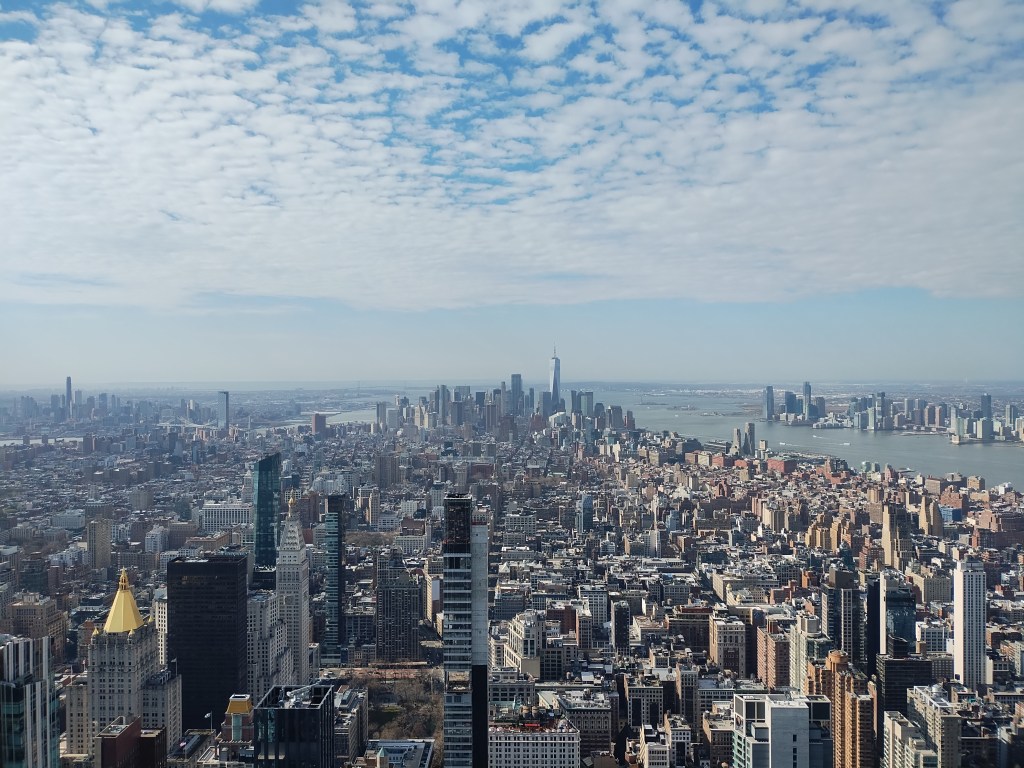
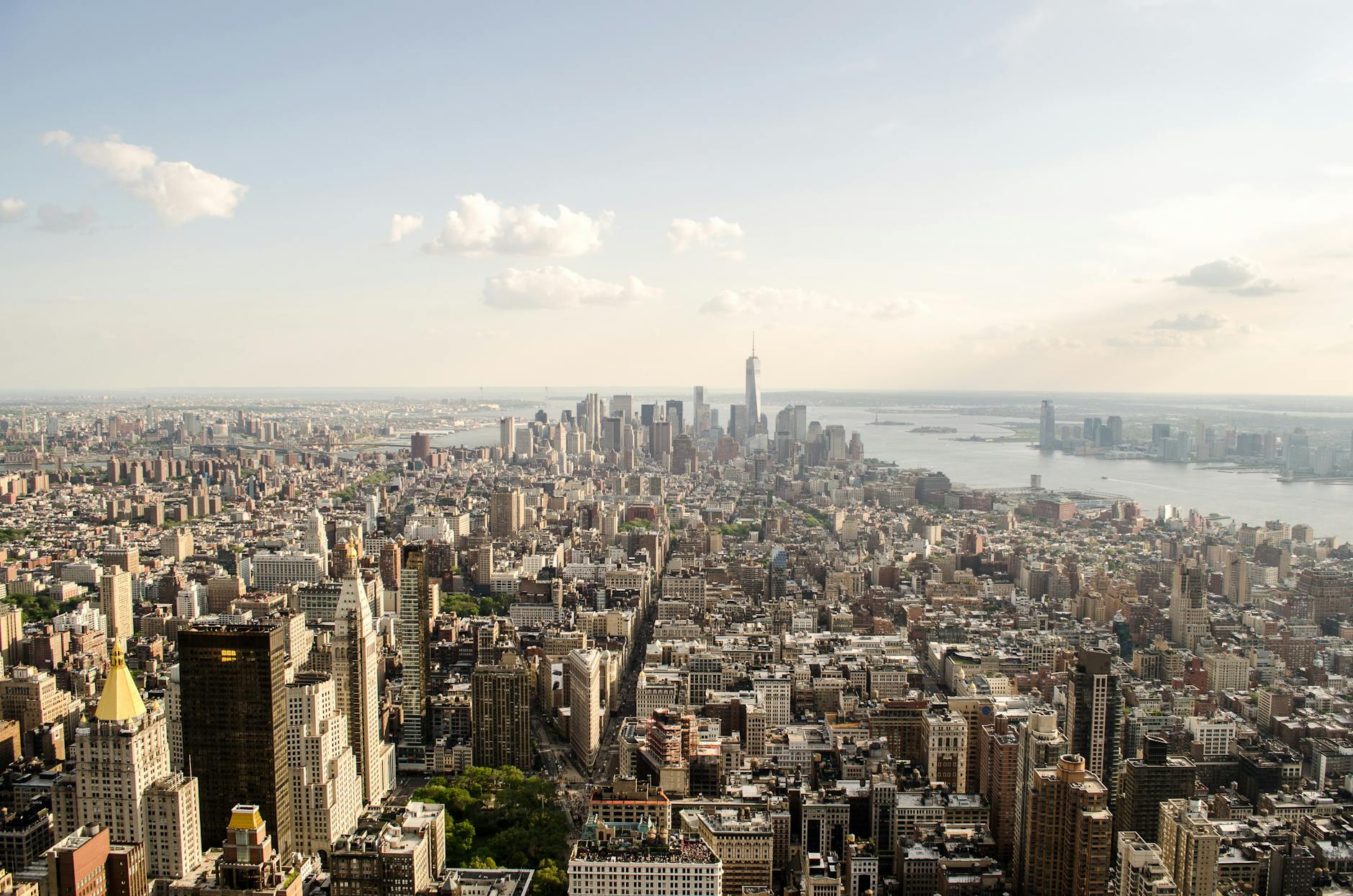
An economist writing about skyscrapers describes seeing New York City from the Empire State Building in a unique way:

Photo by Nextvoyage on Pexels.com

Together, the center becomes a chaotic yet controlled sociological soup: the mix of the mundane with the mighty. Looking down from the Empire State Building, I can see it all.

Is this a different version of the salad bowl metaphor for society (opposed to a melting pot)?

This reminds me of sociologist Robert Park calling the city a laboratory. Does suggesting it is a soup imply different things about the city?

I wonder if anyone has compiled a large or comprehensive list of metaphors for big cities. Given that they are relatively rare and in human history (a few large cities in the past not withstanding), what are frequent or unique images used to try to understand them? How many metaphors invoke food?

Friends was almost exclusively filmed on studio backlots

Friends is a television show closely tied to New York City. Yet, almost all the show was shot in Hollywood studios:

Photo by Nino Souza on Pexels.com

Although the producers always wanted to find the right stories to take advantage of being on location, Friends was never shot in New York. Bright felt that filming outside the studio made episodes less funny, even when shooting on the lot outside, and that the live audience was an integral part of the series.[58] When the series was criticized for incorrectly depicting New York, with the financially struggling group of friends being able to afford huge apartments, Bright noted that the set had to be big enough for the cameras, lighting, and “for the audience to be able to see what’s going on”.[58] The apartments also needed to provide a place for the actors to execute the actions in the scripts.[58]

The fourth-season finale was shot on location in London because the producers were aware of the series’ popularity in the UK.[58] The scenes were shot in a studio with three audiences each made up of 500 people. These were the show’s largest audiences throughout its run. The fifth-season finale, set in Las Vegas, was filmed at Warner Bros. Studios, although Bright met people who thought it was filmed on location.[72]

The show has a close tie to New York City. Could Friends have even existed in another American city? If it had been in Chicago or Atlanta or Austin, would it have been the same show or had the same success?

Yet, almost all of this was done with away from New York City. It was filmed in an environment that could be made to look like New York.

I would guess most viewers do not care whether the show was filmed in New York; it was set in New York, it had enough to look somewhat convincing of being in New York, and that’s enough. I, however, find this disconnect interesting as it commonly happens in TV shows and movies. When we see a “place” on screen, is it really that place?

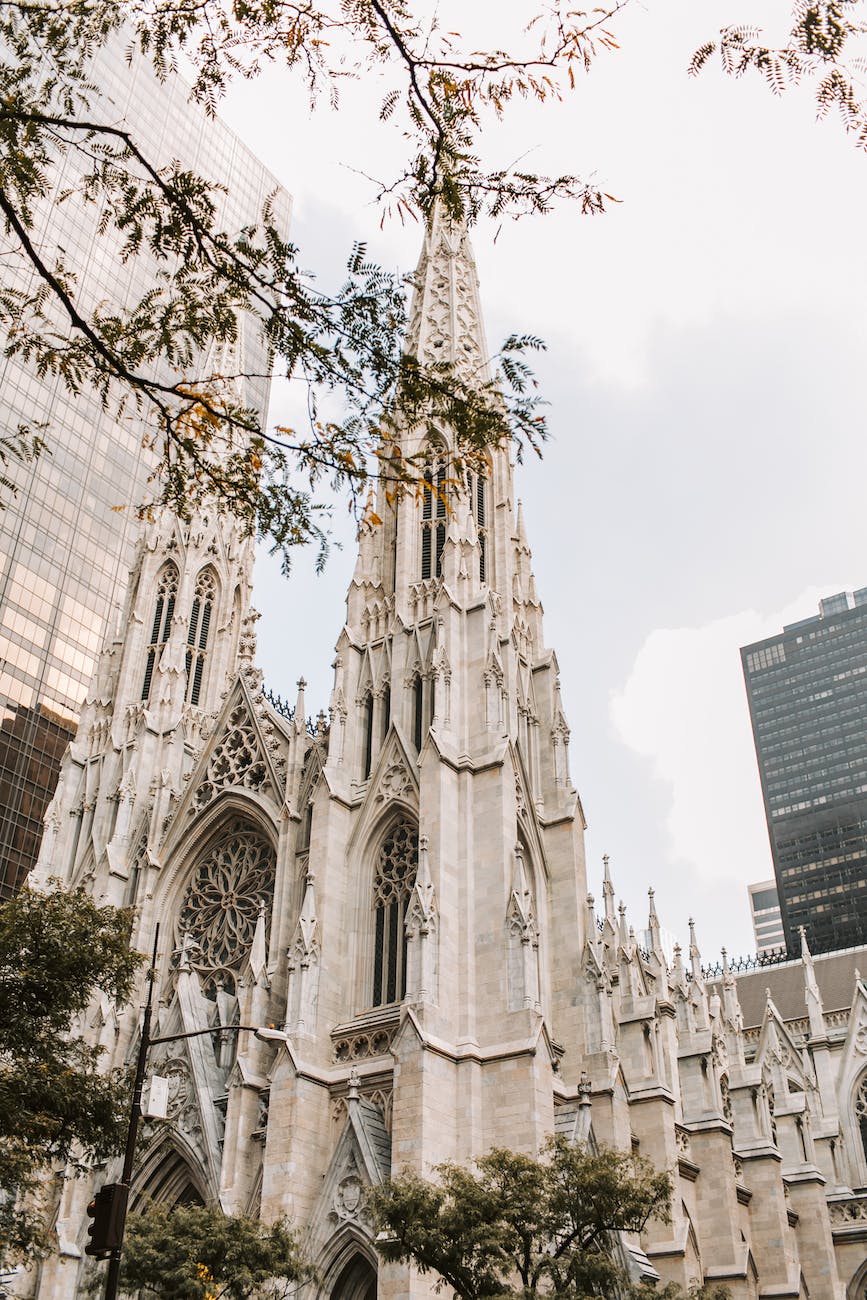
Famous NYC church sells air rights to help keep building going

This is not an unknown story in New York City: a congregation sells part of its property or air rights to help fund its operations. This time it is St. Patrick’s Cathedral:

Photo by Vlada Karpovich on Pexels.com

Citadel’s Ken Griffin and Steve Roth’s Vornado Realty Trust agreed to buy up to 525,000 square feet of air rights from the Roman Catholic Archdiocese of New York to facilitate the development of 350 Park Avenue, PincusCo reported

The per square foot basis of the deal is arguably more important than the total purchase price, because that hasn’t been determined. Under the agreement, the developers can buy up to 525,000 square feet of air rights, but could also buy as little as 315,000 square feet. That means the purchase price ranges from $98.4 million all the way up to $164 million…

Representatives of Griffin, Vornado and Rudin did not respond to a request for comment from The Real Deal. A spokesperson for the Archdiocese of New York said that it is the church’s “hope that the money will go to the continued upkeep of the Cathedral.”…

Griffin’s Citadel is working to develop a 51-story tower at 350 Park Avenue, designed by Norman Foster. Griffin’s firm is redeveloping properties master leased from Vornado and Rudin. Citadel would occupy roughly 54 percent of the 1.7-million-square-foot property, which would stand 1,350 feet tall.

I remember at least a few of these stories while examining zoning conflict in the New York City. For a congregation with an older building and perhaps an aging congregation, allowing others to make use of their property in different ways could help pay the bills. Here, one of the wealthiest people in the United States wants to build a skyscraper, the church has the air rights, and the money paid to the church can help the Cathedral into the future.

This reminds me of some of the reasons many churches left Chicago’s Loop by the early twentieth century. Land prices were high, people had moved out of the central business district, and they could relocate to quieter, more residential streets. That left very few congregations in the downtown.

And even though this point was passed long ago, the contrast of a 51-story skyscraper near a landmark church is interesting to consider. No longer is religious activity at the center of big cities. Is this a physical manifestation that shows America’s leading religion is business?

Places that represent America, in memes and other forms

Ohio is a running meme in social media:

Photo by Mohan Reddy on Pexels.com

According to Know Your Meme, treating Ohio as a joke started in 2016 after the meme “Ohio vs the world” went viral on Tumblr. User @screenshotsofdespair posted a photo of a digital marquee in an unknown city that read, “Ohio will be eliminated.”

At the time, the joke was Ohio was secretly plotting to take over the world, hence the photo calling for its silencing. By the time 2020 rolled around, jokes about the state had evolved…

Now, most memes about the state are saying “so Ohio” or “only in Ohio” about something bizarre or random. It’s usually tied to images, GIFs or videos that highlight something ridiculous. The memes imply that Ohio is a place where strange things happen. Ironically, it’s actually been named one of the “most normal” states in the U.S.

Describing the internet trend, Know Your Meme explains how the memes have essentially re-branded Ohio. Now it is “an American middle place, existing as a capitalist wasteland of chaos and mayhem, akin to creepypastas, lore and randomness, becoming an imagined epitome of American signifiers such as Breezewood, Pennsylvania.”

The Ohio memes have become so near-constant that they’ve taken on a life of their own. To date, the hashtag #Ohio has 33 billion views on TikTok, while #OnlyInOhio has about three billion. In some cases, people have made memes about the memes.

I am intrigued by this idea of particular places embodying America, whether normal or weird. Breezewood? I look forward to driving by it several times a year. The Midwest as the “heartland”? In the sociological tradition, how about “Middletown” and the long set of studies devoted to this community (which was Muncie, Indiana)? Or, what about the claim that Chicago is the most American city? Or, the idea that one can see real America at Walmart or at an emergency room on a weekend night? Perhaps this has a long tradition, even if it is now taking the form of memes.

And then there could be places and communities that are known but cannot embody all of America. Could New York City all about America or does its status as the leading global city and its particular history and character mean that it cannot embody all of the United States? (Perhaps normal American cities are Cleveland.)

Moving forward with a congestion tax for entering Manhattan

A state board recommends vehicles entering Manhattan south of 60th Street pay the first congestion tax in the United States:

Photo by Udayaditya Barua on Pexels.com

Under the plan, passenger car drivers entering Manhattan south of 60th Street during daytime hours would be charged $15 electronically, while the fee for small trucks would be $24 and large trucks would be charged $36.

Cities such as London and Stockholm have similar programs in place, but New York City is poised to become the first in the U.S.

Revenue from the tolls, projected to be roughly $1 billion annually, would be used to finance borrowing to upgrade the city’s mass transit systems…

Officials say that in addition to funding needed transit improvements, congestion pricing will result in improved air quality and reduced traffic…

“The Traffic Mobility Review Board’s recommended credit structure is wholly inadequate, especially the total lack of toll credits for the George Washington Bridge, which will lead to toll shopping, increased congestion in underserved communities, and excessive tolling at New Jersey crossings into Manhattan,” Murphy, who filed a federal lawsuit over congestion pricing in July, said in a statement.

In the US city with the highest rate of mass transit usage, this makes some sense. The roadways are crowded. Mass transit systems need money. At least some of the vehicles entering the city can afford the fee.

At the same time, Americans like to drive free. Cars and driving are an essential part of American life, whether cruising down a highway or delivering many goods via truck. Many will not be happy to pay extra to drive down taxpayer roads into parts of the city when it used to be free.

If this goes forward in Manhattan, how soon until it comes to other American cities? Those places may have fewer alternatives to driving but the revenue – and other benefits – might be hard for other places to pass up.

Pilot ADU program in New York City

New York City has started a small program that could help address the need for housing in the city:

Photo by Centosfotos on Pexels.com

New York City just unveiled its newest effort, which will hand 15 homeowners up to $395,000 to build an additional apartment. This could mean an extra unit in a garage, basement, or attic, or a tiny home in the backyard. The idea is to boost housing density in a city in desperate need of new housing.

New Yorkers can apply online for the funding, but high-income residents aren’t eligible — the income limit for a family of four is $232,980, the New York Times reported. And the ADUs that are built will have a limit on rent: a one-bedroom can’t be rented for more than $2,600.

The city’s department of housing preservation and development on Tuesday unveiled the “Plus One ADU” pilot program, similar to a state-wide initiative with the same name that has doled out tens of millions of dollars to help homeowners across New York State build ADUs in their backyards…

The effort is part of the city’s sweeping new housing reform proposal, which seeks to pave the way for 100,000 new homes in the city by encouraging conversions of commercial buildings into residential, boosting density near mass transit, and reducing space devoted to parking. The proposal also aims to legalize ADU construction across much more of the city.

Adding 100,000 units would be helpful as the city, like many major cities, needs lots and lots of units to provide more housing options and address housing costs. But, how quickly can these units be added and how much can they ease the housing issues? It would be worth looking at the math on this; at what point do the government funds lead to long-term savings? Hopefully, this is part of a comprehensive strategy that tries to add housing units in multiple ways.

Not all New York City is as dense as Manhattan but it is a pretty dense American city. How dense are city residents willing to go? Like many cities, there are different clusters of housing units in different neighborhoods. Adding a housing in basements or backyards can only happen in certain places and these changes would add residents. ADUs might be less visible than other means of providing more housing units – for example, high-rises would not be welcome in many residential neighborhoods – but Is there a point where residents feel there are enough ADUs?