Ever since the pandemic, many landlords, mayors, and bosses have been going through what one might call “the five stages of office grief.” First, in 2020, there was denial that working from home would have any lasting impact. Then, in 2021, there was anger at employees who wouldn’t return, followed by bargaining on the exact number of days people would spend at the office. By 2022, depression had set in, and cities seemed ready to accept the need for radical change. Now, however, the country’s economic rebound provides new ammunition for those who wish to slide back into denial.
Our cities will be better served by embracing the transition to a world that is less centered around offices. That will require diversifying their economic base, streamlining the construction and conversion of new housing and mixed-use neighborhoods, enhancing public services, and doubling down on what makes urban life attractive in its own right—not just as an employment destination. And the effort must start with the recognition that, in good times and bad, the relationship between economic activity and office demand has changed forever.
Even as there are good reasons to have districts of business offices, having fewer offices overall means offices might be better served being more spread out throughout a city and region or having more mixed-use neighborhoods. Americans have long separated land uses but fewer offices presents an opportunity to bring other land use into what once were separate business areas.
This might be a more radical idea but what could be possible if some of those office buildings were not there in the future? Could there be other land uses – not just renovated buildings – that future city residents and property owners would desire?
And could fewer offices mean fewer roads or less emphasis on vehicle traffic? If commuting is not happening at the same rate, what could be possible?
Some Wall Street banks, worried that landlords of vacant and struggling office buildings won’t be able to pay off their mortgages, have begun offloading their portfolios of commercial real estate loans hoping to cut their losses…
But these steps indicate a grudging acceptance by some lenders that the banking industry’s strategy of “extend and pretend” is running out of steam, and that many property owners — especially owners of office buildings — are going to default on mortgages. That means big losses for lenders are inevitable and bank earnings will suffer.
Banks regularly “extend” the time that struggling property owners have to find rent-paying tenants for their half-empty office buildings, and “pretend” that the extensions will allow landlords to get their finances in order. Lenders also have avoided pushing property owners to renegotiate expiring loans, given today’s much higher interest rates.
But banks are acting in self-interest rather than out of pity for borrowers. Once a bank forecloses on a delinquent borrower, it faces the prospect of a theoretical loss turning into a real loss. A similar thing happens when a bank sells a delinquent loan at a substantial discount to the balance owed. In the bank’s calculus, though, taking a loss now is still better than risking a deeper hit should the situation deteriorate in the future.
Four questions come to mind:
How long will banks wait before aggressively working to drop these loans? It sounds like this is happening a little bit. Is there a possible tipping point? In other words, how much “extend and pretend” is doable?
How much does this behavior toward commercial tenants reflect how the same lenders or other banks treat residential loan holders? If a homeowner is not making their mortgage payments, do they get treated the same? Is the issue more of the size of these loans and not necessarily what kinds of properties are involved?
Given the foreclosure crisis of the late 2000s and the COVID-19 pandemic, is it safe to assume there are plans in place if banks need to move a lot of these loans at once? Who would benefit the most from aid to get out from under a lot of commercial property losses in a short amount of time?
What happens to these vacant properties in the short and long-term? How quickly can they be filled by other uses? How do these vacancies affect the communities in which they are situated?
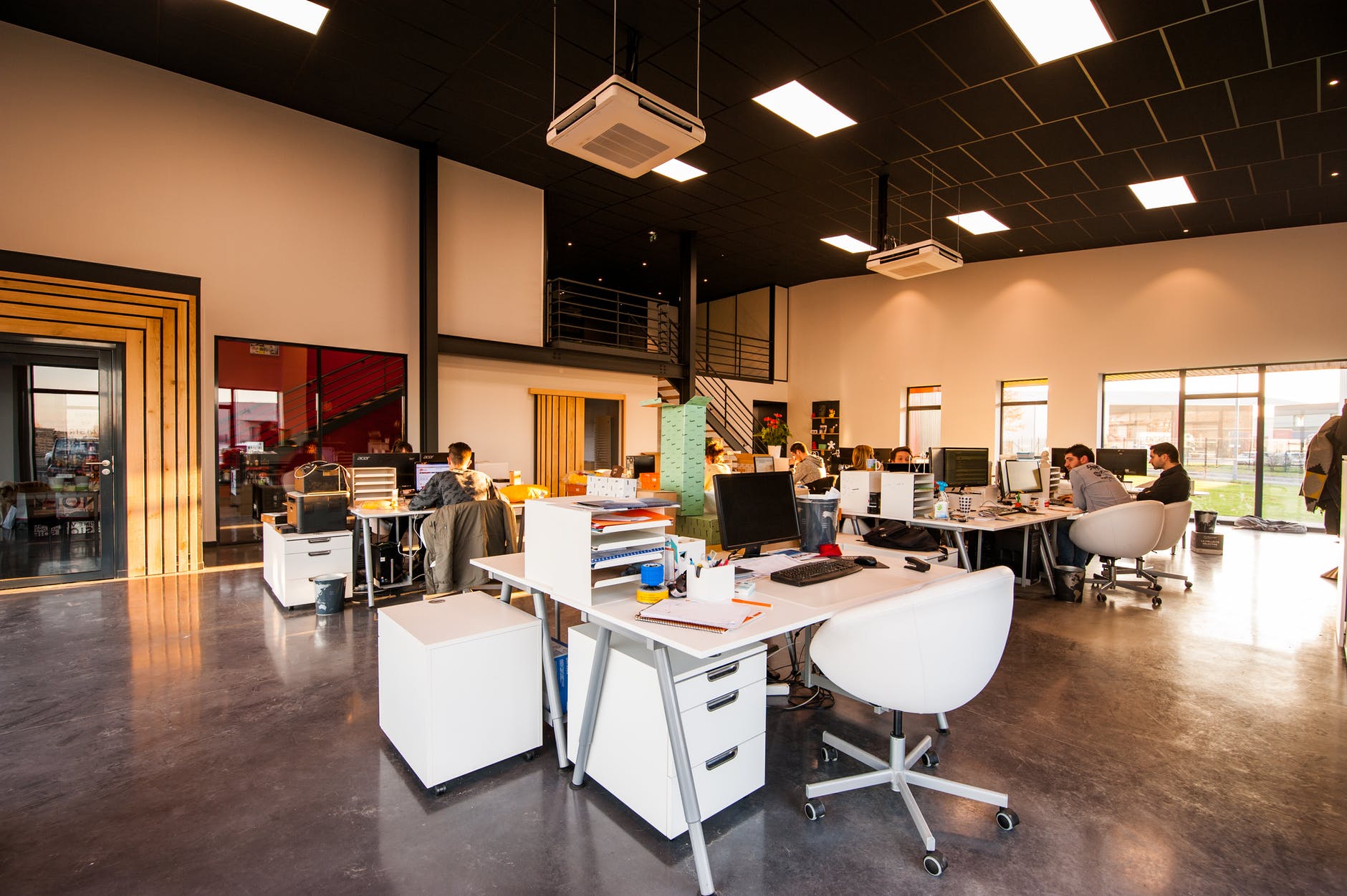
With open office spaces and more people working from home, what physical signs denote someone’s higher status level at the office? Here are a few markers:
Without the corner office, status is conveyed in new ways. No matter the setup, “human beings will still find a way of creating hierarchy,” Lenny Beaudoin, CBRE’s global head of workplace design, explained. Bosses might have more computer monitors, bigger desks, or even just a permanent spot rather than a rotating one, Matthew Davis, a business professor at Leeds University Business School, told me. Power also manifests intangibly—for instance, only a select few might be able to not check Slack or come and go from the office without explanation. It’s the same benefit of having a far-flung corner office, re-created digitally: You know you’re important if you can escape surveillance.
And even if they’re not in the corner, a lot of executives do still have offices. Those have largely slimmed down, but many are connected to conference rooms or other collaborative spaces, such as broadcast rooms in finance firms, recording studios at media companies, and labs in the life sciences. Many higher-ups essentially seize these for themselves whenever they come in, Pogue, at Gensler, told me. From there, they can shape any collaboration that takes place, ensuring it plays out in their space and under their supervision. Many modern companies “have as many conference rooms as there are executives,” Sargent said, and it’s become a “dirty little secret” that conference rooms are the new corner offices.
In other words, how space is utilized and physical possessions workers have continue to signal status. The new forms seem to cover a few areas:
Who can claim space. There may be fewer and/or smaller offices but people with status can claim spaces.
Who needs to be in space (working at a centralized office) or seen in space (surveilled by eyes or on devices). Does this also include who can work remotely and who can not?
Who has certain devices or belongings? Higher status can translate into different and better tools for doing work or furnishing a space.
The moves reflect an overall trend of tenants looking for higher-quality properties with financial stability, said Savills Regional Research Director Anders Klein…
Throughout 2023, trends saw office tenants move from larger spaces in older and more bare-bones Class B and C office properties to smaller spaces in well-maintained Class A buildings with more amenities.
Several thoughts about this:
It would be interesting to see how much less companies pay for office space if this is the trade-off.
Having a nicer location and more amenities on-site might also help companies make the pitch to have employees in the office.
What are the new trends for nice office spaces? We have had a few decades now of gyms, meals, on-site services, etc.
What happens to the less desirable office space? The article suggests some is converted to other uses, like for data centers. other properties might be redeveloped for housing or mixed-use projects.
Could these opposing trends mean office space will look significantly different in the United States in a few decades or will offices still be the offices we know today?
America’s offices are emptier than at any point in at least four decades, reflecting years of overbuilding and shifting work habits that were accelerated by the pandemic.
A staggering 19.6% of office space in major U.S. cities wasn’t leased as of the fourth quarter, according to Moody’s Analytics, up from 18.8% a year earlier. That is slightly above the previous records of 19.3% set in 1986 and 1991 and the highest number since at least 1979, which is as far back as Moody’s data go…
That glut weighs on the office market to this day and helps explain why vacancies are far higher in the U.S. than in Europe or Asia. Many office parks built in the 1980s and earlier struggle to find tenants as companies cut back on space or leave for more modern buildings.
“The bulk of the vacant space are buildings that were built in the 1950s, ’60s, ’70s and ’80s,” said Mary Ann Tighe, chief executive of the New York tri-state region at real-estate brokerage CBRE.
And just as in the early ’90s, it is the overbuilt South that is hit hardest. Today, the three major U.S. cities with the country’s highest office-vacancy rates are Houston, Dallas and Austin, Texas, according to Moody’s. In 1991, Palm Beach and Fort Lauderdale in Florida and San Antonio held those positions.
This sounds like a cyclical market: during financial downturns, fewer companies want office space and vacancies rise. During economic success, more companies expand and make use of the space. When more space is built during the good times, that same space is not necessarily needed later.
Does that mean that COVID-19 was only a partial contributor to office vacancies? Was a reckoning going to come for urban office space even without a global pandemic? Or might office space be back in demand again soon as economic conditions change?
I can see why new office space is desirable to fund and build. Whether it should be built, given the cycles discussed above, is another story. And if office space cannot be easily converted to other uses, how much more is really needed in major cities?
Photo by Miguel u00c1. Padriu00f1u00e1n on Pexels.com
Investors who paid high prices for skyscrapers before the pandemic are reluctant to sell at a discount. Michael Pestronk, chief executive of Philadelphia-based apartment developer and landlord Post Brothers, said that around nine out of 10 office buildings around the U.S. that the company looks at aren’t suitable for converting to apartments, mostly because prices are too high or they still have too many tenants.
How low would prices need to go before redevelopment is attractive? How much money might previous investors be willing to accept or lose to convert structures?
There might need to be a tipping point for this to happen. Imagine a major office skyscraper is converted. Or, a certain amount of space is vacant in a single downtown. Or, a major lender accepts a loss and moves on with new plans. Or, a city decides to move with some major money. Or, one place shows this is possible.
That said, it will not only be expensive to pursue such paths but it will take time and experimentation. There may not be a single answer as cities seek different ways to fill office spaces.
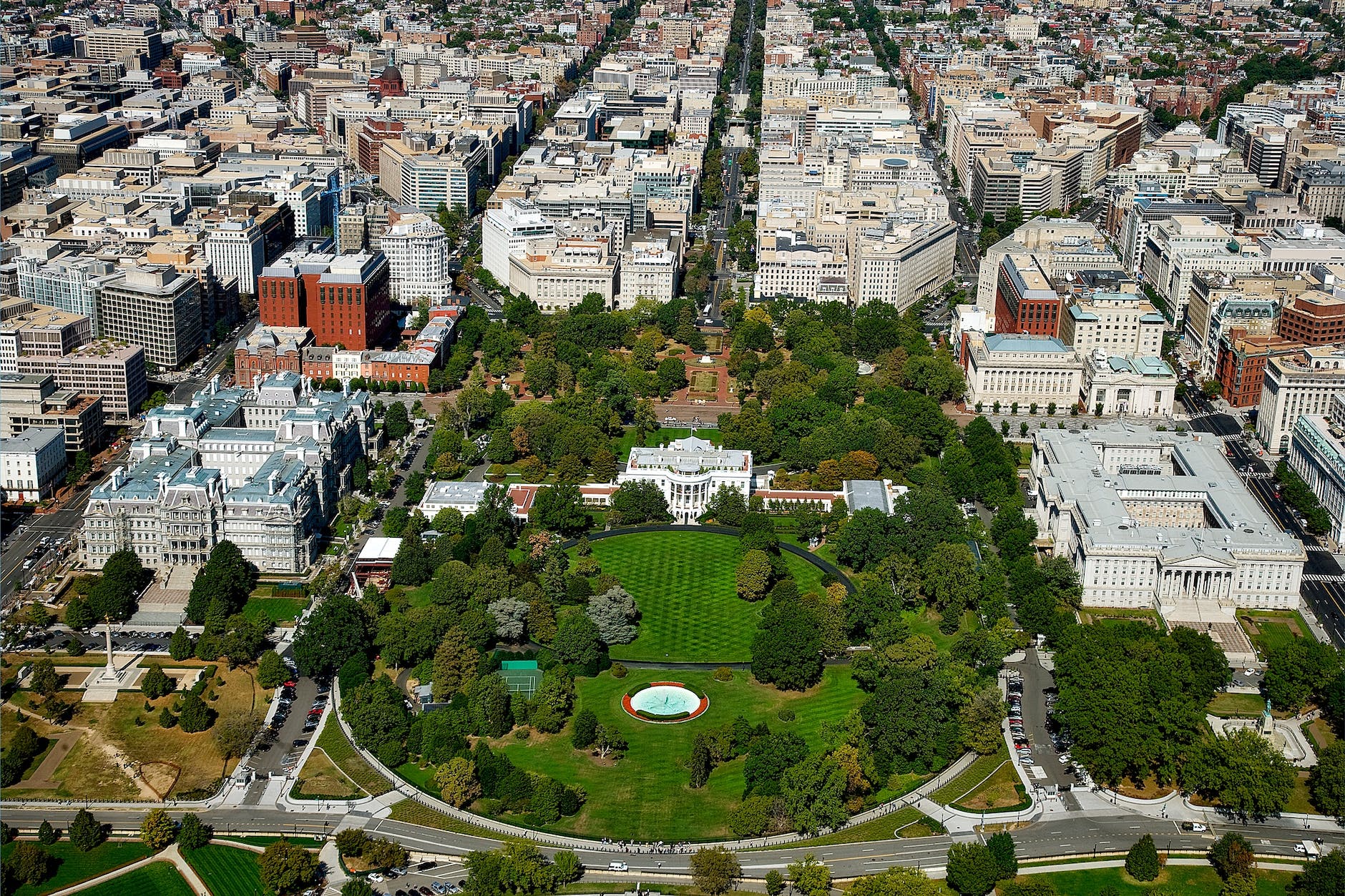
At the swearing-in this month for her third term as the District of Columbia’s mayor, Muriel Bowser delivered a surprising inaugural-address ultimatum of sorts to the federal government: Get your employees back to in-person work — or else vacate your lifeless downtown office buildings so we can fill the city with people again…
There are days when downtowns in other American towns can almost look like they did before 2020. In the 9-to-5 core of Washington, though, there’s no mistaking the 2023 reality with the pre-Covid world. Streets are noticeably emptier and businesses scarcer. Crime has ticked up. The city’s remarkable quarter-century run of population growth and economic dynamism and robust tax revenues seems in danger…
According to census data, Washington has the highest work-from-home rate in the country. Week-to-week numbers from the security firm Kastle Systems back this up: The company, whose key fobs are used in office buildings around the country (including the one that houses POLITICO), compiles real-time occupancy data based on card swipes in its 10 largest markets. D.C. is perennially dead last…
To people who depend on commuters’ lunch-hour spending or transit fees, the change is less welcome. According to John Falcicchio, the city’s economic-development boss and Bowser’s chief of staff, the federal government’s 200,000 D.C. jobs represent roughly a quarter of the total employment base; the government also occupies a third of Washington office space — not just the cabinet departments whose ornate headquarters dot Federal Triangle, but plenty of the faceless privately held buildings in the canyons around Farragut Square, too.
On one hand, Washington D.C. is in a unique situation. One employer, the federal government, is responsible for a sizable portion of the local workforce.
On the other hand, this is an issue facing many downtowns. Can asking companies to have workers return or applying threats be successful? Or, is it better to try to offer amenities and encouragements so workers want to return? As a third option, is it time to transition from the decades-long emphasis on commercial downtown space to residences and other uses?
This could be an inflection point for a number of downtowns or it could end up being a version of the same old approach. However, it would not surprise me if the conversation between local politicians and business leaders heats up around this issue.
A distinct growth sector of the suburban office market, coworking has become a bastion of those downsizing from corporate space, fleeing the congestion of the city, or escaping the domestic distractions of working from home…
He said the New Jersey site opened at that Bell Works in March 2016 with 2,800 square feet. But as the popularity and future trending of coworking became clear, construction began on a 25,000-square-foot version elsewhere in the building — just before the pandemic.
Previously, the concept had been based on a desire in the market for flexibility and a better work-life balance. But the pandemic really hit the gas pedal for coworking…
While coworking sites already make up 7% of total office space, that amount is projected to reach 30% by 2030, she said.
Hauser, whose sister firm Workplace Studio also designs coworking spaces for others, said there are five elements that define coworking: flexible desks, meeting rooms, a sense of community, a community manager, and a source for economic development.
One other factor hinted at in the experiences described in the article is this: a cool factor. The ability to access space in an interesting setting – such as the revamped Bell Works site in Hoffman Estates – with on-campus amenities is fun. Setting up coworking space in a quiet strip mall in a sleepy community would be less attractive. Being around energy and excitement helps make the the flexible workspace experience interesting.
I would be interested to know how much coworking space might emerge compared to the corporate office downsizing that might happen in the next few years. What percent will coworking occupy compared to the loss of traditional office space?
Wilkinson, who designed Google’s 500,000-square-foot Googleplex campus in Mountain View, California, says he had his first epiphany about the office in 1995. While reviewing old studies and surveys about worker habits, he came upon a study that measured how office workers spent their time between 9 am and 5 pm. He was immediately struck by just how much “unaccounted” time workers were spending away from their desks—that is, not in meetings or any other explicit work function. But Wilkinson found it hard to believe that all of these workers were taking multi-hour bathroom breaks or simply leaving the office together. They were still in the office; they were just hanging out in hallways, chatting in foyers, clustering around someone else’s desk as the occupant tells a story.
“It blew my mind,” he told us. “And it made our team realize that the planning of the office was fundamentally flawed.” His realization was straightforward: Office design had long revolved around the placement of desks and offices, with the spaces in between those areas treated as corridors and aisles. But that “overemphasis on the desk,” as Wilkinson recalled, “had worked to the detriment of working life, trapping us in this rigid formality.”
And so he set out to liberate it, shifting the focus of his designs to work that took place away from the desk. In practice, this meant designing bleachers and nooks in places that were once poorly lit corridors, and spacing out desk clusters to incentivize more movement among teams. A kinetic office environment, the idea went, could increase spontaneous encounters, which would then spark creativity. The design also allowed for private areas—many with comfy couches and plush ottomans to replicate a family room feel—to do deep work, away from the noisy bullpen of desks.
This led to tech campuses like that of Facebook, Apple, and Google. What could go wrong?
The danger Wilkinson is describing is, of course, exactly what happened. The new campus design had a profound impact on company culture. Some of that impact was undeniably positive: He created work spaces where people genuinely want to be. But that desire becomes a gravitational pull, tethering the worker to the office for longer and longer, and warping previous perceptions of social norms.
Two thoughts strike me from reading this book excerpt:
The idea of “unaccounted” time. How much of human daily activity is not directly related to productivity or a particular task? How much of that unaccounted time has long-term benefits such as stronger relationships and closer community? Part of the full human experience is having unaccounted time. On the other hand, it is not a surprise that if that unaccounted time occurred on company time, corporations and organizations would want to maximize it. (See this recent post about time, space, and calendars pushed into predictable patterns.)
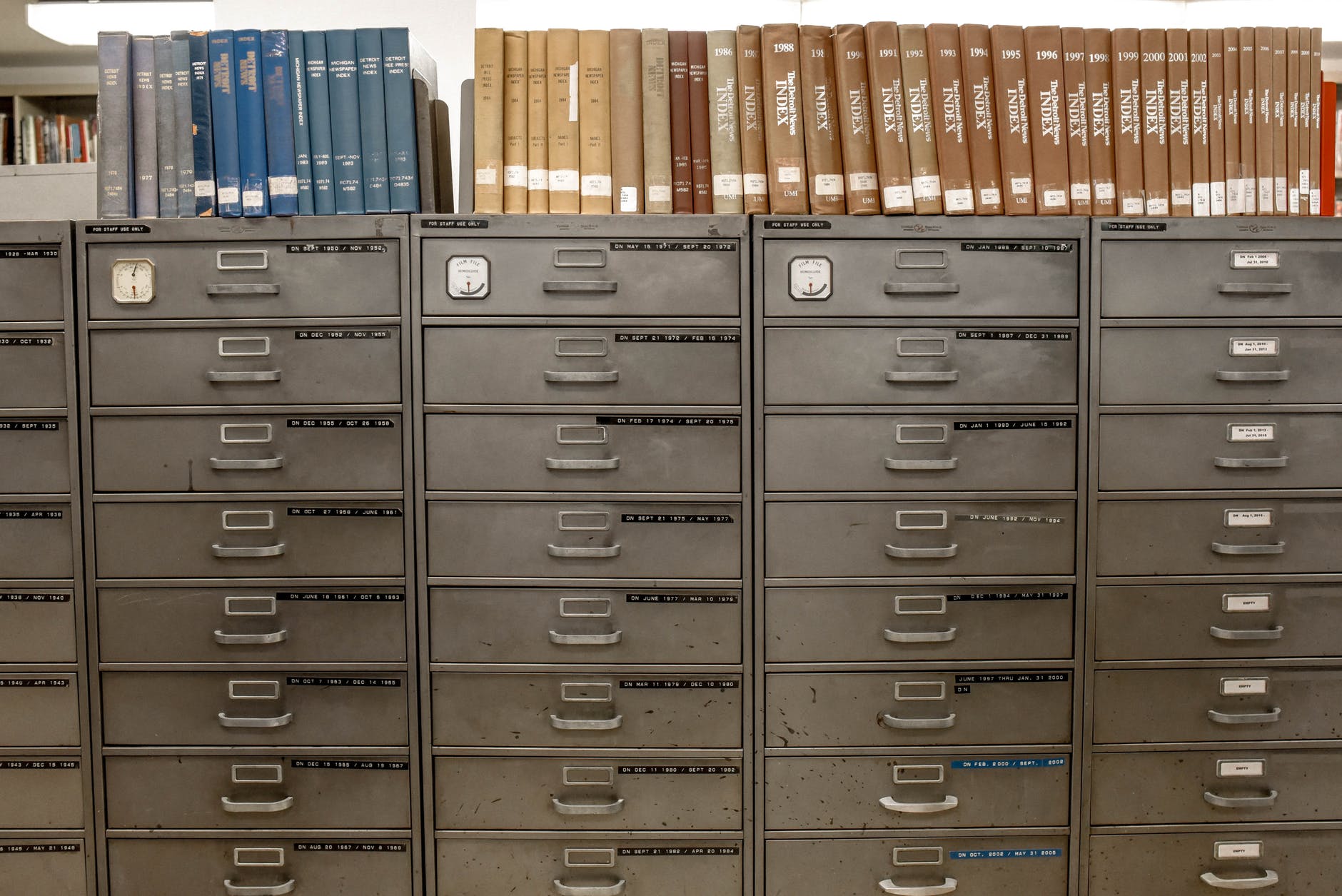
It is easy to dismiss the object: a rectilinear stack of four drawers, usually made of metal. With suitable understatement, one design historian has noted that “manufacturers did not address the subject of style with regard to filing units.” 3 The lack of style figures into the filing cabinet’s seeming banality. It is not considered inventive or original; it is simply there, especially in 20th-century office spaces; and this ubiquity, along with the absence of style, perhaps paradoxically contributes to the easy acceptance of its presence, which rarely causes comment. In countless movies and television shows, one or more filing cabinets line the walls of newsrooms and advertising agencies or the offices of doctors, attorneys, private eyes, police inspectors. Their appearance defines a space as an office but rarely draws attention to the work it does in that office. Occasionally, the neatness or disorder of a filing cabinet gives us an insight into the mental state and work habits of the office’s occupant. Sometimes, the filing cabinet plays a small but vital role in dystopian critiques of bureaucracy.
But if it appears to be banal and pervasive, it cannot be so easily ignored. The filing cabinet does not just store paper; it stores information; and because the modern world depends upon and is indeed defined by information, the filing cabinet must be recognized as critical to the expansion of modernity. In recent years scholars and critics have paid increasing attention to the filing systems used to store and retrieve information critical to government and capitalism, particularly information about people — case dossiers, identification photographs, credit reports, et al. 4 But the focus on filing systems ignores the places where files are stored. 5 Could capitalism, surveillance, and governance have developed in the 20th century without filing cabinets? Of course, but only if there had been another way to store and circulate paper efficiently. The filing cabinet was critical to the infrastructure of 20th-century nation states and financial systems; and, like most infrastructure, it is often overlooked or forgotten, and the labor associated with it minimized or ignored. 6
One thing that humans do, particularly in the modern era, is try to bring order to the world around them. This can come out in physical changes – such as remaking nature or creating megacities – or in discovering and working with knowledge and information in new ways. The filing cabinet is an object that helps with distributed cognition, storing and sorting information for people so that they do not have to keep the thoughts in their own heads.
This history would fit well alongside the history of the modern office as told in Cubed. Alongside arrangements of desks and other equipment and ideas about what offices should accomplish are the humble and essential filing systems. They may even require a lot of space to hold all that important paper but they would rarely feature on an office tour or be the subject of excited conversation.





 Legally Sociable