Ben Norquist and I have a book titled Every Somewhere Sacred: Rescuing a Theology of Place in the American Imagination coming out June 16, 2026 with IVP Academic. See the cover below:
Pre-order the book here. Download a free chapter here.
By November 2022, we had a working outline of the book and a draft proposal for the project. We were excited about the possibilities of considering land and places from a theological and social science point of view. We agreed there was a need for a book that helped American Christians think about approaches to land and place, to consider what did not work currently or in the past and what could work in the present and future.
Going from our proposal to a full draft took a lot of writing, reading, and conversation. We learned a lot. We got words into documents and then revised them. We tried out ideas with friends and colleagues. We finished the full draft manuscript in July 2024.
This is a bit of the back story of what will be released in full in June. I’ll be sharing more about the book in the coming months ahead of the release.
But having lived in a suburban setting for 30-plus years, I don’t recognize any of those assumptions. My neighborhood, on the fringe of a city of 560,000, is multicultural, interconnected and solar-friendly. Everyone knows each other and finds ways to help with any need. We can walk to grocers, restaurants and other basic services. Many neighborhood groups meet regularly to play poker, discuss books or just go to lunch.
Ours is a planned community, but houses were built by different builders at different times. Thus no “little boxes made of ticky-tacky” all in a row. Just opening up areas to be developed without good planning produces the negative view of suburbs. It doesn’t have to be that way — suburban living can be as good as it gets…
Forty years later, we realize that’s not going to happen. Daily life is simply easier here. For food shopping and medical care, there are abundant choices with abundant free parking. The logistics of taking our two toddlers to preschool programs was much simpler than my struggles navigating strollers on buses or in the subway. Connections with our community have been literally lifesaving, and the scale of life is small enough that local officials are responsive. When we moved here and our garbage wasn’t collected one day, a neighbor told us to call the town’s highway department. A supervisor came by, and rang our bell to apologize. The post office took checks; the clerk remarked with a smile, “We know where you live.”…
I love the old custom architecture and charm of my city friends’ homes. But it sure is nice to be able to just go to Home Depot and buy a door or window that fits instead of needing custom everything. All that special old brick and special old stained glass comes with a hefty dose of special pain in the you-know-what.
While the writers do not exactly go through the seven reasons why Americans love suburbs, there are some patterns in this small selection of letters: the suburbs are not necessarily what outsiders might think, life in the suburbs can be pretty good, and there are certain conveniences to suburban life.
Another observation one letter writer hinted at: people are shaped by their environments. Making a major move from one place to another can require a lot of work and change. People have some flexibility and they can also get very used to where they are. With millions of Americans having grown up in the suburbs and millions living there now, the suburbs are known, if not preferred by some.
This also reminds me of an ongoing question I have about places: how exactly do people learn about their own community and communities that are not their own? People have only so much time and ability to see or hear about other places. How does a suburbanite find out what it is like living in a big city or a rural area and all the different possibilities in either of those? There are common narratives and assumptions made about all of these places they might be hard to dispel without direct experiences in other settings.
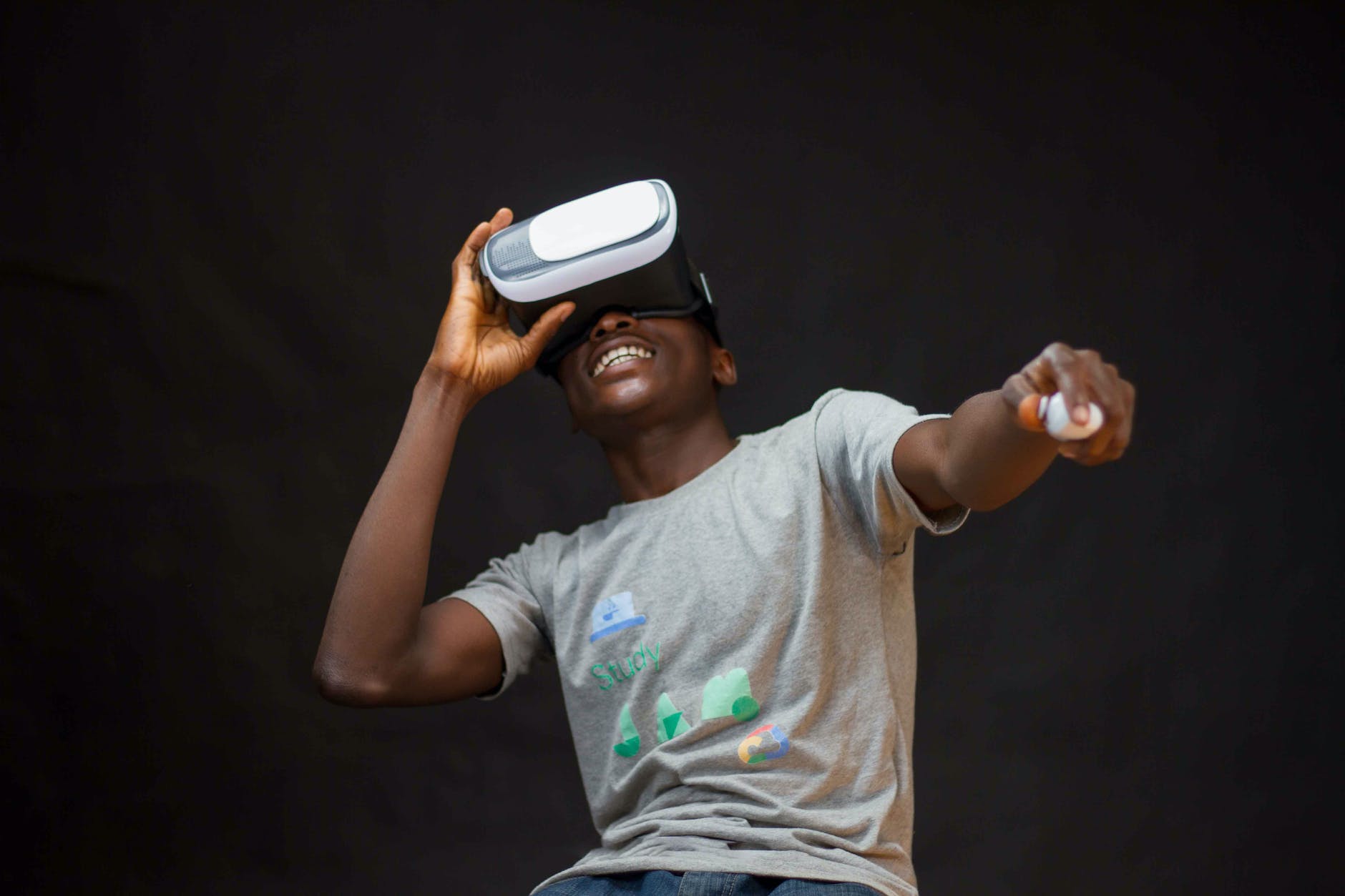
One problem: No one agrees on the definition of spatial computing. Ask 10 people in technology and you might get 12 different answers.
What Apple calls a spatial computer, some technologists call “mixed reality” — or possibly “augmented reality,” “holographic computing,” “the metaverse” or “XR,” which some people say is shorthand for “extended reality.” Others say the letters don’t stand for anything.
What I hope this means: the headset or other device is interacting with the spaces and places around the user. It is not just layering on information on a view but affecting that environment as well. Perhaps the closest a definition in this articles gets to this comes in this quote:
Imagine wearing a lightweight, inexpensive pair of glasses and seeing digital walking directions in your field of vision that point where you turn left. Or imagine sharing a video of your kid’s birthday party that makes others feel like they were there.
If a headset or device could truly make you feel like you were in a setting, that’s cool. But, that is not quite what I envision as spatial computing. What makes places unique in sociological terms is not just the physical arrangements around someone but all of the meanings, symbols, and relationships intertwined with those material realities.
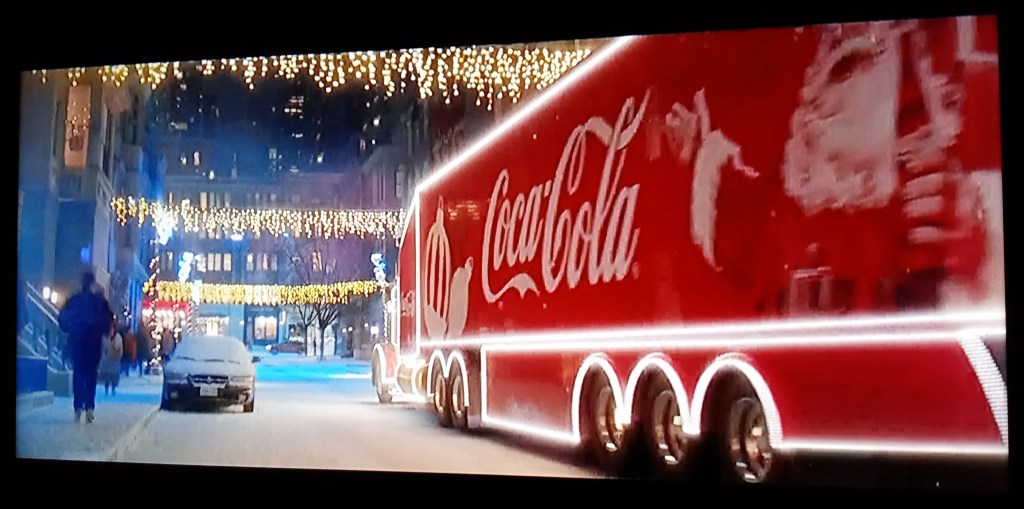
On one hand, it is exciting to be watching a film, TV show, or commercial and recognize a place. It pops out at you out of the other anonymous scenery. On the other hand, this is not a real place. It is a backlot where all sorts of “places” can be made. With some work and added elements, these backlots can look like a lot of different places.
As I have found in studying suburbs on TV shows, places are presented on screens in particular ways. It is hard to communicate the feel and experience of a place on a two-dimensional screen when the emphasis is often on a few characters. Backlots can be changed up but if you know what you are looking for, you can spot them in all sorts of displays. Or, films, shows, and commercials tend to be shot in some places and not others. With these patterns, we do not necessarily see real places or the range of places within the United States.
To investigate this idea in the laboratory, my team used virtual reality to place people within scenes. That way we could manipulate the environments people found themselves in – some scenes shared the same spatial layout while otherwise being distinct. As predicted, déjà vu was more likely to happen when people were in a scene that contained the same spatial arrangement of elements as an earlier scene they viewed but didn’t recall.
This research suggests that one contributing factor to déjà vu can be spatial resemblance of a new scene to one in memory that fails to be consciously called to mind at the moment. However, it does not mean that spatial resemblance is the only cause of déjà vu. Very likely, many factors can contribute to what makes a scene or a situation feel familiar. More research is underway to investigate additional possible factors at play in this mysterious phenomenon.
One thought in response as someone who studies places. We may as individuals not be always consciously aware of spatial arrangements or places. Particularly in today’s world, we may zoom by particular settings in cars or be in a lot of different spatial arrangements in a short amount of time. Yet, in each of these places we are taking in the setting and it is making an impression on us. It may not register at the time or we may not know what it means for us. But, it can influence our later experiences and interpretations of the world around us.
On one hand, this is a set of popular posts covering a range of topics from affordable housing to transportation to online real estate to marketing suburbs to community reactions to a proposal from a religious group regarding their property. COVID-19 did not dominate the top of the list nor did politics.
On the other hand, like in 2020, these most popular posts all had to do with place. In particular, four of the five had to do with the Chicago region. Several touched on topics on which I have published research. I vowed at the beginning of 2021 to continue to publish posts about places and this will continue in 2022. I continue to be convinced that place is understudied and not discussed enough as an critical factor in many of the questions facing the United States (and other societies as well).
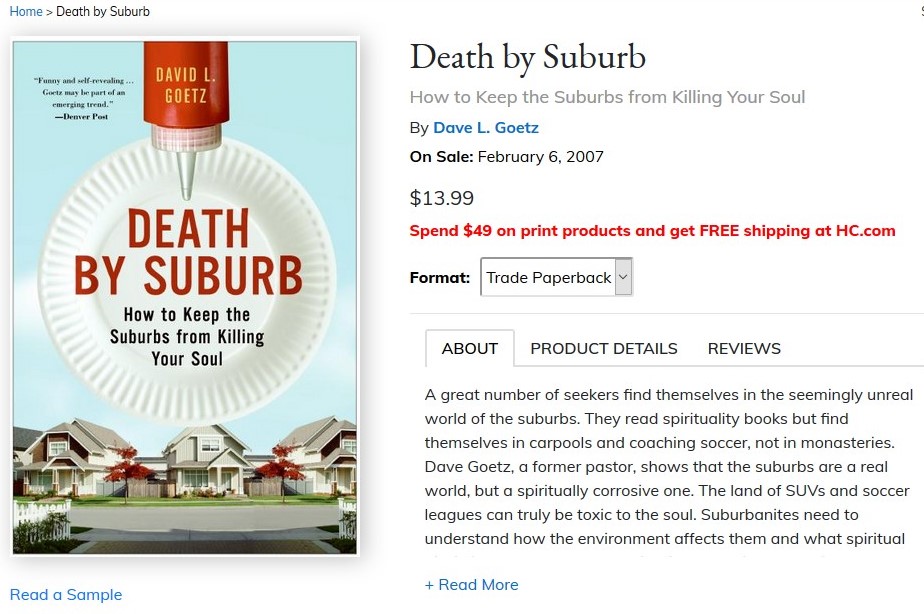
They approach these practices in slightly different ways. In the opening chapter, Goetz sets up the problem:
I think my suburb, as safe and religious coated as it is, keeps me from Jesus. Or at least, my suburb (and the religion of the suburbs) obscures the real Jesus. The living patterns of the good life affect me more than I know. Yet the same environmental factors that numb me to the things of God also hold out great promise. I don’t need to the escape the suburbs. I need to find Jesus here. (5)
harpercollins.com
Subsequent chapters then each start with a listed environmental toxin of suburban life and then a practice in response. The material for each chapter then discusses these two features. Pursuing these practices will help readers find the thicker life he describes this way:
This much thicker world is a world in which I am live to God and alive to others, a world in which what I don’t yet own defines me. (13)
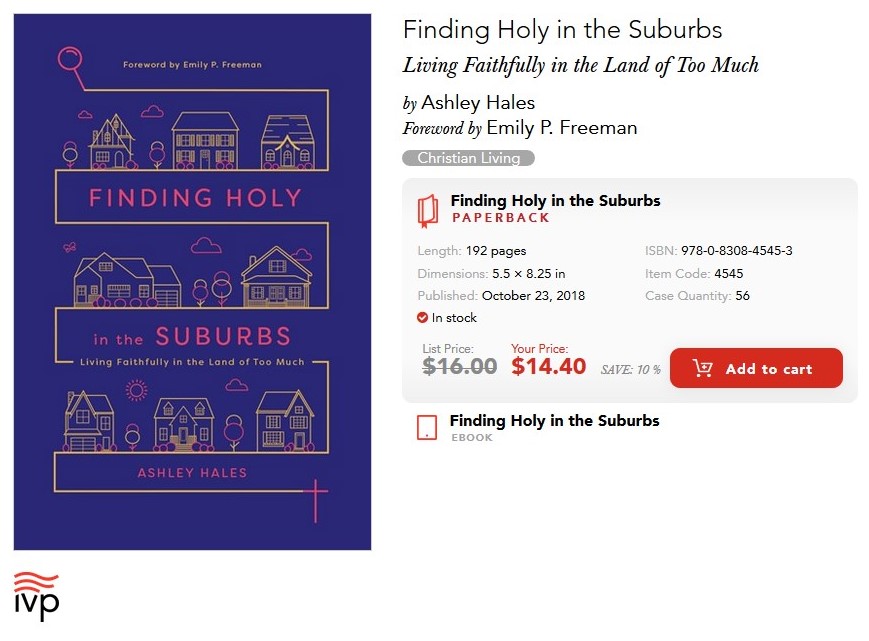
Hales puts the problem this way:
More than 50 percent of Americans live in suburbs, and many of them desire to live a Christian life. Yet often the suburbs are ignored (“Your place doesn’t matter, we’re all going to heaven anyway”), denigrated and demeaned (“You’re selfish if you live in a suburb; you only care about your own safety and advancement”), or seen as a cop-out to a faithful Christian life (“If you really loved God, you’d move to Africa or work in an impoverished area”). From books to Hollywood jokes, the suburbs aren’t supposed to be good for our souls. Even David Goetz’s popular book, Death by Suburb, though helpful, presumes suburban life is toxic for your soul – as if suburbia were uniquely broken by the weight of sin. The suburbs – like any place – exhibit both the goodness of God’s creative acts (in desiring to foster community, beauty, rest, hospitality, family) and sin (in focusing on image, materialism, and individualism to the exclusion of others). We cannot be quick to dismiss the suburbs out of hand. (8)
ivpress.com
The practices and counterliturgies Hales recommends would help Christians see suburbs and their role their differently:
This book is about coming home, about finding ourselves in the story of God and rooting ourselves in our places. It’s a bold look at the culture of affluence as expressed in suburban life. My hope is that is challenges your idea of belonging and also shows you a more beautiful story to root yourself in. As individuals, families, and churches commit to love and sacrifice for our neighborhood and subdivisions, we will find our place. (14-15)
If an individual, church group, or religious organization wants to consider evangelical life in the suburbs, both of these books could be a good starting point for conversation and action.
One of the features of the books I examined is their focus on everyday Christian/evangelical life. On the whole, these texts are part of a larger category of books where evangelicals wrestle with current social issues and consider Christian approaches. Across the books, the goal is help readers build their faith and draw on evangelical and biblical resources.
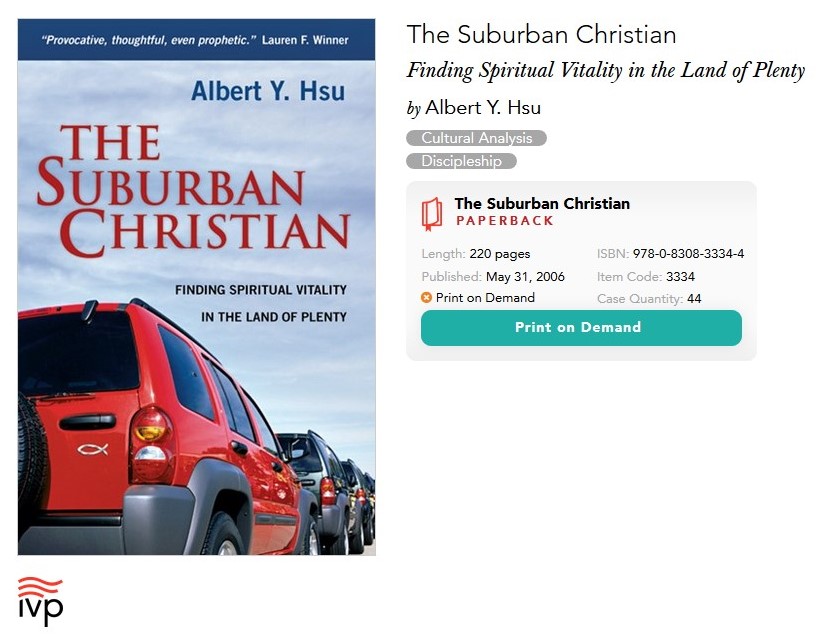
Al Hsu’s 2006 book The Suburban Christian: Finding Spiritual Vitality in the Land of Plenty is the best on drawing on existing historical, theological, and other scholarly research on suburbs and places. There is a full chapter on suburban development that draws on a number of well-cited texts about how the American suburbs came to be. While some books I studied cited no scholarly works, Hsu cites numerous works and the discussion and footnotes could provide a good starting point for a reader who wants to engage the decades-long scholarly discussion.
ivpress.com
The engagement with a wider academic conversation may be connected to other unique features of Hsu’s text. He considers how Christians could engage race and social class in the suburbs. In the final chapter when discussing solutions, Hsu connects religious activity and structural activity:
While we must never neglect the significant of evangelizing individuals, equally important is transforming societal, organizational and municipal structures. (188)
Hsu also helps individual Christians think about their beliefs and practices in the suburbs. For example:
Behind the readers’ comments is a tacit assumption that the Christian life simply can’t be lived in certain environments…But for Christians, nothing is beyond redemption. (13)
For individuals, church groups, and religious organizations looking for an evangelical book addressing suburban life with a more scholarly angle, this would be a good starting point.
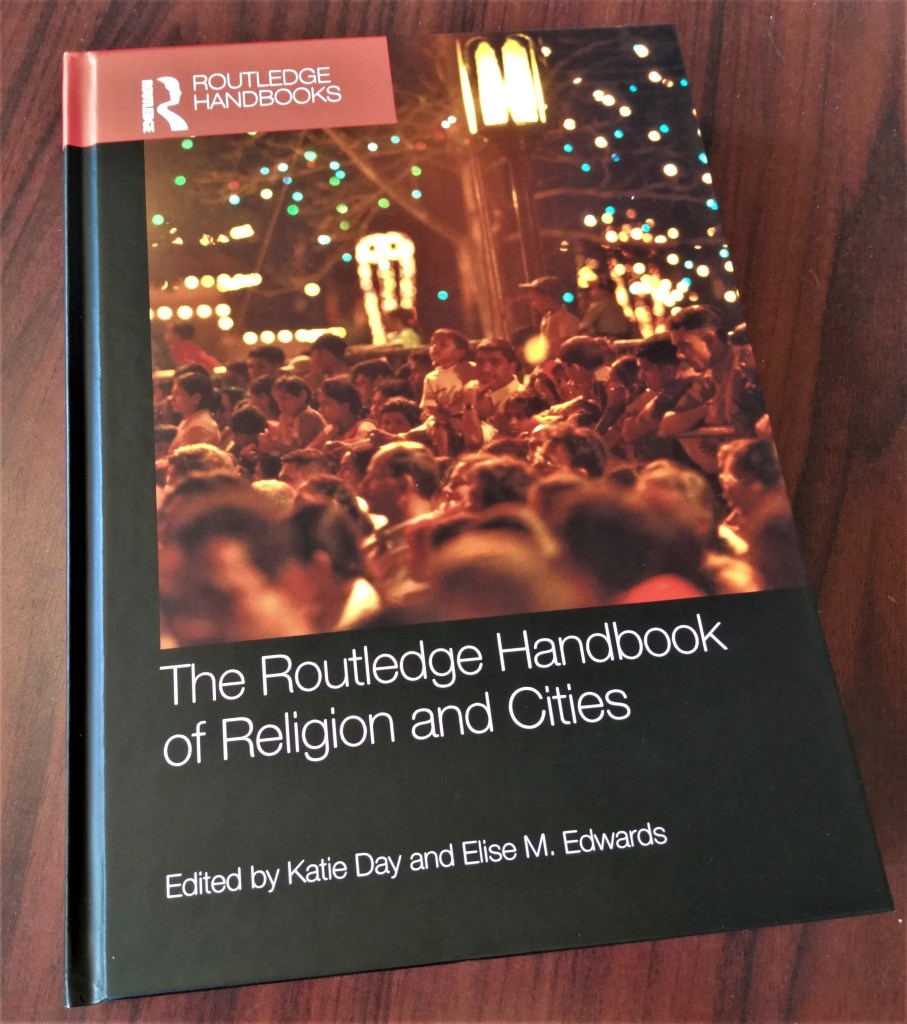
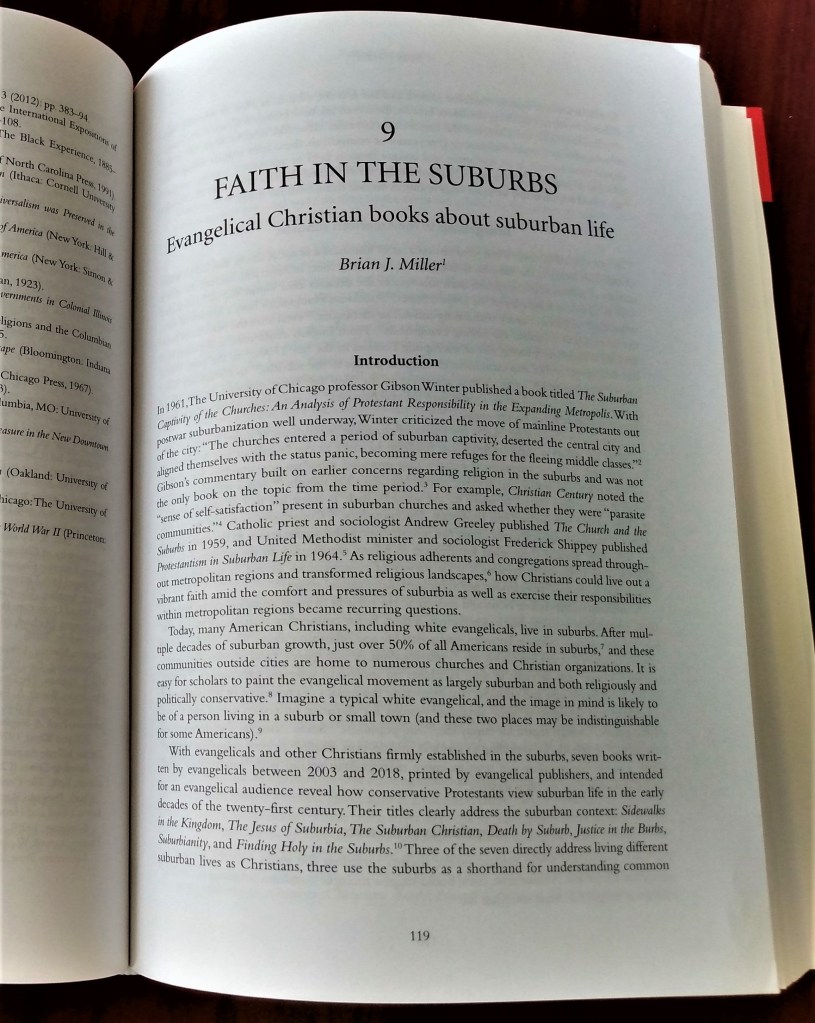
This chapter began in reading several books written over the last two decades where evangelicals considered how to live as a Christian in the suburbs. I slowly collected these books, purchasing some myself and even having one gifted to me by our college’s president. With Americans firmly established in the suburbs at the beginning of the twenty-first century (over 50% of Americans living in suburbs), from different angles the books ask some common questions: do the suburbs present particular opportunities or challenges regarding religious faith? Should Christians live in the suburbs or elsewhere? The chapter I wrote considers common patterns in these books as well as several areas they do not consider.
This chapter is not only about these books; I think these texts also hint at a larger sociological question. How do different spatial environments affect religious faith? Evangelicals do not always consider this; faith is often considered portable, truths are consistent across a variety of contexts, and churches are more about the collections of people rather than buildings and places. Other religious traditions take places more seriously. In the American suburban context with voluntaristic religion, congregations meeting in all kinds of structures, an emphasis on individualism and private property, and geographic mobility, how could a suburban environment not affect religious faith?
There is a word for love of a place: topophilia, popularized by the geographer Yi-Fu Tuan in 1974 as all of “the human being’s affective ties with the material environment.” In other words, it is the warm feelings you get from a place. It is a vivid, emotional, and personal experience, and it leads to unexplainable affections. One of my fellow Seattle natives made this point to me when he said he hated the rain in Boston but not Seattle. Why? “Only Seattle rain is nice.”
In his book A Reenchanted World, the sociologist James William Gibson defines topophilia as a spiritual connection, especially with nature. Oladele Ogunseitan, a microbiologist at the University of California at Irvine, demonstrates topophilia by showing that people are attracted to both objective and subjective—even unconscious—criteria. My friend’s affinity for the “Seattle rain” is probably fueled by what Ogunseitan calls “synesthetic tendency,” or the way particular, ordinary sensory perceptions affect our memory and emotions. If the smell of a fresh-cooked pie, the sound of a train whistle at night, or the feeling of a crisp autumn wind evokes a visceral memory of a particular place, you are experiencing a synesthetic tendency.
It is worth reflecting on your strongest positive synesthetic tendencies—and the place they remind you of. They are a good guide to your topophilic ideal, and thus an important factor to be aware of as you design a physical future in line with your happiness. It is notable that one of the world’s most famous happiness experts, Tal Ben-Shahar, left a teaching position at Harvard University several years ago, where he had created the university’s then-most-popular class, to return to his native Israel—because he felt the pull of his homeland…
You probably have your own Barcelona or Minnesota, somewhere that has a highly topophilic place in your heart. Perhaps you sometimes daydream about going back—but then you snap out of it. Moving is a huge commitment, and not one to be made on a synesthetic whim. The cost of a big move is prohibitive for many people who might like to find a new home. Even if work and family circumstances make it possible, the idea of starting a new job, making new friends, changing schools, facing the DMV—it’s too much for many.
This is more than an acknowledgment of the importance of places in our lives; this encompasses all of the senses. One quick example: there is a home near us that has a line of four or five of the same kind of trees along the sidewalk. When I run by there, the smell alone is enough to transport me to a familiar family vacation spot where that smell is more common.
The argument here helps push back against a more recent narrative in human history that suggests people can and should be mobile. While people not too long ago might have been anchored in a relatively small geographic area for a lifetime, people today are more used to moving for jobs and travel across longer distances. Of course, as is noted above, such mobility might lead to loving a new place or an unexpected place. But, if people form these attachments to places, how do they then respond to mobility? Perhaps mobility can reinforce topophilia; you do not know how much you like places until you are away from them.
This also highlights the material world in ways that we sometimes ignore. Our environments matter, even if we are in an age of screens, private spaces, and lots of driving. There can be a lot of focus on this within private spaces – think decluttering trends or an emphasis on layouts and design in homes – but less emphasis on public or community spaces. To put it in the terms of James Howard Kunstler, are our collective environments worth paying attention to?





 Legally Sociable