Inviting skaters in to revive a moribund urban plaza

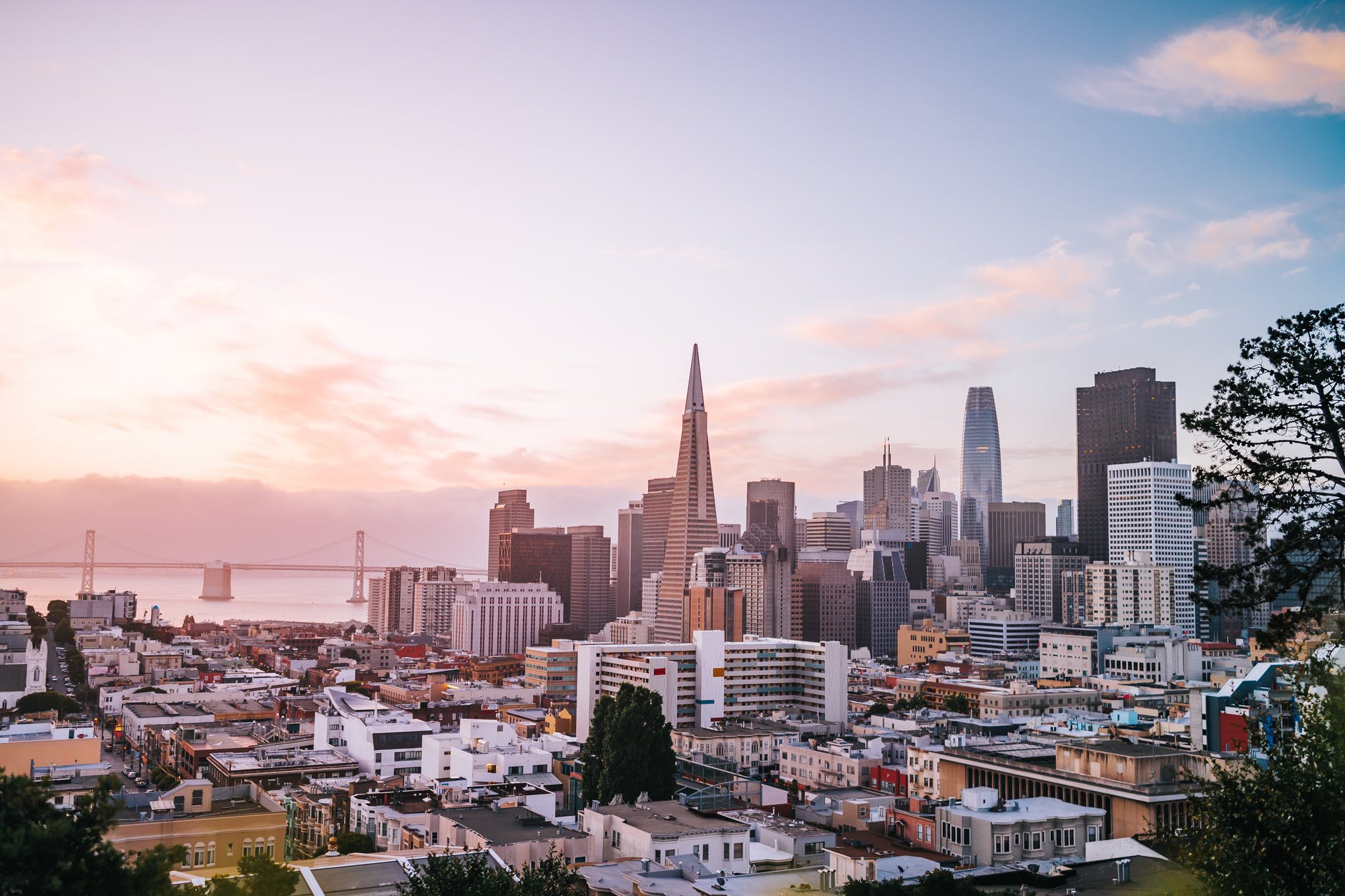
Skaters have revived a plaza in downtown San Francisco:

Photo by Bran Sodre on Pexels.com

For a city struggling to recover after the Covid-19 pandemic, the images of suffering and bedlam could not have been more inconveniently placed: U.N. Plaza, a block from City Hall, has a busy rail station and is bordered by Market Street, a major thoroughfare that double-decker tour buses cruise daily. In 2023, after a big, international conference announced that it was coming to the hobbled city, the parks department scrambled to find a new life for the site.

That turned out to be a skateboard park. On a recent sunny morning, kids in baggy pants slid the railings around a flagpole and cruised over a volcano-shaped embankment. The old granite ledges that used to be illegal to skate on were now open to grind and slide.

Inviting a bunch of skaters to rip around, scuffing ledges, is not the use San Francisco had in mind in 1975 when the plaza was dedicated to commemorate the founding of the United Nations in the city. U.N. Plaza was part of a larger redevelopment meant to attract affluent shoppers to San Francisco from the suburbs. Instead, for the next four decades, the city produced regular reports of failure that highlighted assaults and drug use on the plaza, and high vacancies in the buildings surrounding it. For all the thought that went into the open design and gushing fountain, it was never clear what people were supposed to do there…

What the transformation of U.N. Plaza does show, however, is that attempts at urban revival can go a long way for relatively little money when they attract a natural constituency of users. Obvious as that may sound, it’s the opposite of how planners in San Francisco and elsewhere have historically operated. The notion that a great public space is defined by architecture first, people second, was so ingrained in the city’s thinking that it took the squalor brought on by the pandemic to reverse it…

Another thing that Mr. Ginsburg said he had learned from working with skateboarders was that they operated as the informal “watchful eyes” that the urbanist Jane Jacobs had described as a crucial element of safe streets. They cover a lot of space, they watch out for one another, and unlike a concert or special event, skaters require no special programming from the city. They just show up in short bursts throughout the day, helping to maintain activity outside working hours.

As noted later in the article, skaters are not necessarily the ones American cities tend to call on to bring social life to spaces. But, if the alternative uses are worse, they might call on skaters.

And even though Jacobs is invoked above, her analysis would likely go further than just finding a set of people who want to be in the park: why not design a neighborhood where the uses around the park or plaza support an endless flow of people and activity around and in the park? Then you do not need people who need to just “go to the park” but rather all types who are going in and out of the park.

Would this relationship between the city and skaters continue with the city (1) setting up more spaces for skaters and (2) limiting anti-skating devices and policies in other locations?

SF mall’s fate a sign of “urban doom loop” or suffering from what faces many shopping malls?

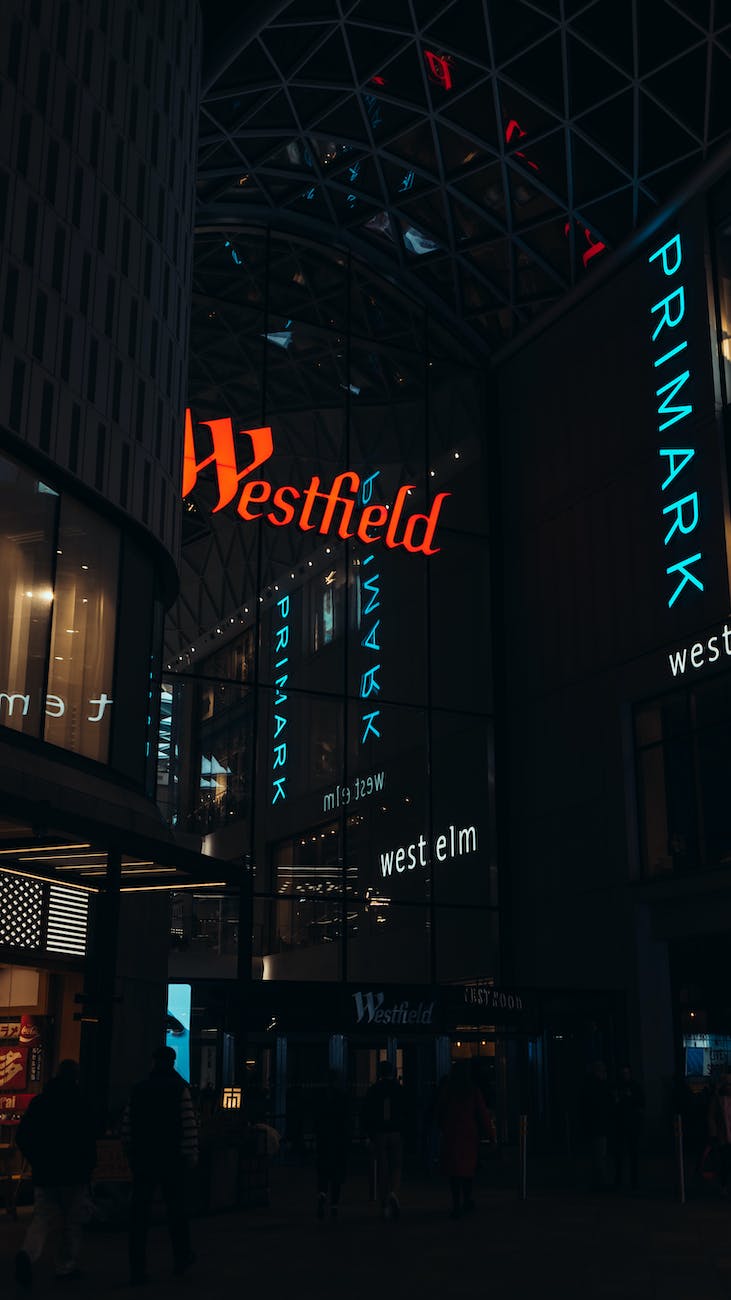
A review of the issues facing San Francisco includes a bit about the Westfield San Francisco Centre:

Photo by brokenadmiral_ on Pexels.com

Dennis Phillips had recently taken her staff to tour the Westfield San Francisco Centre. “We have to understand the possibilities of that building,” she explained. The mall loomed so large as a harbinger of San Francisco’s struggles that I decided to see the damage myself. When I was growing up in San Francisco, at the turn of the millennium, the opening of the Westfield mall had seemed like the capstone of the city’s rise. Now I expected a ruin – the remnant of a once triumphal age.

As I approached, I found the stretch of downtown around the mall lively and crowded. People in the local office garb of slacks and zip vests brushed past, thumbing their smartphones. In front of the Dawn Club, a storied jazz bar that Sheehy reopened this year, men in suits were playing a game that they called Doomloopin Bowling on a strip of AstroTurf. Inside the mall, which as of now has no closure date, I saw customers flowing from Bloomingdale’s. To my left, a Michael Kors salesperson chatted with a couple as, on my right, young men studied fancy watches in an I.W.C. Schaffhausen. The food court was noisy, and there were no free tables at Panda Express. The grimmest space was on the top floor: a Cinemark whose lease is up in the fall had gone dark early. “They’re closed,” a bored looking guard announced to no one.

In public declarations, Westfield – like Gump’s – laid the blame for its lack of business on the condition of San Francisco’s downtown. But in the past forty years the number of malls in the United States has declined by nearly three-quarters, and a tour of downtown San Francisco today, its streets packed, its bars busy, can seem an odd me-or-your-lying eyes experience.

The closing of retail shops in San Francisco was easy to see culminating in this mall when the mall operator recently handed back the property to the lender. A once thriving mall suffered from vacant properties. Its location was once a very busy part of the downtown between regular floods of downtown workers, residents, and tourists. I have been to this mall at least a few times and it was generally a lively spot where a cosmopolitan canopy might be possible.

But, as noted above, shopping malls everywhere are facing difficulties. Brick and mortar locations are suffering, even in the most vaunted locations. The outlook for shopping malls is bleak as many will not be needed in the future landscape. Numerous malls are trying to transition by adding housing and/or other entertainment options.

Like many places, urban or suburban, what the mall becomes might be more important than whether the mall survives. What becomes of potentially valuable land near an urban core that once generated property and sales tax revenue? What use could be good for residents and the city long-term? This may be harder to envision in urban downtowns where a lot of property might soon be available for new uses.

Closing Walmart and Whole Foods locations and their responsibilities to urban neighborhoods

Walmart announced yesterday it is closing four locations in Chicago:

Photo by Evgeni Lazarev on Pexels.com

The simplest explanation is that collectively our Chicago stores have not been profitable since we opened the first one nearly 17 years ago – these stores lose tens of millions of dollars a year, and their annual losses nearly doubled in just the last five years. The remaining four Chicago stores continue to face the same business difficulties, but we think this decision gives us the best chance to help keep them open and serving the community.

Over the years, we have tried many different strategies to improve the business performance of these locations, including building smaller stores, localizing product assortment and offering services beyond traditional retail. We have invested hundreds of millions of dollars in the city, including $70 million in the last couple years to upgrade our stores and build two new Walmart Health facilities and a Walmart Academy training center.

It was hoped that these investments would help improve our stores’ performance. Unfortunately, these efforts have not materially improved the fundamental business challenges our stores are facing.

Chicago officials decried the closures:

Nedra Sims Fears, executive director of the Greater Chatham Initiative, said the closure of the store and health center in Chatham was “deeply disappointing.”…

“All communities in Chicago should have access to essential goods and services,” Lightfoot said in the statement. “That is why I’m incredibly disappointed that Walmart, a strong partner in the past, has announced the closing of several locations throughout the South and West sides of the City. Unceremoniously abandoning these neighborhoods will create barriers to basic needs for thousands of residents.”…

In a statement, Mayor-elect Brandon Johnson said his administration “will be committed to identifying ways to fill the gaps these closures will leave in neighborhoods, and also to finding other ways to ensure families have direct access to groceries in their communities.”

Ald. Sophia King, 4th, and Ald. Jason Ervin, 28th, whose wards include locations slated to close, both called the closures disappointing in statements Tuesday. “The west and south sides need committed partners to reverse decades of disinvestment and discrimination, and I hope Walmart will work hard to invest in the communities in Chicago that desperately need their presence,” Ervin said.

In San Francisco, a Whole Foods that opened downtown in 2022 closed earlier this week:

Whole Foods Market opened a new “flagship” branch Downtown, at Eighth and Market near the Trinity Place development, with much fanfare in March 2022. But just 13 months on, the supermarket chain has decided to close the store, which was shuttered at the end of business on Monday.

Residents and leaders expressed disappointment:

News of the store’s closure also sparked dismay online. Residents on Twitter described losing the supermarket as “disappointing,” and “disheartening,” while one warned: “As whole foods goes, so goes the neighborhood.”

The Whole Foods Market fell within the district of San Francisco District 6 Supervisor Matt Dorsey, who posted a thread about its closure on Twitter on Monday.

“I’m incredibly disappointed but sadly unsurprised by the temporary closure of Mid-Market’s Whole Foods,” he wrote. “Our neighborhood waited a long time for this supermarket, but we’re also well aware of problems they’ve experienced with drug-related retail theft, adjacent drug markets, and the many safety issues related to them.”

Residents of all communities need access to food. Certain neighborhoods are invested in less than others. A sizable grocery store can help anchor other business activity. Filling a vacant large commercial space can be difficult.

If a company says it cannot keep a store open – the two companies give different reasons above – what reasons might be acceptable to a community?

I would hope retailers and corporations want to go beyond just making money in a location. At the least, as corporations and politicians often remind us, they provide jobs. But, they can also be much more.

Would city residents rather live next to a 6,000 sq foot teardown McMansion or a fourplex?

With one proposal in San Francisco to tear down a 1,200 square foot older home and replace it with a 6,000 square foot home, the neighbors say they would rather have a fourplex in its place:

Photo by picjumbo.com on Pexels.com

The even crazier part? One super-rich family can live in 6,000 square feet, but the same-size box in Noe Valley and the majority of San Francisco could not include homes of 1,500 square feet apiece for four families. (This proposal would include an in-law unit, but the city doesn’t check whether they’re occupied, and it’s believed there are thousands of vacant units around the city.)…

“We would 100% support this if it was four families,” said Schwarz, who bought his own home in 2004.

So would his neighbor Steve Boeddeker, who said he’s irked developers are scooping up homes all over the neighborhood to turn them into McMansions and resell them for many millions…

The current rules for McMansions aren’t working. They’re allowed, though neighbors can file a discretionary review application, arguing there are “exceptional and extraordinary circumstances” that require more analysis. Five families have done that for the Noe Valley home, including Shannon Hughes and her husband, Schwarz.

This is an interesting case as San Francisco is often considered ground-zero for issues of overpriced housing, the need for affordable housing, and NIMBY responses to new development.

At least in public comment, few people would say they want to live next to a teardown McMansion. The extra-large size of the new home in comparison to the existing older homes plus the new and poorly regarded architectural design mean that plenty of neighbors do not like the new land use. The teardown is a threat to the existing character of the neighborhood.

At the same time, relatively few residents want to have a single-family neighborhood convert land into higher density residential units. Even as one fourplex is not that many more units, Americans often have negative ideas about renters in apartments or feel that increased density will threaten their property values and neighborhood feel.

My guess is that plenty of urban homeowners would prefer that neither option arrive next door: keep the teardowns and the conversions into multiple units somewhere else. But, if the choice is between the two, the McMansion may be the worst option.

Example of rent drop in San Francisco: one bedroom down from $4,300 to $3,150

After hearing of rent drops in Manhattan, I read about one example of rent dropping in San Francisco:

Until the pandemic hit, the city’s housing market was so tight that would-be renters lined up for viewings and arrived with thousands of dollars in cash, ready to sign a lease on the spot.

But now landlords are hard-up for tenants and some are offering several months free, said Coldwell Banker realtor Nick Chen, who recently rented out a one-bedroom for $3,150 that before would have easily gone for $4,300.

“San Francisco rents have been really inflated over the past couple years,” Chen said. “It will come back, but I think the question is: Will it come back to the level it was at previously? Maybe not.”

This is a sizable drop in rent, roughly 25% in a short time frame. Yet, that is still a price that few Americans across the country could meet. Even with significant changes in social life in cities like San Francisco and New York, this does not mean these places are now accessible to many.

Presumably, there is a bottom floor below which rents will not drop. The person who owns the property has their own bills to pay. Some people will see this as an opportunity to get a place in San Francisco at a lower rent and jump at lower prices.

Or, does COVID-19 shift housing prices in high-priced markets for a longer time? If businesses decide to continue work from home and employees are skittish about being around a lot of people in a dense city, do rents drop even further? Is there an opportunity for developers, buildings owners, housing groups, and local governments to jump in and acquire and/or offer cheaper housing? I would not guess expensive housing markets like San Francisco, Seattle, or Manhattan will soon become reasonable but perhaps there will be some opportunities for more people in the region to take advantage.

More on the wealthy leaving cities, San Francisco edition

The flight of some out of New York City amid COVID-19 has attracted attention. This may also be happening in San Francisco:

city skyline during golden hour

Photo by Kehn Hermano on Pexels.com

Amid the depths of a global pandemic and financial downturn, the demand for real estate is unexpectedly rocketing in wealthy regions outside San Francisco, reports Bloomberg. Agents say that demand is soaring in affluent areas around the Bay Area such as Napa, Marin and further afield in Carmel, as people who have the means look to get away from the city. Meanwhile, the market in San Francisco and Alameda County is still well below where it was last year.

Elsewhere, Lake Tahoe has also seen a surge in real estate interest. The prospect of living out of the city on an alpine lake while maintaining a career is appealing for a new generation of young buyers, as many tech companies have signaled that remote work may be the new norm for a long time…

Meanwhile, the rental market in San Francisco has dropped significantly, with rates for one-bedroom apartments in the city dropping by 9.2% since June 2019, and hitting a three-year low.

However, buying a new home in an isolated haven in a nearby bucolic county is not an option for lower-income San Francisco residents, and some believe the trend is only exacerbating the wealth divide.

And, as noted in the final paragraph of the story, it is hard to know whether this is a long-term trend. But, this is one of the advantage of wealth and resources: residential options during times when many others are limited in where they can live. And this is not just limited to where they can live; it includes being able to travel back and forth easily, owning or renting multiple properties at the same time, and having all the resources for working from home.

More broadly, the evidence cited above is interesting in that people moving out of the city are not said to be moving very far. They are still within a drive of San Francisco/the Bay Area/Silicon Valley. Are people in the Bay Area more willing to stay close by or do they have to due to work (a need for at least some in the tech industry to be at meetings, see people and products, etc.)? Does this differ from New York City where many of those moving ended up in the suburbs while others left the metro region all together? Staying in driving distance changes the moving experience.

I am also imagining the possibility of a more significant migration than some wealthy people heading for the suburbs or other cool metro areas. What if Facebook said they want to get out of the petri dish of Silicon Valley, be a different kind of tech company that really wants to connect people, and picks up for Omaha or St. Louis or another smaller big city in the middle of the country? Clusters of organizations have particular synergies and efficiencies but if more workers are going to be at home, is there still the same need to locate near everyone else?

Related earlier post: the evidence for this happening in Washington D.C. may not be as strong.

California’s biggest cities without blackouts, suburbs have them

A journalist looks into why California’s power blackouts have hit some suburbs but not the biggest cities:

The municipal utility that serves Los Angeles doesn’t shut off power during high winds. As the utility explained in a recent press release, the city’s miles of pavement, numerous fire stations and relatively limited open spaces help protect it from runaway fires. There’s also the chaos that could ensue from knocking out traffic lights in the capital of car culture.

L.A.’s approach, however, isn’t foolproof. The Getty fire that’s chased celebrities from their hillside homes started when a broken eucalyptus branch sailing on the wind hit a live power line owned by the city’s utility. The Los Angeles Department of Water and Power did not return a call Wednesday asking if it would reconsider its no-blackout policy as a result…

San Francisco, meanwhile, benefits from its famously odd climate. While the rest of California heats up and dries out during the summer, San Francisco shivers in a fog bank so much a part of city life that residents have given it a name (Karl). The fog typically vanishes by October, but even then, the city never gets as dry as most of its suburbs. And the dangerous Diablo winds striking this month rarely hit the city as hard as its hilly suburbs.

As a result, San Francisco isn’t included on the state’s official map of high fire threat areas. So PG&E Corp. doesn’t cut its power when winds rise, said utility spokeswoman Ari Vanrenen. That’s not to say the city couldn’t someday lose electricity if PG&E takes down a transmission line that feeds it.

These reasons make some sense. Denser urban areas are less likely to have large areas of foliage and nature in addition to exposed power lines through which fires can easily spread.

At the same time, it might be difficult to make a case when many people in the state are affected by the blackouts and others are not “sharing the burden.” Do such choices provide economic benefits to certain areas while others are hurt?

The case of Los Angeles could get pretty interesting in this regard in that there are some more natural areas surrounding the city and separating communities. The Getty fire above is a good example; the museum and the surrounding homes sit on less dense land on hillsides overlooking the city. Could a fire break out there and then end up on either side of the hills/mountains and spread to urban and suburban land?

Cost and time overruns on public projects do not matter once the task is done

In a look at the troubled construction of the Salesforce Transit Center in San Francisco, one civil engineer puts the problems in perspective:

Paul Gribbon, a civil engineer who brought Portland, Oregon’s $800 million Big Pipe sewer project in on schedule and within budget, points out that, along with cost and time overruns, there’s another general law regarding megaprojects. “Once it’s up and running, once there’s a shining new bridge or light-rail station, people tend to forget about how much it cost, in all senses of the word.”

If the project eventually gets done and it all works, life moves on and the delays, frustrations, and extra monies fade into the past.

But, such challenges seem to be common in at least a few major American infrastructure projects in recent decades. What could help reduce these odds? Or, are these projects so complex that even a small issue – such as cracked steel beams in San Francisco – can create significant ripple effects and headaches?

My guess is that the civil engineer is correct: after delays and blown budgets, people just want something to work. The frustration during the process will dissipate as the public takes it as normal. They will feel relieved when the troubles are over. Yet, the long-term goal across all these projects should be to continue to seek timeliness and on-budget performance as the size of these projects can influence numerous other civic and municipal priorities as well as create inefficiencies for many.

Suing for more suburban housing

A California law makes it possible to sue communities regarding housing:

Pro-housing activist Sonja Trauss, a pioneer in the YIMBY movement, was reading about a controversial 315-unit affordable apartment project in Lafayette in 2015 when she learned about a 1982 state law she’d never heard of before: the Housing Accountability Act.

The law said municipalities must approve a housing development as long as it is consistent with local zoning rules and general plan objectives, would not create a public health hazard or take water from neighboring farms, and would meet state environmental standards…

The California Renters Legal Advocacy Fund, or CaRLA — a group Trauss and her YIMBY allies formed in 2015 — is waging the sue-the-suburbs campaign. CaRLA has used the Housing Accountability Act to sue on behalf of developers in Sausalito, Berkeley, San Mateo, Sonoma, Dublin and Lafayette…

While the lawsuits will eventually result in some increase in the Bay Area’s housing stock — none of the projects in question have opened yet — the bigger impact so far has been to make municipal officials aware that violations of the Housing Accountability Act could result in expensive litigation.

How long until California changes the law to give communities more say over these matters? Not surprisingly, the end of the article mentions a counter group that a co-founder says is “not NIMBYs or anti-housing; for us the issue goes back to democracy and local control.” Suburbanites do like their local control.

This certainly would not be the first time the courts have been used to allow new housing construction in wealthier suburbs. It may be the only way to force compliance from suburbs that would rather not have cheaper housing and different kinds of residents. Unfortunately, it can be a very slow process within specific cases and overall progress is limited. Perhaps the threat of lawsuits and several successful cases in the past could force suburbs to move more quickly but I would guess some would still aim to drag out the process as much as possible.

Final thought: it would be interesting to track what happens to these developments allowed by the courts over time. Do communities eventually accept the housing units and residents? Would a positive response to a new development than encourage the community to pursue other similar developments? Or, does a court victory lead to hardened resistance?

How close to San Francisco does a house have to be to be considered “in San Francisco”?

The short answer: closer than north of Oakland on the east side of San Francisco Bay.

The current edition of Brother vs. Brother on HGTV features two homes undergoing renovation in the Bay Area. However, they are located in the suburbs of El Sobrante and Pinole, respectively a 45 minute and one hour drive from San Francisco. This is similar to a post from years back when I wrote about Procure Proton Therapy claiming a “close to downtown Chicago” location with their Warrenville facility. Can the show truly claim to be about houses in San Francisco?

I would say no for three primary reasons:

  1. The location is just too far away from San Francisco to claim it is in the city. One could visit San Francisco from these locations but the show is not about San Francisco; it is about suburban housing. This is particularly noticeable in each episode with the size of the homes, the price of the homes, and the property each house sits on.
  2. This is not just about being relatively far our from the big city; the homes are also beyond Oakland. The Bay Area is a unique one in that there are three major cities within a relatively short distance from each other: San Francisco, Oakland, and San Jose. The largest in population is San Jose, the 11th largest city in the country, followed by San Francisco at 13th, and Oakland at 45th. Even though San Jose is closest to Silicon Valley, San Francisco is the most prestigious city with Oakland trailing both. If these suburban homes are to be connected to a big city, Oakland would technically be more accurate.
  3. Many suburbanites rarely make it into the big city if they do not work there or have business that regularly takes them there. They may still identify with the big city in the region, especially when talking with people from other parts of the country or world who have little knowledge of little communities but know certain big cities. Yet, their day-to-day experience is markedly different from that of a San Francisco resident.

I know the marketing is driving this. “Brother vs. Brother: San Francisco” is a lot more exciting than “Brother vs. Brother: Bay Area Suburbs.” Still, the consistent shots of San Francisco is a bit much when these are suburban homes that could fit in many regions across the United States.