A 7-11 as a gathering place in a small town

In American communities today, what businesses offer spaces for people to shop and interact with other people 24 hours a day? A profile of a 7-11 in Lewiston, Maine amid a shooting in the community offers one such example:

Photo by Jack Sparrow on Pexels.com

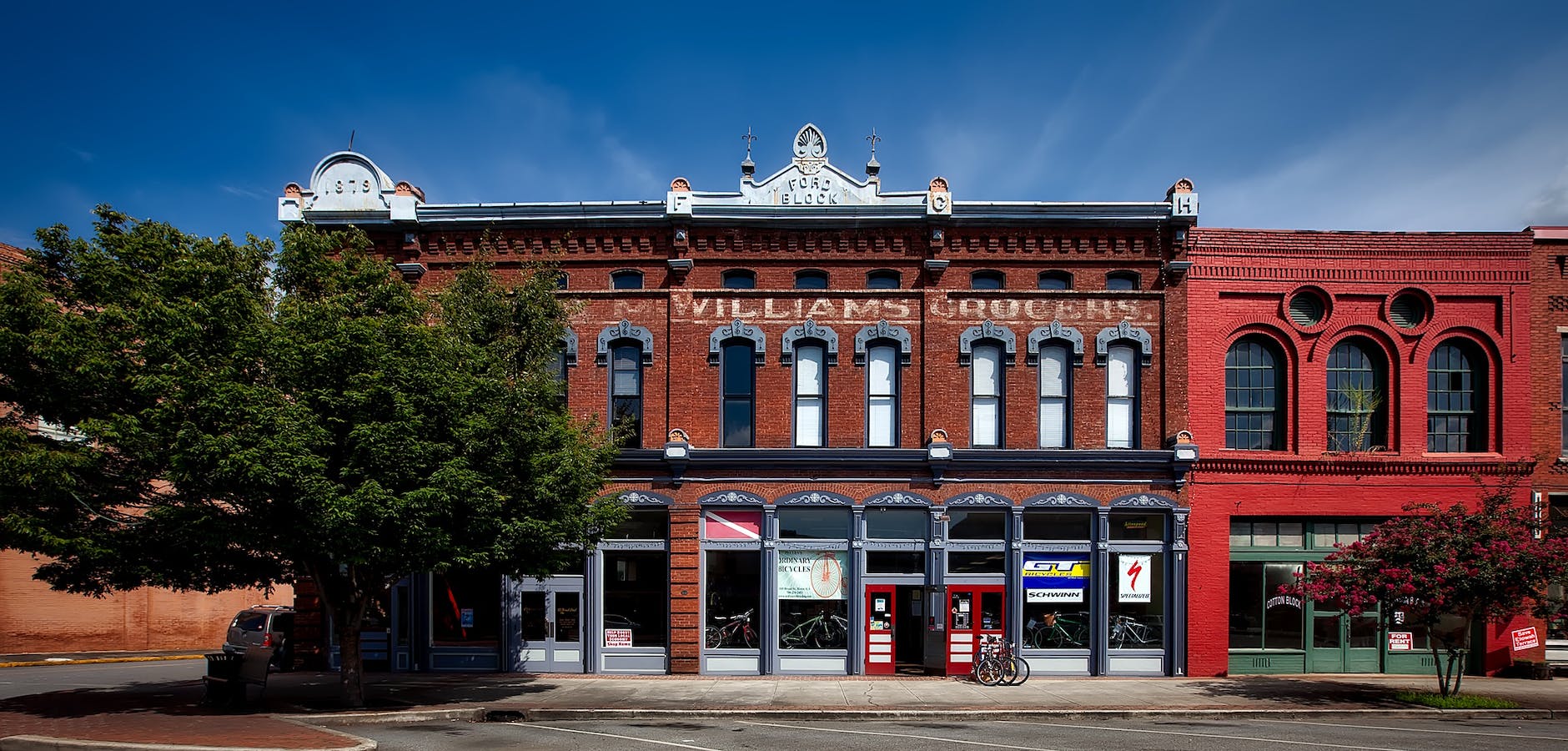
The night of the shooting, Dalia Karim locked the doors of her family’s 7-Eleven for the first time in 17 years. “We never close,” she told me. As owners of one of the few businesses in Lewiston, Maine, that remains open 24 hours a day, seven days a week, the Karims built a livelihood and a reputation by serving customers from all walks of life at all hours. Since 2007, save for a brief afternoon to complete floor repairs, Karim’s store has provided what she calls the “everyday purchases” of life: milk, cereal, soda, donuts, cigarettes, chips, beer. Nearly half of the purchases at her registers are made by EBT cards, she said, and many of her patrons lack the resources to drive to or shop at conventional grocery stores and arrive on foot. To them, the Karims’ 7-Eleven is often a singular source of sustenance…

It was the quietest Friday night Buck and April had ever worked. “The place was like a ghost town,” April said. Though the shooter still hadn’t been found, they both figured that by then, he’d either fled town or taken his own life. At one point, Buck saw police officers tackle a man on a motorcycle driving down Main Street—but it was the wrong guy…

Instead, her mourning took place behind the counter. One night, a woman came in and showed Dalia her wedding ring. “My fiancé is dead,” she said. Karim left the register to give her a hug. Another night, a man came into the store in search of a print copy of that day’s Lewiston Sun Journal. He wanted the paper to memorialize the loss of his brother. As he left, the back of his sweatshirt offered his brother’s name and the dates of his birth and recent death…

When the lunch rush came, Dalia attended to the register. The typical chitchat—about the Celtics, about the weather—came and went. Several customers wore blue Lewiston Strong T-shirts, but no one said anything in particular about the anniversary itself. Then a woman bought a copy of Uncle Henry’s sell-and-swap magazine. Beneath the magazine stood a small stack of print copies of that day’s Lewiston Sun Journal, devoted to stories about the anniversary of the shooting. One story was about a group of cornhole players who’d once played at Schemengees but had since found a new place to gather. Another story was about the resilient children who, despite the memory of the shooting, continued to bowl at Just-in-Time Recreation Center. A final story detailed the efforts of several organizations to come up with a design for a public memorial. When the lunch rush was over, Dalia took a moment to scan the front page of the paper. “I keep thinking: Maybe he will come back?” she said, straightening the papers. “But then I tell myself: It’s OK. It’s OK. He’s gone now.” She looked across the aisles. Soon, night would fall, and the crowds would arrive for the busiest night of the week. But for now, in the convenience store that had given her family a life in this city, and a future in this country, Dalia Karim had a few quiet hours to herself.

I assume there are sociological studies of such spaces. I would be interested to know:

  1. How do the stories, meanings, and relationships generated at 7-11 compare to the same generated in more “official” locations like City Hall or schools? Or to other social spaces/businesses in Lewiston?
  2. How does the 7-11 factor in the social networks of the community? Do people see it as a node important to them or not? Who in the town wouldn’t go to the 7-11?
  3. If the 7-11 were to disappear for some reason, what could take its place (if anything)?
  4. After COVID-19, how many 24 hour a day places are no longer and what does this mean for communities and people within them?

In a society where life seems polarized and atomized, could certain businesses offer room for relationships to form and people to get what they need when they want it? 7-11 and similar stores can offer particular goods for people at all hours and can provide opportunities to share small conversations and information about the town.

The (declining) number of farms in the United States

A long-term trend continues as the number of farms in the United States drops again:

Photo by DESPIERRES Cu00e9cile on Pexels.com

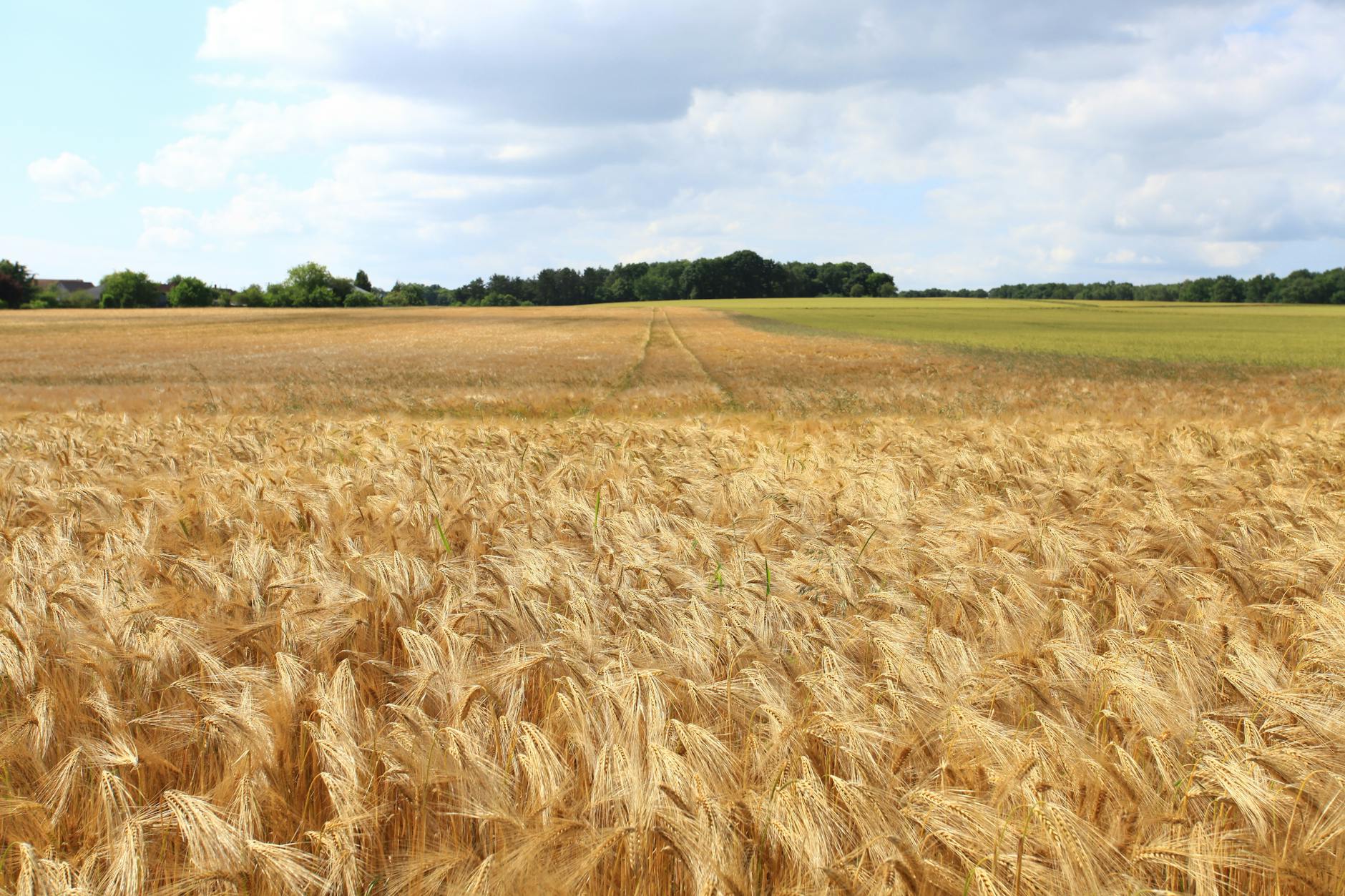
Between 2017 and 2022, the number of farms in the U.S. declined by 141,733 or 7%, according to USDA’s 2022 Census of Agriculture, released on Feb. 13. Acres operated by farm operations during the same timeframe declined by 20.1 million (2.2%), a loss equivalent to an area about the size of Maine. Only 1.88% of acres operated and 1% of farm operations were classified under a non-family corporate farm structure…

In addition to Ag Census data, USDA releases survey-based estimates on farm numbers once every year. Using this annual survey data dating back to 1950, the trend of fewer operations farming fewer acres becomes even more obvious. Since 1950, the number of farm operations has declined by 3.75 million (66%) and the number of acres farmed declined by 323 million (27%) – slightly less than twice the size of Texas. Technological advancements that have increased productivity, such as feed conversion ratios in livestock and yield per acre in crops, have allowed farmers and ranchers to produce more with less even as the U.S. population more than doubled, going from 159 million in 1950 to 340 million in 2023, and the global population more than tripled (2.5 billion to 8 billion) during the same period.

Add to this the drop in the number of people involved in farming or agricultural work over the last century. This all adds up to more and more people living in urban areas, particularly in suburbs where over half of the American population lives.

Even with all of this, the United States produces more food in the long run. Efficiency and innovation mean more can come from the same amount of land. This frees up people and resources for other activities.

The numbers cited above also mean there are still a lot of farms in the United States. The country may no longer be anchored in small towns and family farms – if is ever was – but many continue on with food produced for the country and world.

Measuring community success with “fully occupied homes and anchored schools”

How might we know whether a small town is declining or just experiencing change? Here is one suggestion:

Photo by Pixabay on Pexels.com

The University of Illinois Extension earlier this year held a series of webinars to arm leaders of rural communities with positive data, such as fully occupied homes and anchored schools, while suggesting language those leaders should use to recruit people to move to rural towns, which are often coping with negative stereotypes…

Indeed, residents and leaders in Cullom and Wenona, a town of 1,000 an hour’s drive away and about 25 miles south of the LaSalle-Peru area, say their towns are very much in demand. Cullom Mayor Barbara Hahn said that people — mostly from larger cities around the state — call her “all the time” to see if there are any houses for sale and she mostly has to tell them that the housing stock is at capacity…

But Neste said that the lack of population increase is not because rural life is undesirable…

The circumstances lead to one inescapable, albeit morbid, conclusion, experts say. Prospective rural dwellers are left waiting for seniors occupying single-family homes to die.

What is lurking behind this discussion is an assumption in the United States about communities: they are considered healthiest if they are growing. Communities whose populations are stagnant or declining are often viewed as not doing well. There needs to be construction, population growth, and new businesses in a community for outsiders to suggest that it is doing well. The end of this story above tells of one downstate small town that implemented a TIF district and took on risk in order to build some new housing.

But, not all communities in the United States grow decade after decade. Some are growing now, particularly in the Sunbelt. A number of cities, suburbs, and small towns reached their population peak in the past. Some of these examples are regularly discussed, such as Detroit or Chicago or rural small towns.

The measures suggested above offer some different ways of discussing the vitality of a community. In-demand housing is something Americans understand; if there are few housing units available, this suggests people like the community. Having thriving schools is another aspect Americans like as good schools suggest a community has plenty of children and the community rallies around an institution that can help the next generation succeed.

Other measures that might also be helpful:

-The number of active community groups. This suggests people want to participate.

-The number of local jobs available per resident. Are there economic opportunities in the community?

-The number of local businesses owned by residents or nearby residents. This highlights local business activity compared to national firms (like dollar stores or fast food restaurants).

More broadly, a more open conversation among Americans about what marks a healthy or good or desirable community could provide more measures than just population growth.

Can anything be more horrifying than small town “Everytown, USA” set in Illinois?

The fictional Haddonfield, Illinois has a grim past:

Photo by Toni Cuenca on Pexels.com

As far as I can count, for a town of only 40,000 or so (I think; no census data for the place exists), it has seen more than 150 murders since 1978, nearly all during October.

As the setting for the “Halloween” horror films, the town has an accumulated history:

What makes Haddonfield important, though, is what made Sherwood Anderson’s Winesburg, Ohio, and Hawkins, Indiana, of “Stranger Things,” and many other fictional Midwest small towns, so indelible. These are places that retain the allure of an America we’re promised, full of kindness and nurturing, alongside the hypocrisy we’ve always known. Like Spoon River, Bedford Falls, Grover’s Corners, Brigadoon, Lake Wobegon and Springfield in “The Simpsons” — some Midwestern, all too good to be true — Haddonfield will be defined not as One of the Best Places in America to Live but One of the Best Places to Remind Yourself That Small Town America was Never a Vacuum…

If you take all the “Halloween” films as reference: There are also low-slung elementary schools surrounded by chain-link fencing. Boulevards lined with Victorian and Cape Cod-style homes with welcoming porches and big lawns. There are farms just outside town, and two newspapers and two hospitals inside. The University of Illinois is mentioned but there’s also a community college there and a strip club, tavern and small police force. It’s middle to upper-middle class, but with pockets of inbred poverty. No one mows the cemetery, and despite the violent history, there are more shadows than streetlights…

The real Haddonfield, of course, is South Pasadena, in California. That explains the lack of foliage (and mountains in the background). According to the Los Angeles Times, the 130-year-old home used for the Meyers house has since been made a historic landmark.

But if Haddonfield existed in Illinois, it would most likely be around the Bloomington-Normal area, said Jim Hansen, a professor of English and critical theory at the University of Illinois at Urbana-Champaign who also teaches classes on horror. It seems to sit off I-55. That said, Bloomington-Normal is south of Livingston County, the (real) county referenced in the series. On the other hand, isn’t it scarier if we don’t know?

I have multiple thoughts in response to this:

  1. Are horror films more effective in supposedly idyllic small towns or suburbs? The contrast between normal everyday life and the activity of horror films is high. If the Midwest is a home to American virtue, is it also home to its repudiation?
  2. Put 13 films together and a devoted fan base and this fictional place becomes a known one. Certain sites are familiar, the logic of daily life is known. Relatively few places depicted on television or in movies can become so familiar.
  3. The filming location is very interesting. If you know the filming took place in South Pasadena, does this ruin the image – visual and conceptual – of small town Midwestern life?
  4. This small town needs the services of Encyclopedia Brown, or perhaps an older detective; someone who could put an end to the horror business.

Wealthy people can just buy a town, Mark Cuban edition

A very small community in Texas is now owned by Mark Cuban:

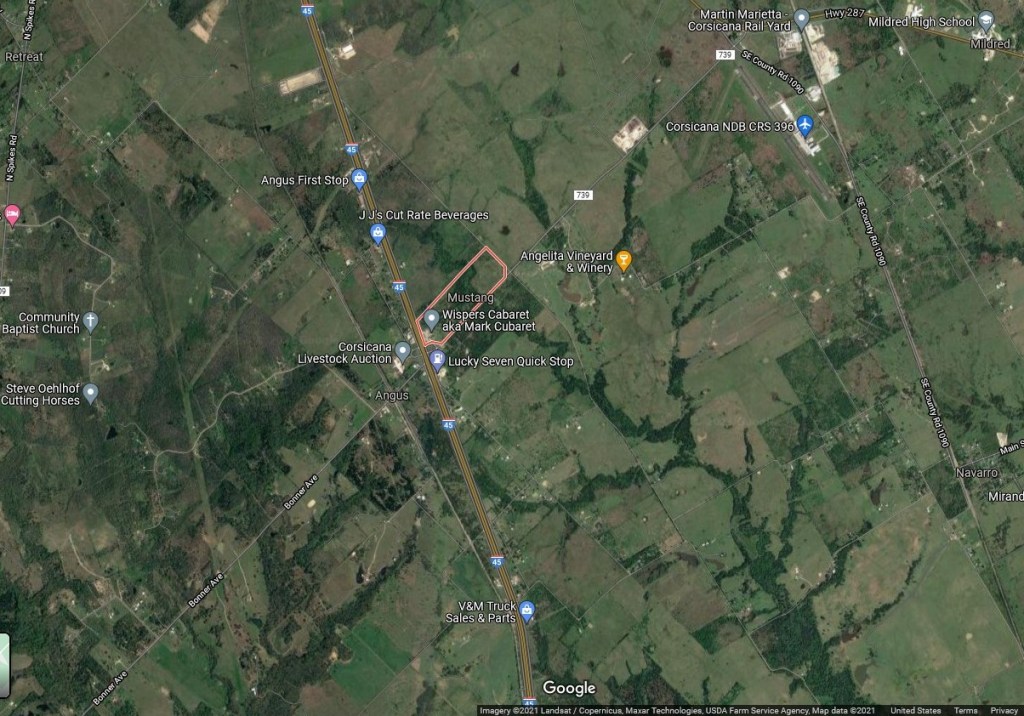
Google Maps, Mustang, TX, on December 3, 2021

The billionaire just bought the entire town of Mustang, Texas — a blip on the map off I-45, with a population of 21 people, according to the latest census data.

The reason, Cuban told the Dallas Morning News: A buddy needed to sell it…

The town was founded in the early 1970s, when it was known mostly as a local watering hole in an otherwise dry Navarro County, according to the paper. These days, there’s little more than a trailer park and a strip club, Wispers Cabaret, which is reportedly in disrepair. On Friday, Google Maps showed the name of the club had been edited to “Mark Cubaret.”…

It’s not clear what Cuban paid for the town, but for someone with a net worth of nearly $6 billion, it was almost certainly a steal. The town was reportedly put up for sale in 2017 for $4 million, but Turner said it was overpriced, even when they slashed the listing price in half.

The angle taken in this reporting is whimsical: a billionaire purchases a town with few plans except to help a friend. The point is made clearly by the opening comparison of Cuban to Johnny Rose, the father in the comedy series Schitt’s Creek.

There are other ways to approach such a story:

  1. How often do wealthy people make such purchases?
  2. When you buy a town, what happens to the people who live there? Is this like buying homes or apartments or is there something different involved when purchasing a community?
  3. What could these 77 acres become given the existing land use and location?

The buying and developing of large land parcels is big business and has consequences for many people. Where does the story go from here?

(This is not the first time I have written about the selling or buying of towns in the United States. See here.)

Brick and mortar success in selling chickens and other farming supplies to new “ruralpolitans”

The shift of Americans from cities to suburbs and rural areas helped boost the fortunes of retailer Tractor Supply:

Photo by Brett Jordan on Pexels.com

Such gangbusters growth is unlikely to continue, with the pandemic easing. But the rush to the country that underpins it is less an anomaly than a speeding up of a long-tern trend, as more people – notably millennials yearning to become homeowners – look to adopt quasi-rural lifestyles. Being priced out of urban living is one driving factor; interest in healthier and more sustainable diets, including homegrown vegetables and home-harvested eggs, is another. Whatever is motivating them, Tractor Supply sees an opportunity in these “ruralpolitans” – and the COVID-driven shift toward remote work will help sustain their numbers.

Lawton, who became CEO in early 2020 after two years as the No. 2 at Macy’s, says millennials’ willingness to move farther from city centers is a “game changer”: “We seeing a new kind of shopper in our stores,” he tells Fortune. Now Tractor Supply is adapting to cater to both its established customer base and these younger space-seekers, following a strategic road map with the folksy title “Life Out Here.”…

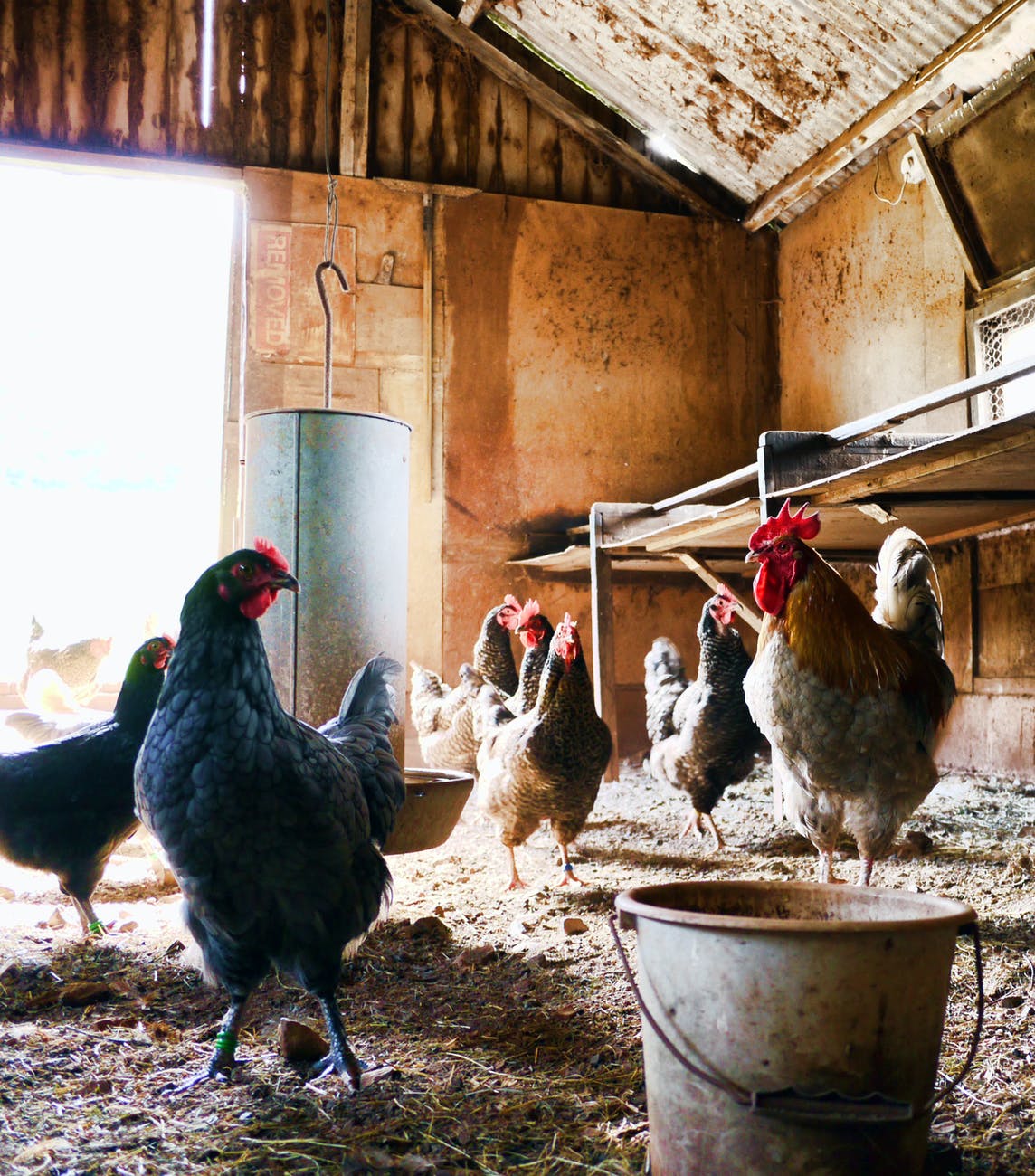
The fast-growing cohort that Tractor Supply is cultivating, she says, are “beginning to learn how to garden. They have this passion for poultry.” Call them the “country suburban” customers.

The company is strategic about where it meets these customers. Its stores are almost all located in mid-size or small towns – communities that are often too small to support a Home Depot, Petco, or Walmart.

The economic impact of COVID-19 has hit some businesses very hard while others, like Tractor Supply, have found opportunities. From the sound of this article, they had locations in numerous places that received new residents during COVID-19 and had the right mix of products and service that appealed to them.

I wonder about the class dynamics of all of this. How do the new “ruralpolitans” who want to raise chickens or have a small farm and have moved from the city compare to the other shoppers at Tractor Supply or to long-term residents in the community?

Another question to ask is whether these newer residents with these interests in food and farming are in it for the long haul or not. On one hand, if remote work is more viable than ever, perhaps people will stay in smaller communities outside cities and pursue this. On the other hand, if companies ask more workers to return or if small-scale agriculture and animal husbandry is not appealing in the long run, this may be more of a flash in the pan. Industry-wide shifts in agriculture could have an impact as well.

Finally, the move to a more rural life has implications for private lives and community life. Many Americans say they like the idea of living in a small town but this is different than actually living in one. What is the tipping point where an influx of new residents changes the character of the community (or is change somewhat inevitable)? How involved will these new residents be in local organizations, religious congregations, local government, and in local social affairs?

Misplaced nostalgia in Cars for the pre-Interstate days

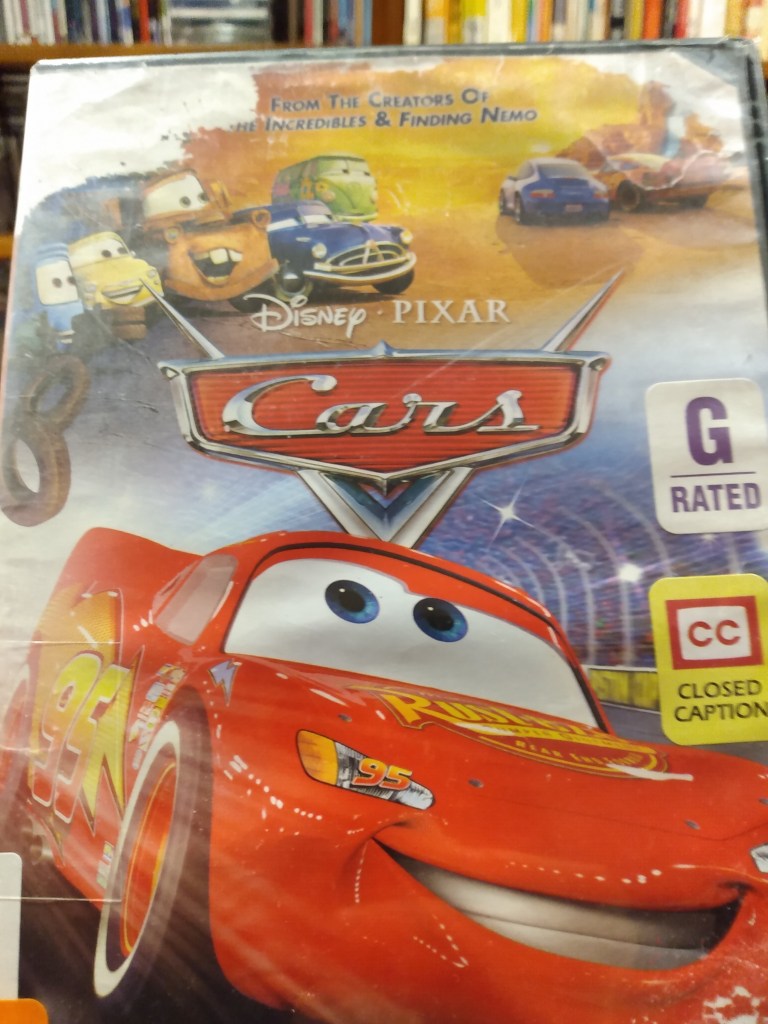
On a recent rewatching of the Pixar film Cars, I was reminded of something that bothered me at my first viewing soon after the movie came out in theaters. Here is the issue: one of the key points of the plot is that the small town of Radiator Springs suffered when Interstate 40 opened nearby. But, the film makes clear that the issue is the interstate, not driving in general.

This movie celebrates driving. The main character, Lighting McQueen, is an ascendent race car and he needs to rediscover his love of the road. He does this after getting stuck in Radiator Springs. The combination of relationships, the lanscape, and a reorganizing of priorities helps him see that driving should be fun and relaxed, not just about winning and being brash.

The Interstate represents all that is bad. McQueen gets into trouble when he is accidentally dumped off on the side of the Interstate and gets lost. Radiator Springs is just a shell of itself because all the traffic that used to come through town now just whizzes by on the Interstate. Route 66, the road of quirky local establishments, small towns, and vistas, gives way to the straight and multi-lane highway where people just want to go as fast as they can to get to the real destinations.

The movie says everything went wrong with the Interstate. Its emphasis on efficiency came at the cost of communities. It left places behind; not just urban neighborhoods where new highways bulldozed homes and establishments but also small towns in the middle of the desert. McQueen would have left it behind too if he wasn’t forced to stay.

Is the real problem the Interstate or an American way of life built around driving? Sure, the Interstate promotes faster driving but cars themselves promote a different kind of life, one lived at faster speeds. Small towns can force people to look a little more closely with reduced speed limits and speed traps. But, they cannot force them to stop or to care or not just stop at a fast food joint and filling station and get back to the road quickly.

Once Americans had cars in large numbers, they wanted to go places. The open road offered opportunities. Some will want to drive and take their time. Some will want to get places as quickly as possible. Others just need to get from Point A and Point B to do what they need to do on a daily basis. Some of the car commercials I see today make me laugh as they try to say that a sportier exterior or 50 more horsepower transform the daily commute; how many people today really love driving?

Or, how many Americans really like small towns? They may hold it out as an ideal but the population shifts in the last century – both shaped and echoed by the Interstates – have been to metropolitan areas, particularly suburbs. Radiator Springs might be nostalgic and an interesting place to visit. But, it is not the place many would choose as they prefer other amenities including the jobs present across metropolitan regions.

All together, Radiator Springs and its ilk would not likely spring back to life just because the Interstate disappears. Indeed, it is revived in part by the end of the movie because people can get to it via the Interstate and they are drawn initially by the celebrity of Lightning McQueen. Now, Radiator Springs can be a tourist destination and some residents may even rue the day when new residents want to move in and new development threatens what the community once was. Here, cars are both the problem and the answer and without a broader discussion about cars and driving, Americans may just be stuck between wanting places like Radiator Springs to survive and the need to drive quickly to the next opportunity in life.

Americans celebrate moving away from their small home town

An excerpt from a new book presents an American conundrum: many Americans like the idea of small towns yet celebrate moving away from them.

Photo by Syed Andrabi on Pexels.com

I was humiliated, not just because I’d left school, but because I’d glaringly stumbled off the traditional path everyone I knew had taken: If you move away from home, you don’t move back. That’s not how young adults do it. We leave. We find our way.…

So there’s this push and pull, where fulfilling this Americanized ideal of being out on one’s own and forging one’s own life comes at the real cost of contributing to families and communities in tangible ways, Katsiaficas explained. “For so many young people that I’ve talked to, they’ve narrated that hyperindividualism as a real sense of loss,” she said. Rarely, if ever, had I heard that sense of loss, or even homesickness, described as anything other than something we’re supposed to grow out of…

Because moving is so ingrained in how we think about this time of life, even though not everyone can “achieve” that milestone, staying seems like it is rarely celebrated. With going-away parties to celebrate new adventures and graduation parties to mark the close of one chapter and the beginning of another, staying in one place can feel boring…

In our conversation, Warnick pointed out that there is a stigma in America against not only small towns, but staying in the same place at all. We tend to think of it as representing “the abandonment of our big dreams,” Warnick said, a feeling of escape that some young people feel acutely. I felt called out, and with good reason: I’d clung to the belief that life would really begin once I left wherever I was. It kept dreams I was too scared to say aloud at arm’s length; it allowed me to imagine, and reimagine, the “best life” I’d finally find with a new zip code, conveniently forgetting that my real life was happening wherever I happened to be. I could participate, or I could wait. And for years, I waited.

There is a lot to consider here: the particular stage of life in the discussion here (from roughly college to settling down as an adult), mobility, frontiers, cities versus other settings, and larger American narratives about success. A few quick thoughts in response:

  1. I wonder how much these narratives differ across places. Is this more prevalent in rural areas where the allure of trying the big city is strong or is it also present in big cities where young people want to experience other places, including other appealing big cities? This could help untangle whether this is more about small towns or a general theme that emerging adults need to strike out on their own somewhere else.
  2. This reminds of some marriage advice I once read that suggested newlyweds should move hundreds of miles away from both families to establish themselves as a couple before moving back near family. Does such a narrative go against most of human history?
  3. Could all of this help explain the enduring appeal of the suburbs? They are not quite small towns but they are not cities. Americans can feel better about returning to suburban municipalities and making a home there because it feels in between.
  4. This all seems to beg for a more robust theology of place in the United States.
  5. It would be interesting to know how social media and the Internet either help connect people to home towns from afar or present just a poor and ultimately unsatisfactory substitute.
  6. Plenty of Americans do stay in the community in which they grew up or stay nearby. What is different about their stories? What are the factors that help explain why some commit to staying and others leave?
  7. How do Americans process their experiences with and understandings of place? If the emphasis is largely on mobility or making do where you are, this might discourage positive memories or investing too much in a particular place.

Slight uptick as nearly half of Americans say they would prefer to live in a small town or a rural area

New data from Gallup suggests a slight shift among Americans toward a preference for moving away from suburbs and cities:

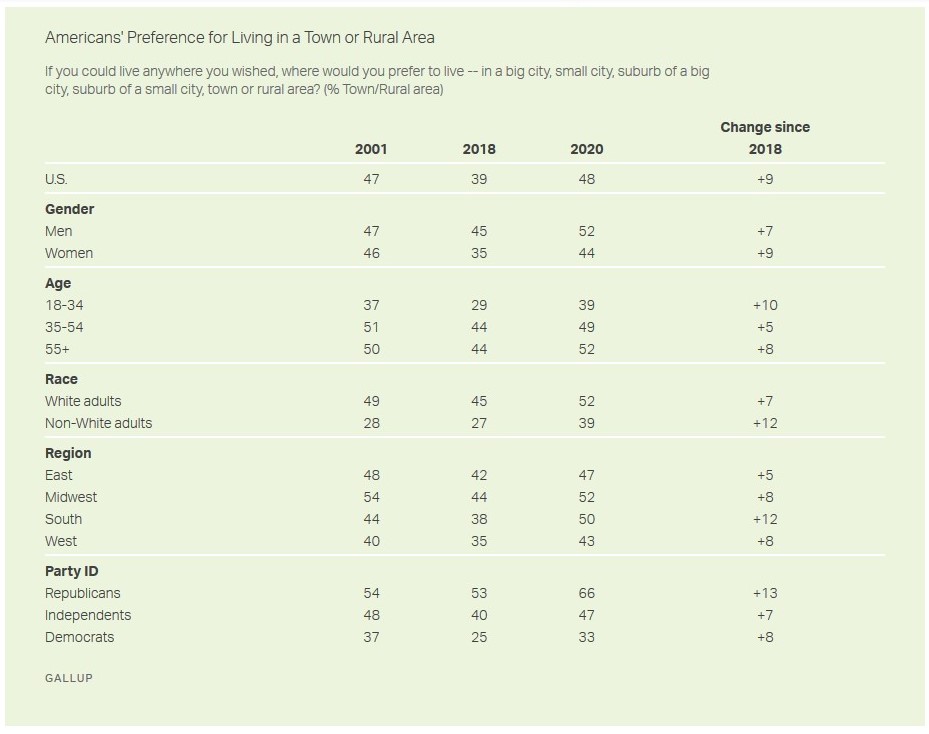
About half of Americans (48%) at the end of 2020 said that, if able to live anywhere they wished, they would choose a town (17%) or rural area (31%) rather than a city or suburb. This is a shift from 2018, when 39% thought a town or rural area would be ideal.

The recent increase in Americans’ penchant for country living — those choosing a town or rural area — has been accompanied by a decline in those preferring to live in a suburb, down six percentage points to 25%. The percentage favoring cities has been steadier, with 27% today — close to the 29% in 2018 — saying they would prefer living in a big (11%) or small (16%) city.

Current attitudes are similar to those recorded in October 2001, the only other time Gallup has asked Americans this question. That reading, like today’s but unlike the 2018 one, was taken during a time of great national upheaval — shortly after the 9/11 terrorist attacks, when the public was still on edge about the potential for more terrorism occurring in densely populated areas…

The preference for cities is greatest among non-White Americans (34%), adults 18 to 34 (33%), residents of the West (32%) and Democrats (36%).

There is a lot to consider here and it is too bad Gallup has only asked this three times. Here are some thoughts as someone who studies suburbs, cities, and places:

  1. The shift from 2018 to 2020 is very interesting to consider in light of the shift in preferences away from small towns and rural locations between 2001 and 2018. What happened between 2018 and 2020? The analysis concludes by citing COVID-19 which likely plays a role. But, there could be other forces at work here including police brutality, protests, and depictions of particular locations or different factors could be at work with different groups who had larger shifts between 2018 and 2020.
  2. One reminder: this is about preferences, not about where people choose to live when they have options.
  3. Related to #2, Americans like the idea of small towns and there is a romantic ideal attached to such places. In contrast, there is a long history of anti-urbanism in the United States. But, people may not necessarily move to smaller communities when they have the opportunity.
  4. The distinction in the categories in the question – big city, small city, suburb of a big city, suburb of a small city, town, or rural area – may not be as clear-cut as implied. From a researcher’s point of view, these are mutually exclusive categories of places. On the ground, some of these might blend together, particularly the distinction between suburbs and small towns. More toward the edge of metropolitan regions, do people think they live in the suburbs or a small town? Or, how many residents and leaders describe their suburb as a small town or as having small town charm (I have heard this in a suburb of over 140,000 people)? Can a small but exclusive suburb with big lots and quiet streets (say less than 5,000 people and median household incomes over $120,000) think of itself as a small town rather than a suburb? I say more about this in a 2016 article looking at how surveys involving religion measure place and a July 2020 post looking at responses when people were asked what kind of community they lived in.

So you want to live in an affordable big city – that is a suburb

Looking to live a big suburb that is affordable? Zillow and Yelp have you covered:

https://www.zillow.com/research/zillow-yelp-suburbs-cities-2020-28058/

Increased opportunities to work remotely are pushing more Americans to rethink how and where they want to live. But even if there’s less of a need to live as close to urban job centers, traditional urban amenities — think restaurants, nightlife, museums and sports venues — remain a big draw and demand for city living remains high. As a result, many buyers may seek places that balance the space and affordability of the suburbs, while still maintaining that big-city feel.

A new “Cityness Index” created by Zillow and Yelp Inc. helps identify the U.S. suburbs that best strike that balance. Key metrics include housing affordability compared to the nearest big cities and to the country at large, housing availability, the mix and diversity of businesses — including restaurants, nightlife and the arts — and consumer reviews and check-ins…

There were four individual Yelp indicators evaluated for each suburb to determine its cityness.

1. A mix of businesses similar to major cities

2. A diversity of restaurant and nightlife businesses

3. A diversity of arts businesses

4. A high level of consumer activity

This is an interesting suburban niche to highlight: communities for those who do not want to live in a big city but want more affordable housing and want to have some urban amenities. Of course, people could find this in less affordable suburbs or suburbs near the big city or other suburbs that have these more urban amenities. Is there something inherently more appealing in being in one of these big suburbs?

The reason I ask is that many Americans equate suburbs with small town life. The appeal of suburbs for Americans involves features often associated with smaller communities including lots of single-family homes (as opposed to denser concentrations of residences) and local control. Big suburbs often have a lot of jobs and can be significant jobs centers within a region. Furthermore, they could offer a mix of more dense housing as well as single-family homes. But, these big suburbs are also close in size to legitimate small big cities including Providence, Rhode Island, Chattanooga, Tennessee, or Akron, Ohio.

Perhaps if you live in a large metropolitan area, it matters less if you live in a particular suburb and more if you live near your work and desirable amenities within a certain budget. If this is the case, perhaps living in a suburb of over 150,000 people does not matter much. It is still more suburban than the big city but you are not at the edges of sprawl and the price is right.