A more diverse suburbia and “liv[ing] together in difference”

This quote from the end of historian Becky Nicolaides’ new book The New Suburbia: How Diversity Remade Suburban Life in Los Angeles after 1945 is worth noting:
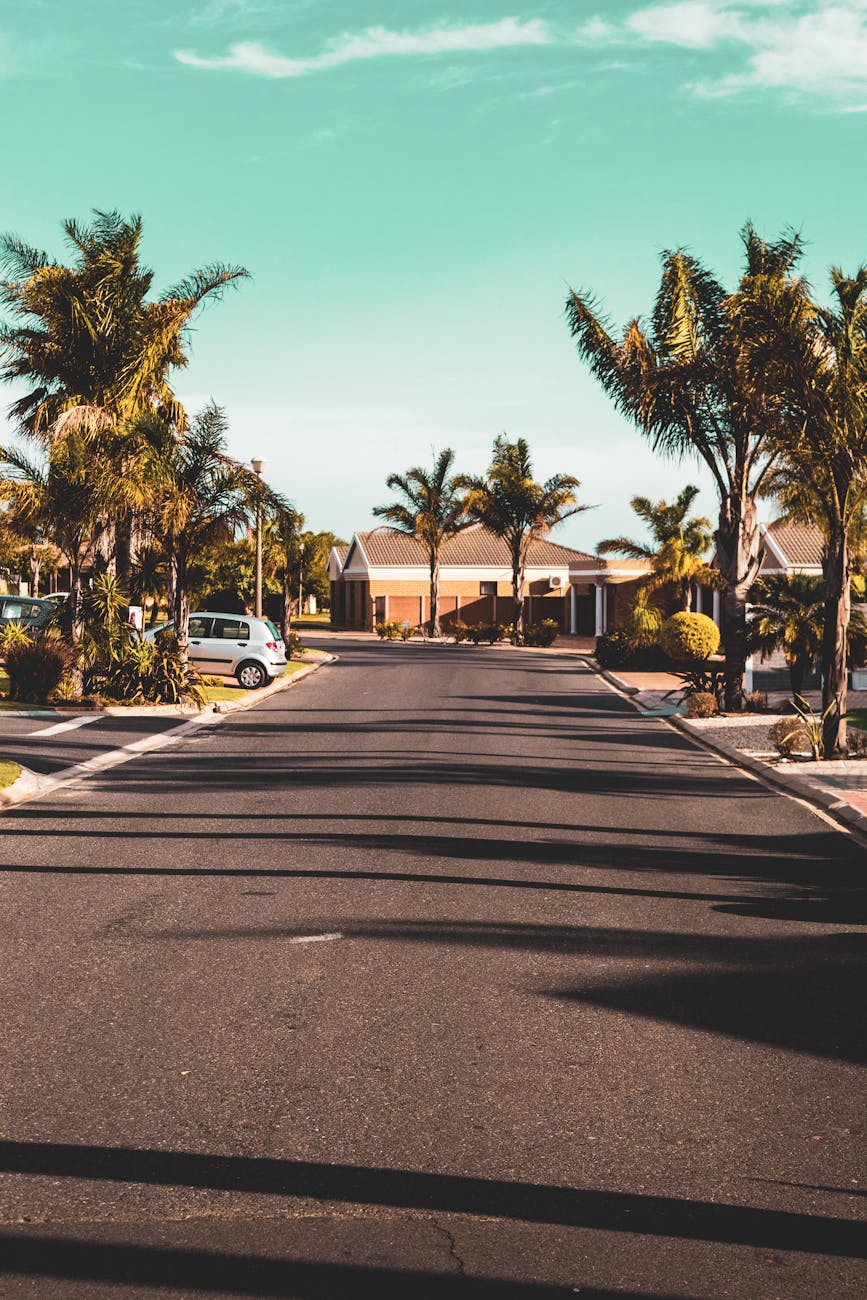
Photo by Myburgh Roux on Pexels.com

The new suburbia emerged as a crucial site where people of different backgrounds, races, classes, and identities coexisted as neighbors, where people were trying to figure out how to live together in difference.

Building on decades of ideology, policy, and patterns in social relations, the American suburbs that grew quickly immediately after World War Two were often single-family home communities with white and middle-class and above residents. But as suburbs changed, particularly in more recent decades, they have become a different landscape. They are more diverse in terms of race and ethnicity and social class. They include numerous immigrants. They can contain different kinds of housing. Suburbanites live in a variety of communities distributed across a metropolitan landscape. Los Angeles is a good place to see these changes in action but this has happened in numerous metropolitan areas across the United States. All of this has led to a more complex suburbia.

Given the quote above, I also wonder if suburbs then can end up being places where Americans do “figure out how to live in difference.” Suburban history is full of examples of exclusion by race and social class. Do suburbanites on a whole today work together to address issues they all care about? Are the suburbs as a whole welcoming places? Can local tensions be resolved effectively? What places and/or groups can help bridge differences in suburbs? Or are suburbs a patchwork of exclusion and different kinds of development that holds together under the place category of suburbs?


Americans on what they think the cutoffs are to be considered “financially comfortable” and “wealthy”

A recent survey asked Americans how much wealth someone would need to fit into different categories. Here are some of the results:

Photo by Pixabay on Pexels.com

Charles Schwab today released additional findings from its 2024 Modern Wealth Survey. Since 2017, Schwab has collected data annually on Americans’ perspectives on saving, spending, investing, and wealth. This year’s study reveals that Americans now think it takes an average of $2.5 million to be considered wealthy – which is up slightly from 2023 and 2022 ($2.2 million).

By generation, Boomers have the highest threshold of what it takes to be considered wealthy, at $2.8 million, while the younger generations, Millennials and Gen Z, have lower thresholds of what is considered wealthy. At the same time, Americans say that the average net worth required to be financially comfortable is $778,000. The average net worth required for financial comfort reached a peak last year at $1 million, but this year, Americans’ estimations are more in line with 2022 ($775,000) and show an upward trend when compared with 2021 ($624,000).

Income is one measure of considering status and social class and wealth – adding up assets and subtracting debts – is another way. It may have benchmark figures like income does; perhaps making six figures is similar to being a millionaire or the median income might be akin to median wealth.

The survey referenced above has less intuitive figures after considering all the responses. To be wealthy, $2.5 million is up from previous years. It is certainly above $1 million and $2 million. It feels oddly specific, as if having $2.3 million would not quite qualify but $2.8 million certainly does (even for Boomers!).

The figure for being financially comfortable is also interesting: $778,000. Less than $1 million, more than $500,000. The figure has gone up and done in recent years. Having less than $778k feels uncomfortable and insufficient?

This would be fascinating to track over time with multiple kinds of data. If asked to add up different costs or expenses people might face, would the responses from the survey be revised upward or downward? Does this depend highly on the respondent’s current income level or cost of living or other traits? How much do broader economic factors affect the responses people give?

The key to the American middle class is feeling middle class

Forget material measures of being middle-class; what if the key is that people in the American middle class feel that they are comfortably middle class?

Photo by Engin Akyurt on Pexels.com

Vincent is among a growing group of middle-class Americans — most recently defined in 2022 by the Pew Research Center as households earning between $48,500 and $145,500 — who don’t feel they can’t afford to live a traditional middle-class life, replete with a home and a comfortable retirement…

Collins suspects that most middle-class Americans feel anxious about their financial situation due to financial shock fatigue — the exhaustion of navigating one big economic shock after another — as well as a lack of financial planning…

Financial anxiety has hit an all-time high, according to a survey from Northwestern Mutual, and a survey from Primerica found that half of middle-class households say their financial situation is “not so good” or outright “poor.”…

Buying a home may be the greatest example of a tenet of middle-class life feeling out of reach for many, and that struggle is very real rather than merely negatively perceived.

The suggestion is that people feel less certain of their social class status because of financial uncertainty at the moment and in recent years. They may have resources, particularly a certain income level, but they do not feel secure.

What might this mean for defining the middle class? Perhaps this should lead to changing what it means. If people do not feel that certain markers provide a middle class status, then change the markers. These variables might need to change as economic conditions change.

It would also be interesting to see what social class those feeling financial anxiety say they are in. Traditionally, being in the middle class was a sign of making it and being successful. Would someone who might be classified as middle class by income and other markers say they are working class? Is there a big shift away from identifying as middle class?

    The American middle class and a high salary to “live comfortably” in a city with a 50/30/20 budget

    SmartAsset recently looked at the salary needed to “live comfortably” in American metro areas. The numbers are pretty high:

    Photo by Vecislavas Popa on Pexels.com

    Key Findings

    • On average, an individual needs $96,500 for sustainable comfort in a major U.S. city. This includes being able to pay off debt and invest for the future. It’s even more expensive for families, who need to make an average combined income of about $235,000 to support two adults and two children without the pressure of living paycheck to paycheck.
    • A family must make over $300k to raise two kids comfortably in six cities. Two working adults need to make a particularly high combined income in San Francisco ($339,123); San Jose ($334,547); Boston ($319,738); Arlington, VA ($318,573); New York City ($318,406); and Oakland, CA ($316,243) to raise two children with enough money for needs, wants and savings.
    • It takes the most money to live comfortably as a single person in New York City. This breaks down to $66.62 in hourly wages, or an annual salary of $138,570. To cover necessities as a single person in New York City, you’ll need an estimated $70,000 in wages. 

    Here are the budget calculations:

    SmartAsset used MIT Living Wage Calculator data to gather the basic cost of living for an individual with no children and for two working adults with two children. Data includes cost of necessities including housing, food, transportation and income taxes. It was last updated to reflect the most recent data available on Feb. 14, 2024.

    Applying these costs to the 50/30/20 budget for 99 of the largest U.S. cities, MIT’s living wage is assumed to cover needs (i.e. 50% of one’s budget). From there the total wage was extrapolated for individuals and families to spend 30% of the total on wants and 20% on savings or debt payments.

    I would be interested to see how this compares with how different people or groups over time have defined the American middle class. Is it a particular income band or an ability to have certain kinds of experiences? Do Americans in the middle class interpret their own lives as living comfortable?

    Since most residents in cities do not have the salaries listed above, one conclusion is that many people are not able to live comfortably. Do these numbers mean that people below these salary points are living paycheck to paycheck (or think they are)?

    This could lead to helpful discussions of social class, pay, and conditions in American cities. If Americans should be able to live on a 50/30/20 budget, what could be changed to help people achieve this?

    Religion in the American suburbs: a diverse religious landscape

    In the postwar era, Will Herberg described American religion as primarily involving Protestants, Catholics, and Jews. The same was assumed to be true in the suburbs. With suburban populations growing, Protestants, Catholics, and Jews moved in and added to existing congregations and founded many new ones.

    Photo by Zac Frith on Pexels.com

    These groups also had to adjust to suburban life. Practicing faith in the suburban context looked different than in urban neighborhoods or rural areas. Critics within these traditions suggested the suburban version of their faith had serious deficiencies. Supporters of the suburban faith highlighted new possibilities and energy.

    With changes to the population in the United States, including changes prompted by the Immigration and Nationality Act of 1965, the suburban religious landscape changed. Today, there are still plenty of Protestant, Catholic, and Jewish congregations in the suburbs but they are located near the congregations of Muslim, Buddhist, Hindu, Orthodox, Sikh, and other religious traditions. Increasing racial, ethnic, and class diversity in the suburbs goes alongside religious change. The complex suburbia of today includes a complex religious landscape.

    Add to that the growing number of residents of the United States who do not identify with a religious tradition or faith. The suburban landscape may include religious activity throughout the week but it also is full of residents with no religious affiliation or other understandings of religion and spirituality.

    This is easy to see in many suburban areas. Pick a populous county outside a major city – whether Washington, D.C. or New York City or Chicago or Los Angeles – and you can find religious and non-religious activity all over the place. The suburban landscape may be dominated by single-family homes and roads but there are plenty of congregations in a variety of traditions. It is visible when driving down major roads. You can see it in county-level counts of religious congregations.

    This means any quick description of suburban religion is hard to do given the number of practices, beliefs, and belonging present in American communities. One way to see this diverse religious landscape is in the religious buildings of the suburbs – this is the subject of the next post.

    Who suburban leaders say affordable housing is for – another example

    Federal money will help in constructing a new affordable housing apartment building in suburban Glen Ellyn. Who might live there?

    Photo by Bidvine on Pexels.com

    Chicago-based nonprofit Full Circle Communities is seeking to build an apartment complex with up to 42 units. The developer would set aside no less than 30% of the units as permanent supportive housing for people with disabilities under the terms of an agreement to purchase a portion of the village-owned property.

    U.S. Rep. Delia Ramirez requested federal dollars for demolition and site remediation work to make room for the proposed affordable housing project. Ramirez, whose 3rd Congressional District runs from Chicago’s Northwest Side into DuPage County, announced the funding at a news conference with Glen Ellyn Village President Mark Senak and other elected officials last week.

    Affordable housing allows “senior members of our communities to stay close to their families so that grandparents can see their grandchildren,” Senak said, echoing remarks he made at a village board meeting last month.

    “It gives adults with developmental disabilities the opportunity to remain in the community where they went to school, where they grew up, where their families live, where their friends live, and where many of them work,” Senak said.

    This follows a common pattern among west suburban leaders in recent years. Affordable housing is for (1) seniors who want to stay in their community and (2) adults with developmental disabilities who want to stay in their community. These are indeed groups with housing needs.

    Would more communities be open to affordable housing for people who do not have much money? The two examples above suggest affordable housing is for people already in the community who want to stay. Is there interest in housing for workers with lower wages?

    My study of suburbs suggests that in wealthier suburban areas there is less interest in affordable housing that is open to any residents who might qualify. Americans generally do not like the idea of government money for public housing, with some exceptions. This is probably even more true in suburbs where a primary focus is on single-family housing.

    Workers cottages and a growing suburban dream in the Chicago region

    What kinds of homes did early suburbanites in the Chicago area live in? Some lived in workers cottages:

    Photo by Steve Johnson on Pexels.com

    Thanks to a plentiful supply of lumber from old growth pine forests in Wisconsin and Michigan, as well as new milling processes such as kiln drying that gave precut wood precise standardized measurements, a new form of structure started appearing. Workers cottages were more affordable than elaborate, but they came with the promise of a better standard of living for working class families.

    A century and a half after they started being built in earnest, an effort is afoot to celebrate and preserve the cottages, houses that have continued to offer utility and accessibility for generations…

    The lecture was arranged by the nonprofit Chicago Workers Cottage Initiative, a group organized to celebrate and promote the houses, built mostly from the 1880s to the 1910s, that they say “represent the origins of the ‘American Dream’ of homeownership and the investment and pride of Chicago’s new immigrants.”…

    “Some of these cottages were really spartan four-room houses,” Bigott said. “They cost like $600 on a $200 lot. It was a simple frame building, with two bedrooms, a living room, a kitchen.”…

    It was a model that worked, and its backbone was the workers cottage. Elaine Lewinnek, a professor of American Studies at California State University, Fullerton, argues in her 2014 book “The Working Man’s Reward: Chicago’s Early Suburbs and the Roots of American Sprawl” that the idea of house ownership as “the working man’s reward” was one of Chicago’s most impactful exports, setting the scene for suburbs everywhere.

    The suburbs have a longstanding reputation that they are full of people of wealth who are able to purchase a home and afford a suburban lifestyle. Imagine neighborhoods of McMansions, rampant consumerism, and newer vehicles.

    This may be largely true and yet it is not entirely true. The homes described above could house the working class in suburban settings. This is not the only area where this occurred; historian Becky Nicolaides described working class houses in the Los Angeles suburbs.

    And the housing today in the suburbs can also be varied. Postwar housing also had some variety from larger homes to smaller ranches. Wealthy suburban communities in the Chicago region today sit not far from neighborhoods with more modest housing.

    If this article looks back at what was over 100+ years ago, what housing today will be viewed as housing for the working person in the suburbs in 2100?

    Buses, migrants, and race and social class in the United States

    How are buses viewed in the United States? Two recent stories offer hints. First, communities in the Chicago area are restricting buses from dropping off migrants.

    Photo by Ricky Esquivel on Pexels.com

    Second, inter-city bus travel will be more limited as stations are bought and the land redeveloped:

    An investment firm know for buying up newspaper publishers then gutting them is behind the recent shuttering of dozens of Greyhound bus stations across the country, a new report has revealed.

    Twenty Lake Holdings LLC, a subsidiary of Alden Global Capital, purchased 33 Greyhound stations across the U.S. from transport company FirstGroup in 2021, reported Axios

    Since the change of ownership two years ago, Greyhound has closed scores of its central bus stations around the country, either by cutting services completely, or moving to far out sites as a cost-saving measure to sell off the depots to real estate developers…

    But as demand fell – with passengers numbers dropping by a third from 1960 to 1990 and then halving again between 1980 and 2006 – and running costs increased, they became less economically viable to run.  

    Given the American emphasis on driving, buses offer opportunities to move a lot of people along existing road networks. This limits the needs for fixed railroad tracks and buses can make more stops.

    Yet, I have discussed before who is willing to ride buses and who avoids them if they have the resources to drive. A story from several years ago highlights these persistent patterns:

    Like most transit hubs, buses and bus stations are shared spaces where members of different neighborhoods or social classes mix—which has made them important symbolic battlegrounds in civil rights history.

    Black Americans, escaping the Jim Crow South for better opportunities in the north and west, used Greyhound buses during the Great Migration. The Freedom Riders used Greyhound buses to protest segregation and to test new protections on interstate passenger travel. In 1961, a mob beat and firebombed the Riders’ bus in Anniston, Alabama, attempting to trap the passengers, who escaped through the windows and door; the Riders had to be evacuated from Anniston through a convoy…

    The accessibility of bus services and the mutability of their routes have historically made it an effective method for cities to move systemic problems elsewhere. Prior to the 1996 Olympics, for example, Atlanta leaders aimed to make the city more hospitable to the world by reducing its hospitality to people experiencing homelessness. The city bought thousands of one-way bus tickets to other locales to remove homeless populations from sight.

    With more emphasis in the United States on driving individual vehicles – and this is a marker of self-sufficiency and freedom – buses can get short shrift. For those who cannot afford cars and other travel options, buses can offer opportunities – if they are available.

    Americans need a lot of money to achieve the American Dream

    Two estimates of how much money it takes to live out the American Dream suggest that many Americans will struggle to do so:

    Photo by Nadi Lindsay on Pexels.com

    The “American Dream” costs about $3.4 million to achieve over the course of a lifetime, from getting married to saving for retirement, according to a recent analysis from financial site Investopedia. 

    Meanwhile, median lifetime earnings for the typical U.S. worker stand at $1.7 million, earlier research from the Georgetown University has found. 

    Such figures underline the financial pressures that many families face trying to afford a middle-class life as expenses like child care, college tuition and buying a home continue to climb. The Investopedia analysis tallies the average cost of achieving other aspects traditionally associated with the American Dream, such as owning a house and raising two children to age 18. 

    Another analysis, from USA Today, found that funding the American Dream costs about $130,000 a year for a family of four. Median household income stands at about $74,450, according to the Census Bureau.

    One key facet of the American Dream is that it is supposed to be available to all. That never meant everyone would achieve it, particularly as Americans often emphasize individual hard work and taking advantage of opportunities. But, it should be reachable in a society where many Americans value and see themselves as middle-class.

    Perhaps this is why there is a market or demand for particular experiences that provide part of the American Dream or a taste of it. One traditional marker of the American Dream in the United States is owning a home. This is displayed on TV, illustrated in toys, and promoted by presidents. If people can just own a home, they have a strong case to make for attaining the American Dream. Or, consider the freedom of driving down the road in your vehicle to wherever you want. This experience offers a taste of the larger American Dream.

    If large numbers of Americans cannot obtain the American Dream now and in the coming years, this could mean the Dream becomes redefined. Maybe it will have different elements. Or, perhaps it will be more commonly viewed as attainable only by some. It could be a status symbol of the elite. Or, new policies and conditions could renew aid and efforts toward achieving the American Dream. Politicians could run on this idea while grassroots movements could promote it.

    Those with the right jobs and resources can move where they want in the United States

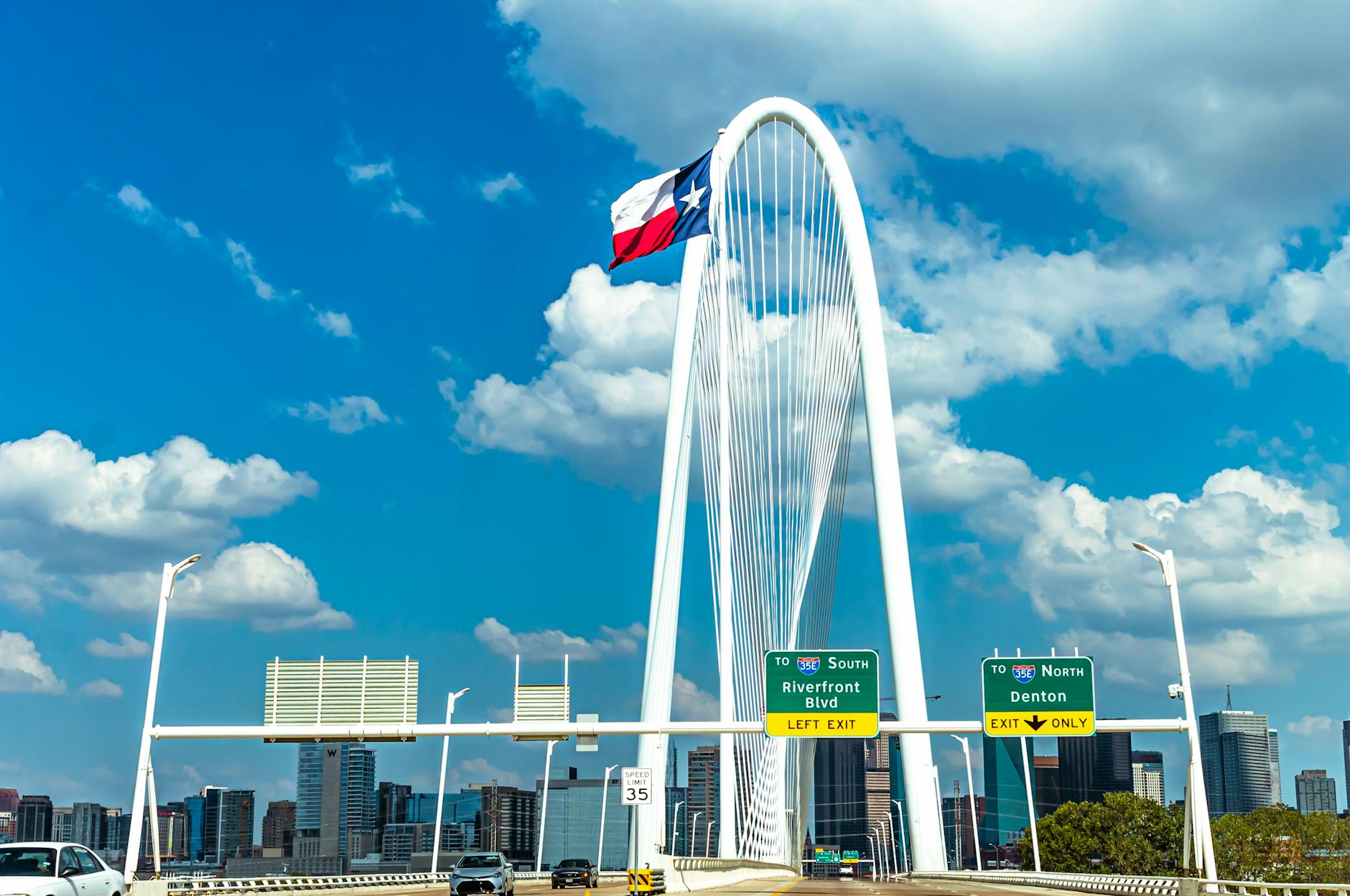
    In a story about people leaving Texas (even as the state gained population last year), I was struck by the patterns in the stories of people moving out the state: they could do so. Here is what I mean:

    Photo by Terrance Barksdale on Pexels.com

    While people have been moving into the Lone Star state to take advantage of its relatively affordable real-estate market, political atmosphere, and work opportunities, some of those same qualities are driving others out. Over 494,000 people left Texas between 2021 and 2022 (though the state gained a net population of 174,261.) It’s a trend that could intensify as housing costs surge and the state’s political landscape becomes more polarized

    For Texans, “the Midwest has emerged as popular recently because it is just by and large the most affordable region,” Hannah Jones, Realtor.com’s economic research analyst, told Business Insider in October. “We’re seeing this trend of buyers looking for affordability really explode.”…

    In Austin, some tech workers who flocked to the city during the pandemic just can’t seem to get out fast enough

    Jules Rogers, a reporter who relocated from Portland, Oregon, to Houston in 2018 for a position at a local newspaper, left Texas less than two years after moving to the city…

    Theoretically, Americans can move wherever they like. In reality, the ability to move is constrained by a variety of factors, including financial resources and jobs.

    In this story, people can move in and out of Texas relatively easily. Some came in recent years and want to move back out. Others are leaving Texas for cheaper housing elsewhere.

    This may be possible for some. But, it is not easy for everyone to do this. Americans do not just move to places where housing is cheaper. People have numerous reasons for locating in certain places and not others. Those with resources and particular jobs that are in demand or available in many places have some flexibility that others may not have. White-collar workers, in particular, may be able to more easily move from big metro region to big metro region (or even out of these regions as some did during COVID-19).

    This would be hard data to collect but it would be interesting to compare people moving for different reasons and how long they stay. Do retirees who move to certain places stay longer than those who move for jobs or cheaper housing?