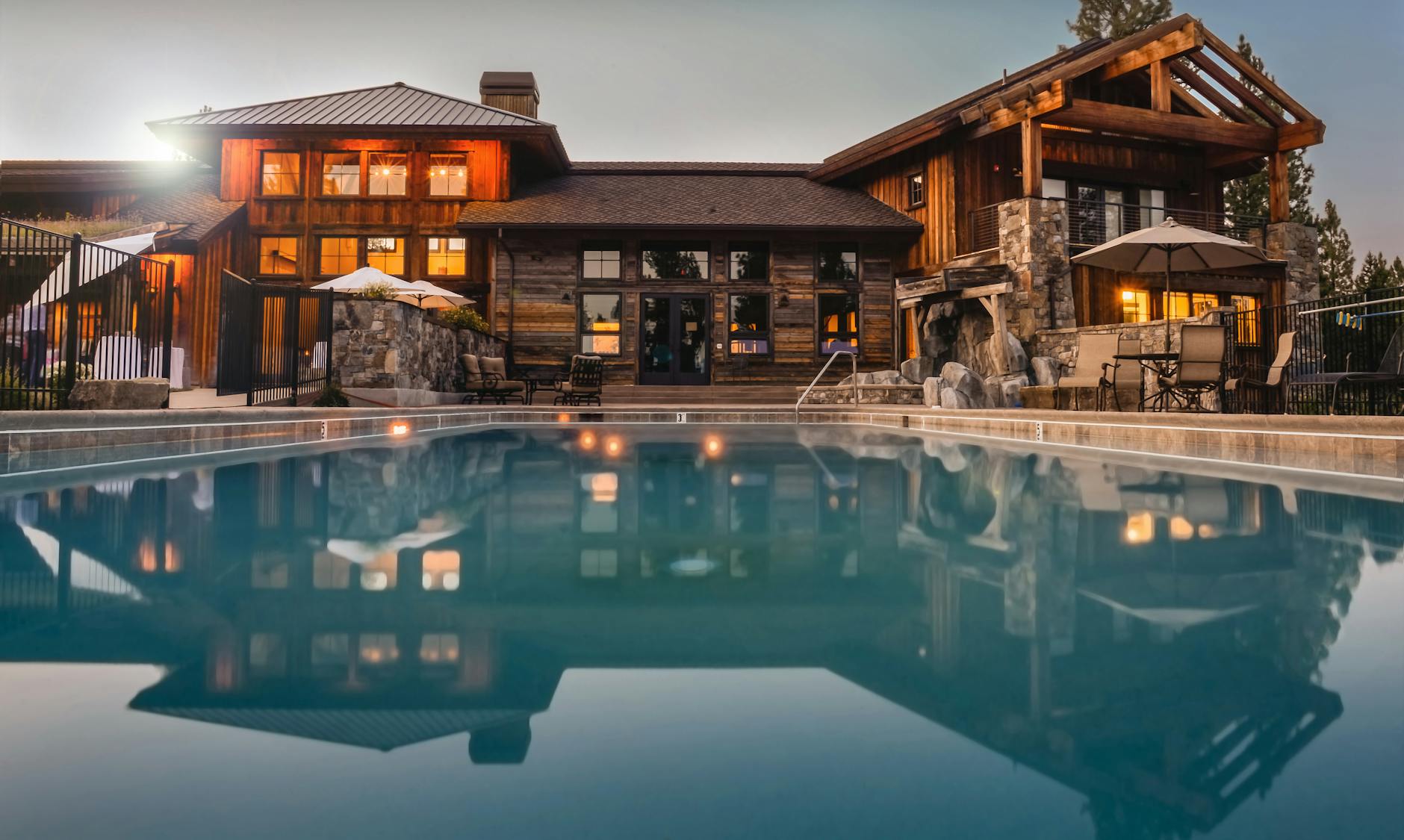
How do you describe one of the biggest houses in the United States in two paragraphs?

The home of Tony and Jeanne Pritzker in Los Angeles is big and part of a still-under-negotiation divorce. Here is how one article describes the unique and large home:

Photo by Talha Riaz on Pexels.com

Completed in 2011, the Angelo Drive estate is accessed by a long, steep driveway flanked by landscaped hedges, according to documents filed with the city. Surrounding a central courtyard, the main house has a large, high-ceilinged atrium lighted by a skylight. Fronted by a fence up to 8 feet high in places, the estate also has a tennis court, guesthouse, staff quarters and a detached recreation room and home theater. 

The property has at least 12 to 15 bedrooms, said local real-estate agent Rayni Williams, who has attended events at the Pritzker estate. Its view is one of the best in Los Angeles. “You feel like you’re floating in the view,” she said. The vista is especially remarkable given the home’s massive size, she said. Most houses of comparable square footage are located in flatter areas rather than in the hills.

From this description, several traits of the home stand out:

  1. It has particular features, including a large atrium, additional buildings, and lots of bedrooms.
  2. It is large. It has at least 12 bedrooms and it is “massive.”
  3. It has a special setting, particularly compared to other big houses, with a long driveway and an impressive view.

These strike me as pretty standard descriptors of homes. What features does it have? How big is it (measured by some standard traits like square footage and number of bedrooms and bathrooms)? What is its location (because it is all about location, location, location)? Real estate listings tend to have a particular format and this description fits with those.

This description does give me some sense of what the home is like. But I wonder if a different approach is needed for such a uniquely large home. A few other possible options:

  1. What is it like to walk through a home and property this big? It has at least 12 bedrooms; what is it like to visit them all? What does it feel like to walk up to a house this size and walk around it? This helps fill out the experience of a home this size beyond certain measurements.
  2. What is the view comparable to? What can I see from the house that I cannot see elsewhere? Roughly how many other homes have a similar view? This helps describe the location of the home.
  3. Are these features found in other places or is this a unique combination or is there a particular sense of style with all of these features? What makes these features stand out from other large homes? This helps get at what helps the house stand apart from others.

All of these involve an experience of the home that goes beyond what can be ascertained by plans and pictures. Without this experiential information, it is just a big house and hard to imagine.
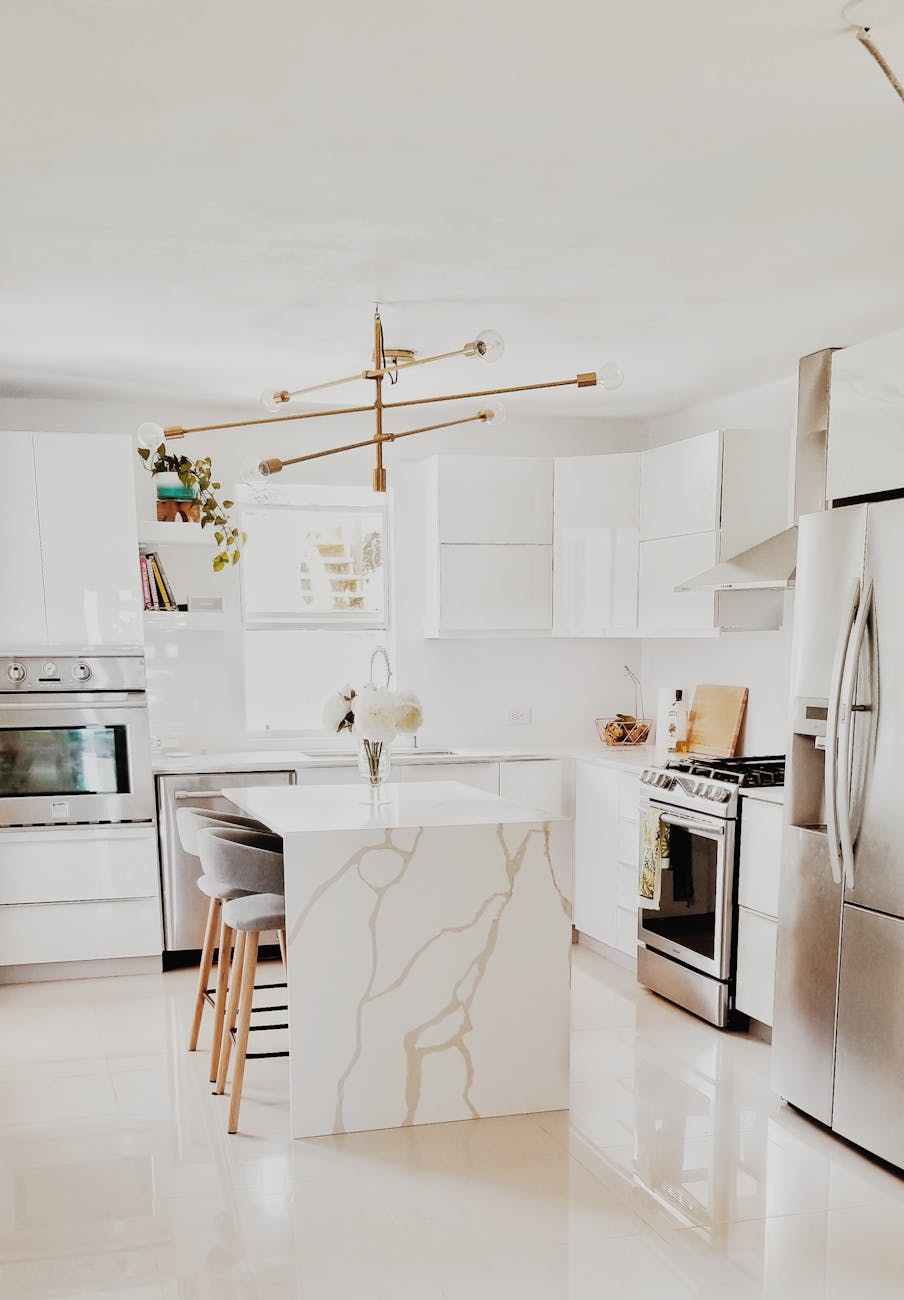
New American homes down in square footage in 2023

Census Bureau data for 2023 shows new American homes are a little smaller:

Photo by Rosana Solis on Pexels.com

But as the cost of buying a home has exploded and McMansions have fallen out of favor, homebuilders have reversed course, building smaller homes with an eye to first-time buyers. In 2023, the median single-family home built was 2,233 square feet, down 9% from the 2015 peak, with many formal dining rooms and “bonus” rooms disappearing…

Homebuyers are warming up to the idea of smaller dwellings: According to an April study from the National Association of Homebuilders, the typical buyer wants a home that is 2,067 square feet — still smaller than the typical new home size last year…

There are signs those efforts might be helping buyers get in the door: The median sales price of existing homes jumped to $426,900 in June, according to the National Association of Realtors, while the median price of new homes in June was $417,300, according to the US Census Bureau.

Three thoughts in response:

  1. It will be interesting to watch the long-term trends. The article marks 2015 as a peak. Does this mean homes will continue to get smaller in the coming years?
  2. Connected to #1, how much do Americans want smaller homes or how much do housing prices constrain what Americans expect and want? The first option could be connected to Americans having less stuff. If you buy more consumer goods, you need somewhere put them. But if you stream everything and prioritize experiences, perhaps a house is not needed as much for storage. Or if household sizes are decreasing, smaller homes could be fine. In contrast, if mortgage rates went down or housing prices became more attainable for people, would they once again want bigger houses?
  3. The figures above suggest the new homes are slightly lower in price than existing homes. But the newer smaller homes are still pretty expensive. At what price point and square footage would a bunch of potential homebuyers be able to jump into the market? Where do these lines cross on a graph? A median of 1,800 square feet at $340,000 (very hypothetical)?
  4. From the Census data, it may be worth noting that since 1999 the percent of new homes completed at 3,000 square feet or higher has always been a minority of the market (at 31% in 2015). Now this size is a smaller segment of the market as the mid-size new homes percentages are up (1,400 to 2,399 square feet).

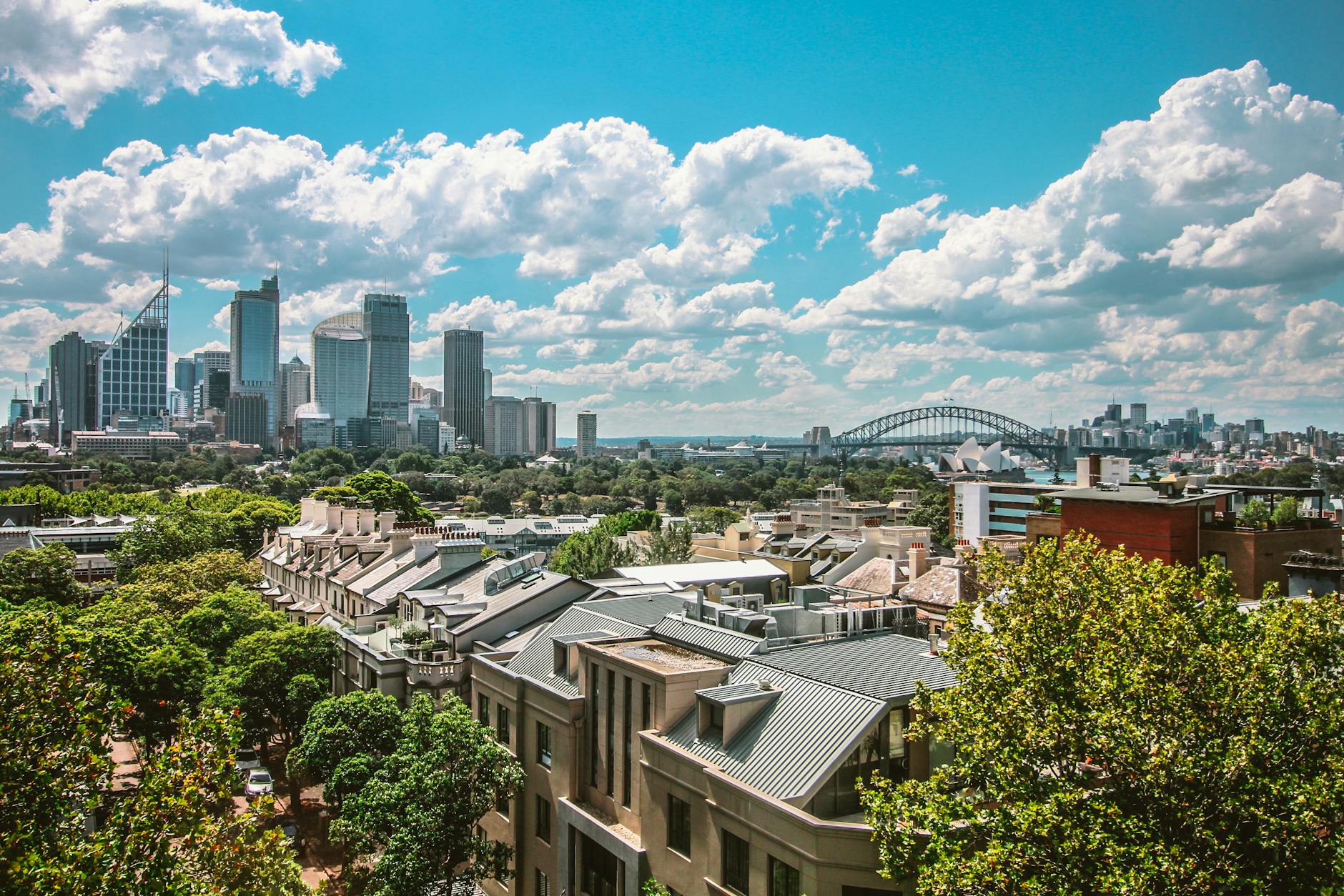
Where the houses are large and household size is declining, Australia edition

A recent report suggests Australia has the biggest houses in the world even though the number of people living in their homes is declining:

Photo by Belle Co on Pexels.com

The research found two thirds of homeowners across the nation live in a house with an average size of 214 sqm, followed by New Zealand and the United States with a typical home 200 sqm in size…

Australia has an average household size of just 2.5 people, with nearly half of the population living in 2-3 person households, the figures found…

Nearly a quarter of Australian households consist of only one person, although that’s not as bad as Denmark, where almost 40 per cent of citizens live by themselves…

The data was collected from reports provided by World Population Review, Statista, Eurostat and official census data.

This has some parallels to the United States where more people are living alone and houses are large.

Are there causal effects between these two statistics? Do people today generally want more individual living space? Does having a larger house lead to having a smaller household? Or are these two social features produced by separate factors?

One other interesting feature of this article: large houses are called McMansions. The opening line of the story:

It’s official: Australia is the king of the McMansion.

I would argue not all large houses are McMansions. For example, a 2,500 square foot home in the United States is likely not a McMansion (though it could be due to its architectural features or it is a tearown next to smaller homes). A 10,000 square foot home is probably too big to be a McMansion. Using McMansion as shorthand for large houses in general obscures the different kinds of big houses and how they interact with neighborhoods and communities.

How many American communities want super big houses?

Americans have large houses. But not every community wants a lot of really big houses:

Photo by Chris Goodwin on Pexels.com

“How big is a house?” mused Jeremy Samuelson, planning director for East Hampton, N.Y., where a working group recently proposed slashing the town’s maximum-allowed house size in half, from 20,000 square feet to 10,000 square feet…

Towns from Aspen to Martha’s Vineyard are in a big-house brouhaha. Critics say mushrooming mansions cramp scenic vistas and local charm, consume excessive energy and inflate prices…

Truro capped new homes at 3,600 square feet in 2017, but then, Shedd says, officials stuck in an amendment allowing bigger builds with special permits. “I’m not saying it was done on the sly,” says Shedd. “Our town meetings drag on. I was probably glazed over.”…

Routt County, Colo.—home to Steamboat Ski Resort—adopted a proposal capping house sizes at 7,500 square feet in June. Debated for months, the hot-button issue packed public meetings…

In Pitkin County—home to Aspen—officials slashed the maximum new home from 15,000 to 9,250 square feet last November, noting that a big house raises “greenhouse gas emissions and increases environmental havoc.”

What strikes me about these discussions is something I first discovered when researching the use of the term McMansion: the size of a big house is relative in terms of size and quantity. In the case of McMansions, a 3,000 square foot new house might be normal in newer neighborhoods but it can be considered a monstrosity next to a 1,100 square foot postwar ranch house. Or is an 8,000 square foot home a McMansion or a mansion? Depends on who is considering the home and where it is located. Or one teardown McMansion might not be a big deal but dozens or hundreds over a decade or two might be considered going too far.

In the cases of these even larger homes, how big is too big or how many is too many? The discussions here do not appear to be taking place within communities where they are contemplating going from no big houses to some. They are considering whether to have no more big houses. Apparently there is some limit to be reached soon or no more might be allowed.

Will such moves push those who desire giant houses to other communities? Will they end up in municipalities just outside these jurisdictions? Are there other communities who would see this as an opportunity rather than a problem?

Seeing a 24/36/56,000 square foot home in DuPage County

I recently viewed from the road possibly the largest house in DuPage County, Illinois. Depending on which real estate site you look at, it is either 24,500 square feet, 36,000 square feet or 56,000 square feet. It took years to build and was up for auction at one point. Here is a 2007 description of the property in Chicago:

Photo by Iva Muu0161kiu0107 on Pexels.com

The biggest of these latter-day Xanadus, a colossal 41,000-square-footer, is about midway through construction in a far less plum location in the southwest suburbs: an out-of-the-way cul-de-sac outside Burr Ridge. Its only neighbor is a modest ranch house; a pizzeria, a gas station, and the entrance ramp to Illinois Highway 83 are just around a bend in the road…

What’s more, that whopper of a house will be home to only three people. Nick Memeti, the 30-year-old owner of Freedom Mortgage Team, is building it for himself and his parents-and the hundreds of guests he plans to have at the frequent parties he expects to throw in the cavernous basement. Down there, he will have an indoor pool (he is also planning an outdoor pool), slot machines, a dance floor, a 30-seat movie theatre, and a full gym. “It’s really built for entertaining,” Memeti says. “I have about 200 employees, and this will be the place for them to come and break bread with the boss and hang out.”

From the outside, this looks like a large home but even with the pictures online, it is hard to imagine that much space in a single home. This is not just a mansion; this is a supermansion that few homes can match. This is not the only large house in Burr Ridge. A 2016 story describes a different 30,000 square foot home. Chicago in 2023 named the suburb as great for “space chasers” seeking bigger homes:

This is another burg that’s not cheap, but you get “a lot more for your money in terms of space inside and out,” notes Jack Brennan of Second City Agents. A six-bed, five-bath home that was listed for $860,000 this spring, for instance, boasts 4,553 square feet, a four-car garage, and a full acre lot. The $189-per-square-foot price is good value compared with the $213 you’d pay for a comparable listing five miles north in Hinsdale. Burr Ridge offers the kind of quiet living you’d expect 19 miles southwest of the Loop. Yet the days when residents had to drive to Hinsdale or La Grange for dinner are gone: The Burr Ridge Village Center, built in 2007, features familiar names from the city, like the restaurant and bar Hampton Social and the breakfast joint Yolk.

Here is a description of the community on the Burr Ridge website:

Nestled 19 miles west of the Chicago loop, Burr Ridge is home to distinguished houses on large lots in quiet neighborhoods, fine dining, upscale shopping, quality hotels, excellent recreational opportunities, highly rated schools, open land for new business and a progressive business environment. The thriving business community ensures that Burr Ridge, year after year, maintains one of the lowest tax rates in DuPage County.

Worth magazine named the community one of the top 250 wealthiest communities in the country. In 2011, The Business Journals exclusive ‘On Numbers’ report ranked the quality of life in Burr Ridge second out of 955 Midwestern communities.

Straddling the border of DuPage and Cook Counties, Burr Ridge is conveniently located at the intersection of I-294 and I-55, just minutes from I-355 and 290. These expressways provide direct access to O’Hare and Midway airports. Three train stations in neighboring communities, hotel shuttles, and a Pace Bus facility in downtown Burr Ridge provide easy access to regional transportation and downtown Chicago without all the congestion.

Home to over 500 large and small local and national businesses, occupying more than 6 million square feet of floor area and employing over 10,000 people, Burr Ridge has a carefully planned mix of office and industrial parks and two well-designed retail areas in a natural setting. The two retail centers, County Line Square and Burr Ridge Village Center, are conveniently located at the southeast corner of County Line Road and host exciting community events each year. From an annual 5k race and Car Show to a weekly outdoor summer concert series, thousands of residents and visitors come from the region to enjoy the amenities in Burr Ridge.

The biggest houses tend to be located in certain communities with resources (Burr Ridge has a median household income over $174,000), desirable locations, and zoning that allows large homes.

Companies want less office space – and better quality space

Office space patterns in the Chicago suburbs suggest two trends at work: companies occupying fewer square feet but wanting to have higher-quality square footage.

Photo by . . on Pexels.com

The moves reflect an overall trend of tenants looking for higher-quality properties with financial stability, said Savills Regional Research Director Anders Klein…

Throughout 2023, trends saw office tenants move from larger spaces in older and more bare-bones Class B and C office properties to smaller spaces in well-maintained Class A buildings with more amenities.

Several thoughts about this:

  1. It would be interesting to see how much less companies pay for office space if this is the trade-off.
  2. Having a nicer location and more amenities on-site might also help companies make the pitch to have employees in the office.
  3. What are the new trends for nice office spaces? We have had a few decades now of gyms, meals, on-site services, etc.
  4. What happens to the less desirable office space? The article suggests some is converted to other uses, like for data centers. other properties might be redeveloped for housing or mixed-use projects.
  5. Could these opposing trends mean office space will look significantly different in the United States in a few decades or will offices still be the offices we know today?

Baby Boomers own a lot of large homes

A new analysis suggests older adults own a larger proportion of large homes than they did 10 years ago:

Photo by Matthias Zomer on Pexels.com

As a result, empty-nest Baby Boomers own 28% of large homes — and Milliennials with kids own just 14%, according to a Redfin analysis released Tuesday. Gen Z families own just 0.3% of homes with three bedrooms or more…

This is a change from the historical norm, according to the research. Ten years ago young families were just as likely as empty nesters to own large homes…

For those who own their home outright, the median monthly cost of owning a home, which includes insurance and property taxes, among other costs, is just $612, according to the report.

“Logically, empty nesters are the most likely group to sell big homes and downsize,” said Bokhari. “They no longer have children living at home and don’t need as much space. The problem for younger families who wish their parents’ generation would list their big homes: Boomers don’t have much motivation to sell, financially or otherwise.”…

This speaks to one of the assumptions of American housing: older adults are expected to move out of larger homes and move to smaller homes or ones that better suit their needs later in life. This frees up their homes for the next generation to move into.

Is this the way it has always worked? Might patterns change heading into the future?

Several thoughts on these trends:

  1. Americans like bigger homes. As the size of American homes has increased, might Americans want to keep these larger homes as long as possible?
  2. Houses are places to live and strategic investments. Older residents may not need all that space but wouldn’t they want to cash out as late as possible on this large asset?
  3. An emphasis on living independently and youthfully may mean that staying in a house is a sign of vitality (while moving would be a sign of weakness). Why sell if you can still live in a big house?

This could be the product of a unique confluence of factors in recent decades: a sizable birth cohort, a change in what housing is and what housing is available, and an unprecedented growth in housing values.

Assuming the starter home is just the beginning of a journey of bigger and bigger homes

Starter homes are in short supply. Does this mean the idea that Americans should be able to purchase bigger homes as they age will change? One recent story looks at these expectations:

Photo by Tatiana Syrikova on Pexels.com

When Vickie Franzen and her husband, Jon Crenshaw, bought their first house in Roseville, Calif., in 2018, they never expected they would still be there in 2024, weighing whether to squeeze a desk into the nursery along with the crib, so the space could double as an office…

Suddenly, the house’s 1,600 square feet feel like a way tighter squeeze. But there’s another number they can’t get out of their minds, either: 3.5 percent, their current mortgage rate, which they scored by refinancing in 2020 and aren’t eager to give up.

Their quandary isn’t unique, of course. Today’s high interest rates and low housing affordability mean that all across the country, homeowners just like them – people who thought they were buying good-enough-for-now houses that they would leverage into dream homes soon enough – are having to reevaluate. Not that Franzen and others in her situation aren’t grateful to own a home, given the current market conditions. But turning a starter home into something closer to a forever home requires compromise, from sacrificing space to putting off having children…

Logically, as homeowners stay put, they consider whether to renovate. But acquiring a loan to fund a remodel can be costly. Renovation loans functionally refinance a mortgage at the current interest rate. And home equity lines of credit typically come with either adjustable rates or rates fixed at a high number.

The assumption is that there is a starter home – described as a “good-enough-for-now” home – which will soon be followed by a larger house – described above as “something closer to a forever home.” Americans have expected this for decades, particularly in the suburban era where single-family homes are a sign of status, private family life, and an important investment.

Built in to this expectation is larger and larger houses over time. Americans have the largest new homes in the world. The one example of square footage in the story involves a 1,600 square foot home. When the families interviewed for the story talk about their homes, they need more room for growing households. The American Dream is a dream of more and more square footage.

Do Americans need more space? They like more space, whether for more bedrooms or activity rooms or storage space. They expect more space.

As many articles in the last decade or so have noted, perhaps this simply means the starter home will go away and people will jump into bigger homes from the start. Why bother going through the trouble of a starter home if big homes are an option? And all those large homes owned by Baby Boomers might be available soon.

Here is what Americans gained in interior features with larger and larger new homes

An analysis of data involving American homes from 1970 to 2022 shows several important changes:

Since the 1980s, the percentage of homes being constructed with four bedrooms has on the whole grown, while the percentage of two-bedroom homes have fallen. In 2022, nearly half of all homes constructed had four bedrooms, compared to two-bedroom homes at 9%.

This trend of larger homes is also shown through the number of bathrooms in new houses, with over a third having three or more baths, slightly more than the percentage of homes with two baths.

If you have more square footage, people might want more of these kinds of rooms. Who wants to share a bathroom? Can’t additional bedrooms be repurposed for other uses like an office or workout space? Haven’t all the shows on HGTV convinced viewers that more bedrooms and bathrooms increase the resale value of a home? Too bad we do not have a measure of the number of open concept living areas. Or, how many square feet are allocated to the kitchen, the space where Americans spend a lot of their time?

One more interesting chart regarding basements:

Basements have also become much less popular over the last five decades— the percentage of new homes with a full or partial basement in 1974 was 45%, compared to just 21% in 2022. Slab and other types of foundations have become the sweeping majority for new homes.

I wonder if this has more to do with more new homes constructed in places, like the South, where basements are less common as opposed to a declining interest in basements. This also suggests newer homes have less space underground and have more of their space above ground.

Are these changes due solely to the spread of McMansions? The headline may invoke McMansions but they were not the only style of larger home constructed in recent decades. As many new homes added square feet, their features shifted. McMansions may have had plenty of bedrooms and bathrooms but so did other new homes.

Skyscrapers happened because real estate was really expensive

A quick history of the Chrysler Building in New York City provides a reminder of a key reason skyscrapers emerged in American cities:

Photo by Following NYC on Pexels.com

Dominating the New York skyline brought prestige and publicity, but tall towers also resolved a more prosaic problem: As land prices climbed, developers had to build upward to turn a profit, pushing their projects as high as engineering, natural light and, eventually, zoning would allow. “Skyscrapers were a self-fulfilling prophecy of the heated real estate market,” writes Neal Bascomb in his 2003 book Higher: A Historic Race to the Sky and the Making of a City. By the 1920s, with Europe in ashes after World War I, these buildings became brash totems of a new world order. Manhattan in particular had become the “harbor of the world, messenger of the new land … of the gold diggers and of world conquest,” wrote the German architect Erich Mendelsohn in his seminal 1926 book Amerika, published the year after New York overtook London as the world’s most populous city.

In a dense space like Manhattan, demand for land pushed prices up. To make more money from the same plot of land, skyscrapers offered more space. The addition of thousands of square feet of office space, even if it could be hard to fill at times, provided profit.

I would be interested to see analysis shows the profits of a skyscraper over a lifetime compared to other options builders, developers, and companies could have pursued. Instead of building up in major cities, here are other options they could have pursued: building underground; building dense and wide buildings (imagine ones that cover several city blocks at a height of ten stories or so); constructing large buildings in other parts of the city and suburbs; and pursuing multiple business districts rather than centralized locations where everyone wants to gather.

Even if there was profit at stake, there is also the matter of the prestige of skyscrapers. Skyscrapers are important symbols in a city skyline. Were skyscrapers both profitable and status-enhancing or did the increased status mean that the absolute numbers did not matter quite as much?