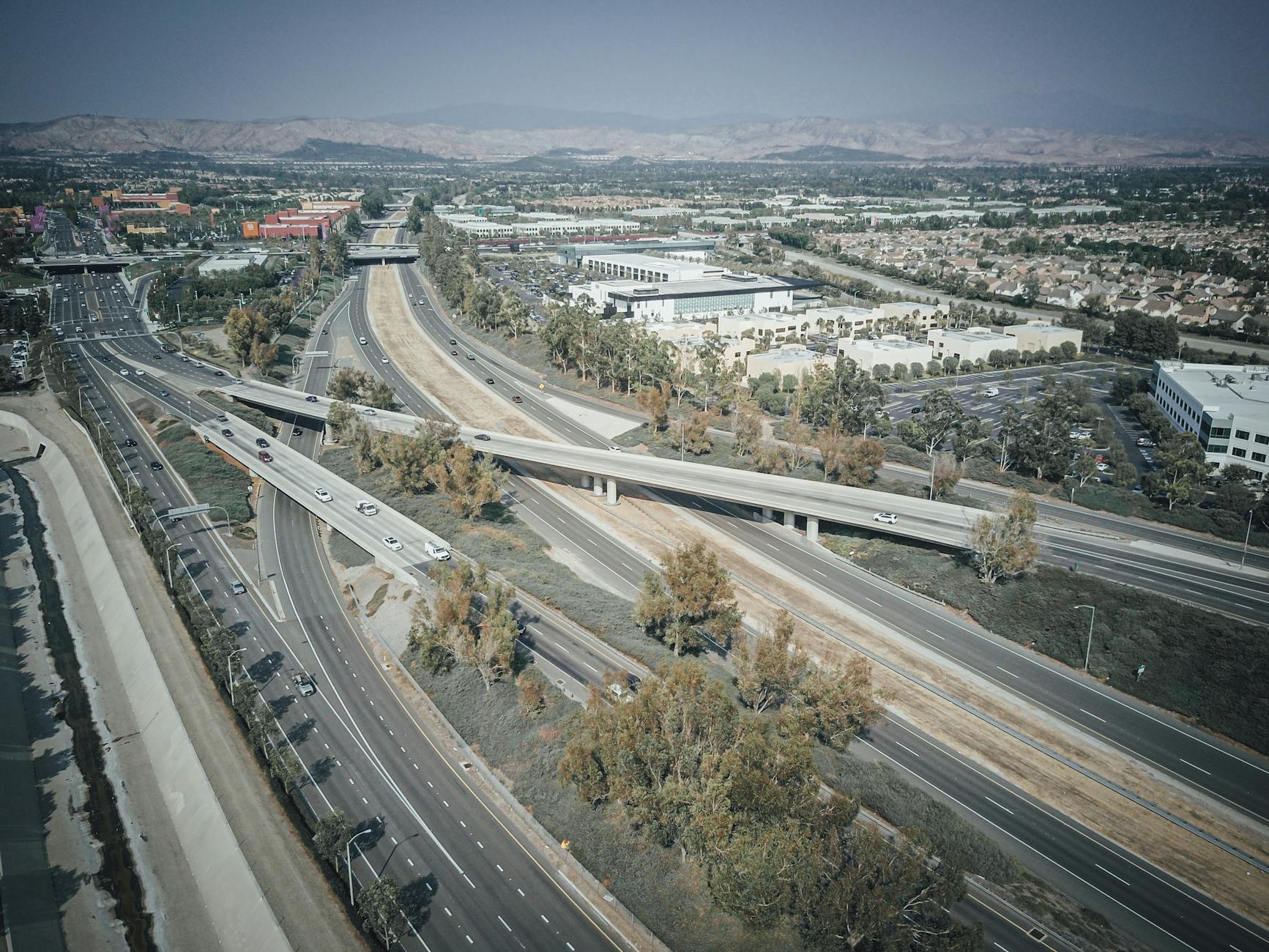
Argument: construction and traffic on highways in Chicago leads to suburban growth

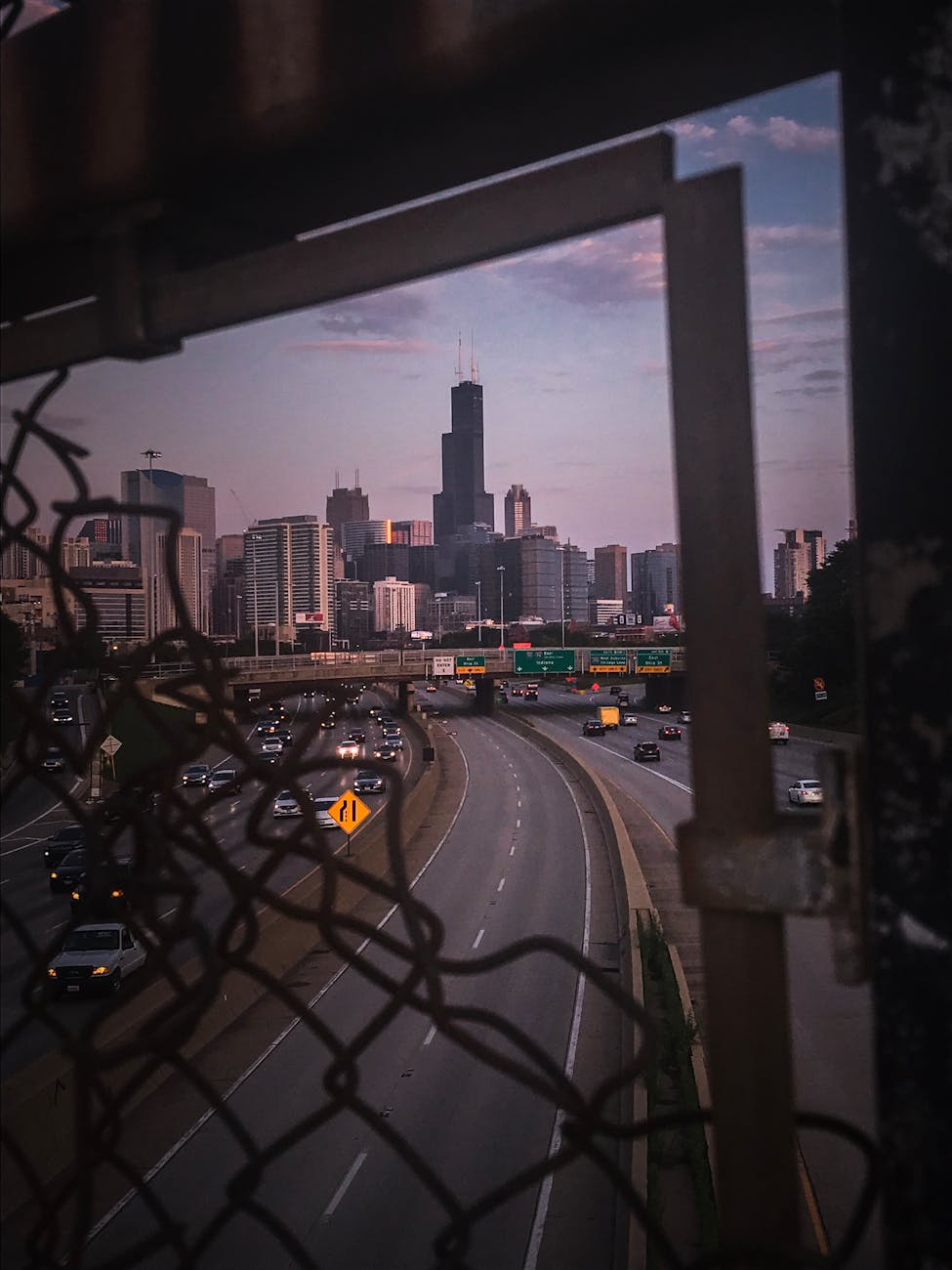
A Chicago Tribune editorial concerned with multiple years of construction on the Kennedy Expressway in Chicago ends with a claim that the traffic issues bolstered suburban businesses:

Photo by Trace Hudson on Pexels.com

Kennedy problems, or at least the perception thereof, certainly helped bolster a lot of the growth this past couple of years in suburban business districts like those in the likes of Naperville, Glencoe, Wheaton and Aurora, as suburbanites and exurbanites looked beyond Chicago to avoid the Kennedy at all costs.

Good for those suburbs for jumping on an opportunity. But Chicago got a “lanes closed, expect delays” warning for years — a handicap it most certainly did not need.

How might we know that this construction on a highway leading northwest out of Chicago boosted business in suburban areas (including several that are different directions from the Kennedy)? Some possibilities:

  1. A rise in the number of visitors or patrons in these suburban businesses and a decline in visitors or patrons in Chicago. These might not be causing each other but trends going different directions might be taken as evidence for this argument.
  2. Survey or interview data that suggests suburbanites factor in traffic in Chicago when making decisions about where to go. It might go something like this: “The drive into Chicago just takes too long…let’s go somewhere that is closer and easier to get to.” Anecdotal evidence might point in this direction but how often does this happen?
  3. Changes in commuter patterns and/or the presence of entertainment and business centers in the suburbs. As metropolitan areas have expanded, how many people find jobs, shopping, and cultural opportunities in other suburbs rather than in the big city? (This has happened already in American metropolitan regions but some Chicagoland specific data would be interesting.)
  4. Evidence of direct efforts from suburban communities or businesses to attract people by referencing the issues present in going to Chicago. For example, do any suburban downtowns tell people they do not need to go to Chicago to find X? Or do businesses make this argument? Or suburban shopping malls?

The gang nail plate and McMansions

I have seen gang nail plates before but did not know their name nor consider their possible contribution to the rise of McMansions:

The more that I think about it, the more that I come to believe that this invention is responsible for the suburbs as we know it. This unassuming little piece of metal, it’s called a gang nail plate or a truss plate, and its job is to affix pieces of wood together at their joints.

What’s really unique about it though is that it can securely connect wood members positioned at almost any angle. With the aid of these plates houses made of standard 2×4 studs can have open floor plans, cathedral ceilings, and complicated roof shapes all constructed with ease. You might recognize all those three traits as the common features of modern suburban homes, especially the so-called McMansions. Yeah, these things make McMansions possible.

One feature of many McMansions is a roof line with numerous gables. The front may have multiple gables popping up above windows. Or there might be gables pointed different directions. The roof line might mix several architectural styles. These options give McMansions a distinct profile, one that critics often note is odd or garish.

The argument of this video is that this is made possible by the gang nail plate. Without it, the roof is more expensive and not as strong. The big spaces that Americans expect in their single-family homes are more difficult to construct.

This reminds me of the importance of other construction techniques that enabled suburban housing. Balloon framing. The systems developed in mass suburbs, such as Levittown, to build homes in stages and with a set number of floor plans.

How many of the Chicago Christmas movies actually take place in the Chicago suburbs?

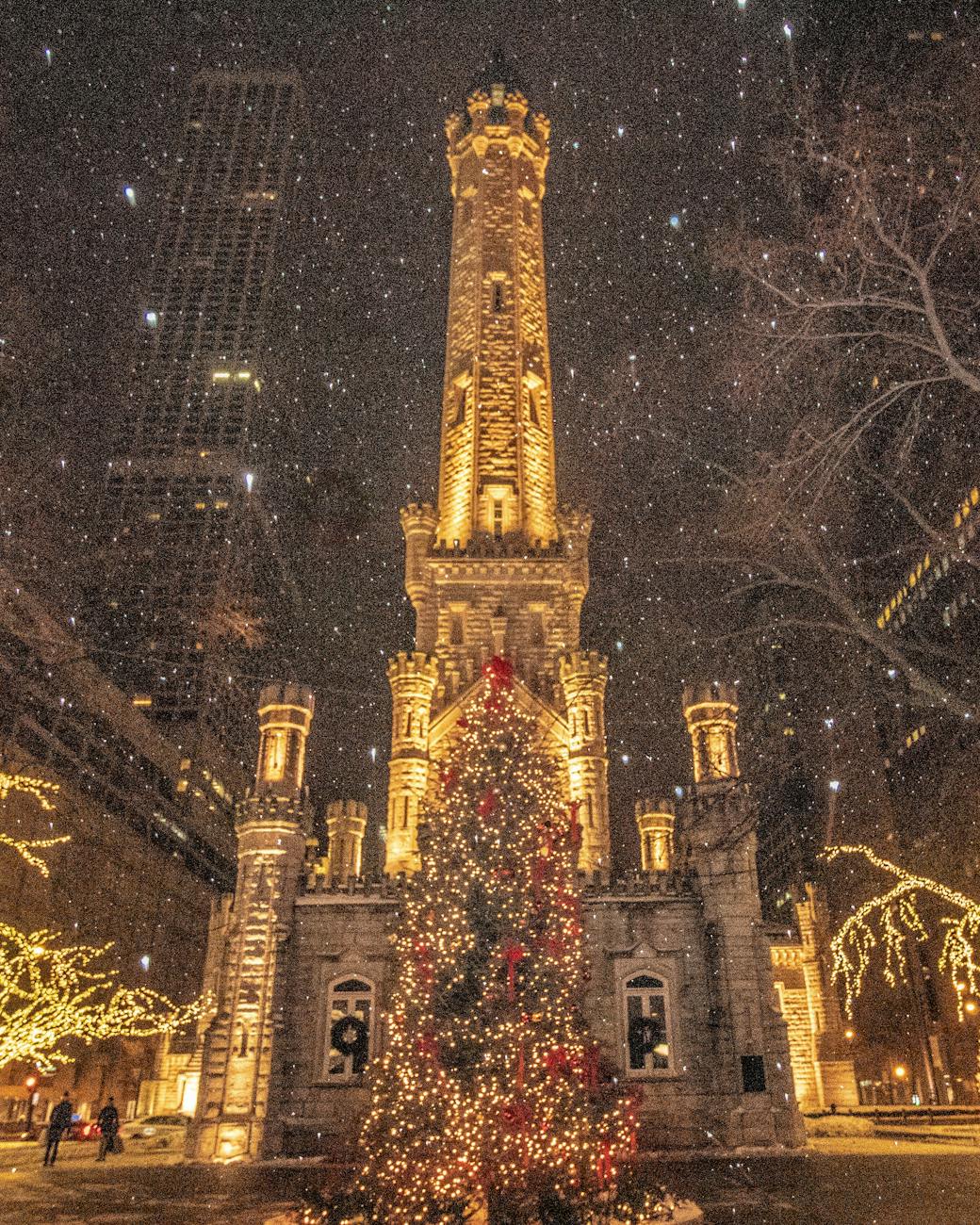
I do not spend a lot of time watching Christmas movies but I know at least a few of the Christmas movies said to involve Chicago are more about the Chicago suburbs. Some evidence…

Photo by Vishal Shah on Pexels.com

Here is one recent overview of Chicago Christmas movies that references their settings:

“Home Alone” is set in a fictionalized version of Winnetka, Illinois. “National Lampoon’s Christmas Vacation” takes place in an unnamed suburb outside of Chicago. “The Santa Clause” is set in Lakeside, Illinois. “Christmas With the Kranks” happens in Riverside, Illinois. “Fred Claus,” “The Christmas Chronicles,” “Office Christmas Party,” “While You Were Sleeping,” “A Bad Moms Christmas,” and the early scenes of “A Christmas Story Christmas” take place in downtown Chicago.

“The Polar Express” is initially set in Grand Rapids, Michigan (based on the inclusion of several historic local buildings familiar to the original book’s author). Still, its North Pole sequences are modeled after the Pullman Factory in Chicago.

Many additional films also connect to the greater Midwest. “A Christmas Story” takes place in Northwestern Indiana. “Jingle All The Way” is set in Minneapolis. The Barbara Stanwyck and Fred MacMurray classic “Remember The Night” starts in New York City and moves to Indiana for the holidays.

Another list of “The 11 best holiday films set in Chicago, ranked” includes several films in the city and several in the suburbs (including the top two on the list).

A third list of “Best Chicago Christmas Films” includes a number set in suburbia.

    Claiming some of these Christmas movies are Chicago movies is like Chicagoland residents claiming to be from Chicago.

    Now we’re reporting on the house next to the Home Alone house?

    The Home Alone house is a popular place. The house next door, briefly featuring in the movie, is also apparently newsworthy:

    Photo by Photo By: Kaboompics.com on Pexels.com

    In real life, the home of the fictional South Bend Shovel Slayer — aka OId Man Marley — from the 1990 John Hughes-written holiday classic “Home Alone” is located at 681 Lincoln Avenue in north-shore Winnetka…

    It’s right next door to the more famous “Home Alone” house at 671 Lincoln Ave. in Winnetka, which was shown extensively in the film as the home of the McAllisters. That home was listed for sale in May at $5.25 million and, according to its Zillow listing, has a sale pending…

    As it turns out, Old Man Marley — played by the late character actor Roberts Blossom — is a kindly neighbor who helps Kevin overcome his fears of going into the basement. Kevin, in turn, helps Old Man Marley reconnect with his estranged son…

    According to the Zillow listing, the home was built in 1898 and was a creation of Benjamin Marshall, a major influence on the architecture of modern Chicago. The home sits on two-thirds of an acre in Winnetka and features six bedrooms, six full bathrooms, one half-bathroom, a balcony, a library, a putting green, a large in-ground pool, a half basketball court, and plenty more.

    Popular movie + expensive suburban house = story people will click on? Americans like single-family homes and may even like looking at interesting single-family homes more than they like their own.

    Chicago suburbs as popular places to film Christmas movies

    Chicagoland residents may see some familiar places in recent holiday movies:

    Photo by Tim Mossholder on Pexels.com

    If you’re nodding, you’ve seen Very Merry Entertainment’s three holiday films shot on location in the Lake County village: “Christmas with Felicity,” “Reporting for Christmas” and “Christmas on the Ranch.” The latter debuted on Hulu in November.

    “Once Upon a Christmas Wish,” a Long Grove production starring Mario Lopez, premieres Saturday on the Great American Family network. And two other Illinois-based movies, “Christmas at the Zoo” and “Christmas in Chicago,” will be released in the future.

    In recent years, Illinois has emerged as the site of a holiday movie cottage industry. While old big-screen classics like “Home Alone” and “National Lampoon’s Christmas Vacation” are associated with the Chicago area, a crop of newer projects were also shot in the city and surrounding villages and suburbs. Of the Christmas movies released between 2018 and 2023, 12 were at least partially filmed in the Chicago area, including the 2021 Disney+ movie “Christmas Again,” according to the Illinois Film Office…

    “The villages that surround Chicago are very bucolic, and have this period architecture and a setting that mimics the ideal that the storytelling for a Christmas film encompasses,” said Louis Ferrara, assistant deputy director at the Illinois Film Office. “If you go to Libertyville or Long Grove, you’ll see the Christmas decorations going up [in early November] and through the holidays. So, these villages exist in this manner every year. And I think producers and filmmakers are really now discovering that aspect of our region.”

    In other words, the financial situation in the Chicago suburbs has to be good – aka tax breaks – and the communities fit the aesthetic for a Christmas film. If the goal is to have charming downtowns in small suburbs, the Chicago area has plenty of those. Take the Wikipedia description of Long Grove, mentioned above:

    The village now has very strict building ordinances to preserve its “pristine rural charm”,[5] including prohibitions on sidewalks,[6] fences,[7] and residential street lights.[8] The Long Grove area is now known for its historic downtown, its exclusive million dollar homes and the annual events including the chocolate, strawberry and apple festivals that take place in May, June and September, respectively.[9] The Robert Parker Coffin Bridge, on the edge of the city’s downtown, is a historic 1906 bridge that is featured on the Long Grove’s logo and welcome signs.[10] Due to the 8-foot-6-inch (2.59 m) clearance height of its covering, it has been struck by vehicles dozens of times in recent years.[11]

    Or Wikipedia’s overview of Libertyville’s downtown:

    Libertyville’s downtown area was largely destroyed by fire in 1895,[11] and the village board mandated brick to be used for reconstruction, resulting in a village center whose architecture is substantially unified by both period and building material.[11] The National Trust for Historic Preservation, which gave Libertyville a Great American Main Street Award, called the downtown “a place with its own sense of self, where people still stroll the streets on a Saturday night, and where the tailor, the hometown bakery, and the vacuum cleaner repair shop are shoulder to shoulder with gourmet coffee vendors and a microbrewery. If it’s Thursday between 7 a.m. and 1 p.m., it’s Farmer’s Market time (June–October) on Church Street across from Cook Park — a tradition for more than three decades.”[17]

    I could imagine some additional Chicagoland suburbs would want to get in on selling themselves as having a charming, Christmas aesthetic that lasts all year long.

    The reasons Americans move to exurbs – including economic opportunities

    An overview of some booming American exurbs explains why they are growing:

    Photo by Ruslan Burlaka on Pexels.com

    Exurbs are areas typically located 40 to 60 miles from city centers and are often appealing to families seeking more space, affordable homes and a quieter way of life.

    The trend has transformed once-sleepy rural towns into thriving cultural communities with booming populations and housing markets…

    The COVID-19 pandemic has played a significant role in the shift to the exurbs, with many people now able to make a living from home thanks to an increase in remote work opportunities. 

    This means they are no longer tied to big hubs where offices are based.  

    Skyrocketing housing costs in major cities have also pushed many families to seek more affordable and spacious alternatives.

    Finding affordable housing is a significant issue across American metropolitan areas. The thought often goes that the further one moves out from the center the more house a buyer can get. (This can ignore the pockets of cheaper housing that do often exist closer to the center of regions but the assumption is those who want these cheaper homes also want a particular kind of suburban community or way of life.)

    But there is another component to the growth of exurbs and the suburban fringe. There are jobs and other economic opportunities on the edge of regions. Commuting to the big city is arduous from these far-out locations. The article above hints at the possibilities of working from home but numerous exurbs grew before this. Where are people working?

    They are often working at companies and organizations in the suburbs. If I live 60 miles outside the big city, I may commute to a job 45 miles from the big city. Those edge cities spread throughout regions can provide thousands of good jobs accessible to those living in the exurbs. Or the new growth generates jobs and opportunities in the exurbs. Yes, some people can work from home but these are particular kinds of jobs and new growth leads to medical jobs, service jobs, and jobs in other industries that also find it attractive to locate in exurbs.

    In other words, you cannot have the cheaper housing of the exurbs without also having jobs and opportunities in and near the exurbs.

    John Grisham describes American sprawl

    In his latest work of fiction, John Grisham opens a chapter by describing a scene:

    Photo by Kindel Media on Pexels.com

    Across the Camino River and headed west away from the island, the busy highway was lined with shopping centers, fast food restaurants, car dealerships, car washes, churches, and big box retailers, the typical American sprawl. Billboards advertised cheap loans, scowling lawyers, and plenty of subdivisions. Construction was in the air. New developments, new “neighborhoods,” new retirement villages were up to seemingly overnight. Realtors’ signs clogged the intersection. Every other truck belonged to a plumber, an electrician, a roofer, or an HVAC specialist advertising a deep concern for your comfort and quality of life.

    This paragraph contains multiple traits of suburban sprawl as described by numerous people in recent decades. This includes:

    1. Highways lined with particular businesses (a “typical” American streetscape?).
    2. Lots of vehicles on the roads.
    3. Fast growth (developing happening “seemingly overnight”).

    Perhaps the biggest thing missing – though hinted at with “realtors’ signs” – are single-family homes that loom large in American suburbs.

    On one hand, the book gets at the problems of sprawling waterfront growth in Florida. This has its own unique features. On the other hand, would the description above be out of place around Las Vegas, Nashville, or Dallas or decades ago outside New York, Chicago, or Minneapolis?

    Chicago suburb Oak Park named in list of global places to visit in 2025

    On the Travel Lemming list of “Our 50 Best Places to Travel in 2025,” one suburb makes the list of global destinations:

    Photo by Element5 Digital on Pexels.com

    At first glance, you may think that Oak Park is nothing more than an affluent suburb of Chicago. But it’s so much more.

    Stunningly beautiful, Oak Park is the birthplace of American author Ernest Hemingway. Meanwhile, prominent architect Frank Lloyd Wright lived and worked here. A casual stroll around the suburb will take you past numerous examples of his work.

    Come in the fall to watch or run in the Frank Lloyd Wright races. These 5K, 10K, and youth mile races weave through some of the suburb’s most notable architecture.

    Even among this global range of destinations – cities, natural spots, beaches, mountains, etc. – this one suburb stands out. It may be the only suburb on the list. Oak Park is unique in several ways. As noted above, it does have some unique architecture and the ability to learn more about Frank Lloyd Wright. Hemingway was born there. It is also a suburb that has pursued racial and ethnic diversity for decades.

    At the same time, is one reason an American suburb could make such a list is that visitors get to experience a suburban lifestyle? If they went to Oak Park, beyond some of the unique features discussed above, would they have a sense of what American suburban communities are like?

    What other American suburbs might make a global list of top travel destinations?

    “Trump won the suburbs”

    One media source recently declared “Trump won the suburbs”:

    Photo by RDNE Stock project on Pexels.com

    The suburbs have become increasingly diverse and populous. More than half of voters in 2024 were in suburban areas, according to exit polls. They have become swing areas, home to some of the most closely targeted House seats, and a good barometer of who will win the presidential election.

    The winner in the suburbs has won 11 of the last 12 presidential elections, dating back to 1980. And this year that was Trump, 51%-47%, according to exit polls.

    Vice President Harris was hoping she could turn out women in the suburbs in key swing states to get her across the finish line. But that didn’t happen. Trump, for example, won white suburban women by 7 points, as well as white suburban men — by 27. So there were some split kitchen tables, but not enough to help Harris win.

    In multiple swing states, there were significant shifts in Trump’s direction in the suburbs, based on nearly final vote totals. That includes a net swing of almost 60,000 votes in the four counties that make up the Philadelphia suburbs and the two major ones north of Detroit, more than 10,000 in the “WOW” counties around Milwaukee (Waukesha, Ozaukee and Washington) and in the counties touching Fulton County, Ga., where Atlanta is.

    This is the strongest declaration I have seen thus far about suburban voters in the 2024 election.

    Two graphics in the story add to the text above:

    1. A national map of counties shows many suburban counties shifted toward more raw votes for Trump between 2020 and 2024. Relatively few suburban counties shifted toward Harris.
    2. There is an interactive graphic that shows shifts in suburban counties from 2016 to 2020 to 2024 and some suburban counties did move toward Harris in that span. This graphic shows there is significant variation in voting patterns across suburban counties.

    On the whole, one candidate garnered more votes from the suburbs. Did that determine the election? This analysis does not say; it suggests suburban voters contributed to the outcome.

    Converting suburban houses into group homes – but they cannot look like group homes

    Multiple suburbs in the Chicago region allow for the conversion of suburban single-family houses into group homes for seniors or adults with disabilities. However, they generally agree that the conversion cannot alter the appearance of the home:

    Photo by Dave Frisch on Pexels.com

    A 2021 Northwest Municipal Conference survey of its members identified 14 suburbs permitting group homes for particular populations, largely those with disabilities.

    However, the conversion of homes into assisted living centers for seniors is becoming increasingly prevalent. Schaumburg has seen two proposals in the past year alone. There are also online seminars offered to entrepreneurs looking to flip homes and turn them into assisted living centers, aimed at the nation’s aging population.

    Regulations vary in towns that allow such conversions. Some require approval from a village board or city council, while other towns don’t require such approval because these uses are already allowed in its residential code. But all enforce rules against external changes to the houses that would identify them as group homes…

    “You’ll be driving down a neighborhood and never know we’re there apart from a van picking people up or dropping them off,” said Little City Foundation CEO Rich Bobby…

    While the intention of the homes is to blend in, a degree of engagement with neighbors is sought in advance to paint an accurate picture of those who are going to live there.

    A common suburban story regarding proposed changes to houses might go like this: neighbors get wind of a possible change in a subdivision or residential area. They express concerns about such changes altering the character of the community. Perhaps there might be increased traffic, noise, and lights? They share that they moved into this location because it was a quiet, residential space. Changes to that format threaten their day-to-day experiences and their property values.

    But what if the changes to that house or residence were minimal in nature? Or, as the regulations above suggest, the exterior of the home does not look any different and there is not a noticeable change in day-to-day life around the home? Would this allay all the concerns?

    From this article, it sounds like concerns have been at a minimum thus far. The number of conversions is small. Perhaps there is a tipping point where multiple proposals in the same neighborhood or on the same straight might draw more attention. But if neighbors do not see significant changes on the outside, they might not have many issues.

    Given the needs of the suburban population, I suspect more suburbs will face this particular issue in the coming years. Building large facilities can be difficult and costly. If converting homes to group homes can help serve residents and neighbors are okay with it, perhaps this will happen in a lot of places.

    (This reminds of a 2013 book looking at affordable housing built in New Jersey where one of the goals was to design the multi-family housing units in a way that people passing by would not identify them as affordable housing. With some design work, this was largely accomplished and relatively few neighbors opposed the project.)