The first presidential candidate from the suburbs

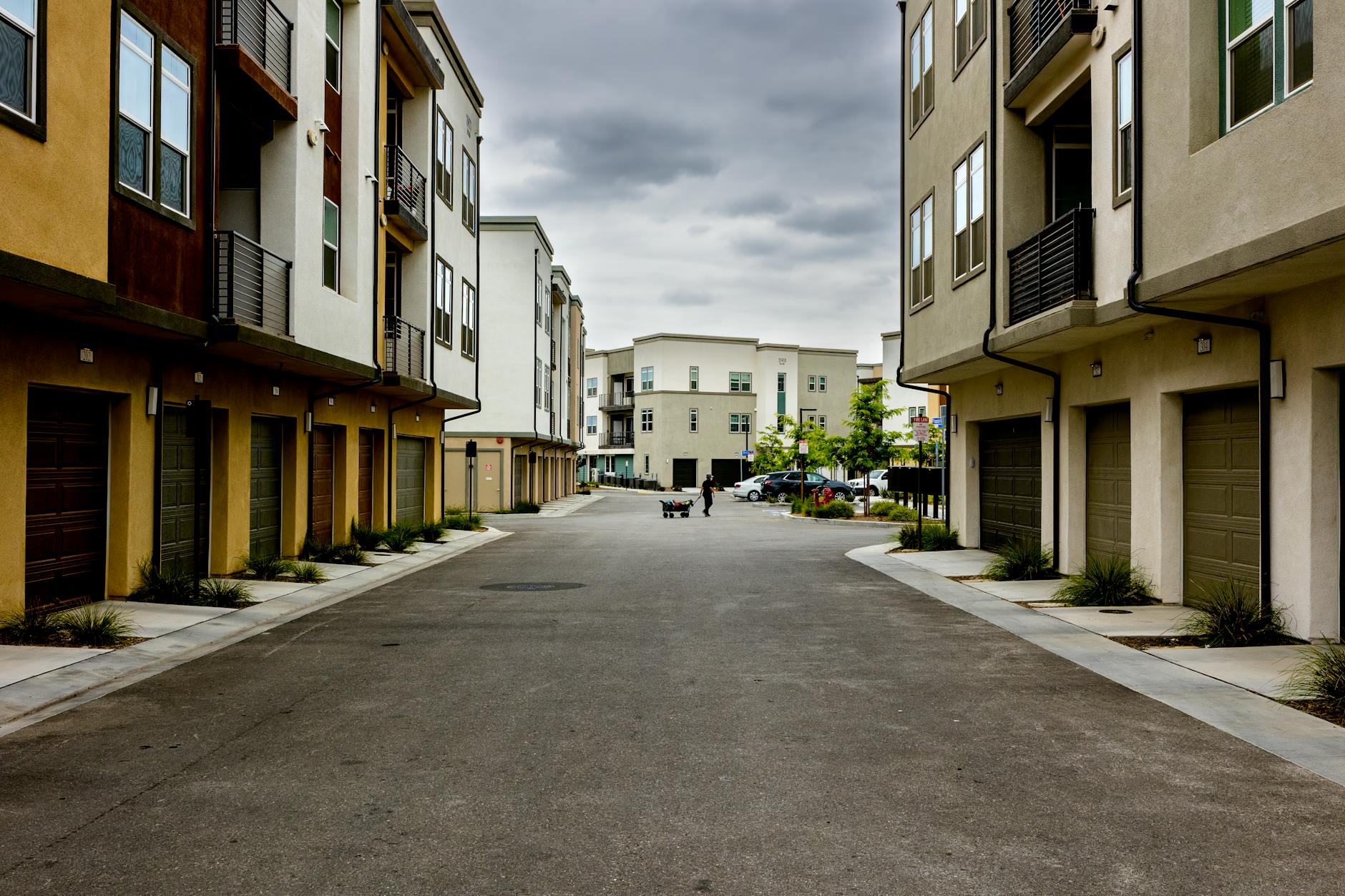
When Michael Dukakis ran for president in 1988, he did so as governor of Massachusetts and as a suburbanite:

Photo by Sergei Starostin on Pexels.com

Dukakis’s suburban origins and issue-oriented style actually served as a major asset with the other constituency that many strategists recognized as key to his and the Democratic Party’s success in the general election. Political consultant and Dukakis adviser Hank Morris saw Dukakis’s upbringing and ethos as important in galvanizing postindustrial suburban professionals in battleground states such as California, Illinois, and New York. Suburban professionals responded favorably to Dukakis’s record about quality-of-life issues like traffic and air pollution, unregulated commercial growth and sprawl, declining schools, and rising drug and crime problems. Morris urged the campaign to further underscore that “he is the first presidential nominee to grow up in the suburbs and to stay there, commuting to work and mowing the lawn and knowing the concerns of suburbanites.” Taking the advice to heart, Dukakis made frequent references to his 1963 Sears snowblower as an emblem of his suburban sensibility and frugality. (275)

This passage comes toward the end of historian Lily Geismer’s book Don’t Blame Us: Suburban Liberals and the Transformation of the Democratic Party. It serves as a culmination of several decades of history where the actions of suburbanites in Boston suburbs along Route 128 presaged larger changes in the United States.

Of course, Dukakis lost the election. But Geismer argues that he represented a shift in the Democratic party toward the educated knowledge workers of suburbia. Whereas suburbs had been viewed as conservative and Republican in the immediate postwar era, by the 1980s there were pockets of suburban liberals and today there are numerous Democratic strongholds in suburban areas outside large cities.

At the same time, Geismer notes that these suburban liberals had particular notions about liberal causes. They tended to promote individual freedom, not addressing structural issues. When asked to transform their own suburban communities for the greater good of the Boston area, these suburban liberals resisted. It is one thing to advocate for liberal causes that might help you; it is another to promote affordable housing in your community.

I would venture that we see a number of these patterns still playing out today. What happened along Route 128 has happened to varying degree across American suburbs with pockets of high-tech, knowledge industry workers clustering in suburban parts of metropolitan areas. The American suburbs are more diverse than they were in the 1980s. Many of wealthy suburbs with white-collar jobs or workers are not fully open to change or to addressing metropolitan issues or regularly resist what they see as threats to the quality of life the enjoy. The choices suburbanites like to have still gives those with resources options to find communities that they like and then push back against change.

And when will the United States have its first suburban president, someone born in the suburbs and who identifies with the suburbs?

Local control is essential to understanding American suburbs

The mayor of Naperville thanked the City Council for not supporting a proposal that regional transit authorities could develop land within half a mile of train stations. He explained his opposition this way (via his Scott Wehrli for Naperville Facebook page):

Photo by cottonbro studio on Pexels.com

I’m proud of our City Council for standing together in opposition of this legislation that would give transit agencies the power to control development within a half-mile of our train stations—taking that authority away from the local officials you elected.

In Naperville, development decisions should be made by our community, through our City Council, not by transit agencies in Chicago. Local control has always been the foundation of our city’s success, and we’ll continue to protect it.

This is a good example for why I included local control as one of the seven reasons that Americans love suburbs. Suburban residents and leaders want to be able to make decisions about local land and monies as they see fit. They can resent when decision-making involving their land and money takes place elsewhere, particularly if it goes against what the suburban community wants or is perceived to be a threat to an established way of life.

This particular case involves transportation and land development. A popular idea in numerous cities and suburbs is to construct transit-oriented development which often involves higher residential densities adjacent to mass transit stops and a reduced number of parking spaces required. A number of Chicago suburbs have pursued this in recent decades; trains going in and out of Chicago pass apartments and condos in suburban downtowns.

But the key for many of these suburbs is that they made these decisions regarding development around train stations. These conversations often included debate about the size of new buildings and the number of units involved. How tall is too tall for a suburban downtown? How many units will be erected? What is the target population for these new developments?

Leaders and residents in Naperville and suburbs across the United States might pursue denser development near mass transit but they want to make the decision and steer development in ways they feel is consistent with the existing character and footprint of their community.

(I would also argue that local control is closely linked to the other six reasons Americans love suburbs.)

The suburban contexts of James Dobson and Focus on the Family

In reading multiple obituaries upon the passing of Dr. James Dobson, I was interested to read about where he lived and where his ministry operated. In my book Sanctifying Suburbia, I examine how evangelicals embraced the suburbs, and I discussed in Chapter 6 two of the evangelical centers where Dobson spent much of his adult life: the suburbs east of Los Angeles and Colorado Springs, Colorado. But his suburban experiences also predated the professional career for which he became know. Here is what the New York Times reported:

Photo by Jake Heinemann on Pexels.com

James Clayton Dobson Jr. was born in Shreveport, La., on April 21, 1936, the only child of James and Myrtle (Dillingham) Dobson.

He was the son, grandson and great-grandson of Church of the Nazarene ministers. The family avoided dancing and movies. His father, who never attended college, was a traveling evangelist, primarily in the Southwest, and young James lived mostly with his mother in Bethany, Okla., and graduated from San Benito High School, in San Benito, Texas, in 1954.

He received a bachelor’s degree in psychology in 1958 from Pasadena College (now Point Loma Nazarene University) and a master’s degree in 1962 from the University of Southern California.

In 1960, he married his college sweetheart, Shirley Deere. She survives him, as do his son; a daughter, Danae Dobson; and two grandchildren.

After four years as a teacher and counselor at high schools in Hacienda Heights and Covina, Calif., he earned a doctorate in child development in 1967 from U.S.C. He was then on the faculty of the Keck School of Medicine for 14 years and simultaneously on the staff of Children’s Hospital.

Looking more closely at these early locations shows some connections to suburbs. Shreveport is a small big city with over 76,000 residents in 1930. Bethany is a suburb west of Oklahoma City created by Nazarene founders that grew from 485 residents in 1920 to 22,694 residents in 1970. San Benito is a small community within the Browsnville-Harlingen-Raymondville combined statistical area today that is not far from the Mexico border. It had between roughly between 13,000 and 16,000 residents in the 1950s while Brownsville at that point had between 35,000 and 48,000 residents.

Dobson went to college at Pasadena College. This college started as Pacific Bible College in Los Angeles. In 1909 it moved to purchased land in Pasadena, a suburb east of Los Angeles. When Dobson was in college, the suburb was finishing a growth spurt: it had grown from 9,117 residents in 1900 to 116,407 residents in 1960. In the early 1980s, a proposed move of Pasadena College to Santa Ana, another suburb southeast of Los Angeles in Orange County, failed and the college occupied a former college campus in San Diego (and became known as Point Loma).

His first jobs involved teaching in two suburbs east of Los Angeles. Hacienda Heights is an unincorporated community that had 35,969 residents in 1970. Covina is also in the San Gabriel Valley and its population exploded in the postwar era, expanding from 3,956 residents in 1950 to 30,395 in 1970.

Without closer study, it is hard to know exactly how these suburban experiences shaped Dobson’s views and work. But going to school and starting work in a hotbed of growing evangelicalism in the post war era – suburban Los Angeles – plus his own experiences in small communities outside bigger cities echo broader evangelical patterns. Emphasizing nuclear family life and conservative political values also aligns with reasons evangelicals could embrace suburban life.

The wealthy and big suburbs in the United States

Lists of the wealthiest communities in the United States often feature places with just a few thousand residents. But in looking at a list of the fastest-growing suburbs in the United States, I noticed that some of these fast-growing and large suburbs have high median household incomes. Here are 3 suburbs in the top 5 fastest-growing:

Photo by Photo By: Kaboompics.com on Pexels.com
SuburbPopulationMedian Household Income
Frisco, TX210,238$146,158
McKinney, TX202,314$120,273
Santa Clarita, CA229,021$119,926

For 2023 (the same year at the end of the data used for this list), the Census Bureau reported that the median household income in the United States was $80,610. The median income means that half of households are above this mark, half are below. These suburbs are way over this mark and they have a lot of residents.

I have wondered about this given my research over the years on Naperville, Illinois. It is a larger suburb – around 150,000 residents – and it is wealthy. In 2023, its median household income is $150,937.

Knowing what I know about Naperville, my guess is that the three communities above are home to thousands of white-collar professional jobs. They have lots of office space. They are home to national and/or regional headquarters for sizable corporations. They have a particular quality of life residents expect.

At the same time, people living in these large and wealthy suburbs might have different experiences from those living in small and wealthy communities in the United States. What does this wealth and access to resources look like on a daily basis? What kind of community engagement and spirit is there? What separates these bigger and smaller wealthy suburbs from the communities around them that are not the same?

Seven suburbs added over 40,000 residents between 2013 and 2023

American suburbs are used to growth; as a whole, they have been growing for decades. But some suburbs grow much more quickly than others. A recent analysis suggests these seven suburbs added more than 40,000 residents in just ten years: Meridian, Idaho, Horizon West, Florida, Buckeye, Arizona, Santa Clarita, California, McKinney, Texas, Frisco, Texas, and Enterprise, Nevada.

Photo by Erik Mclean on Pexels.com

All of these locations are in the South or the West. All of them are sizable communities; the smallest has over 60,000 residents and several are over 200,000 residents.

Imagine how this much growth in a short period of time could change a community. More development and land in the community. Increased levels of local services, everything from school to libraries to firefighters to road maintenance. More traffic and activity. A different sense of who the community is.

At some point, the rapid growth of these ten years slows or stops. There is less land for development. There is limited appetite for building up or at higher densities. Growth moves to other nearby communities or other metropolitan areas.

It may take years for these suburbs to settle into being a place (1) that once had such fast growth and (2) that lives with the consequences of their now larger size.

Horror films, the suburbs, and “the seedy underbelly of American promise”

Want to show that Americans may not be able to access the American Dream? Why not make a horror film set in the suburbs?

Photo by Alex Fu on Pexels.com

Weapons is not a very scary horror film. It is, however, a fascinating movie about the suburbs and the way the architecture of family life supports silence and complicity. Horror movies often use the suburbs to interrogate the seedy underbelly of American promise. Whether exploring fear, ennui, racial tensions, or Satanic Panic, suburban horror films are about control—who has power and who desperately wants it.

Since the rise of postwar suburban sprawl, numerous cultural works have explored the facade of successful suburban life. What is hiding behind the green lawns?

Horror films do this in particular ways, following conventions in their field. One question we could ask is whether this particular film gets at this seedy underbelly in unique ways. Does it put together existing ideas in new ways? Does it break new ground in exploring the suburbs? Does it offer new commentary on suburban life here in 2025?

Another question we could ask: how many Americans are familiar with these horror film depictions of suburbs? If you have seen one or two such films, do you have a general sense of their suburban commentary?

Marijuana dispensaries and the ongoing reputation of suburban communities

Over a decade ago, numerous Chicago suburbs debated regulations regarding marijuana dispensaries. One line of argument went that such establishments diminished the reputation of communities. Here is an update for one Chicago suburb:

Photo by Nataliya Vaitkevich on Pexels.com

A second marijuana dispensary quietly has opened in Arlington Heights, years after controversy and debate about whether to allow the first one to do business in town.

Longtime Mayor Tom Hayes was outright opposed to the vice, arguing it would diminish the village’s reputation as a family-oriented community.

But supporters say times have changed, and there was the new mayor, Jim Tinaglia, holding giant scissors at a recent ribbon cutting welcoming the new business and its green — leaves and tax dollars — to town…

But others on the elected panel soon decided revenue estimates from local taxes on pot sales — as much as $500,000 per dispensary, per year — were too good to pass up.

This potential link between the status of the community and the presence of marijuana dispensaries sound like it could involve testable hypotheses.

First, we would need to get at the status of a community. The suburbs overall are considered by Americans as “family-friendly” but the suggestion here is that some suburbs are more about families than others. Could Census data reveal that a suburb is “family-oriented” or would this depend on survey or interview data of local leaders and residents? Or is this more about social class – income, wealth, housing values and types, etc. – and the status that comes with it?

Second, perhaps this is not about status but rather the need for local revenues. How do budgets look before and after considering a marijuana dispensary? Can suburbs afford to keep certain businesses out? Dispensaries may not be the only businesses suburbs do not want; this could range from tattoo shops to warehouses to other land uses considered not in character with the community.

At least from this one story above, it sounds like a change in leadership plus a need for revenue led to different local approaches. And does this come with increased local revenues and any difference in status?

How do suburbs know if their mass market radio ads are successful?

In the span of a few minutes the other day, I heard radio commercials for two suburbs. One was aimed more at businesses and residents moving to the community, the second was about visiting and enjoying the amenities there. Do these advertisements work?

Photo by Jean Balzan on Pexels.com

There are multiple ways organizations could measure this. The most common one I have seen in today’s age is the online or email survey question: “how did you hear about us/this?” Then the respondent can select among many options, including radio ads.

But if someone were moving to a suburb, starting a business in a suburb, or visiting a suburb, how likely would it be that they would receive such a survey? What would trigger this survey?

There are, of course, other techniques. We could rely on anecdotes and the occasional story people tell. Perhaps focus groups of recent movers or visitors could explore this. Maybe someone contacts the community directly and describes hearing the advertisement. Maybe seeing an uptick in population or visitors or business activity in the community after airing the ad could lead to people saying the ad worked.

None of these are likely great options. Getting people to participate in research studies is hard. The commercial is one out of many people will hear or encounter each day.

It is hard to brand a suburb when there are many – over 300 – in the Chicago area and in a media saturated landscape. What can reflect the community well and stand out to people (and then hopefully prompt them to act)?

NIMBY wins by reducing the number of residential units

One observer discusses how NIMBY efforts reach their goals:

Photo by cottonbro studio on Pexels.com

Sometimes working together, sometimes working separately, NIMBYs have manipulated a web of local laws and requirements—such as exclusionary zoning, minimum lot sizes, and parking minimums—to reduce production of homes. As with any production cap, the result is higher prices for new residents and higher profits for incumbents, and a transfer of wealth and power from buyers and renters to existing owners.

The article places this in the context of antitrust efforts. Local residents and officials are able to operate a monopoly with local land and regulations, thus limiting any competition. Loosen the monopoly’s hold, others can promote and build housing, and housing prices might be more reasonable and more units are available to those who could not otherwise more there.

In the suburban context, one of the reasons Americans tend to like suburbs is because of this local control. They want to buy a home in a community, enjoy the benefits of that community, and then see their property values appreciate as they are there for a while. More housing units is perceived to do multiple things: (1) threaten the amenities of the community – through density, traffic, new residents, etc. and (2) threaten property values.

The author describes efforts in Washington state to counter local NIMBY efforts. It sounds like efforts at the state level changed what local communities could do. It remains to be seen how much local change will now occur and it is not clear how many states would be willing to go as far as Washington. How many local residents would support state-wide efforts that could overrule community interests regarding housing/

Teenagers, e-bikes and scooters, and suburban laws

Suburban teenagers and others have taken to e-bikes and electric scooters to get around communities which often require a vehicle to get from place to place. But now some suburbs have responded with new rules:

Photo by JONATHAN PAGAOA on Pexels.com

In passing the new rules, Elk Grove has joined a growing list of Chicago suburbs that have enacted tougher e-bike regulations due to growing safety concerns. Several communities — including Highland Park, Schaumburg, Glen Ellyn and Lombard — have recently imposed age limits on riders, while Burr Ridge has banned e-scooters from its streets.

Illinois law divides e-bikes into three classes based on their maximum assisted speed and whether the motor requires the rider to pedal. No one under 16 is allowed to ride a bike that can reach more than 20 mph under Illinois law.

State regulations also require riders to label their bikes with the motor wattage and classification type. Elk Grove Village officials, however, believe it’s more important for riders to follow the rules of the road, said Scott Eisenmenger, the deputy police chief…

Under the town’s rules, anyone younger than 16 can ride less powerful Class 1 and Class 2 e-bikes without motor assistance, relying on pedal power alone. Like Illinois law, Roselle ordinance prohibits anyone under 16 from riding a Class 3 bike, which reaches up to 28 mph before the motor cuts out. Additionally, no one under 18 can operate a low speed electric scooter.

Suburbs are built around cars and driving. It is part of living in a single-family home, having a suburban lifestyle, and is often necessary from getting from place to place because of the size of communities and limited additional transportation options.

Teenagers are often in a particular predicament. Herbert Gans noted this in his book The Levittowners: in new sprawling suburban communities, what could teenagers do and where could they go? With subdivisions and homes structured around private family life and cars necessary to get places, what could teenagers seeing independence do? Americans see teenagerdom as a life stage of trying out independence but without viable transportation this may be hard to do.

Enter e-bikes and electric scooters. They are now widely available. They are easy to operate. The local infrastructure is set up for cars, not pedestrians, bicyclists, or others. Vehicles are large. Safety can be an issue for anyone else trying to use a roadway.

Perhaps the bigger question is not about e-bikes and scooters; it is about possibilities for transportation options across suburbs. Teenagers may have their own interests but they are not the only ones limited in suburbia if you do not have a car.