In light of all this, it would be surprising if suburban sensibilities have not shaped evangelical faith and practice. As Miller argues, “It is not enough for researchers and pundits to consider the theological positions and political behavior of evangelicals; accounting for their spatial context is part and parcel to understanding the whole package of white evangelicalism” (italics mine).
And from a later part of the review:
Miller’s point is that the evangelical cultural toolkit appears to have been calibrated by patterns, experiences, and commitments common to suburban life. He’s careful to avoid claiming a direct, causal relationship between suburban norms and prevailing traits among evangelicals. But he makes a compelling case for drawing arrows of motive, means, and opportunity.
It should be easy enough to accept a narrower version of Miller’s thesis that suburban evangelicalism is “formed in regular moments in daily life and in interaction with the social and physical realities of the American suburbs.” It will be harder for many to accept that American evangelicalism in general is essentially suburban in its values and sensibilities…
In the aggregate, as Miller sees it, these institutions take a fundamentally suburban vision and prescribe it as an objectively Christian vision that can guide evangelical faith and practice in any environment. This doesn’t feel like a stretch to me. My own ministry experience and professional work has primarily involved churches in rural and urban environments. Pastors in both places frequently lament that the resources they rely on are clearly tuned to social realities outside their own. It’s fair to say, at minimum, that suburban sensibilities dominate American ministry materials.
Thanks to the magazine and Brandon O’Brien for reviewing the book.
In August Wilson’s 1979 play Jitney, one of the Pittsburgh characters is working to buy a suburban home for his young family. In the opening scene of Act 2, Youngblood describes where the home is:
I asked Peaches if she would go with me to look at houses, cause I wanted to surprise you. I wanted o pull a truck up to the house and say, “Come on, baby, we moving.” And drive on out to Penn HIlls and pull that truck up in front of one of them houses and say, “This is yours. This is your house baby.”
And a little later in the same conversation:
Wait till you see it. It’s real nice. It’s all on one floor . . . it’s got a basement . . . like a little den. we can put the TV down there. I told myself Rena’s gonna like this. Wait till she see I bought her a house.
In this conversation, the home in Penn Hills is part of achieving the American Dream: a pleasant place where a family can settle in and children can achieve.
Later in the same scene, the older character Becker hears of the potential move and approves of the community:
Good! They got some nice houses out there. That’s a smart move, Youngblood. I’m glad to see you do it. Ain’t nothing like like owning some property.
The vision of a suburban property contrasts sharply with the fate of the jitney station as the city will soon board up the property with some vague notion of redeveloping the land in the future.
But there are also hints that Penn Hills might not be a paradise. In the final scene (Act Two Scene 4), another character comments on Penn Hills:
They ain’t as nice as the houses in Monroeville. Most people don’t even buy houses in Penn Hills no more. They go out to Monroeville.
Reading this reminded me of Benjamin Herold’s book Disillusionedthat includes Penn Hills as part of the argument of how the American Dream of suburban living did not extend beyond white families. Penn Hills grew quickly after World War Two, increasing from over 15,000 residents in 1940 to over 62,000 in 1970. But since then white families left (as development extended to Monroeville and other places), the population declined, and Black families who moved to the community found a suburb struggling to maintain its tax base and fund local infrastructure.
Penn Hills may have looked in the early 1970s to hold out hope regarding a successful suburban life but Herold suggests it cannot now promise the suburban American Dream. By the late 1970s, it was changing. The struggles of and in Pittsburgh neighborhoods that Wilson describes extended out to Penn Hills. What was a place of hope turned out to be different than depicted.
Wilson’s legacy includes dozens of hit singles with the Beach Boys, including three Number One singles (“I Get Around,” “Help Me, Rhonda,” and “Good Vibrations”). In the 1960s, the Beach Boys were not only the most successful American band, but they also jockeyed for global preeminence with the Beatles. And on albums such as Pet Sounds, Wilson’s lavish, orchestral production techniques dramatically expanded the sonic palette of rock & roll and showed how the recording studio could be an instrument by itself.
Born June 20, 1942, Brian Wilson grew up in Hawthorne, California, a modest town next to the Los Angeles Airport. Brian was the eldest of three brothers; his younger brothers were Dennis and Carl. Their father, Murry, was an aspiring songwriter and a tyrant. “Although he saw himself as a loving father who guided his brood with a firm hand, he abused us psychologically and physically, creating wounds that never healed,” Wilson wrote in his 1991 autobiography, Wouldn’t It Be Nice: My Own Story.
Wilson grew up playing sports and obsessing over music, teaching his brothers to harmonize with him. Music was his sustenance and his solace, he said: “Early on, I learned that when I tuned the world out, I was able to tune in a mysterious, God-given music. It was my gift, and it allowed me to interpret and understand emotions I couldn’t articulate.”
In 1961, Brian, Dennis, and Carl formed a band with their cousin Mike Love and their friend Al Jardine, managed by Murry Wilson; Brian played bass, took many of the lead vocals, and wrote the songs. Signed to Capitol Records and named the Beach Boys, they started to roll out hits like convertible Thunderbirds coming off an assembly line: “Surfin’ U.S.A.” (with music borrowed from Chuck Berry’s “Sweet Little Sixteen”), “Surfer Girl,” “Be True to Your School,” “Fun, Fun, Fun.” Those Brian Wilson compositions all sounded like insanely catchy jingles for the California teenage lifestyle — surfboards, hamburger stands, pep rallies — but on the flip side of the good times was a real sense of melancholy. Sometimes that was apparent in the lyrics — the lonesome “In My Room,” for example — and sometimes it was expressed nonverbally, with the Beach Boys’ heartbreaking multipart harmonies.
Two connections to the suburbs to note:
Hawthorne, California was a small community in the early 1940s – over 8,000 residents – southwest of downtown Los Angeles and a few miles from the beach. Today, the community houses nearly 90,000 people. The suburb was home to a number of aerospace companies over the years and Mattel was started there in 1945. It grew as the sprawling Los Angeles area grew in the postwar era.
Many of the songs of the The Beach Boys reflect features of suburban life, particularly for teenagers. Numerous early songs discuss driving. Los Angeles became a driving capital in the postwar era and Hawthorne is bordered by multiple interstates. A teenager driving in the early 1960s could easily access the beach, fast roads, fast food, shopping malls, and new subdivisions and communities. Do this all in the sunshine and you might be regularly going in “American Dream mode.” There is also the theme of family. The group includes Wilson’s two brothers and his cousin. Wilson writes and sings about relationships. In the suburbia of the 1950s and 1960s, nuclear families were emphasized. The Brady Bunch, set not that far from Hawthorne, purported to show wholesome family life. That the group and songs involved family life, even amid clear themes of teenager individualism, is not surprising given the suburban context.
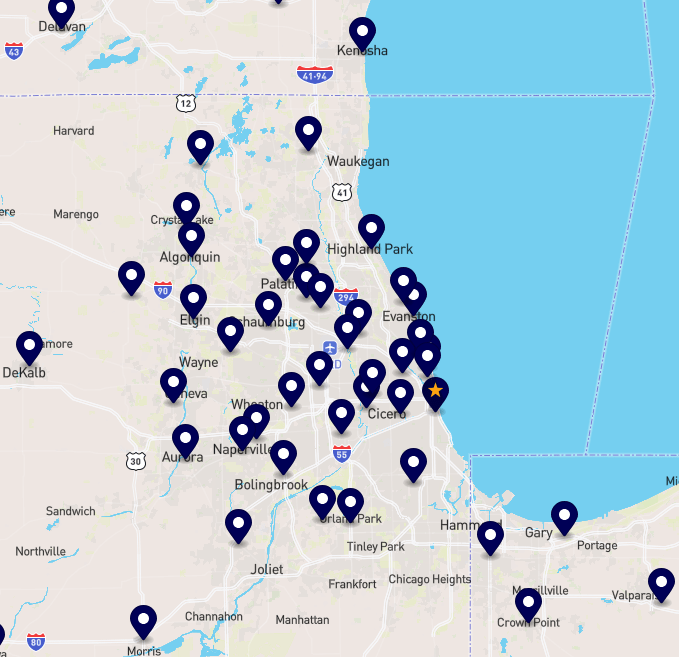
Thomas and Wilson met four years ago in Nashville when the producer was recording Stars and Stripes, a country tribute to the Beach Boys. They are an unlikely pair — Wilson the fragile artist and Thomas the beefy Midwesterner who wears cowboy boots and a mullet haircut. But in 1996, their wives bought sprawling homes next to each other in the rolling countryside of St. Charles, Illinois, and a studio was installed in Wilson’s basement to record Imagination.
The Wilsons chose St. Charles almost by chance. “Joe and Brian were in the studio in Chicago one day, so Chris [Thomas’ wife] and I went shopping, because they were looking for a house,” explains Melinda, 51, sitting with Brian in a small, comfortable room off the studio in St. Charles. “We saw this place with a basement that was unfinished, and we thought, ‘Why not?’
“It’s good to get out somewhere, away from everything, where you can work,” she says. “It doesn’t matter about the weather, doesn’t matter about traffic. If Brian doesn’t want to work, he just goes upstairs, and when he feels like it, he comes down. Most artists are not people who can do a nine-to-five trip.”…
Later, over dinner, Wilson feels differently, and he admits that he misses L.A.: “It’s home, where I’ve always recorded, and there’s just something about the vibe there. I like the L.A. vibe.”
After living in St. Charles, Wilson moved back to Los Angeles.
Trahan told the Journal in 2023 that the house was “the worst investment ever,” but has since clarified those comments, telling People that she views the home as a piece of art.
“When I was buying it, I wasn’t thinking, ‘Oh, it was a great investment,'” Trahan told People in 2023. “When I buy art, it’s because I love the art. It’s not because, ‘Oh, I’m going to make money on this.’ If you’re going to make money in art, you have to sell it. I buy art, and then I don’t sell it.”
The first Brady Experience sweepstakes was such a success that Trahan is opening it up for another round. Trahan could not be reached for comment.
Can a home be art? Can a real suburban home that became part of a well-known TV show be art? This might require public and/or critical consensus.
The idea that a postwar suburban house could be a piece of art is not that farfetched. Imagine homeowners of such homes across the American landscape that lovingly take care of their homes, maintaining and improving them. Or preservationist efforts that protect particular homes for future generations. (Which postwar suburban homes might qualify for this is another discussion – which are more art and which are more pedestrian?)
Add to this the iconic nature of this home. For many, The Brady Bunch house represents suburban family life. The show only ran 5 seasons but the family and its home became a part of the postwar culture during its run, through syndication, and ongoing lore. I doubt many critics would say the show was art – it was a normal sitcom – but the iconic status of the show may elevate it in the eyes of viewers.
Perhaps the Brady home is pop art: a slice of a particular time that was revered by many.
The suburb of Naperville, Illinois is marked by several characteristics: rapid growth from the 1960s onward, particularly between 1980 and 2000, and lots of land annexation; wealthier suburban residents and numerous white-collar jobs; and a lively downtown with national retailers, local stores, plenty of restaurants, and a nice Riverwalk. Will any Chicago area suburb trace a similar path in the future?
Here is why I would guess no:
Limited population growth in the Chicago suburbs. The whole region is not growing much. Population growth in the suburbs could still be uneven; some places are perceived as more desirable or are more affordable and they could grow faster will others stagnate or even shrink. But explosive population growth in the Chicago area looks like it is done.
At multiple points in Naperville’s history, leaders and residents discussed possible development and regulatory options. They tended to choose growth and in particular forms. These sets of decisions helped give rise to the particular traits of Naperville today. Even if another suburb tried to pursue the same path, not all the pieces might fall together in the same way.
When Naperville grew from 1960 onwards, it was closer to the edge of the metropolitan region. Land was cheap and available. The city could annex land without running into other communities. That growth has since moved out further beyond Naperville’s ring, out to places like Aurora and Plainfield and Oswego. Any future Naperville will be 10-30 miles out from Naperville.
Naperville itself – and other older suburbs – will likely change in the future. If Naperville wants to continue to grow in population, it will need to grow denser and taller. Infill development on small parcels could add lots of townhouses, condos, and/or apartments. Redevelopment in desirable areas and around mass transit options could lead to taller or denser buildings. This all could happen in numerous Chicago suburbs but this will move them away from homes dominated by single-family homes and lifestyles.
The realignments of recent years—the midwestern white working class toward Trump’s GOP and the suburbs toward the Democrats—can be understood as the process of ideological and education sorting coming for groups that were the most out of place in the new political realm: rich suburban Republicans and culturally conservative working-class Democrats. In 2020 and 2024, this realignment came for the nonwhite voters once at the center of Barack Obama’s coalition, especially working-class Hispanics, and most especially those in the rural outskirts of the Rio Grande Valley.
Starr County’s tradition of machine politics, manifest in an unusually strong preoccupation with local elections, marked a place ripe for a sudden political shift. Not unlike the Democratic majorities in the big cities of mid-century, which continue at some level into the present day, political dominance in the region was built not through allegiance to liberal ideals but through political machines that delivered tangible benefits and shaped the political identity of new immigrant groups. This is evident in polling today showing that nonwhite Democrats are much more moderate and conservative than their white counterparts. For a time, ideological differences were subsumed to the work of advancing group interests through machine politics. But in an era of declining party organization and an emptying out of majority-minority cities in favor of more integrated suburbs, the tide of ideological voting could be held at bay for only so long. Once it poured in, America shifted into a new era of politics, from one forged by social connections at the neighborhood level to today’s cultural and ideological polarization, where you vote Republican if you have conservative cultural beliefs, regardless of race.
Two claims here stand out:
“Rich suburban Republicans and culturally conservative working-class Democrats” shifted in recent decades. As the suburbs grew quickly after World War Two, those new suburbanites were assumed to be Republicans. Now, college-educated suburbanites tend to lean toward Democrats. And it also matters where in the suburbs someone lives; those closer to big cities tend to vote Democratic and those more on the metropolitan edge tend to vote Republicans.
The connection made between “more integrated suburbs” and increased polarization. Did the people moving to the suburbs lead to polarization – more residents of different racial, ethnic, and social class backgrounds living in suburbs – or did people moving out lead to polarization? What exactly changed and what led to what? How did suburbs over time become different social and political places?
The pattern seems well-established now: the political state of suburbia has changed. The reasons for it and the long-term consequences are still to be worked out.
A new list of the “Best Places to Live” was recently released. Reading through the list, I was reminded of what kind of communities often dominate the top of these lists: large and wealthy suburbs. All the top ten communities have median household incomes of over $116,000, six are over $131,000, and the top two are over $146,000.
U.S. News & World Report’s Best Places to Live rankings help readers make the most informed decisions when choosing where to settle down. Cities in the rankings are evaluated using data from Applied Geographic Solutions (AGS) and U.S. News’ own internal resources. AGS develops its core database and specialized indexes from both private and government sources, including the U.S. Census Bureau, Department of Commerce, the Federal Reserve and the Bureau for Economic Analysis, as well as state and local sources.
This data was categorized into the five indexes listed below and evaluated using a methodology determined by Americans’ preferences. The percent weighting for each index follows the answers from a February 2025 public survey in which people from across the country voted for what they believed was the most important factor to consider when choosing where to live.
Another might be that these are the kinds of communities Americans say they want. The ratings methodology above suggests this but generally Americans like, no, love, suburbs. And wealthy suburbs tend to have traits Americans like in suburbs: big houses, nice amenities, a quiet lifestyle. How many suburbanites want to be successful and then live around other successful people?
But if we keep naming the same kind of places as the best places to live, does this reinforce a particular story about places to the exclusion of other places? Many people will not have the opportunity to live in these communities, whether because of a lack of resources or ties and connections to other places within metropolitan regions. Could it be better to focus on helping more communities be places where people can thrive? Can many suburbs within a region be successful, even if they never make it to the top of lists with particular criteria?
The suburban coyote populations are growing rapidly which means there will likely be more interaction with people but both Erickson and Ramono say it’s not really the coyotes’ faults.
“We invited them when we built all these suburbs,” Erickson said. “We said, ‘Hey, there’s more food here. There’s more habitat here.’ We invited these animals in here.”
They say when we experience mild winters three to four years in a row, the population can increase 18 to 27 percent. The old and sick and late-littered animals survive, animals that would normally would die off.
In five years, the population could double.
They also say rural coyotes may only live two years because there are pressure on them. In suburban areas, we have coyotes live to 13-years-old because of the all of food and the lack of pressure.
I have seen coyotes running across busy four-lane suburban roads and through suburban backyards. I have heard them howl at night in an open field next to a neighborhood. I have read plenty of online claims regarding the threat of coyotes to local pets. Coyotes are now fixtures in suburban Chicagoland.
They are evidence that some species can thrive in suburbia. As noted above, suburban areas provide food and places to live while limiting pressure (competition for food? predators?). The typical suburbanite may not like their presence but coyotes are here to stay for now.
At what point would communities take action against coyotes? When I have read online claims of the threats to pets, I could imagine that an uptick in coyote/pet interactions could move people to act given the love Americans have for their pets. Or perhaps signs of coyotes taking out other wildlife that suburbanites like or are used to.
Homer Glen-based home rehabber Pawel Radzik paid $66,000 last year for the modest, three-bedroom ranch-style brick house on 141st Place, and he gave it a major overhaul, saying last week that “80% of it is new — new flooring, new cabinets, new plumbing, new electrical, new kitchen.” He then listed the home in January for $219,000 before cutting his asking price to $205,000 later that month and then to $199,900 in February…
Upon the naming of the pontiff, Radzik immediately pulled the house from the market and told Elite Street at the time that he was looking into “what is the best option for me,” regarding the home, given its newly discovered provenance and heightened prominence.
Now, Radzik and his listing agent, Steve Budzik of iCandyRealty, have teamed up with auction house Paramount, with a June 18 auction date. The house has a reserve price of $250,000, meaning that Radzik has the right to reject any offers below that amount…
What a new owner would do with the home is unclear — perhaps turning it into a shrine to the new pope, or alternately restoring it to how it might have looked when the pontiff was a boy. No one disputes that the house has no real equal, as Prevost is the first American ever to become pope, and the 141st Place house is the only home Prevost ever lived in while growing up.
Three things strike me from this news:
The house looks like a typical postwar suburban house in the Chicago area: modest in size by today’s standards and was in need of overhauling. And the community it is in has changed.
This house is famous because of someone who once lived there. What happens to such suburban houses? There must be many such houses in the American suburbs – even though no other ones can claim to be the home to such a religious leader – given the number of Americans who have lived in suburbs over the decades.
The increase in value is striking. Even before the announcement about the Pope, the home went from a purchase price of $66,000 last year to a sales price around $200,000 this year to a set minimum of $250,000 later this year. That a significant appreciation in housing value. Does this end up as a successful house flipping project?
I will be curious to see what the home sells for as it combines an aging yet rehabbed and more valuable home in the suburbs connected to a famous religious leader.
But at the same time, these are not just local issues. There are patterns across places. What happened with public housing in Chicago may not have been exactly the same as what happened in other major cities but the effects of federal legislation and monies and public perceptions about public housing influenced numerous cities. Suburbs have unique characters but types of suburbs – say edge cities or inner-ring suburbs – can have similar experiences and trajectories. The ways zoning is used to privilege single-family homes and exclude people and undesirable uses is common. National ideologies regarding desirable and undesirable housing influences leaders and residents.
Figuring out how to link these two realms regarding housing – national and state-level policies and meanings and local action and sentiment – is very important to addressing any large-scale housing issues. Abandoning larger-scale efforts because all housing is local is not helpful. Focusing efforts only at the state or national level can ignore complexities within communities and regions.