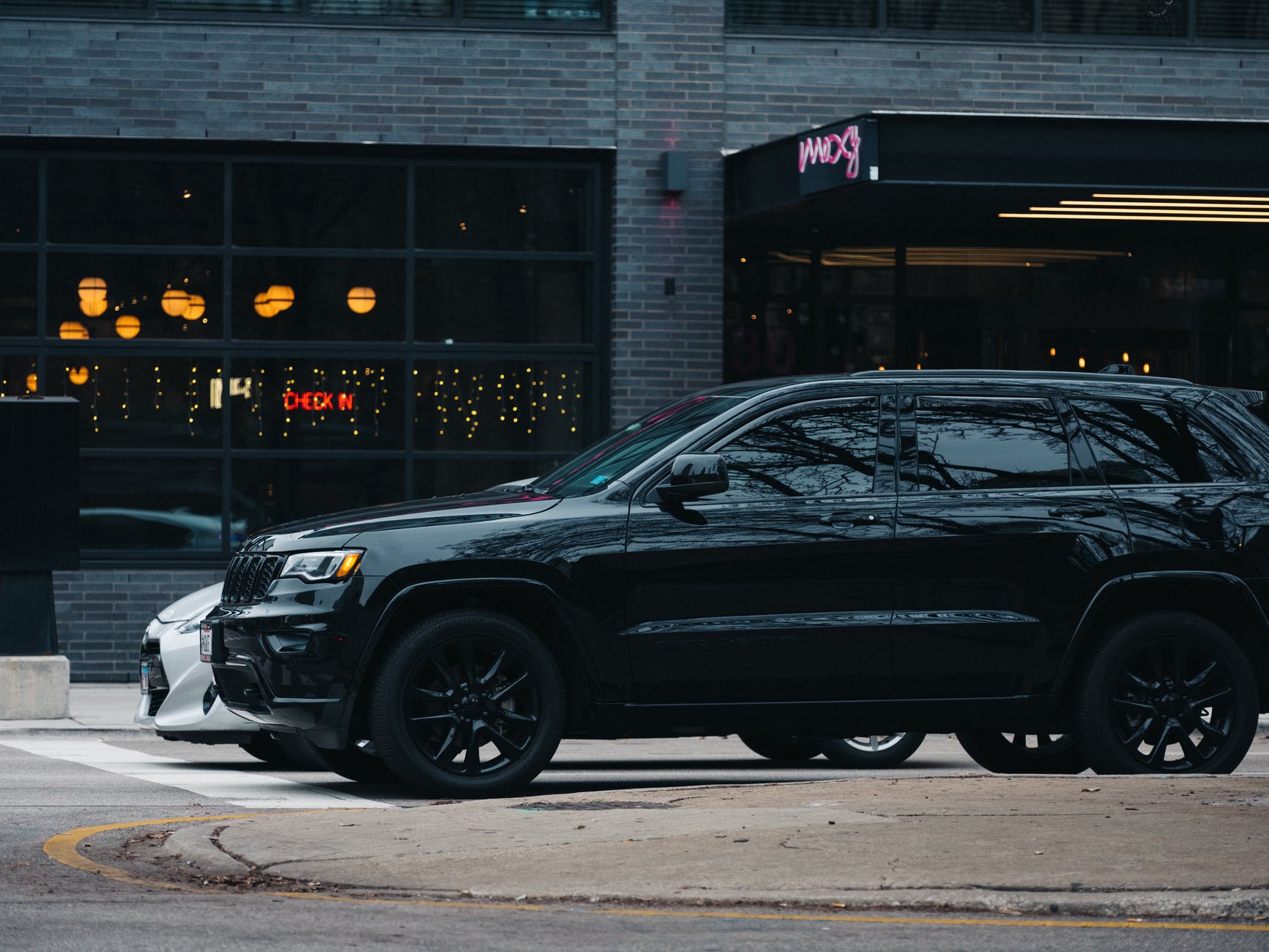
“Little Boxes” song critiquing suburbia now used to sell SUVs to suburbanites

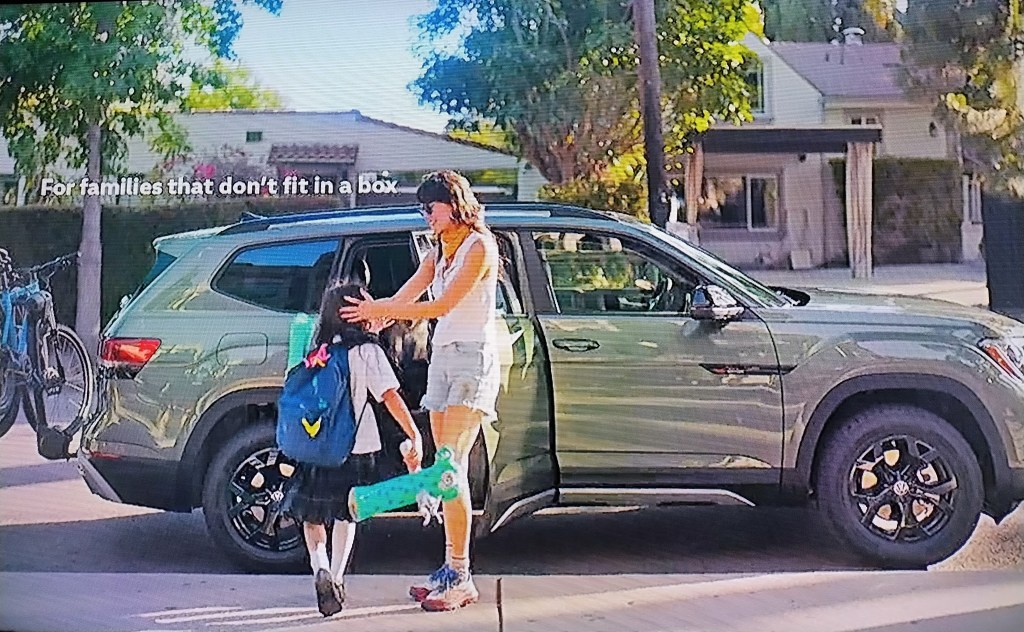
A new Volkswagen TV commercial features the song “Little Boxes” sung by Malvina Reynolds. This song originally critiqued the sprawling mass suburbs of the postwar United States but now is used – and in a remixed version! – to sell an SUV:

Four thoughts related to this advertising campaign:

  1. The song was protesting conformity in sprawl. Does buying a particular SUV counter conformity and sprawl?
  2. The tagline above – “For families that don’t fit in a box” – seems to suggest that people who own this vehicle are doing things outside the box. This vehicle allows you to escape the normal suburban life. Can this happen when almost everyone has an SUV already?
  3. The song said houses were boxes; are SUVs boxes? This particular model might be less boxy than some others but it still looks like a box. Are SUVs cool boxes where as suburban ranches houses were considered by some to be uncool boxes?
  4. If the primary target of this campaign is suburbanites, then a song critiquing suburbia is being used to sell products suburbanites. We have come full circle: do what you can to sell SUVs to suburbanites!

American minivan sales peaked in 2000

As the era of the McMansion and SUV emerged in the early 2000s, the minivan went into decline:

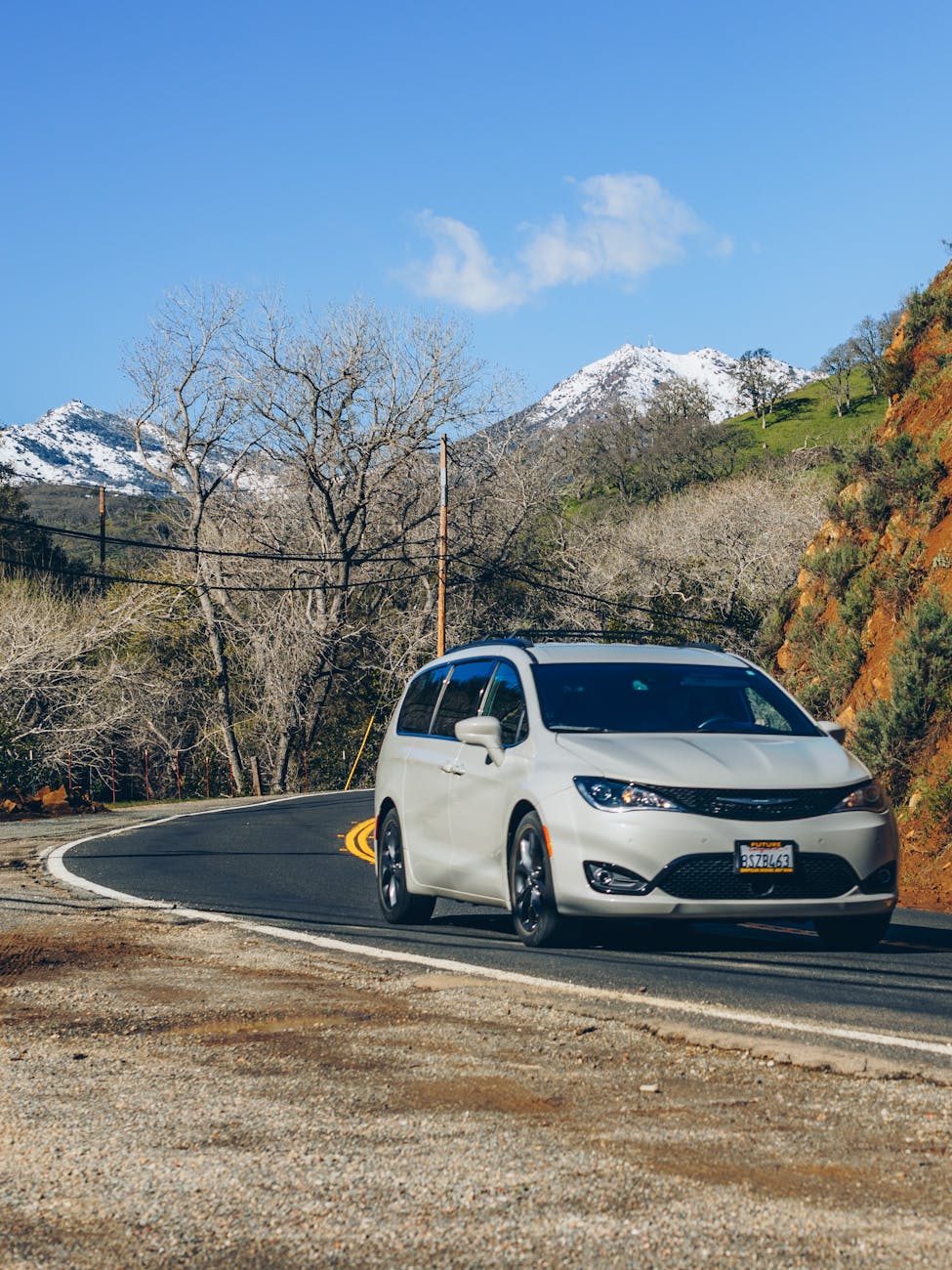
Photo by jacky xing on Pexels.com

Even so, minivan sales have been falling steadily since their peak in 2000, when about 1.3 million were sold in the United States. As of last year, that figure is down by about 80 percent.

What caused this decline? The same article suggests this:

However it evolves, the minivan will still be trammeled by its fundamental purpose. It is useful because it offers benefits for families, and it is uncool because family life is thought to be imprisoning. That logic cannot be overcome by mere design. In the end, the minivan dilemma has more to do with how Americans think than what we drive. Families, or at least vehicles expressly designed for them, turned out to be lamentable. We’d prefer to daydream about fording Yukon streams instead.

I am interested in some of the bigger connections that might be made around this same time (early 2000s). So family life in the suburbs – embodied by the minivan – became uncool? The 2000 Census was the first time 50% of Americans lived in suburbia. By this point, several generations of Americans had experienced or grew up in suburban settings. Is a choice of vehicles really pushing back against family life in the suburbs (even as plenty of Americans continue in these settings)?

Or another way to take the argument above is that individualism wins out over any symbols of family life. The iPhone and SUV somehow broadcast a consistent message of a cool or unique individual – regardless of how many people own the same model – while the minivan is saddled with family life. Did the long-term American yearning to be an individual doom the minivan (despite its peak in 2000)?

A third consideration: is this just a branding question? If so, other products have been revived so why not the minivan? Imagine a famous celebrity endorses the minivan and drives one around. Or a new brand emerges. Or problems arise with SUVs and the minivan is dependable. Or families become cool again. There may be limited interest in trying to revive the minivan but this could provide someone a marketing challenge.

What it might mean to have a house sticker on the back window of my car

Stickers on the back windows of cars can signal all sorts of things. The number of family members. A favorite vacation spot. A beloved car brand or sports team.

What would a house sticker in the back window mean?

I recently saw a SUV with a two-story house sticker. The sticker looks similar to a drawing a child might make of a house. The picture below has such an image; this sticker had much cleaner lines but had a similar shape.

Photo by Maria Mileta on Pexels.com

Here are some options for what the driver of the vehicle might want others to know:

  1. They own a home. Americans value home ownership.
  2. They value home. Like others might include stickers of family members and pets, this house signals the importance of home and what happens there.
  3. They work in real estate or a related industry. However, wouldn’t they want to put their name or company to make this clear?
  4. Someone in their household or a friend drew this picture and they made a sticker out of it. It is easy to order stickers online.

Put together a home and an SUV (with a sticker of a home) and you have the American Dream?

McMansions and SUVs arose together; SUVs won

When I set out to study McMansions, I found regular reference to McMansions alongside SUVs. In the time period I examined, the New York Times put these two phenomena together 33 times. Both the homes and vehicles emerged in a similar time period, the end of the twentieth century, and embodied a consumption economy with a bigger is better mentality.

Photo by mali maeder on Pexels.com

Looking from the vantage point of 2023, SUVs far exceeded McMansions. Even accounting for the differences in price and resources needed, can we declare the SUV the more successful cousin? This particular statistic helped me come to this conclusion:

Today 4 in 5 new American cars are SUVs or trucks, up from less than 1 in 2 in 2000.

That adds up to a lot of SUVs in a country that prioritizes driving.

The best counter-argument I can imagine would go like this: do bigger vehicles and more driving enable McMansions or does a love of single-family homes fuel driving SUVs? Americans like big houses and this encouraged more big vehicles to travel to and from these hours.

However, the sheer number of SUVs is hard to overcome. Millions upon millions. How many McMansions are there? Plenty, but they are clustered in particular places. The SUVs are everywhere and not fading anytime soon.

The rise of SUV nation(s)

A look at the impact of increased SUV sales on the environment includes a short history of the rise of the vehicle category:

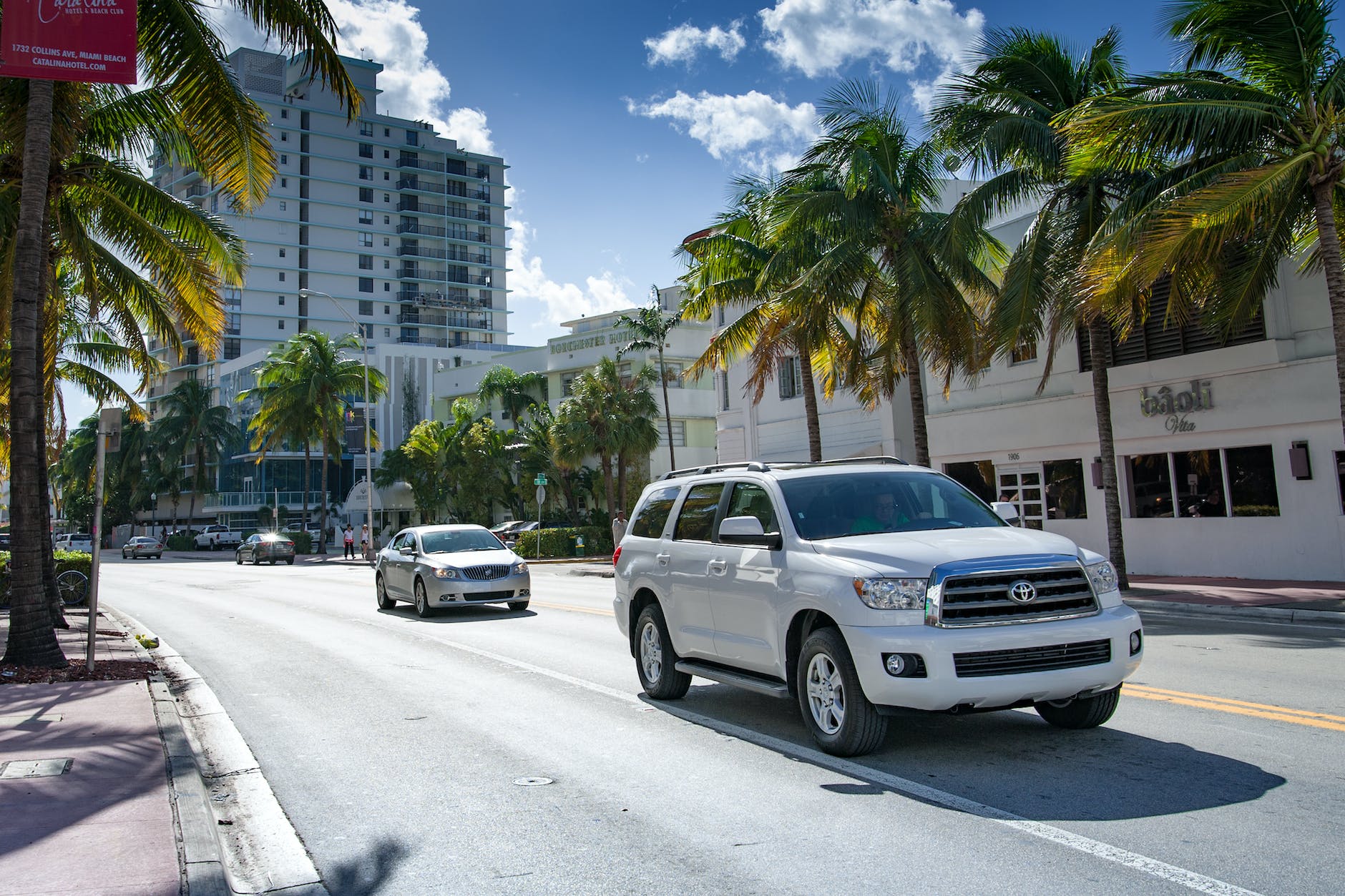
Photo by Ricardo Esquivel on Pexels.com

SUVs raced to a new milestone in 2019, surpassing 40 percent of all car sales worldwide for the first time. The world’s roads, parking lots, and garages now contain more than 200 million SUVs, eight times the number from a decade ago. SUVs’ share of car sales in the U.K. has tripled over the past 10 years; in Germany last year, 1 in 3 cars sold was an SUV…

This global phenomenon has its roots and impetus in the U.S., where in the 1980s the car industry carved out a new category called the “sport-utility vehicle”, a sort of mashup between a truck, a minivan, and the traditional American family car. After successfully lobbying lawmakers to class these vehicles as light trucks rather than cars, binding SUVs to less stringent fuel efficiency standards, the industry set aboutslotting them into almost every arena of American life…

The industry found that American drivers enjoy the lofty seating position of SUVs as well as the capacity and the comforting feel of security their bulk provides, even if half of all journeys taken in the U.S. are mundane trips of under 3 miles to run errands rather than high-octane adventures in the Rocky Mountains. For many Americans, SUVs invoke alluring qualities of fortitude and independence…

As Bloomberg’s Nat Bullard noted in a recent tweet: “We don’t buy cars here. We buy big cars built on truck bodies, and we buy trucks and drive them like cars.” The U.S. is now indisputably an SUV nation, a transformation that has had profound consequences for American cities as well as the global climate.

A few thoughts:

  1. This timeline roughly lines up with connection I have found in my years of studying McMansions: SUVs and McMansions can be viewed as related phenomena. They are both large and represent increases in size from typical earlier versions. The 1980s appears to be a key decade with a bigger economy, plenty of spending, and a growing emphasis on larger consumer goods. And those SUVs may need a three car McMansion garage to fit.
  2. There are hints here but there are also links to a suburban lifestyle that is largely structured around driving and short trips. Granted, just because Americans live in a sprawling landscape does not necessarily mean they need large vehicles to get around; they could use smaller cars. Yet, all that driving – even for relatively short distances – means Americans get lots of time to think about vehicles and what they want to have (and need to have to access many places).
  3. It is interesting to note that SUV sales and use are up in other countries as well. SUVs are often tied to American interests in driving and size; what explains increased sales in Germany and the UK? Car makers could be pushing these vehicles more and why are drivers more itnerested now than earlier?

McMansions, SUVs, and megachurches

I recently reviewed the book The Glass Church: Robert H. Schuller, the Crystal Cathedral, and the Strain of Megachurch Ministry by sociologists Mark Mulder and Gerardo Martí. As the authors describe Schuller’s emphasis on growth, they include this line on page four:

TheGlassChurchP4

As I studied the use of the term McMansion in the first decade of the twenty-first century, I found people regularly linked McMansions to SUVs. As the cited passage above suggests, McMansions and SUVs came about at the same time. Perhaps some would go even further and say McMansion owners are likely to be SUV owners or the two consumer goods are likely to be found in the same communities or kinds of places. And, like the passage above, the comparisons could go further than SUVs to include large food items.

Rarely have I seen the growth of McMansions and the growth of single-family homes in the United States connected to megachurches. A similar argument could be made: in a period of growth as Americans liked to consume bigger items in bigger settings with providers happy to produce larger goods, McMansions and megachurches came about or became widely recognized at roughly the same time (McMansions built in the closing decades of the 1900s and as a term widely used by the early 2000s; megachurch as a phenomenon known by the 1980s). As everything grew and appetites expanded, so did churches. And maybe megachurches were likely to spring up in or near McMansion filled suburban communities flush with money, family life, and access to highways.

At least in this study, Robert Schuller was enamored with growth decades before McMansions became a thing. Mulder and Martí suggest Schuller pushed for growth in order to encourage more growth; previous accomplishments became evidence for pursuing and fulfilling future accomplishments (until it could no longer hold together). Yet, Schuller was well-positioned in a booming suburban area: he arrived in Orange County in the 1950s and capitalized on the growing population and appetite for large churches in a way that few other religious leaders could match.

Now, linking these multiple phenomena together would take some more work. Were Orange County McMansion owners more likely to attend a megachurch? Is this a pattern throughout the United States? Did an ideology of growth pervade many sectors at the same time and mutually reinforce each other or explicitly intersect at points?

Marketing 101 example: equating pickup trucks to the American way of life

A look at declines in pickup sales for American automakers includes this description of what pickups represent:

“Pickups represent a rugged sense of individualism for many Americans. They are the very definition of America in that they are larger than life like America and can both work and play hard,” said Erich Merkle, U.S. Ford sales analyst.

This is both a concise and bold marketing statement: pickups are the American way of life! The statement ties to multiple big themes that run through American culture: individualism, larger than life, hard work and lots of play. And it is a vehicle that allows the owner to participate in the pervasive driving culture in the United States. And all this just for $35,000 to $50,000 for a new truck!

A truck, like many consumer goods, is not just about functionality but is also a statement about the owners and what they want to be. Buying smartphones, single-family homes, clothing, and more fall into the same process: marketing appeals to our want for what we own to match our personality and/or aspirations. A truck is not just a truck; it is a statement about the driver. It says, “I eat a Prius for lunch” or “I need to do important projects” or “I have the resources to buy a new truck” (among other possible messages).

Then I am reminded that it is just a pickup truck. Vehicles are necessary in many American communities in order to get from Point A to Point B. But, many vehicles may work in order to accomplish regular tasks. If the primary vehicle use is for commuting to work or regular errands such as buying groceries or dropping off and picking up kids, a truck is probably not needed. Some people need trucks for regularly hauling items or for work.

For now, this match between pickups and the American Dream “works.” There are numerous other products that would wish to tie themselves as closely as pickup trucks to the base values of the American Dream. It may not be this way in several decades; perhaps the rugged individualism and freedom will be attached to fleets of electric vehicles that are at everyone’s beck and call. Until something changes, expect to continue to see the marketing pitch that pickups equal the American way of life.

Need bigger garages and parking spaces for bigger vehicles

Americans’ interest in bigger vehicles means more space needs to be devoted to their storage:

Across America, the drive for bigger vehicles is bumping into physical limitations. SUVs and pickups are getting so large that they’re struggling to fit into some home and parking garages and public parking spaces.

Homeowners may need to think twice about purchasing larger vehicles, while parking lot operators are starting to charge oversize fees to accommodate behemoth SUVs and trucks…

“Nowadays, there’s people buying Dodge Rams, Ford pickups that don’t fit, and they’ll park them outside,” he said. “The difference here is this is an electric vehicle and … you need to plug it in. I’m not gonna spend $50,000, $60,000, $70,000, $80,000 on a vehicle and then have to run an extension cord outside the garage or an outside outlet.”…

While larger vehicles may pose some inconveniences, Americans don’t seem too bothered by it overall, at least if the vehicles being introduced by automakers are any indication.

This goes along with the idea that Americans should buy bigger houses to help store their stuff!

I first noticed this last year on a trip to New York City. In looking ahead of time for a parking garage, I saw that garages charged more for oversized vehicles. The article notes that this is largely confined to New York City but from other recent experiences seeing large vehicles in parking garages in the Chicago area, I would not be surprised if this idea spreads.

Another casualty to these large vehicles: lanes on roads and highways. A bigger vehicle means it takes up more of a lane, particularly on roadways with narrower lanes and tighter conditions. There is also less room for drifting from going straight ahead.

There is a focus in some places of reducing the number of parking spots as communities have long had generous numbers of spots compared to the average number of parkers. It would be interesting to see how a reduction in the number of parking spots might clash with a need to create bigger spots (which would take up more space per spot).

Contrasting tiny weddings to reduced interest in McMansions and SUVs

I first read about “tiny weddings” yesterday – and the lede suggested they are the opposite of consuming big items:

Big SUVs, McMansions and the term “bigger is better” are all things that used to connote living your best life. Now, consumers are shifting to the opposite end of that spectrum, including those who want to tie the knot.

Tiny weddings (aka microweddings) are a growing trend for couples who want to have their special day with less worry and spend less money (think $2,000 to $3,000) at a time when annual reports like those from The Knot state that the national average cost of a wedding is $33,931. The smaller ideal also comes at a time when families are picking up less of the tab for the big day and student-loan debt is infringing on wedding dreams and goals. The tiny wedding limits the numbers of attendees. The average wedding in the U.S. has 126 guests, according to the WeddingWire 2019 Newlywed Report.

To some degree, McMansions and SUVs are back. And linking the two might be in vogue for a long time.

But there is a bigger question at play here: is the suggestion correct that Americans are now less interested in purchasing big items? I have heard this for years: Americans are past the garishness and ostentatious purchases of the 1980s through the early 2000s. They learned their lessons about too much debt, too much emphasis on material objects, and the impact on social life. They are now more interested in consuming experiences than items. They want to live simpler, less cluttered lives. Tiny houses are in, McMansions out.

At the same time, with an economy that slowly recovered after the housing bubble of the late 2000s is this true in regards to SUVs and McMansions? Both are expensive, particularly compared to other options in their categories. They both have their critics and these criticisms have dogged them for decades. Yet, both seem to be thriving among the sectors of the buying public that like them. Both appear to have a future. If Americans continue to desire single-family homes and there are still forces arranged to push them toward large homes, McMansions will continue.

Twenty-first century American life: McMansions, SUVs, and celebrities

An argument that the first decade of the twenty-first century never really ended includes citing McMansions, SUVs, and celebrities as part of our current world:

You might be tempted to cap the perceptual 2000s in late 2008, when Obama was elected president and the investment banks Lehman Brothers and Bear Stearns collapsed, taking down the housing market and much of the American economy with them. That collapse ended the tacky prosperity of the early 2000s, a period when the McMansion flourished, cheap gas fueled a love affair with giant SUVs, and pop culture was overrun with paparazzi shots of Paris Hilton and Lindsay Lohan falling out of Los Angeles nightclubs while wearing low-rise jeans and trucker hats. Meanwhile, Facebook was metastasizing beyond college students, sculpting the basic contours of the digital environment much of the world now lives in. In hindsight, the moment in 2007 when the pop princess Britney Spears cracked under the paparazzi glare, attacked a car with an umbrella, and shaved her head feels like foreshadowing of the cultural brink to come, when none of this would feel so innocent or breezy.

The pairing of McMansions and SUVs continues. Both are still alive and well. Americans continue to purchase large vehicles and like driving (at least compared to alternatives). At the same time, Americans generally desire the largest new houses in the world. While housing prices may be really high in some urban markets, many still desire a starter home and suburban life.

Adding pop culture to this pair is an interesting choice. Do all three of these together suggest bigger is better or that consumption of all things – cars, homes, and people/celebrities – is what Americans want to see and experience? We have many images of celebrities driving around in expensive SUVs and living in large homes. As Americans in general like the idea of large homes, those in the public eye seem to gravitate toward large and showy homes. Their residences, such as those of sports stars and Hollywood stars, are usually beyond what the average American could buy (as are most McMansions).

These three together are likely not going to age well: do people need such large homes, large vehicles, and news about celebrities? Will future generations see this all as rampant excess and problematic? Yet, it is hard to see a future where Americans turn away from each of these three interests: new homes might be slightly smaller than in the recent past but a big shift has not occurred, driving is still necessary for most people to attain success, and celebrities allow consumers to consume people rather than created products.